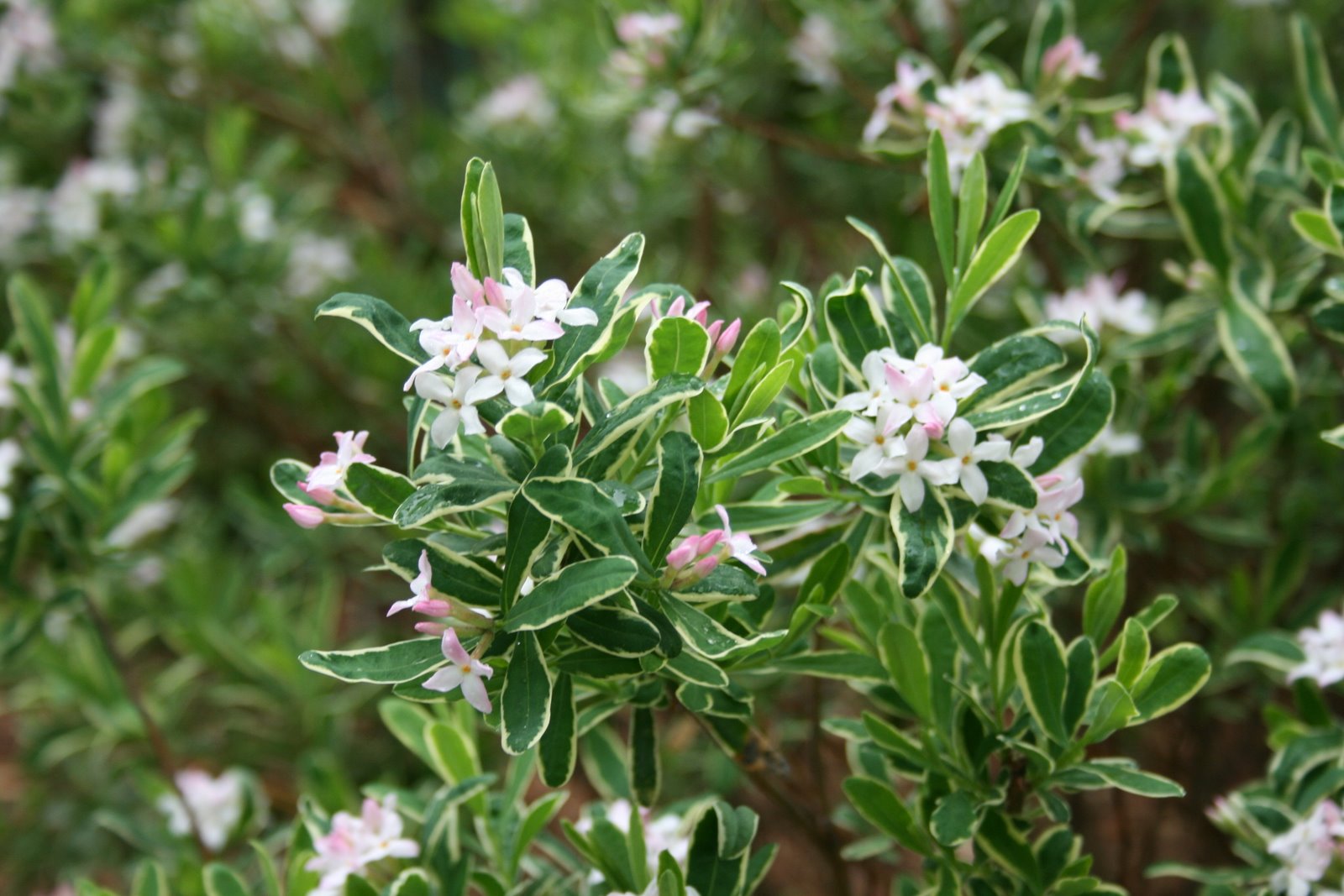
Variegated Daphne in Bloom – a fragrant flowering shrub with beautiful evergreen foliage

This beautiful variegated Daphne, in the Front Border, was blooming in late April (zone 6b). The blooms have a beautiful fragrance and groupings of small pink and white flowers.
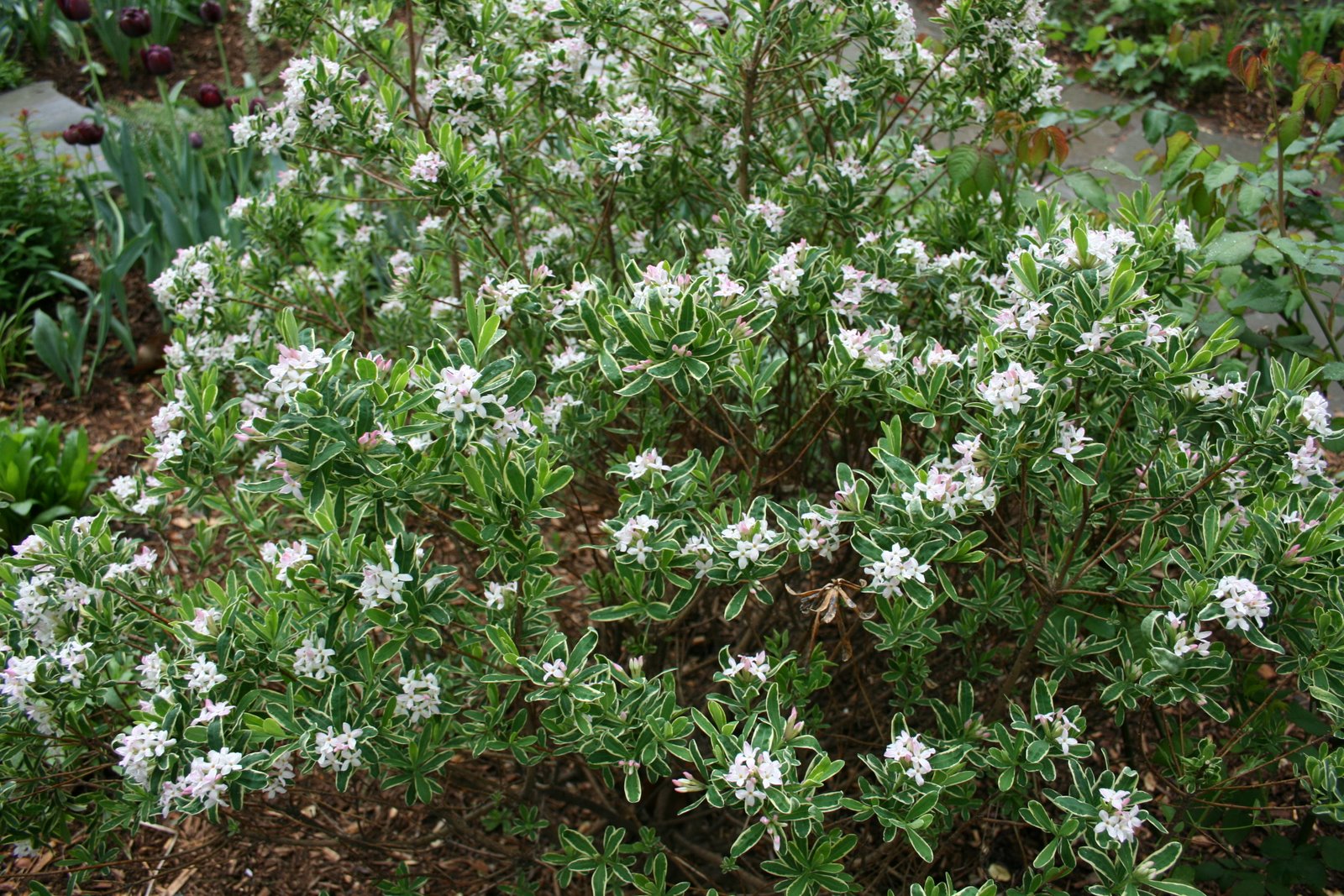
Perhaps what I love about this shrub even more than the flowers is the interesting, evergreen foliage. Last June, when I hosted a garden tour, the shrub obviously had no flowers, but many people commented about how much they loved it.

.

If you are looking for an alternative to a conifer, an evergreen without needles, try Daphne.

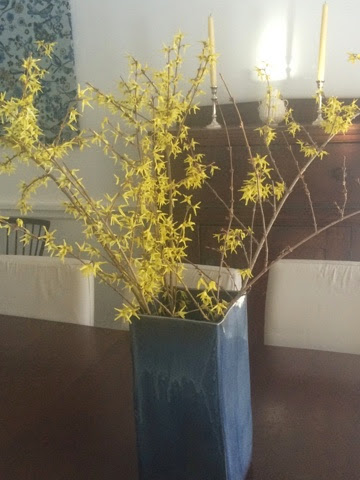
Forcing Forsythia

Forcing forsythia is super easy! Now is the time to grab some clippers and cut several forsythia branches.  I like the long, straight ones because they make more dramatic arrangements.  However, the branching ones are beautiful too as seen here.  Once you have cut the branches put them in water and wait anywhere from one to three weeks for the buds and flowers to appear depending on how late in the winter you cut them.  There is no need to change the water while your waiting for the branches to bloom.  I do find it helpful, however, to make a 1/2 inch vertical cut at the base of the branch to make it easier for the stems to take up water.  The flowering branches look great for several weeks.

Winter Floral Arrangements

Bringing flowers in from the garden is one of my great joys as a gardener.  Winter presents a challenge in that there is less to choose from, but the desire for greenery grows stronger.  One of my goals this winter is to create an arrangement each week from the garden.  It will not only beautify my living space, but will satisfy my desire to be in the garden at a time of year I ordinarily would not.  I share with you week 1.


This small vase contains clipping of cedar clippings and yellow twig dogwood gathered from the garden with an accent of purple from Japanese beautyberry  growing at the edge of our lawn.  

NYBG: Much to Savor, and Worry About, Amid Mild Winter’s Early Blooms

By
Published: February 26, 2012

At the New York Botanical Garden in the Bronx, an experimental plot was in full flower on a recent February afternoon, as the thermometer edged toward 60.

“This is the earliest I’ve seen all of these things in flower,” said Todd Forrest, the garden’s vice president for horticulture and living collections. “The ground isn’t even frozen. That’s shocking.”

Latest buzz on bee decline: Studies blame pesticides

Updated: Friday, March 30, 2012 1:49 PM
SETH BORENSTEIN
Associated Press

WASHINGTON (AP) — A common class of pesticide is causing problems for honeybees and bumblebees, important species already in trouble, two studies suggest. But the findings don’t explain all the reasons behind a long-running bee decline, and other experts found one of the studies less than convincing. The new research suggests the chemicals used in the pesticide — designed to attack the central nervous system of insects — reduces the weight and number of
queens in bumblebee hives. These pesticides also cause honeybees to become disoriented and fail to return to their hives, the researchers concluded. The two studies were published online Thursday in the journal Science. Just last week activists filed a petition with more than a million signatures asking the government to ban the class of pesticides called neonicotinoids. The
U.S. Environmental Protection Agency said it is re-evaluating the chemicals and is seeking scientific help.

Support Your Local Farm: The Village Tree Farm in Green Village, NJ

Why did it take me so long to find The Village Tree Farm on Meyersville Road in Green Village, NJ? It’s a family-run Christmas tree farm just a few minutes from my home and we had a wonderful afternoon picking out our tree. In addition to getting a great tree, we also got to admire their beautiful, Amish-constructed barn, built in 2004.

www.villagechristmastreefarm.com