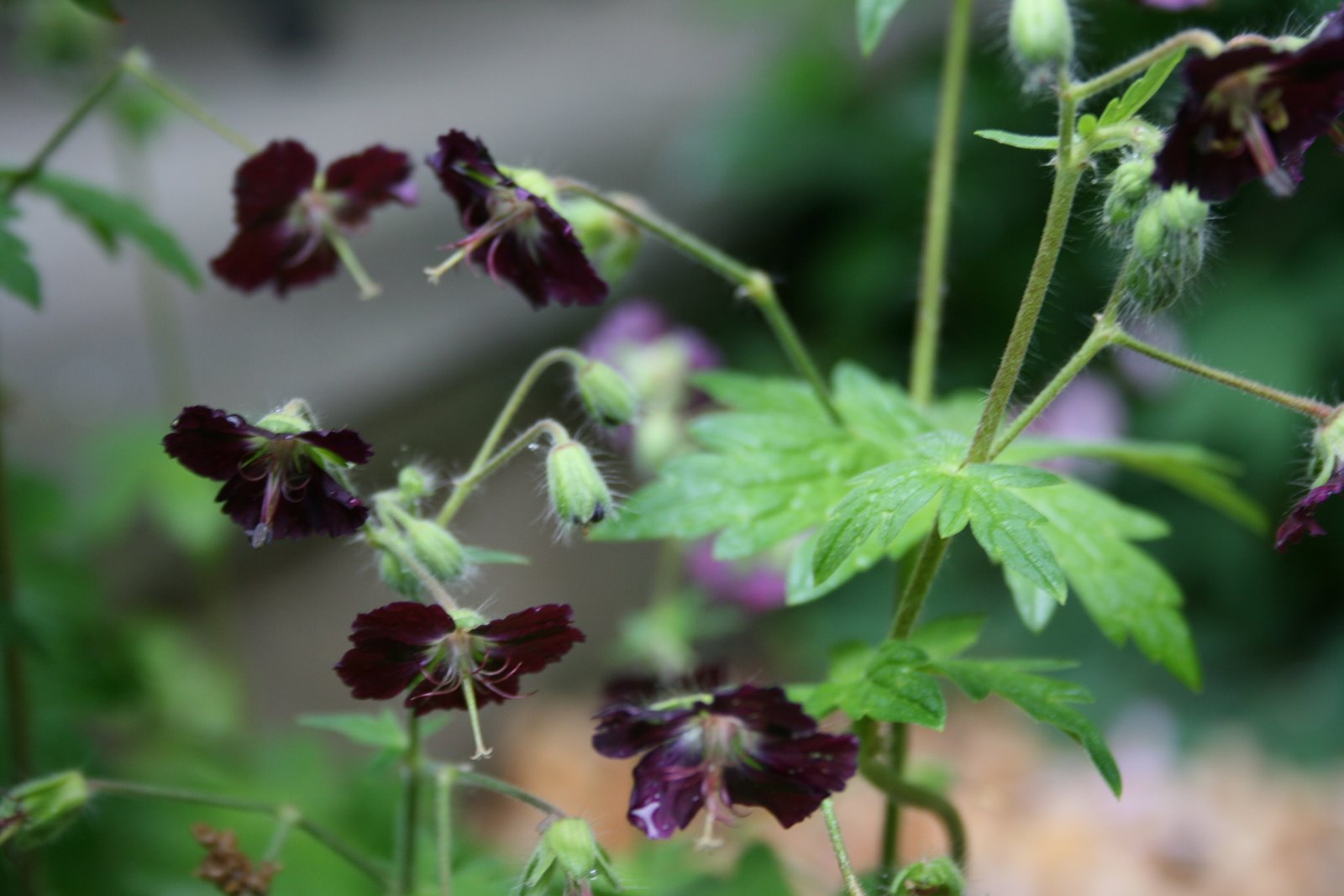
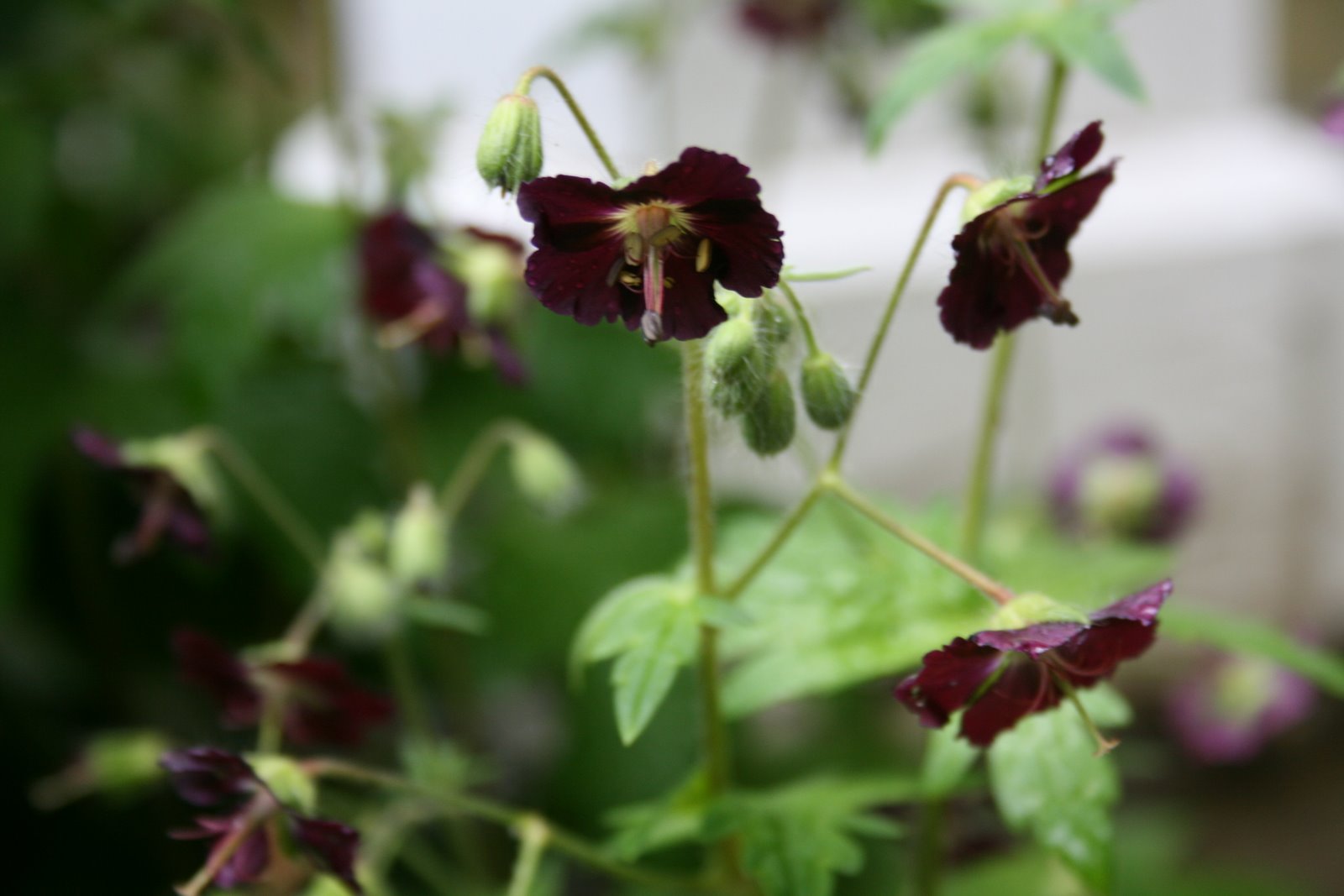
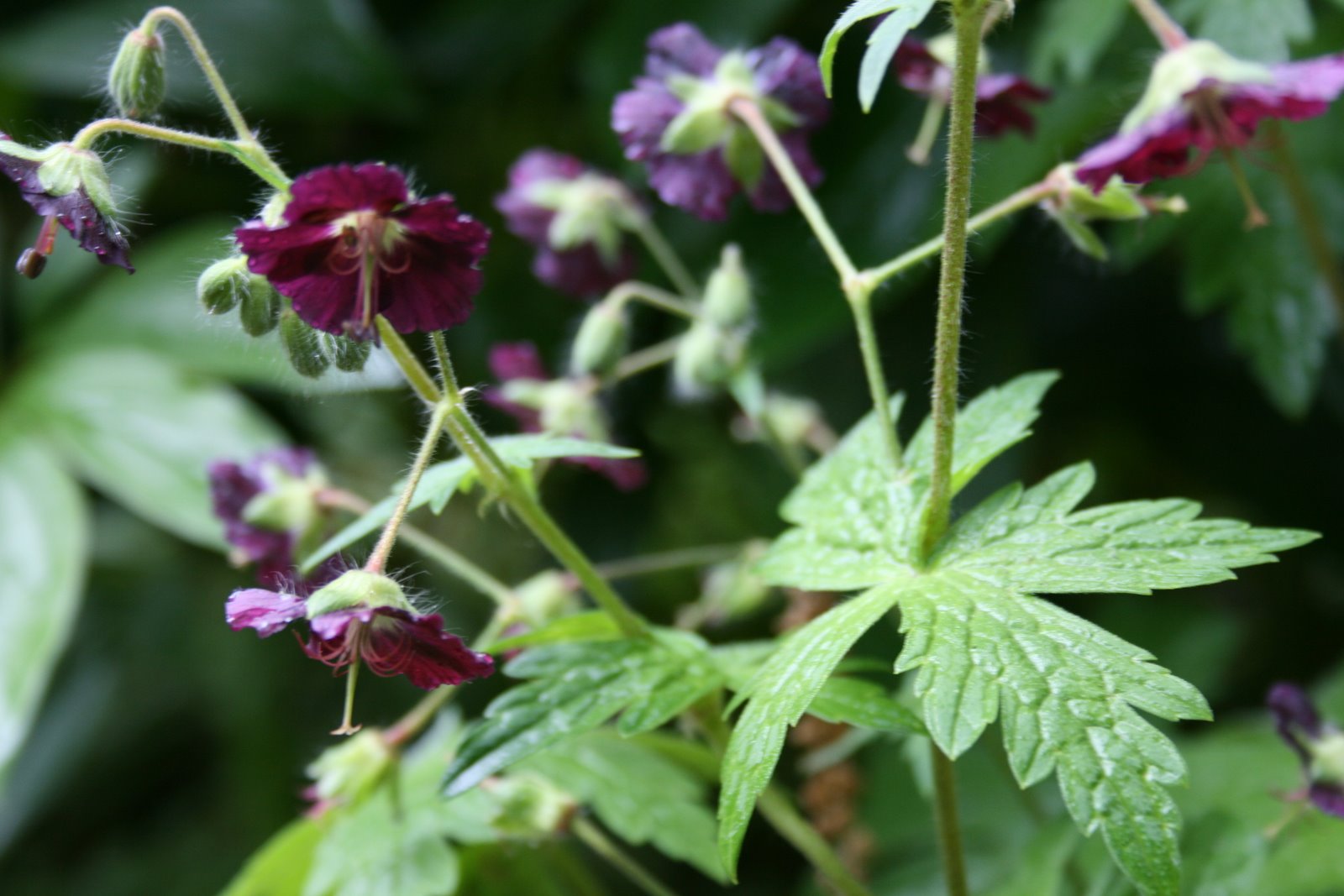
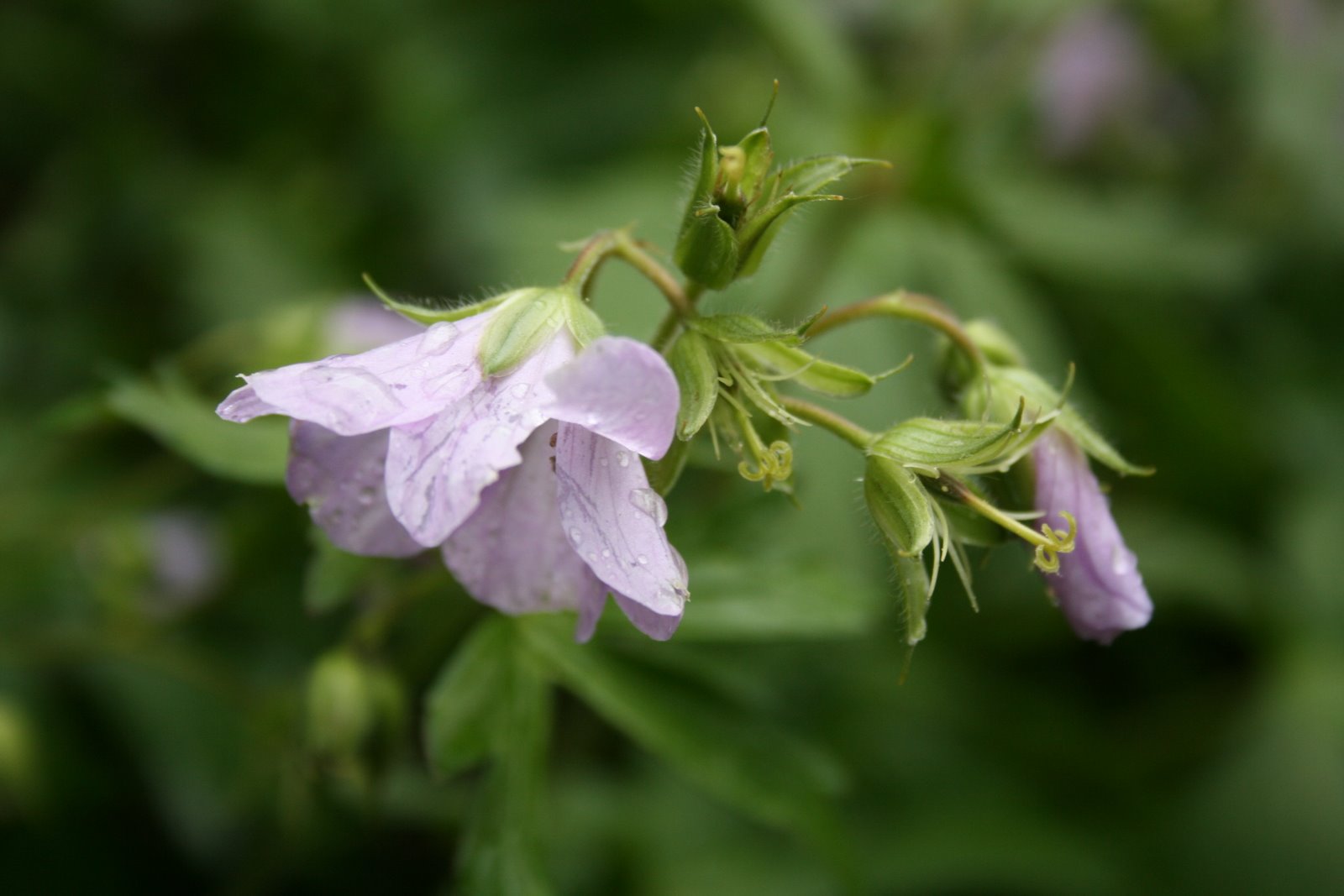
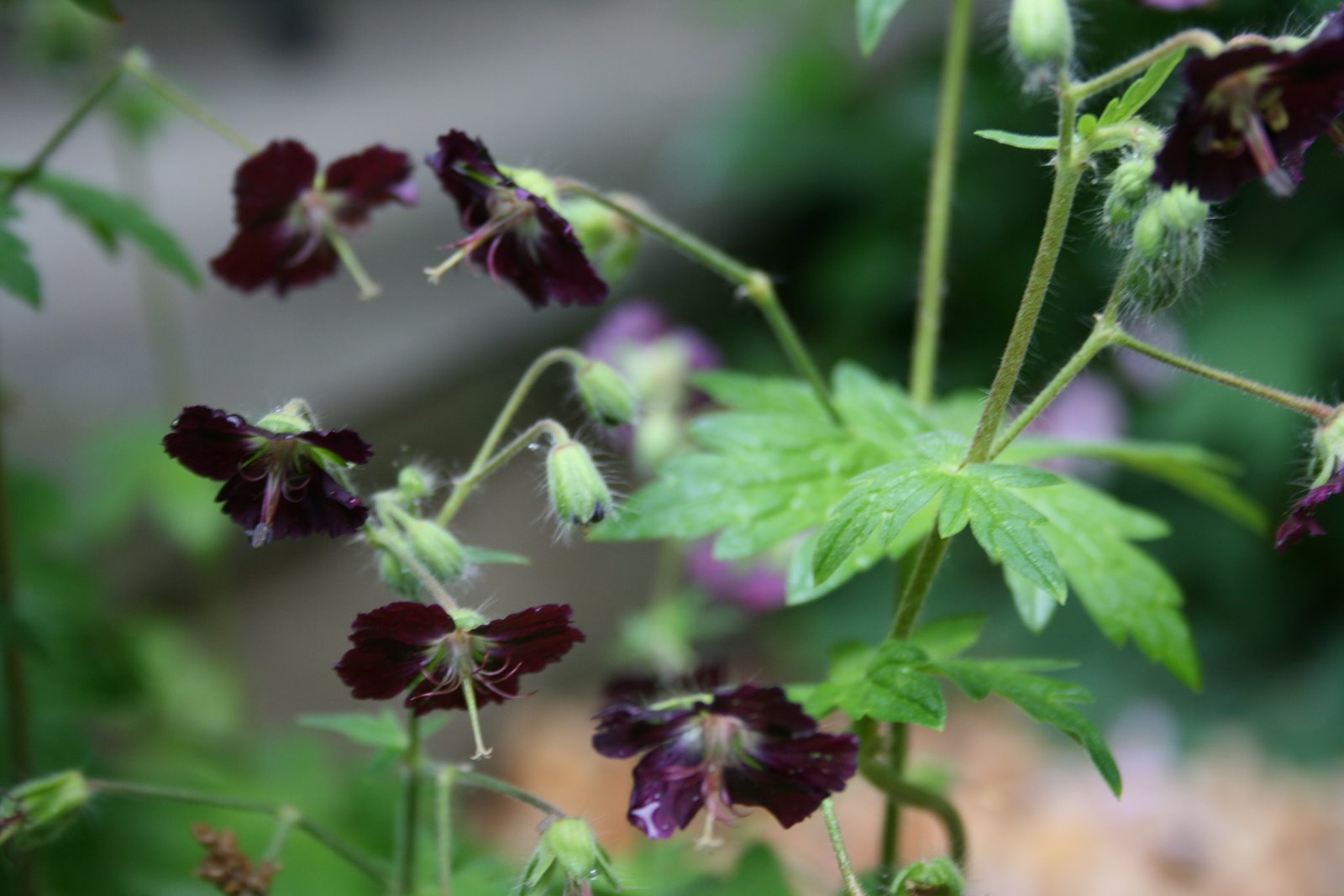
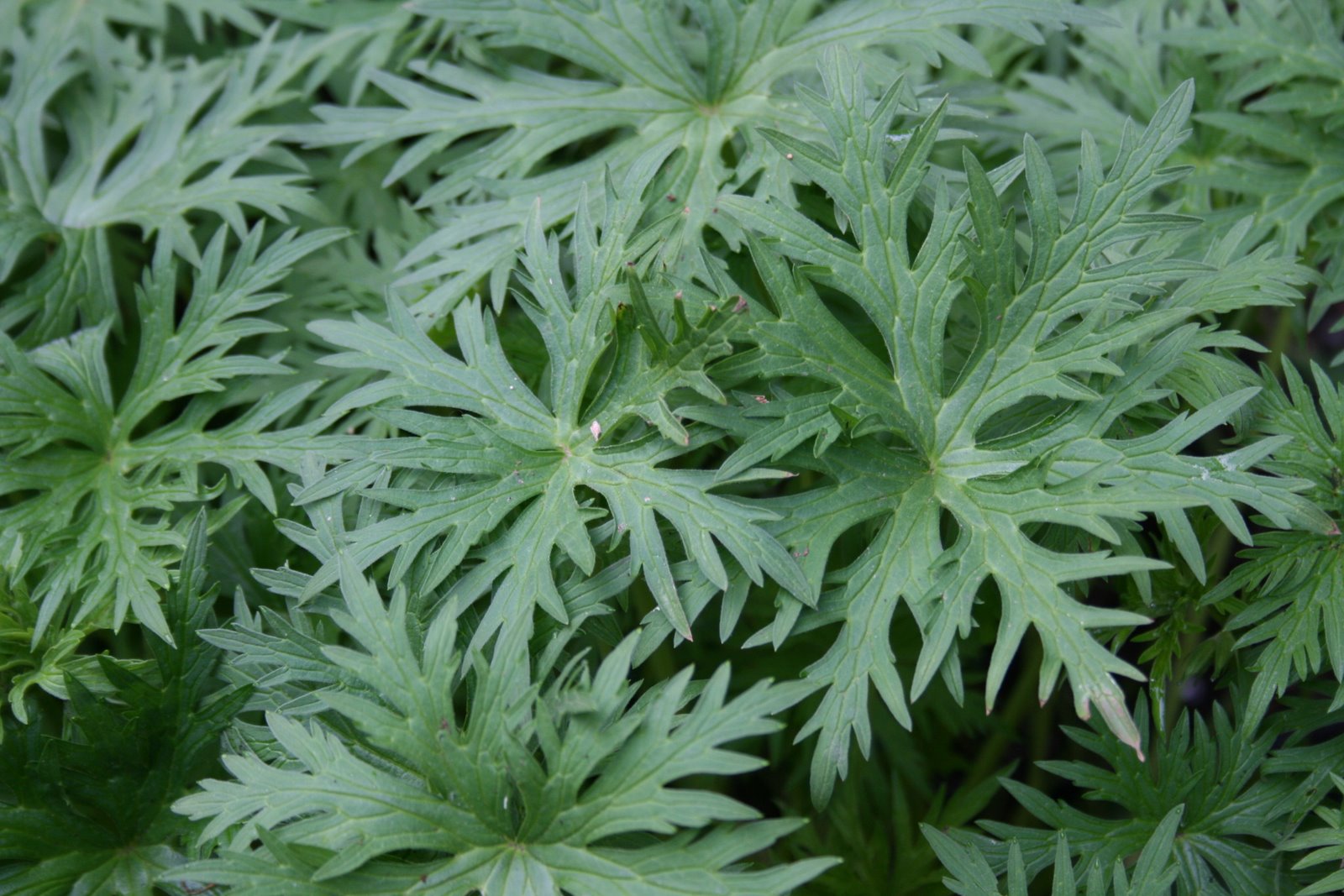
 My cranesbill geraniums have just begun blooming this week. I love them. As cut flowers, they make great fillers or can be used for posies. Even without any flowers, the leaves themselves are highly ornamental. If you are not familiar with these hardy geraniums, now is the time to think about planting some.
~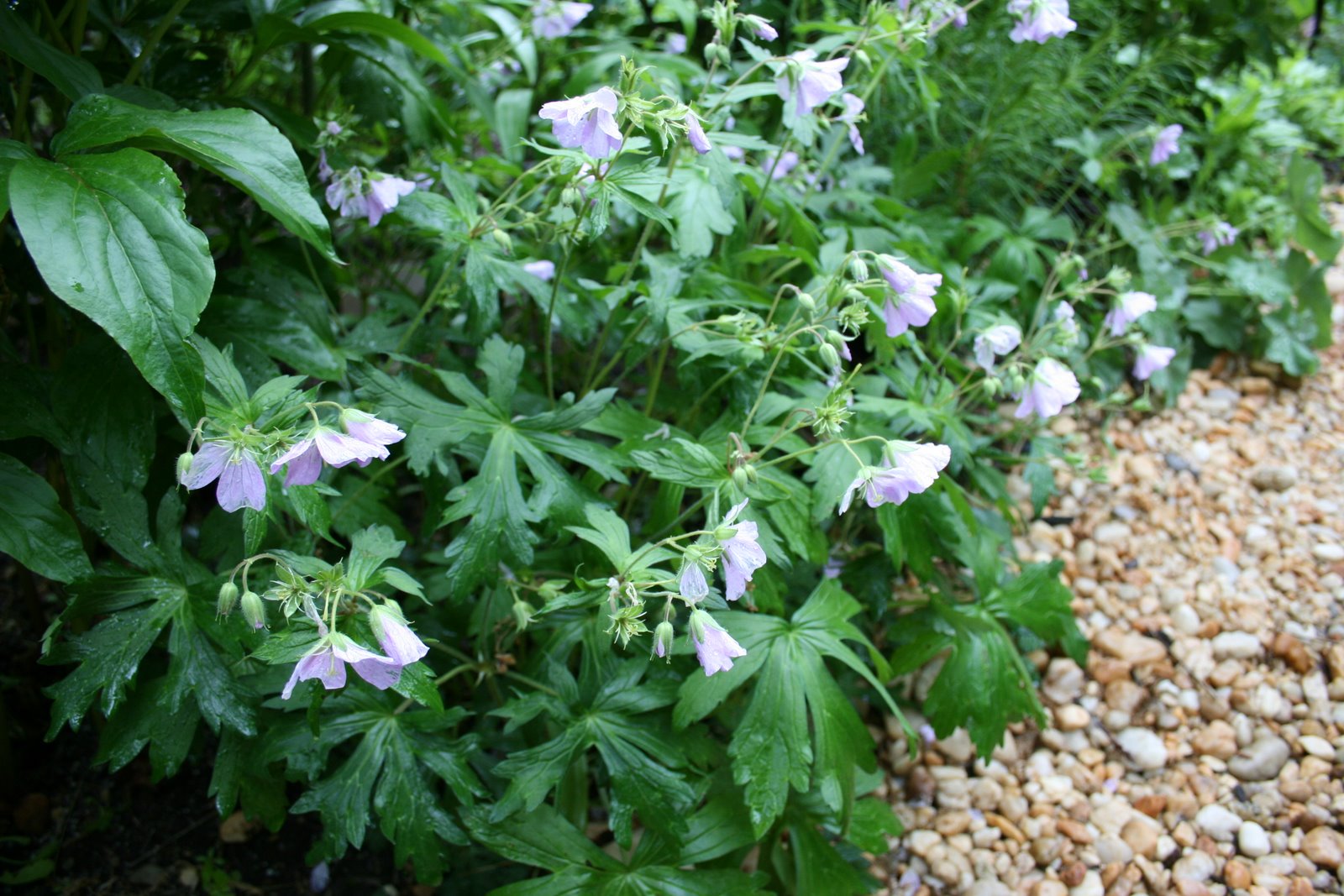 Where to Plant Cranesbill Geraniums. These little plants are my favorite mixers along the outside of all my borders. Wherever I can put them, I do. Cranesbill geraniums are hardy, easy to grow, and suited to a variety of situations. There are some for the shade garden, others to use as ground cover, and others that are suited to sunny beds and borders.
~ How to Maintain Cranesbill Geraniums. Geraniums edge, they weave, they spill over. Most bloom over a very long period of time and will repeat if they are cut back after flowering. Some of the larger geraniums will require mid-season maintenance. To prevent these ones from flopping or splaying open, I cut them back hard after blooming and fertilize. Soon, new fresh leaves appear and the plant remains compact.
~
 Where to Buy Cranesbill Geraniums. My first geraniums were from Perennial Pleasures Nursery which specializes in heirloom perennials. I also got others from Heronswood before they were sold. Another wonderful source for hardy geraniums is Geraniaceae, a California nursery which also has an online catalog. The selection at Geraniaceae is phenomenal. I am wanting to get some more mourning widow geraniums. Geraniaceae offers 26 different varieties. I don’t know how I will be able to choose. I think this will be a paralysis of choice.



 Heirloom Gardener