This article includes inspiring photographs of some of my favorite bulbs: “Elspeth Thompson chooses the bulbs to plant now and enjoy later…For me there is something unfailingly cheering and hopeful about bulb-planting – it even helped me through the death of a muchloved dog one sad October. It can be tiring if large numbers are involved, so alternate the big naturalistic swaths with handfuls of delicate beauties in pots that can be brought inside when coming into bloom..”
Category: Bulbs and Tubers
Pictures of the Beautiful Japanese Irises Blooming in my Long Border


What I’ve Learned About Growing Tulips in New Jersey: Protecting from Squirrels and Deer, Planting in Clay Soil, and Creating Colorful Combinations
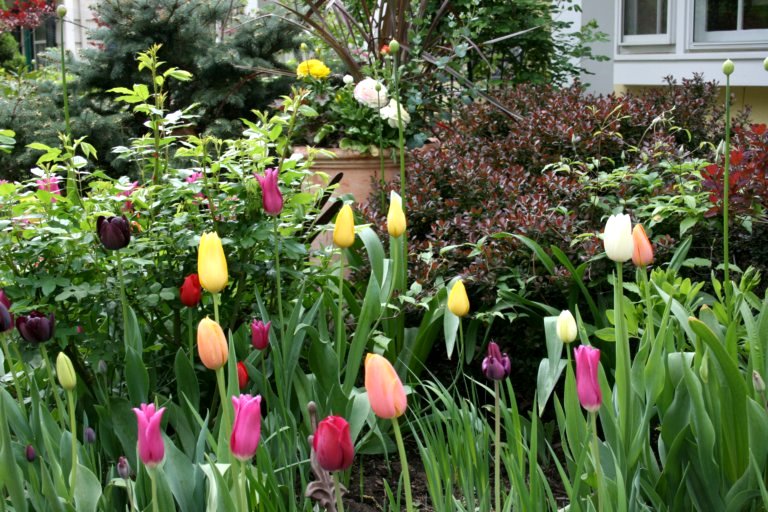 One of my favorite spring flowers at this time of year is the tulip. Because of the squirrels, deer, and clay soil in my area of New Jersey, few of my neighbors grow tulips, but it can be done. Here are some lessons that I have learned over the past few years on growing these beautiful flowers in my less than ideal conditions. For me, it has been well worth the effort.
~
1. Protecting Tulips from Squirrels and Deer. In the fall, to protect the bulbs from being eaten or dug up by hungry squirrels, I soak them in deer repellent before planting. In the spring, to protect the tulips from being nibbled by the deer (my friend calls them rodents with antlers), I then regularly spray them with deer repellent as soon as the bulbs begin to emerge.
~
~
2. Growing Newer and Heirloom Tulips in Clay Soil. Because tulips naturally like dry, warm summers, there is a big difference between the newer varieties that have been bred mainly for commercial cutting and the heirloom varieties that were bred to actually be grown in people’s gardens.
~
The newer varieties spoil if I keep them in my moist, clay soil year-round. To over-summer them, I remove the bulbs after the show is over to a less prominent area of the garden so the foliage can continue to make energy for the bulb. Once the leaves have died down naturally, I dig them up and store them in a dry cupboard until it’s time to re-plant them in the fall.
~
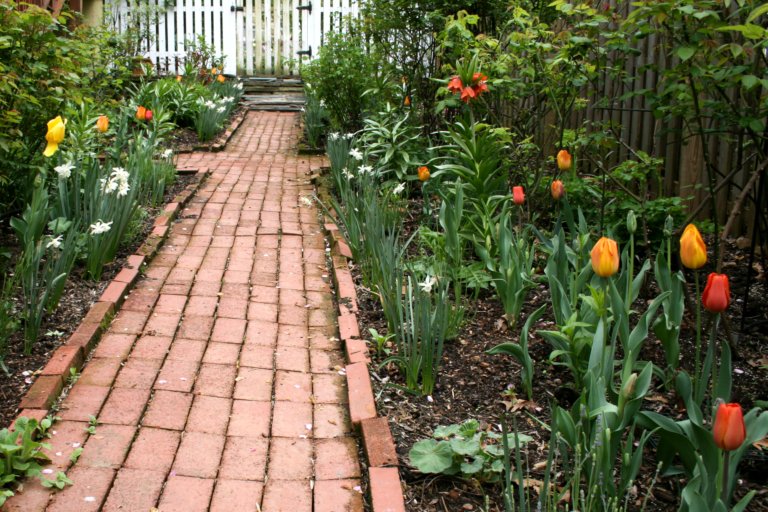 In contrast, the heirloom varieties are much more tolerant of my less-than-ideal clay soil. I find that about three-quarters of them will survive the summers in the ground. In the areas where I grow them, like the Rose Garden (pictured), I simply plant enough new bulbs each fall to compensate for the expected loss. A mix of orange tulips including General de Wet, Orange Favorite, Princess Irene, Dillenberg are planted with Black Parrot as a dark purple accent.
 ~
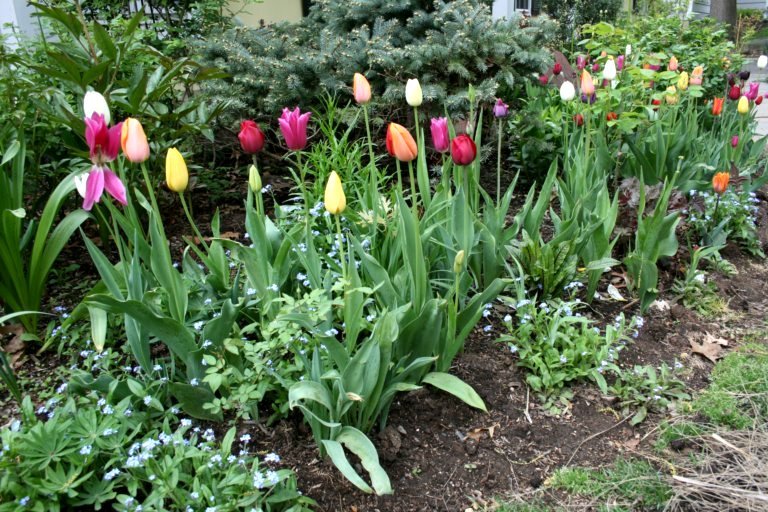
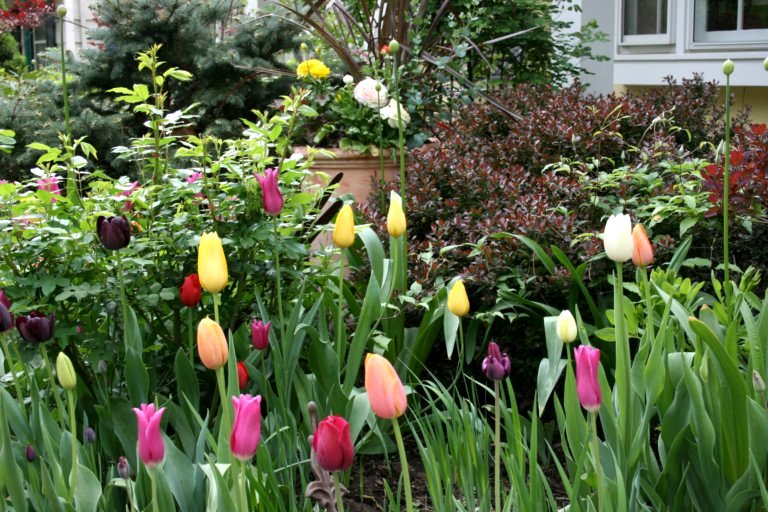
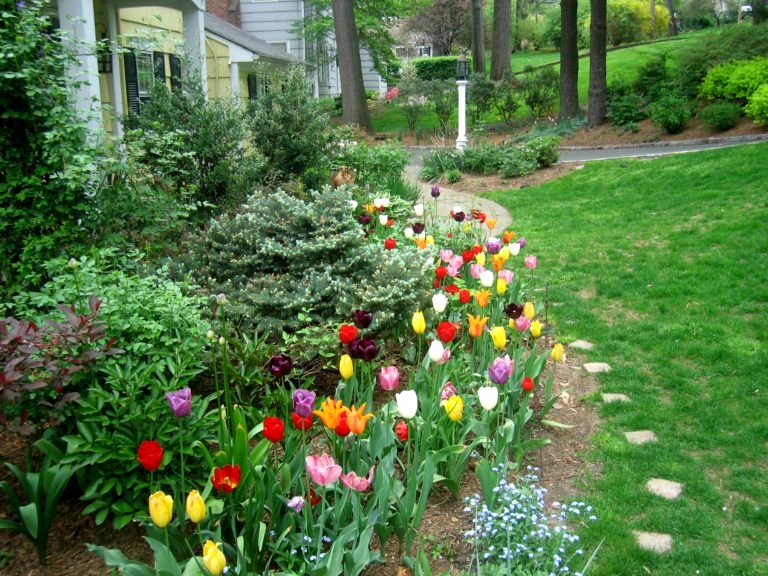
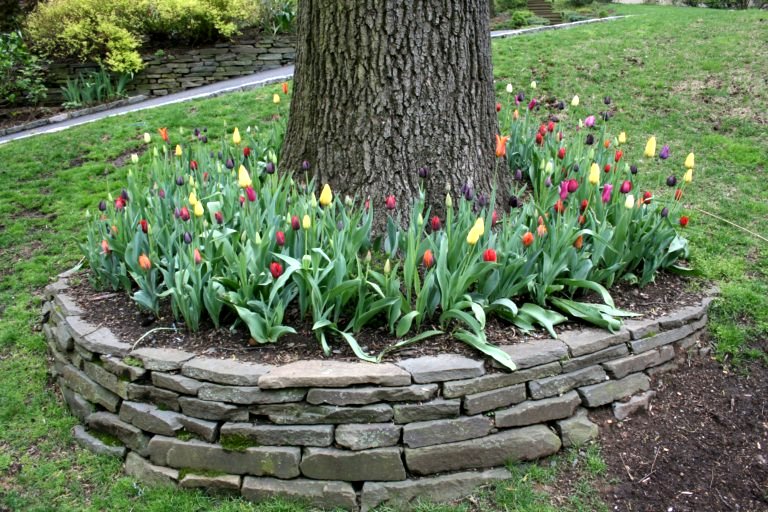 3. Creating Colorful Combinations of Tulips. Inspired by the Granny Mix offered by Old House Gardens, the last two years I’ve been mixing up my own tulip combinations to remind me of the old mixtures found in cottage gardens or old time front door gardens. I have ten varieties of tulips chosen for a range of color, height, and form which bloom April and May. My own mix is planted in the front of our house (pictured). It consist of the following tulips: Ballerina, Queen of the Night, Couleur Cardinal, Princess Irene, Kingsblood, Mariette Cum Laude, Maureen, Mrs John T. Scheepers, and Dordogne.
~
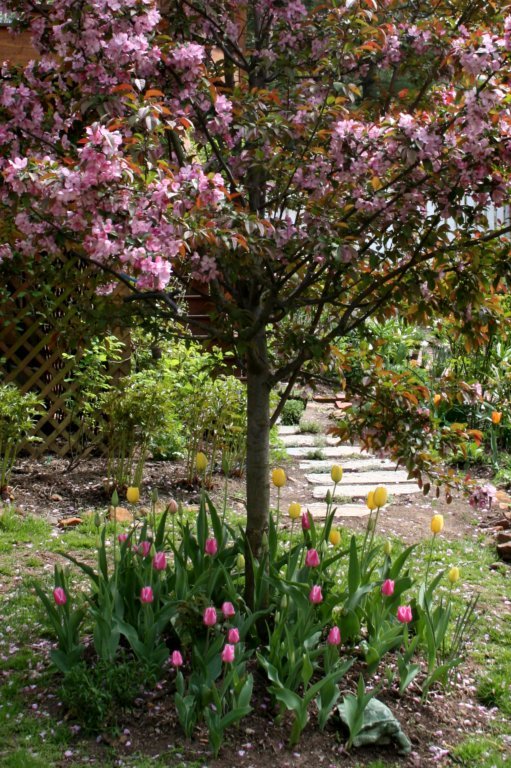
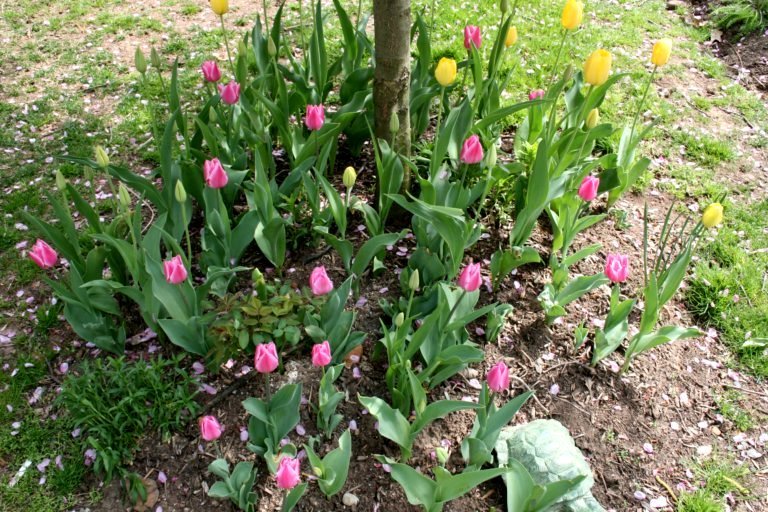 Under a pink flowering crabapple outside the Children’s Garden, I planted Christmas Dream, Big Smile and Menton. I must say that originally, I did not like the apricot color of Menton, but as it matures it is absolutely beautiful, particularly because it picks up tones in the red foliage of the crabapple as the leaves elongate.
 ~
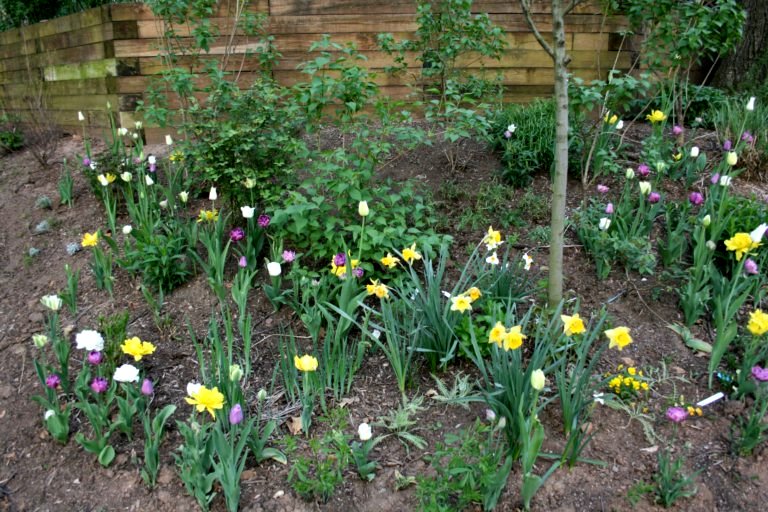 On Lilac Hill, I planted the String of Pearls combination from White Flower Farm along with Lilac Perfection, Monte Carlo, Blue Diamond, and Violet Beauty. The String of Pearls collection contains Mount Tacoma, Maureen, White Triumphator, Spring Green, and Calgary.
~
Related posts: How to Keep Deer Out of the Backyard
Spring Ephemerals: Virginia Bluebells Are Spreading Through The Garden
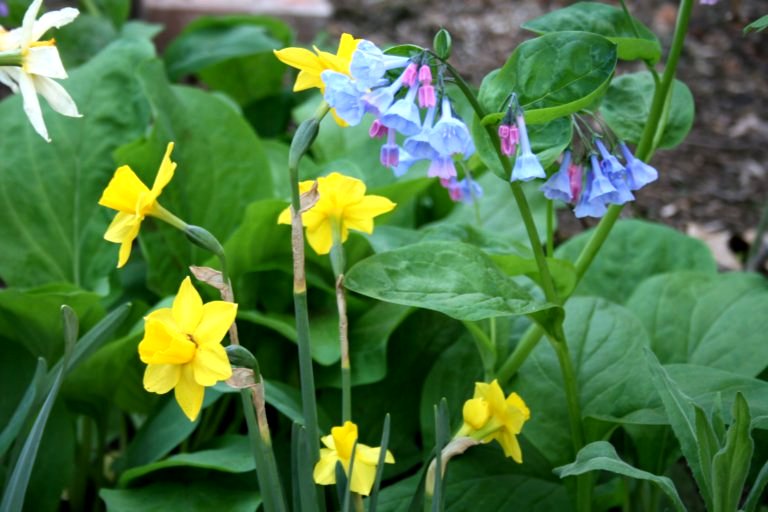
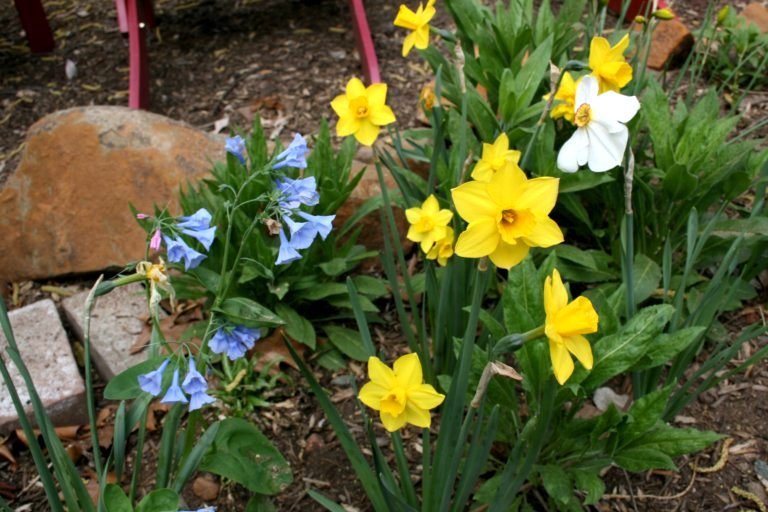
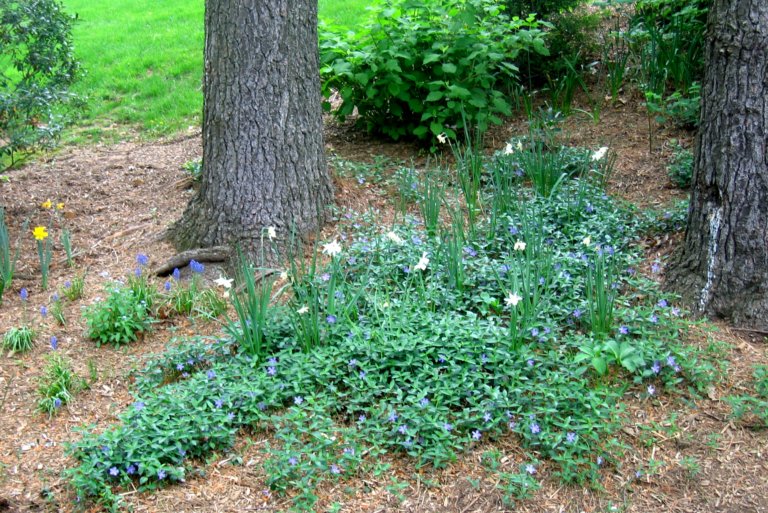
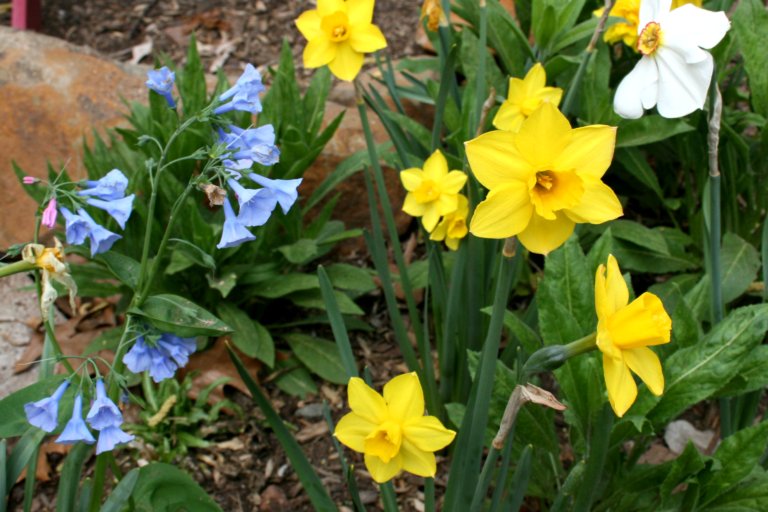 This year, my Virginia Bluebells are the best ever. After three seasons, these spring ephemerals are spreading beautifully through the garden. I have wonderful combinations of them with daffodils (pictured) in the Long Border and great surprises as they have shown up in other areas.
~
I look forward to their number increasing further. The spring ephemerals are so charming for how they appear when the garden is bare and leave in just enough time to make room for summer perennials as they bulk up.
~
In my garden, more bluebells are always welcome. They seem to thrive in areas where the clay soil is on the dry side and in parts where the moisture level is more normal. They have done well in rich and ordinary soil. I have them planted under roses, a tree hydrangea, and in the ‘tree skirts’ that surround my oaks in the back garden.
Advice Wanted: Crown Imperial Fritillaria Coming up Blind
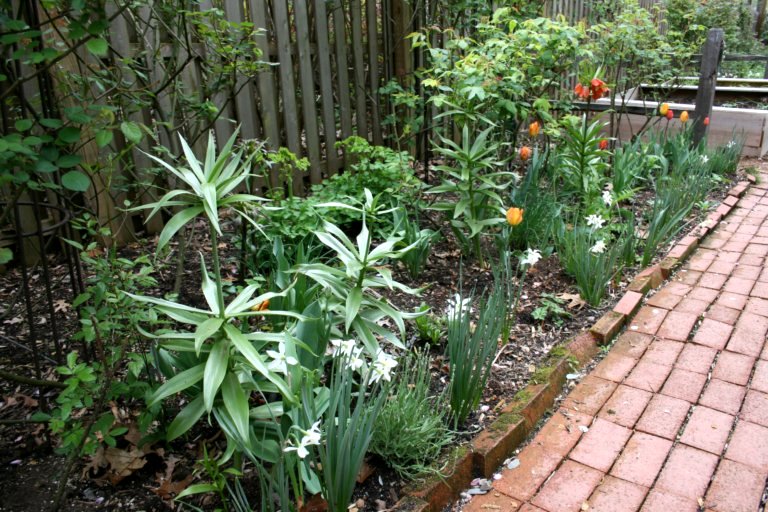 Last year I planted various orange and deep purple tulips and orange fritillaria in the Rose Garden. I love orange tulips and the contrast with the deep purple makes the orange stand out all the more. I thought the orange crown imperial fritillaria would be great with the tulips.
~
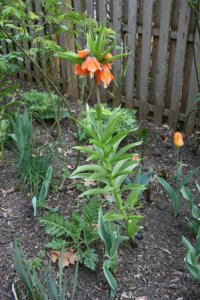 The bulbs all came up beautifully. But THEN, only one fritillaria formed flowers. Why? So far, I have no quick answers. I spoke to a gardener at one of the botanical garden I visit who suggested buying the bulbs from a different supplier. They have hundreds of fritillaria which are all blooming from Brent & Becky’s.
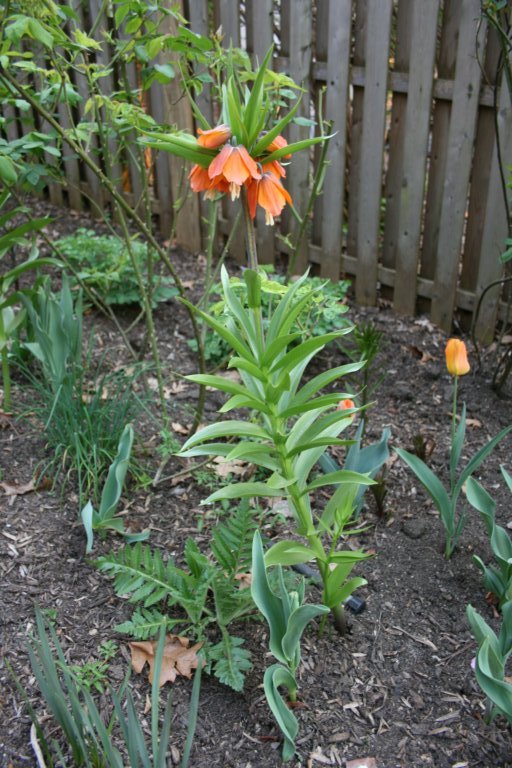 The bulbs all came up beautifully. But THEN, only one fritillaria formed flowers. Why? So far, I have no quick answers. I spoke to a gardener at one of the botanical garden I visit who suggested buying the bulbs from a different supplier. They have hundreds of fritillaria which are all blooming from Brent & Becky’s.
~
~
Any other ideas? The one (pictured) is so beautiful, I would love to have more next spring.
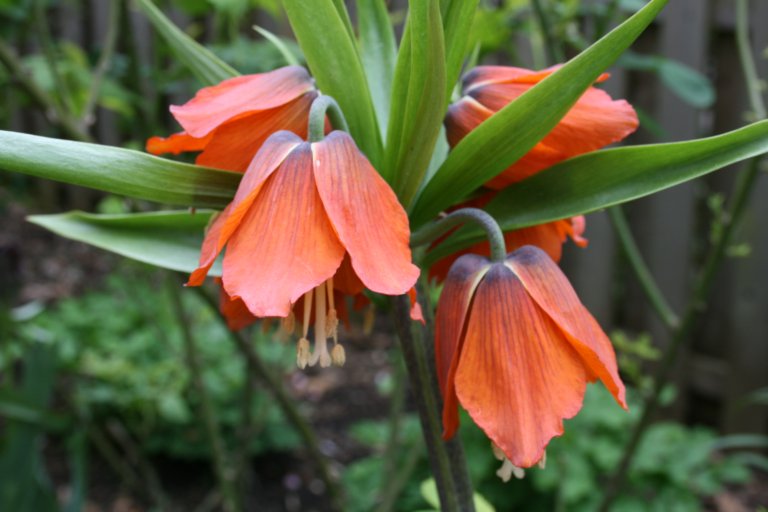
Garden Bloggers’ Bloom Day – March 2008: Early Spring Bulbs for New Jersey (Zone 6b)
May Dreams Gardens (http://maydreamsgardens.blogspot.com/) has a great monthly event where garden bloggers’ post pictures of what is blooming in their garden on the fifteenth of each month. For the past several months, I’ve been meaning to take pictures and post them on my blog to participate, but the day comes and goes and…
Well, March fifteenth came and went, and you can check out other bloggers’ posts here: http://maydreamsgardens.blogspot.com/2008/03/bloom-day-list-and-new-bloom.html. It’s wonderful to see what’s blooming in other bloggers’ gardens, particularly those in warmer gardening zones. Maybe on April fifteenth, I’ll post my pictures on time.
In northern New Jersey (zone 6b), it’s still pretty cold, but the early spring bulbs are out: snowdrops, winter aconite, and crocuses.
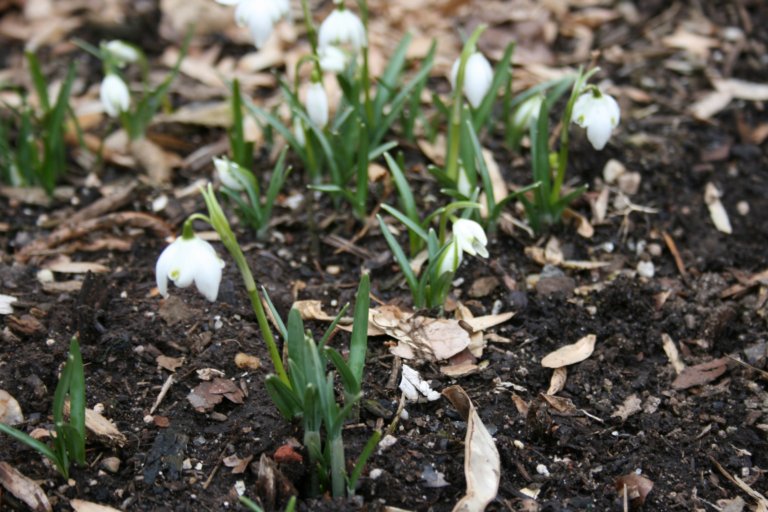 Snowdrops: Next year–Inspired by Wisley (http://www.rhs.org.uk/WhatsOn/Gardens/wisley/) in the UK–I want to plant thousands around my property. As I wrote in a prior post, “These small flowers are so cute and the first real sign that spring is coming. Given their size, you really can’t plant too many of them–think hundreds. Since I like to plant a lot, I buy my snowdrops wholesale from Van Engelen (http://www.vanengelen.com/index.html). Once they come up, I cut small bunches for vases.”
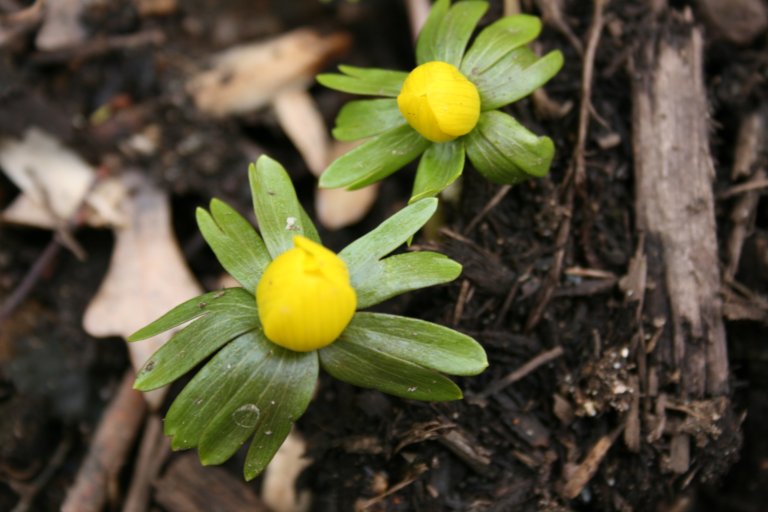 Winter Aconite: As I wrote in a prior post, “It took me a couple of years for me to get these established. I was most successful with bulbs from Old House Gardens (http://www.oldhousegardens.com/). I think the difference was that these bulbs dry out very easily and Old House Gardens coats the bulbs in a horticultural wax to prevent this. If you know someone with an established clump, it’s best to beg a few in the green and replant them immediately in your garden.”
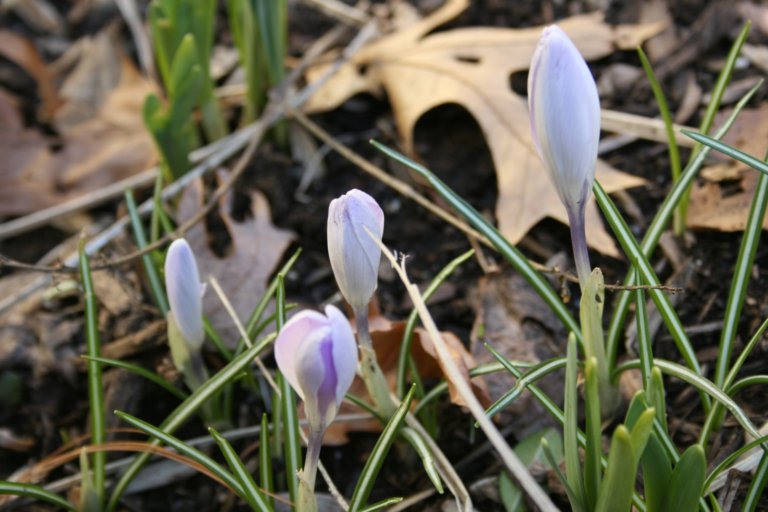 Crocuses: Pictured is crocus tommasinianus, a smaller and early blooming crocus. The squirrels and chipmunks in my neighborhood love to eat crocus bulbs, but seem to leave these ones alone. The larger crocuses will bloom in several weeks. Like my snowdrops, I also buy these bulbs from from Van Engelen (http://www.vanengelen.com/index.html).
The Rose Garden in Spring & Summer; Daffodils Replace Lavender Border
To help me plan for this coming gardening season, I am going through some of my pictures from last year. Here are two pictures of the Rose Garden from last spring and summer.
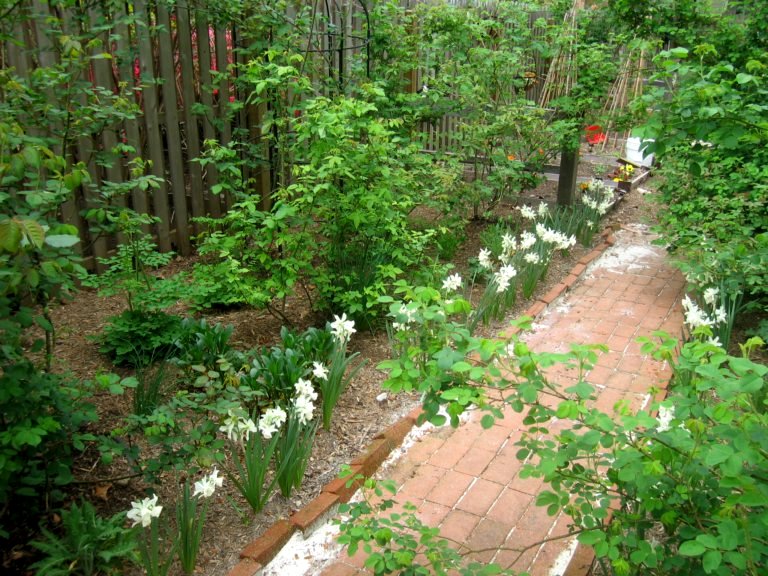
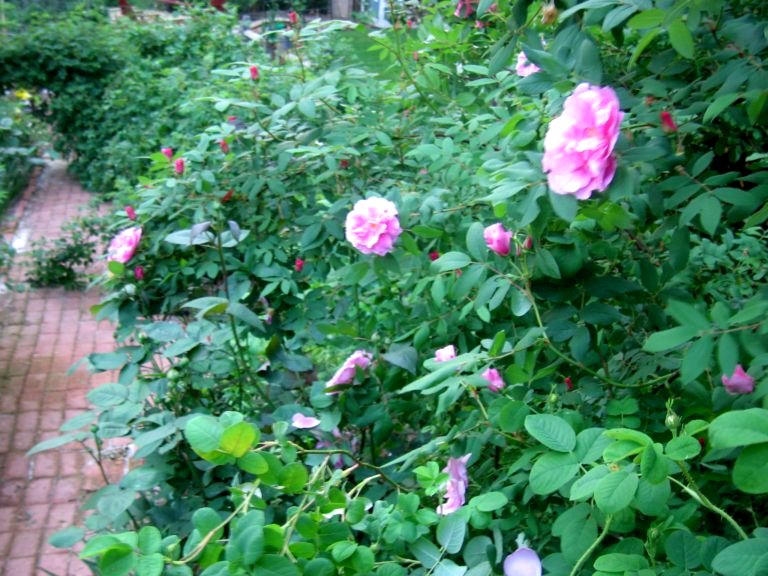
The first picture is from early spring before the roses bloom. Previously, the path was lined with lavender, but the lavender didn’t work. The purpose of lining the path was to provide interest before the roses started to bloom. The lavender looked great when I first put it in during the summer, but the next season I learned that it is one of the last perennials to wake up from winter–later than the roses themselves. Thus, I pulled out all of the lavender and replaced it with daffodil bulbs. As you can imagine, the daffodils looks much better in spring than the lifeless lavender. The second picture is from late spring when the roses have started to bloom.
The Rose Garden was created from a strip of previously unused lawn. The central brick pathway starts at the back of the Cutting Garden runs through the Rose Garden and ends at the Children’s garden. For more information on the creation of the Rose Garden, click here: http://heirloomgardener.blogspot.com/2007/12/creating-rose-garden.html
The Front Border Last Spring With Tulips
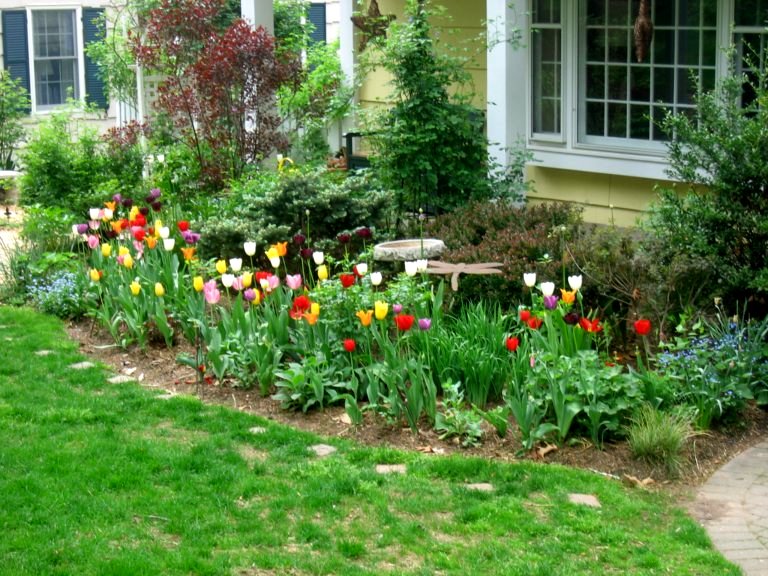
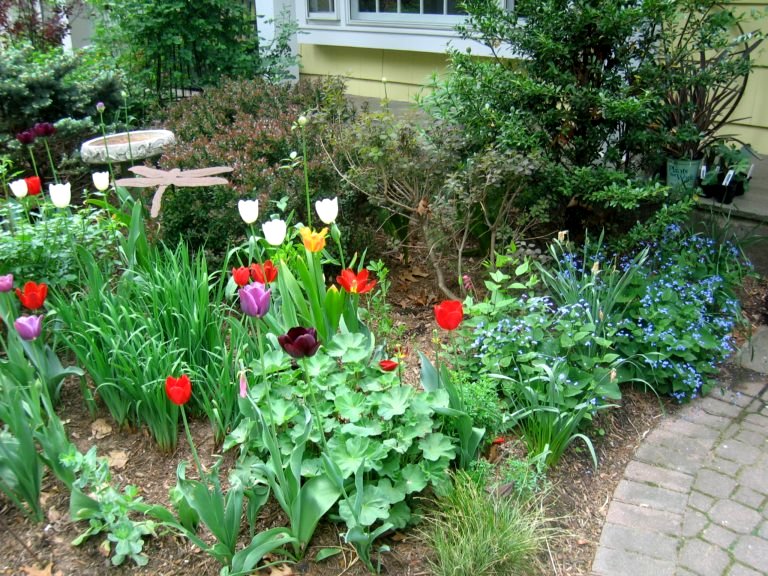
To help me plan for this coming gardening season, I am going through some of my pictures from last year. Here are some of the Front Border from last spring during high tulip season.

Gardening on a Hill: Goldberry Hill Last Spring with Tulips
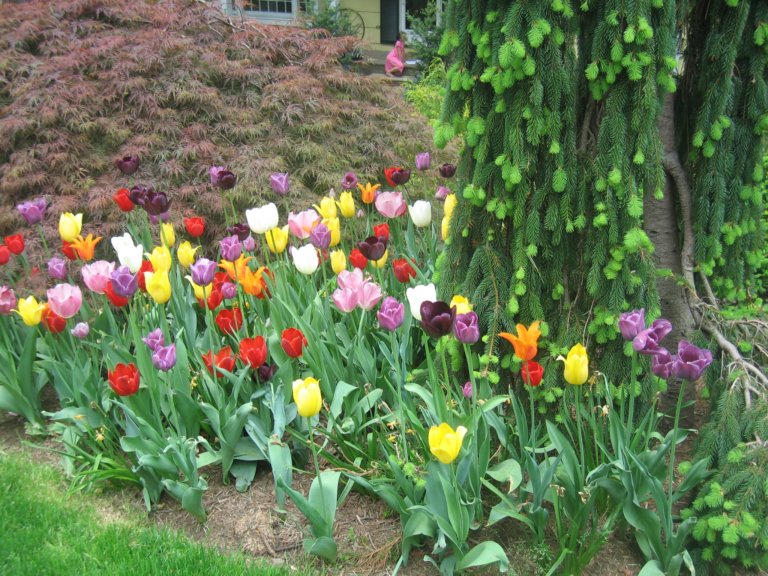
To help me plan for this coming gardening season, I am going through some of my pictures from last year. Here are some of Goldberry Hill from last spring during high tulip season. Goldberry Hill is the name of the garden in the front of my home on the hill between the street and my driveway. Goldberry Hill is made of small trees, shrubs, perennials and grasses.
For pictures from last summer, click here: http://heirloomgardener.blogspot.com/2008/01/gardening-on-hill-goldberry-hill-in.html


 Heirloom Gardener