I never liked clematis. Everyone in my neighborhood had the perfunctory clematis draping their mailbox. They were beautiful in bloom, but later did nothing for the mailbox.
Then in 2004, I met Raymond Evison at the Philadelphia Flower Show and I fell in love. Mr. Evison is one of the world’s foremost experts on and hybridizers of clematis. He has been growing clematis his entire life and produces somewhere around twenty five percent of all clematis sold in the world. Some pictures from his presentation at the Philadelphia Flower Show can be seen here: http://philadelphia.about.com/library/gallery/bl2004fs197.htm
The enduring lesson I learned from Mr. Evison is that clematis can and should be grown with other plants. The vines are gorgeous when in bloom, but are not so interesting otherwise. With this simple principle, the possibilities are endless: clematis with roses, clematis with shrubs, clematis with trees, clematis intertwined with perennials, and even clematis with ground covers.
I probably now have around 100 clematis throughout my garden and I feel like I’m just beginning my collection–there are so many spaces for clematis. Clematis offer such a range of color, vigor, and bloom time that every garden could find more spaces for clematis. Each time I plant a shrub, I usually plant a clematis along with it. Lilacs, for example, are dull most of the year; by adding a clematis that blooms later like ‘Venosa Violacea‘ (heirloom 1883), you have two seasons. Or clematis ‘Madame Julia Correvon‘ (heirloom pre-1900)blooms at the same time as caryopteris creating a great dark pink and blue combination. Herbaceous clematis from the intergrefolia group like ‘Hakuree‘ can be planted to weave in and out of perennials. If you have a shady spot you wish to brighten, many of the lighter colored clematis actually preform better there than they do in full sun. The part sun will not reduce their blooming power and will make the color of the flowers more vibrant. Two good clematis for part sun and northern exposures are ‘Dawn’ and ‘Asao.’ On a low evergreen, the upward facing, vase shape blooms of the ‘Texensis Viorna‘ group are beautifully set off.
Some people shy away from clematis thinking that they are difficult to prune and grow. If you don’t want to deal with pruning decisions buy clematis in group 1 which don’t need pruning or in group 3 which you cut back to two to three buds in the late winter. As for growing, if planted deeply–at least two to three inches deeper than they are in the container–success is almost assured. Clematis have a remarkable ability to regenerate from underground shoots. I have had vines that look like they have not made it through a transplant or have fallen victim to clematis wilt that come back later in the season or the following one. Once chosen and planted well, just fertilize and keep well watered.
If Mr. Evison was not enough inspiration, in August 2007, The New York Times wrote about Barbara Packer and “The Climbery, her seven-acre clematis garden…near Livingston, N.Y., in Columbia County. With 600 varieties and 6,000 vines, it’s the largest private clematis collection in the world, according to the International Clematis Society.” Like many of us, Ms. Packer is not a professionally trained gardener, but this is no encumbrance to her being passionate about her garden. If you are reading his blog, I’m sure you know what I mean. For the full article, click here: http://www.nytimes.com/2007/08/31/travel/escapes/31away.html?pagewanted=all
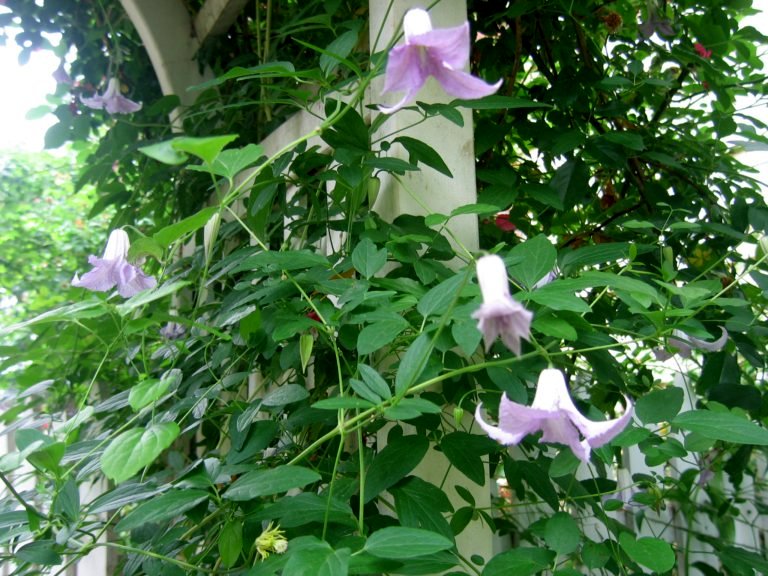
For a prior post about the Betty Corning clematis on my arbor, click here: http://heirloomgardener.blogspot.com/2008/01/two-perfect-flowering-plants-for-arbors.html
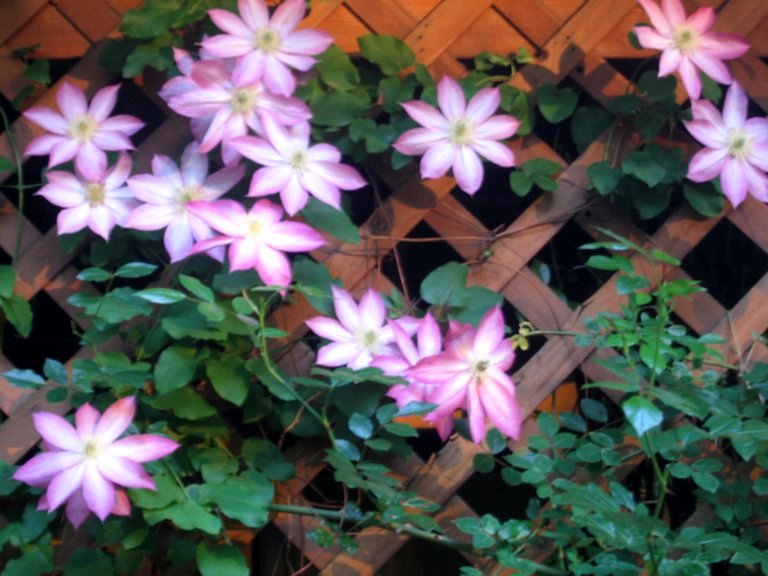
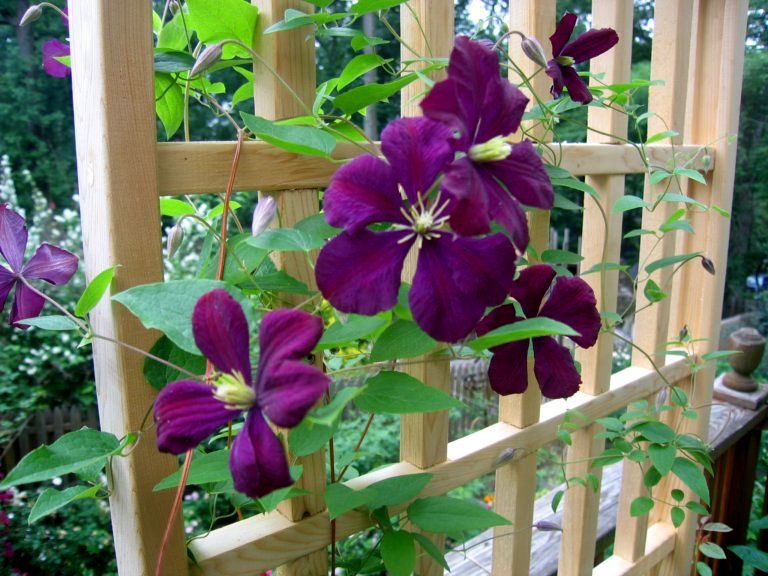
The pictures below are: ‘Ville de Lyon’ (heirloom 1899) growing in full son on Goldberry Hill; ‘Asao‘ growing in shade under our deck; and ‘Etoile Violette’ (heirloom pre-1885) growing in full sun on the deck.




 Heirloom Gardener