Cut Flowers, Branches, and Foliage: Bringing Early Spring Into The Home

Cutting flowers from the garden is a beautiful way for me to bring the garden into the home. The flowers that we grow in the garden are incomparable to the ones at the florist or the supermarket. I thought this year I would keep of record of good cutting material–flowers and foliage. Almost anything can be used for arrangements, but often I overlook plants until I see a clever arrangement put together by someone else. So, please share with me the plants you like to cut and the combinations you enjoy.

~
1. Cut Flowers
~
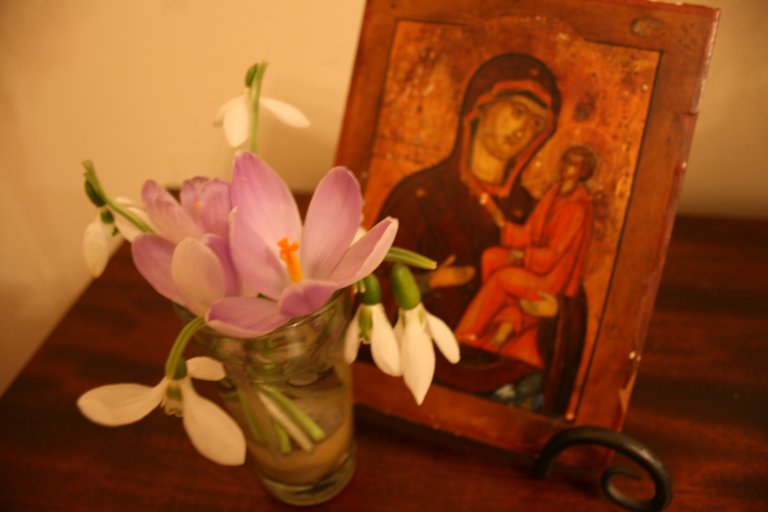
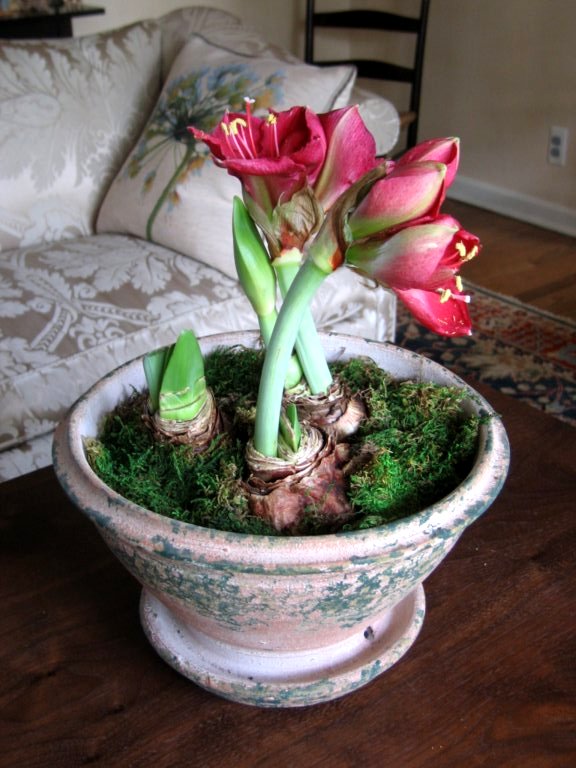
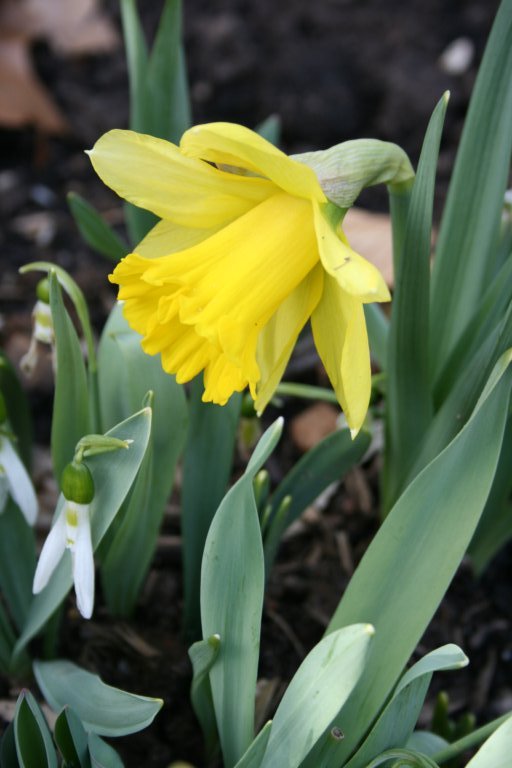
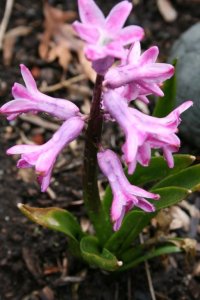
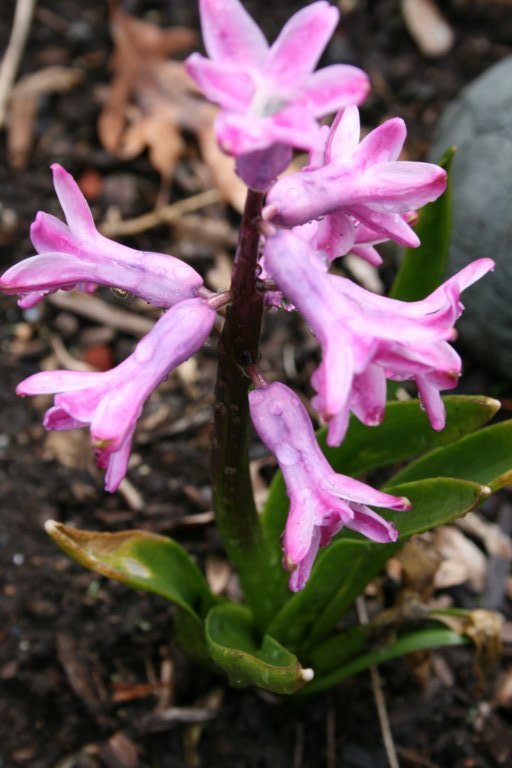
I mainly have spring bulbs for cutting. These include snowdrops (first picture), crocuses, daffodils (first picture), hyacinth (second picture), and early tulips. All of the bulbs will last at least a week in water, if cut when they are just about to open except crocuses. Crocuses are short lived as a cut flower, lasting only several days. Daffodils I do not mix with other flowers because the sap which oozes out of the stem poisons other flowers. I have read that if you soak daffodils in many changes of water for many hours it renders them safe to mix with other flowers. I haven’t taken the time to try this, so I don’t know first hand how well it works.
~
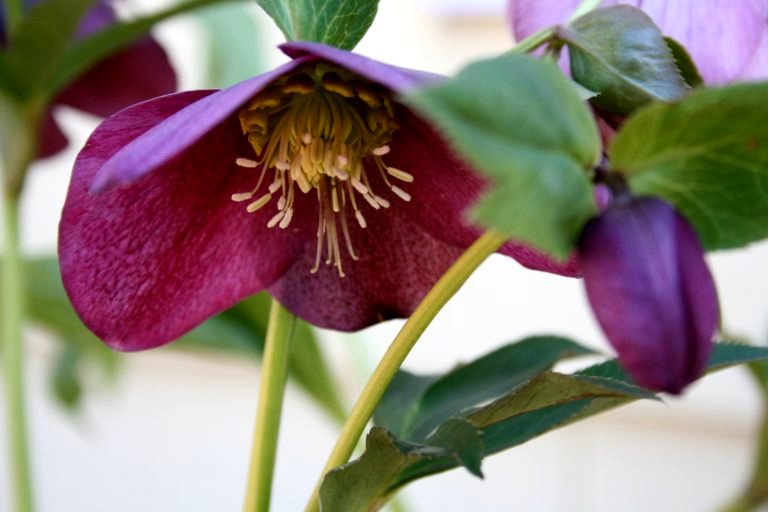
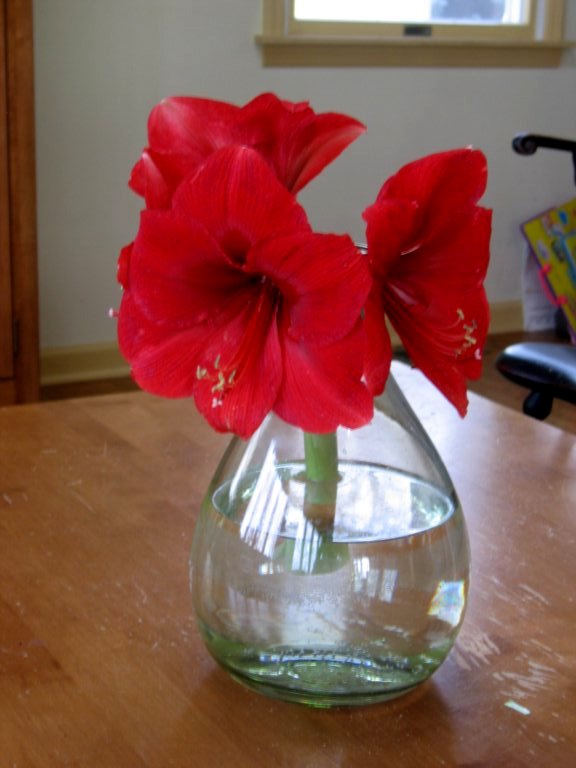
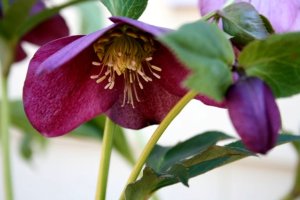
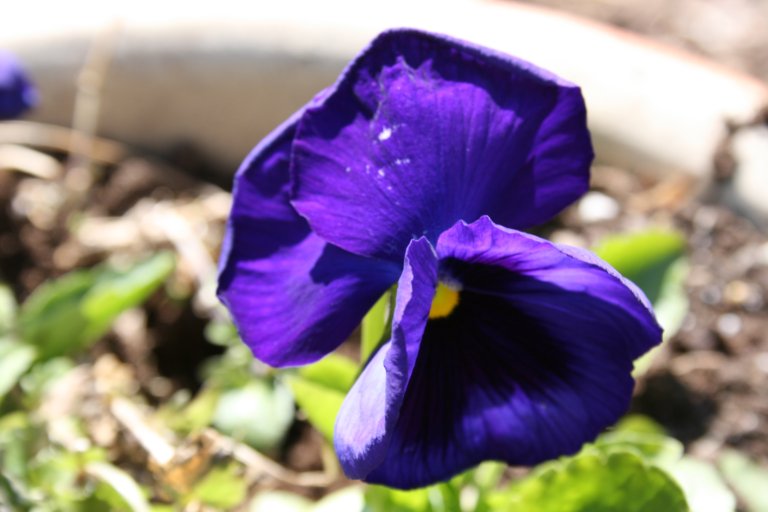
The other flowers in my garden are hellebores (third picture), periwinkle, violets, and pansies (fourth picture). The violets and pansies are good for tiny vases. I will use antique shot glasses or small maple syrup bottles we’ve collected from Cracker Barrel.
~
2. Cut Branches
~
I cut my trees and shrubs also. Now I have cherries, pussy willow, serviceberry, forsythia, quince, cornelian cherry, and redbud. Magnolia flowers are wonderful to float. I don’t cut branches from magnolias because they tend to throw up long vertical branches if pruned. Floating in water, the flowers only last one to two days, but to see them up close I appreciate their beauty all the more and I can pick a few everyday that they are in bloom.
~
3. Foliage
~
I love the freshness of the early spring flowers. Often I make vase of only one type of plant all together. However, if I want foliage filler, I have celandine poppy, pussy willow, and bleeding hearts. The celandine poppy is one of the few perennial plants that has a lot of leaves. This is a member of the poppy family, so sear the stems before placing stems in water. Bleeding hearts have both beautiful leaves and flowers. The flowers have not yet appeared, but throughout its three month stay in the garden I use bleeding heart leaves as filler in vases.
~
Forced Branches: Follow-up Pictures of Cherry Blossoms

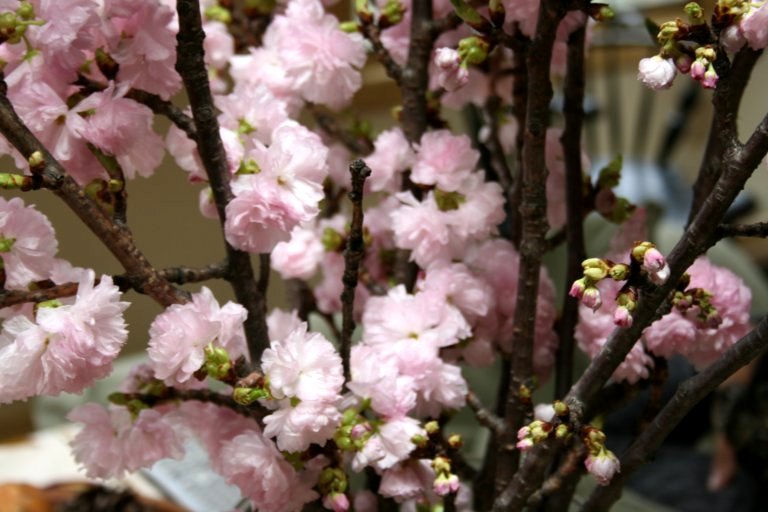
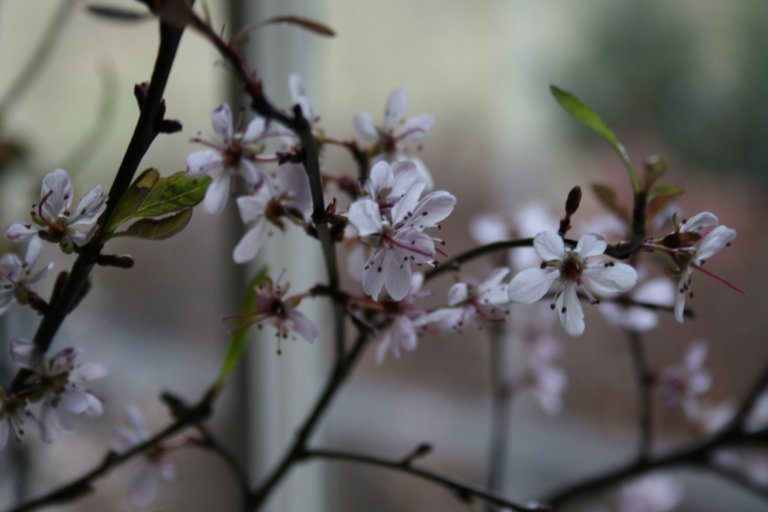
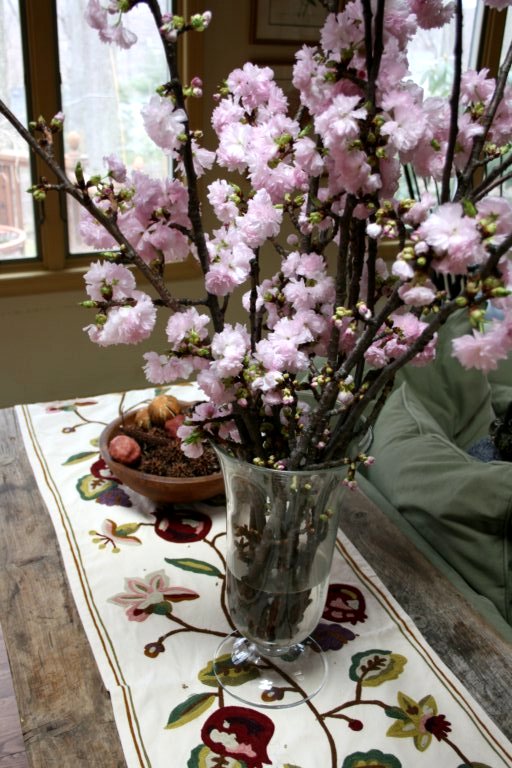
As a follow-up to my prior posts on forced forsythia, crabapple, quince, ceris (redbud), and pussy willow, here are two pictures of the current forced branches gracing my family room: cherry.

I don’t have a cherry tree in my own garden, but purchased these beautiful branches from a local grower. From the time of purchase, it took about a week or so for the buds to swell and another week for them to fully blossom.

Cherry is one of several trees–dogwood, magnolia, and witch hazel are the others–that I have a great desire to add to my garden this year.

Forced Branches: Follow-up Pictures of Quince, Ceris (Redbud), and Pussy Willow

As a follow-up to my recent post on forced branches, here are some additional pictures of quince, ceris (redbud), and pussy willow that I took this morning.

For the original post on forced branches, click here:
http://heirloomgardener.blogspot.com/2008/02/forced-branches-quince-crabapple-willow.html

For a prior post on forcing forsythia and bulbs, click here:
http://heirloomgardener.blogspot.com/2006/02/forcing-forsythia-and-bulbs-of-all.html

Forced Branches: Quince, Crabapple, Willow, Ceris, Dogwood, and Forsythia

During the winter I miss the abundance of material from the garden for floral arrangements. This winter I am enjoying the shrubs and trees in the garden that force easily. By easy I mean that you simply cut the branches, place them in a vase with water, and wait. No special soaking or temperature control should be required. Here are the successes so far.

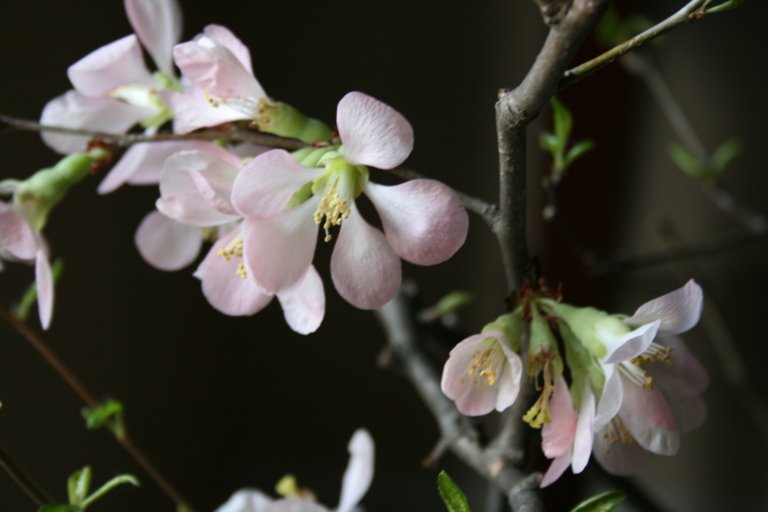
Quince are easy to force and grow. The flowers are very delicate and are lovely against the mostly bare branches. The shrubs are vigorous and won’t miss anything you cut. The only caveat is that they should be planted in an out of the way spot because they tend to lose most of their leaves by midsummer and are a bit thorny. Quinces will grow in full sun or part shade with equal success.

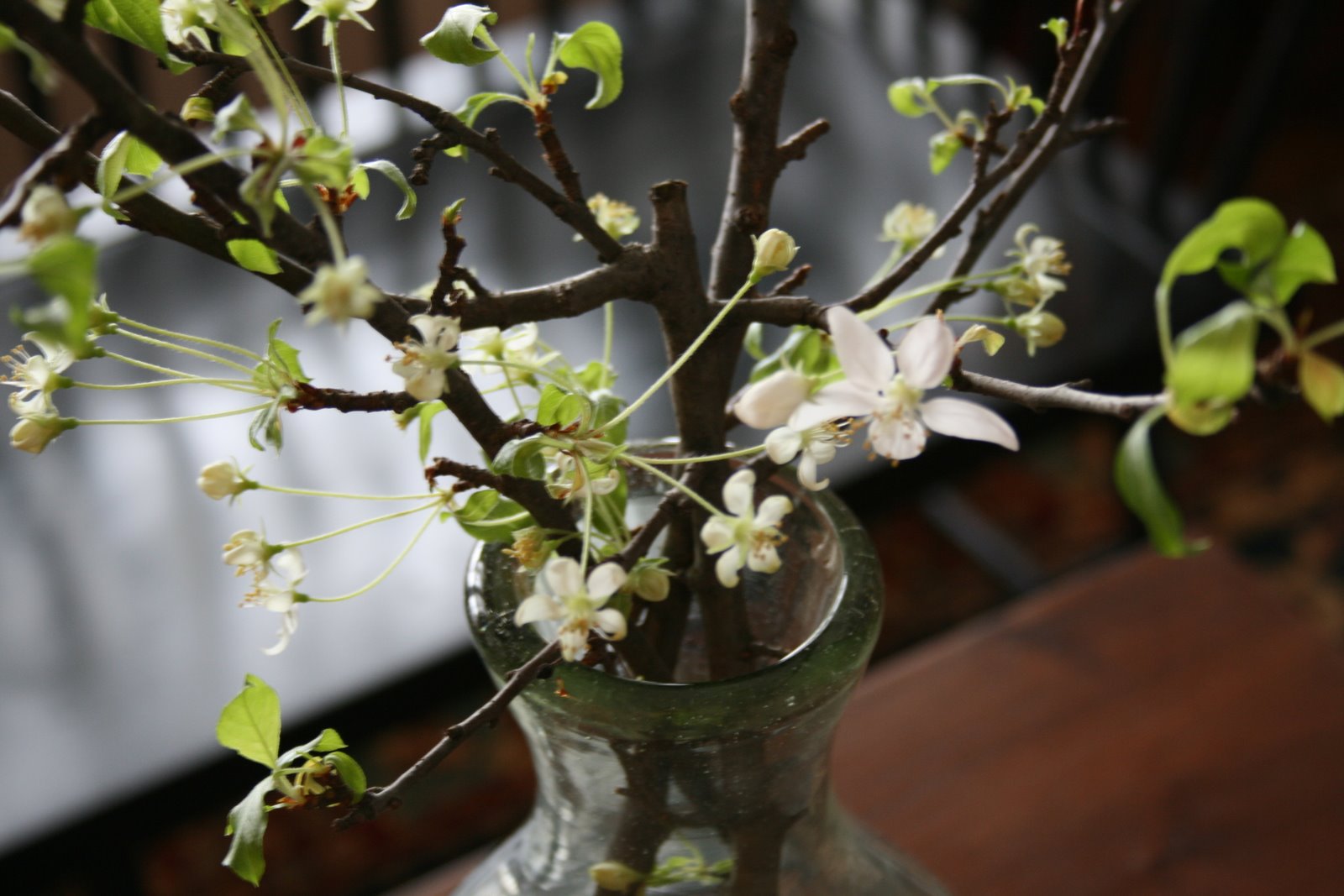
Crabapple (pictured above) to my surprise has been extremely easy to force. I brought some into the house from the Egg Garden a few weeks ago with the intention of enjoying the fruit that remained. In about a week, the buds began to swell; then the branches leafed out; and now, they are just beginning to break into bloom.

All kinds of willow are super easy. Ones with large catkins are wonderful to look at, but also are a treat to touch. But other willows which are grown more for their leaf like Salix ‘Flamingo’ are fun to watch leaf out and root at the same time.

Ceris ‘Forest Pansy” is beautiful when forced and pruning it helps to keep it small enough for the front border. The dainty little flowers can also be better appreciated when viewed up close in a vase. I do not have other redbuds in my garden. I would love to see if the redbuds which produce flowers all along their stems before they leaf out would force also.

The red twig dogwoods make great displays all winter. The dark red stems are beautiful especially when contrasted with the new lime green leaves. The yellow stemmed ones would work well too and would be more subtle.

Forsythia, as many know, is a great forcer and will grow vigorously just about anywhere. For a prior post on forcing forsythia and bulbs, click here: http://heirloomgardener.blogspot.com/2006/02/forcing-forsythia-and-bulbs-of-all.html.

I will have to try some other branches in the next month. My goal is to get twelve months of cut material from the garden. Any suggestions?
*****
For follow-up pictures of quince, ceris (redbud), and pussy willow, click here:

Japanese Beautyberry (Unexpected) Propagation

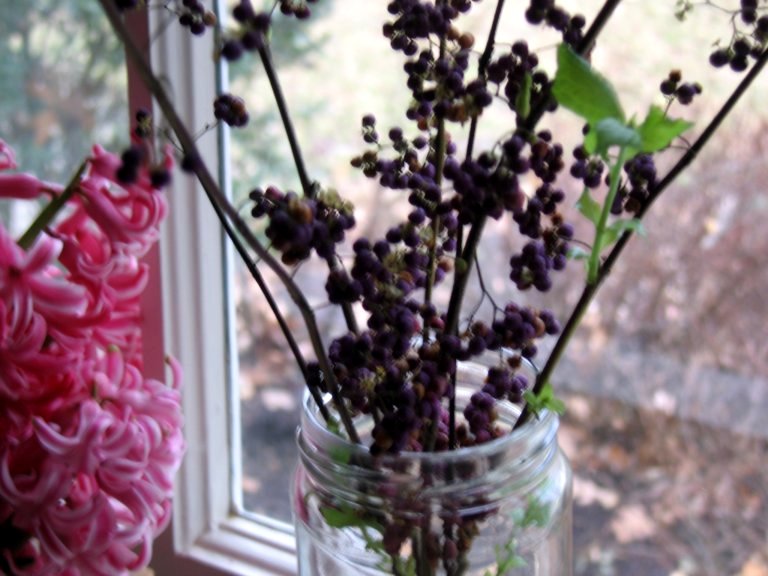
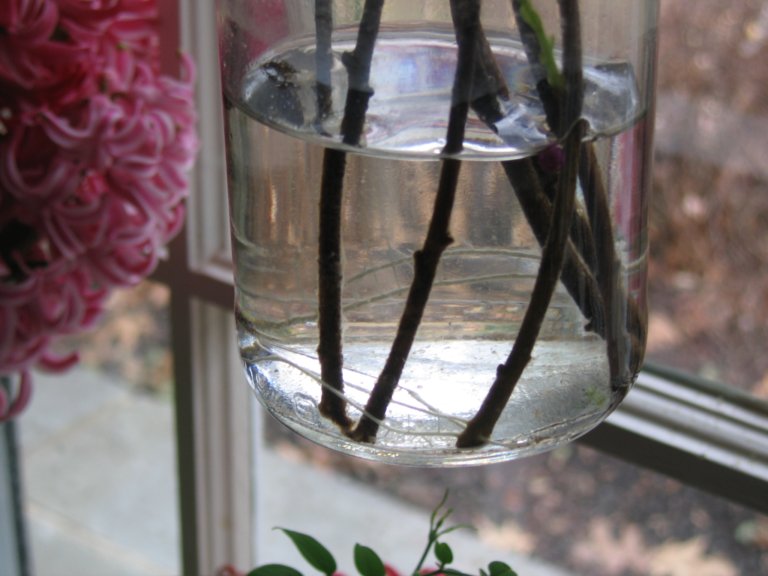
As a follow-up to my prior post about Japanese Beautyberry, I have an unexpected surprise to share with all of you. The Japanese Beautyberry that I cut back in November and put in a vase of water started rooting and sending up new shoots, as you can see in the pictures below. I should replant them now in some soil let them develop better roots inside before planting them outside in the spring.

For the original post, click here: http://heirloomgardener.blogspot.com/2007/12/japanese-beautyberry.html

When Do You Force Forsythia? Now is the Time

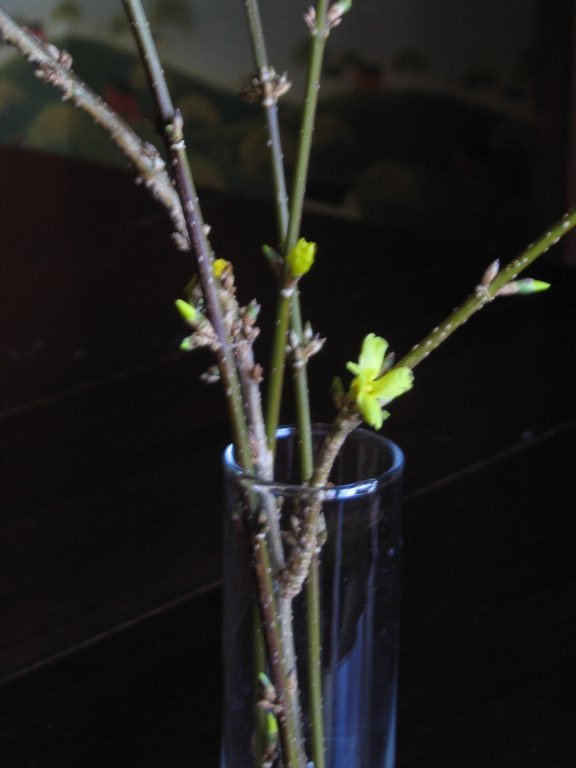
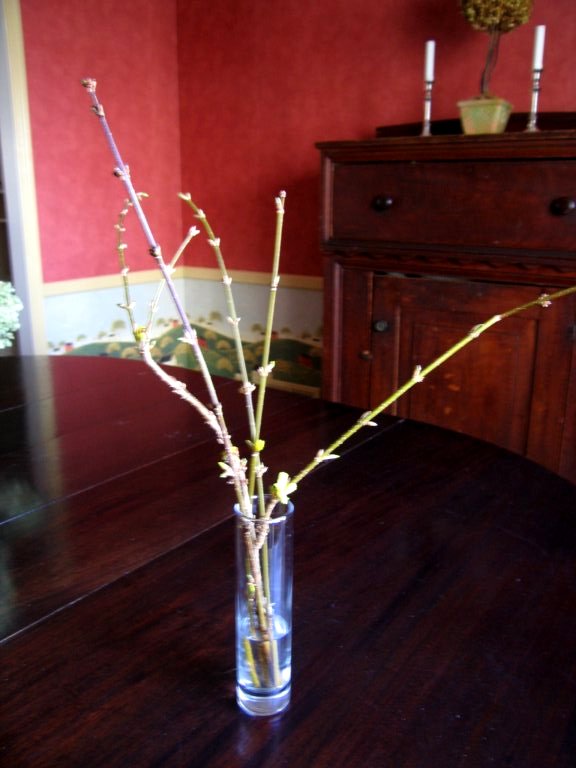
Now is the time. Go out and cut as much forsythia as you want. The plant grows like a weed and for each cut, you’ll be rewarded with long straight stems for the next winter’s forcing. Put the forsythia in a vase, wait a week or two and you’ll have flowers, wait longer and you’ll get green leaves.

For a prior post and additional pictures on forcing forsythia and bulbs, click here: http://heirloomgardener.blogspot.com/2006/02/forcing-forsythia-and-bulbs-of-all.html

Old House Gardens Nursery & Heirloom Dahlias

My garden planning for next year is in full tilt now. I just received the Old House Gardens email newsletter which I had been waiting for to see what web only dahlias, glads, and cannas will be offered. The dahlia ‘Giraffe’ was first in my shopping cart.

Old House Gardens–“Antique Flower Bulbs for Every Garden – Unique, Endangered, Amazing!”–is a great source for heirloom bulbs: cannas, dahlias, glads, tulips, daffodils, hyacinths, lillies, and a few diverse others. Every shipment is carefully checked and packed. Nothing which is sub prime gets out. The bulbs come with detailed instructions on planting, forcing, and winter care.

For the summer, dahlias are my favorite cut flower and are super easy to grow. One dahlia tuber produces loads of blooms which keep getting better and better as the season winds down and other plants are calling it quits. Cut flowers mix well in arrangements and hold well in water. The heirloom dahlias offered at Old House Gardens are not the super sized dahlias that are difficult to mix with other flowers, but come in a range from small pompoms to larger 5-6 inch diameter flowers.

Dahlias can be started inside in pots before the weather warms up for an early start. But, seeing that dahlias grow so quickly, I usually wait until the weather has warmed up and plant them outdoors when I plant my tomatoes. I always topdress the soil and incorporate a little compost into the planting hole when I plant my tubers. After they start growing, begin watering them and watch them grow.

The one thing to be vigilant about, however, is staking. When planting put a tall stake in next to the tuber. Don’t think it’s too tall because in about six weeks you will otherwise be wishing you had. The hollow stems of dahlias break very easily in a summer storm or strong winds, so be careful to begin tying them in when they are about 18 inches tall.

Once blooming, keep deadheading or cutting for the house. The more you cut, the more they bloom.

In the fall, I will post about storing dahlias for the winter.