Salve for the Gardener’s Winter Blues: How to Grow Amaryllis

As any gardener will tell you, winter is an excruciatingly long season. Trapped in our homes with no active gardening to be done, we plan the next season’s gardening projects and count down the days until the glorious spring days arrive and we can get our hands dirty.

Ready to be planted and pre-planted Amaryllis bulbs are readily available–I’ve even seen them sold at Target and the local grocery store. For a broader selection, I purchase my Amaryllis bulbs from:

http://www.vanengelen.com/

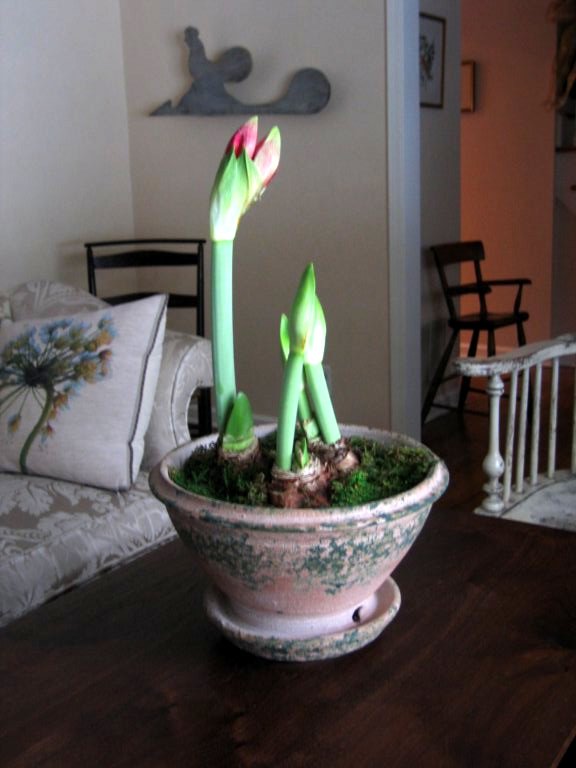
I purchase them in September, as some types sell out by October. As you can see in the picture, they start to bloom around Christmas.

If you buy ready to be planted bulbs, they can be placed in shallow pots with the tops exposed. I cover the exposed soil with moss to enhance the pot’s appearance. Over the next couple of months, it is pleasing to watch the Amaryllis grow and flower. Each stem produces three to four blossoms.

After the flowers have bloomed, I dispose of the bulbs. By this time, the other bulbs that I have chilled–daffodils, hyacinth, tulips–will be ready to replace the spent Amaryllis.

While it is possible to keep your Amaryllis bulbs so that they flower the next season, I neither have the space nor the time to do this once spring arrives.

For a prior post on forcing bulbs and branches, see:

http://heirloomgardener.blogspot.com/2006/02/forcing-forsythia-and-bulbs-of-all.html

Common Witchhazel Blooming in December

When driving to my friend P’s house (also in Chatham, New Jersey), I almost ran off the road when I noticed Common Witchhazel (Hamamelis virginiana) in full bloom. I’d never noticed it before, as it is a small tree in the corner of her yard–but now that it’s in bloom, you can’t miss it.

My friend P was kind enough to give me a branch that came off during the recent ice storm to enjoy indoors.

From this branch, I have taken a few small cuttings and put them in the refrigerator, so I can try to propagate them in the spring. If I can’t, I’ll have to find one to mail order.

Christmas Decorations from the Garden

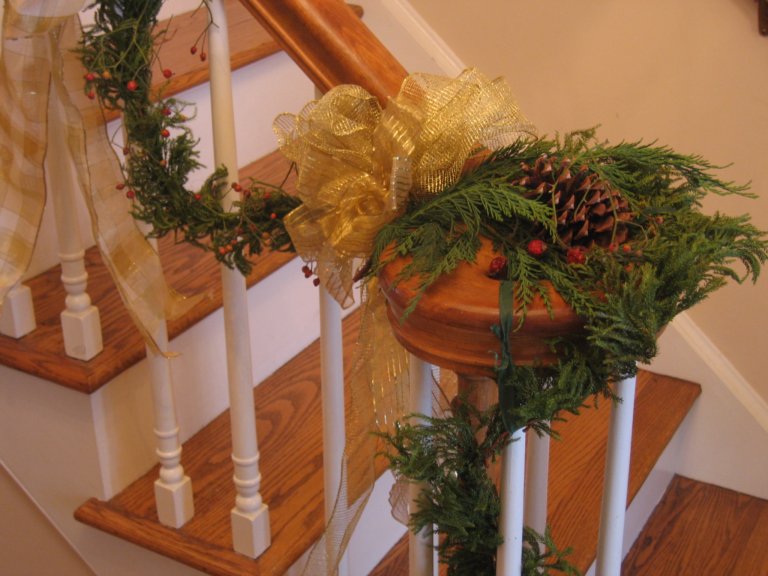
When decorating our home for Christmas, I try to bring some of the garden indoors. Below are some examples.

In the first picture of the staircase, I have paired some of my Ballerina and Dog Rose hips with the Princess Pine I purchased from my local nursery and the Leland Cypress clippings from my backyard.

In the second picture of the chandelier, I have placed additional Leland Cypress clippings.

Heavenly Bamboo (Nandina) in December

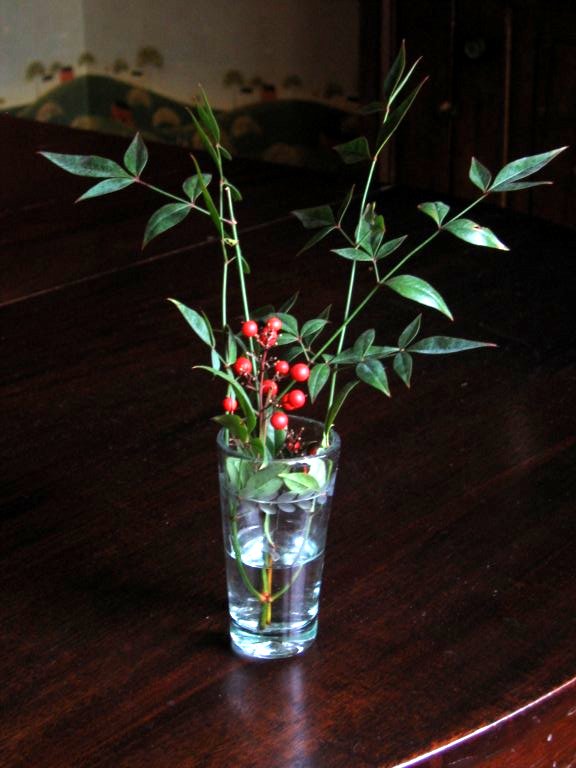
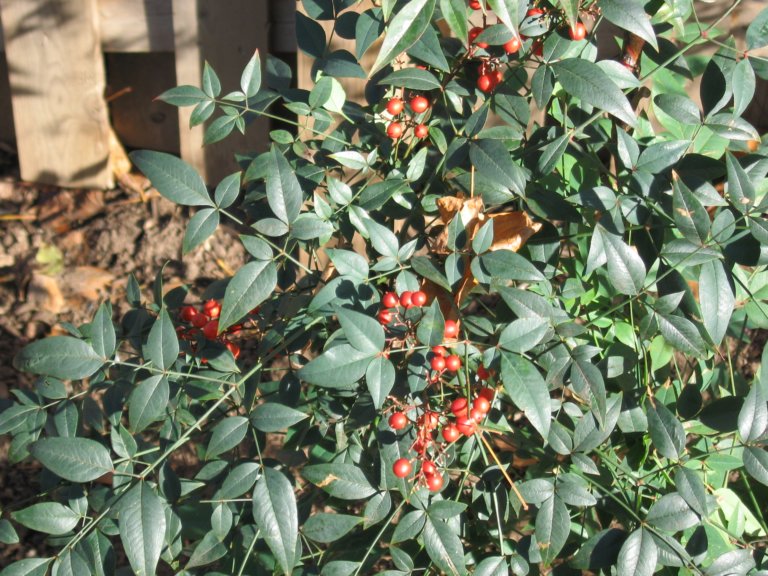
Next year I plan to plant more heavenly bamboo. When most every other non-conifer has lost its leaves, nandina looks as fresh as it did two months ago. The red berries are beautiful and cuttings of nandina last for weeks in water.

The plants are pretty undemanding. They will grow in sun or part shade, do not require feeding, and have modest water requirements. They grow 3-5 feet tall and will spread with time. Nandina does have a tendency to become leggy, so good pruning in spring helps stimulate growth lower down on the plant.

Heritage Rose: Flowers in December

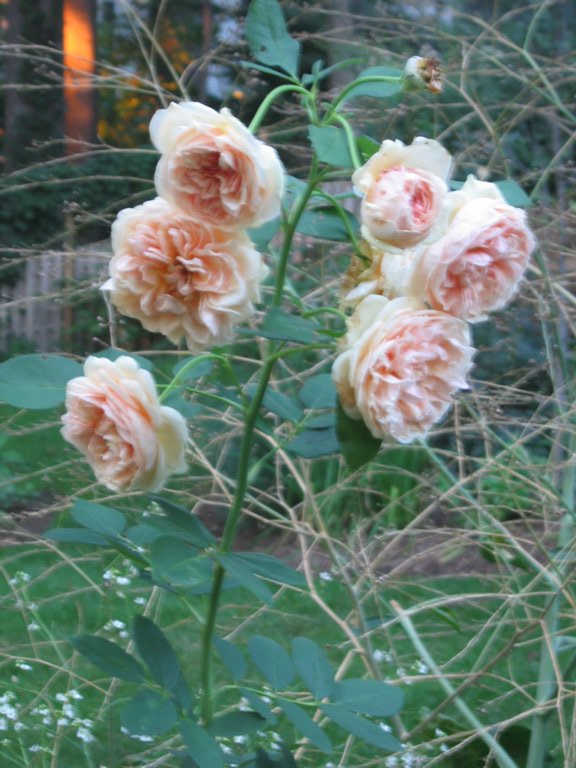
This past weekend when it was a bit warmer, I was surprised when I took my daily walk about the garden and noticed Heritage (pictured here back in November) had a few roses opening up still. The warmth seemed to have awakened them, so I decided to cut a few for the house. The frost damaged the outer petals, but once I peeled these away, the flowers were in good enough shape to display. I can’t believe its December and I still have a few roses.

Heritage has been an unbelievable bloomer. It has beautiful, big, fragrant cupped flowers and is definitely one of the stars of the David Austin rose collection. The foliage is super healthy, even during the hot, humid days of summer.

Heritage has many uses in the garden. I started Heritage in a pot on my deck where it did very well its first year but was growing taller than I wanted it to be. I find that many of the Austin roses grow a lot taller than stated with our hot summers.

I re-planted it in the Children’s Garden where it has continued to grow very well. Heritage has very few thorns and offers a lot of flowers for the kids to cut for vases. Heritage also sets hips after I stop deadheading it in August which the squirrels (not the birds) eat in the fall and winter.

For more information about David Austin roses:

http://www.davidaustinroses.com/

Star of the Republic Rose

This is one of the new roses I tried last year from Antique Rose Emporium. It is one of their pioneer introductions which are supposed to be remontant, healthy, and vigorous. It is all that and more.

I almost pulled it out at the beginning of the season because rabbits had eaten all its leaves and I thought it would not survive. Also, I checked the Antique Rose Emporium website (http://www.antiqueroseemporium.com ) which described the rose as orange, a color I don’t care for in roses. But, I hesitated and left it there. I am now glad that I did.

The roses are beautiful and the shrub is healthy. As it turns out, Star of the Republic is incorrectly described as orange. Although, roses can bloom in slightly different colors depending on soil and exposure, I cannot see how this lovely pink-apricot color could ever be described as orange. In addition, it grew to about four feet — out of reach for the rabbits.

Japanese Beautyberry

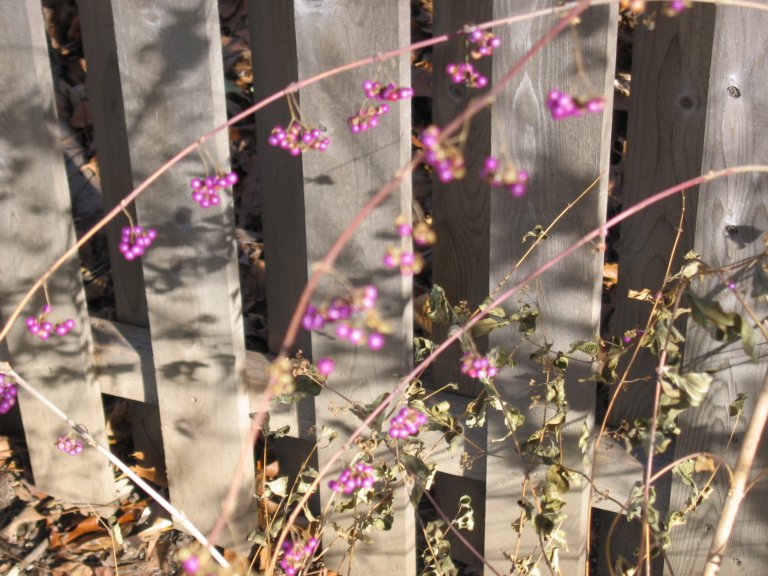
The first picture shows what the Japanese Beautyberry is known for: its distinctive purple berries that appear in autumn and persist into the winter.

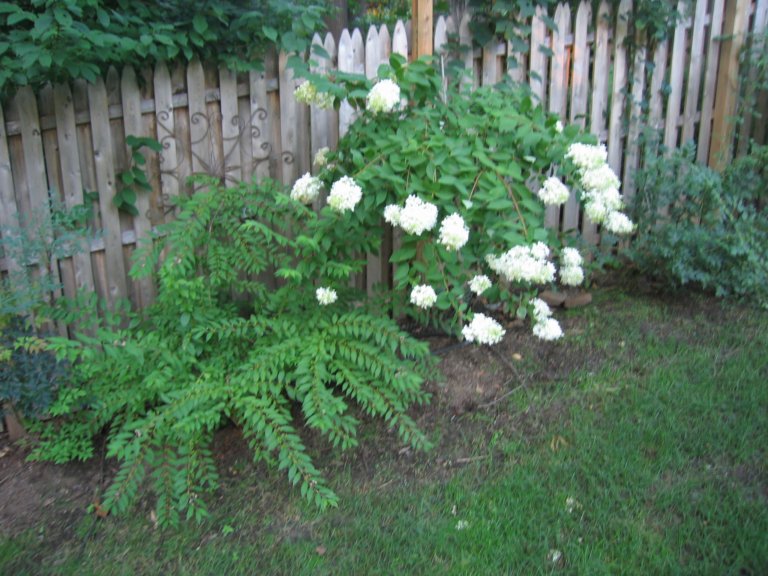
The second picture shows what the plant looks like in the summer, on the lower left, beneath the Pee Gee hydrangea.

I like these two stages of the plant, but am less fond of its other stages: the early spring when it looks dead and is late to leaf out; and the autumn when the leaves droop and look lifeless for about a month before they fall off.

They are healthy and vigorous plants. I purchased very small plants and they grew quickly in the first year. Next year, I am cutting them back to six inches off the ground in early spring to avoid the first problem. Further, I keep moving them around my property in hopes of finding the perfect place to enjoy them, and they are not bothered by this.

For fall and winter arrangements, you can cut the branches with the Beautyberries. If you do so when they still have leaves, I recommend that you remove the leaves because they droop immediately after being cut.

***

Click here for a follow-up post on propogation: http://heirloomgardener.blogspot.com/2008/02/japanese-beatyberry-unexpected.html

Creating Space for a Garden: the Cutting Garden

Like many suburban gardeners, one of the hardest things to do is find space for all of the plants that you want to cultivate. One solution is to create gardens in the under-utilized parts of your property.

Like many suburban tracts, each home in my neighborhood has about thirty feet of space between each house. When we moved in, the fifteen feet on our side of the property line included a very large rhododendron, some unattractive evergreen trees, some grass, and a lot of weeds. The only thing we did on this strip of property was occasionally walk from the front yard to the back yard.

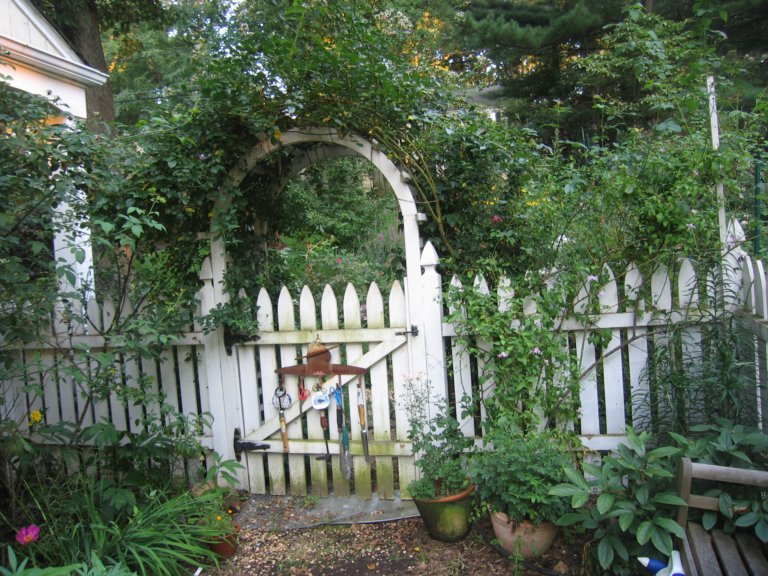
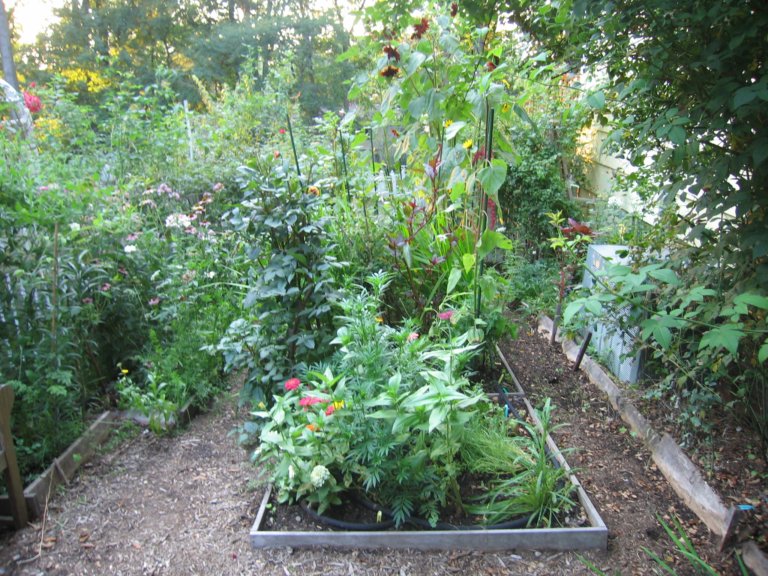
After a couple of years, we decided to remove the existing trees and plants and transform the space into a cutting garden. This space measures approximately fifteen feet wide and thirty feet long. We created a garden room by installing a wooden picket fence with an attractive arbor and gate in the front (visible in the first picture from inside the garden) and a simple gate in the back. Because the side yard was also on a slope, we installed a short, one-foot dry laid wall in the back to decrease the grade.

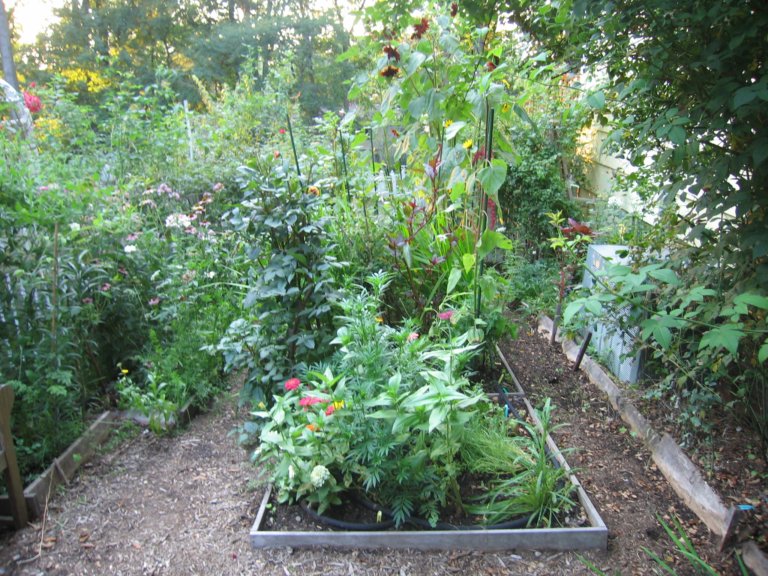
There are three foot beds on either side and a central four foot bed (visible in the second picture). The paths are too narrow at only two feet, but with only fifteen feet to work with, we had to make compromises. The soil was dead, so we dug down about two feet and also created shallow raised beds with ipe wood. Ipe is expensive, but it is far better for your garden than the toxic chemicals in pressure treated wood. Warning: ipe is very hard, which makes it rot and insect resistant, but it also makes it extremely difficult to cut with standard woodworking tools. I had to have my planks cut at the lumber yard.

After digging out the beds and creating the walls of the raised beds, we then added significant amounts of composted cow manure and Bumper Crop. These are now some of the richest beds on our property.

This is now one of the favorite parts of our property. In addition to changing this from unused and unattractive to a place we visit every day, it also produces abundant cut flowers for indoor enjoyment from May through October.

Related Post: Making the Most of Your Space for Gardening – A Map of My Gardens