Q: How Do You Keep Deer Out Of The Backyard? A: The Deer Fence

Chatham, New Jersey is overrun by deer. It is not uncommon to see shameless groups of deer grazing in our neighbors’ yards or strolling down the street. The first victims are the deer’s favorites–like ewe hedges, hostas and hydrangeas. By the end of the season, their appetite expands to include some of the deer resistant plants (so called by our local nursery), such as cone flowers and shasta daisies.

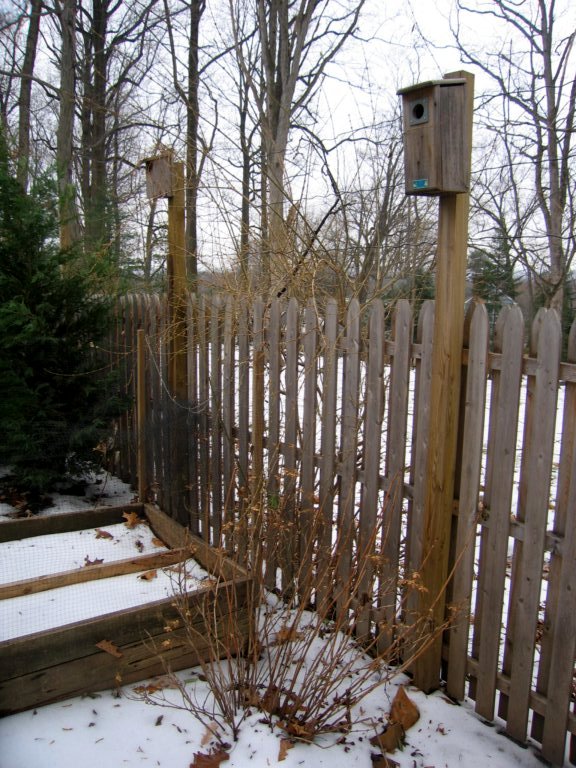
In order to keep the deer out of our backyard, we have installed a six foot tall wooden fence. For added protection, the fence posts (four by fours) are ten feet tall and strung with very strong, weather-resistant, plastic-coated wiring. There are three rows of wire above the fence, each spaced about one foot apart.

Aesthetically, the wiring is virtually invisible from a distance and does not take away from the beauty of the garden as some traditional deer fences do. In addition, we have topped many of the posts with bird houses.
Gardening Gone Wild: Fences, Walls & Paths

I just came across Gardening Gone Wild which is a blog written by a collective of passionate gardeners. They hold online “Design Workshops” where gardeners can share ideas about different topics. This month’s topic is about fences and walls:

http://www.gardeninggonewild.com/?p=466

I was inspired by last month’s topic on paths, an aspect of my garden that I would really like to improve this year in my own garden:

http://www.gardeninggonewild.com/?p=457

Creating the Rose Garden with a Central Brick Path

After we established the Cutting Garden, there was a narrow portion of our property behind it and next to our deck that was another relatively unused portion of our yard, measuring approximately fifteen feet wide by thirty feet long.

Because this space had full-sun, I thought it was the perfect place for a rose garden. While I have roses in almost every part of the garden, a dedicated rose garden would provide more space for all of the roses that I wanted to grow.

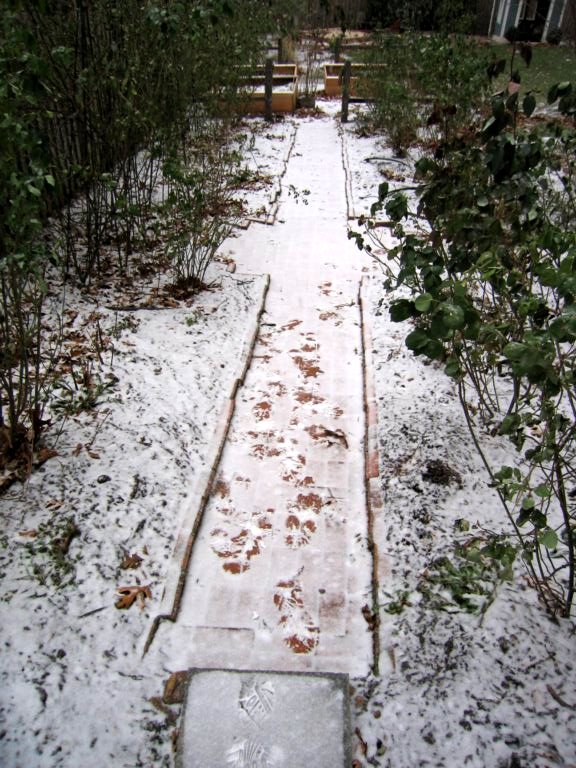
The first picture is taken from the steps of the Cutting Garden looking down the path of the Rose Garden to the Children’s Garden.

The main structural element of the Rose Garden is the brick path that you see running through the center. I actually installed the brick path myself, which was a tremendous amount of work that I’m not sure I would want to do again.

After we established the path in the summer, we started to prepare the beds for planting the roses. In the fall, we put down newspaper to kill the grass and covered it with a thin layer of organic matter. In the spring, we dug in significant amounts of composted cow manure and mushroom compost. Then, we planted the roses.

Inspired by the Cranford Rose Garden at the Brooklyn Botanical Garden, I knew that I could fit a lot of roses into a limited space. We now have twenty-seven different roses in the Rose Garden, as well as bulbs and perennials.

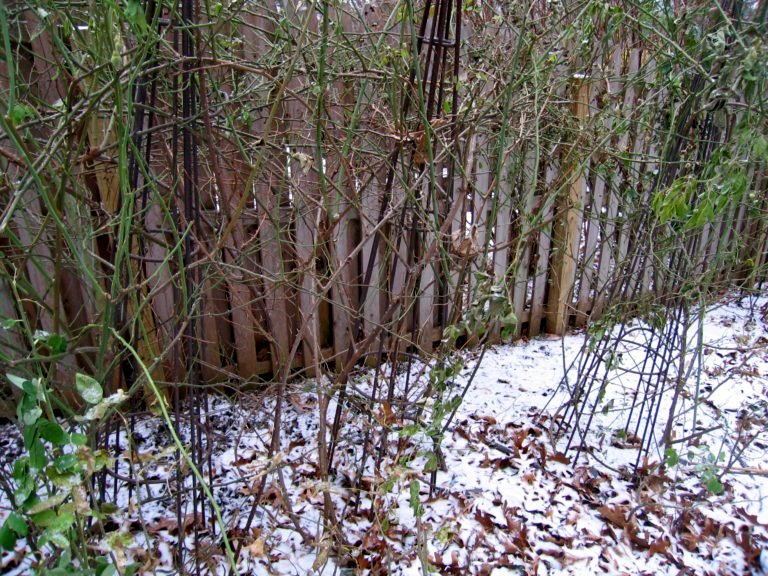
Some of the roses are grown on tutuers. The three pictured were purchased from the New York Botanical Garden, which has the best gift shop of all of the gardens I visit:

http://www.nybgshop.org/

For pictures of the Rose Garden in season, click here:

http://heirloomgardener.blogspot.com/2008/01/rose-garden-in-spring-summer-daffodils.html

For information on the creation of the Cutting Garden, see this post:

http://heirloomgardener.blogspot.com/2007/11/creating-space-for-garden.html

Gardening with Children: Creating the Children’s Garden

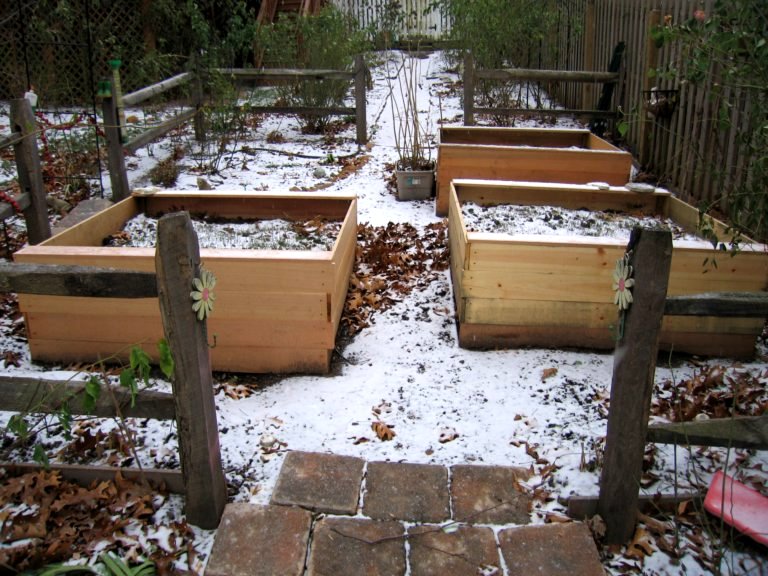
This is a picture of the Children’s Garden looking up the hill in winter. Beyond the Children’s Garden is the Rose Garden and beyond the Rose Garden is the back gate to the Cutting Garden.

The Children’s Garden includes beds that I help the children plant and cultivate: three raised vegetable beds, for which my oldest son (age eight) is the primary gardener, and one flower bed, for which my older daughter (age ten) is the primary gardener.
The boundaries of the Children’s Garden were created by installing a post and rail fence within the backyard.

Given the placement of the garden and to allow for maximum play, it has three openings: one to the Rose Garden, another to the Great Lawn, and the third next to the Long Border. The Great Lawn and the Long Border are hyperbole, as the Great Lawn is small and the Long Border is short.

Creating Space for a Garden: the Cutting Garden

Like many suburban gardeners, one of the hardest things to do is find space for all of the plants that you want to cultivate. One solution is to create gardens in the under-utilized parts of your property.

Like many suburban tracts, each home in my neighborhood has about thirty feet of space between each house. When we moved in, the fifteen feet on our side of the property line included a very large rhododendron, some unattractive evergreen trees, some grass, and a lot of weeds. The only thing we did on this strip of property was occasionally walk from the front yard to the back yard.

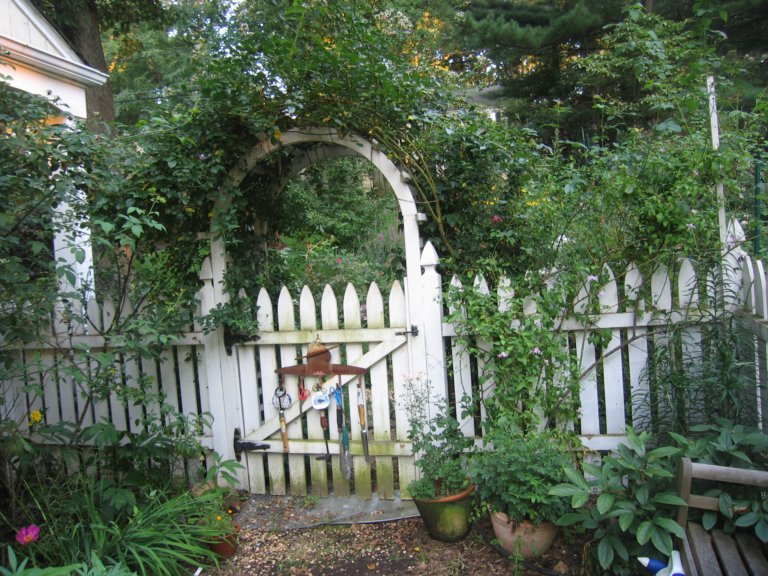
After a couple of years, we decided to remove the existing trees and plants and transform the space into a cutting garden. This space measures approximately fifteen feet wide and thirty feet long. We created a garden room by installing a wooden picket fence with an attractive arbor and gate in the front (visible in the first picture from inside the garden) and a simple gate in the back. Because the side yard was also on a slope, we installed a short, one-foot dry laid wall in the back to decrease the grade.

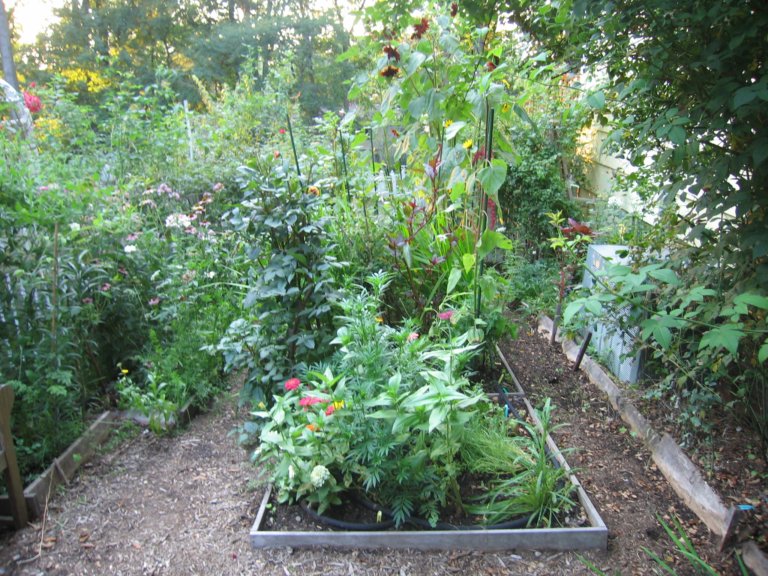
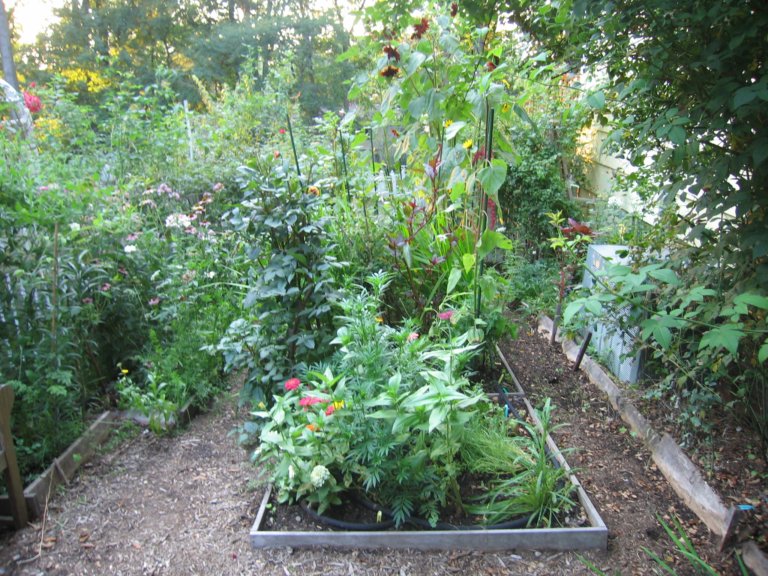
There are three foot beds on either side and a central four foot bed (visible in the second picture). The paths are too narrow at only two feet, but with only fifteen feet to work with, we had to make compromises. The soil was dead, so we dug down about two feet and also created shallow raised beds with ipe wood. Ipe is expensive, but it is far better for your garden than the toxic chemicals in pressure treated wood. Warning: ipe is very hard, which makes it rot and insect resistant, but it also makes it extremely difficult to cut with standard woodworking tools. I had to have my planks cut at the lumber yard.

After digging out the beds and creating the walls of the raised beds, we then added significant amounts of composted cow manure and Bumper Crop. These are now some of the richest beds on our property.

This is now one of the favorite parts of our property. In addition to changing this from unused and unattractive to a place we visit every day, it also produces abundant cut flowers for indoor enjoyment from May through October.

Related Post: Making the Most of Your Space for Gardening – A Map of My Gardens