As I wrote in my Ten Tips for Planning a Children’s Garden, one of the ways to enable your children to enjoy and appreciate the garden is to encourage them to participate in the gardening activity. Each of my children has a small plot that I let them plant. Last year, my now eight year old planted primarily annuals, but in the fall decided to follow mom’s example and densely plant daffodils and tulips. What do yo think? I think she might have out-planted mom!
. The first picture is from about two weeks ago with mostly daffodils and a few tulips beginning to bloom.
.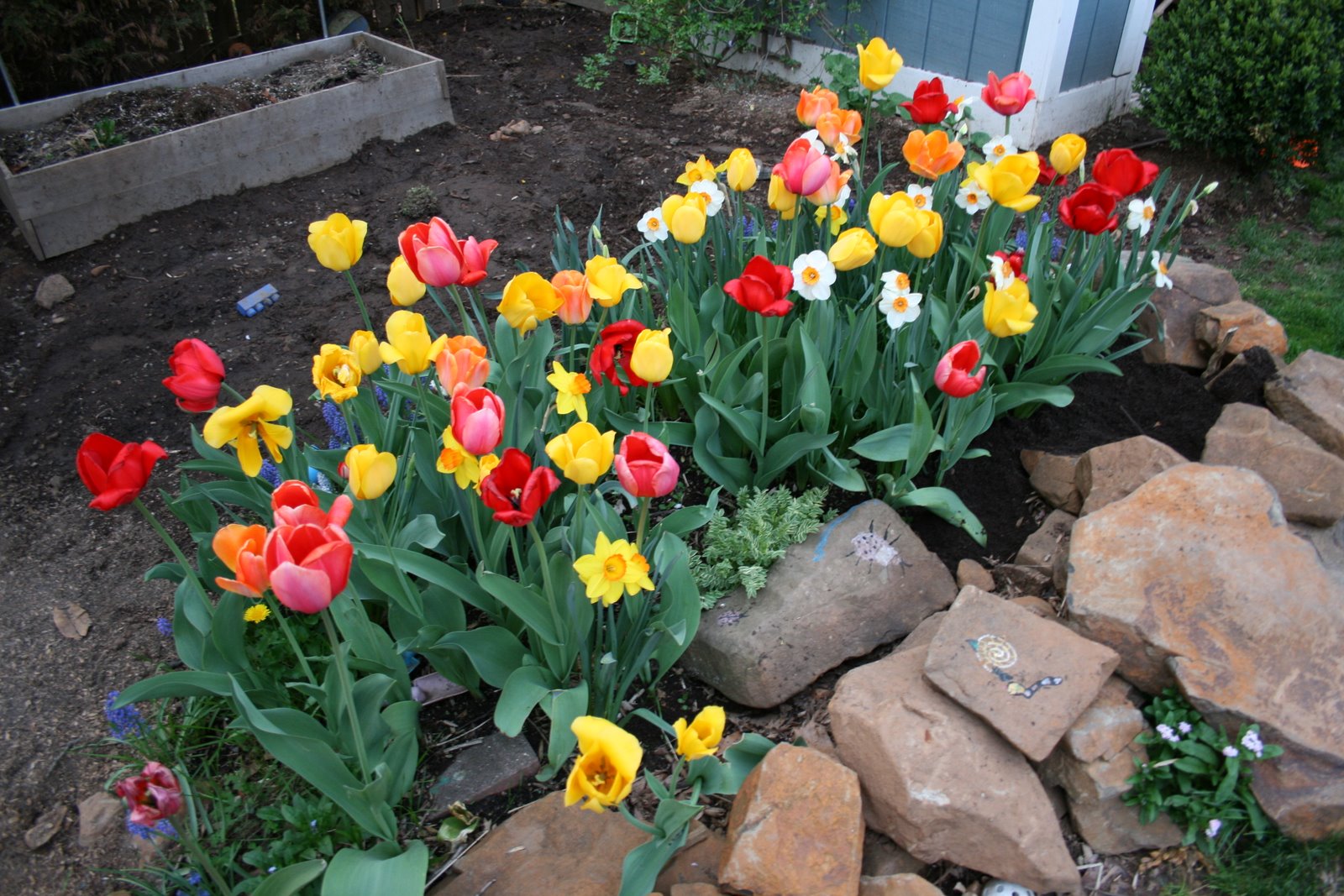 The second picture is from this past weekend when the tulips were in full bloom.
Category: Gardening with Children
Garden Bloggers’ Design Workshop on Kids in the Garden: What the Kids Say
This month’s Garden Bloggers’ Design Workshop at Gardening Gone Wild is on Kids in the Garden. As a gardener with five young children, my whole blog is in part about gardening with children. Some of the most popular posts on my blog have been the most explicit about the topic, including:
~
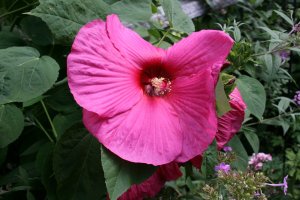 “My favorite thing in the garden is making flower arrangements. I like putting different flowers together. My favorite color is pink, so a lot of my vases have pink in them. One of my favorite plants is the hibiscus, but the flowers only stay good in a vase for one day. Phlox are good too.”
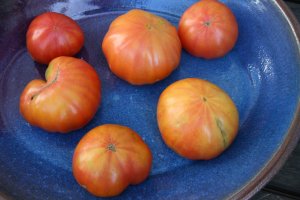 “My favorite thing in the garden is harvesting vegetables. There are so many different ones to find in the vegetable garden. My favorites to harvest are the tomatoes.”
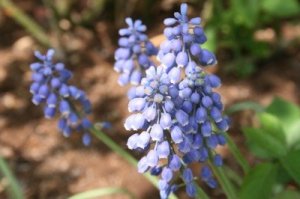 “My favorite thing about gardening is looking at the flowers. Some of my favorite flowers are daffodils, tulips, and muscari. Muscari is my favorite because it looks like it has bells.”
~
In addition to these posts, my post for last month’s Design Workshop was Five Tips for Growing Edibles with Children. For this specific Design Workshop, I asked my three oldest children to write down their favorite things about gardening.
~
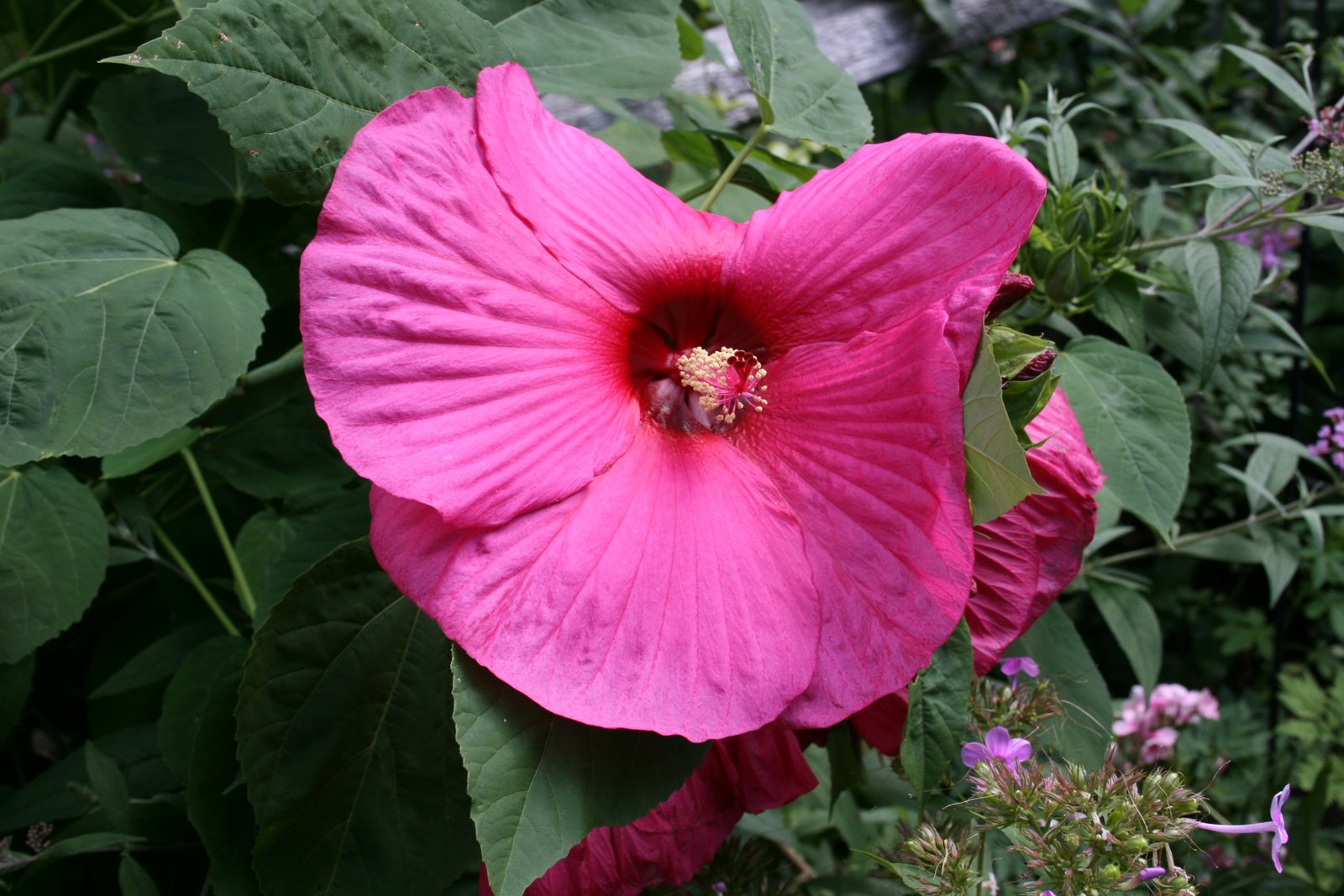 “My favorite thing in the garden is making flower arrangements. I like putting different flowers together. My favorite color is pink, so a lot of my vases have pink in them. One of my favorite plants is the hibiscus, but the flowers only stay good in a vase for one day. Phlox are good too.”
~
-My older daughter, age 10
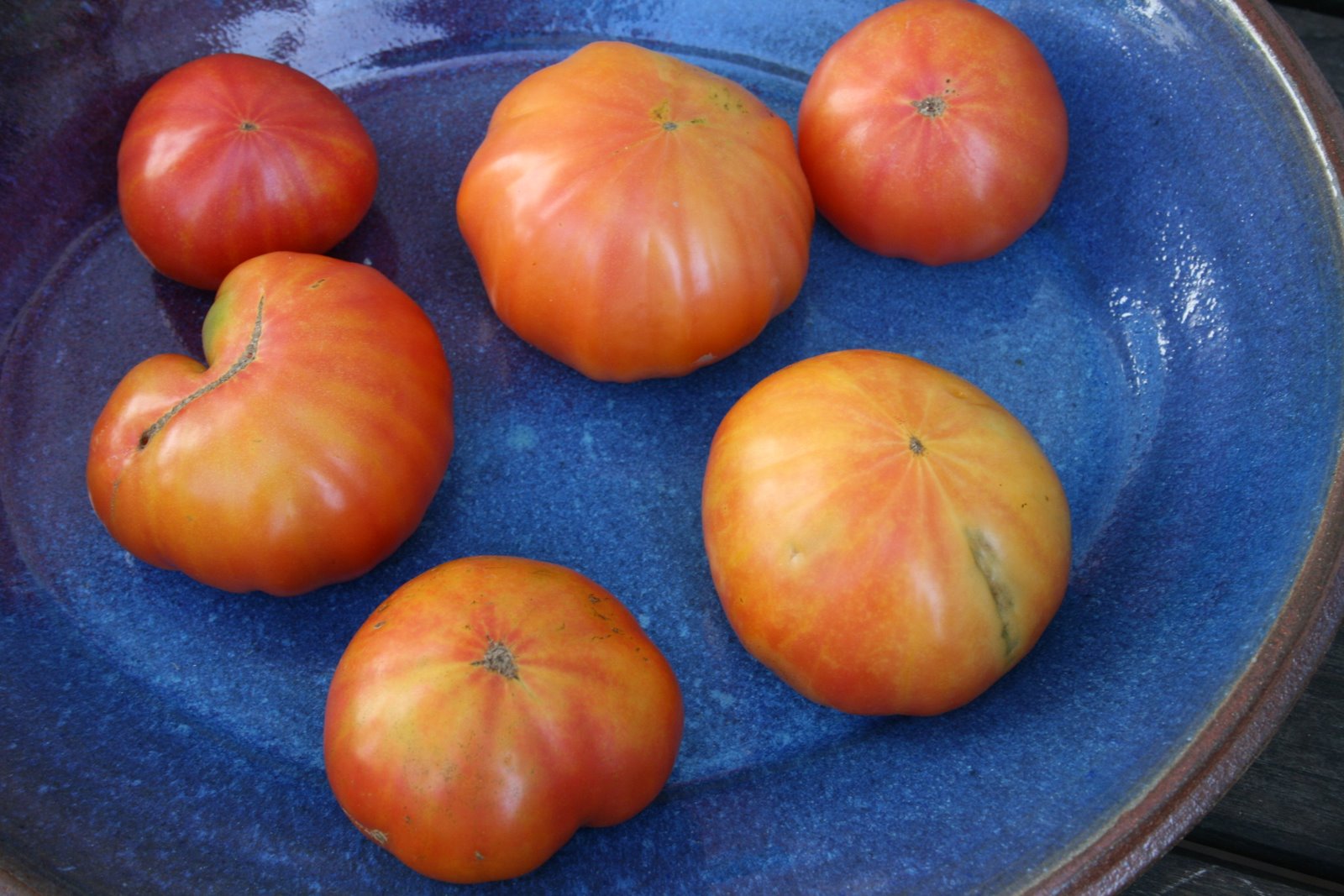 “My favorite thing in the garden is harvesting vegetables. There are so many different ones to find in the vegetable garden. My favorites to harvest are the tomatoes.”
~
-My oldest son, age 9
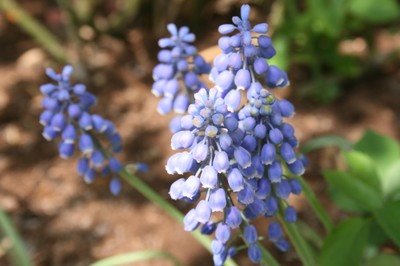 “My favorite thing about gardening is looking at the flowers. Some of my favorite flowers are daffodils, tulips, and muscari. Muscari is my favorite because it looks like it has bells.”
~
-My younger daughter, age 7
Five Tips for Growing Edibles with Children
This month’s Garden Bloggers‘ Design Workshop at Gardening Gone Wild is on Edibles in the Garden. While I am primarily a flower gardener, I do grow edibles in a dedicated vegetable plot, as well as in my mixed borders and containers. Given the size of my suburban lot, I cannot expect to grow enough to feed my family, but what I do grow is a lot of fun. Here are five tips for gardeners who want to attract those beneficials otherwise known as children.
~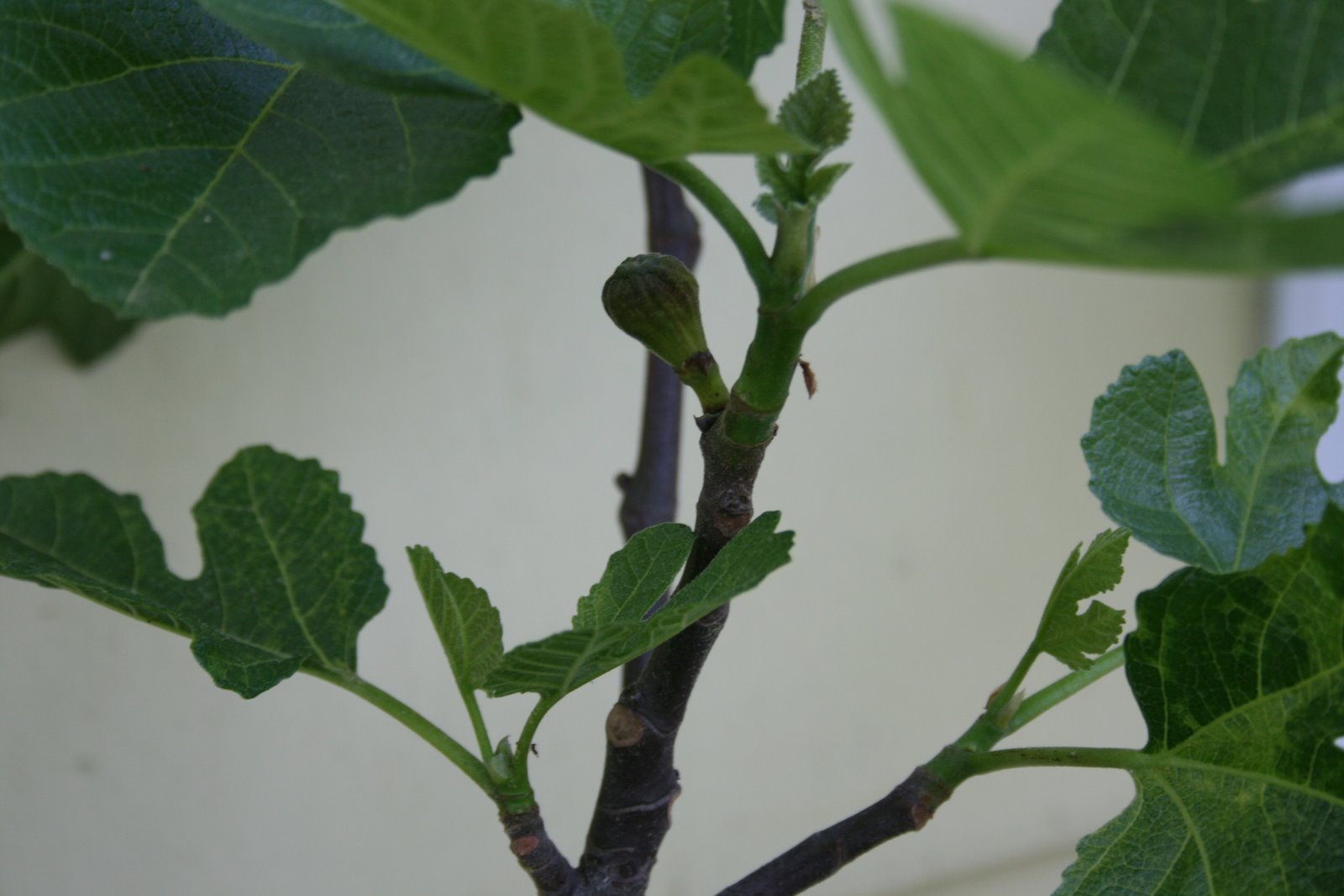 1. Grow fruits and vegetables that you can pick and eat directly from the plant. What child can resist the instant gratification of eating sweet sugar snap peas straight from the vine? The children always eat the ripe cherry tomatoes off the vine before I can ever get to them. They also love the fresh figs off the tree that I grow in a container on my deck. Strawberries, blueberries, raspberries, blackberries and the wild wineberries are other favorites.
~
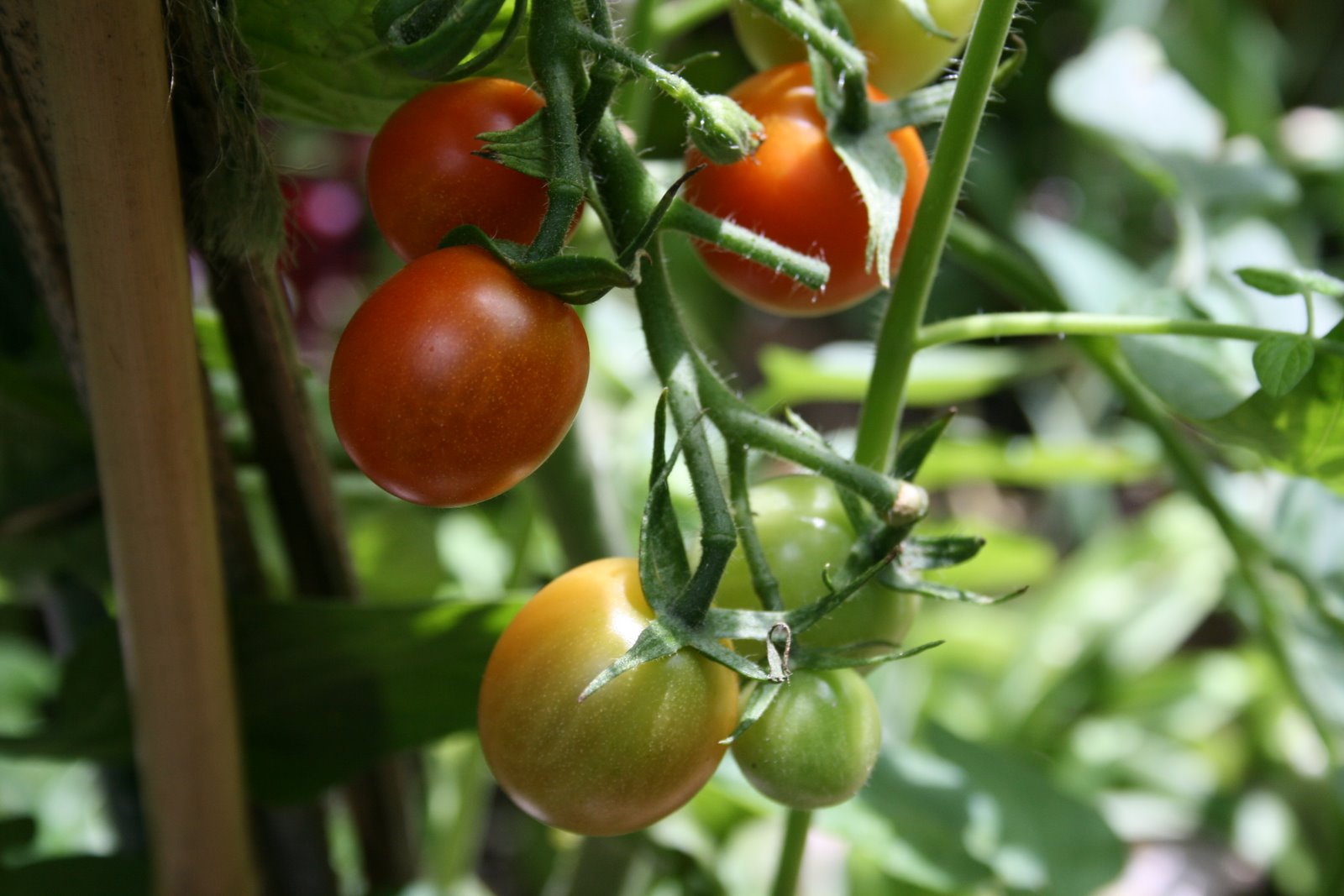 2. Grow vegetables that your children can plant, tend and/or harvest. This takes a little more effort on the part of mom than the former suggestion, but children can learn a lot from planting, tending and harvesting vegetables too. It’s really amazing for a child to plant a seed or seedling, water it, watch it grow, tend it, and harvest it. This year, my children helped plant almost all of the vegetables and took particular pleasure in harvesting the asparagus, lettuce, eggplant, zucchini, tomatoes, cucumbers, corn and potatoes.
~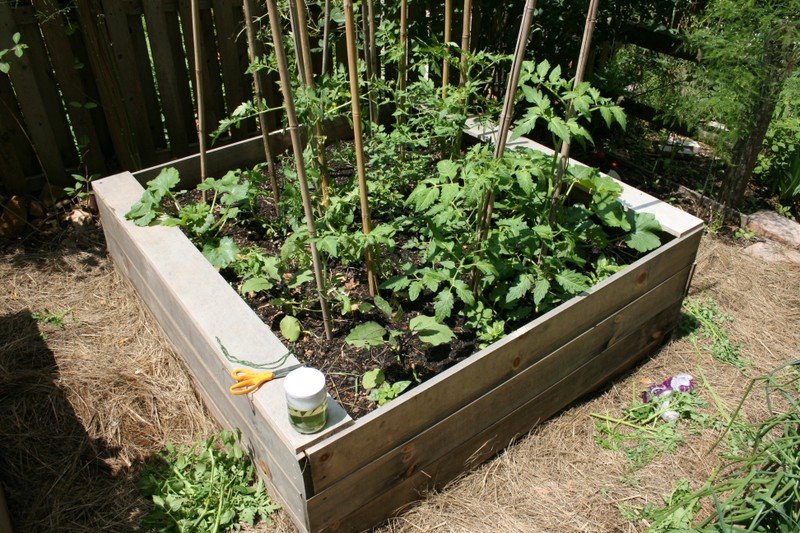 3. Grow heirloom varieties that you can’t buy in the grocery store. As you can tell by the name of my blog, Heirloom Gardener, I am particularly interested in plants that our grandparents and prior generations grew. While these varieties aren’t typically available as seedlings at your local nursery, you can buy an almost infinite variety through online and offline catalogs and seed exchanges. The children find the variety and novelty of them quite interesting. Some of my children’s favorites this season were the lemon cucumbers (they are about the size and color of a prickly lemon) and the German stripe tomatoes (mostly yellow with a spot of orange on one end).
~ 4. Grow edibles with which they can play. In addition to using some of the above vegetables for playing store, the children have also found other ways to play with the edibles. For example, they love using the hollow stems of chives and lovage as drinking straws. Also, they have made up a drink with the fresh mint, which is made of crushed mint leaves, sugar, and sparkling water.
~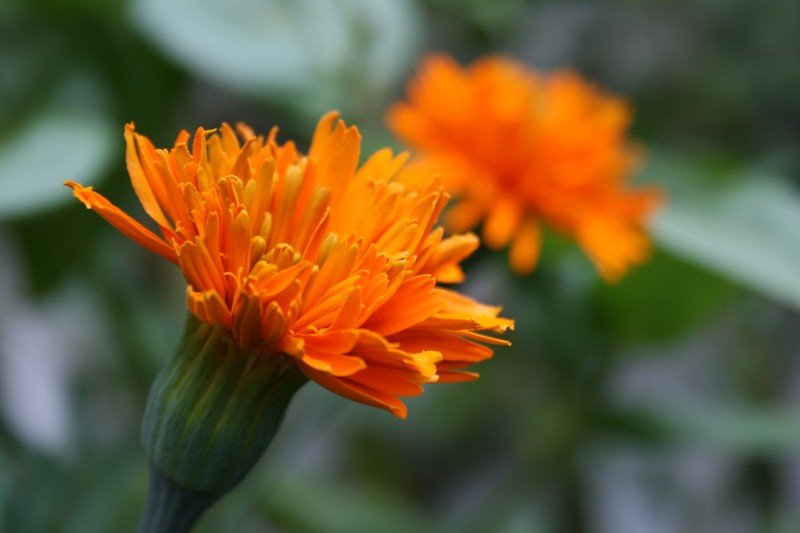 5. Grow flowers that are also edible. The children find it quite amusing that some flowers are edible. They particularly like including pansies, marigolds, calendula, and nasturtium flowers and leaves in our salads with mixed greens or as garnish.
~
Related posts:
- How to Build Raised Beds (on a Slope/Hill)
- Organically Preparing the Soil for Planting
- How to Make the Perfect Soil Mix for Seed Sowing
- Farmer’s Almanac Spring Planting Schedule (May)
- Farmer’s Almanac Spring Planting Schedule (April) and Heirloom Seed Sources
- How to Plant Corn the Way Squanto Taught the Pilgrims
- How to Plant Potatoes and Harvesting Asparagus
- My Eight Year Old Son’s Great Potato Harvest
- Organic Beetle Control with Children
- Ten Tips for Planning a Children’s Garden
- Creating the Children’s Garden
Garden Bloggers’ Design Workshop on Garden Whimsy: Guard Frogs and Garden Names
I missed last month’s Garden Bloggers’ Design Workshop on Porches and Decks because I was just too busy gardening! This month’s Garden Bloggers’ Design Workshop at Gardening Gone Wild is Garden Whimsy. The truth is I don’t think I have too many whimsical elements in my garden, but then two ideas came to mind: the entrance to the Children’s Garden and the names of my garden rooms.
 Guard Frogs. Just like the lions Patience and Fortitude that stand at attention in front of the entrance to the New York Public Library, the children placed these two stone frogs in front of the entrance to their garden.
 The stone frogs are a couple of inches tall and wide–large enough to notice, but not too large to take away from the plants. Also, they are a representation of an animal we like, as I have prohibited statuary of all garden pests–rabbits, squirrels, etc.
Garden Names. In a prior post, I included a map of my garden. For planning purposes, I name each of the garden rooms, which is not whimsical in and of itself. The whimsy, which is more of an inside joke than an external display, is that the garden rooms have names that are aspirational to a much larger or grander property, such as the Long Border that is not too long, the Great Lawn that is modest in size, and the Walled Garden that lacks a proper wall but is rather made up of stones that I dug up from the beds. While I do take my gardening seriously, it’s good not to take it too seriously.
Vegetable Gardening with Children: How to Plant Potatoes and First Harvest of the Season – Asparagus
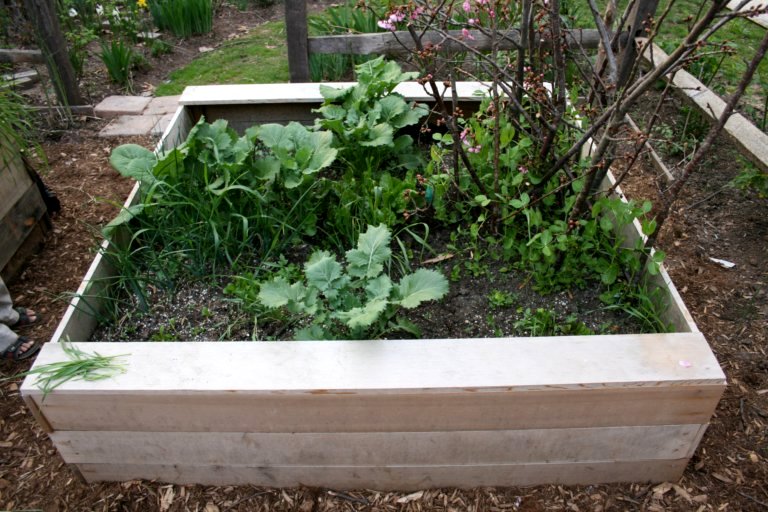 While my less-than-half-an-acre suburban lot is primarily a flower garden, I do enjoy growing the vegetables and herbs for which I have room. A few years ago, I visited the working organic farm at Old Sturbridge Village in Massachusetts and learned that it would take approximately one acre to feed my entire family of seven for the year.
  Thus, rather than trying to feed my family, the vegetables and herbs primarily provide an opportunity for my children’s participation and education. We get to organically prepare the soil, plant the seeds or seedlings, and then harvest the results.
 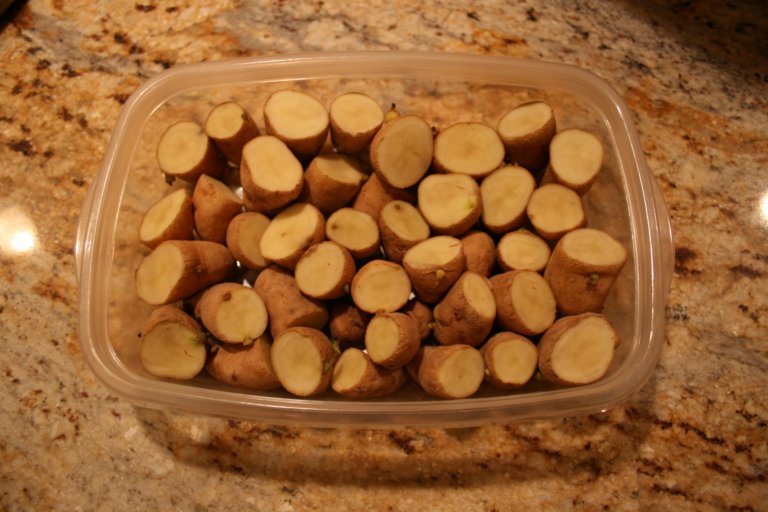 Further, we get to plant heirloom varieties that are otherwise not available. In terms of yield, we produce enough for the occasional amuse-bouche or side dish. To satisfy our need for organic and locally harvested produce, we shop at the local farmers’ markets in Chatham and Summit from June through November.
~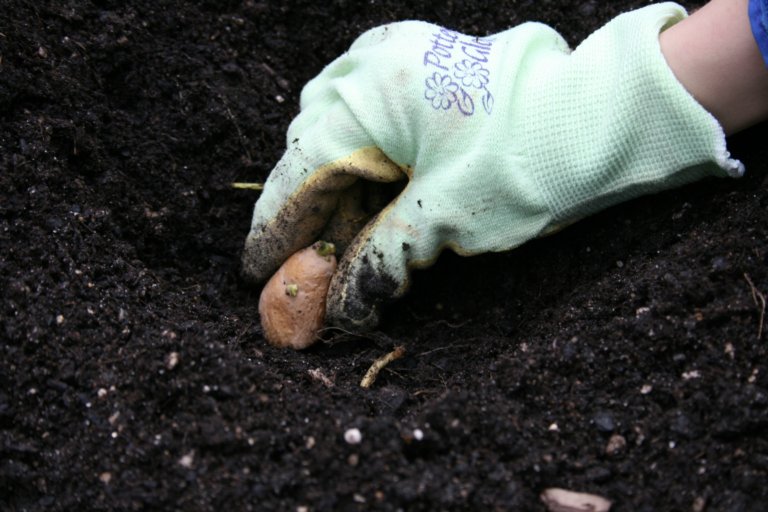 Last week, according to the Old Farmer’s Almanac, it was time to plant our seed potatoes. This is a perfect activity to do with children, or if old enough to handle a sharp knife, something that the children can do by themselves with some adult supervision. First, our son (age eight) prepared our seed potatoes (purchased from Seed Savers Exchange) by cutting them into one inch pieces.
  Second, we cured them cut-side up for three days to prevent them from rotting in the soil. Third, we planted them an inch-or-so in the raised vegetable bed with the eyes up.
~
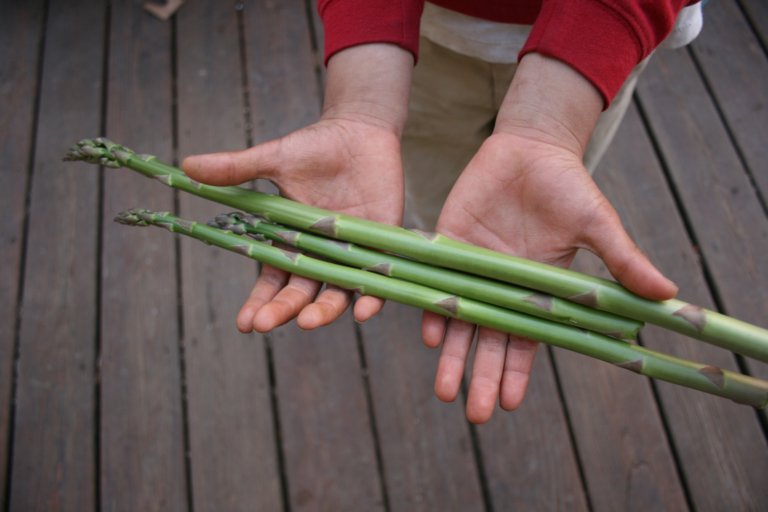
Three years ago, we planted our first asparagus crowns (purchased from the Cook’s Garden) around the outside of the Children’s Garden. This weekend, we got our first harvest–three big, beautiful stalks of asparagus (pictured). 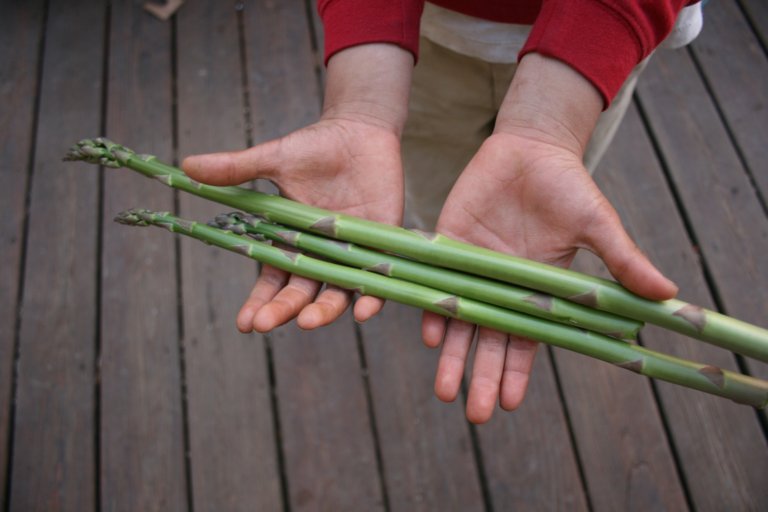 The kids were so excited to cut the asparagus (about one inch above the ground), roast it, and then eat it with dinner. In the coming weeks, we’ll have more to harvest.
~
Related posts: Ten Tips for Planning a Children’s Garden, How to Build Raised Vegetable Beds, Old Farmer’s Almanac Spring Planting Schedule
Gardening with Children: Creating the Children’s Garden
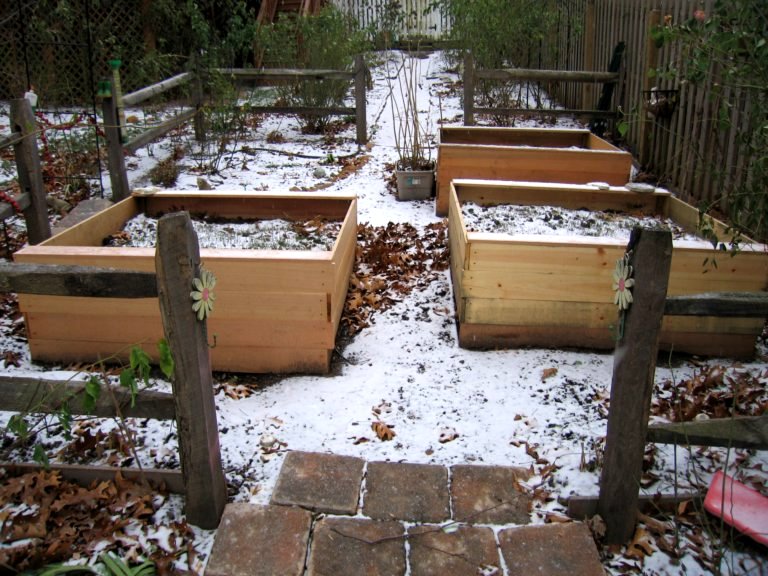 This is a picture of the Children’s Garden looking up the hill in winter. Beyond the Children’s Garden is the Rose Garden and beyond the Rose Garden is the back gate to the Cutting Garden.
The Children’s Garden includes beds that I help the children plant and cultivate: three raised vegetable beds, for which my oldest son (age eight) is the primary gardener, and one flower bed, for which my older daughter (age ten) is the primary gardener.
The boundaries of the Children’s Garden were created by installing a post and rail fence within the backyard.
Given the placement of the garden and to allow for maximum play, it has three openings: one to the Rose Garden, another to the Great Lawn, and the third next to the Long Border. The Great Lawn and the Long Border are hyperbole, as the Great Lawn is small and the Long Border is short.
 Heirloom Gardener