Good news! The Sunday Farmers’ Markets in Summit, New Jersey have been extended until the weekend before Christmas. I remember from last year that the number of shoppers dropped off significantly with the cold weather, so they didn’t know if they were going to try to do it again this year. Alas, here’s your opportunity to dress warmly and continue supporting the farmers. If enough people come out, maybe we can have a year-round farmers’ market like they in other areas.
Category: Heirloom and Organic Food
WSJ: Canning Makes A Combeack
Our vegetable garden isn’t big enough to produces excess for canning, but the children do love making pickles from the cucumbers at the farmers’ market. From Ana Campoy’s article in The Wall Street Journal:
“The worst recession in decades and a trend toward healthier eating are inspiring many Americans to grow their own food. Now the harvest season is turning many of these gardeners into canners looking to stretch the bounty of the garden into the winter…
At Jarden Corp.’s Jarden Home Brands—the maker of Kerr and Ball brand jars—sales of canning equipment are up 30% this year through mid-September, over the same period in 2008. And canning classes from Brooklyn, N.Y., to Boise, Idaho, report seeing skyrocketing enrollments this year.
Canning has been around since the dawn of the 19th century, when, at Napoleon’s behest, a Frenchman developed a method of sealing food in bottles to prevent spoilage on long military campaigns. The process was later adapted to factory-sealed metal cans, but at home, “canning” is still practiced in thick glass jars…”
Parsley Blooms in the Bird Garden

This Cucumber Looks Like a Duck
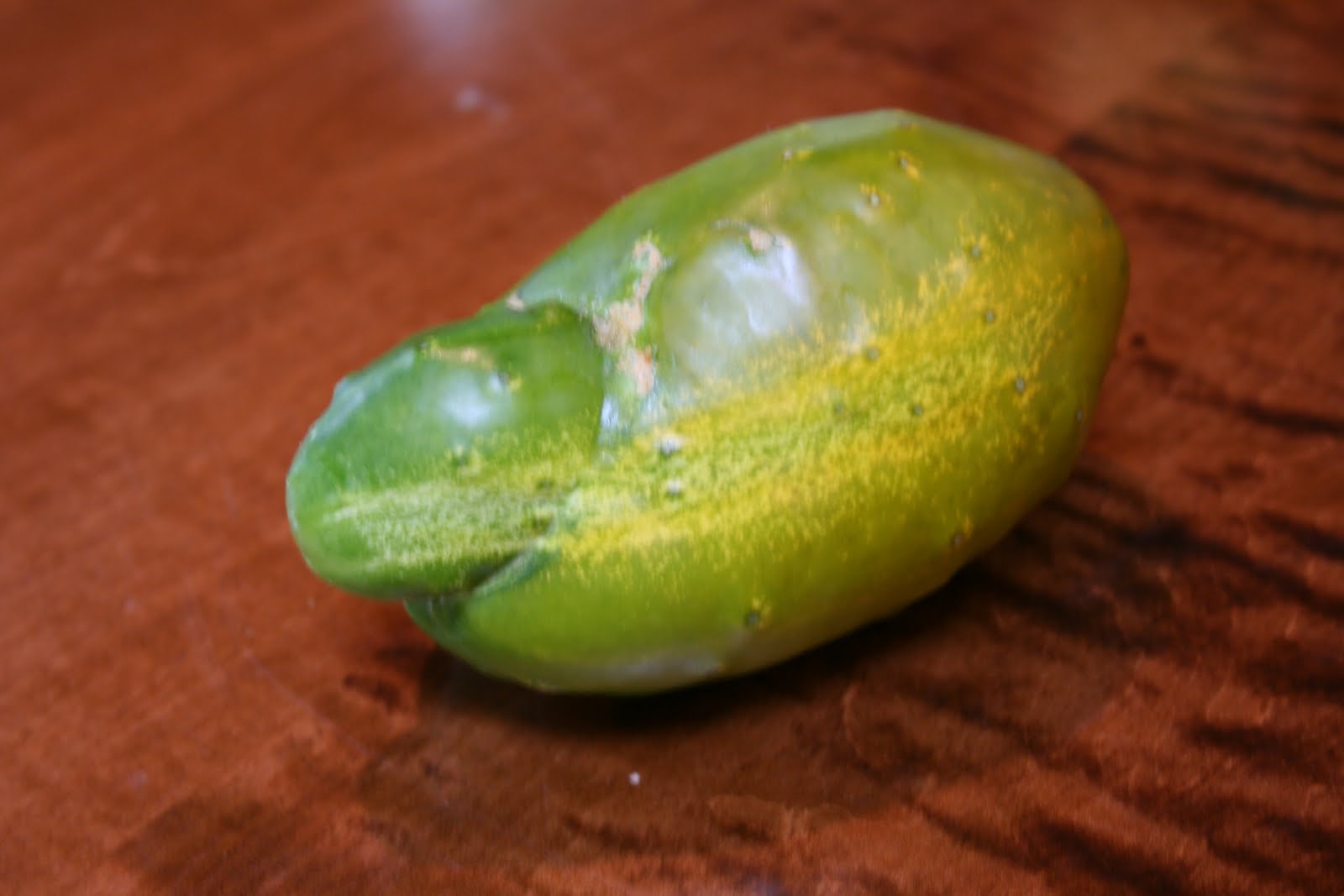 This cucumber got stuck in the netting of the eight foot tall screen around the raised vegetable bed and my children thought it was blog-worthy.
Some of This Year’s Heirloom Tomatoes
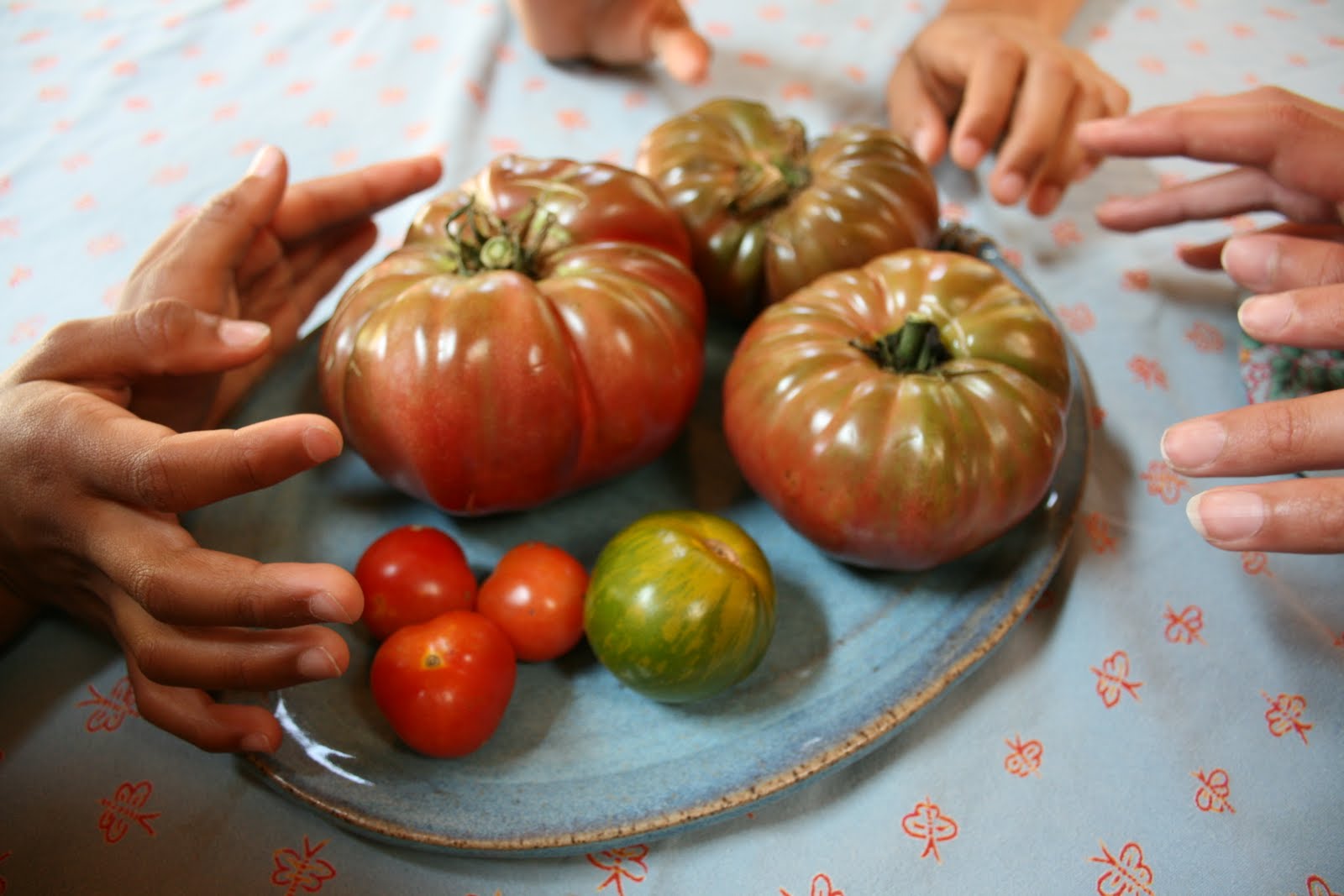 As readers of this blog know, I am primarily a flower gardener. However, the children love growing and eating vegetables, so the Children’s Garden is now primarily a vegetable garden. Each year, I learn more about growing heirloom vegetables, but my yields have been limited due to the pests who like to eat our vegetables before we do. This year, we built eight foot tall screens around the raised beds and have been rewarded with our best harvest yet.
Outbreak of Fungus Threatens Tomato Crop
From Julia Moskin in The New York Times:
“A highly contagious fungus that destroys tomato plants has quickly spread to nearly every state in the Northeast and the mid-Atlantic, and the weather over the next week may determine whether the outbreak abates or whether tomato crops are ruined, according to federal and state agriculture officials…
…Authorities recommend that home gardeners inspect their tomato plants for late blight signs, which include white, powdery spores; large olive green or brown spots on leaves; and brown or open lesions on the stems. Gardeners who find an affected plant should pull it, seal it in a plastic bag and throw it away, not compost it.”
For the full article click, here.
How to Protect the Vegetable Garden from the Groundhog, Part 3: New Eight Foot Tall Screens Around the Raised Beds
One of this season’s projects has been to better protect the vegetable garden. As frequent readers of this blog know, enemy number one is the groundhog that lives next door in my neighbor’s yard. The extra tall fence around my backyard keeps out the deer and my one year-old cat effectively deters most of the smaller pests–rabbits, squirrels and chipmunks. Unfortunately, I have been ineffective against the groundhog.
.
Part 1 of this year’s project was to build a chicken wire fence cover over one of the raised beds with short vegetables. You can read about that here.
.
Part 2 of this year’s project was to reinforce the open post and rail fence with chicken wire and build pest proof gates for the three openings. You can read about that here.
.
After parts 1 and 2 of this project, the first two months of the growing season were pest free with no break-ins from the groundhog. Then, last week, he broke in. I don’t know how he did it, but he did. My poor beans and cucumbers were mowed down. He even had the audacity to push the chicken wire cover off just enough to squeeze in and help himself to some Russian kale. After having such a good start to the season, and seeing the damage he did in a single visit, I must confess that I thought of just giving up. My son responded with my own words: there is no giving up in gardening. I told my husband that he had to do something.
.
How to Protect the Vegetable Garden, Part 3
.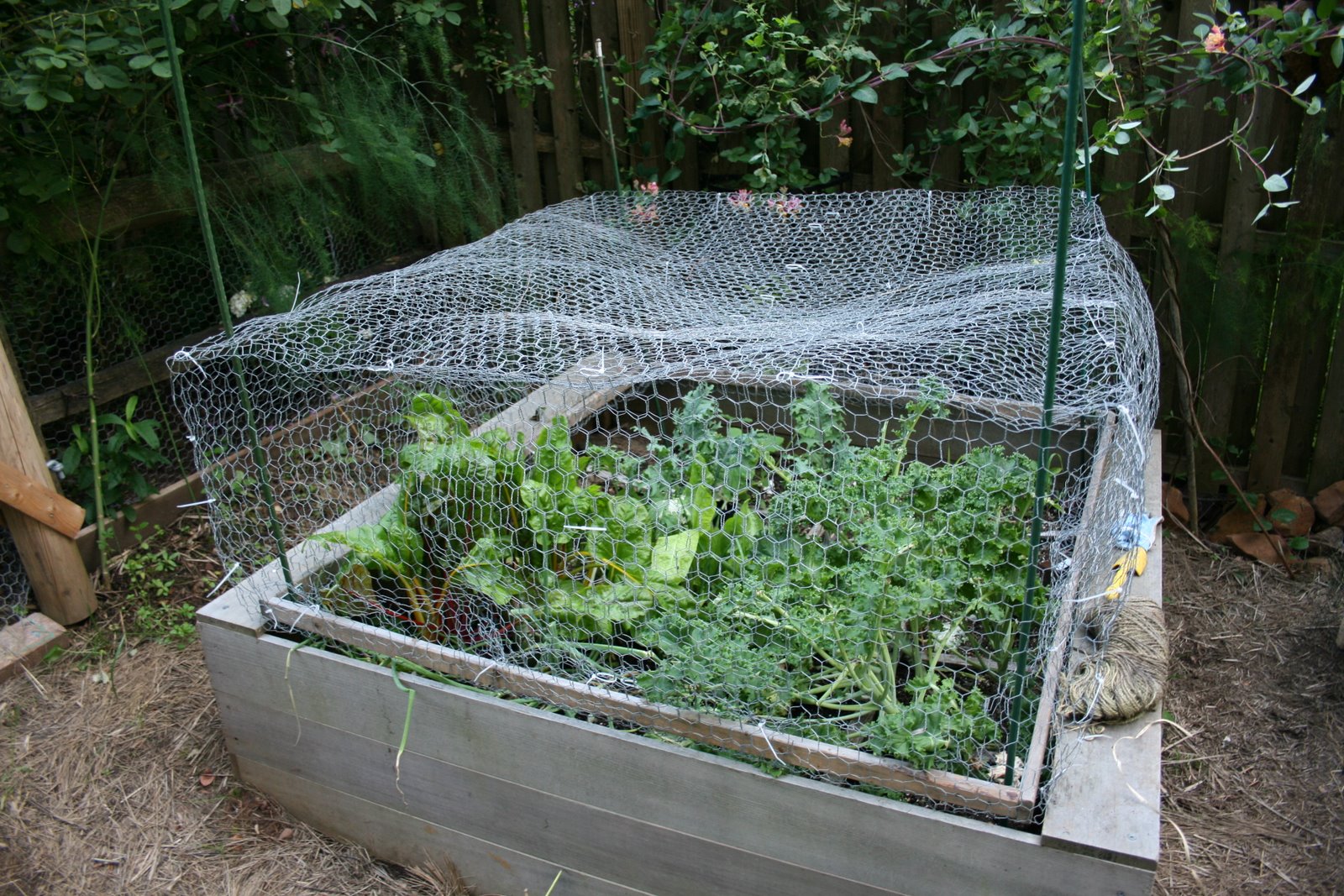 The first part was easy, so easy in fact, I can’t believe we didn’t think of this before. In the four corners of the chicken wire raised bed cover, we put in long stakes. Now, it cannot be pushed over.
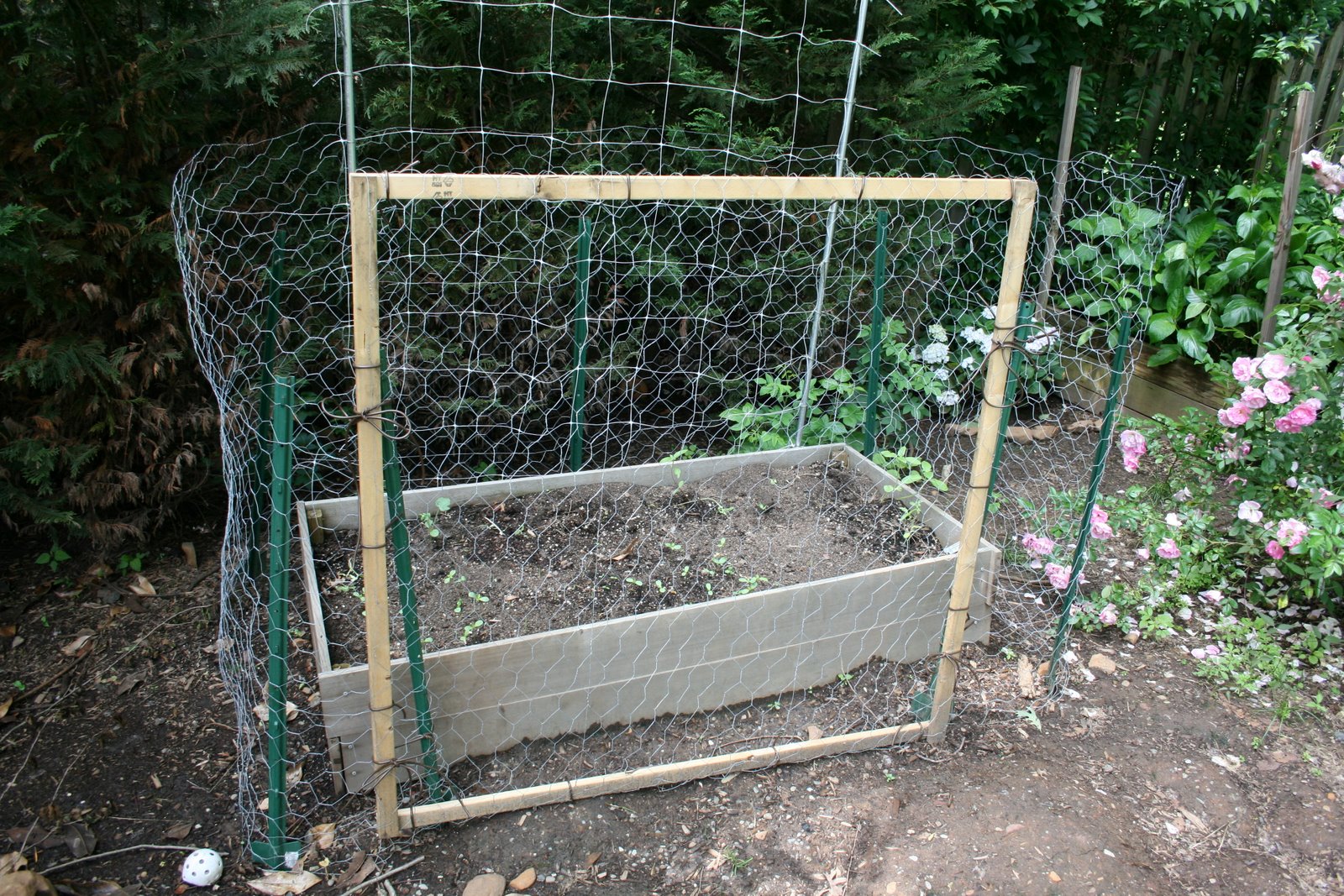
.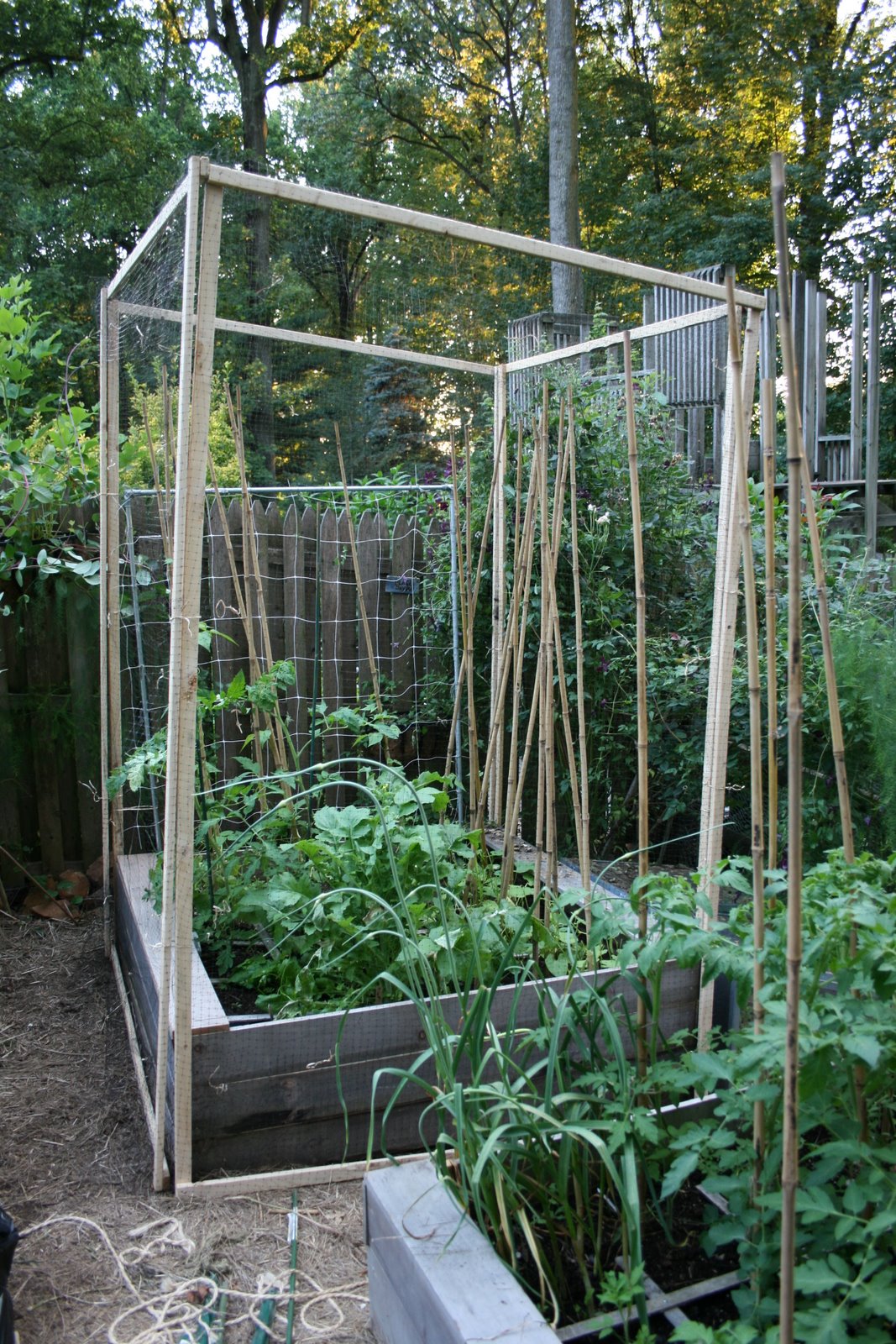 The second part took a trip to the hardware store and more effort. As you see in the picture, my husband built four 5’x8′ screens around each of the other two raised beds that contain the taller vegetables. The two far sides are nailed into the box. The two near sides are tied on with bow ties that can easily be tied and untied for access to the vegetables. Here are some simple instructions that can be adapted to your needs:
a. Buy eight foot 1x2s. We needed four 5’x8′ screens for each raised bed, so my husband needed to buy thirty-two for the two raised beds we wanted to protect.
.
b. Cut your 1x2s to the desired length.
.
c. Nail your 1x2s together to make the frames of your screens. My husband put two 1 1/2 inch nails into each corner.
.
d. Cover your frames with deer fence netting. For such a large area, this is much lighter, cheaper and easier to work with than the chicken wire.
.
e. Nail two screens to the sides of your vegetable box where you need the least access.
.
f. Tie the other two screens to the fixed screens with rope that can easily be untied and re-tied for your access.
.
Hopefully, there will not be a Part 4 of this year’s story.
How to Protect the Vegetable Garden from the Groundhog, Part 2: Adding Chicken Wire and Gates to an Open Post and Rail Fence
When originally conceived, the Children’s Garden was going to be a place to grow creative things with the children, like a tee pee made of vines, which we did the first year, and other beds planted and maintained by the children. Thus, the original fencing around the garden was a post and rail fence with three open entryways without gates, which you can see here. The only part of the garden remaining from that original conception is my older daughter’s flower garden in the upper left hand corner. Over time, the children’s interest in growing vegetables increased, so we replaced the short raised beds with extra-tall raised beds, which you can see and read about here. The extra-tall raised beds improved our vegetable production significantly, but as a result, we also attracted more pests, particularly those hungry, no-good rabbits and groundhogs.
.
At the end of last year, after seeing some of my hard-earned vegetables stolen before we could enjoy them, I resolved to improve the situation for this year. The first step, early this season, was asking my husband to create a chicken wire cover for one of the raised vegetable beds, which you can see and read about here. That has worked great, but it unfortunately does not work for tall vegetables, such as tomatoes.
.
Thus, the second step, completed last month, was asking my husband to pest-proof the fence around the Children’s Garden. We thought of replacing the open post and rail fence, but after considering the expense, decided to work with what we had. We covered the post and rail fence with chicken wire and added built-to-fit gates to the former openings. Below are some of the “after” pictures.
.
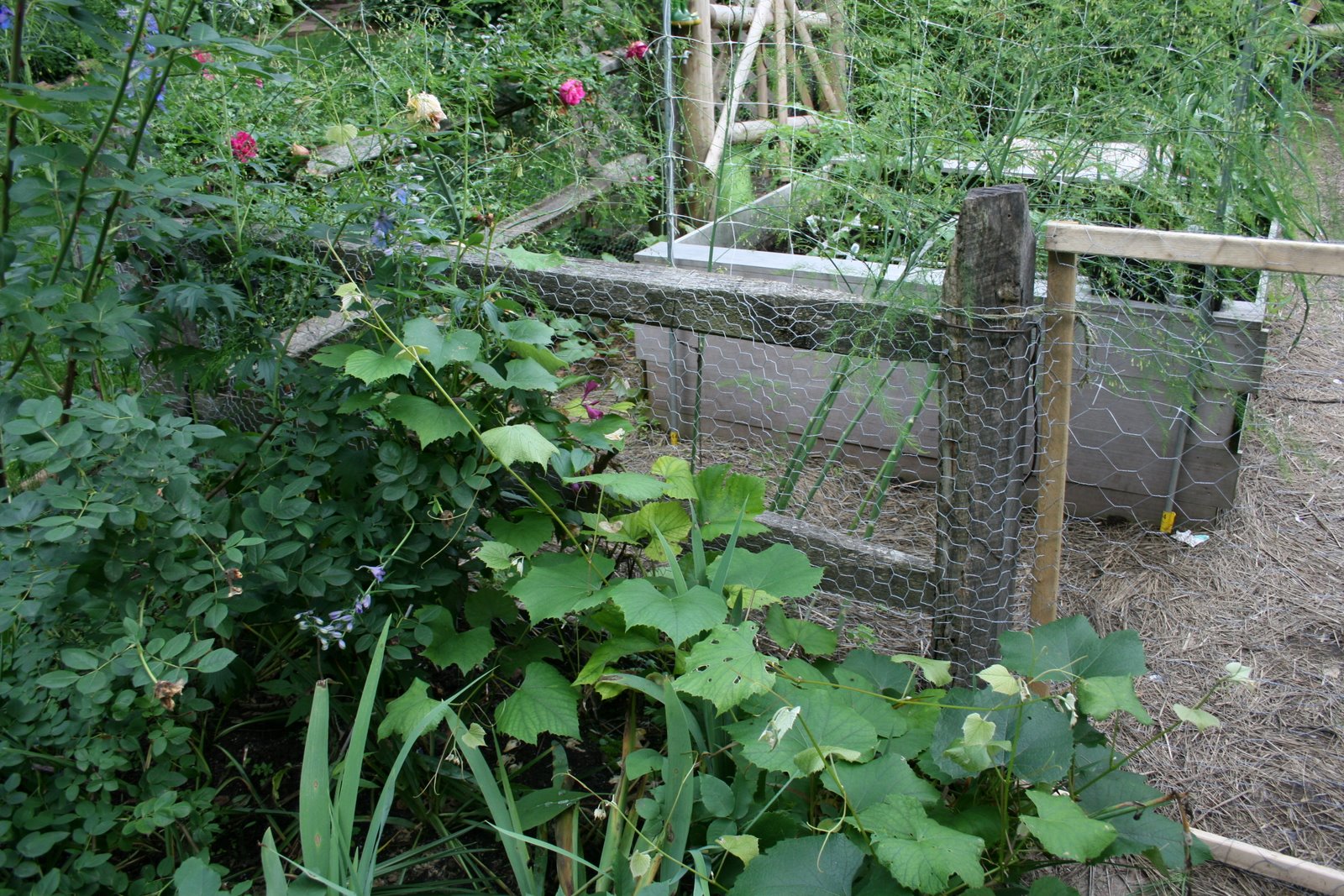
On the left hand side, you can see some of the asparagus and grape vines that had to be removed from the fence to install the chicken wire. On the bottom, the chicken wire rests on the ground approximately 6+ inches to discourage any attempts to dig under the fence.
.
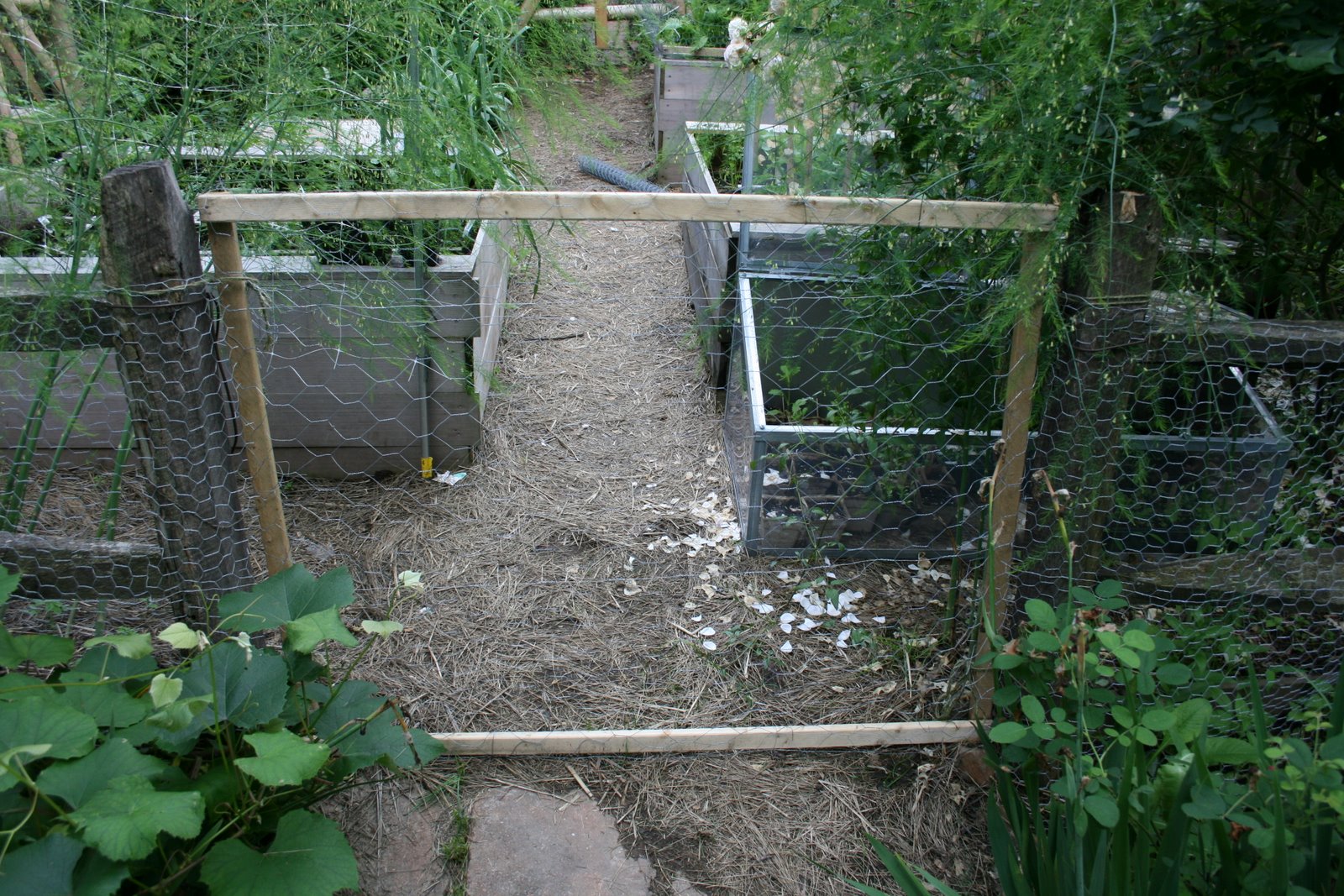 In the middle, you can see the simple wooden gate built to fit the space between the two posts. It is built with the same one by two’s left-over from building the chicken wire raised bed cover. Because I wanted to keep pests from crawling under the gate, it is actually resting on the ground. Instead of hinges, it has long, easy, on-and-off ties on the top and bottom attached to each of the side posts.
.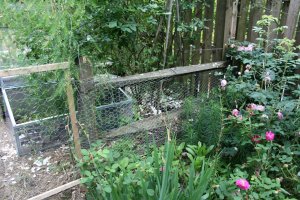
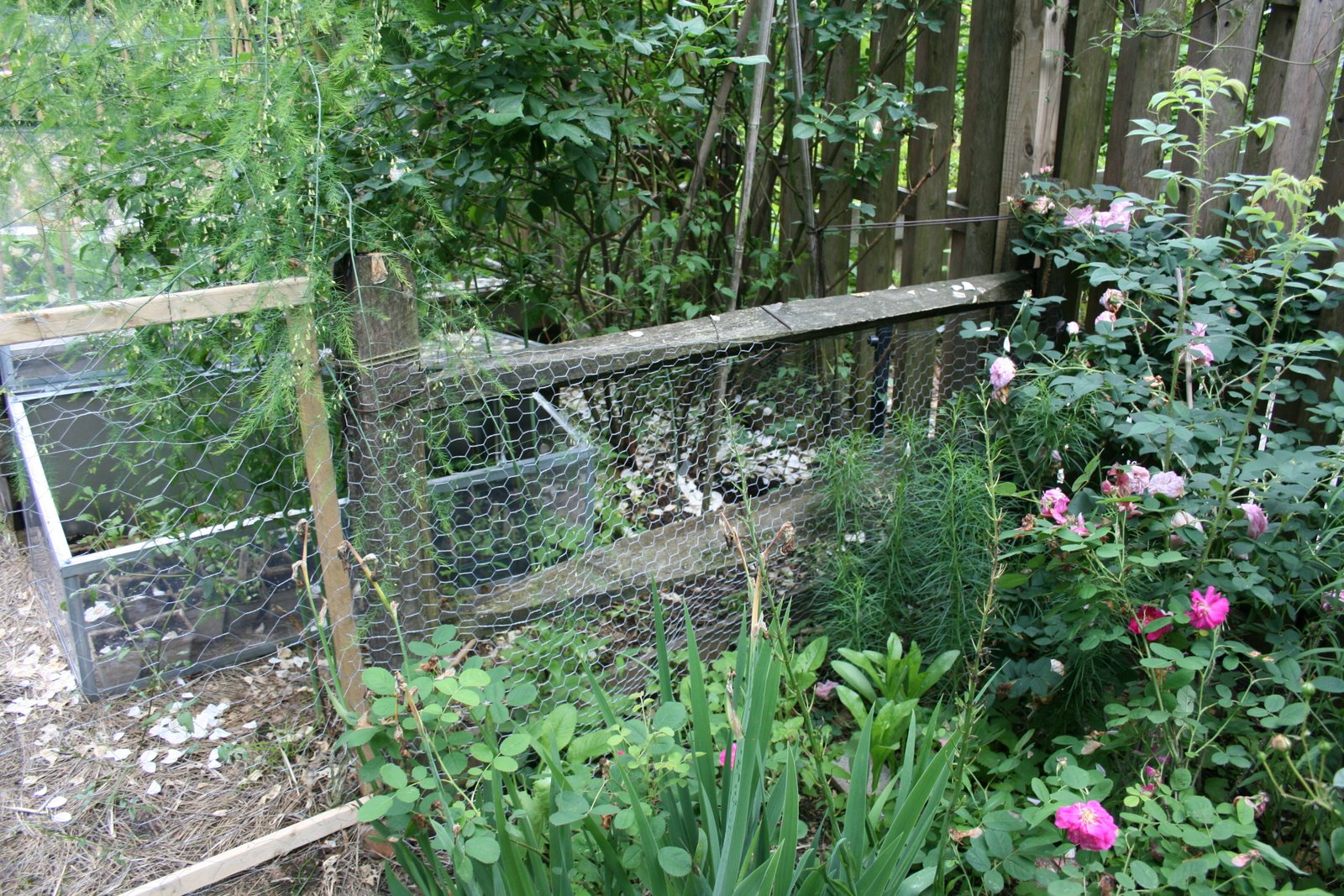
On the right hand side, the chicken wire runs from post to post, covering the rails, just like on the left hand side.
.
This enclosure was repeated on the left and top sides of the garden. The right side of the garden is enclosed by a proper fence.
While it is still early in the season, we have not yet had any break-ins.
.
Related posts:
*A Chicken Wire Raised Bed Cover
*A Chicken Wire Raised Bed Cover
Support Your Local Farmers: Chatham and Summit, New Jersey Farmers’ Markets re-opening in June 2009
Summit Farmers’ Market opens on Sundays starting on June 7th, 8AM-130PM:
http://www.summitdowntown.org/images/farmersmarket09.pdf
Chatham Farmers’ Market opens on Saturdays starting on June 27th, 8AM-1PM:
http://www.chathamboroughfarmersmarket.org/
To find a farmers’ market near you, type your zip code into the Local Harvest website:
http://www.localharvest.org/
 Heirloom Gardener