Organic Dairies Watch the Good Times Turn Bad

Another reminder to support your local and organic farmers, many of which are now going out of business or are at risk of doing so, from Katie Zezima in The New York Times:

“When Ken Preston went organic on his dairy farm here in 2005, he figured that doing so would guarantee him what had long been elusive: a stable, high price for the milk from his cows.
.
Sure enough, his income soared 20 percent, and he could finally afford a Chevy Silverado pickup to help out. The dairy conglomerate that distributed his milk wanted everything Mr. Preston could supply. Supermarket orders were skyrocketing.
.
But soon the price of organic feed shot up. Then the recession hit, and families looking to save on groceries found organic milk easy to do without. Ultimately the conglomerate, with a glut of product, said it would not renew his contract next month, leaving him with nowhere to sell his milk, a victim of trends that are crippling many organic dairy farmers from coast to coast.”
.
For the full article, click here: http://www.nytimes.com/2009/05/29/us/29dairy.html
Map of Michelle Obama’s Kitchen Garden on the South Lawn of the White House

I found it interesting to look at a map of Michelle Obama’s 1,100 square foot Kitchen Garden that was installed in March on the South Lawn of the White House:

http://www.whitehouse.gov/assets/documents/garden_layout.pdf

I have not seen is any mention of or credit assigned to who actually designed the garden, assuming that the First Lady did not do this herself.

More People Gardening, Canning, Sewing, and Focusing on Family in the Recession

Yes, the current economic crisis is awful, but here is some good news from Peggy Noonan’s editorial in today’s Wall Street Journal:

“A small sign of the times: USA Today this week ran an article about a Michigan family that, under financial pressure, decided to give up credit cards, satellite television, high-tech toys and restaurant dining, to live on a 40-acre farm and become more self-sufficient. The Wojtowicz family—36-year-old Patrick, his wife Melissa, 37, and their 15-year-old daughter Gabrielle—have become, in the words of reporter Judy Keen, “21st century homesteaders,” raising pigs and chickens, planning a garden and installing a wood furnace.

Mr. Wojtowicz was a truck driver frustrated by long hauls that kept him away from his family, and worried about a shrinking salary. His wife was self-employed and worked at home. They worked hard and had things but, Mr. Wojtowicz said, there was a “void.” “We started analyzing what it was that we were really missing. We were missing being around each other.”

…The article offered data suggesting the Wojtowiczes are part of a recent trend. People are gardening more if you go by the sales of vegetable seeds and transplants, up 30% over last year at the country’s largest seed company. Sales of canning and preserving products are also up. Companies that make sewing products say more people are learning to sew. I have a friend in Manhattan who took to surfing the Web over the past six months looking for small- and farm towns in which to live. The general manager of a national real-estate company told USA Today that more customers want to “live simply in a less-expensive place.”

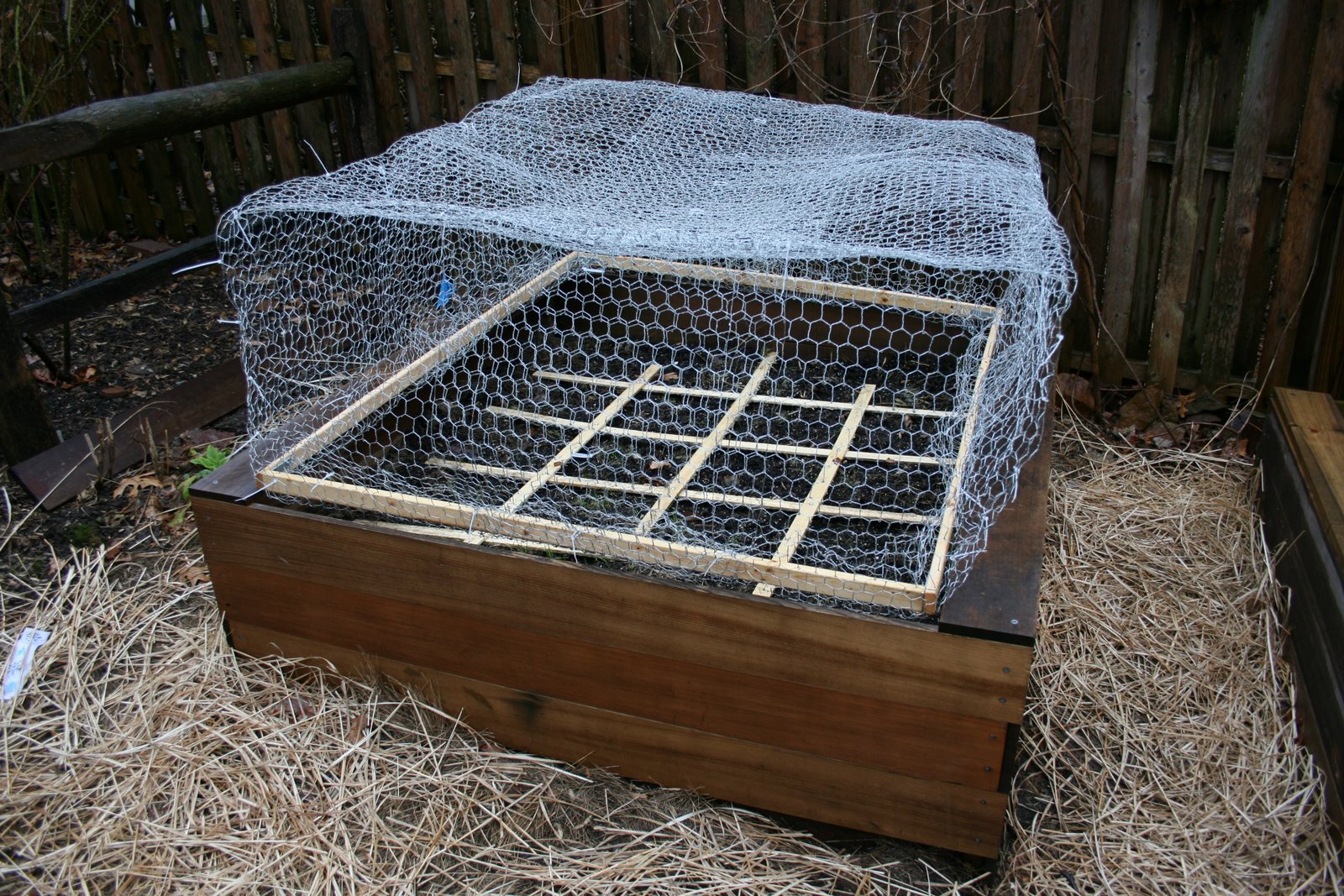
How to Protect Vegetables from Groundhogs, Rabbits and Squirrels, Part 1: A Chicken Wire Raised Bed Cover

Dear Messrs. Groundhog, Rabbit, and Squirrel,

My friends over at Gardening Gone Wild asked me to write to you to discuss the status of our current dispute. While I have such a harmonious relationship with so much of the other wildlife in the garden–the birds, the toads, the salamanders–I regret that our relationship has become so acrimonious, particularly as it relates to the vegetables.

While I am flattered that you like the vegetables as much as (or perhaps even more than) we do, I find that your appetites leave something to be desired, namely leftovers. Last year, the garlic spray kept you away from many of the vegetables, but I was disappointed to still find teeth marks on my vine-ripened tomatoes and zucchinis, not to mention the fruitless pumpkin and watermelon vines whose flowers you devoured. I can no longer bear your rude interruptions.

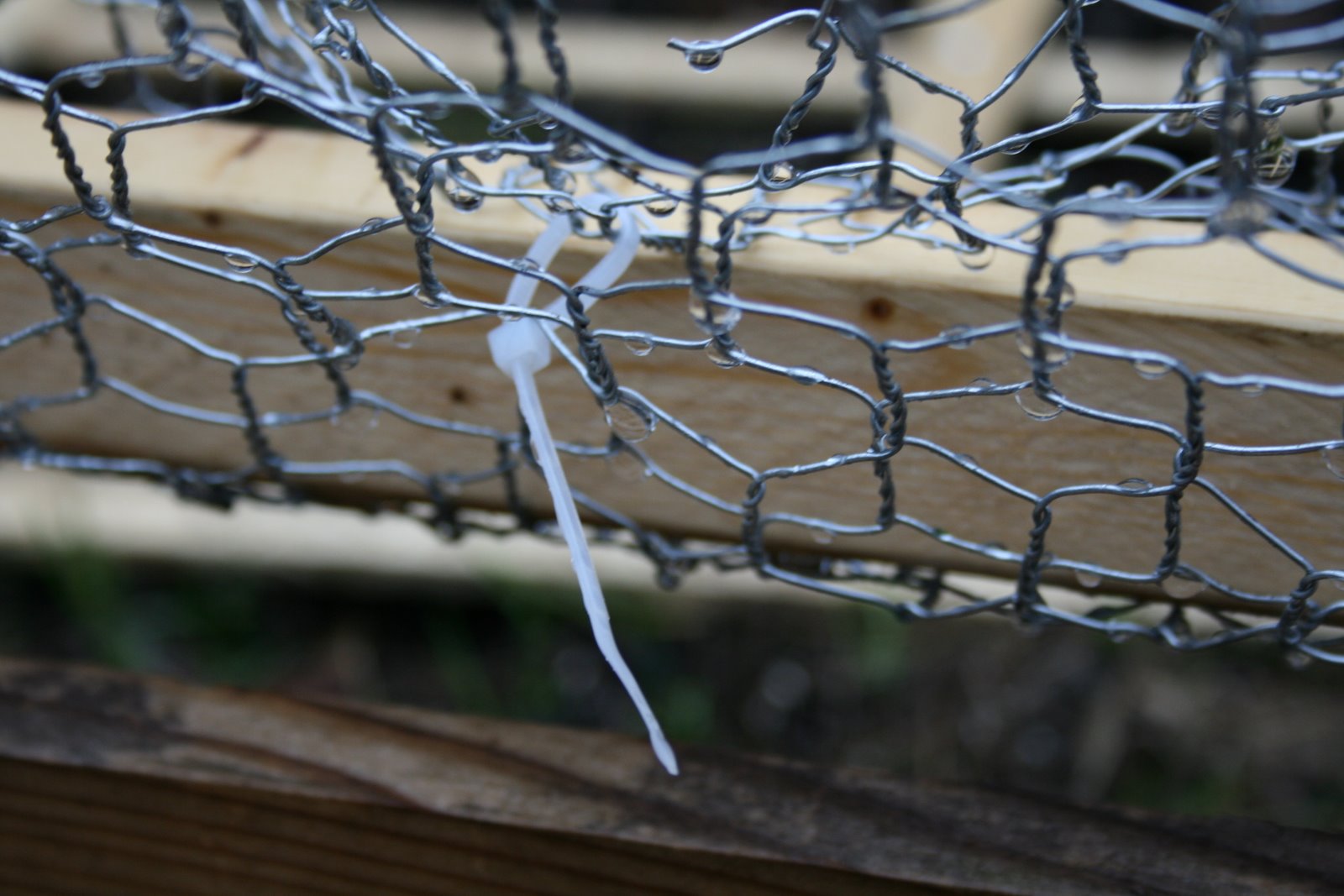
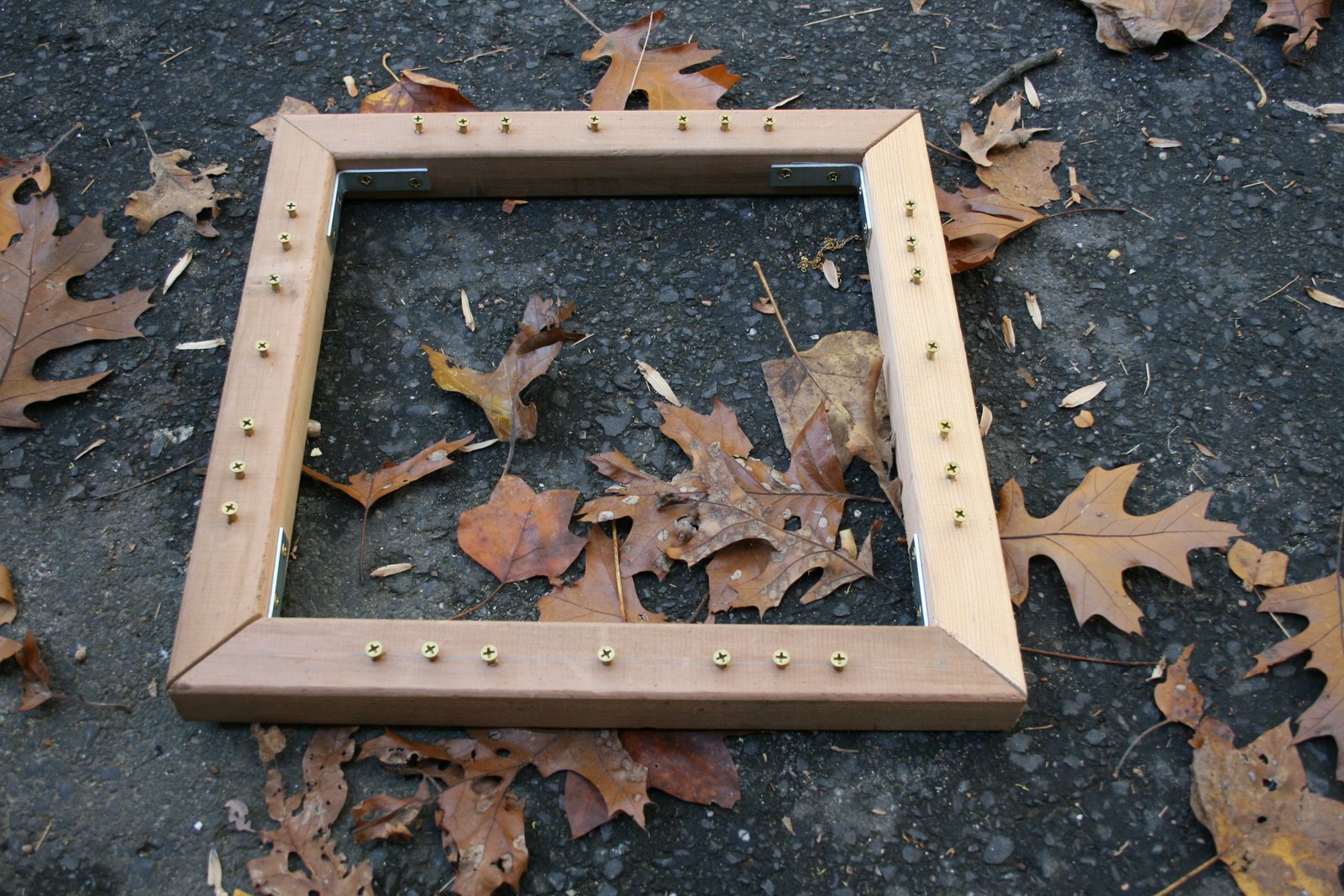
In response, I have asked my dear husband to make a simple, custom-fit chicken wire vegetable box cover to keep you away. What it lacks in aesthetic contribution to the garden, I hope it makes up in efficacy. In the future, please find food elsewhere in the wild or, if I may be so bold to suggest, cultivate your own vegetables.

Best wishes,

Heirloom Gardener
.
UPDATE: Part 2 of this series discusses adding chicken wire around the post and rail fence. Part 3 of this series discusses reinforcements to chicken wire raised bed cover after a break-in.
.
Related posts:

Planting Early Spring Cool Season Crops and Vegetable Gardening 101

Last week, I turned over the cover crops in my raised vegetable beds. Having let the soil rest for a week, I am now ready to plant my first cool season crops: loose leaf lettuces, shelling peas, and sugar snap peas. I am planting all of them from seeds purchased from Baker Creek Heirloom Seeds.

The lettuce seeds need some light to germinate, so all you have to do is press them into the soil. The pea seeds are planted at a depth twice the length of the seed which is easy to do by simply poking your finger into the soil. From here, you don’t really water them. You just mist them enough so that they stay slightly moist and don’t dry out. How frequently you do this depends upon the weather.

*****

Vegetable Gardening 101: Tips from a Beginning Heirloom Vegetable Gardener

How to Build a Planting Grid for Square Foot Gardening

In preparation for this year’s vegetable gardening, I’ve been reading Mel Bartholomew’s All New Square Foot Gardening (see below). One idea that I got from the book was to build a planting grid with wood lathes to stay true to the square foot gardening philosophy. Just as the book promised, it was easy to build and hopefully will make my vegetable gardening easier and my yield greater. Here’s how I did it:
~
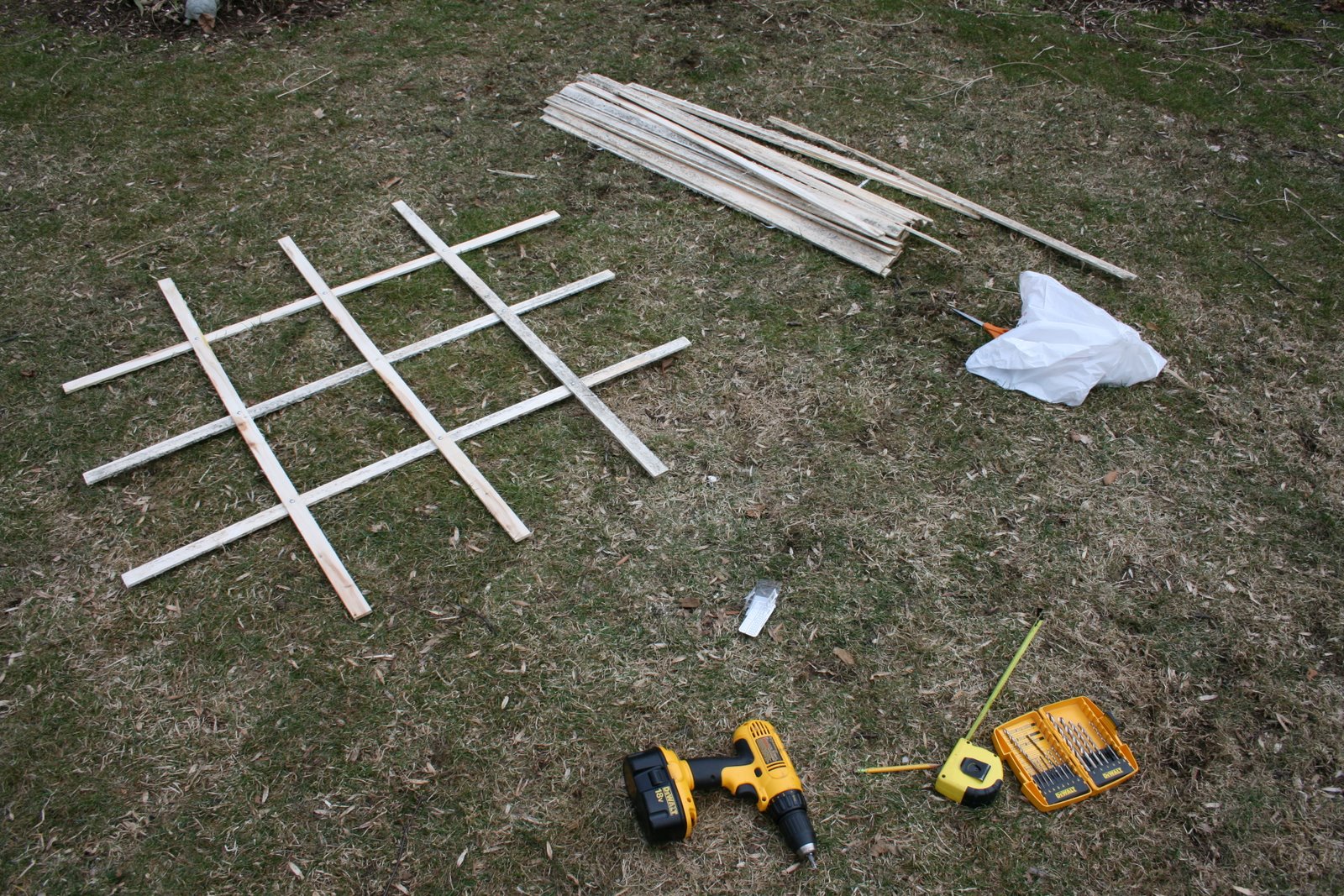
1. Gather together your materials and tools: 6 four foot wood lathes for each 4×4 foot grid you want to make; nuts and bolts to hold your grid in place; tape measure and pencil; and power drill.
~
2. Measure and mark your wood lathes in one foot increments.
~
3. Pre-drill the holes in your wood lathes at each one foot increment. Pre-drilling is important as the wood lathe would likely break without doing so.
~
4. Screw in your nuts and bolts to hold together your grid. At this step, I found that I actually needed to re-drill some of the holes, as my wood lathes were not all perfectly straight.
~
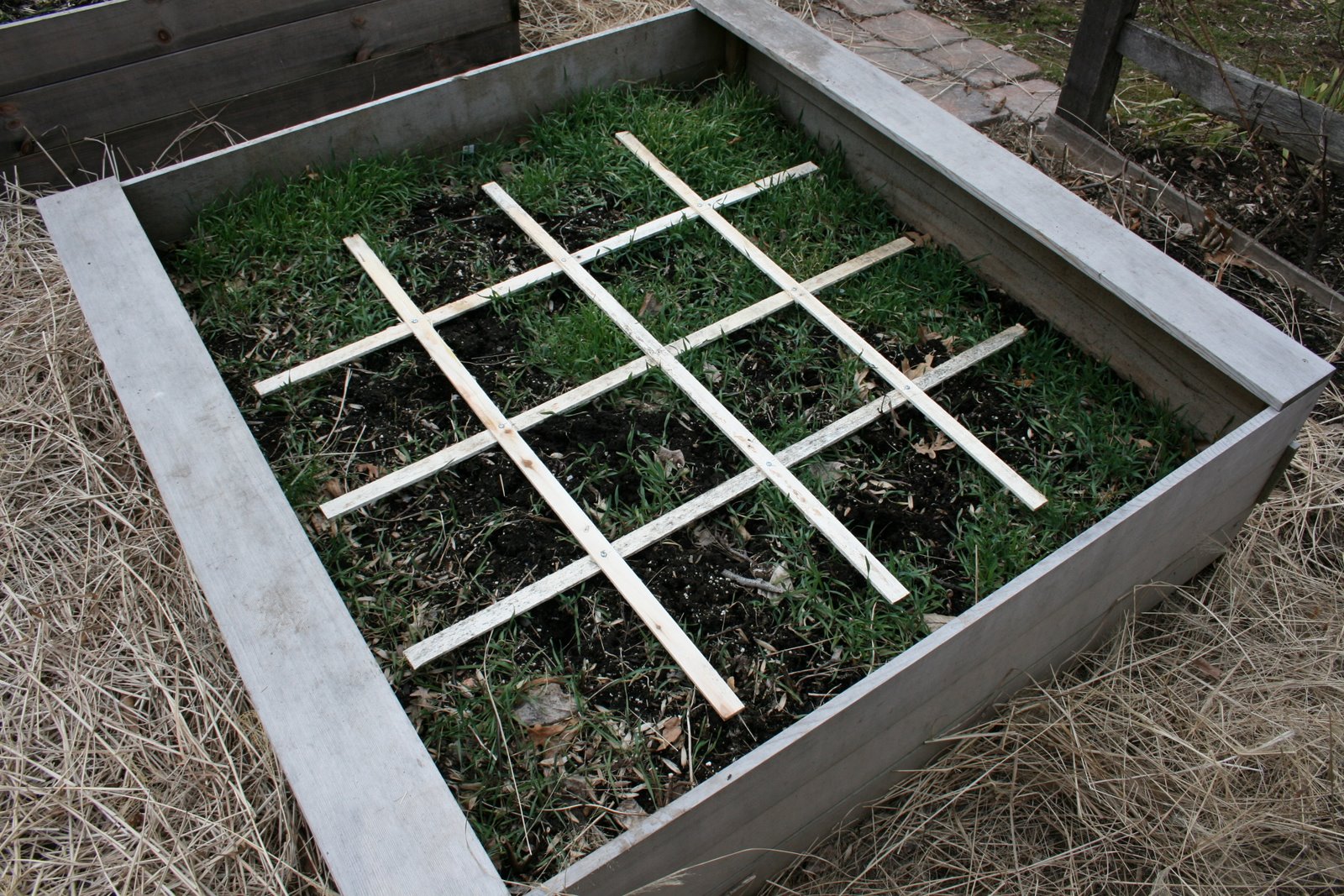
5. Take apart and put back together again. Well, hopefully you won’t have to take this step, but I did. As you see in the second picture, I realized that the grid was 4 x 4 for sixteen squares, but what I really wanted for my raised vegetable beds was 4 x 5 for twenty squares, so I wound up taking the grid apart and re-attaching one set of lathes at 6, 18, 24 and 30 inches.

http://rcm.amazon.com/e/cm?t=heirlgarde-20&o=1&p=8&l=as1&asins=1591862027&fc1=000000&IS2=1&lt1=_blank&m=amazon&lc1=0000FF&bc1=000000&bg1=FFFFFF&f=ifr

Baker Creek Heirloom Seeds: the best heirloom seed offerings I’ve seen anywhere

I recently received my Baker Creek Heirloom Seeds catalog. I love it. The whole thing deserves a cover to cover read. The heirloom seed offerings are phenomenal–the best I’ve seen anywhere. The descriptions and histories of the various seeds are interesting and illuminating. For instance, I’d never heard of some of the cucumbers offered, particularly those from India. There are cucumbers in many colors: white, yellow, green, and even brown.
~
The seed selection is vast and diverse. They have so many of my favorite black and green tomatoes that I was out in the garden looking for more places to grow tomatoes. The catalog notes that Baker Creek offers more melons than any other catalog. I was happy to find a 60 day maturing watermelon. Also, you will not find any GMOs in this catalog, not even GMO corn.
~
The story of Baker Creek and the company’s aims are also to be applauded. It is a family owned business from Missouri (my home state) which has been able to grow every year in size and offerings. In the back of the catalog is a reprint of an article about the founder, Jeremiath Gettle. I love the story of how his love of heirloom vegetables and seed saving has grown into a thriving business. This is truly a story of how following you passion can reap vast personal rewards.
~
In addition to offering seeds for sale, Baker Creek also publishes a magazine (with a great name) “The Heirloom Gardener;” has a poultry farm for historic, rare breed chickens; and hosts several festivals at Bakersville, the historical village they are creating.
~
For more information, check out their websites:

http://rareseeds.com/
http://heirloomseedsmen.com/
http://theheirloomgardener.com/ (no relation to this blog)