Old Farmer’s Almanac Spring Planting Schedule (May)

As I wrote in my prior posts on my April planting schedule and heirloom seed sources and potato planting and asparagus harvesting, I am following the Old Farmer’s Almanac Gardening 2008 Calendar this year. As a a relatively new vegetable gardener (most of my gardening experience is as a flower gardener), the Calendar is an indispensable help in knowing when to plant what.

~
According to the Calender for my area in New Jersey (zone 6b), May is the time to plant the rest of the vegetables I have not yet planted. Here’s a summary of what I’ve done to date:
~
Outside the perimeter of the Children’s Garden:
~
*Asparagus – planted three years ago, the first harvest was two weeks ago, the second harvest was last week, and the third harvest will be in the coming week; I love perennial vegetables
~
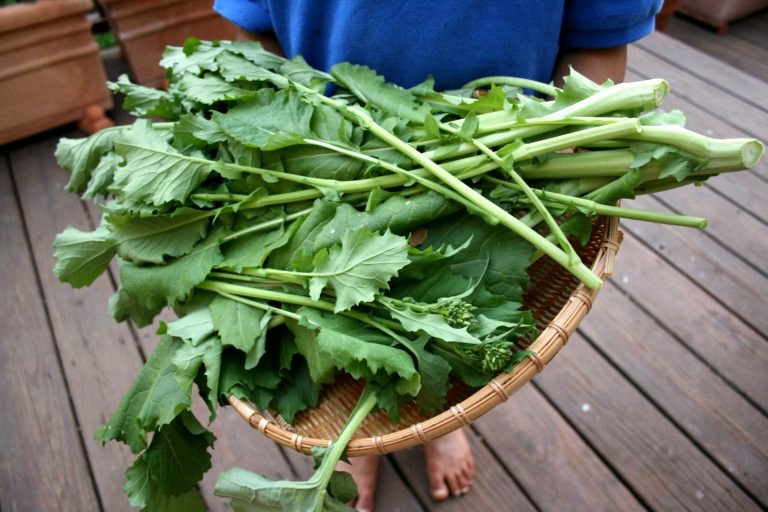
*Brocolli Rabe (pictured) – seedlings planted in early April were harvested last week and were delicious
~
*Lettuce, Swiss Chard, Carrots, Leeks, Beets, Onions, and Sugar Snap Peas – also planted in early April, but not yet ready to harvest
~
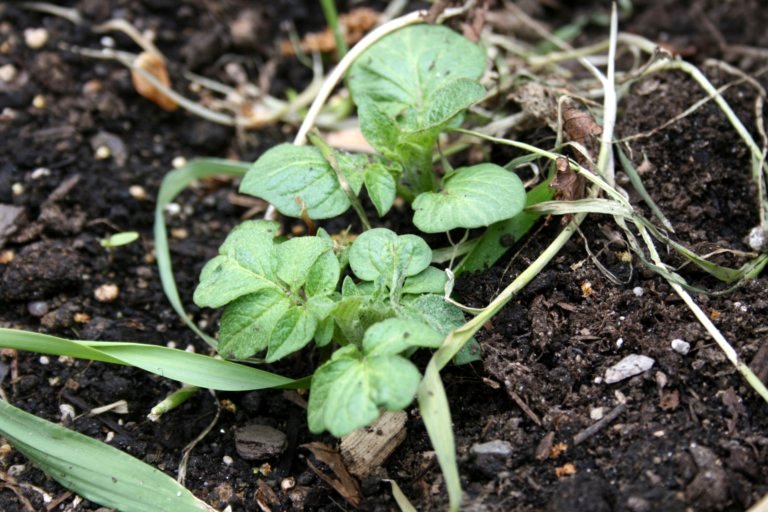
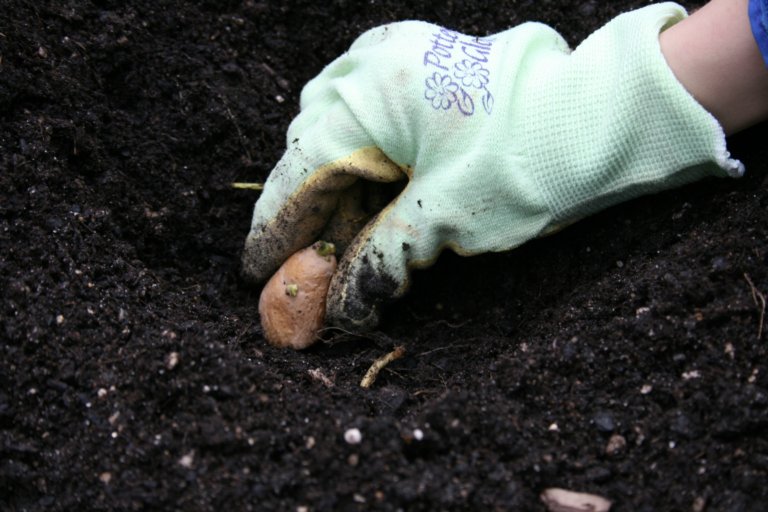
*Potatoes (pictured) – seed potatoes planted two weeks ago have already started to come up–I just bought the salt hay to cover them this week
~
*Tomatoes, Zucchini, Cucumbers, Eggplant, Pumpkins, and Watermelon – some were planted last week, the rest will be planted this week
~
*Corn – to be planted this week Native American-style with a piece of whole fish for each seedling–this is another great project with the kids, though you have to harvest all of the ears the minute they are ready before the critters get to them
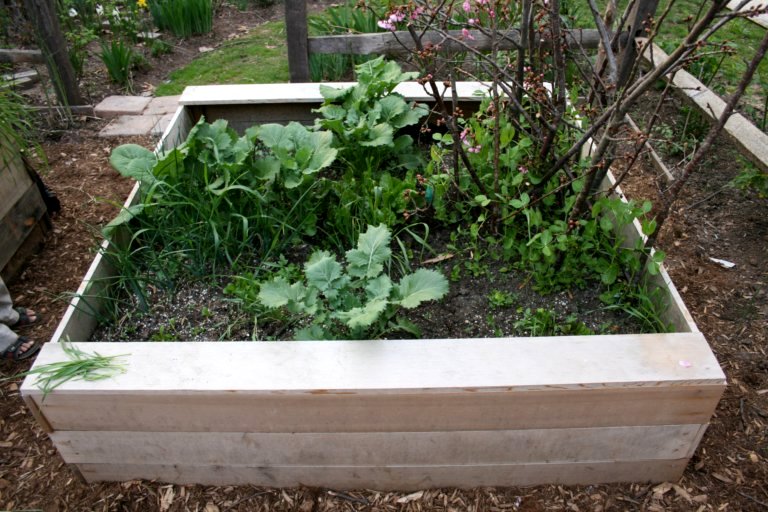
Vegetable Gardening with Children: How to Plant Potatoes and First Harvest of the Season – Asparagus

While my less-than-half-an-acre suburban lot is primarily a flower garden, I do enjoy growing the vegetables and herbs for which I have room. A few years ago, I visited the working organic farm at Old Sturbridge Village in Massachusetts and learned that it would take approximately one acre to feed my entire family of seven for the year. Thus, rather than trying to feed my family, the vegetables and herbs primarily provide an opportunity for my children’s participation and education. We get to organically prepare the soil, plant the seeds or seedlings, and then harvest the results. Further, we get to plant heirloom varieties that are otherwise not available. In terms of yield, we produce enough for the occasional amuse-bouche or side dish. To satisfy our need for organic and locally harvested produce, we shop at the local farmers’ markets in Chatham and Summit from June through November.
~
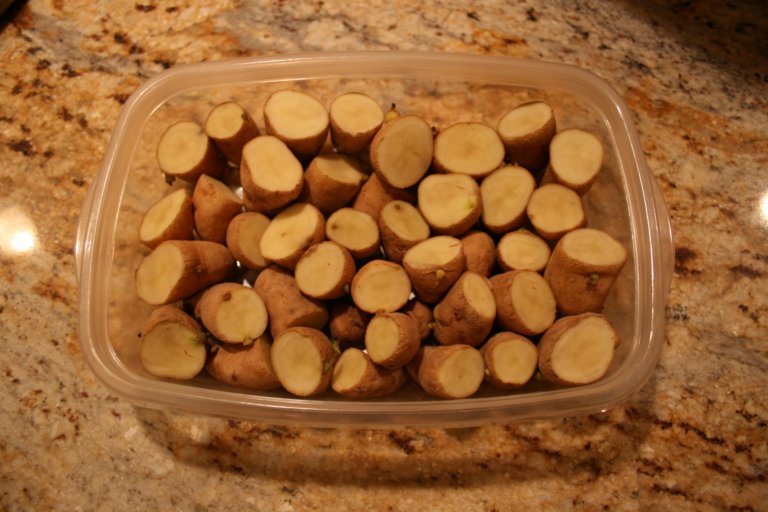
Last week, according to the Old Farmer’s Almanac, it was time to plant our seed potatoes. This is a perfect activity to do with children, or if old enough to handle a sharp knife, something that the children can do by themselves with some adult supervision. First, our son (age eight) prepared our seed potatoes (purchased from Seed Savers Exchange) by cutting them into one inch pieces. Second, we cured them cut-side up for three days to prevent them from rotting in the soil. Third, we planted them an inch-or-so in the raised vegetable bed with the eyes up.
~
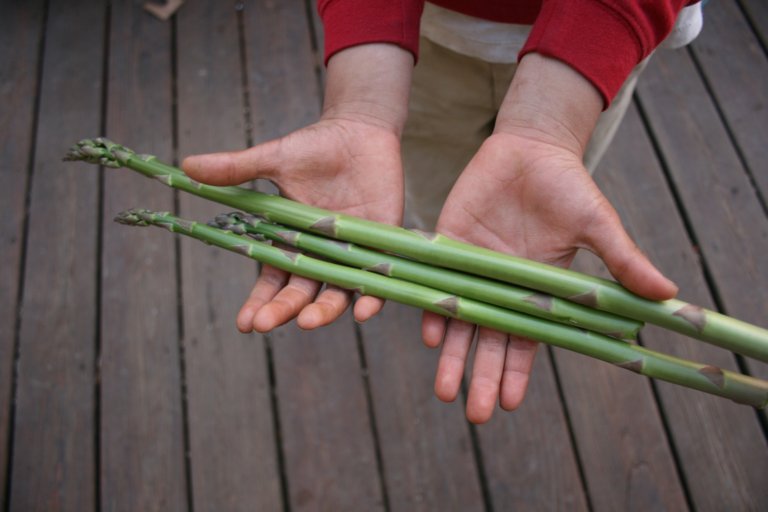
Three years ago, we planted our first asparagus crowns (purchased from the Cook’s Garden) around the outside of the Children’s Garden. This weekend, we got our first harvest–three big, beautiful stalks of asparagus (pictured). The kids were so excited to cut the asparagus (about one inch above the ground), roast it, and then eat it with dinner. In the coming weeks, we’ll have more to harvest.
~
Related posts: Ten Tips for Planning a Children’s Garden, How to Build Raised Vegetable Beds, Old Farmer’s Almanac Spring Planting Schedule

Wall Street Journal & New York Times: Suburban Farming and Kitchen Gardens

Today, the Wall Street Journal featured an article and a video about individuals who have started to farm their own and their neighbors’ suburban lots for food. Kelly Spors writes:

“Since 2006, Mr. Nash, 31, has uprooted his backyard and the front or back yards of eight of his Boulder neighbors, turning them into minifarms growing tomatoes, bok choy, garlic and beets. Between May and September, he gives weekly bagfuls of fresh-picked vegetables and herbs to people here who have bought “shares” of his farming operation. Neighbors who lend their yards to the effort are paid in free produce and yard work.”

Last week, the New York Times also wrote an article about the less-extreme resurgence of kitchen gardens. Anne Raver writes:

“During World War I, to save fuel and labor, President Woodrow Wilson had sheep grazing on the White House lawn. His wife, Edith, planted vegetables to inspire the Liberty Garden campaign, in which thousands of students, called ‘Soldiers of the Soil,’ grew their own food in their schools and communities, she said. As the Allied powers began to win, the name Liberty Garden was changed to Victory Garden…Just after Pearl Harbor, Ms. Hayden-Smith said, another Victory Garden campaign was started. Eleanor Roosevelt grew peas and carrots on the White House lawn, and by the end of the war, Ms. Hayden-Smith said, ‘Americans were producing 40 percent of the country’s produce’ in their gardens’ (emphasis added).”

Old Farmer’s Almanac: Spring Planting Schedule (April) and Heirloom Seed Sources

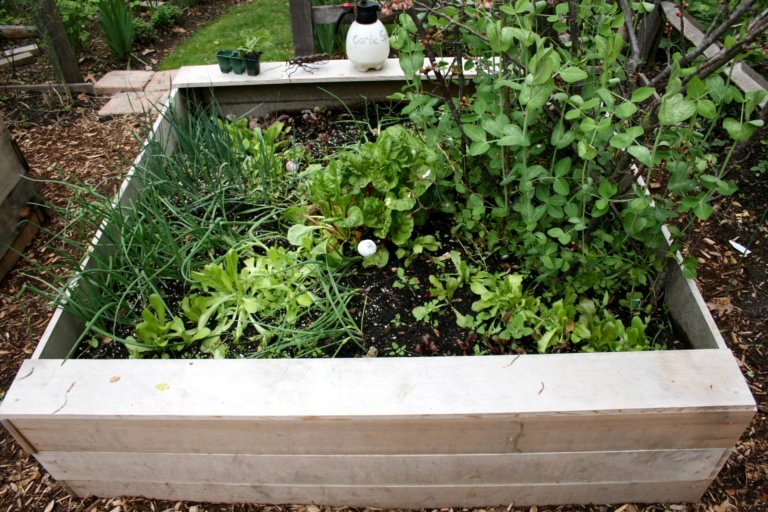
I finally got to planting out my vegetables with the kids this weekend in the Children’s Garden. According to the Old Farmer’s Almanac, I made it just under the wire to plant many of my spring crops. In the early vegetable raised bed, I planted beets, onions, leeks, Swiss chard, carrots, lettuce, sugar snap peas, and broccoli raab.

In zone 6b, beets, broccoli, carrots, lettuce, parsley, onion sets, peas, and turnips need to be done now. The vegetables which can be started now until early to mid April are brussel sprouts, cabbage, cauliflower, collards, kale, leeks, radishes, spinach, and Swiss chard. I have planted a mix of heirloom and modern hybrids. The following are the heirloom varieties I’ve sown:

  • Lettuce Mix from Seed Savers Exchange of Amish Deer Tongue, Australian Yellowleaf, Bronze Arrowhead, Forellenschuss, Lolla Rossa , Pablo, Red Velvet, and Reine des Glaces
  • Bull’s Blood Beet purchased from Thomas Jefferson’s Monticello; the Monticello online store is a good source of heirloom early American plants and seeds
  • Nantes Carrot, also from Seed Savers Exchange; “Seed Savers Exchange is a nonprofit organization that saves and shares the heirloom seeds of our garden heritage, forming a living legacy that can be passed down through generations”

Related posts: How to Build Raised Vegetable Beds; Organically Preparing the Soil for Vegetable Planting; and Old Farmer’s Almanac Gardening 2008 Calendar

Follow-up: Old Farmer’s Almanac Spring Planting Schedule (May)

Raised Vegetable Beds: Organically Preparing the Soil for Planting

As a follow-up to my prior post about how to build raised vegetable beds, we are now organically preparing them for spring planting.

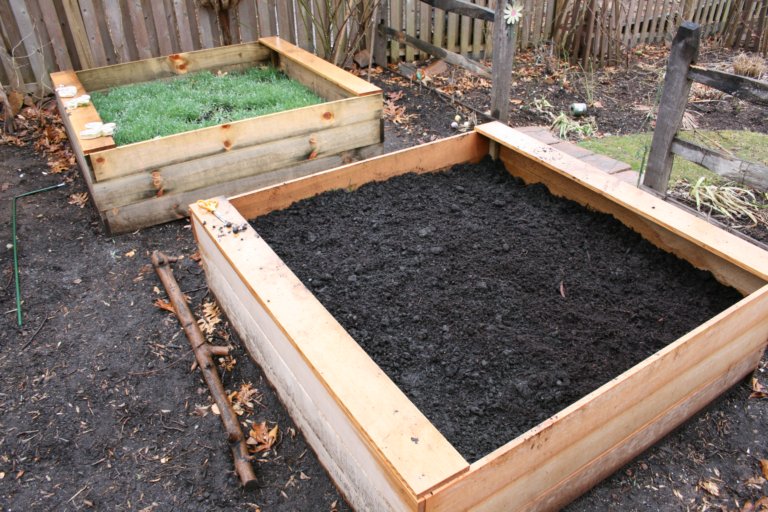
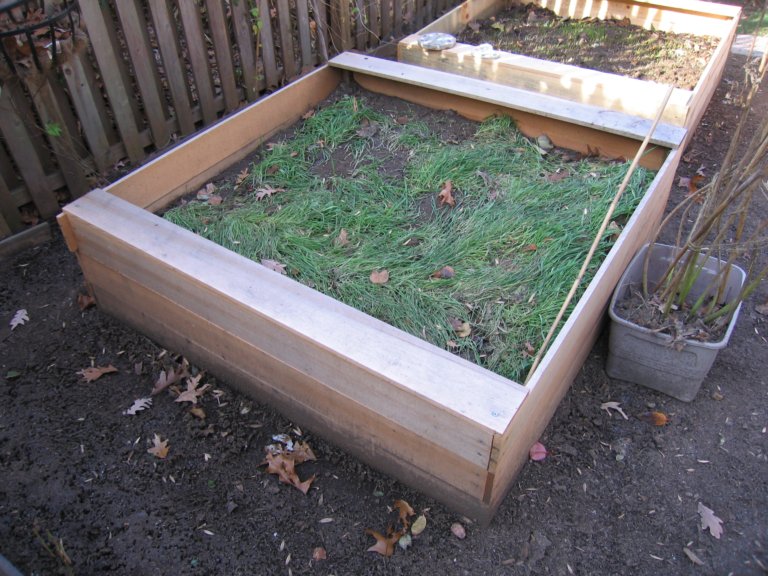
In the picture, the bed in the back is in the “before” stage and the bed in the front is in the “after” stage.

In the “before” stage, you can see that the box which was previously filled with compostable garden waste has settled about 6-12 inches over the winter. Some of the settling is due to the breaking down of the garden waste. The cover crop of winter rye was sown very late, in November I think. Over the winter it grew to about 6 inches tall.

In order to prepare the box for planting, I turned over the winter rye, then added bumper crop and top soil to re-fill up the box. Under this covering, the winter rye will decompose adding more organic material to improve the soil for growing vegetables.

Our vegetable plot is rather small for our family, but we hope through growing crops closely together that we will get some meals from the garden and a great learning experience for our children.

Container Gardening: Autumn Cleanup and Rosemary in Bloom

In autumn, before the first frost, I move some of my non-hardy plants grown in containers from my deck into more sheltered locations.

Some, I move into the garage so they can go dormant under milder conditions, like my fig tree and a few of my roses. Others, like the elephant ears, I move into the house. The herbs, except the chives and thyme which are hardy and can be left outdoors, I have usually treated as annuals.

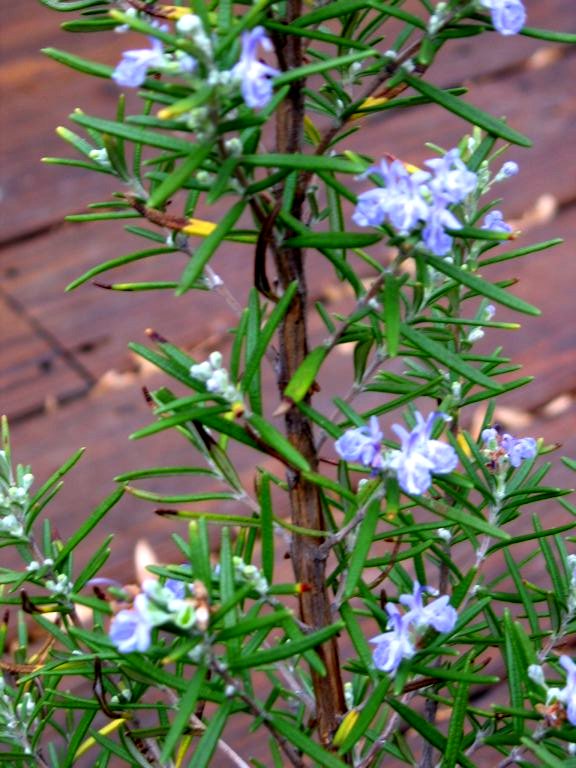
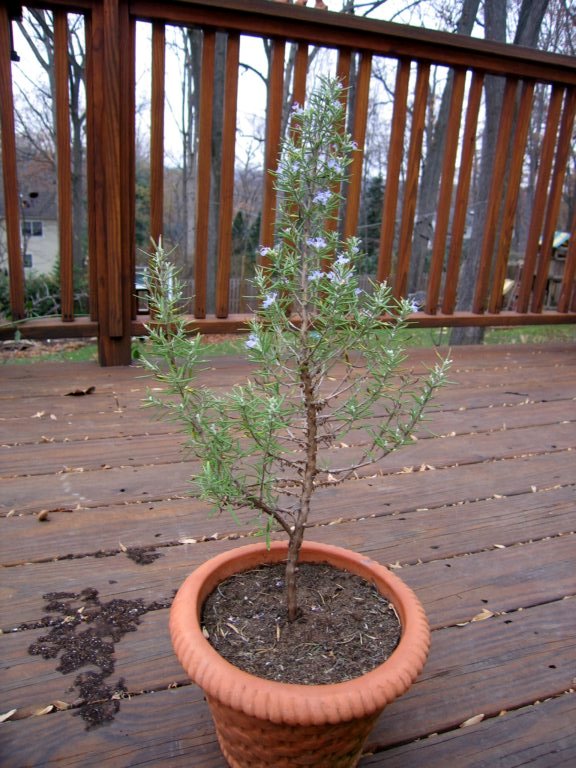
This year, I brought my rosemary plant indoors and, to my surprise, it started blooming. It is now covered with the small, light purple flowers that you see in these pictures.

Heirloom Gardener Magazine

I just found out about Heirloom Gardener Magazine, which has no relation to this blog:

http://theheirloomgardener.com/

Based upon the website, it looks like a great magazine for heirloom gardeners, primarily focused on vegetables, which makes sense given that it is published by Baker Creed Heirloom Seeds:

http://www.rareseeds.com/

As you can probably tell by my blog to date, my garden is primarily a flower garden, with a small vegetable patch. That being said, the magazine does have some articles about heirloom flowers, so I have ordered some back issues to see if I want to subscribe.

There is a review of the magazine on the following blog:

http://davesgarden.com/products/gwd/c/2875/

Old Farmer’s Almanac Gardening 2008 Calendar

I just got my Old Farmer’s Almanac Gardening 2008 Calender. I love it. It has wonderful full color illustrations and just enough room to keep your appointments, but not take up too much space.

The best part is the gardening folklore, advice, and hints which are included each month relating to the garden chores, weather, and plants expected that month. On the last page is listed the planting times for an array of vegetables according to your region of the country. The calender also includes a preview of the gardening article for the month which can be read on the Farmer’s Almanac website.

Related post: Old Farmer’s Almanac Spring Planting Schedule; How to Build Raised Vegetable Beds; and Raised Vegetable Beds – Organically Preparing the Soil for Planting

http://rcm.amazon.com/e/cm?t=heirlgarde-20&o=1&p=8&l=as1&asins=1571984283&fc1=000000&IS2=1&lt1=_blank&lc1=0000FF&bc1=000000&bg1=FFFFFF&f=ifr

Vegetables and Herbs: How to Build Raised Vegetable Beds (on a Slope/Hill)

In my children’s garden, my children and I grow vegetables in addition to flowers. For the last two years, we used the same raised bed construction that I used in the side garden:

http://heirloomgardener.blogspot.com/2007/11/creating-space-for-garden.html

These were short raised beds constructed with six inch wide ipe wood. You can see a picture of one of these beds below from last summer with heirloom lemon cucumbers:

The rabbit fencing around the cucumbers was to keep the resident groundhog from eating the cucumbers in the same way he did the tomatoes.

Towards the end of the summer, we visited New York Botanical Garden’s Home Gardening Center (http://www.nybg.org/hgc_online/hgc_onsite/) and were inspired by their raised beds that were significantly taller than the ones we had constructed. Thus, once we had harvested the last of our cucumbers and zucchinis, my husband deconstructed the old beds and built the new ones you see below:

Ipe was too difficult to work with and costly, so we made these out of cedar wood. We purchased standard six by one inch, un-treated ten foot planks and had them cut in half. Each box (two of three are pictured) is made of three planks on three sides and four planks on the fourth side because our entire property is on a slope. Two additional boards are placed on top on either side to create a place where you can sit, place tools, or when the vegetables have grown, stand.

We filled the bottom of the boxes with compostable garden waste. On top, we added a mix of composted cow manure, Bumper Crop and top soil. Then, to protect the soil, we sowed a cover crop of winter rye that I purchased from Johnny’s Seeds (http://www.johnnyseeds.com/). The winter rye will be turned over in the spring adding even more organic material to the soil.

The overall result was a neater looking garden that will hopefully produce an even more robust crop next year.

*****

For a follow-post on organically preparing the soil for planting, click here:
http://heirloomgardener.blogspot.com/2008/03/raised-vegetable-beds-organically.html