How to Keep Track of What Plants You Have Bought, Where They are Going, and What You Still Need to Buy: The Garden Planning Binder

This month’s Garden Bloggers’ Design Workshop at Gardening Gone Wild is on Labeling and Record Keeping. Like many of the other bloggers, I have tried many different methods of labeling and record keeping with varying degrees of success over the years. For example, I tried the wooden and metal markers, but I didn’t like how they looked in the garden, so I no longer use them. In recent years, I have settled on three means of record keeping: the Garden Journal, the Garden Planning Binder, and the photographs of my garden.
~
In terms of the Garden Journal, I wrote a separate post about it last year that I won’t repeat in full here: “I find the garden journal is an invaluable tool to help me keep track of my garden and plan for the future. I started keeping a garden journal about six years ago. Before then, I would keep notes at random on successes, failures, and sources of inspiration. These I would easily misplace and forget about.”
~
I used to try to keep track of absolutely everything in my Garden Journal, but one aspect of my record keeping kept slipping through the cracks: what plants I had ordered, where I planned to plant them, and what I still needed to buy. I would print out my online orders and put them in a file folder to read alongside my Garden Journal, but it was just too disorganized. Boxes of plants that I had ordered in the fall and winter would arrive on my doorstep in the spring and I would forget why I had ordered such and such a plant and/or where I planned to plant it. Sometimes I would remember the space I was trying to fill, but other times I would not and need to find a home for it. At some point later in the season, the intended space would present itself and I’d remember what I had planned to plant there, causing me to move the plant or change the plan.
~
My Garden Journal needed a friend. Thus, the Garden Planning Binder was born. I bought a large three-ring binder and anytime I ordered anything–trees, shrubs, bulbs, perennials, annuals–I would print out the order form, write down where I planned to plant it, punch holes in it, and put it in the binder. This works on purchases for my containers, as well as my beds. Also, by keeping all of the receipts together, I am better able to keep track of my budget. Now, when the boxes arrive in the spring, I just find the matching order in the Garden Planning Binder and immediately plant the plants where they are supposed to go.

***

One unrelated note about labeling dahlia tubers. If you over-winter dahlia tubers, here is one specific record-keeping suggestion: write the name of the dahlia on the actual tuber with a black Sharpie marker. I used to keep them in paper bags with the name of the dahlia on the bag, but I found that the paper bag disintegrated by the next spring.
Organic Pest Control: Threelined Potato Beetles, Colorado Potato Beetles, and Japanese Beetles

I could never imagine spraying inorganic chemical pesticides on vegetables or herbs that I am growing in my own raised vegetable beds. This year, two beetles have started to attack my potato plants.

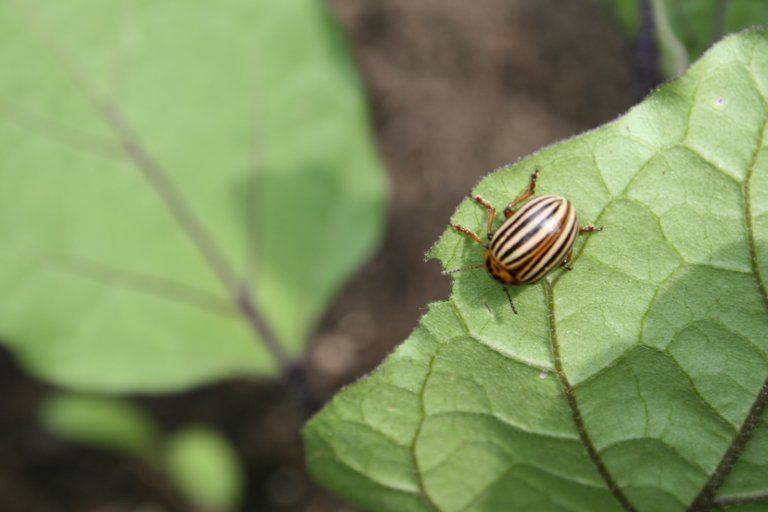
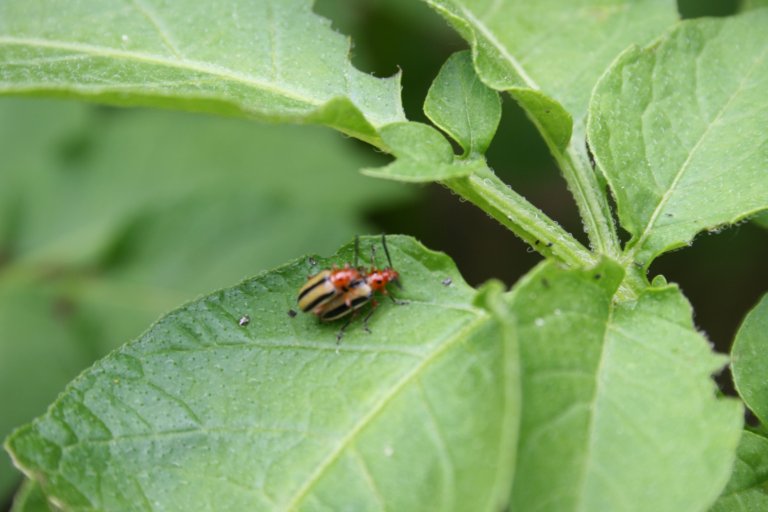
The more numerous of my beetles are the smaller (pictured) Threelined Potato Beetles (Lema trilineata).

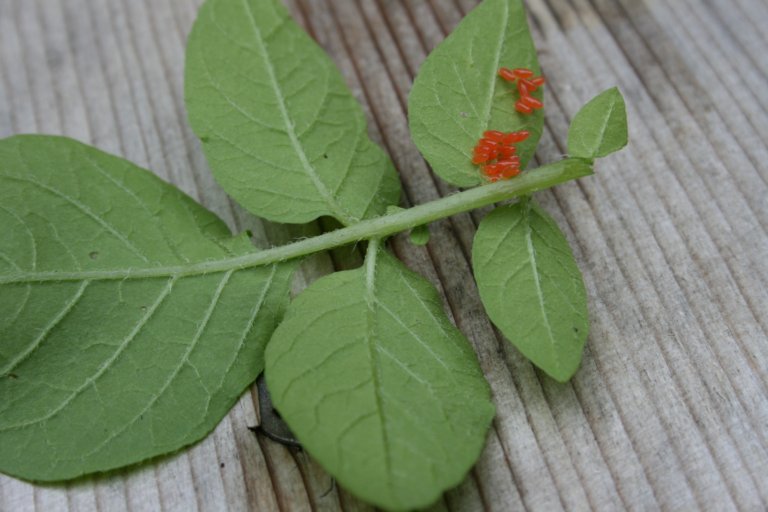
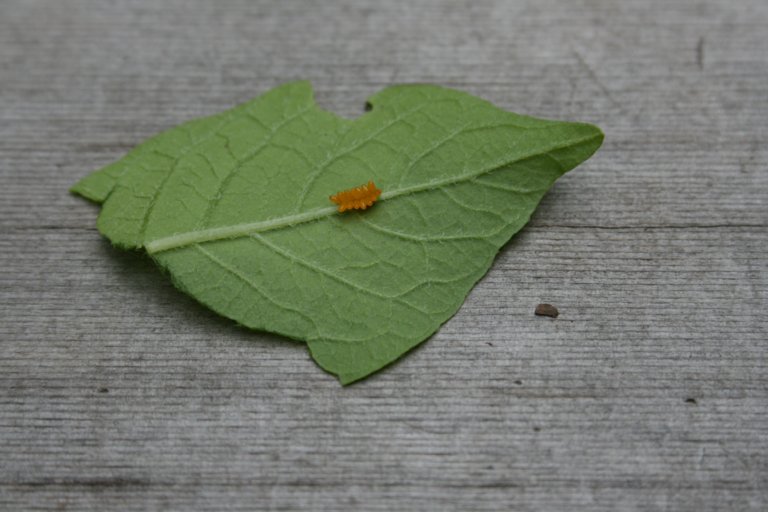
They lay small yellowish eggs (pictured) on the underside of the potato leaves.
The other, larger beetle is the Colorado Potato Beetle (Leptinotarsa decemlineata).

These beetles lay somewhat larger, orange eggs (pictured), also on the underside of the potato leaves.

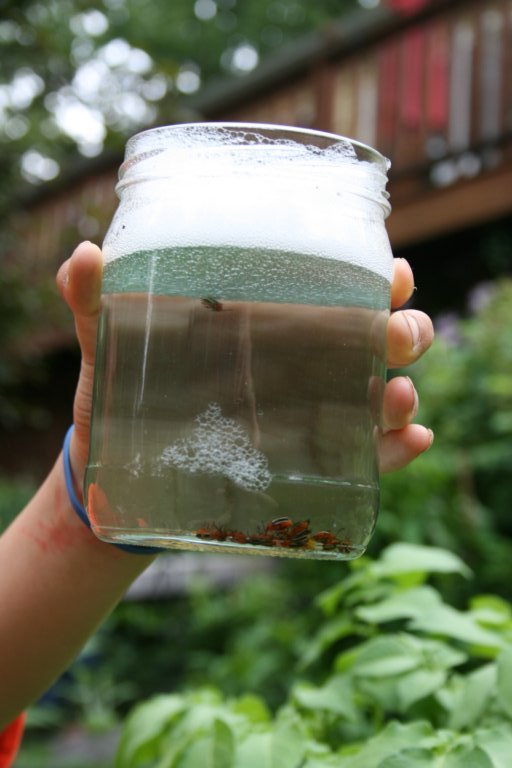
Organically controlling the beetle population is something that I have taught my children how to do, includes them in the vegetable tending process, and is an activity that they enjoy. Here’s how to do it:

1. Fill a jar with soapy water.
2. Hold the jar under any beetles that you see.
3. If you bring your hand close to a beetle, it will have a natural flight response of dropping to the ground–or in this case, into your jar.
4. Once they fall into the soapy water, they lose the ability to fly and quickly sink to the bottom; in 5-10 minutes, you can rid yourself of dozens of these pests.
5. As for the eggs, check the undersides of your leaves; I find them sticky and difficult to remove, so I just tear off the leaves and stick them in the water too.

Side note: This method also works on the Japanese Beetles (Popillia japonica) that attack my roses in July.

Gardening with Children: Replacing the Playground Mulch with Cedar Mulch

Last year, we put down a fresh layer of playground mulch in our children’s play area (pictured). However, the playground mulch was made of pine and this was not a good thing.

Because the play area is at the bottom of the hill, rain washed down to the play area and the playground mulch became moist. By the end of the season, the playground had become a mushroom patch and the children refused to play there.

So last week, we skipped the pine playground mulch and put down thirty large bags of high quality cedar mulch. For the kids’ sake, we hope the cedar mulch keeps away the mushrooms.

Container Gardening: Autumn Cleanup and Rosemary in Bloom

In autumn, before the first frost, I move some of my non-hardy plants grown in containers from my deck into more sheltered locations.

Some, I move into the garage so they can go dormant under milder conditions, like my fig tree and a few of my roses. Others, like the elephant ears, I move into the house. The herbs, except the chives and thyme which are hardy and can be left outdoors, I have usually treated as annuals.

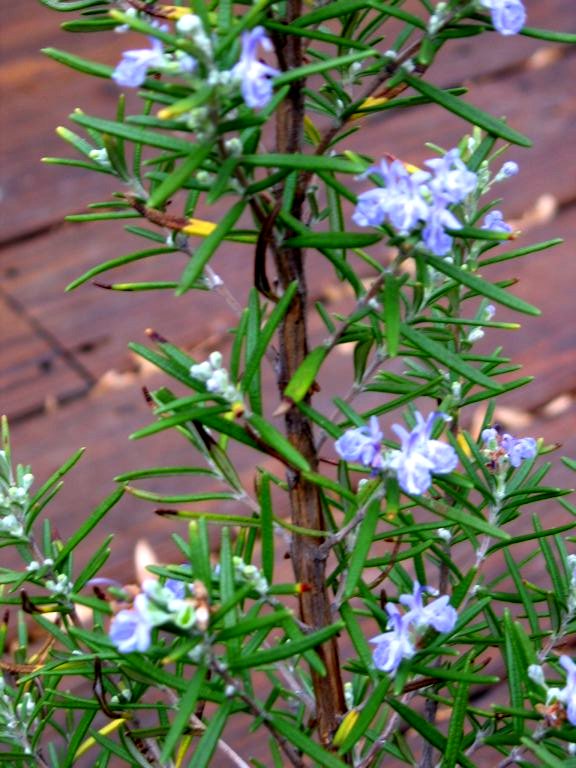
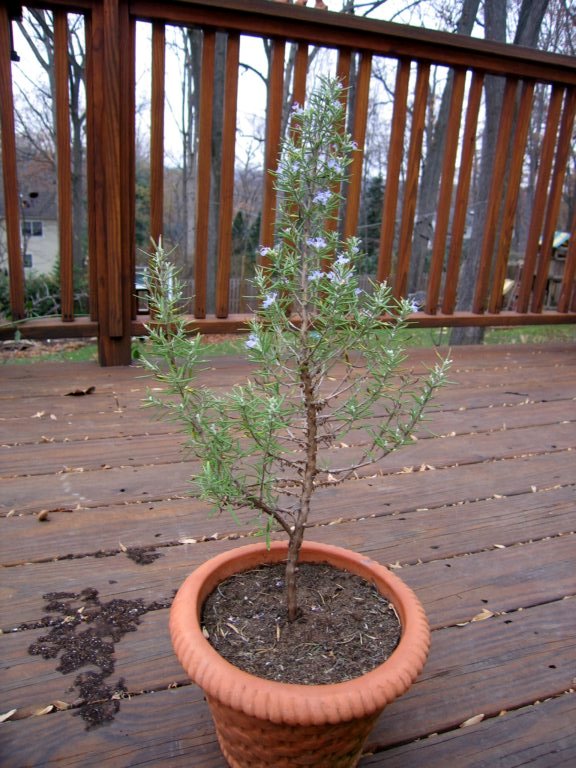
This year, I brought my rosemary plant indoors and, to my surprise, it started blooming. It is now covered with the small, light purple flowers that you see in these pictures.