Ask Heirloom Gardener: What Should I Do About Black Spot on my Roses?

Question from the mailbag (heirloomgardener [at] aol [dot] com): I have about 30 rose bushes and most are struggling due to black spot. What should I do?

Answer from Heirloom Gardener: Regarding the black spot, I wouldn’t worry about it at this time of year. It won’t kill the plant, even if all of the leaves fall off. If you want to prevent black spot on your roses next season, start your maintenance in the spring. I spray dormant oil right before the plant leafs out which kills any over-wintering spores that cause black spot as well as insects, etc. If you spray it now, it will kill the plant. After the plant leafs out, I spray with neem oil that smothers the spores every two weeks except during the heat of summer when it will burn the leaves.

Related posts: Dormant Oil Application for Pest Prevention

Ask Heirloom Gardener: How to care for David Austin Roses

Question from the mailbag (heirloomgardener [at] aol [dot] com): I read your post about how to care for heirloom roses. Does this apply to David Austin roses?

Answer from Heirloom Gardener: Yes, everything I wrote in my post about how to care for heirloom roses applies to David Austin roses. They are stronger than hybrid tea roses, not as strong as heirloom roses, but have the benefit of fragrance and repeat blooms. Relative to heirloom roses, here are some of my observations.

1. They all need a lot of water and very rich soil.

2. Because they were developed in the more moderate English climate, I have observed a few differences in their growth habit in New Jersey: they grow taller than stated on the plant tag, so I locate them in areas to accommodate the extra height; they are leggier, so I grow them in groups; and the summer is sunnier and hotter here, so they are healthier for me in part shade.

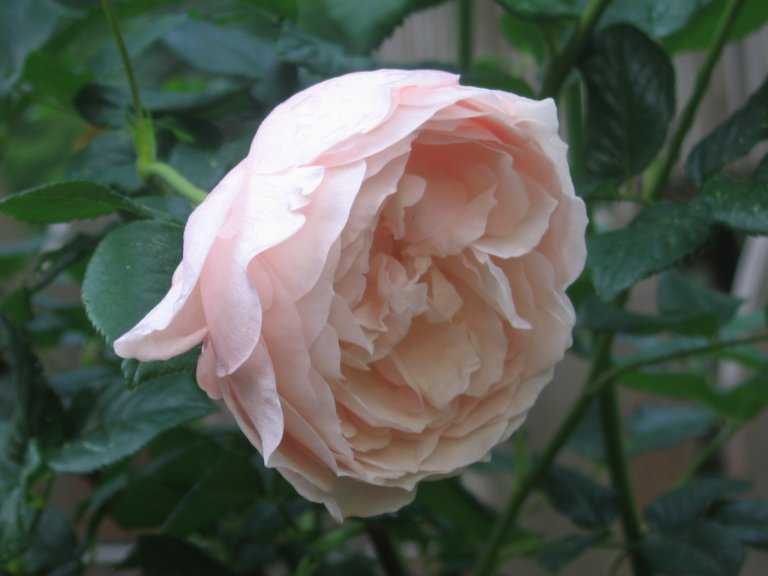
3. Some are better than others as it relates to health and vigor. In my experience, the best are: Graham Thomas, Heritage (pictured above), Abraham Darby, Sophie’s Rose and Mary Rose. Mary Rose is a sport of Winchester Cathedral, so my assumption is that Winchester Cathedral is as healthy as Mary Rose. I grew Mayflower which was healthy, but be warned that rain spoils the flowers. I also grow Molineaux because it is beautiful, but it requires a lot more coddling. I grew other David Austin roses that were less healthy, so I removed them from the garden.

Related posts: How to Care for Heirloom Roses; Are Heirloom Roses Hard to Grow?; Six Trouble-Free Heirloom Roses

Ask Heirloom Gardener: Are Heirloom Roses Hard to Grow?

Question from the mailbag (heirloomgardener[at]aol[dot]com): Are heirloom roses hard to grow?

Answer from Heirloom Gardener: In short, my answer is no, they are not hard to grow. I’m not sure why heirloom roses have a misperception of being difficult, when my experience has been the exact opposite. In fact, I wrote a whole post about how easy they are, How to Care for Heirloom Roses: No Chemicals, No Sprays and No Special Treatment Required. A short excerpt:

“Heirloom roses are wonderful because they grow with very little care. In response to a recent question, you do not need to use chemicals to grow these roses. If you are into organic gardening or low maintenance gardening, then old garden roses are the plants for you. Look for the following classes of roses: alba, moss, damask, portland, centifolia, and gallicas. Also, include in your selection species and rugosa roses.
~
Most likely, the only one of these to be found in the average garden center is the so called beach rose: either rugosa alba or the pink single rugosa. Fortunately, they are easily available from specialty nurseries, such as: Antique Rose Emporium, Ashdown Roses, and Rogue Valley Roses. All three offer wonderful containerized own root roses. Rogue Valley Roses also has larger than normal roses for shipment.”

In addition, I wrote a related post, Six Trouble Free Heirloom Roses, which includes recommendations of particularly easy heirlooms: Rose de Rescht, Paul Neyron, Madame Plantier, Variegata di Bologna, Henry Martin, and Tuscany Superb. In that post, I wrote:

“The old garden roses are so easy to grow. In most cases, you can dig a hole, add in some compost, plant the rose, water it well for the first year, and from there its requirements are the same as other shrubs in your garden. What they lack in remontancy is made up with fragrance and profusion of bloom. Also, if you grow the Portlands and Bourbons, you can have repeat blooming shrubs as well.”

Protect Your Roses Now: Spray Dormant Oil Before Your Roses Leaf Out

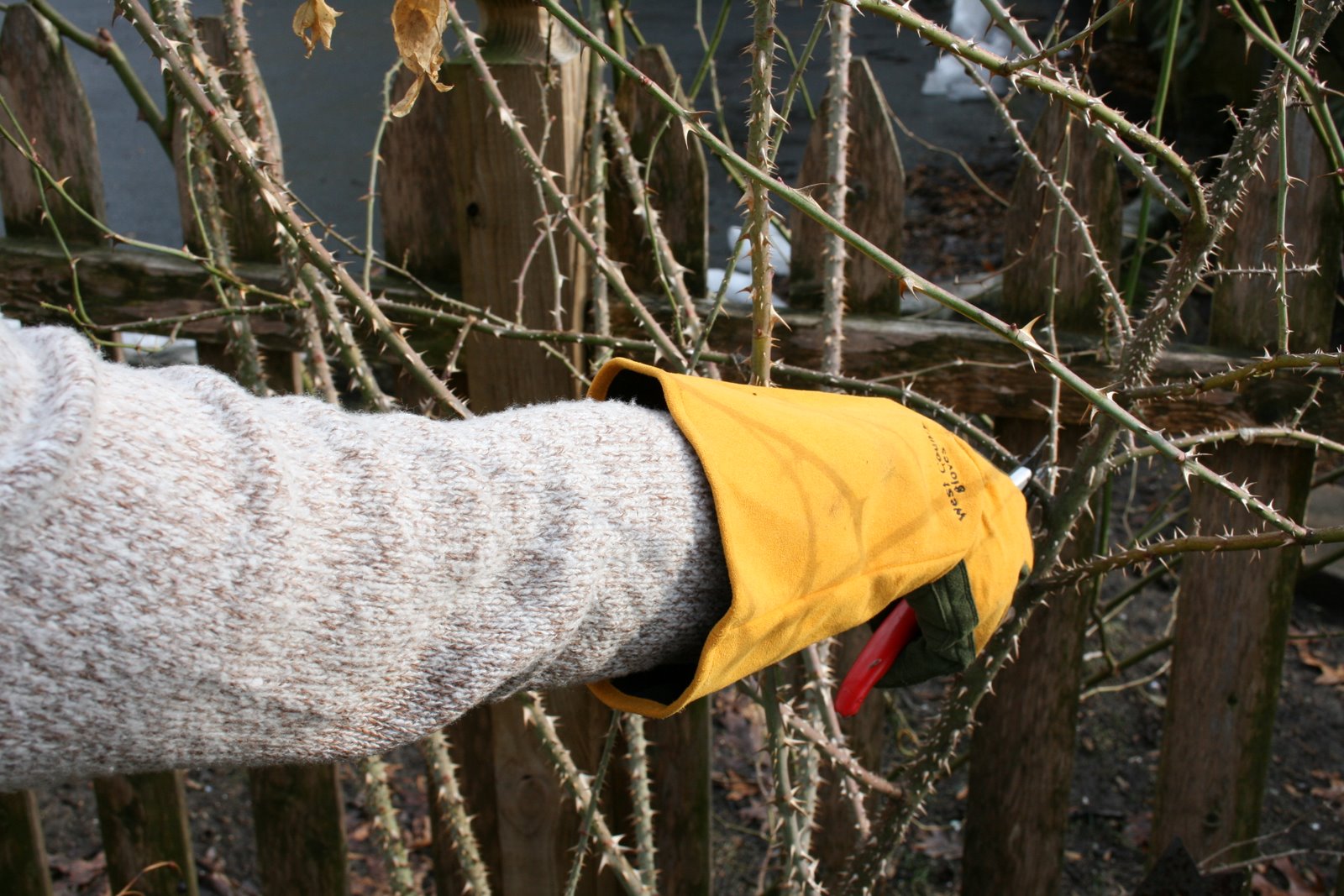
This weekend, I applied Dormant Oil to all of my roses. This is the best organic pest protection that you can give to your roses, as it smothers over-wintering insects and their eggs. As I wrote in a post last year:

“The dormant oil is horticultural oil diluted in water. Horticultural oil is available at most nurseries. As a dormant spray, the horticultural oil is less diluted than it is when its used after plants have leafed out. The importance of the horticultural oil for the organic rose gardener is that it suffocates many pest and their eggs before they become active as the weather warms up. It’s good as a control for aphids, spider mites, scale, sawfly, and thrips. The dormant oil should be applied all over the canes of the roses. The easiest time to do it is after pruning because all the unnecessary wood has been removed; but, if you will not complete your rose pruning until the leaves have already begun to emerge, do it now. The only brand that I know of is Bonide All Seasons Horticultural & Dormant Spray Oil.”

How to Prune Hydrangeas and Roses

As a clarification to yesterday’s post on pruning shrubs, you only want to cut back the hydrangeas that grow on new wood. If you cut back the hydrangeas that grow on old wood, you’ll be cutting off this year’s flowers.
~
For information on pruning hydrangeas that grow on old wood, check out this post:

~

~

For those of you who asked about pruning roses, check out these posts:

~

Ask Heirloom Gardener: How to Prune an Old, Neglected Rose

One of the unexpected responses to starting Heirloom Gardener is the questions I receive from readers about their gardens. Given how interesting I have found the inquiries, I thought I’d start sharing some of them with all of you. If you have a question for me, email me at heirloomgardener[at]aol[dot]com.

Question for Heirloom Gardener: I just read, and very much enjoyed, your series about pruning roses. Thank you. I’ve inherited a rose bush that is about 70 years old. It has some huge, gnarly growth at the bottom, from which is growing a horrible mess of old, twisted, and rubbing branches. The rose has been neglected for years, and what I have to deal with is a basic framework of very old growth supporting a mess of spindly young growth. So my question is whether this rose would be injured by being cut back to little more than its basic framework. I fear that such old branches might not like my demand that they be responsible for new canes again after years of playing a supporting role.

Heirloom Gardener’s Answer: You don’t want to shock the rose too much, so I’d prune it back over a two year time period. In my zone (6b), I would prune it back by one third in April. You may also remove one third of the canes from the ground. After it blooms in the summer, you can prune away any new growth. In the fall, bring it back to the height it was in the spring. The next year, repeat the process. Best wishes.

How to Care for Heirloom (a.k.a. Low Maintenance) Roses — No Chemicals, No Sprays and No Special Treatment Required

Heirloom roses are wonderful because they grow with very little care. In response to a recent question, you do not need to use chemicals to grow these roses. If you are into organic gardening or low maintenance gardening, then old garden roses are the plants for you. Look for the following classes of roses: alba, moss, damask, portland, centifolia, and gallicas. Also, include in your selection species and rugosa roses.
~

Most likely, the only one of these to be found in the average garden center is the so called beach rose: either rugosa alba or the pink single rugosa. Fortunately, they are easily available from specialty nurseries, such as: Antique Rose Emporium, Ashdown Roses, and Rogue Valley Roses. All three offer wonderful containerized own root roses. Rogue Valley Roses also has larger than normal roses for shipment.
~

Once you have the rose, planting is very simple. First, dig a hole a bit larger than the container. Mix as much organic matter into the soil which you removed as you wish. This could be compost, leaf mold, composted manure, Bumper Crop, or whatever else you desire. Plant the rose, tamp it down firmly, water, and mulch with more organic material.
~

After planting, old garden roses can fend for themselves. The reason we still have these roses in our gardens today is because they are able to thrive even with neglect. People did not continue to cultivate them because they were unhealthy and hard to grow, but because they are easy to grow and full of beauty. Many of the old roses available are found roses that survived without any help until someone ‘discovered’ them.
~
If you want to give them extra care, top dress them with compost once or twice a year. For more suggestions, and for those of us who can’t sit back and do nothing, there is a wonderful book on growing roses organically called Growing Roses Organically by Barbara Wilde.
~
Pictured in this post from top to bottom are: Apothecary, Celsiana and Noisette.
~

Related posts:
Six Trouble-Free Roses for the Home Gardener
Creating the Rose Garden with a Central Brick Path
The Rose Garden in Spring and Summer: Daffodils replace the Lavender Border
How to Prune Roses, Part I: An Introduction
How to Prune Roses, Part II: Old Rose Pruning Secrets
How to Prune Roses, Part III: Why Prune?
Index of Rose Photos

"Put the Pruners Down and Step Away": Autumn is not the Time to be Pruning your Roses and Hydrangeas

As a relatively new blogger, I’m still learning about all of the different blogging tools available. On Google Analytics, I’ve just figured out how to look at the keywords and web pages that visitors to my blog have been searching and reading.
~
Much to my surprise, I’ve recently attracted a lot of traffic to my prior posts on pruning roses and hydrangeas. My advice? Wait until late winter/early spring. I do absolutely no pruning of hydrangeas at this time of year and the only pruning of roses that I do is either of completely dead wood or canes that have grown so tall that they are likely to break in the winter winds and damage the rest of the plant. For more information, click below:
~
Hydrangeas: Why and How to Prune
How to Prune Roses, Part I: An Introduction
How to Prune Roses, Part II: Old Rose Pruning Secrets
How to Prune Roses, Part III: Why Prune?

Organic Pest Control: Threelined Potato Beetles, Colorado Potato Beetles, and Japanese Beetles

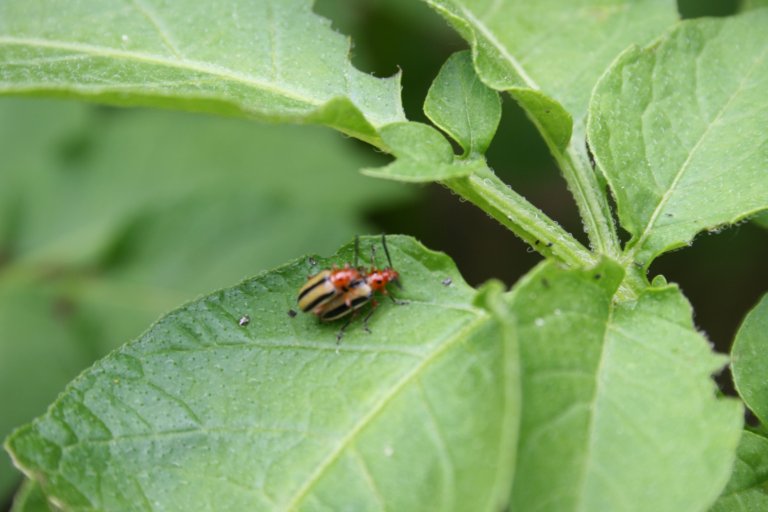
I could never imagine spraying inorganic chemical pesticides on vegetables or herbs that I am growing in my own raised vegetable beds. This year, two beetles have started to attack my potato plants.

The more numerous of my beetles are the smaller (pictured) Threelined Potato Beetles (Lema trilineata).

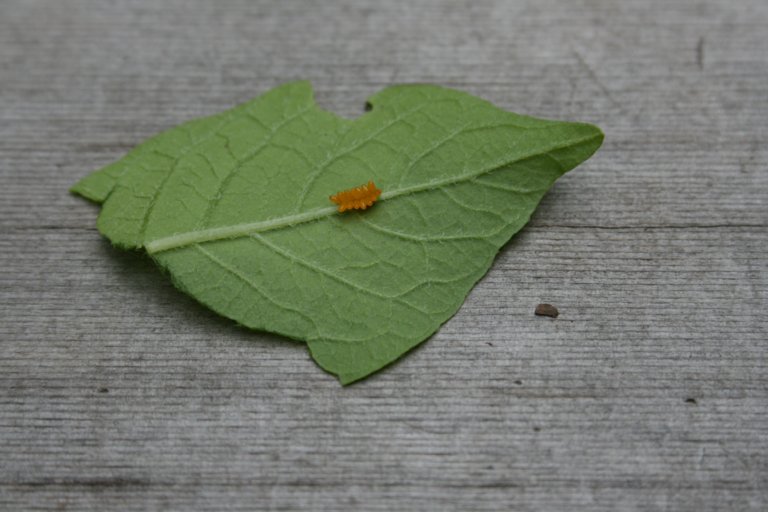
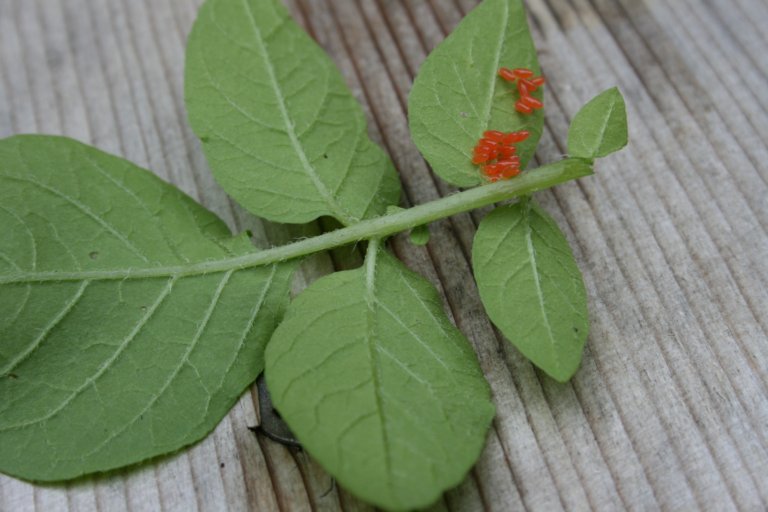
They lay small yellowish eggs (pictured) on the underside of the potato leaves.
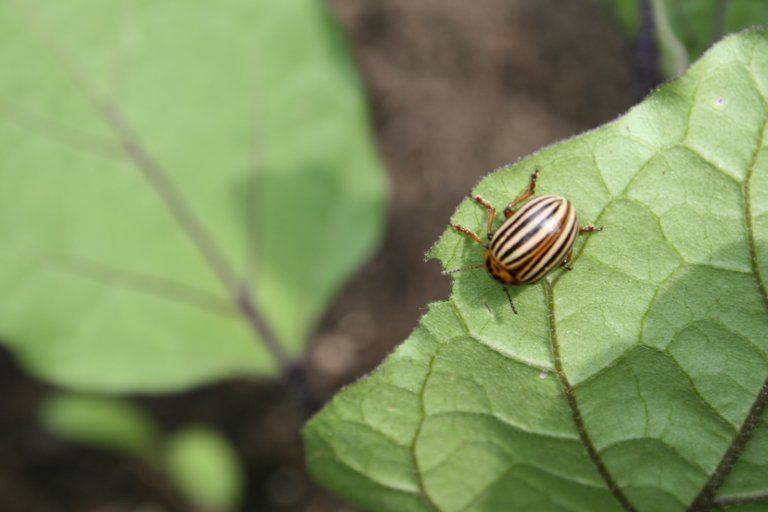
The other, larger beetle is the Colorado Potato Beetle (Leptinotarsa decemlineata).

These beetles lay somewhat larger, orange eggs (pictured), also on the underside of the potato leaves.

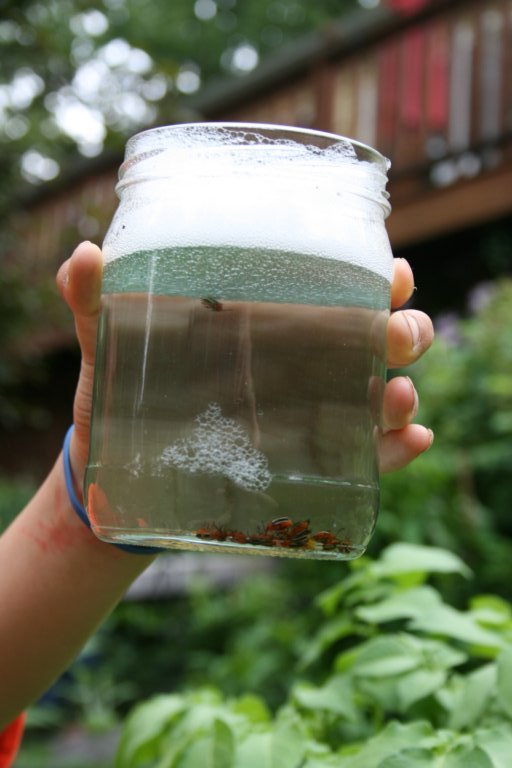
Organically controlling the beetle population is something that I have taught my children how to do, includes them in the vegetable tending process, and is an activity that they enjoy. Here’s how to do it:

1. Fill a jar with soapy water.
2. Hold the jar under any beetles that you see.
3. If you bring your hand close to a beetle, it will have a natural flight response of dropping to the ground–or in this case, into your jar.
4. Once they fall into the soapy water, they lose the ability to fly and quickly sink to the bottom; in 5-10 minutes, you can rid yourself of dozens of these pests.
5. As for the eggs, check the undersides of your leaves; I find them sticky and difficult to remove, so I just tear off the leaves and stick them in the water too.

Side note: This method also works on the Japanese Beetles (Popillia japonica) that attack my roses in July.