How to Prune Roses, Part III: Why Prune?

Every free moment I get now, I’m out pruning roses. This month I am working on my portlands, hybrid perpetuals, hybrid musk, and polyanthas. While I was outside pruning today, my oldest son–my most observant and handy child in the garden–asked me, “Why do you prune them?” What a great question. If we think about why we’re pruning, it will help us to get the most out of the job.
~
Pruning for Size
~
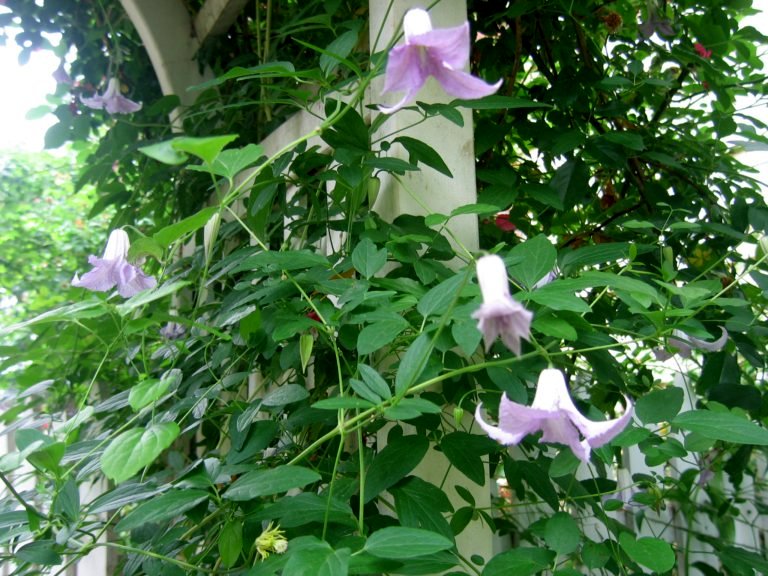
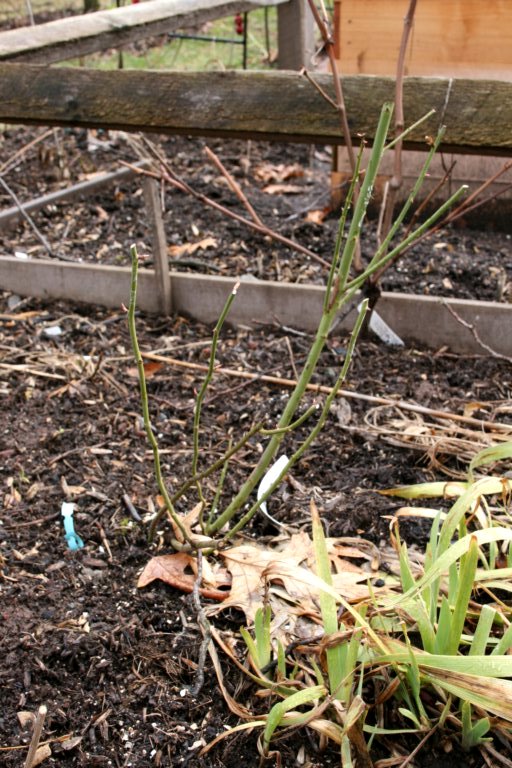
First, I prune to control the size of my roses. One of the criticisms against old roses is that they take up too much space compared to modern ones. Yet, you can grow them as smaller shrubs. The Reeves-Reed Arboretum (http://www.reeves-reedarboretum.org/) in Summit, New Jersey has a great collection of old roses in a small space. I observed that they prune these roses by half each year which keep them to a size of about 3 feet by 3 feet, instead of the usual 5 by 6. In my garden, I grow Russell’s Cottage (http://heirloomgardener.blogspot.com/2007/12/seven-sisters-rose.html, pictured above). It is reported to grow to between 6 to 12 feet high with equal girth. By pruning, I have kept it to about 4 feet tall and 3 feet wide.
~
The key to old shrub roses is accepting that these roses are really tough. They have survived this long because they can regenerate themselves and resist disease. It took awhile, but now I am no longer afraid of cutting them way back. By doing so, I get to enjoy a greater variety of roses in a small space.
~
Pruning for Blooms
~
Second, I prune my repeat bloomers to stimulate growth and better, more continual blooming. The early spring pruning gets rid of thin, unproductive wood in the roses which drain energy away from flower production. The rule of thumb is that you should cut out any growth less than the diameter of a pencil. I also find it helpful to ask myself if the branch could support a rose blossom. If not, then prune it out. Lastly, remember that the stems as they come off the prior branch get smaller and smaller. If there is doubt about rather to keep something or not, ask yourself if the branch which comes off of it is too small to be productive. Very rarely will you regret pruning out questionable wood.
~
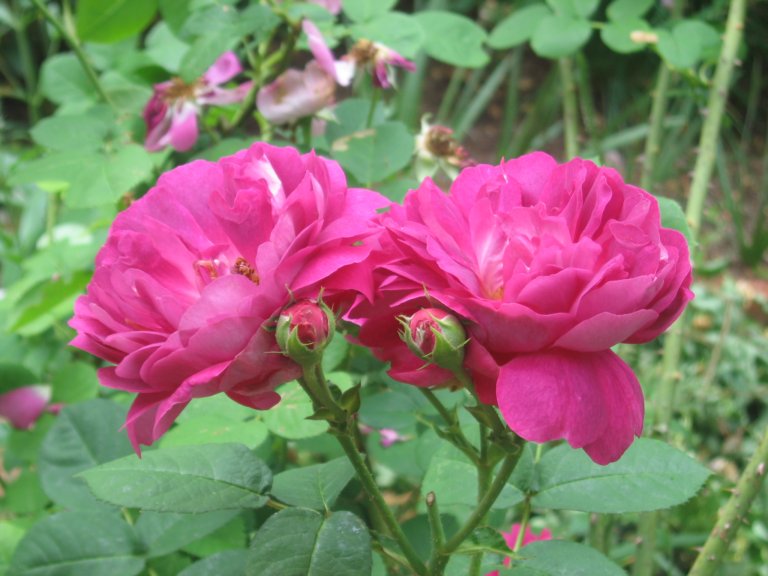
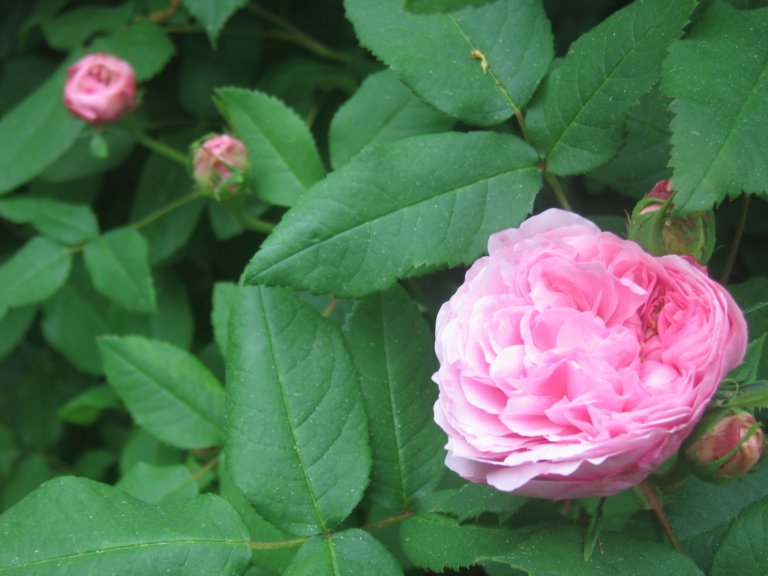
Without needing to sustain the wood you remove, the rose can give more energy to blooming. Oftentimes, if a repeat blooming rose goes a season where the blooming seems less prolific, cutting it back by half will remedy the situation. I find that portlands, in particular, need a firm pruning hand every three to four years. As they get larger, the frequency of their flushes decreases. With lots of young wood, shrubs like Rose de Rescht (http://heirloomgardener.blogspot.com/2007/11/rose-de-rescht.html, pictured above) and Jacques Cartier (a.k.a. Marchesa Boccella, pictured below), will bloom almost continuously from June to October.
~
While removing the unproductive wood, all dead and damaged wood should also be removed. This wood can harbor disease and will take energy away from the shrub. Finally, you can cut away branches that are congesting the center of your shrub. It is good to lighten it up so that air may easily pass through.
~

*****

~
With these two main ideas in mind, my pruning is directed and it’s easier to know what cuts to make: I prune to keep the rose in its allotted space and to direct more of the plant’s energy to make big, beautiful blooms that keep on coming.
~
For “How to Prune Roses, Part I: An Introduction” click here: http://heirloomgardener.blogspot.com/2008/02/how-to-prune-roses-part-i-introduction.html.
~
For “How to Prune Roses, Part II: Old Rose Pruning Secrets” click here:
http://heirloomgardener.blogspot.com/2008/03/how-to-prune-roses-part-ii-old-rose.html.
Organic Rose Gardening: Dormant Oil Application for Pest Prevention

Dormant oil application to my roses is the most important pest prevention task for me as an organic rose gardener. The dormant oil is horticultural oil diluted in water. Horticultural oil is available at most nurseries. As a dormant spray, the horticultural oil is less diluted than it is when its used after plants have leafed out.

The importance of the horticultural oil for the organic rose gardener is that it suffocates many pest and their eggs before they become active as the weather warms up. It’s good as a control for aphids, spider mites, scale, sawfly, and thrips.

The dormant oil should be applied all over the canes of the roses. The easiest time to do it is after pruning because all the unnecessary wood has been removed; but, if you will not complete your rose pruning until the leaves have already begun to emerge, do it now.

The only brand that I know of is Bonide All Seasons Horticultural & Dormant Spray Oil (see photo below).

http://rcm.amazon.com/e/cm?t=heirlgarde-20&o=1&p=8&l=as1&asins=B000BX4RNW&fc1=000000&IS2=1&lt1=_blank&lc1=0000FF&bc1=000000&bg1=FFFFFF&f=ifr

For related posts on Rose Pruning, see:

http://heirloomgardener.blogspot.com/2008/02/how-to-prune-roses-part-i-introduction.html

http://heirloomgardener.blogspot.com/2008/03/how-to-prune-roses-part-ii-old-rose.html

How to Prune Roses, Part II: Old Rose Pruning Secrets from Mottisfont Abbey and John Scarman

It was fifty-some degrees in Chatham today, so it was a perfect day to go out and continue my rose pruning. Today, I pruned another nineteen of my 150+ roses over two hours, including Ferdinand Pichard, pictured after his pruning (http://heirloomgardener.blogspot.com/2007/11/tbd_492.html, pictured in bloom).

As a follow-up to my prior post, “How to Prune Roses, Part I” (http://heirloomgardener.blogspot.com/2008/02/how-to-prune-roses-part-i-introduction.html), here is some additional, hard-earned advice on rose pruning.

When I first started growing old roses, I followed the traditional pruning instructions to prune once bloomers after their summer flush. This did not work. Each spring, as the roses pushed out new growth and became laden with blossoms, the shrubs would splay such that they obstructed the paths in the garden, toppled over the perennials around them, and often brought each other down. Those that weren’t laying on the ground remained upright only with the support of many bamboo stakes. There had to be a better way.

I found the answer in a book called Gardening With Old Rosesby John Scarman published in 1996. He has vast experience with old roses through his work at Rosemany Verey’s Barnsley House (http://www.barnsleyhouse.com/THEGARDENS.html), with David Austin (http://www.davidaustinroses.com/), and at his own nursery which specializes in old roses (http://www.cottagegardenroses.com/).
Scarman prunes his old roses three times a year. The first pruning is done during the dormant season and the roses are cut to what he calls pruning height. This is a little below the height you want the roses to be during the summer and it is at the height where there are enough strong canes on the outside to provide support to the more flexible inner canes. The second pruning is done just as the buds are showing color. Its aim is to remove non blooming vegetative growth. This showcases the flowers and redirects the rose’s energy to produce more stems. The third pruning happens in late summer where the roses are pruned back to where they flowered and are shaped.

For more information on how to do the first pruning and to see it done, there is an invaluable DVD available from Ashdown Roses (http://www.ashdownroses.com/) of a seminar they held with David Stone from Mottisfont Abbey (http://www.nationaltrust.org.uk/main/w-vh/w-visits/w-findaplace/w-mottisfont/), the garden of Graham Stuart Thomas. He demonstrates the technique to get totally self supporting shrubs with no bamboo supports in sight.

*****

For “How to Prune Roses, Part I: An Introduction” click here:
http://heirloomgardener.blogspot.com/2008/02/how-to-prune-roses-part-i-introduction.html.
For “How to Prune Roses, Part III: Why Prune?” click here:
http://heirloomgardener.blogspot.com/2008/03/how-to-prune-roses-part-iii-why-prune.html.

How to Prune Roses, Part I: An Introduction to One Gardener’s Observations on Pruning Her 150+ Roses

On Monday, the temperature reached 65 degrees. I could not stay inside, so I began my early season rose pruning. This is the first of several posts that I plan to write on rose pruning because that is most of what I do in the garden in February and March.

Rose pruning is a year-round job, but a significant part of it happens now. In my garden, I have about 150 roses representing 95 varieties. About half of my roses are once blooming species and old European roses. Most of the other half is a mix of Rugosas, Portlands, Hybrid Perpetuals, Chinas, David Austin roses, Bourbons, and Ramblers. I also have a few Noisettes that are hardy to zone 6 and modern shrubs.

The first step to all pruning is gathering your tools: Felco hand pruners, loppers, glue, gloves, and a bucket to collect the prunings. If you haven’t sharpened and cleaned your tools already, it’s time to do so. There are lots of simple sharpeners out there and sharp tools make pruning easier and are better for the rose. For older shrubs with very thick canes or to pull out material without thrusting your hand into the middle of the bush, loppers are handy.

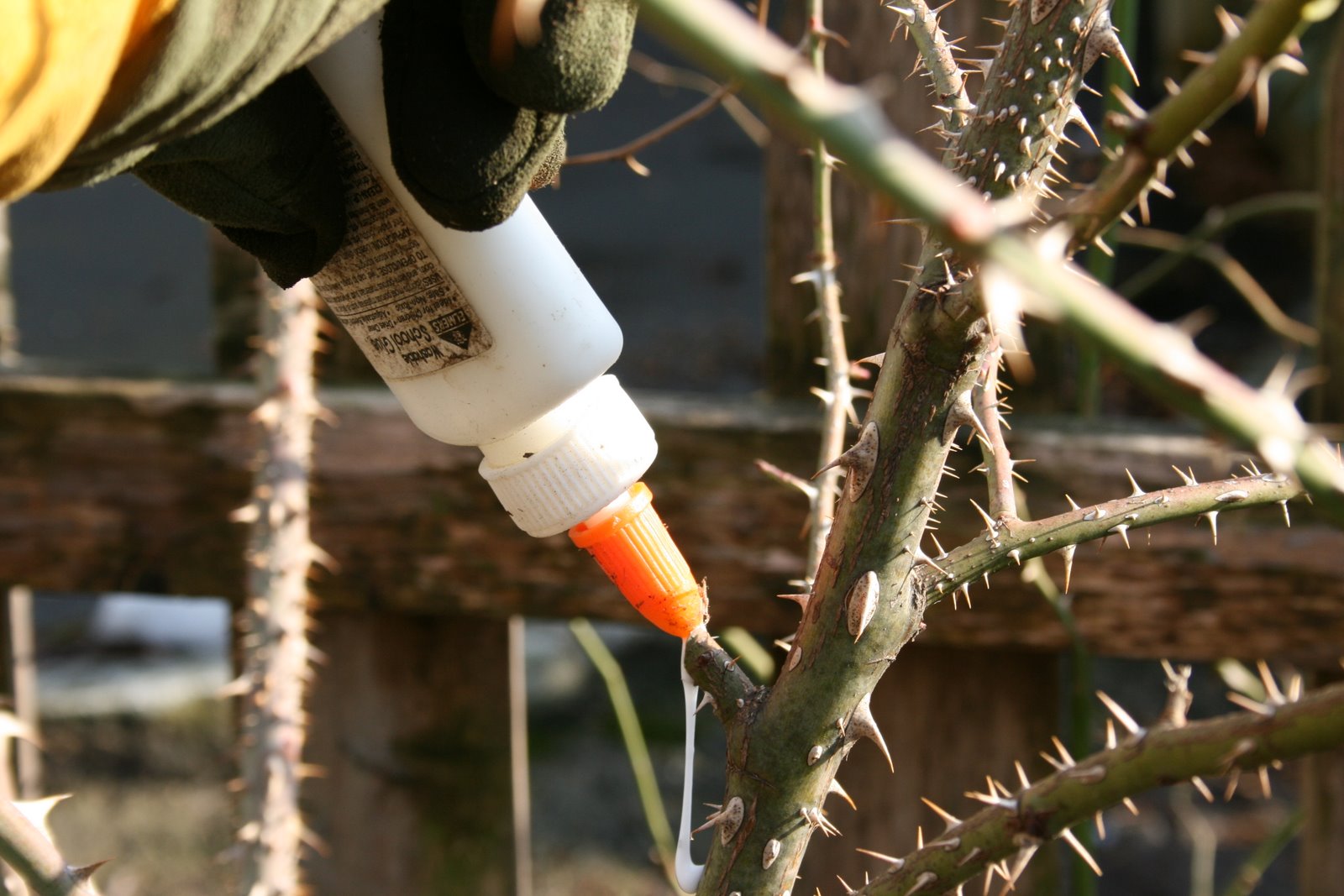
As I prune, I seal every cut with Elmer’s glue to deter bores from entering the freshly cut stems. I got this tip from the DVD Secrets of a Rose Gardener. If you haven’t seen this, it’s a wonderful day with rosarian who started as a garden volunteer to became the head rosarian at Long Island’s Planting Field Arboretum. I’ve been glueing for three years now. From observation in my garden, this does help prevent the borers from damaging the fresh cuts.

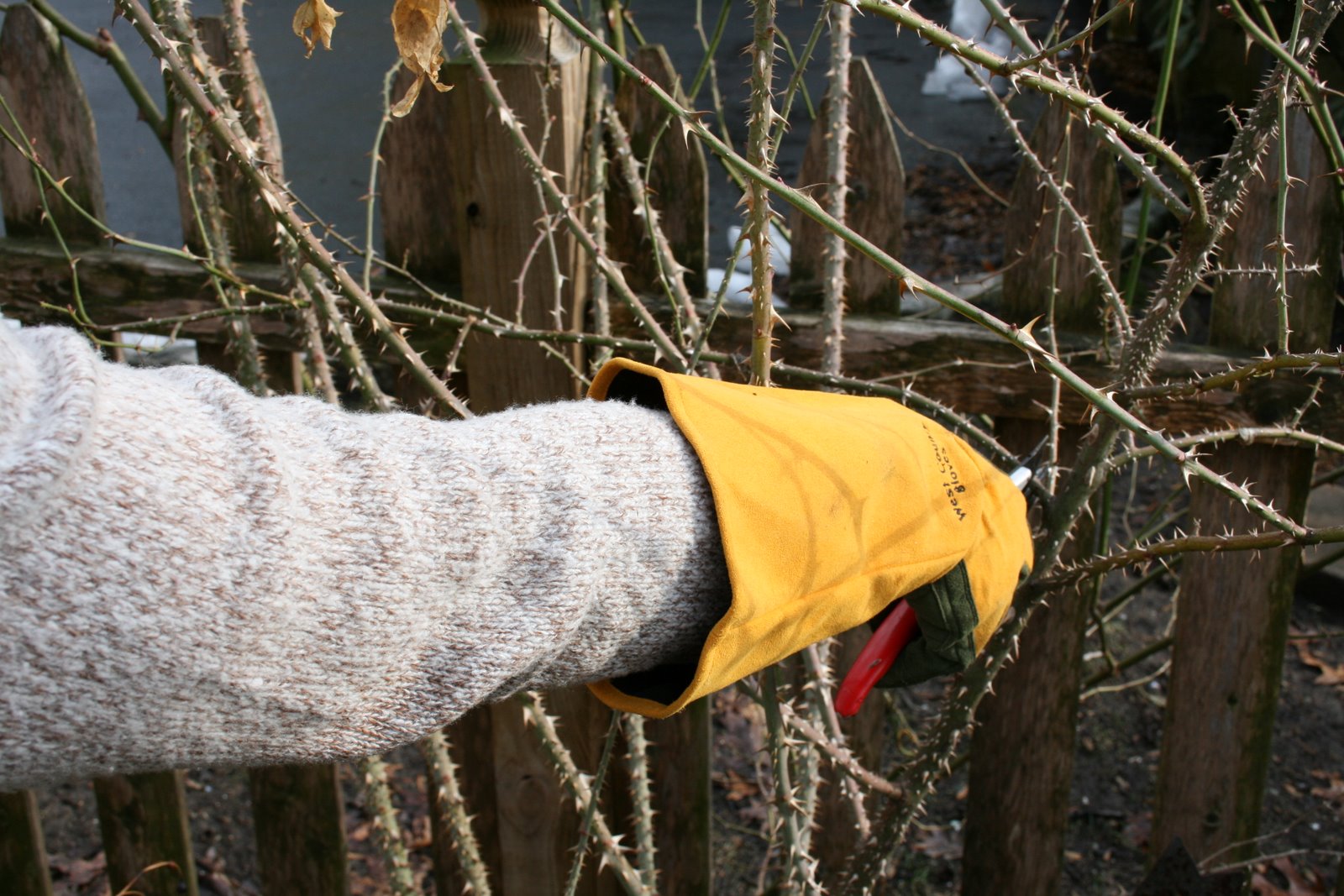
When I prune roses, I sometimes start barehanded, but I always regret it and end up going back to the house for gloves. The thing I don’t like about most gloves is that to be thick enough to not let the thorns in, the gloves restrict the movement of your hand. Last year, however, I bought a pair of rose pruning gloves from West County Glove that are wonderful. They go up to my elbow and allow very free movement of my hands and wrist.

I also get a kneeler because most roses require you to get down onto the ground to have a good look and them. Lastly, I bring out a bucket or large garbage can to hold all my prunings to make clean up easier. My favorite buckets are Tubtrugs.

http://rcm.amazon.com/e/cm?t=heirlgarde-20&o=1&p=8&l=as1&asins=B00009R607&fc1=000000&IS2=1&lt1=_blank&lc1=0000FF&bc1=000000&bg1=FFFFFF&f=ifr

*****

For “How to Prune Roses, Part II: Old Rose Pruning Secrets” click here:
http://heirloomgardener.blogspot.com/2008/03/how-to-prune-roses-part-ii-old-rose.html.

For “How to Prune Roses, Part III: Why Prune?” click here:
http://heirloomgardener.blogspot.com/2008/03/how-to-prune-roses-part-iii-why-prune.html.

Two Perfect Flowering Plants for Arbors: Betty Corning Clematis and Dortmund Rose

My favorite of all plants to grow on an arbor is the heirloom clematis ‘Betty Corning.’ I have only two arbors in my garden–they both have Betty Corning. My hope is to install additional arbors to the Bird Garden and the Walled Garden. These too will have Betty Corning.

I love this clematis because of its scent. It has a lovely, sweet scent that hangs in the air just as you pass through the arbor. The scent is never cloying. It’s like the perfect perfume that you catch a hint of as someone passes by you.

Betty Corning is also very easy to grow. It is classed in the viticella group which means at the beginning of the spring as the buds swell you cut down last years growth to the first two to three buds. I fertilize my clematis liberally with fish and/or seaweed emulsion during the growing season which produces lots of strong growth and lots of bell shaped flowers. I purchased Betty Corning from Chalk Hill Clematis.

With Betty Corning grows the heirloom rose ‘Dortmund.’ This is the most asked about rose I grow. It catches everyone’s eye with its large, single red blossoms covering the arbor and itself in June. When it flowers the arbor isn’t seen nor are Dortmund’s glossy, disease resistant leaves. Dortmund is a repeat bloomer, but blooms most prolifically in the early summer and fall. Last year I didn’t get around to deadheading Dortmund, but as a result I got a bumper crop of hips to use for winter arrangements. For pictures of the hips, click here: http://heirloomgardener.blogspot.com/2007/12/dortmund-rose-hips.html

I purchased Dortmund from Antique Rose Emporium. Dortmund covered the arbor within a season, however, it is what I would call a well mannered climber–it never gets out of hand by too much exuberant growth for an arbor. With Dortmund though, you must be vigilant about tying in its canes to the arbor as it has very large curved thorns. Also, wear long sleeves and good, thick gloves for the yearly pruning in March.

This post was inspired by Gardening Gone Wild’s Garden Bloggers’ Design Workshop on Arbors and Pergolas: http://www.gardeninggonewild.com/?p=599