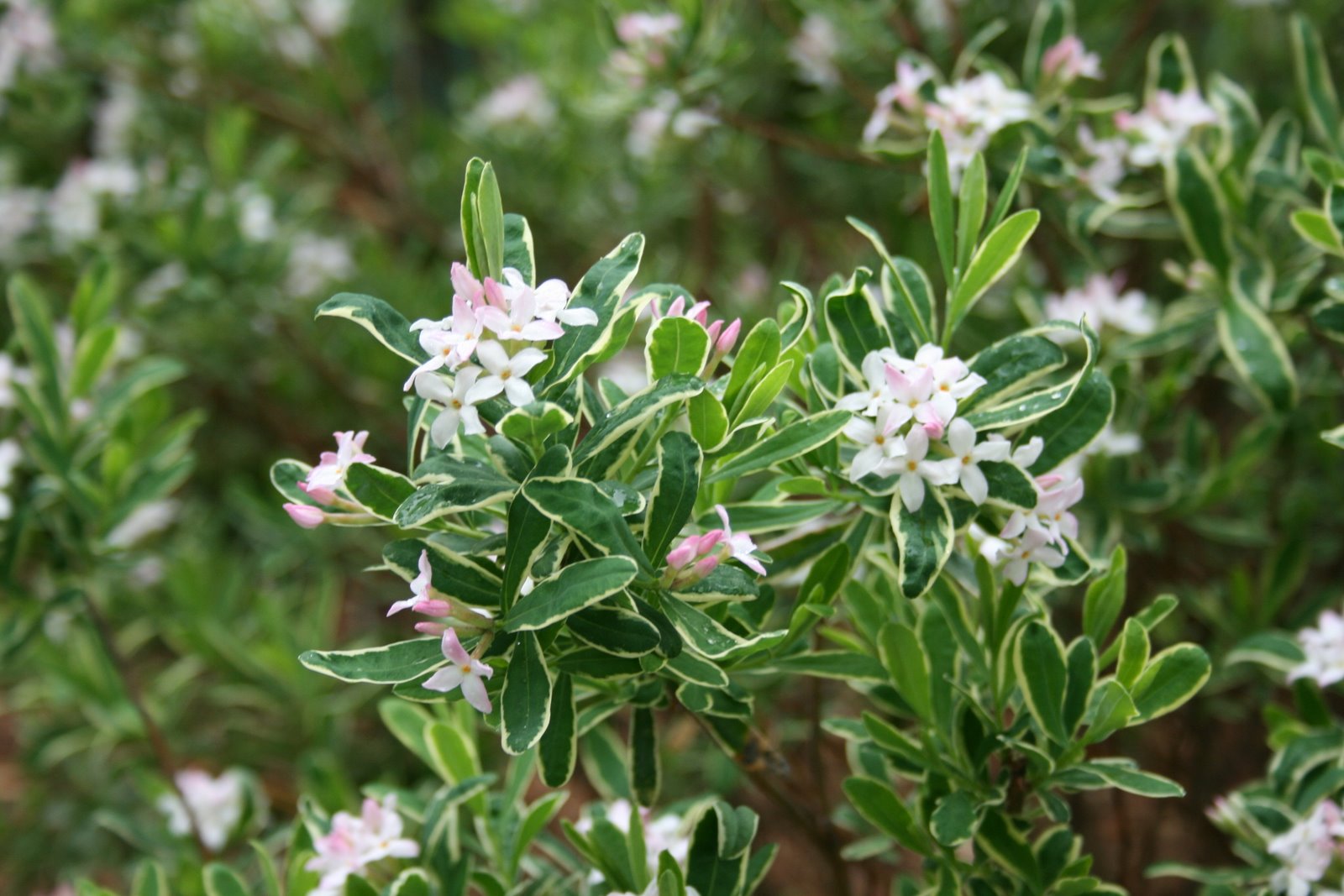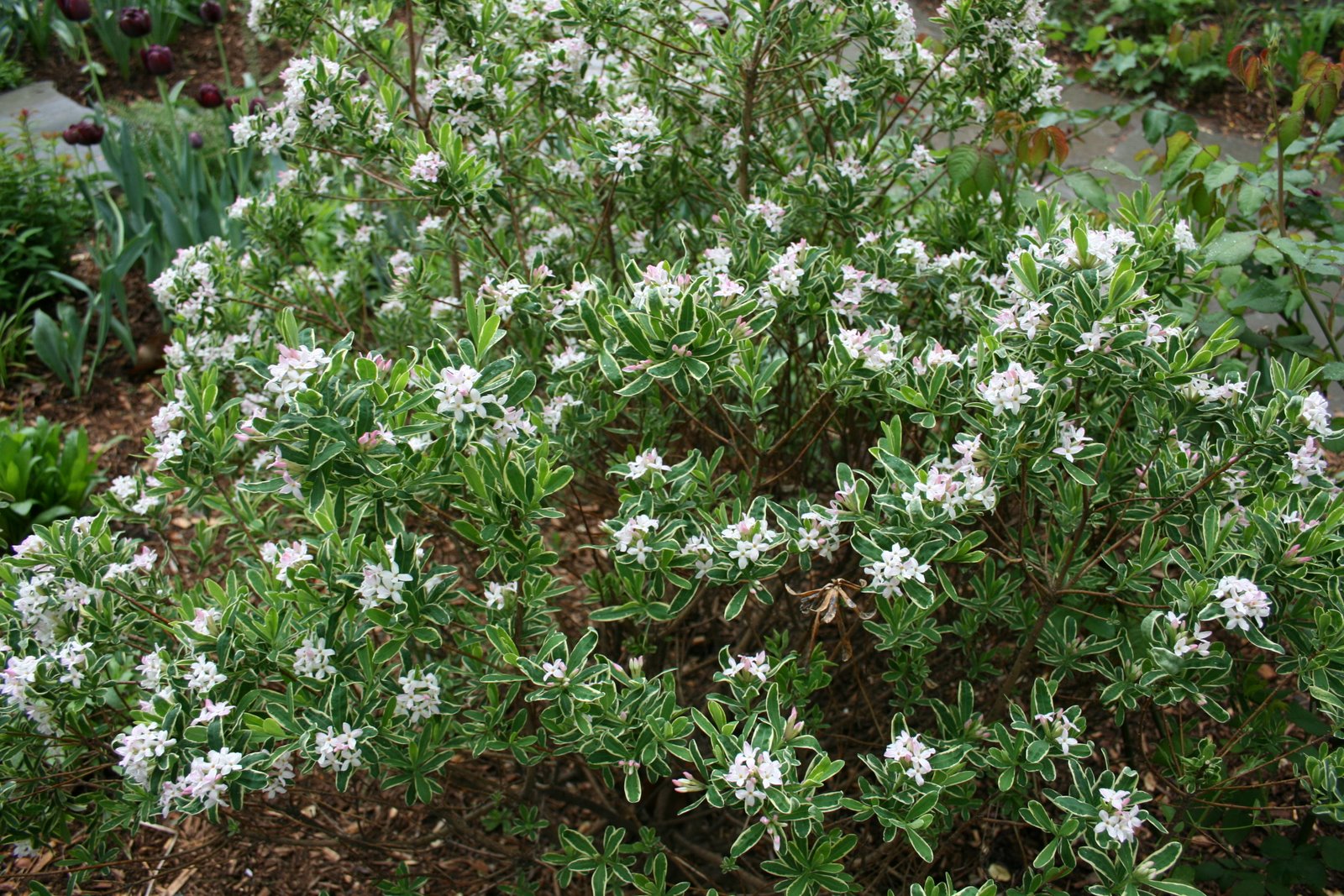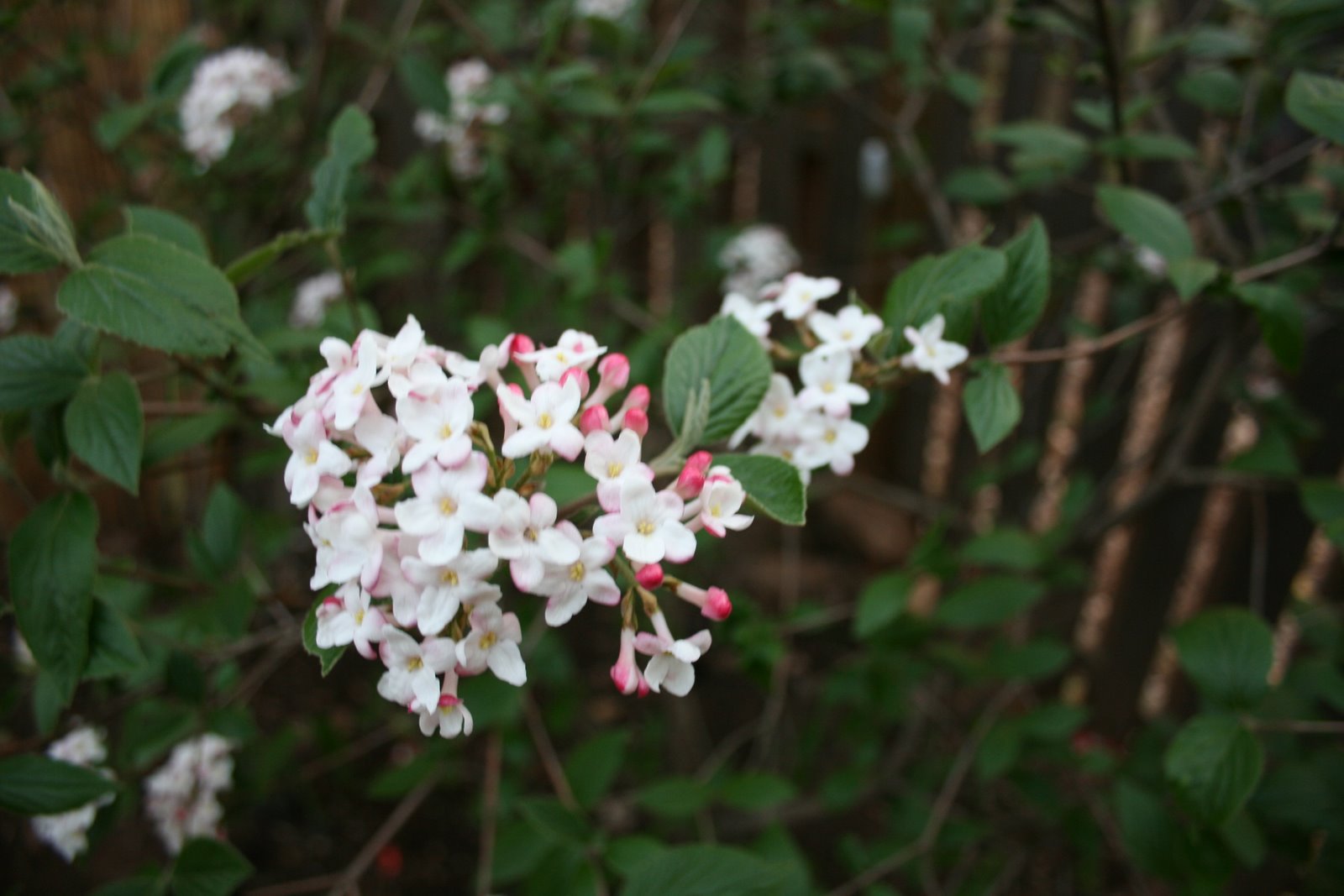
Variegated Daphne in Bloom – a fragrant flowering shrub with beautiful evergreen foliage

This beautiful variegated Daphne, in the Front Border, was blooming in late April (zone 6b). The blooms have a beautiful fragrance and groupings of small pink and white flowers.

Perhaps what I love about this shrub even more than the flowers is the interesting, evergreen foliage. Last June, when I hosted a garden tour, the shrub obviously had no flowers, but many people commented about how much they loved it.

.

If you are looking for an alternative to a conifer, an evergreen without needles, try Daphne.

How and When to Prune Caryopteris, Spirea, Butterfly Bush, Pee Gee Hydrangea, Annabelle Hydrangea, Smokebush, Elderberry

After the “in like a lion” March first snow, we were blessed with “out like a lamb” seventy-degree spring weather this weekend. The whole family spent every waking minute outside and I took the opportunity to do some of my late winter shrub pruning. In my zone (6b), early March is the perfect time to prune the shrubs that are grown either for (i) flowers that bloom on new wood or (ii) foliage that is more vibrant on new wood.
~
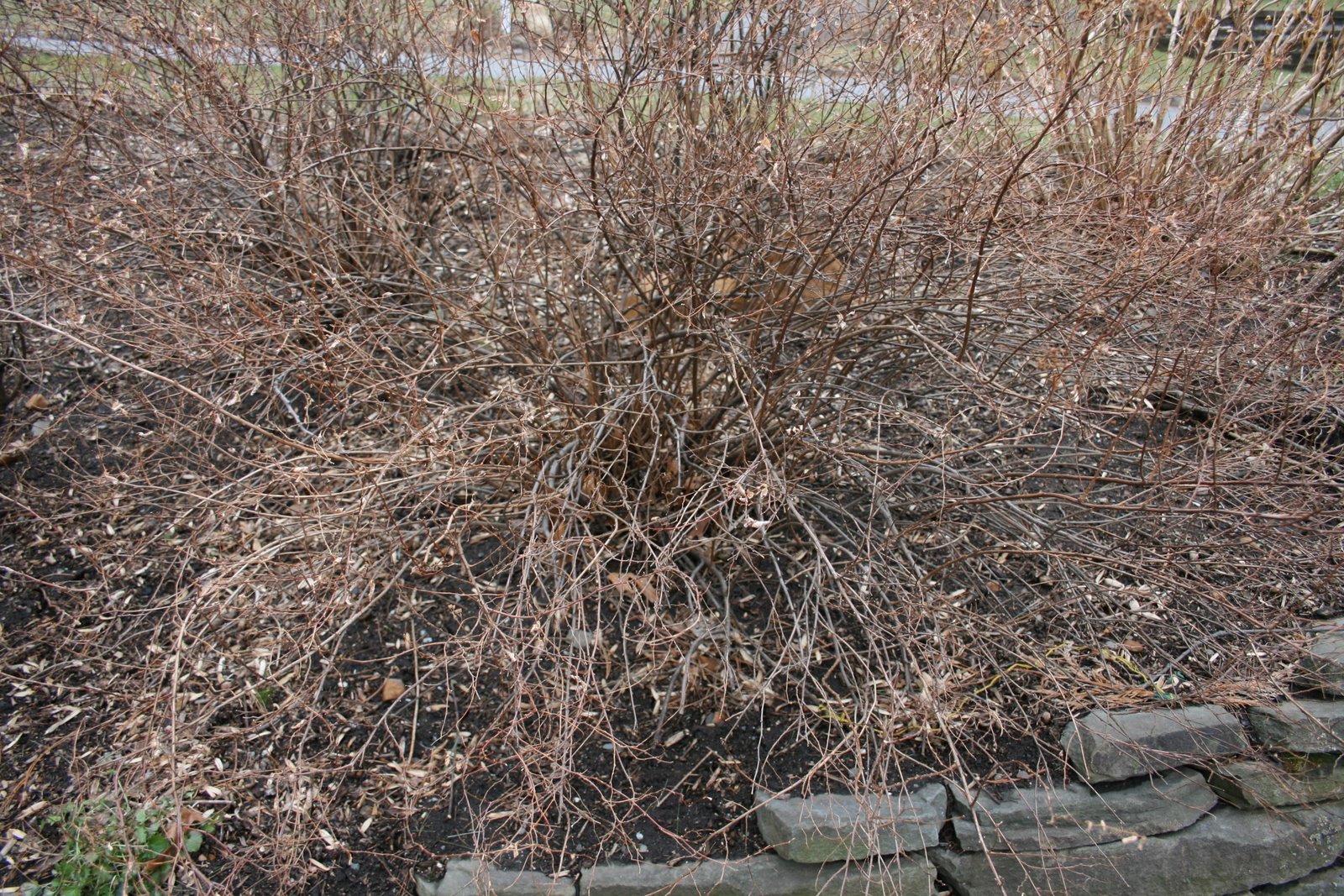
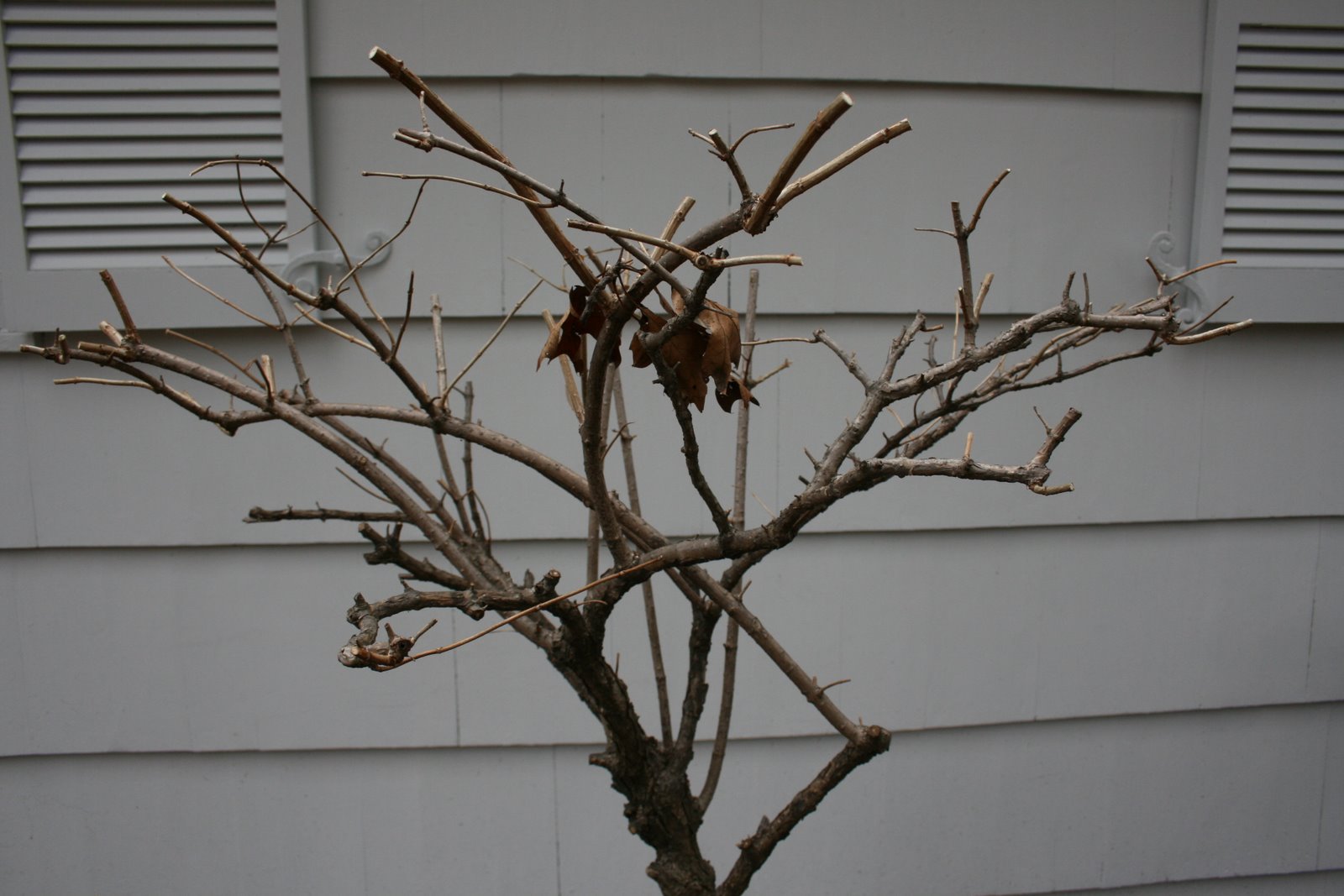
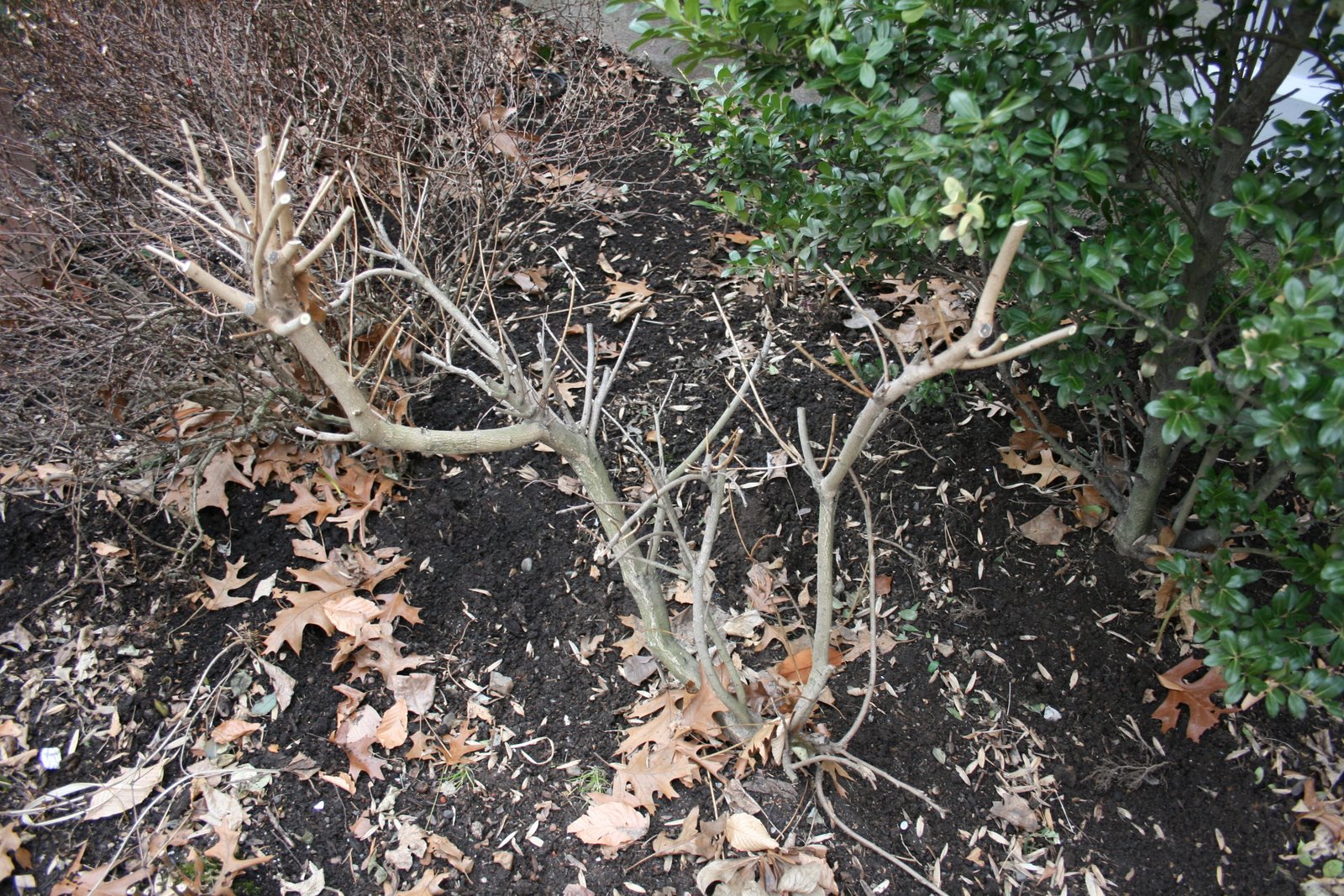
Some of the shrubs that I grow for flowers that bloom on new wood include caryopteris, spirea (pictured below), butterfly bush, pee gee hydrangea (pictured below) and annabelle hydrgangea. Some of the shrubs that I grow for foliage that is more vibrant on new wood includes smokebush (pictured below) and elderberry (or sambucas). As you can see in the pictures below, you can really cut these shrubs back significantly and by doing so, you will be rewarded with a greater number of blooms on your flowering shrubs and more vibrant color for your foliage shrubs.
~
Does pruning these shrubs really make a difference? Yes! Last year, I cut back only some of the spirea and the difference between the pruned and unpruned was quite noticeable.

~
Spirea before pruning
Spirea after pruning
Pee gee hydrangea after pruning
Smokebush after pruning

Autumn Beauty: Japanese Beautyberry

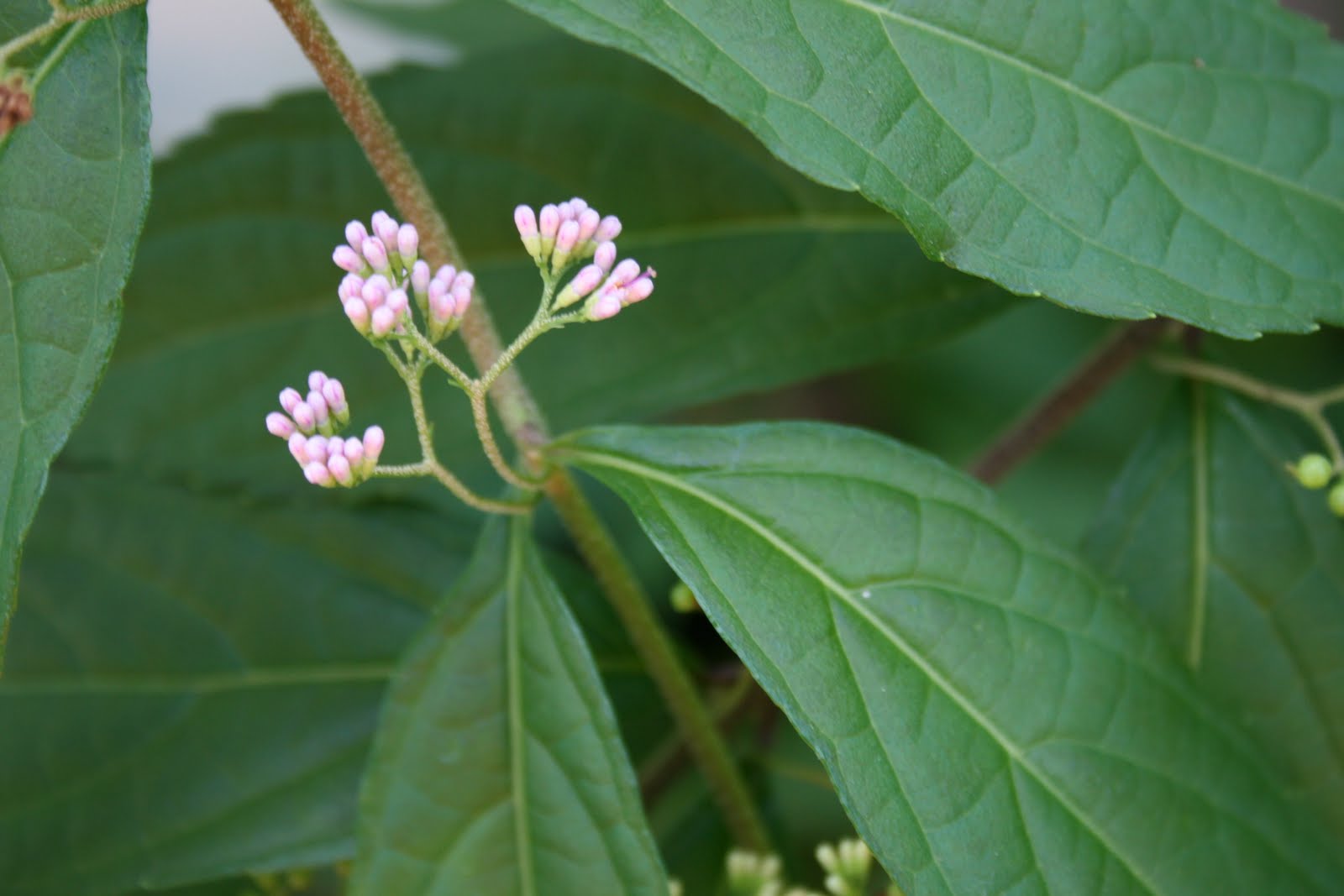
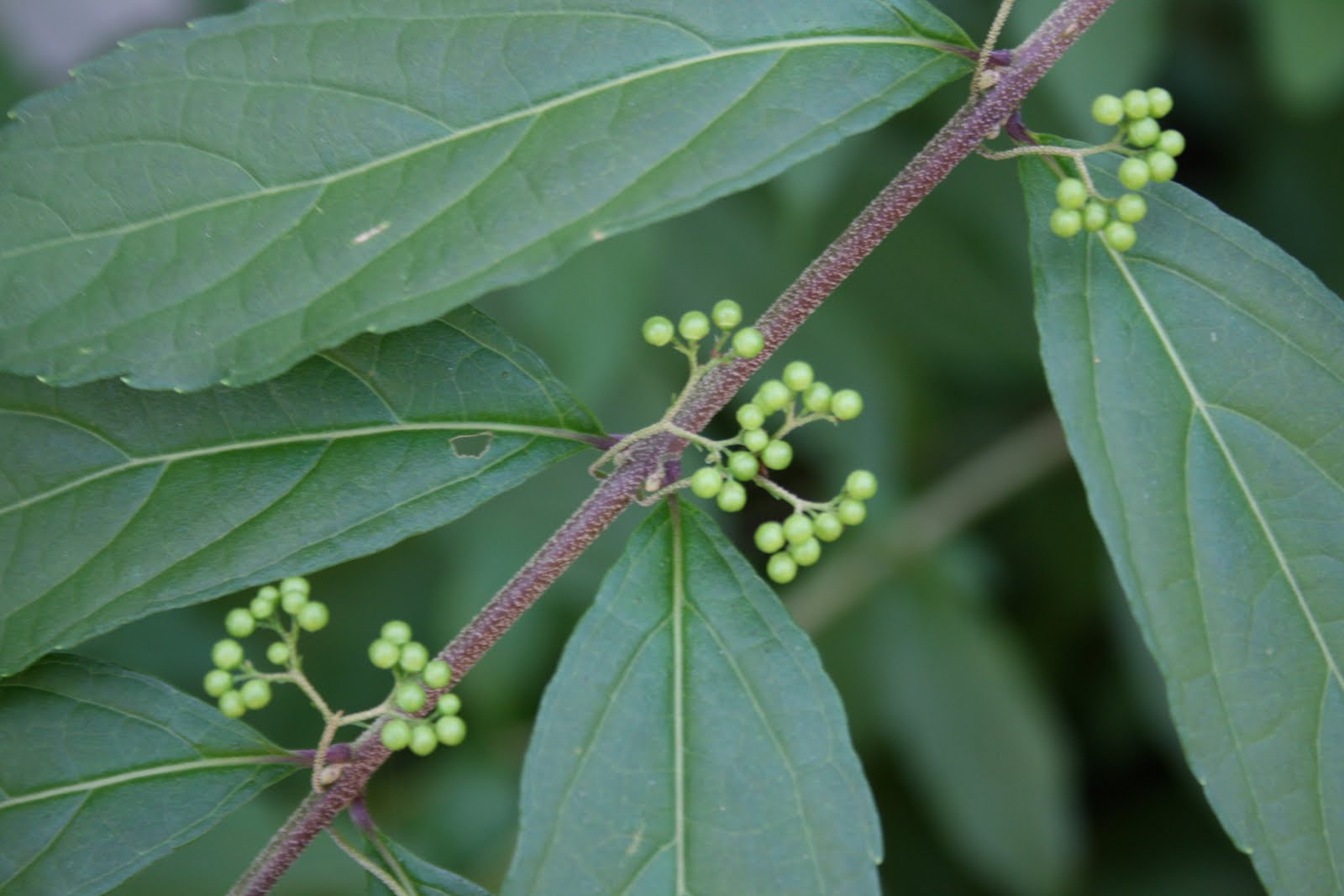
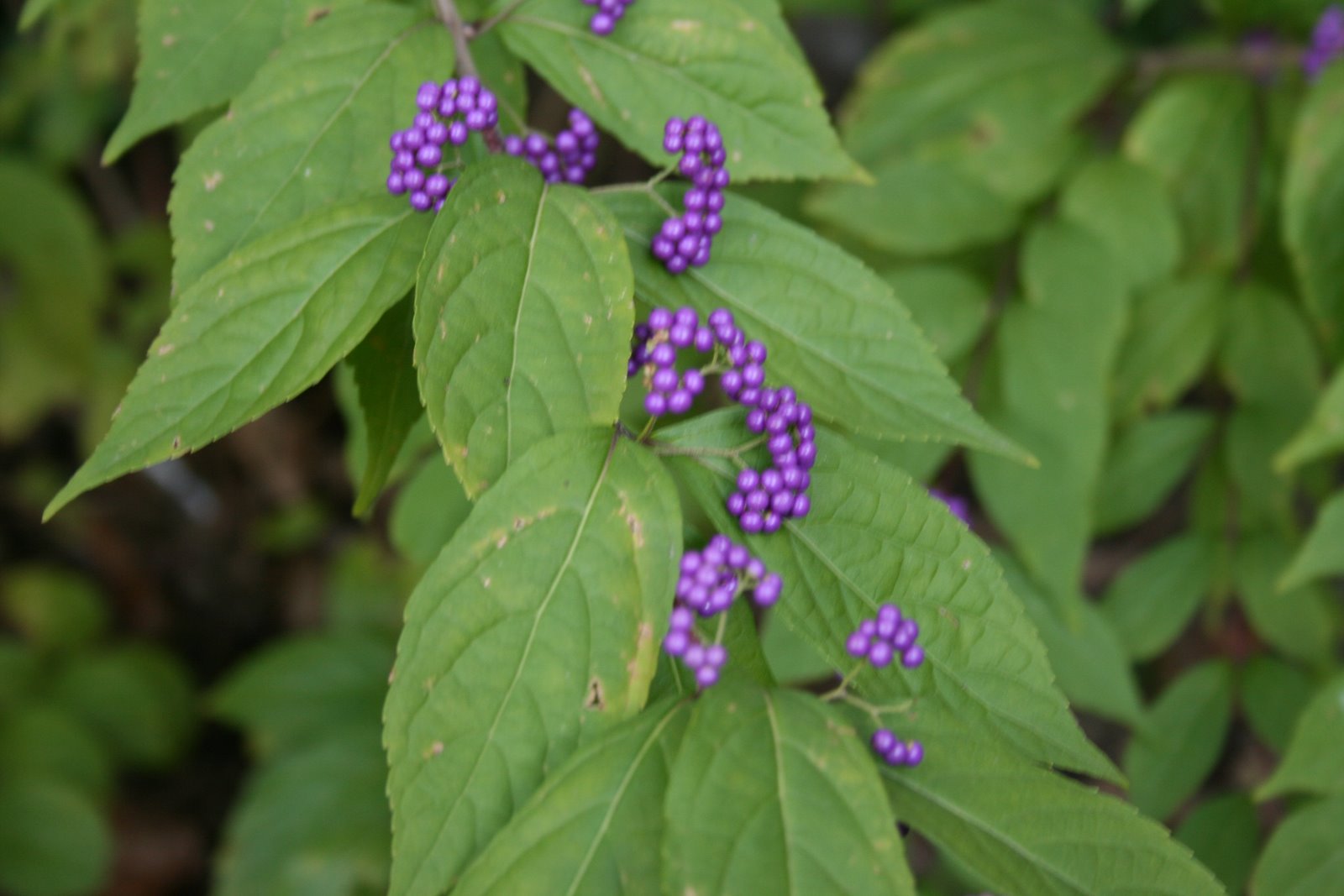
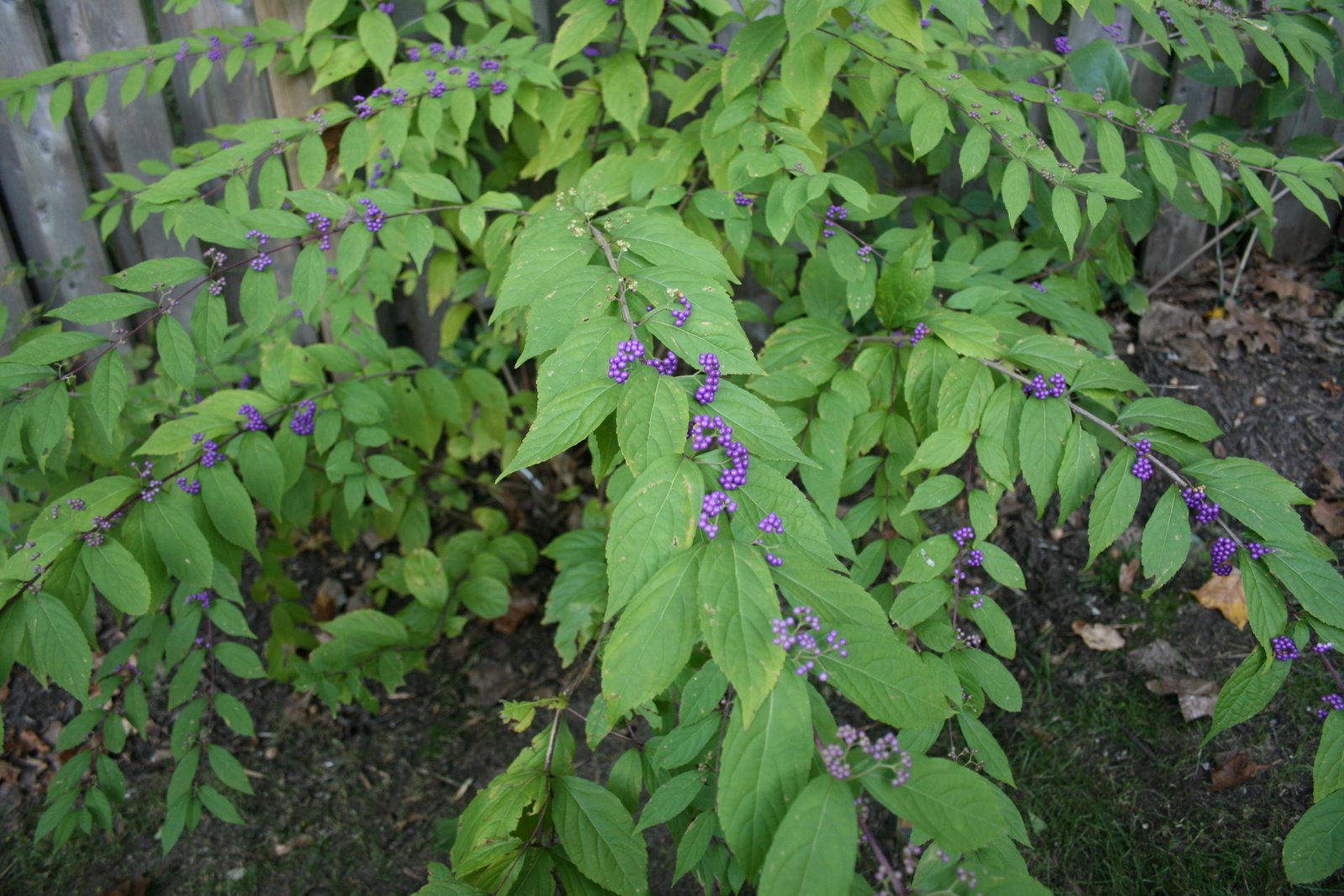
As a supplement to last year’s pictures of my Japanese Beautyberry (Callicarpa japonica) in summer and winter, here are two autumn pictures with the berries and leaves. In the winter, the shrub will be left with just the berries.

“They are healthy and vigorous plants. I purchased very small plants and they grew quickly in the first year…For fall and winter arrangements, you can cut the branches with the Beautyberries. If you do so when they still have leaves, I recommend that you remove the leaves because they droop immediately after being cut.”

For an additional post on propagation, click here.

Container Gardening: Pictures of Miss Kim Lilac


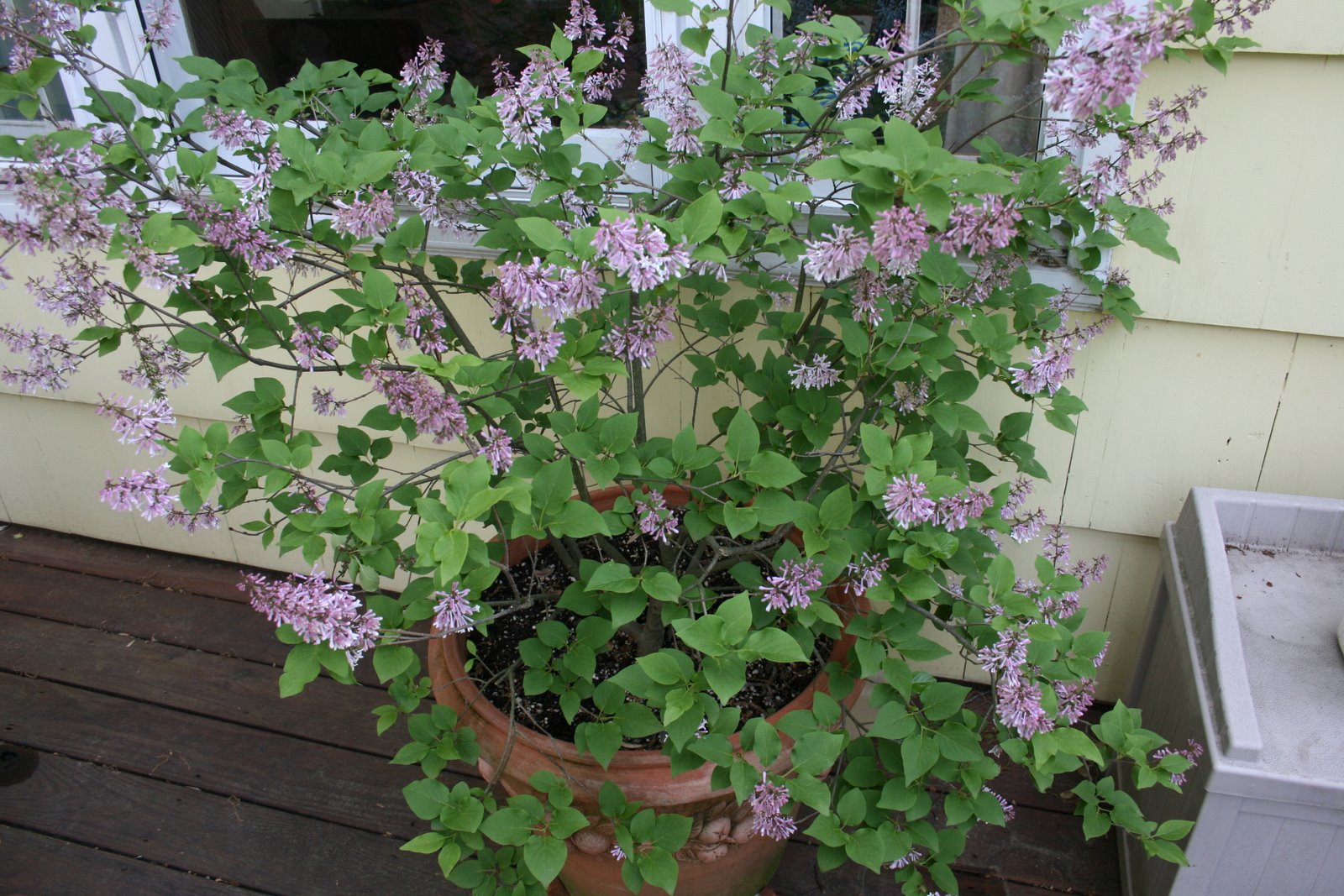
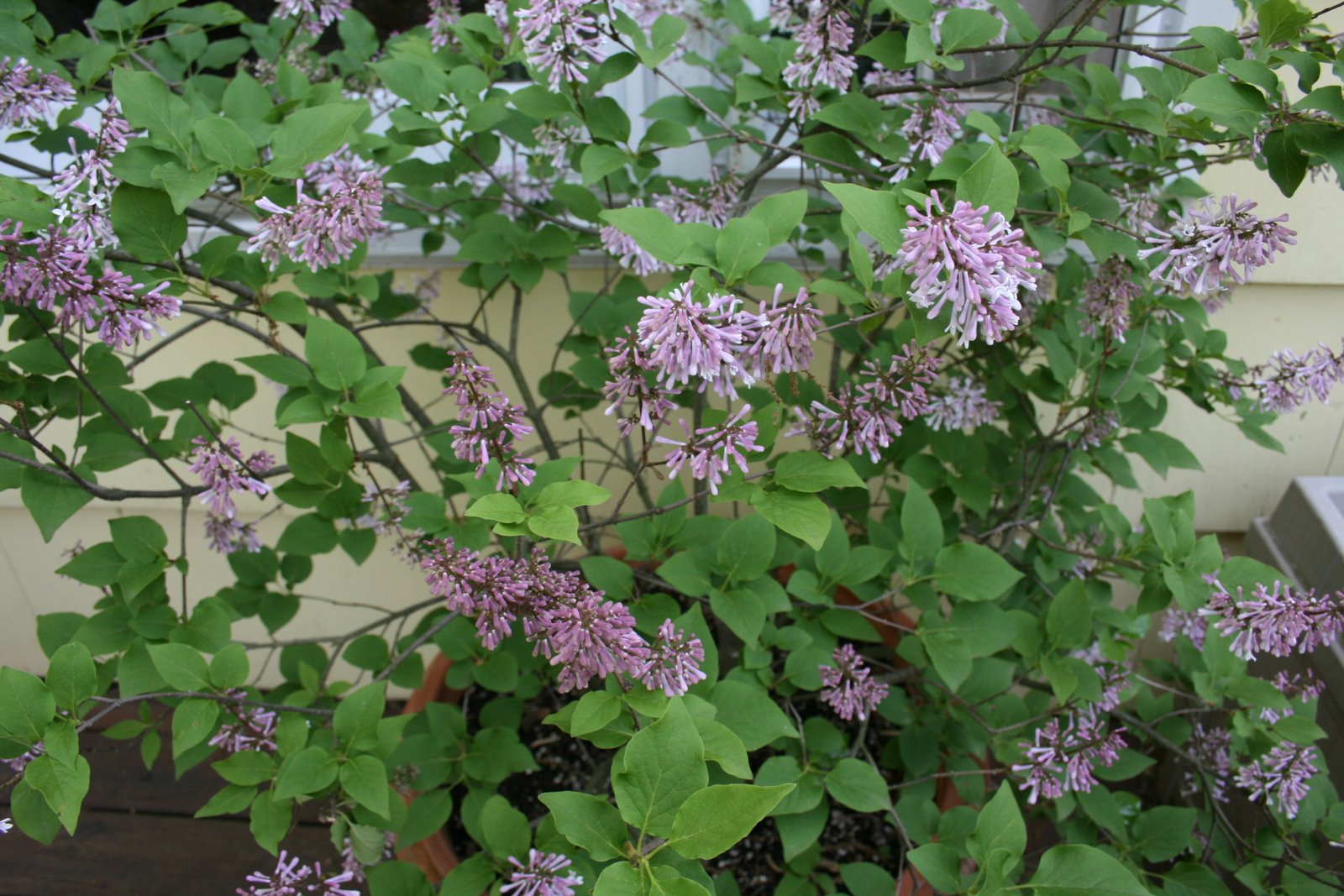
As a follow-up to my post on the variety, soil, and care of containers, here are some pictures of my Miss Kim Lilac, one of my favorite containers on the deck. As I previously wrote:

“When growing shrubs and trees in pots for the long term, I’ve learned to treat them as really large bonsai plants. Each year, I renew their soil by removing some and adding organic amendments and manure. Also, every few years I trim off the outer most roots of the plants on one side to allow more root development without the danger of the plant becoming root bound. With this treatment, my lilac is still growing in its original planting pot.”

Hydrangeas: Why and How to Prune

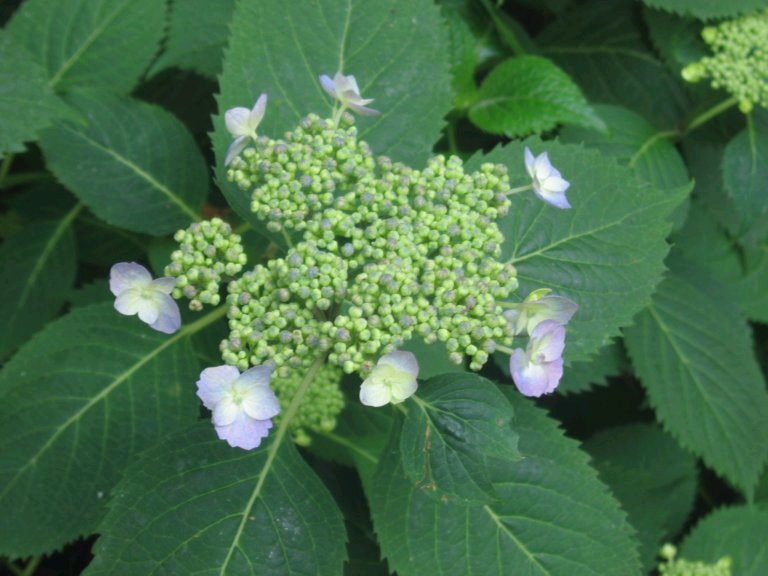
Since my prior post about pruning a pee gee hydrangea, I have received numerous follow-up questions on why and how to prune other types of hydrangea. Most of the hydrangea in the garden are either mopheads or lace caps (pictured). These belong to the group Hydrangea macrophylla. Most macrophylla bloom on wood or stems more than a year old.
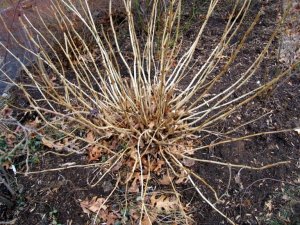
In late spring these can be pruned to remove dead wood. Since it is very difficult for me to distinguish between the dead and living wood in dormant hydrangeas, I wait until late April when the stems have begun to leaf out. Then I cut the dead wood at the base of the plant as far down as I can reach. This will allow plenty of new room for new shoots to emerge.
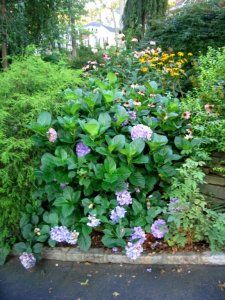
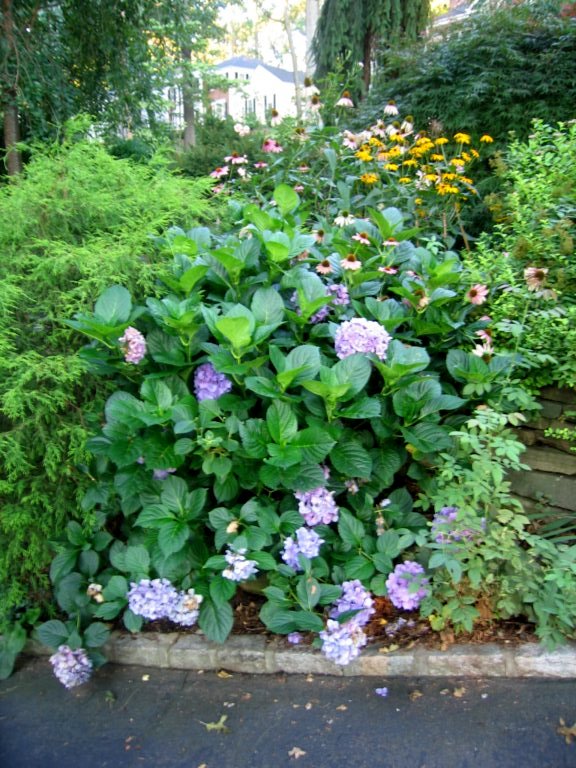
If your hydrangea macrophylla (pictured on Goldberry Hill) is getting too big and you want to reduce its size, prune it in mid summer after it has bloomed. You can either cut back the stems or just take out some of the longest wood at the base of the shrub. By waiting until July, you will have blooms and give the shrub time to prepare new growth to flower the following year. You do not have to do this type of pruning unless you need the space. Naturally hydrangeas develop a nice rounded shape.

Although I grow many heirloom hydrangea cultivars, I also love the new ones that have come out which bloom on old and new wood. Endless Summer and Blushing Bride are two such hydrangea. These are particularly useful in areas where hydrangea are marginally hardy. If your hydrangea gets killed to the ground during the winter, new stems can grow in the spring which will flower the same year. This also allows you to cut them to the ground or cut them back in early spring if you want to keep them smaller. Anabelle hydrangea are treated the same way.

Telegraph.co.uk – ‘Annabelle’ hydrangea: How to grow


I was walking around my garden this weekend and I couldn’t resist taking yet another picture of my Annabelle hydrangeas. As I wrote in a prior post, my Annabelle hydrangeas–with their dried blossoms–are a highlight of my winter garden (http://heirloomgardener.blogspot.com/2007/12/annabelle-hydrangea-in-winter.html).

This past week, Telegraph.co.uk–the online version of the Telegraph in London–wrote an article praising Annabelle hydrangeas and giving advice on how to grow them. Val Bourne writes:

“The cool white Hydrangea arborescens ‘Annabelle’ produces one of the most magical of all winter seed heads. After the flowers have faded and fallen, a skeleton of fine tracery remains to catch the frost and low winter sunshine. So this is one hydrangea that deserves a prominent place in every garden, somewhere it can shine in three seasons – summer, autumn and winter.”

For the full article, click here: http://www.telegraph.co.uk/gardening/main.jhtml?xml=/gardening/2008/02/08/garden-hydrangea-grow108.xml.