Creating Space for a Garden: the Cutting Garden

Like many suburban gardeners, one of the hardest things to do is find space for all of the plants that you want to cultivate. One solution is to create gardens in the under-utilized parts of your property.

Like many suburban tracts, each home in my neighborhood has about thirty feet of space between each house. When we moved in, the fifteen feet on our side of the property line included a very large rhododendron, some unattractive evergreen trees, some grass, and a lot of weeds. The only thing we did on this strip of property was occasionally walk from the front yard to the back yard.

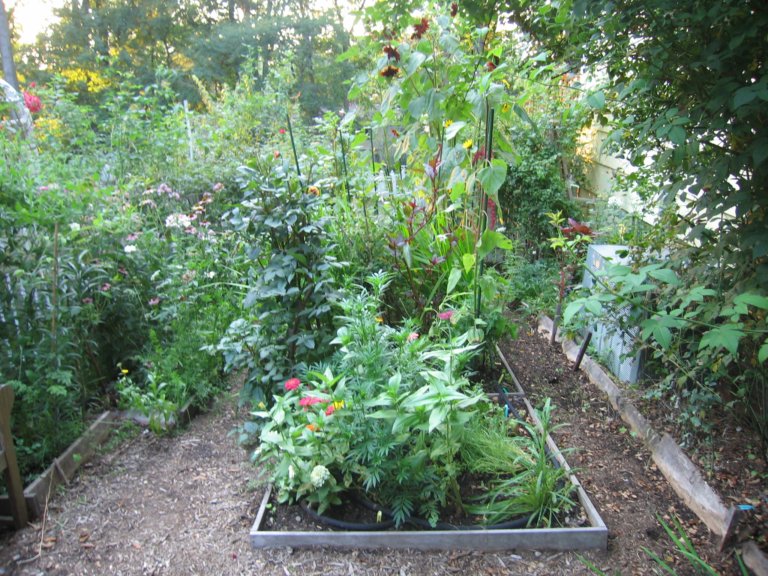
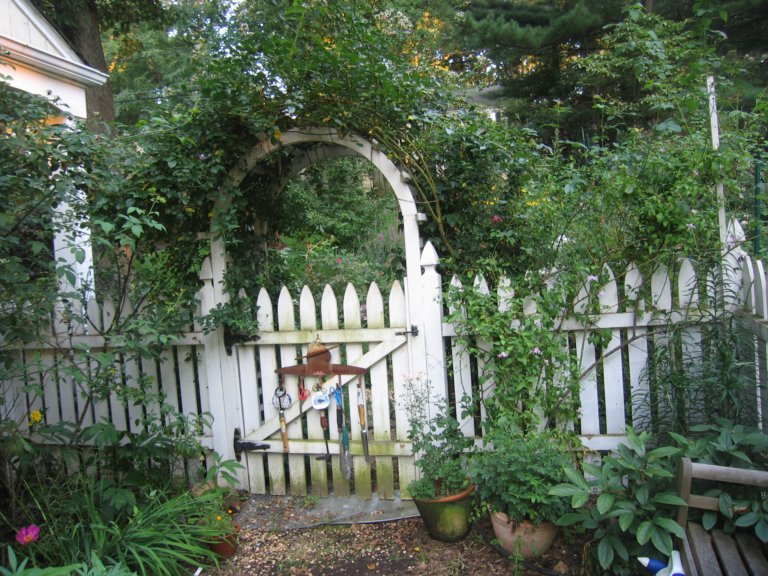
After a couple of years, we decided to remove the existing trees and plants and transform the space into a cutting garden. This space measures approximately fifteen feet wide and thirty feet long. We created a garden room by installing a wooden picket fence with an attractive arbor and gate in the front (visible in the first picture from inside the garden) and a simple gate in the back. Because the side yard was also on a slope, we installed a short, one-foot dry laid wall in the back to decrease the grade.
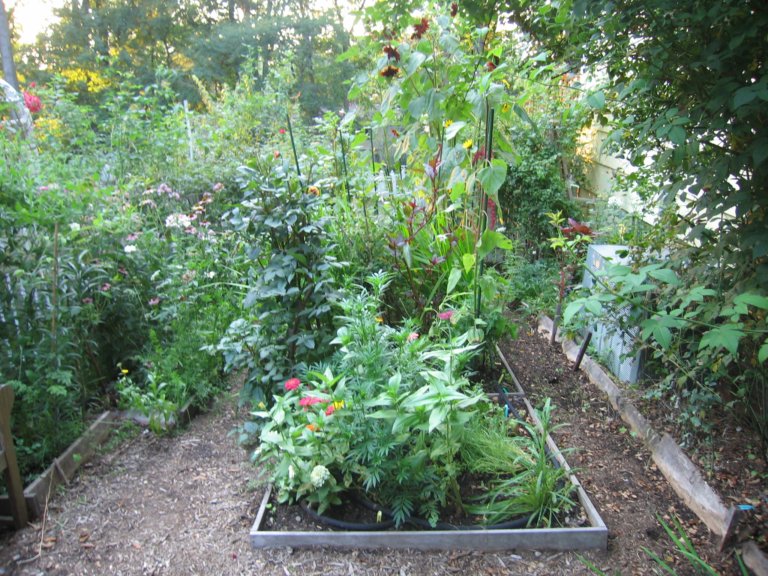
There are three foot beds on either side and a central four foot bed (visible in the second picture). The paths are too narrow at only two feet, but with only fifteen feet to work with, we had to make compromises. The soil was dead, so we dug down about two feet and also created shallow raised beds with ipe wood. Ipe is expensive, but it is far better for your garden than the toxic chemicals in pressure treated wood. Warning: ipe is very hard, which makes it rot and insect resistant, but it also makes it extremely difficult to cut with standard woodworking tools. I had to have my planks cut at the lumber yard.
After digging out the beds and creating the walls of the raised beds, we then added significant amounts of composted cow manure and Bumper Crop. These are now some of the richest beds on our property.

This is now one of the favorite parts of our property. In addition to changing this from unused and unattractive to a place we visit every day, it also produces abundant cut flowers for indoor enjoyment from May through October.

Related Post: Making the Most of Your Space for Gardening – A Map of My Gardens
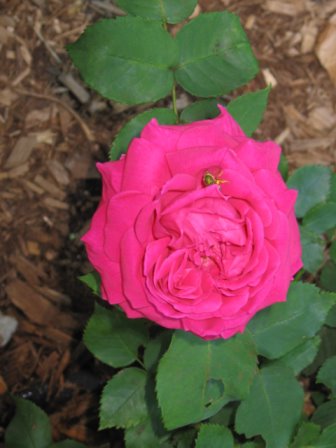
Sophie’s Rose Provides Late Season Color

The frost has come and gone, but Sophie’s Rose continues to bloom. I purchased Sophie’s Rose on a recommendation from Matterhorn Nursery in Spring Valley, New York, one of the best nurseries in the tri-state area:

http://www.matterhornnursery.com/

Matterhorn Nursery contains a large David Austin rose display garden and sells many David Austin roses, including Sophie’s. It blooms prolifically from May through November.

Sophie’s Rose is planted in my front mixed border in part-shade. I am amazed it blooms as much as it does given the lack of full sun.

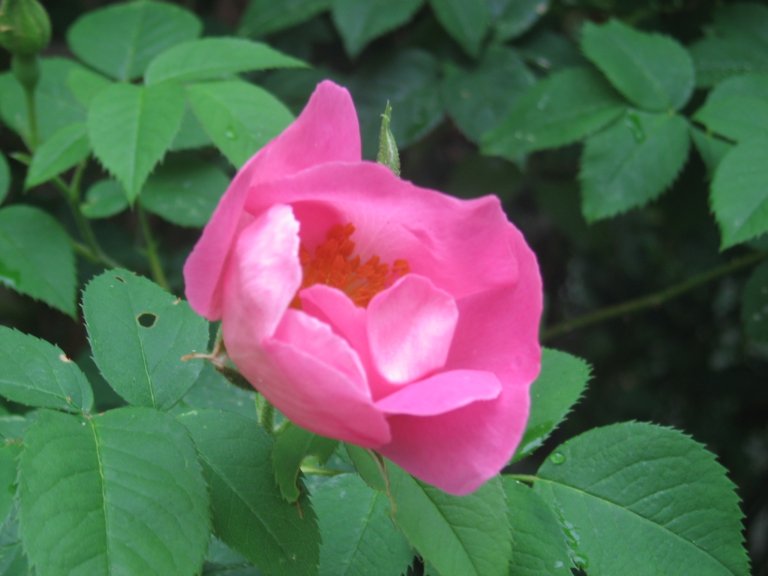
This is a tall, but not wide rose. It should be planted in a group of at least three, each spaced two feet apart. After being pruned to about twenty-four inches tall in the spring, it ends the season approximately seven feet tall.

For more information about David Austin roses:

http://www.davidaustinroses.com/

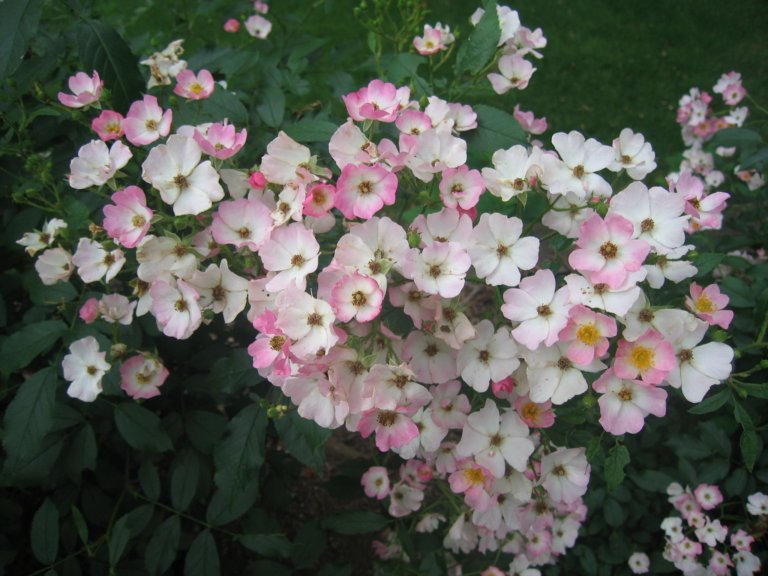
Complicata – Vigorous Once Blooming Rose

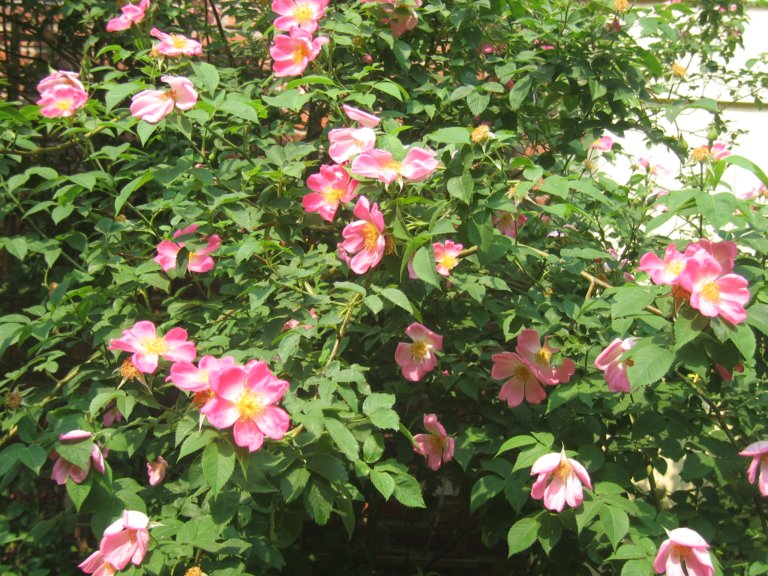
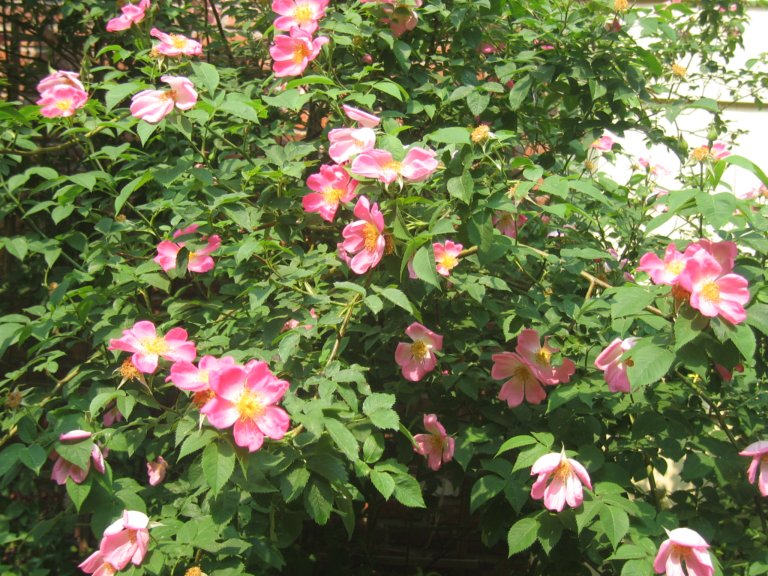
I purchased Complicata in 2004 and she was about eight inches tall. At the end of her first season, she was over six feet tall. She blooms each May/June once and is completely covered with single blooms. She is now eight feet tall and six feet wide, so make sure you have space. Each spring, I cut out any dead branches. In addition, I freely cut out stray canes that extend into the path beside her. Purchased from:

http://www.antiqueroseemporium.com/

For pictures of Complicata in winter with hips:

Ballerina – All Purpose Repeat-Bloomer

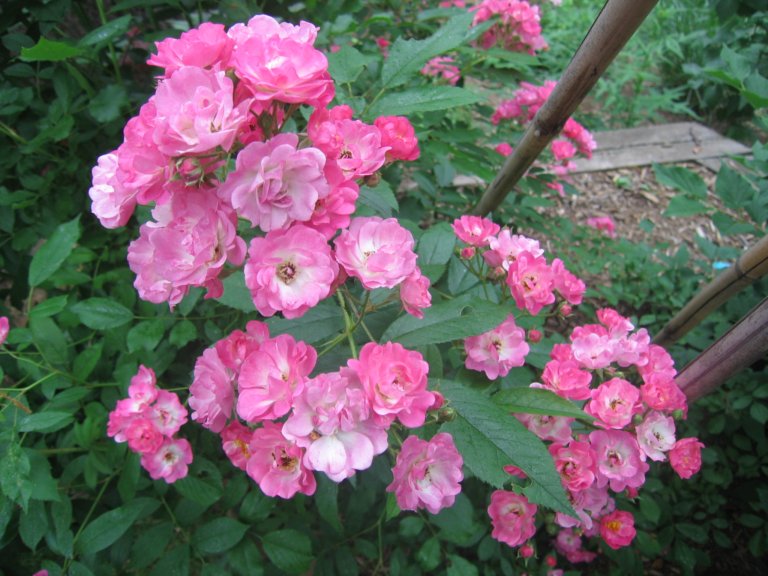
If you are a beginning rose gardener, start with Ballerina. She grows in full sun and part shade. She repeat blooms from May to November (she really does). She has beautiful blooms in sprays that make for wonderful cut flowers and has red round hips that I use in winter arrangements. I have one growing as a pillar rose on a tutuer in full sun. I have seven growing in part shade as a hedge. I have two more in a mixed border. I have two more that have been trained as tree roses, purchased from:

http://www.whiteflowerfarm.com/

For pictures of the hips:

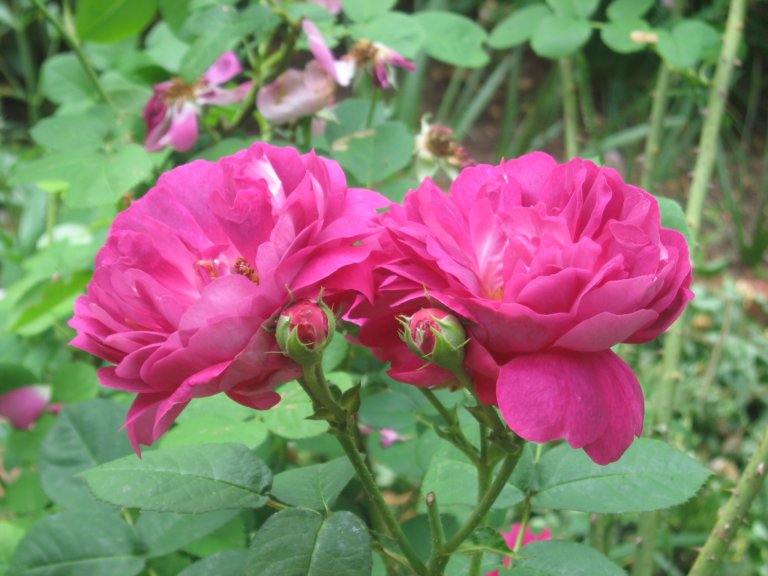
Rose de Rescht – An Intense, Old Rose Fragrance

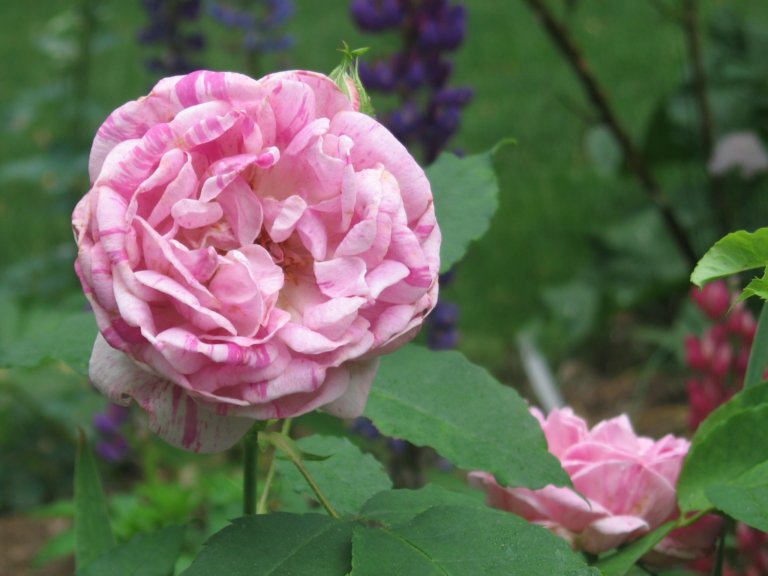
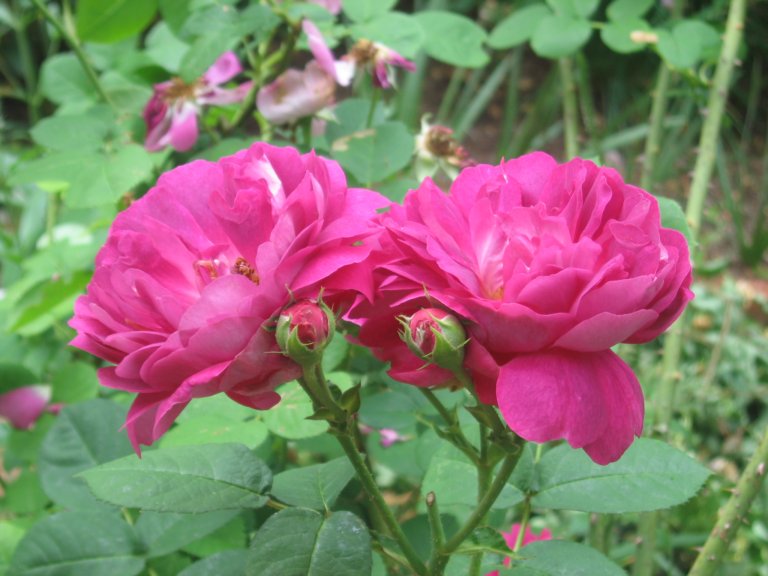
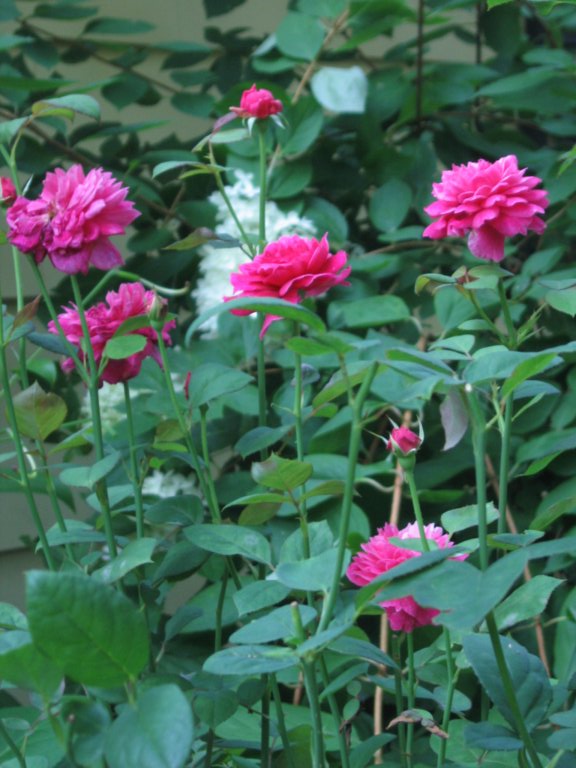
Rose de Rescht is one of my favorite roses. She is one of the first roses to bloom on May and is continuing to bloom into the frost. She blooms in repeat flushes with short rest periods. She is a Portland rose and is three to four feet tall and two to three feet wide after four years. The fragrance is amazing–a heavy, sweet, damask perfume. I have a few in the ground and a few in containers–both work equally well. As you can see in the picture, the flowers are quite full. When dead heading, just pinch off the faded blossom as the new blossom will appear not far from the old blossom.