
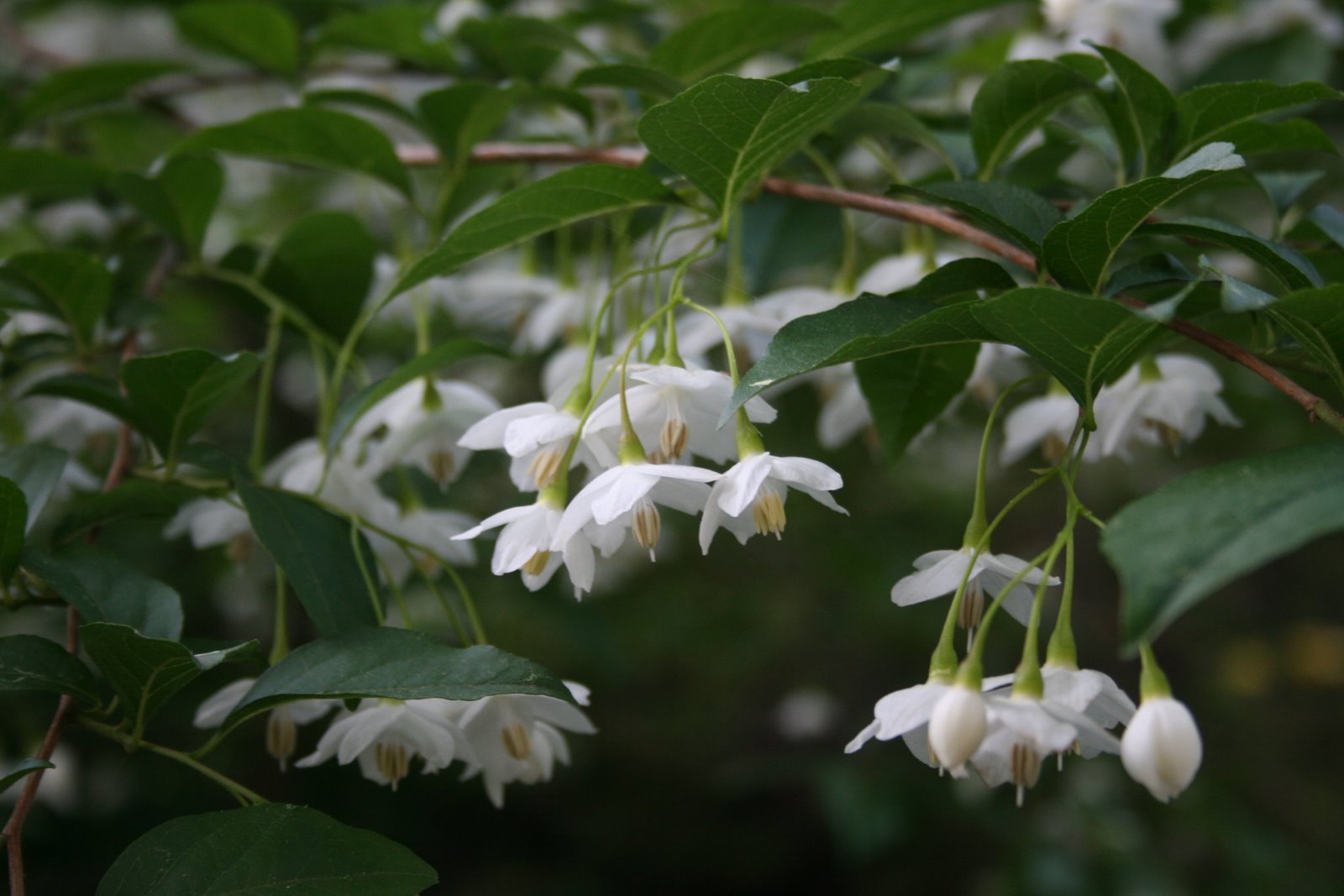
 I love taking pictures of flowering trees, but I can only submit one picture for the contest at Gardening Gone Wild. The reason why I like this photograph is for what Rob Cardillo, this month’s judge, calls “botanical gesture which is capturing the essential qualitites of a plant in one picture.” This picture of Styrax Japonicus was taken in early June in my garden in zone 6b. You can see additional photographs of my flowering trees here.
Category: Trees
Styrax japonicus tree and flowers in bloom on Goldberry Hill
Is the Crabapple the Best Tree for the Suburban Garden? Pictures of White and Pink Crabapple Blossoms
I love all of my spring flowering trees, but I have a special love for my two crabapple trees, one white and one pink. They have beautiful flowers, an attractive shape, and fruit that provides winter interest and food for the birds. What more could you ask for?
.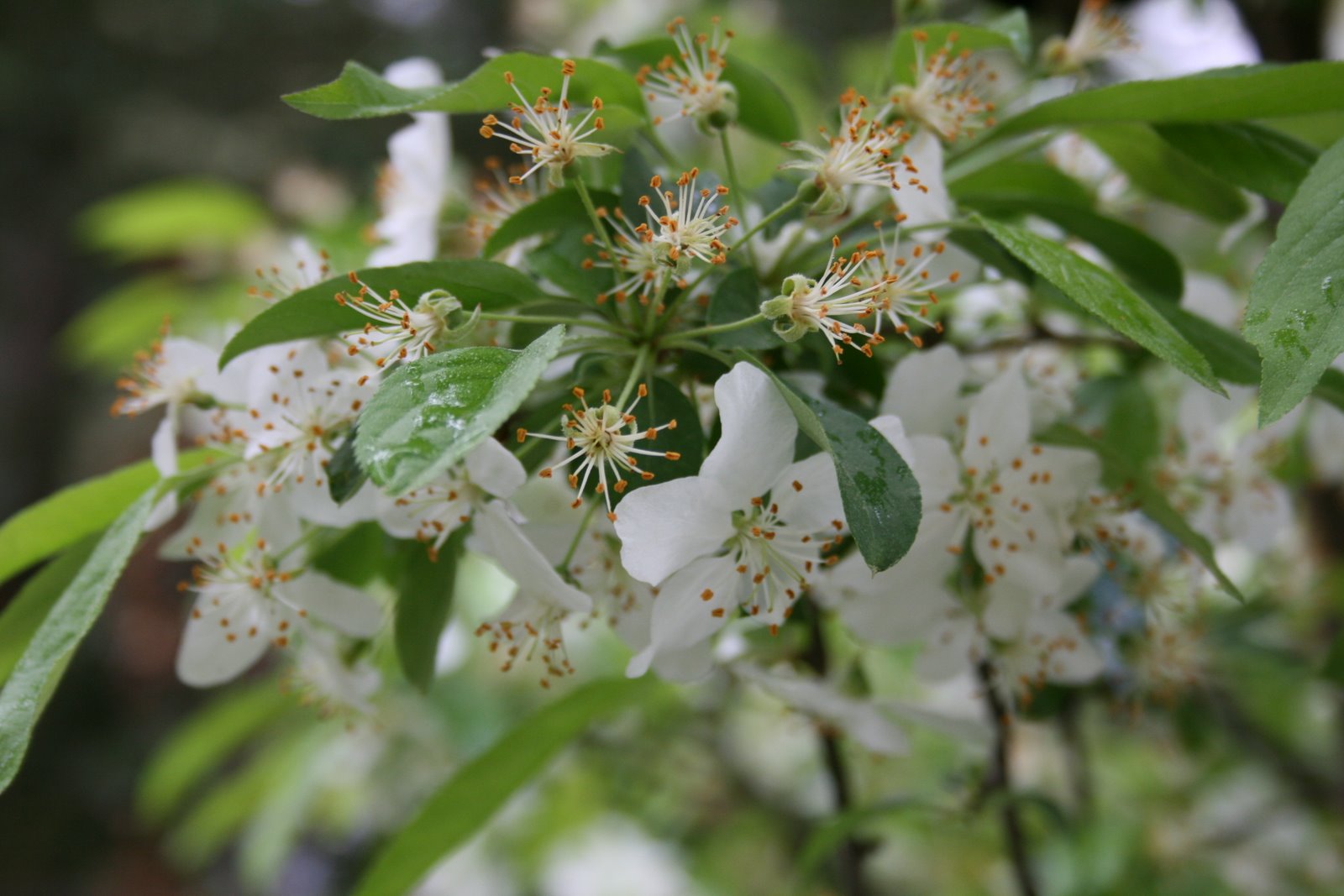 The white crabapple tree replaced a dying Japanese Maple and is a year-round focal point in the Egg Garden. For a picture of this tree in winter with the crabapple fruits, click here.
.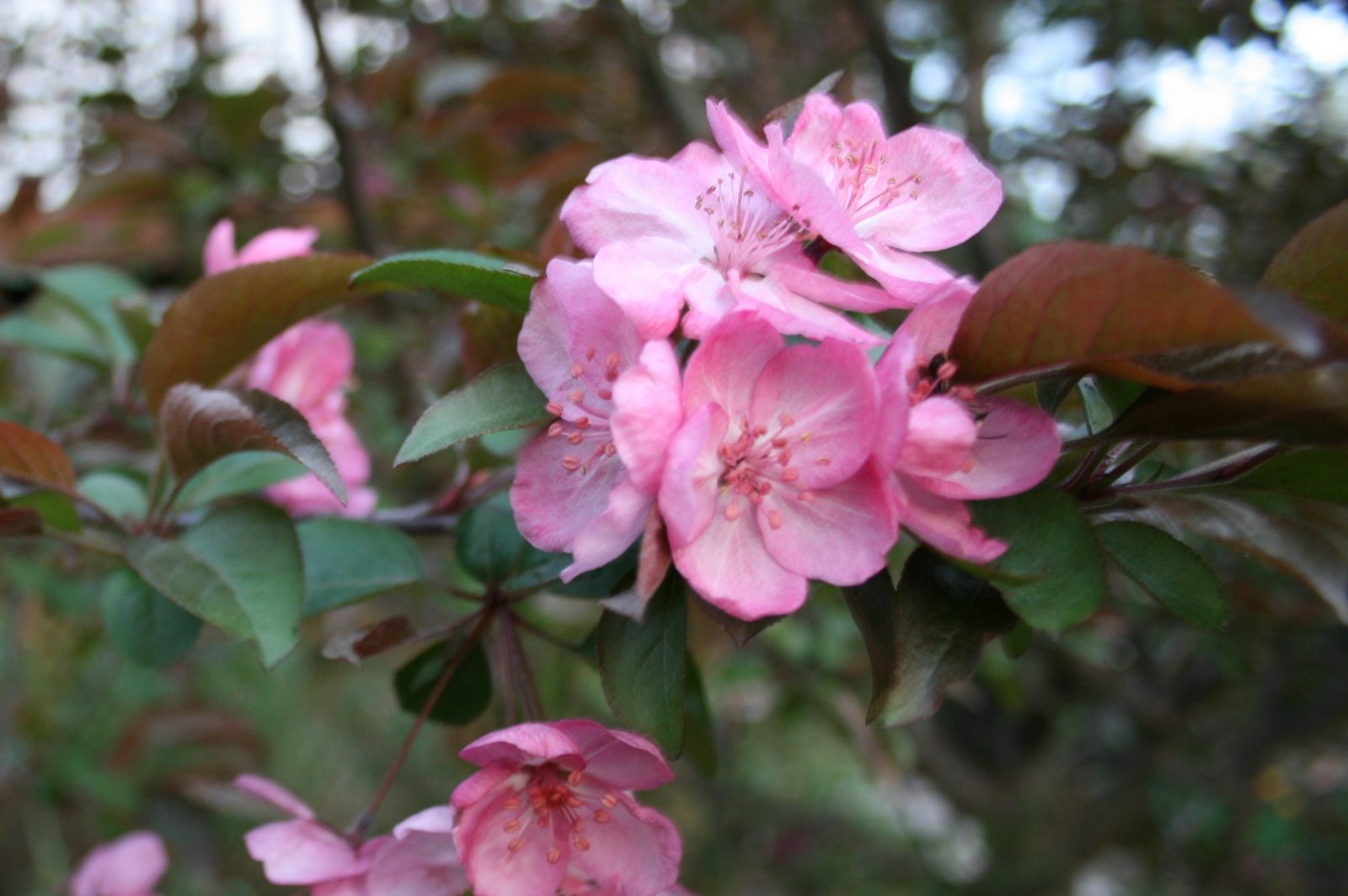 The pink crabapple is located outside of the Children’s Garden. For some reason, the pink tree has grown twice as fast as the white one. Also, the birds love to nest in this particular tree.
Gardening Gone Wild: Native Plant Photo Contest
 Gardening Gone Wild just concluded its native plant photo contest. They have some great photos of native plants and plant combinations.
.
I didn’t get around to posting this photo during the contest, but it is one of my favorite photographs of a native flowering tree. This Cornelian cherry dogwood (Cornaceae Cornus mas) was on my property before I was and it blooms in late March/early April here in zone 6b.
Goodbye, Old Oak Tree…What Should I Plant in Your Place?
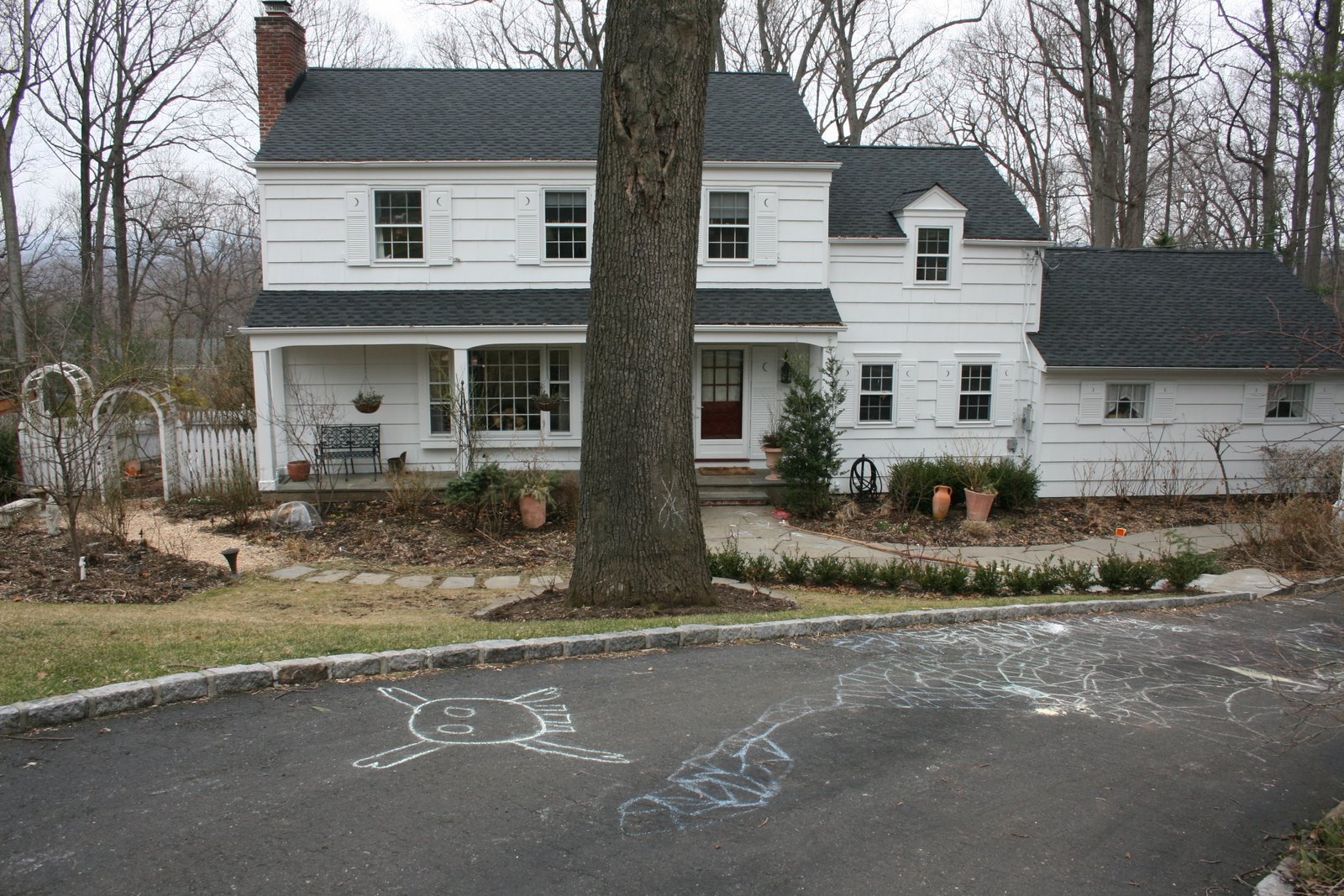 The mature oak tree in our front yard, right in front of our home (first picture) had unusual growths on it.
 With some fear that it would disastrously collapse on our home some day, we consulted our favorite arborists, Savatree–who are not quick to cut down any tree–and they sadly agreed that the tree should be removed. A few days later, they removed the tree (second picture).
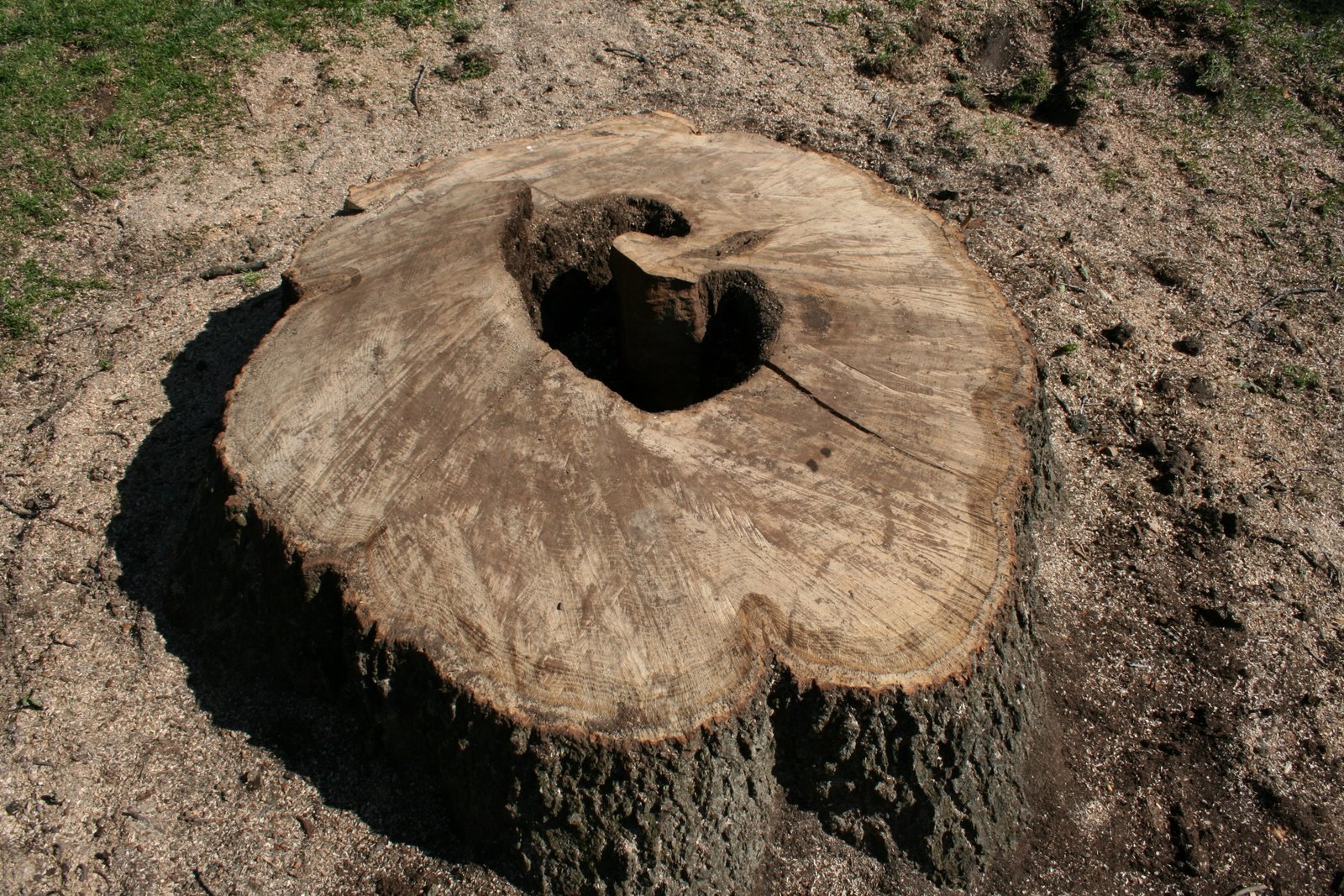 After the tree was removed, we could see that, in addition to the disease causing the growths, the trunk had also become hollow in the core (third picture).
What do you do with the tree stump grindings that are left behind? We now have a cubic yard or two of stump grindings. I am saving some to mix into our compost. The rest I am spreading as playground mulch in the Walled Garden. It’s soft under bare feet and now I don’t have to buy and spread the cedar mulch I usually put down.
The question now is: what do I plant in the place of the old oak tree? It’s now full-sun of course and it is right outside of the large picture window where I like to sit and read or knit or have a cup of tea. Any suggestions?
The First Tree to Flower in the Garden: Witchhazel (Arnold’s Promise) Blooming in Late February/Early March in New Jersey (Zone 6b)
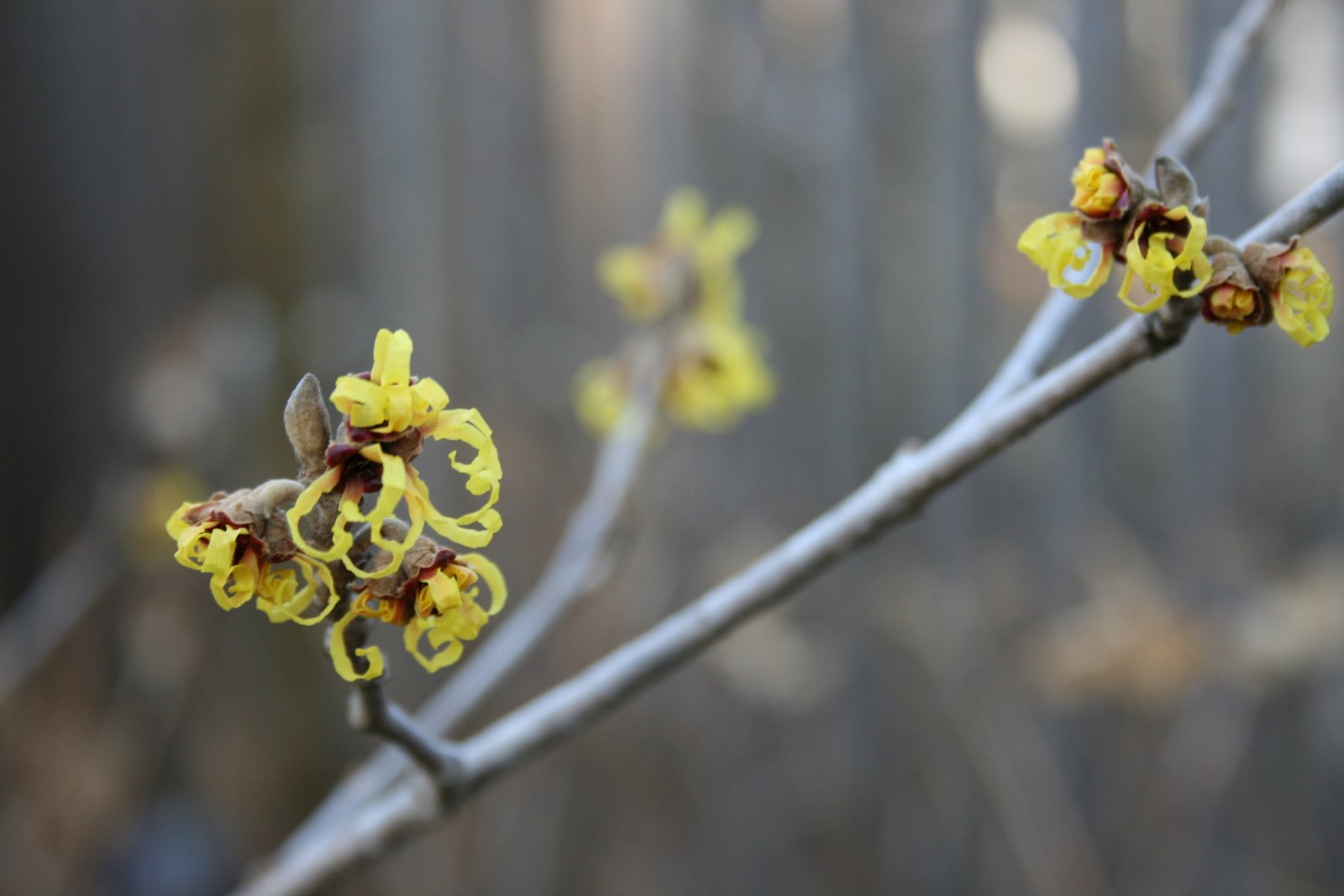 I’ve wanted a witchhazel for a few years now and, after planting my first one last spring, am now enjoying my first blooms. I planted a small specimen of Arnold’s promise (the name is from Harvard’s Arnold Arboretum in Massachusetts), a common and widely available witchhazel (my specimen is from Forestfarm Plant Nursery). The flowers are unique and have a strong fragrance. In addition, they get bonus points for blooming while the rest of the garden is still asleep. The picture was taken this weekend before today’s heavy snow.
Multi-Purpose Southern Magnolias: Summer Blossoms and Evergreen Leaves
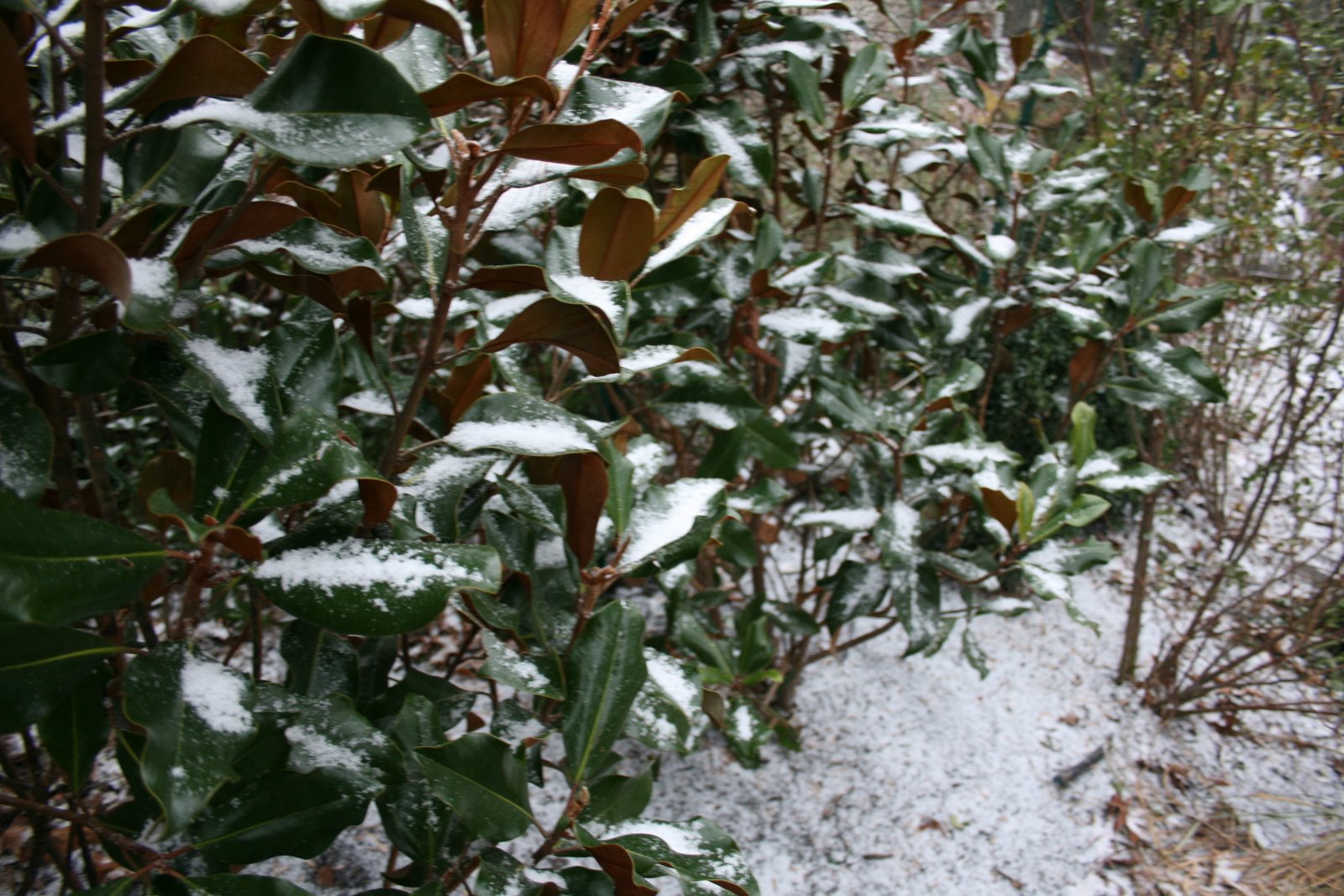 After the deciduous trees drop their leaves, I become all the more appreciative of the evergreens in my garden. One of my favorite additions to the garden this year is the Southern Magnolia.
~
This summer, I planted a row of Southern Magnolias along my property line to provide some year-round privacy from my neighbor and beauty to my garden. In addition to their large and fragrant summer blooms, their leathery, bi-color leaves–dark green on top and rich brown on the bottom–provide year-round beauty and can also be used in Christmas decorations.
~
This picture was taken early on Saturday morning when heavy, wet snow was falling. The temperature quickly rose above freezing and the snow turned into a cold rain.
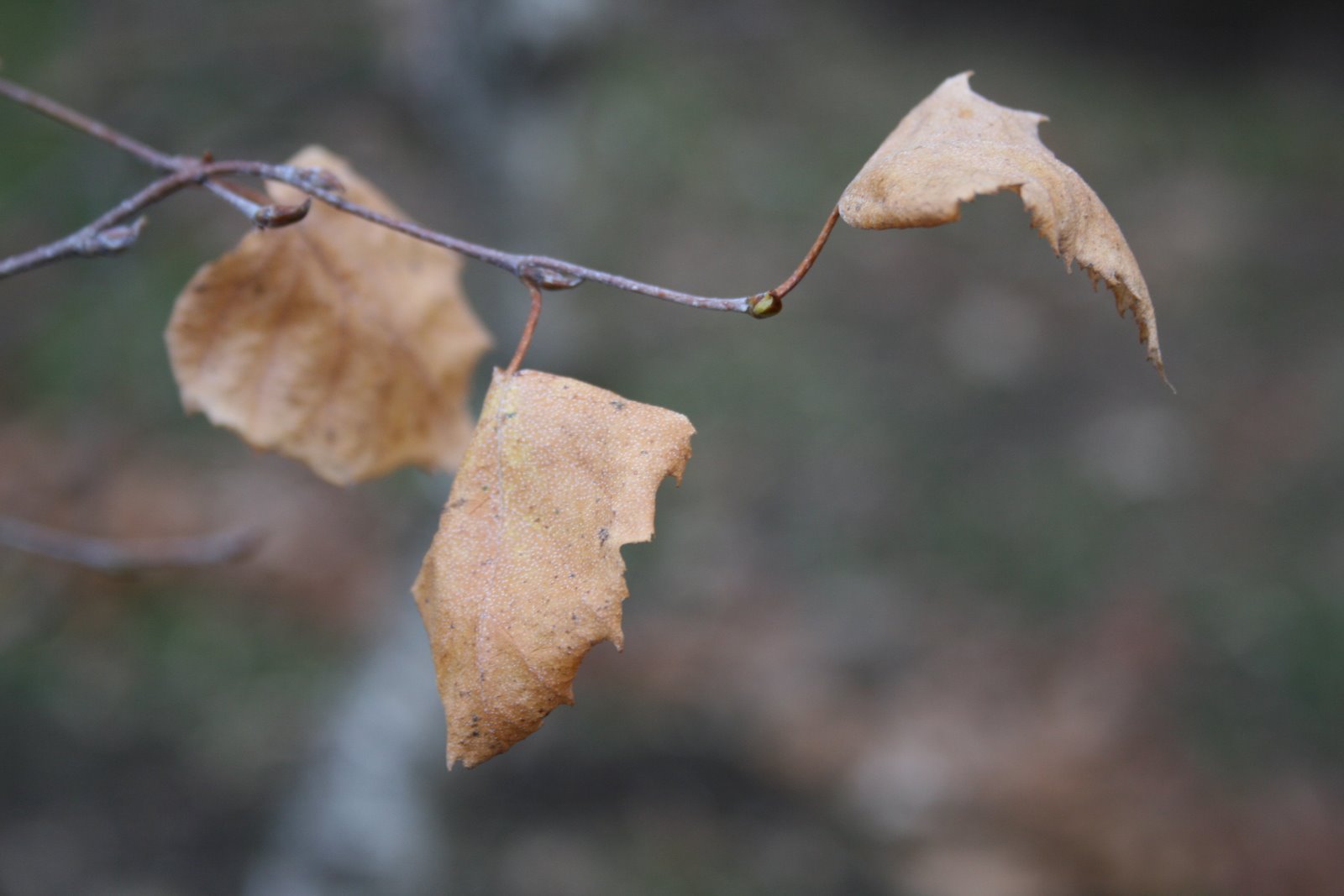
After the Frost: the Birch Tree
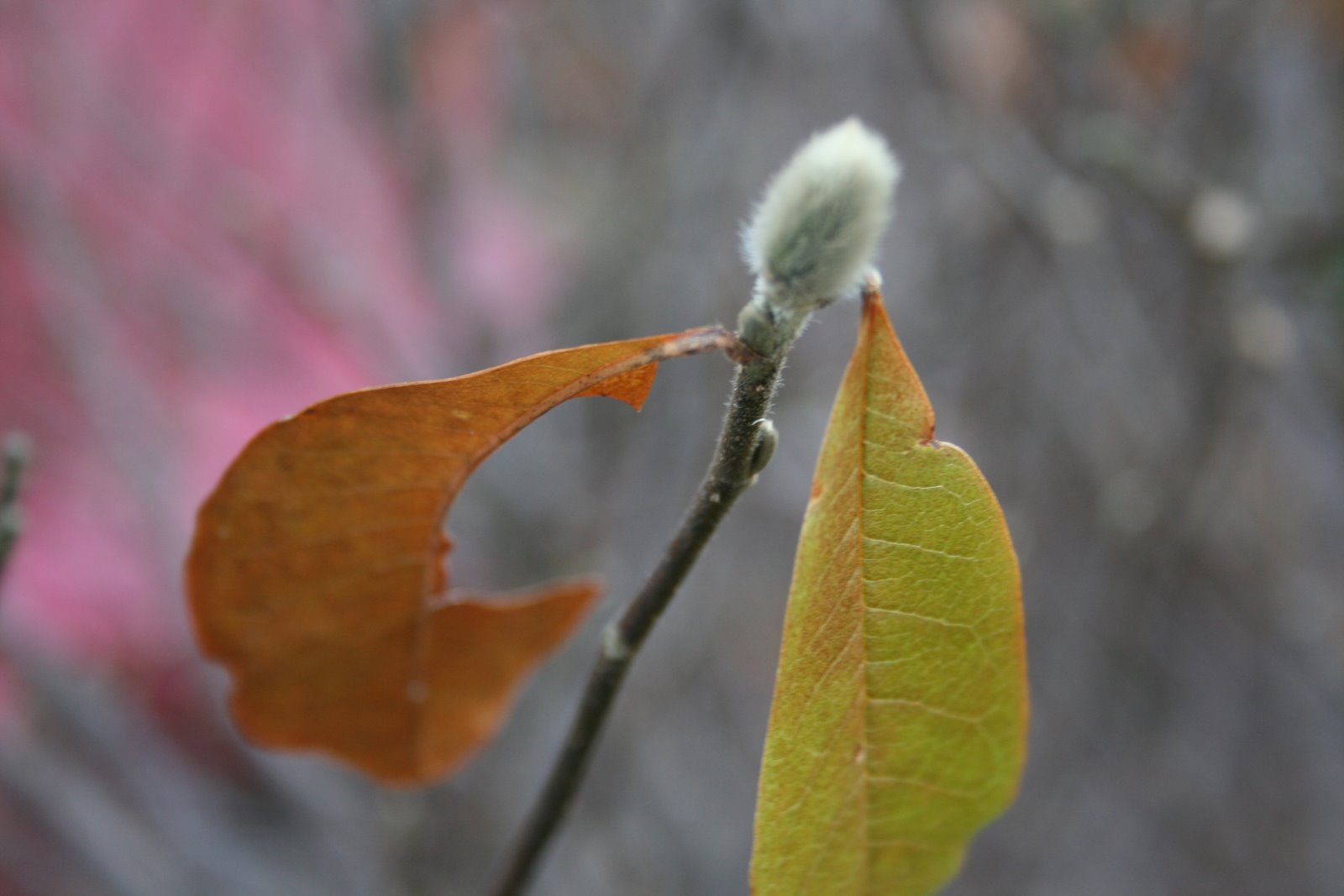
After the Frost: Star Magnolia in the Walled Garden

 Heirloom Gardener