Annuals and Perennials to Help Save The Bees

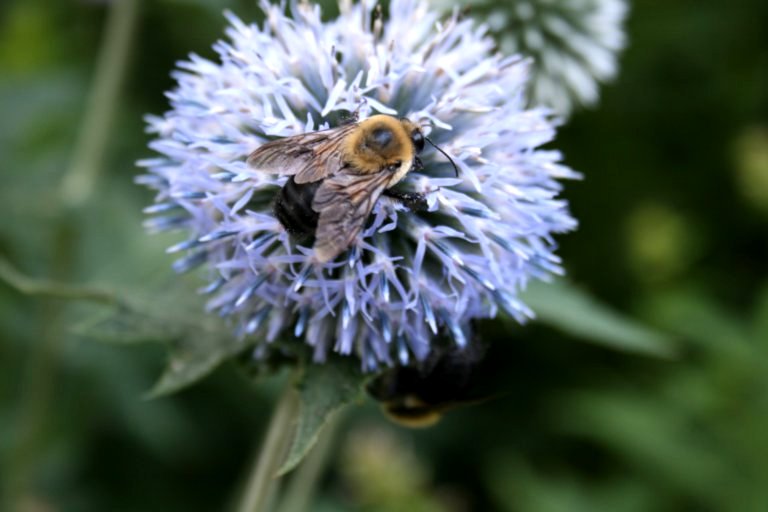
I’ve been reading for over a year now about the decline in the global bee population. This season, there was even a noticeable decrease in our local bees. In today’s Wall Street Journal, Josie Glausiusz reviews Fruitless Fall by Rowan Jacobsen which examines what’s happening. Sadly, Ms. Glausiusz writes:

“No one knows where the bees have gone. No one knows the cause, either, though theories abound, ranging from the absurd (cellphones, the hole in the ozone layer) to the alarming (rampant pesticide use, widespread loss of habitat). After extensive interviews with beekeepers and bee biologists, Mr. Jacobsen concludes that a “rogue’s gallery” of stresses may have driven honeybees to the edge: parasitic mites and beetle beehive-invaders, and a slew of bacterial, fungal and viral diseases, not to mention “pesticides, antibiotics, malnutrition, urbanization, globalization and global warming.” Florida’s state apiarist, Jerry Hayes, tells the author: “I’m surprised honeybees are alive at all.””

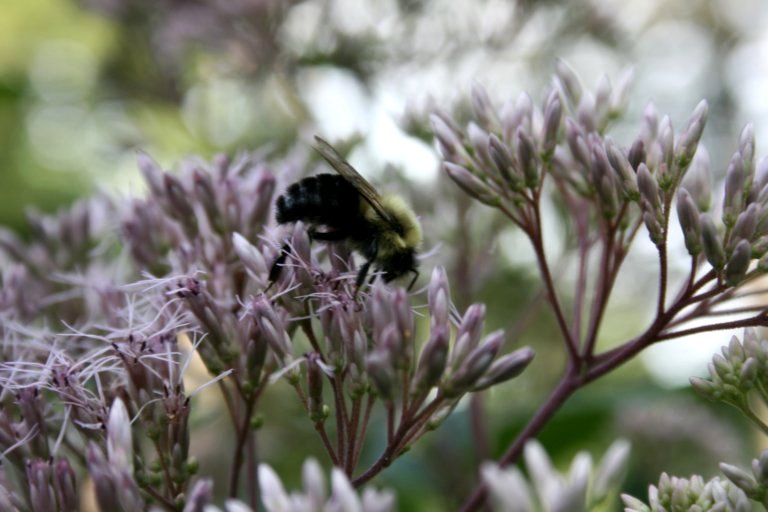
My favorite ice cream maker, Haagen Dazs, has set up a website http://helpthehoneybees.com/. On this website, under “How you can help,” it suggests four things: plant bee-friendly plants; donate to universities that are doing research on Colony Collapse Disorder; support beekeepers; and tell your friends. The bee-friendly plants they suggest are: lavender, glory bushes, jasmine, rosemary, coreopsis, violets, thyme, wisteria, bluebells, trumpet vine, sunflowers, cosmos and cone flowers.

Well, I’ve already planted most of these bee-friendly plants and now I’m telling my friends. Please do the same!
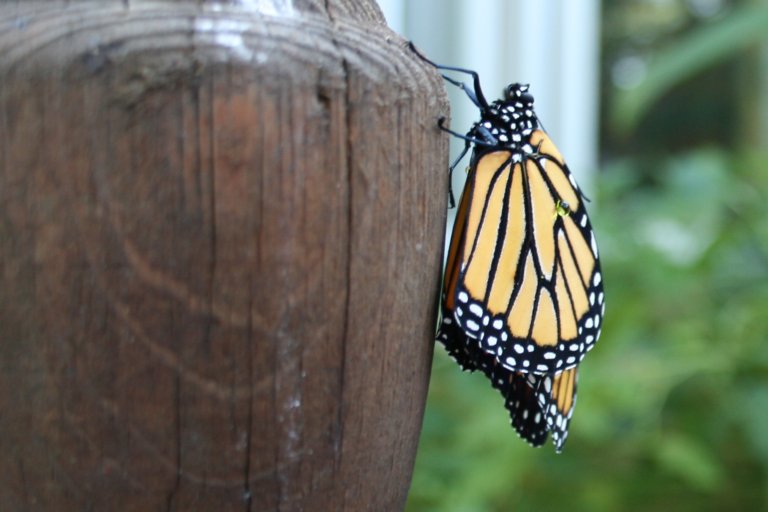
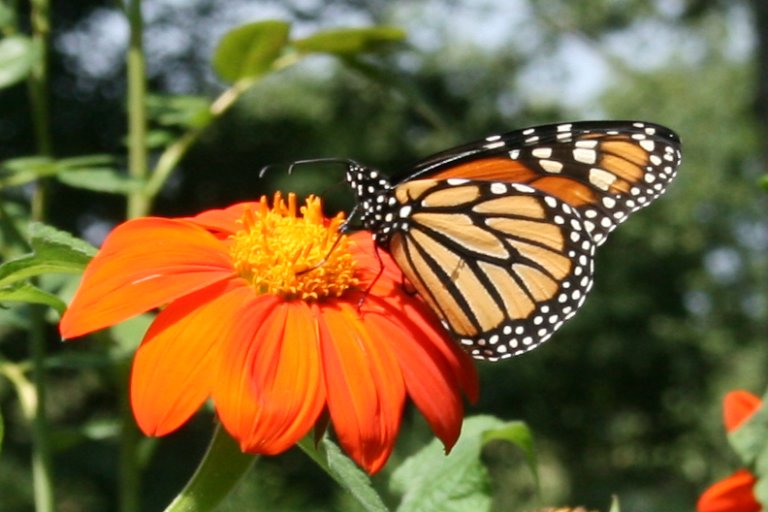
The Monarch Butterfly (Danaus plexippus) emerges from its chrysalis and another feeds on a Mexican Sunflower (Tithonia rotundiflora)

As a follow-up to my prior post about the monarch caterpillars we have been enjoying and the chrysalis we found of our deck, my five year old son actually found the new butterfly after it emerged from its chrysalis. We didn’t see it actually come out, but we knew this was the one because it was was walking on the deck a few inches away from the old chrysalis with its moist, unfurled wings. It didn’t fly away for a few hours.

Here’s a picture of another beautiful monarch I caught feeding on our Mexican sunflower in the Children’s Garden. Unlike some other butterflies, I find that these monarchs don’t let you get too close.

Links to Some Great European Gardening Blogs

One of the really fun things about garden blogs is that you can peak into others’ gardens all around the world. This list in no way is exhaustive, but just some of the European gardening blogs that I have discovered and enjoyed. If you have suggestions of others, let me know.

A Garden Diary (Budapest)
Bliss (Netherlands)
Carrots and Kids (UK)
Down on the Allotment (UK)
Ewa in the Garden (Poland)
Garden Dreams (Sweden)
Garden Hopping (UK)
Jardin Miranda (France)
Lady Greenthumb’s Garden (Croatia)
Roses and Stuff (Sweden)
Roses in Gardens (Denmark)
The Constant Gardener (UK)
Victoria’s Backyard (UK)

Pictures of Monarch Butterfly (Danaus plexippus) Caterpillars on Butterfly Weed (Asclepias tuberosa) and Chrysalis on the Deck

The children love counting the dozens of Monarch Butterfly caterpillars growing and crawling all over the Butterfly Weed.
The chrysalis of the Monarch Butterfly is something beautiful to behold. A photograph cannot capture the shiny translucence of it, which is truly breathtaking.

Follow-up: the Monarch Butterfly emerges from its chrysalis.

Nan Ondra, Garden Writer/Blogger, Featured in The New York Times

Nan Ondra, one of my favorite garden bloggers, the genius behind both Gardening Gone Wild (a blogging consortium and host of the Garden Bloggers’ Design Workshop) and Hayefield (her personal blog), was featured in last week’s New York Times. In the article, “Where Foliage Eclipses Flowers,” journalist Anne Raver talks with Nan about her life, her garden, and her books (Nan just published her twelfth).

Caterpillars that Sting: Pictures of Saddleback Caterpillars (Acharia stimulea)

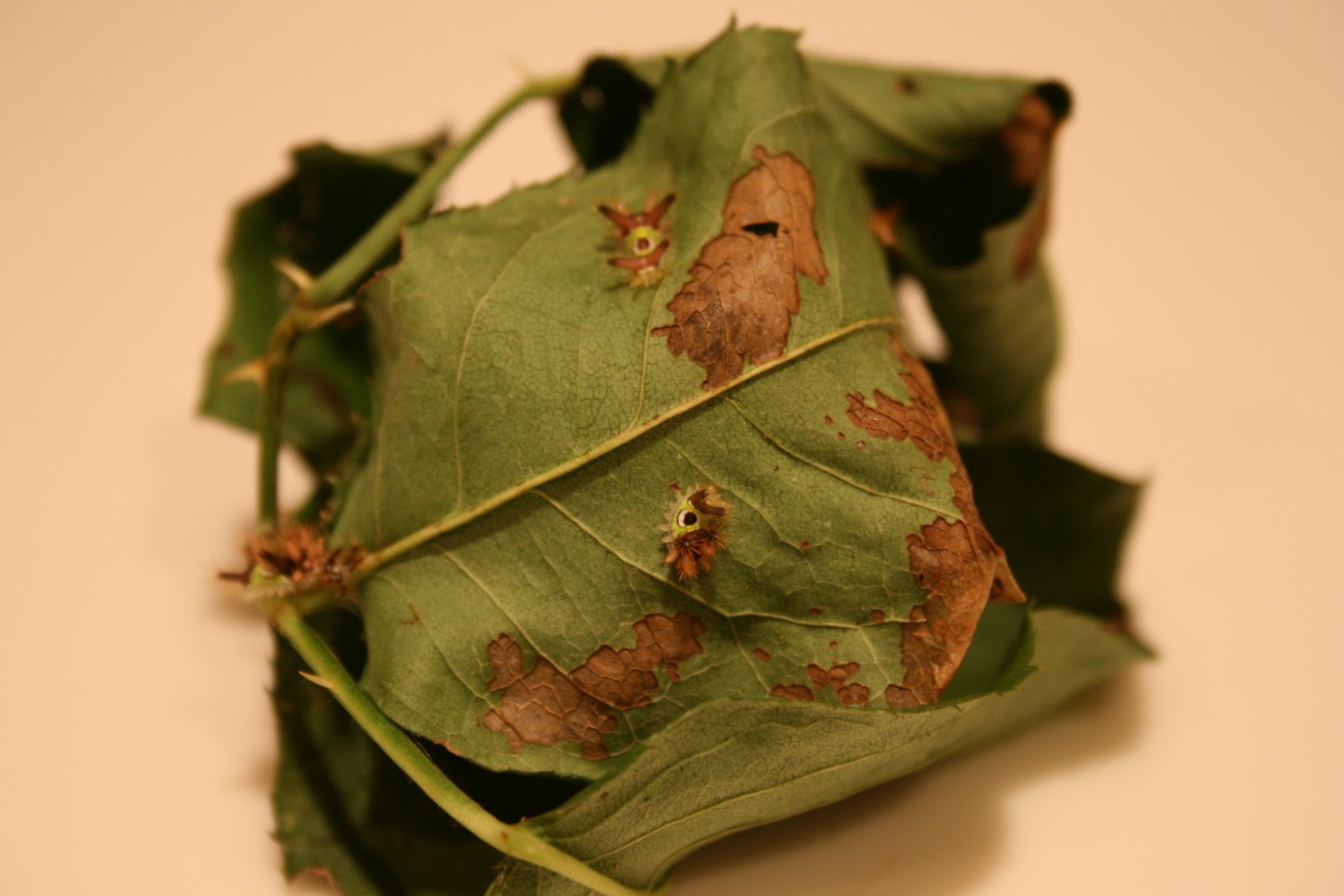
I was picking up some rose pruning clippings today when I felt a stinging sensation on my hand. I have never seen this little creature before, but my daughter identified it as the Saddleback Caterpillar, which she had previously seen in one of her science books. Unknown to me, these little creatures can actually sting you from their four distinctive spines. The first picture includes three caterpillars. The second picture includes one of the unhatched eggs. The caterpillar matures into an unremarkable brown moth, that you can see on bugguide.net.

Swamp Darner Dragonfly among the Roses and Clematis

Earlier this week, I saw an amazing dragonfly resting among the roses and clematis. I see a lot of dragonflies in the garden, but I’ve never seen one this large before. It was huge–almost four inches long, though I haven’t figured out exactly which one it is yet. I’m working my way through the New Jersey Odanata Enthusiasts’ website to try to determine which it is–perhaps some sort of Darner. If someone can identify it for me, let me know!

Follow-up: I sent a picture of my dragonfly to the good people at the New Jersey Odanta Enthusiasts and they were able to identify my dragonfly as a Swamp Darner (Epiaeschna heros). Description: Huge. The size makes it almost unmistakable, but just in case, the blue eyes, prominent green thoracic stripes and brown abdomen ringed in green should remove all doubt.