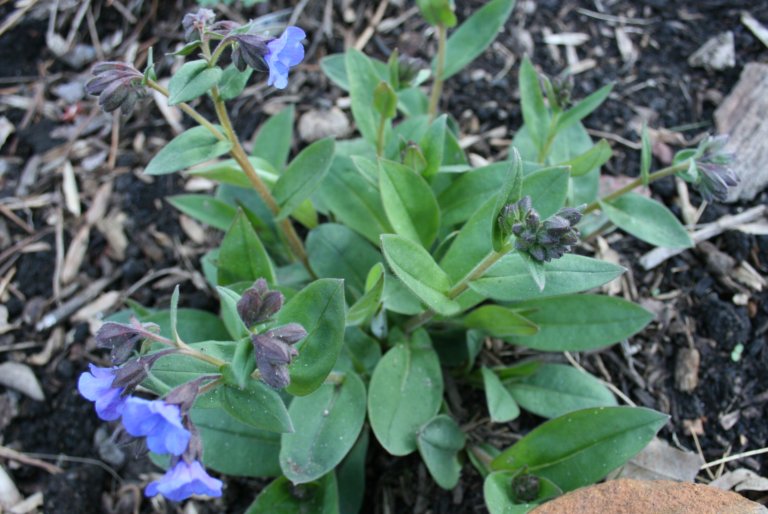
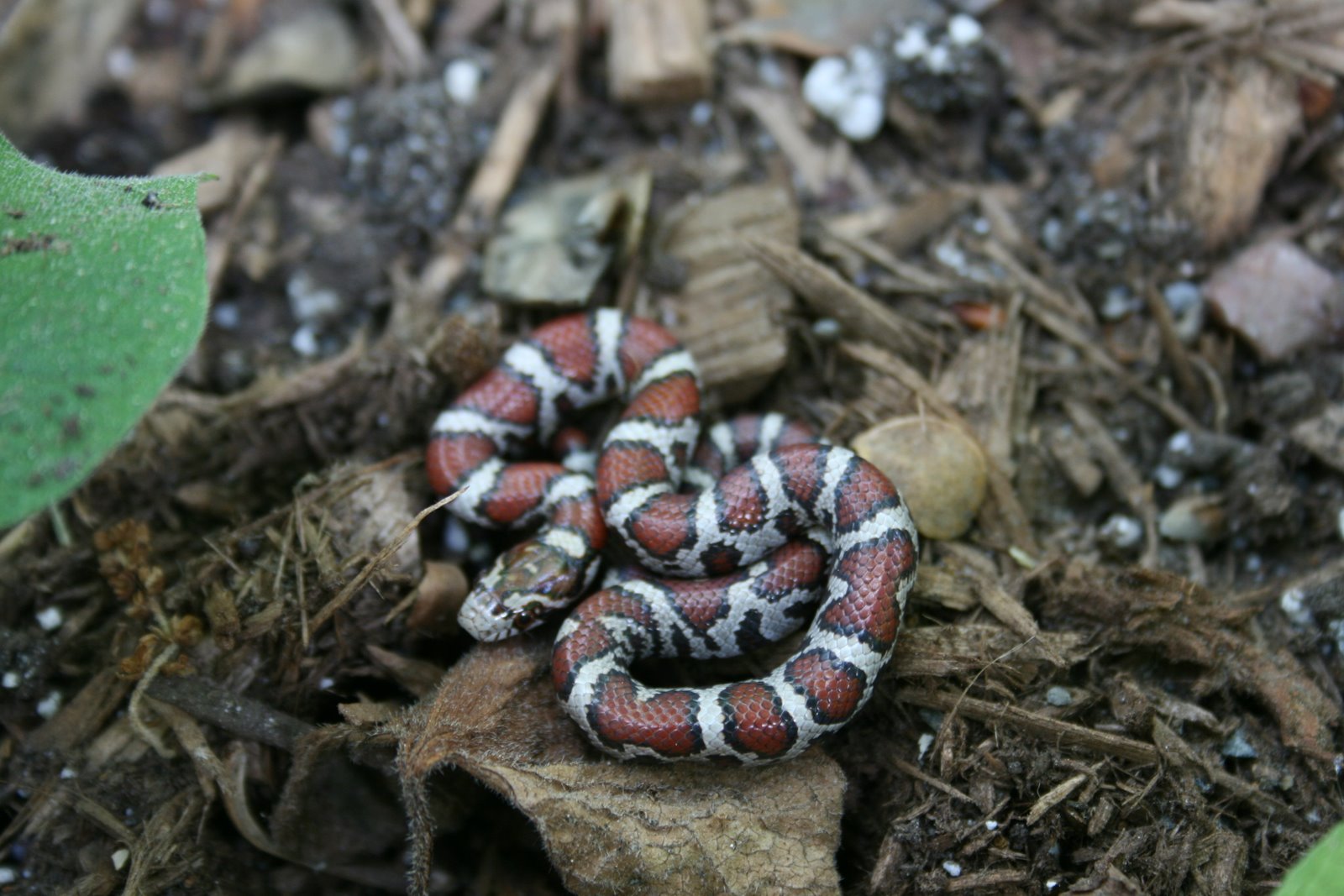
 My nine year-old son spotted this small, handsome snake hiding next to the brunnera in the Front Border. I’ve never even seen a snake in my garden before, and this one was quite a sight: prominent orange spots outlined in black on a white background.
.
According to the New Jersey Department of Environmental Protection’s website on snakes, it looks like either (i) the “Coastal Plain” Milk Snake integrade, which is a rare cross between the Eastern Milksnake and the Scarlet Kingsnake, (ii) the Scarlet Kingsnake, or the (iii) Northern Scarlet Snake. According to the website, none of them live in Morris County, but then my identification may be off. It looked like a baby, a little thicker than a pencil and no more than one foot long. If there are any ophiophiles out there who can identify it, let me know.
Category: Uncategorized
The Garden Conservancy’s Open Days 2009: Opening America’s Best Private Gardens
What gardener doesn’t like to visit other gardeners’ homes? The Garden Conservancy’s Open Days for 2009 are beginning around the country this weekend. In their words:
“Here at the Garden Conservancy, we believe that the best way to learn about gardens and to appreciate them, is to simply spend more time in them. Through the more than 300 gardens that will be open in 2009, we invite you to explore first-hand examples of outstanding design and horticultural practice that are growing in America’s gardens.”
For the whole schedule, click here. Around my area of New Jersey, I am looking forward to seeing the following private gardens on May 16th:
The Hay Honey Farm
Far Hills, New Jersey
Nestled in a valley with long pasture views, the gardens reflect a diverse range of interests, and include an early spring patio garden, a summer-to-fall perennial border, and a wide variety of trees and shrubs. A walk along a stream leads past a wet meadow to a rhododendron glade with year-round interest. There is also a large vegetable and cutting garden.
Kennelston Cottage
48 Post Kennel Road
Far Hills, New Jersey
Several gardens surround the early 1900s main residence, reflecting the English Tudor architecture of the house and the European tradition of creating garden rooms. Organized along axial lines, the gardens form enclosures within walls, fences, or plant masses, each for a different function and each with its own ambiance, enhanced by a rich planting palette. There is a courtyard garden with a reflecting pool, a potager, a shrub garden with its millstone, a sunken garden set within an old stone foundation, a conservatory terrace garden, and a pool garden. Further away, there are less formal lines of a pool garden, bird garden, and a shade garden. The property also features an English greenhouse by Alitex and a small nursery and boxwood garden near the barn complex and, at the main entrance, an early colonial gatehouse surrounded by an old fashioned cottage garden. Evolving over the past twelve years, the gardens were designed by B. W. Bosenberg & Company of Far Hills and Ania Bass of Peapack.
Hedgerows
200 Old Chester Road
Chester, New Jersey
The landscape surrounding this nineteenth-century farmhouse unfolds to reveal several acres of gardens with different themes, set in meadows where a flock of sheep graze. There are perennial borders, a formal herb garden, and woodland gardens with a reflecting pool and stream. The owners are enthusiastic collectors, and many rare plant species are growing on their property. Island beds showcase unusual shrubs and trees, and a series of trough gardens contain rock and alpine plants. The gardens are planted to create interest throughout the year.
New Jersey Wildflower and Native Plant Sales
The Native Plant Society of New Jersey is hosting several wildflower and native plant sales around the state. For the full listing, check out this link:
http://www.npsnj.org/events.htm
For Morris County, check out the sale being hosted by Chester Township. The plant list and order form is below. Orders must be received by April 30th for pick-up on May 9th.
http://www.chestertownship.org/form/annual-native-plant-sale-2009.pdf
Top Five Flowers for Early Spring Color (Before the Daffodils and Tulips)
Before I was a gardener, I thought of daffodils and tulips as the first flowers of spring. Now, people frequently ask me how I get color so early. I have two answers: first, I plant more bulbs; and second, I keep a record of what blooms early. Here are five of my favorites:
.
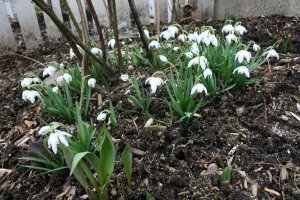 1. Snowdrops. You can’t get enough of them and they last for a very long time. They have been blooming in my garden since February. I find that the double-blooming snowdrops bloom later, so you can add them if you want an even longer bloom period. Also, I’m not sure if they are poisonous, but no one (chipmunks/squirrels) eats them in my garden.
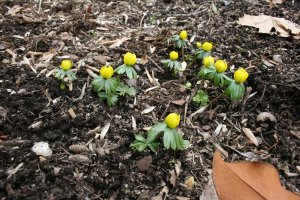 2. Winter Aconite. Be sure to buy super-fresh bulbs (I suggest Old House Gardens) or you can try soaking them in water before planting. If they do not work, it is most likely because they dried out before planting. They are poisonous to rodents (chipmunks/squirrels).
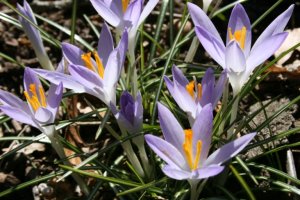 3. Crocuses. You can’t get enough of them. Tommies are the most rodent (chipmunk/squirrel) resistant and the earliest blooming. I have mainly purple and some rosy purple varieties. I also plant vernalis, which are the larger crocuses that also bloom early. Before planting, I dip the bulbs in Ropel or my home-made deer mix. I love mixes of purples, lavenders, purple-stripes and whites.
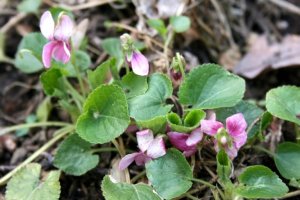 4. Violets. Violets are lovely. They are great as an underplanting beneath roses and other shrubs. They require no care whatsoever. They produce beautiful, sweetly scented blooms during the early spring (and even during the winter on particularly warm days). You have to be careful not to choose wild varieties that self-seed too much. I grow sweet violets as parma violets are not hardy in my region.
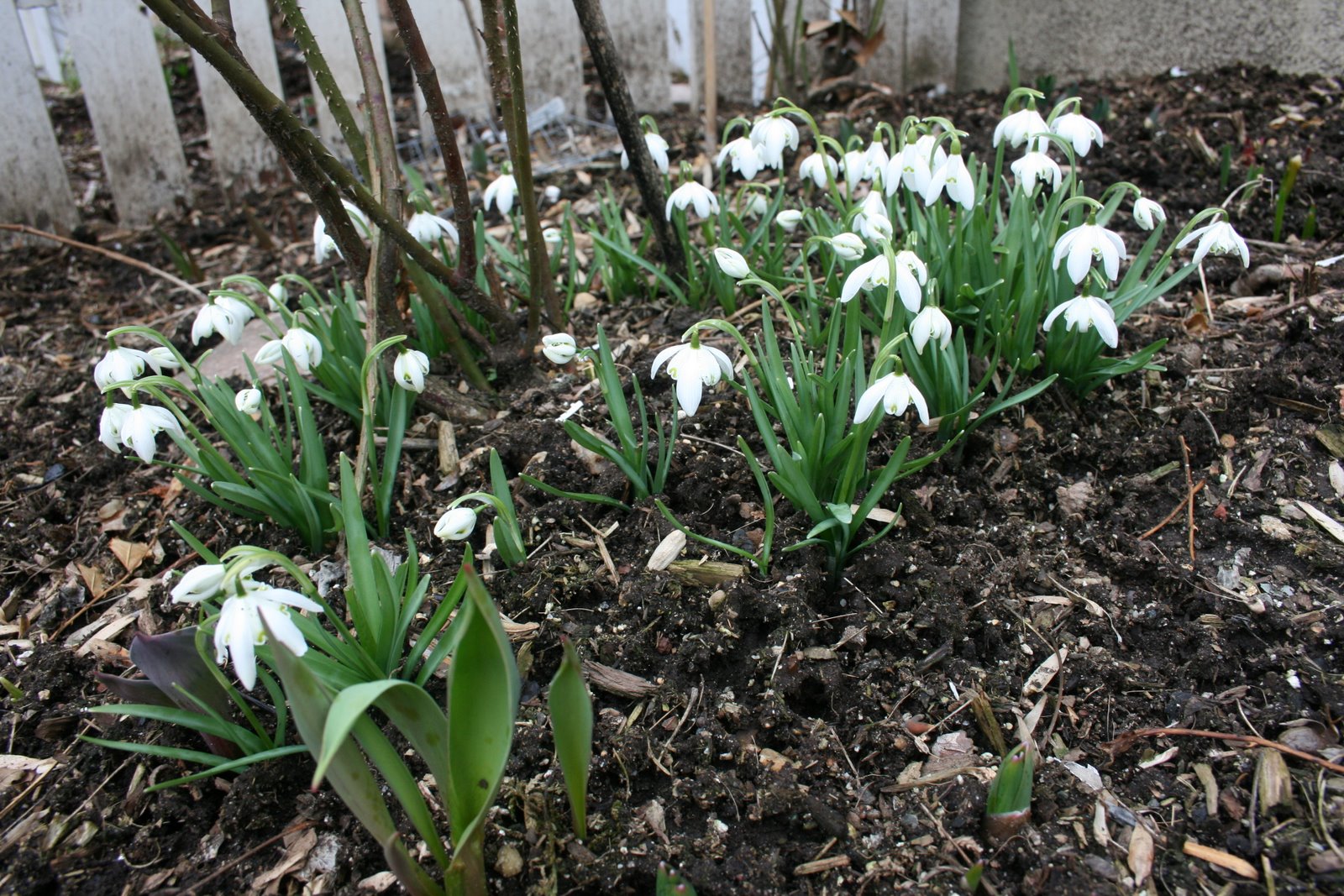 1. Snowdrops. You can’t get enough of them and they last for a very long time. They have been blooming in my garden since February. I find that the double-blooming snowdrops bloom later, so you can add them if you want an even longer bloom period. Also, I’m not sure if they are poisonous, but no one (chipmunks/squirrels) eats them in my garden.
.
 2. Winter Aconite. Be sure to buy super-fresh bulbs (I suggest Old House Gardens) or you can try soaking them in water before planting. If they do not work, it is most likely because they dried out before planting. They are poisonous to rodents (chipmunks/squirrels).
.
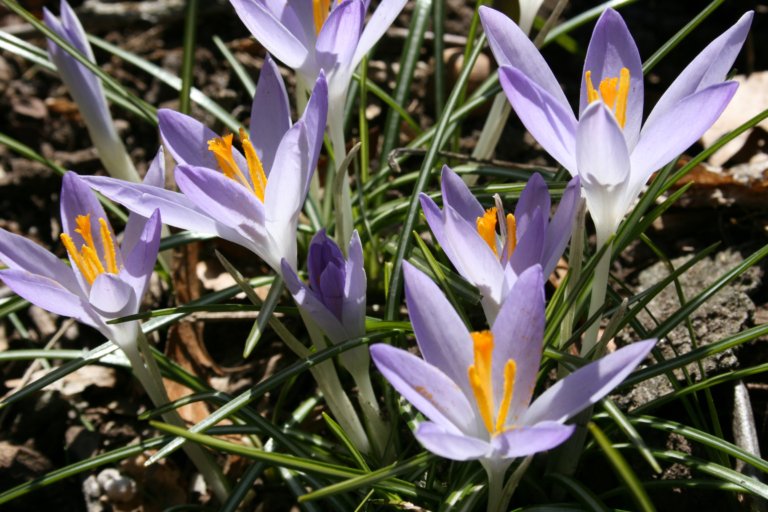 3. Crocuses. You can’t get enough of them. Tommies are the most rodent (chipmunk/squirrel) resistant and the earliest blooming. I have mainly purple and some rosy purple varieties. I also plant vernalis, which are the larger crocuses that also bloom early. Before planting, I dip the bulbs in Ropel or my home-made deer mix. I love mixes of purples, lavenders, purple-stripes and whites.
.
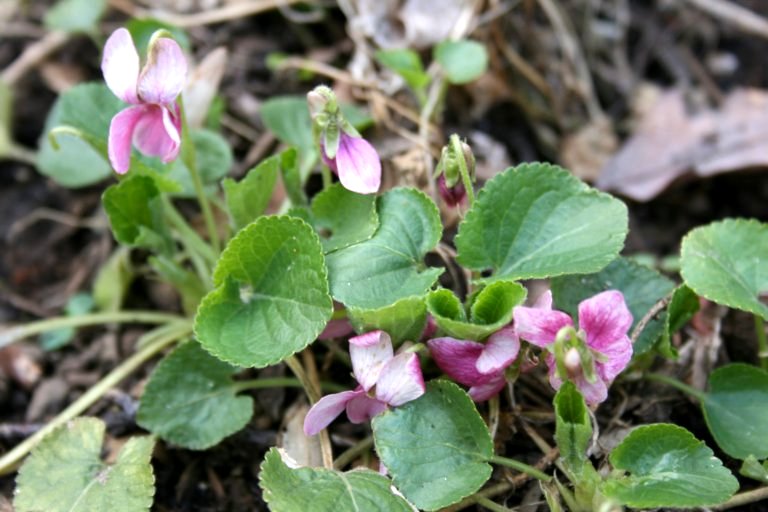 4. Violets. Violets are lovely. They are great as an underplanting beneath roses and other shrubs. They require no care whatsoever. They produce beautiful, sweetly scented blooms during the early spring (and even during the winter on particularly warm days). You have to be careful not to choose wild varieties that self-seed too much. I grow sweet violets as parma violets are not hardy in my region.
.
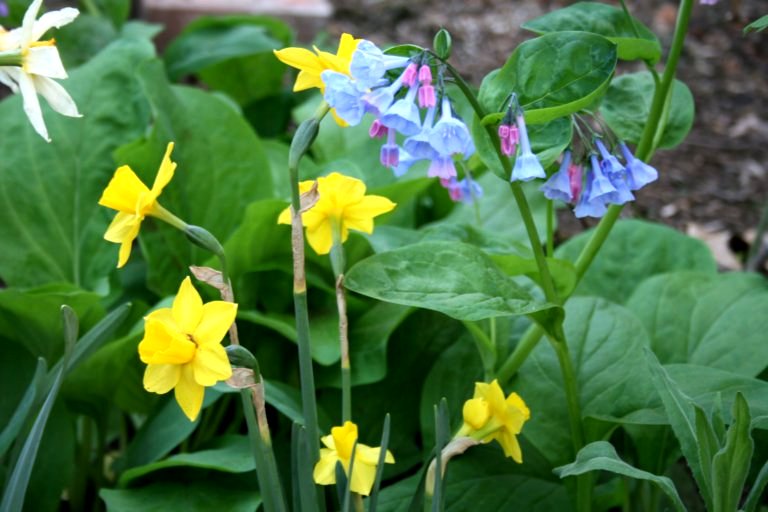
The Best of Heirloom Gardener (updated as of March 2009)
I. Trees, Shrubs, and Plants
- Twelve Great Nurseries for Heirloom Plants: Roses, Perennials, Annuals, Bulbs and Seeds
- Two Perfect Flowering Plants for Arbors: Betty Corning Clematis and Dortmund Rose
- Growing Tulips in New Jersey: Squirrels, Deer, and Clay Soil
- Container Plantings: Variety, Soil, and Care
- Twelve Months of Garden Color in New Jersey (Zone 6b)
- Hardy Annual and Biennial Self Seeders
- Calendar for Forced Branches: When to Cut Various Flowering Branches for Forcing
- Forced Branches and Bulbs: Forsythia, Hyacinth, Tulips, Muscari, and Crocus
- Garden Bloggers’ Bloom Day
- Index of Rose Photos
II. Pruning
- How to Prune Caryopteris, Spirea, Butterfly Bush, Pee Gee Hydrangea, Annabelle Hydrangea, Smokebush, Elderberry
- How to Prune Pee Gee Hydrangeas and Wisteria
- Hydrangeas: Why and How to Prune
- How to Prune Roses, Part I: An Introduction
- How to Prune Roses, Part II: Old Rose Pruning Secrets
- How to Prune Roses, Part III: Why Prune?
III. Hardscaping
- Path Makeover: Replacing the Terra Cotta Stepping Stones with Pebbles
- Maintaining the Pebble Path
- Creating Space for a Garden: the Cutting Garden
- Four Year Makeover of the Front Garden: How to Improve Boring Suburban Landscaping
IV. Gardening With Children
- How to Build a Children’s Playhouse (the Fort)
- How to Build a Sandbox
- Ten Tips for Planning a Children’s Garden
- Five Tips for Growing Edibles with Children
- How to Make a Crown and Boutonniere with Fresh Flowers
V. Vegetables and Herbs
- How to Build Raised Beds (on a Slope/Hill)
- Organically Preparing the Soil for Planting
- Farmer’s Almanac Spring Planting Schedule (March/April) and Heirloom Seed Sources
- Farmer’s Almanac Spring Planting Schedule (May)
- How to Make the Perfect Soil Mix for Seed Sowing
- Baker Creek Heirloom Seeds – the best heirloom seed offerings
- How to Build a Planting Grid for Square Foot Gardening
- How to Make a Planting Square to Uniformly Space Your Seeds
- How to Plant Corn the Way Squanto Taught the Pilgrims
- How to Plant Potatoes and Harvesting Asparagus
VI. Pest Control
- Advice Wanted: How to Keep Rabbits Out of the Garden
- Keeping the Deer Out of the Backyard: the Deer Fence
- Keeping the Groundhog Out of the Cutting Garden
- Organic Pest and Fungus Control: Garlic Barrier – Yes, It Really Works
- Organic Rose Gardening: Dormant Oil Application for Pest Control
- Organic Pest Control: Colorado Potato, Threelined Potato, and Japanese Beetles
Twelve Great Nurseries for Heirloom Plants: Roses, Perennials, Annuals, Bulbs and Seeds
In the past year or so that I have been writing this blog, it’s been my pleasure to mention a number of the wonderful nurseries which specialize in heirloom plants. Given how frequently that I am asked about where you can buy rare plants, I thought it might be helpful to gather all of the recommendations in a single post. I am sure that this list excludes many fine nurseries, but these are just from my own personal experience. Feel free to make additional recommendations in the comments, as I am always looking for new nurseries. The following list is in no particular order:
1. Antique Rose Emporium (mentioned as a source for various roses in 12/07, 1/08, 2/08, 6/08, and 12/08): http://www.antiqueroseemporium.com/ “Antique Rose Emporium is your source for antique and old garden roses.”
2. Ashdown Roses (referred to as a source for a great DVD on 3/08 and roses on 12/08): http://www.ashdownroses.com/ “The best antique, climbing and garden roses.”
3. Rogue Valley Roses (mentioned as a source of roses on 12/08): http://roguevalleyroses.com/ “Specializing in antique, rare and exceptional roses.”
4. Perennial Pleasures (noted as a source of phlox in 1/08, of cranesbill gernaiums in 5/08 and sweet pea in 8/08, sells perennials): http://www.perennialpleasures.net/ “We grow over 900 varieties of flowers, herbs and shrubs, specializing in heirloom and medicinal plants.”
5. Geraniaceae (mentioned in 5/08 as a source for some cranesbill geraniums, specialty geranium nursery): http://www.geraniaceae.com/ “Geraniaceae is a small nursery in Marin County, California (Zone 9b) specializing in some of the plants of the Geranium family.”
6. Select Seeds (cited in 2/08 as a source of some of my self seeders, sells annuals, perennials and bulbs): http://www.selectseeds.com/ “…offers gardeners a fabulous selection of unique, high-quality flower seeds and plants, specializing in old-fashioned fragrant varieties, flowering vines, and rare cottage garden annuals.”
7. Annie’s Annuals & Perennials (source of heirloom annuals and some perennials, noted in 3/08 as an inspiration for my terrarium): http://www.anniesannuals.com/ “Rare, unusual annuals & perennial plants, including cottage garden heirlooms & hard to find California native wildflowers”
8. Old House Gardens (subject of a post on 1/08, with a focus on heirloom dahlias; mentioned as a source of winter aconite in 11/08, dahlias in 9/08, lilies in 8/08, and tulips in 5/08): http://www.oldhousegardens.com/ “Antique Flower Bulbs for Every Garden – Unique, Endangered, Amazing!”
9. Well Sweep Herb Farm (subject of a visit and post in 5/08, sells perennials and herbs): http://www.wellsweep.com/ “Our farm, a family endeavor, is located in the picturesque mountains of Warren County and is home to one of the largest collections of herbs and perennials in the country.”
10. Baker Creek Heirloom Seeds (subject of a post in 1/09): http://rareseeds.com/ “Preserving our gardening heritage, offering over 1275 unique varieties!”
11. Seed Saver’s Exchange (mentioned in 4/08 as a source of heirloom seeds): http://www.seedsavers.org/ “Since 1975, Seed Savers Exchange members have passed on approximately one million samples of rare garden seeds to other gardeners. We are a non-profit organization of gardeners dedicated to saving and sharing heirloom seeds.”
12. Thomas Jefferson’s Monticello (indicated in 4/08 as a source of heirloom seeds, also sells a limited selection of heirloom plants): http://www.monticello.org/ “The gardens at Monticello were a botanic showpiece, a source of food, and an experimental laboratory of ornamental and useful plants from around the world.”
Pictures of House Wren, Goldfinch, Tufted Titmouse and Downy Woodpecker Bird Nests from the Garden
One of the many things that I enjoy about being a gardener is the opportunity for my family to observe all of the native wildlife close-up, particularly the birds. In preparation for spring, we cleaned out all of the bird houses and nesting boxes around the yard and it is so amazing to see how each type of bird nest is made of different materials from the garden. Here are a few of the nests that we found and my best guesses on who made them:
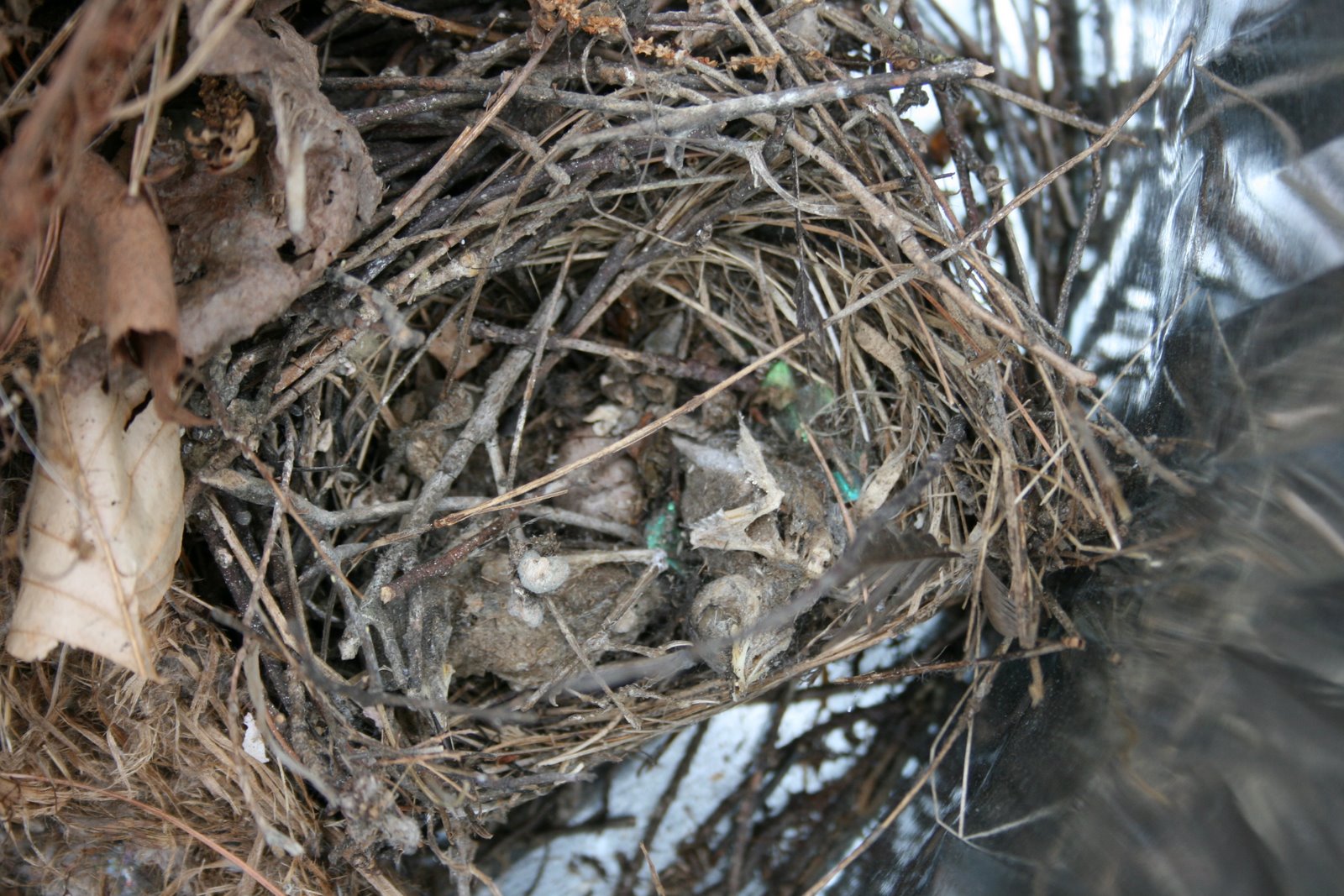 The house wrens made their nest exclusively with twigs. Unfortunately, we discovered a few babies that didn’t make it out of this nest last year. They made this nest in one of the small bird houses on Goldberry Hill (picture of a house wren nest).
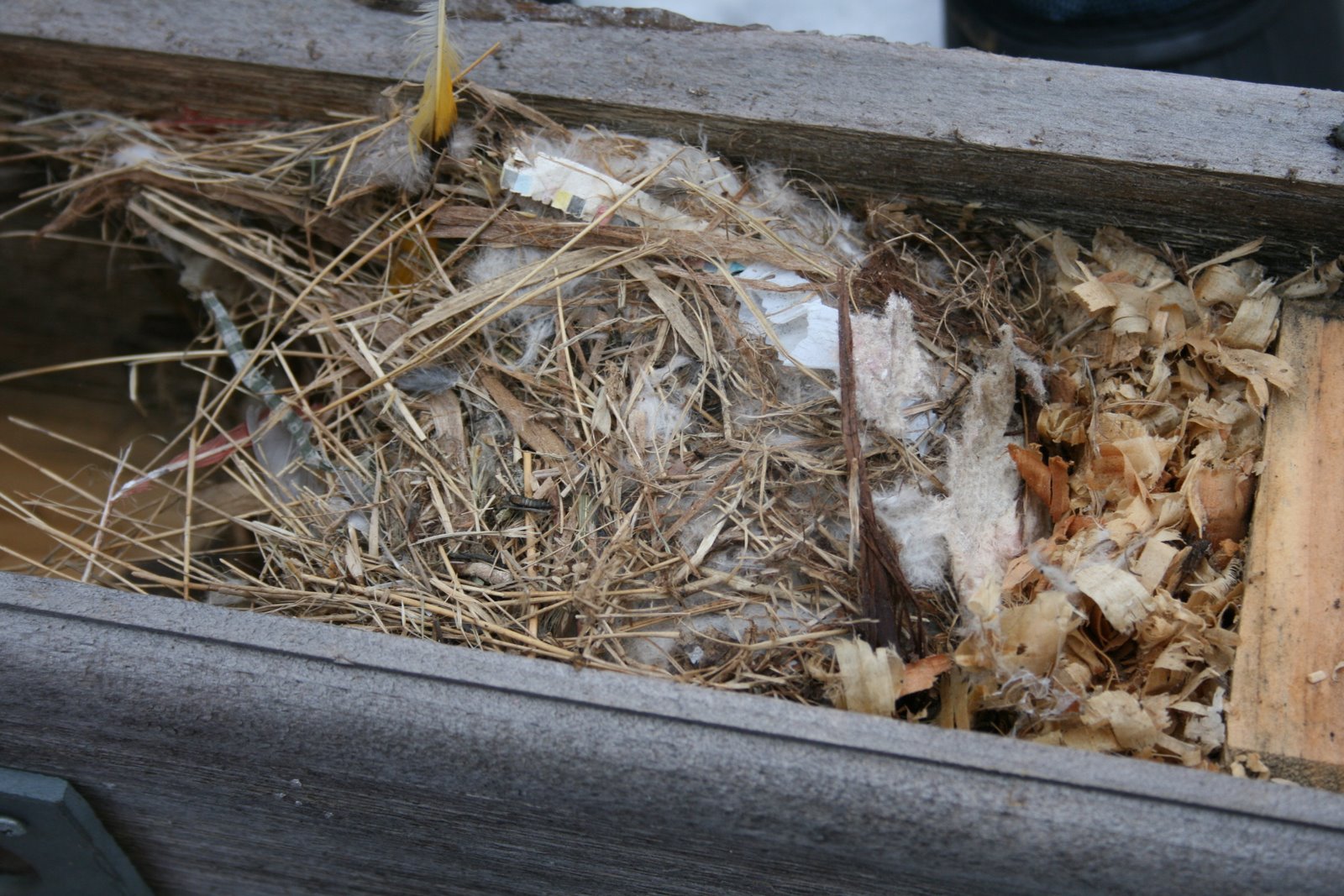 The goldfinches (?) made their nest mostly of wood shavings, small pieces of cedar mulch, and coarse grasses. I think it was made by goldfinches because of the yellow goldfinch-looking feathers I found in the box, but Paul H. below in the comments suggests it may not be. They made this in one of the nest boxes on the deer fence (picture of a goldfinch nest).
 The tufted titmice win the contest for the most comfortable-looking nest. They made their nest mostly of leaves and fine grasses. They made this nest in the children’s fort. Interestingly, the nest was built vertically like a cave instead of horizontally like a cup (picture of a tufted titmouse nest).
 The downy woodpeckers (?) made this nest mostly of wood shavings topped with leaves. Thanks to Paul H. in the comments below for the identification (picture of a downy woodpecker nest).
Local Harvest: North Jersey Farms, Food and Families

Frelinghuysen Arboretum
Saturday, January 17, 2009 (snow date January 24), 1-4 p.m.
Free admission
Meet some of the New Jersey farmers and artisans who produce the food on your table at “Local Harvest: North Jersey Farms, Food, and Families,” a celebration of the farms of northern New Jersey. Meet farmers, watch chef demos, sample and purchase local food, and learn about north Jersey’s agricultural heritage past and present. Learn about CSA (Community Supported Agriculture) and sign up for a share of the 2009 harvest. Co-sponsored by the Morris County Historical Society and the Northern New Jersey chapter of Slow Food USA.
Made possible by a grant from the New Jersey Council for the Humanities, a state partner of the National Endowment for the Humanities.
More details: http://www.acornhall.org/events.htm
"I support local farms and food."
Sadly, today was the last day of my local farmers’ market in Summit, New Jersey. It was half-raining, half-sleeting and about 32 degrees, but my boys (ages 8 and 5) and I would not have missed it for anything. Tony and his faithful family from Vacchiano Farms with their fresh meat and produce were there. Brad and his faithful crew from Hoboken Farms with their specialty foods were there too. We will miss all of you until next June.
Chatham Farmers’ Market (Chatham)
Summit Farmers’ Market (Summit)
 Heirloom Gardener