Category: Winter Garden
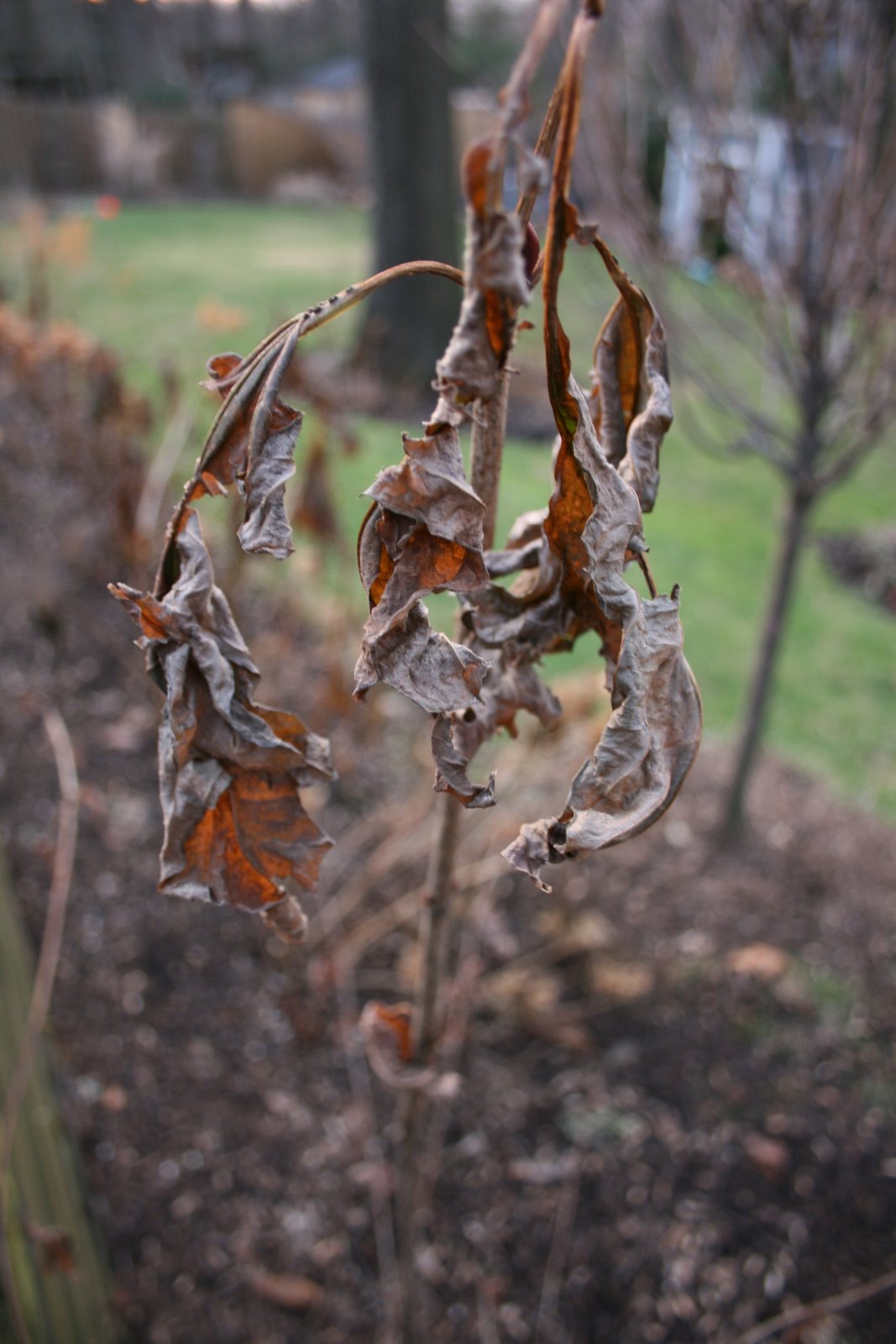
After the Frost: Hydrangea Leaves
Container Gardening: More of This Year’s Containers
As a follow-up to last Wednesday’s post, here are the rest of this year’s winter containers.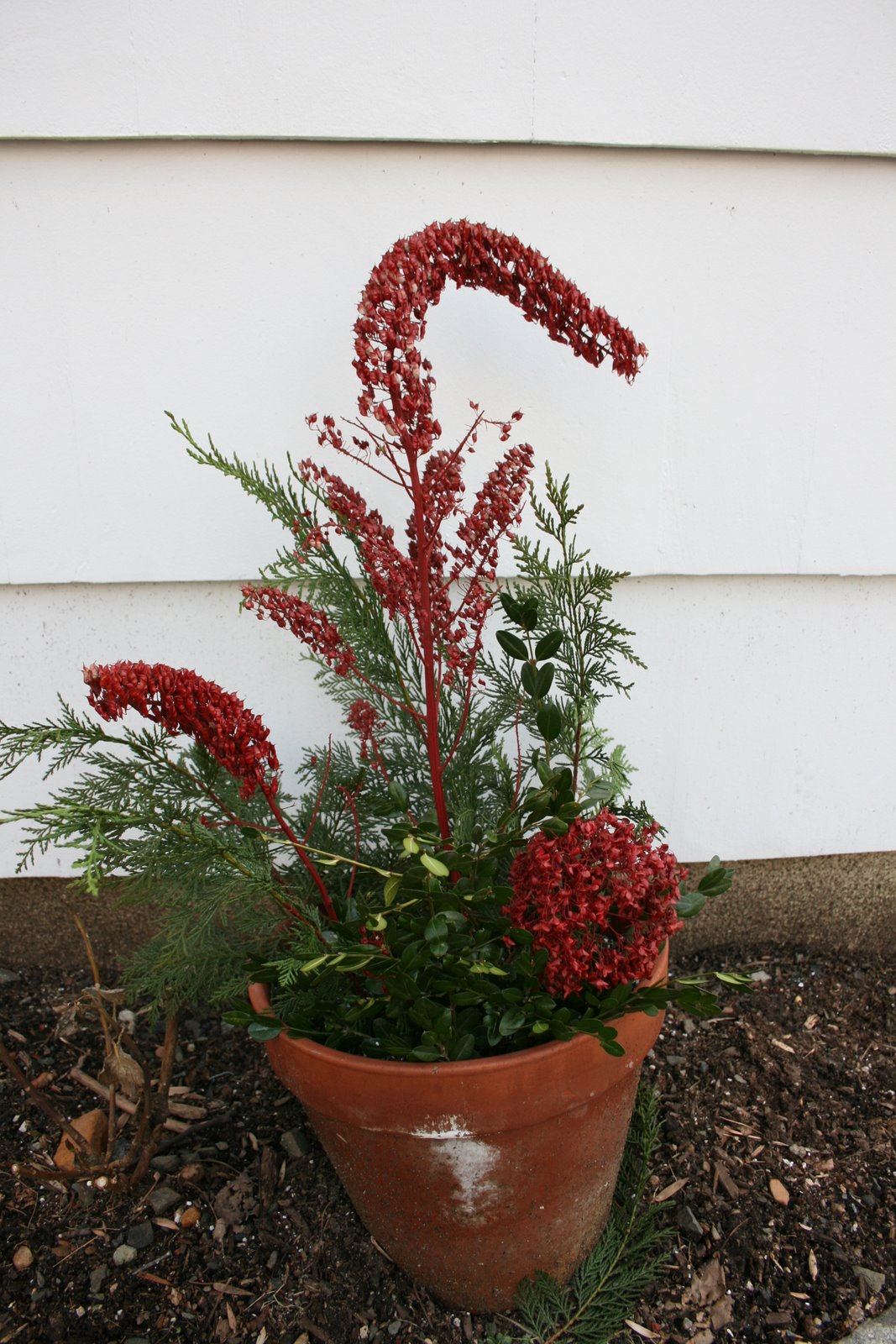

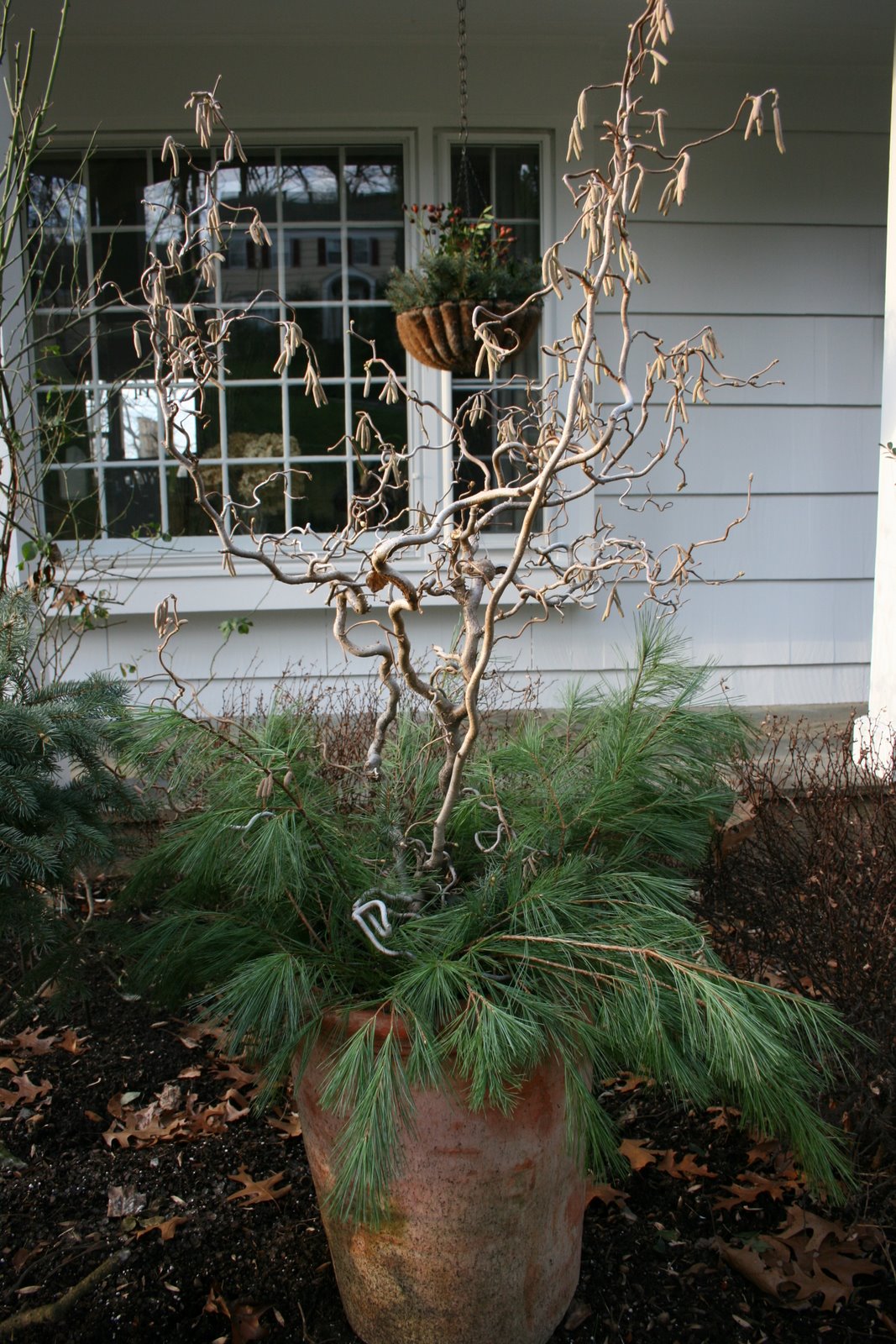
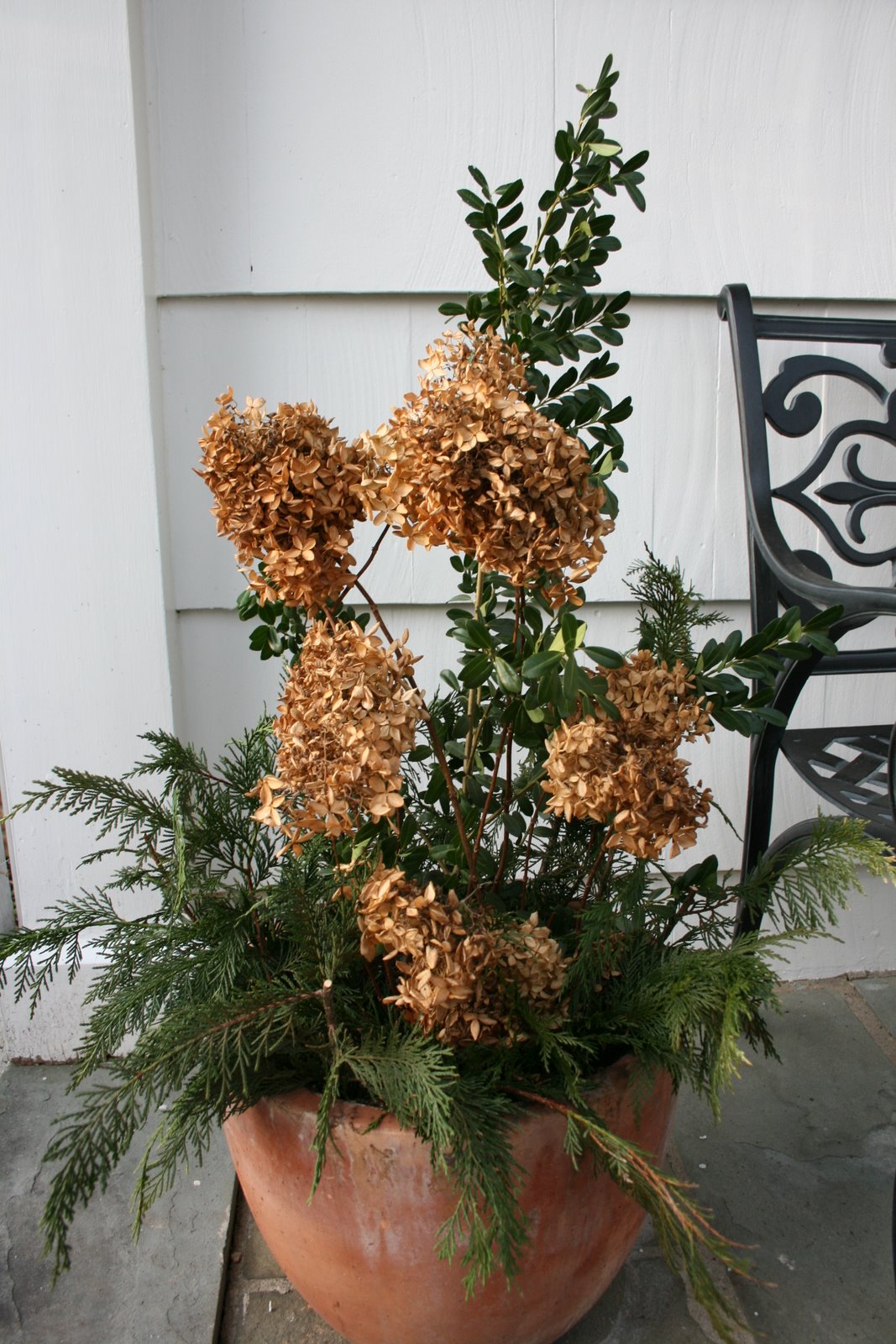
Container Gardening: Some of This Year’s Winter Containers
As per my recent posts on spray-painted alliums and wreath-making, I am trying do most of my indoor and outdoor Christmas decorating with cuttings from my garden. As a part of this effort, here are some of the winter containers that I have put together this past week. I’m about half-way done and will post pictures of the others after I finish them. If you want to see how they differ from last year’s winter containers, click here.
~ Winterberry and Leyland Cypress
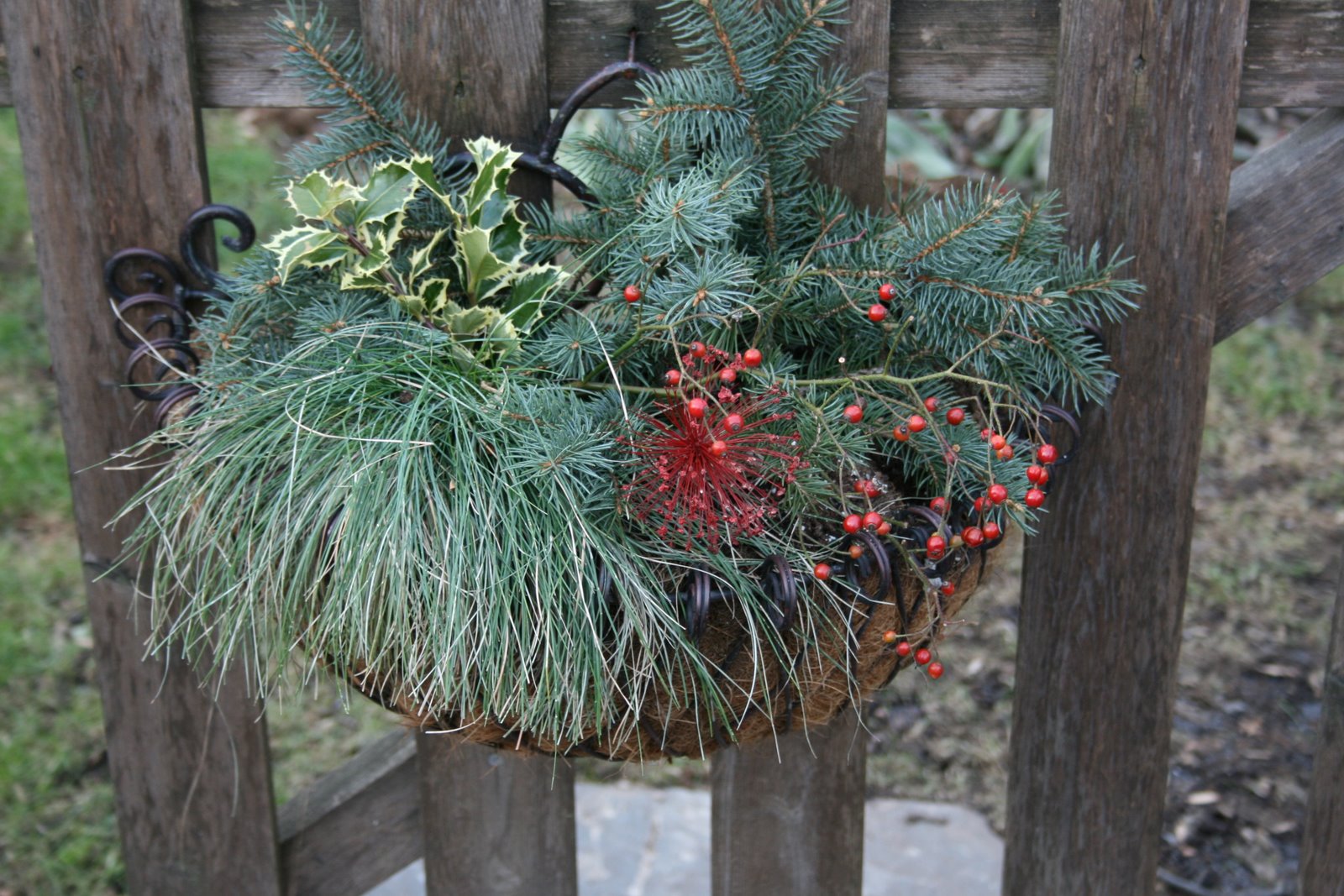 Carex, blue spruce, variegated holly, Ballerina rose hips, and spray-painted allium
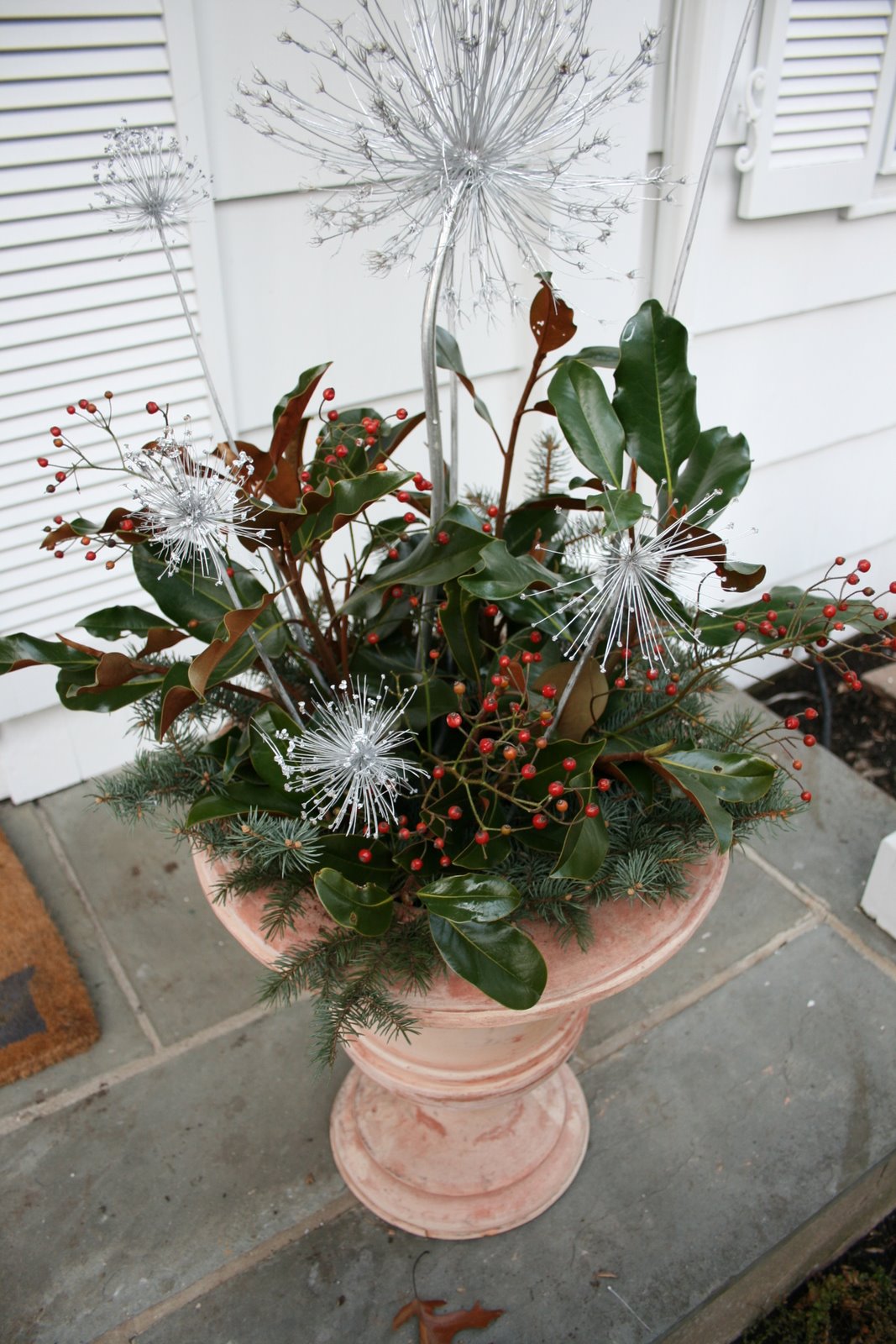 Spray-painted alliums, Southern Magnolia leaves, blue spruce and Ballerina rose hips
 Ilex, Dortmund rose hips and blue spruce
 Multi-Purpose Southern Magnolias: Summer Blossoms and Evergreen Leaves
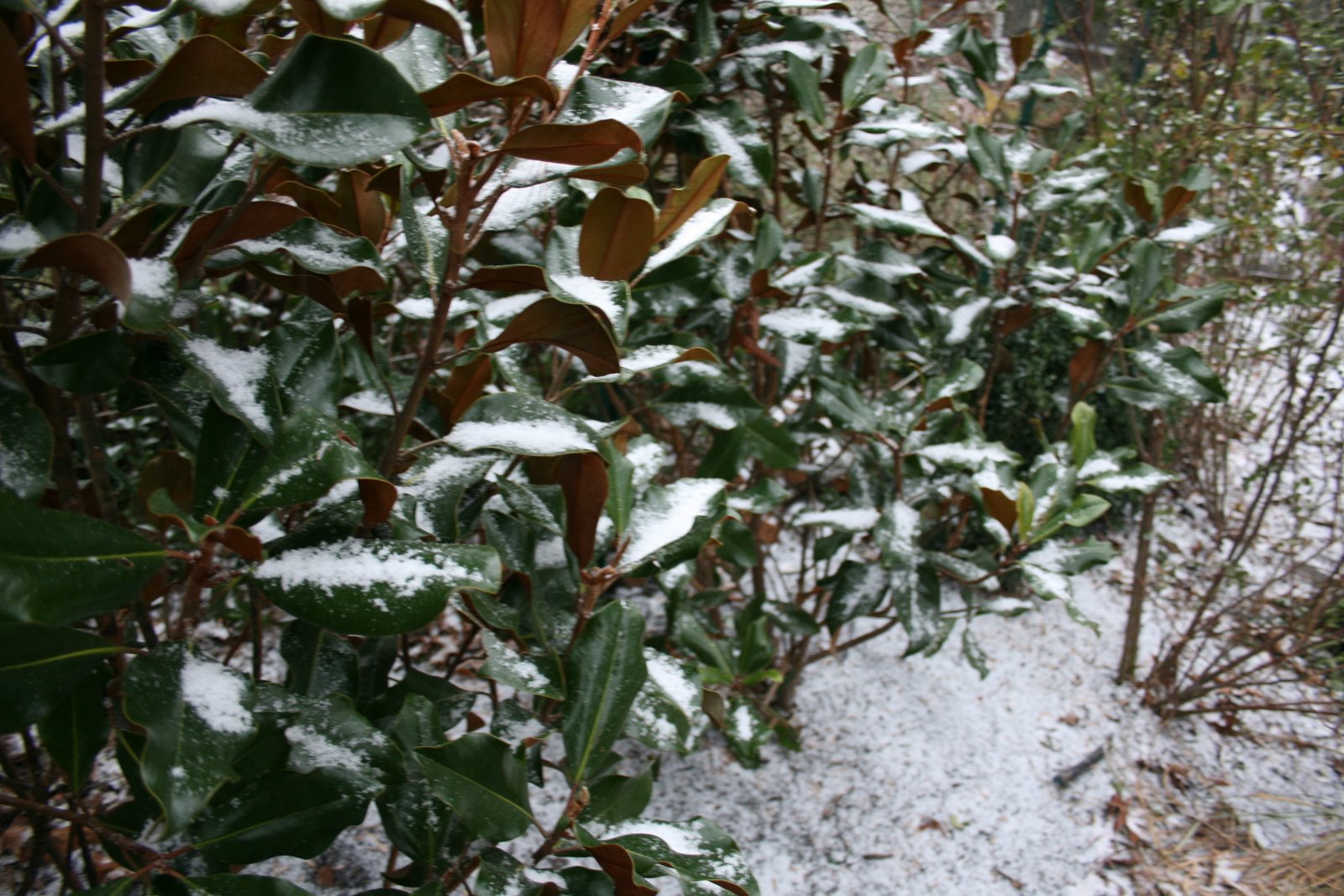 After the deciduous trees drop their leaves, I become all the more appreciative of the evergreens in my garden. One of my favorite additions to the garden this year is the Southern Magnolia.
~
This summer, I planted a row of Southern Magnolias along my property line to provide some year-round privacy from my neighbor and beauty to my garden. In addition to their large and fragrant summer blooms, their leathery, bi-color leaves–dark green on top and rich brown on the bottom–provide year-round beauty and can also be used in Christmas decorations.
~
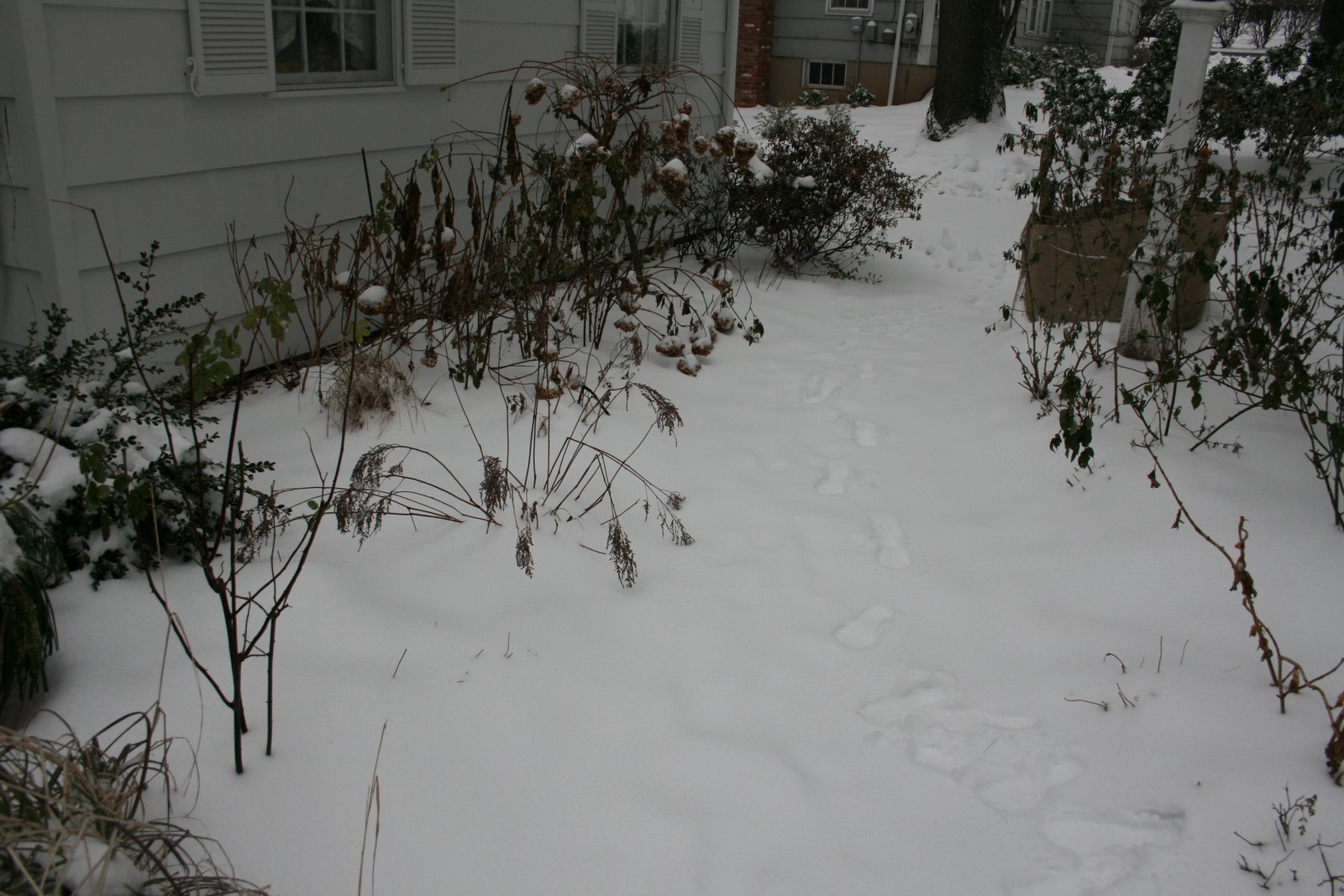
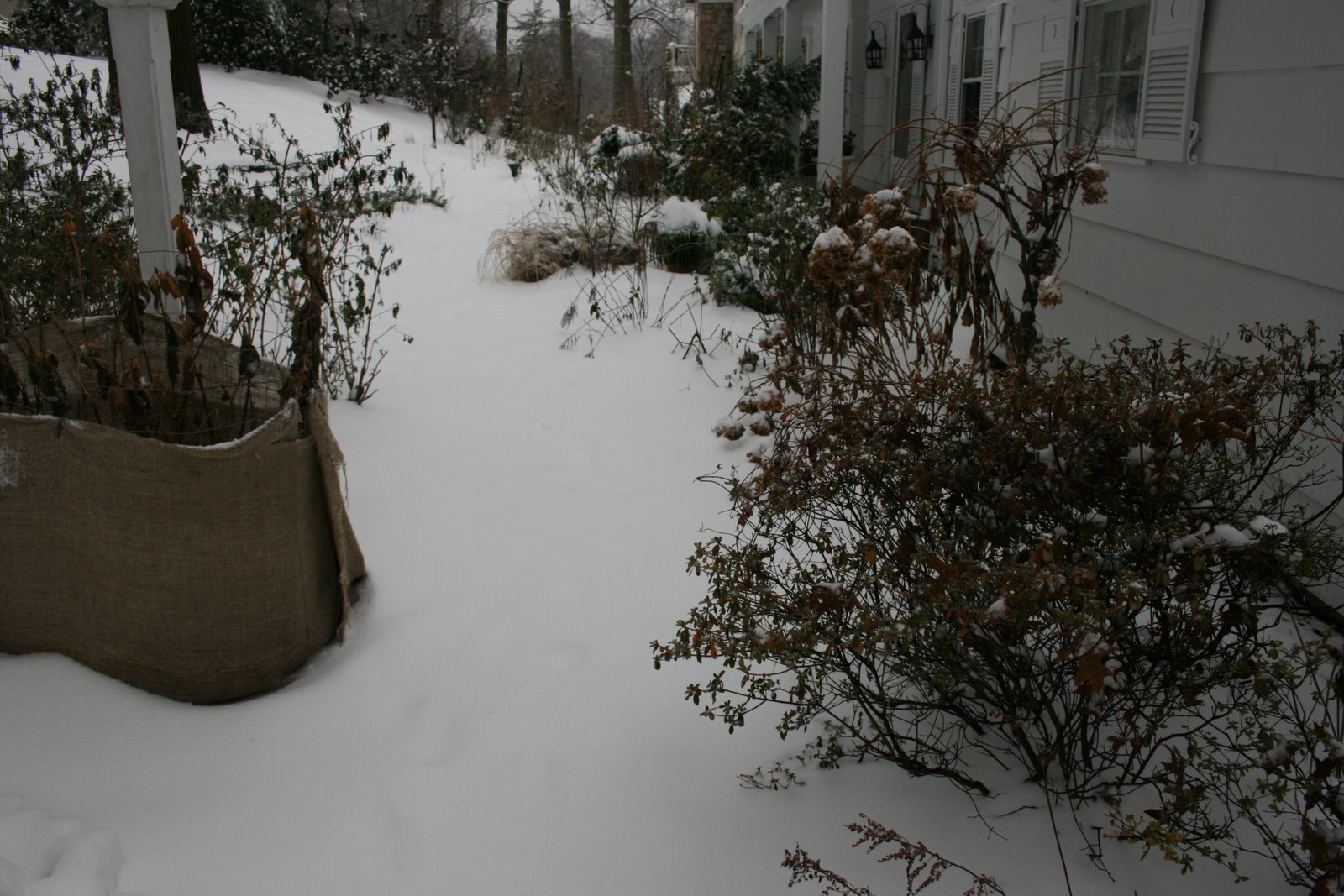
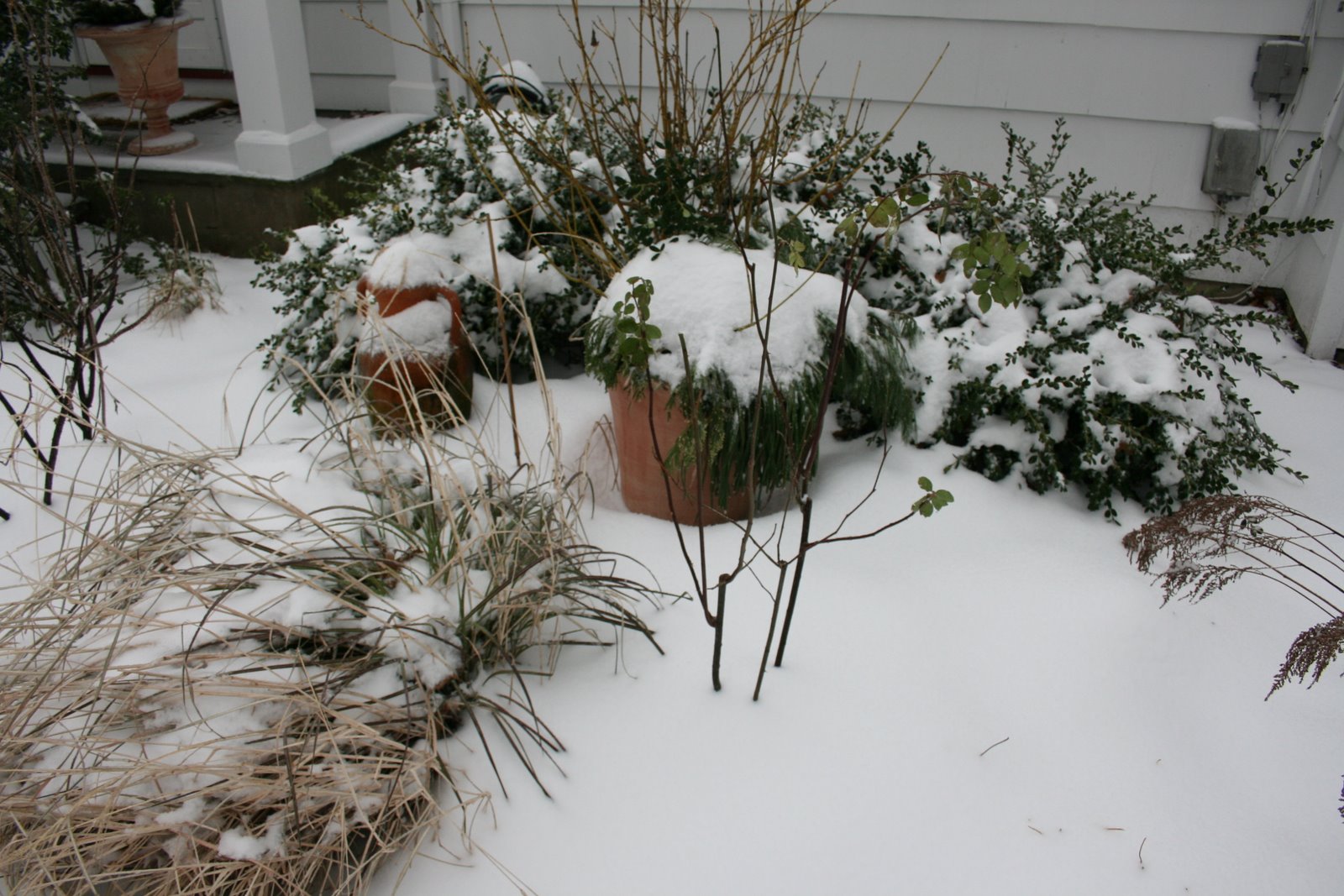
This picture was taken early on Saturday morning when heavy, wet snow was falling. The temperature quickly rose above freezing and the snow turned into a cold rain.
Pee Gee Hydrangea: Four Seasons of Beauty
One of the many reasons I love hydrangeas is that they look good year-round (for a related post on year-round color, click here). Right now, their autumn colors are a highlight. See below some pictures of the pee gee hydrangea (Hydrangea paniculata) in the Front Border during all four seasons.
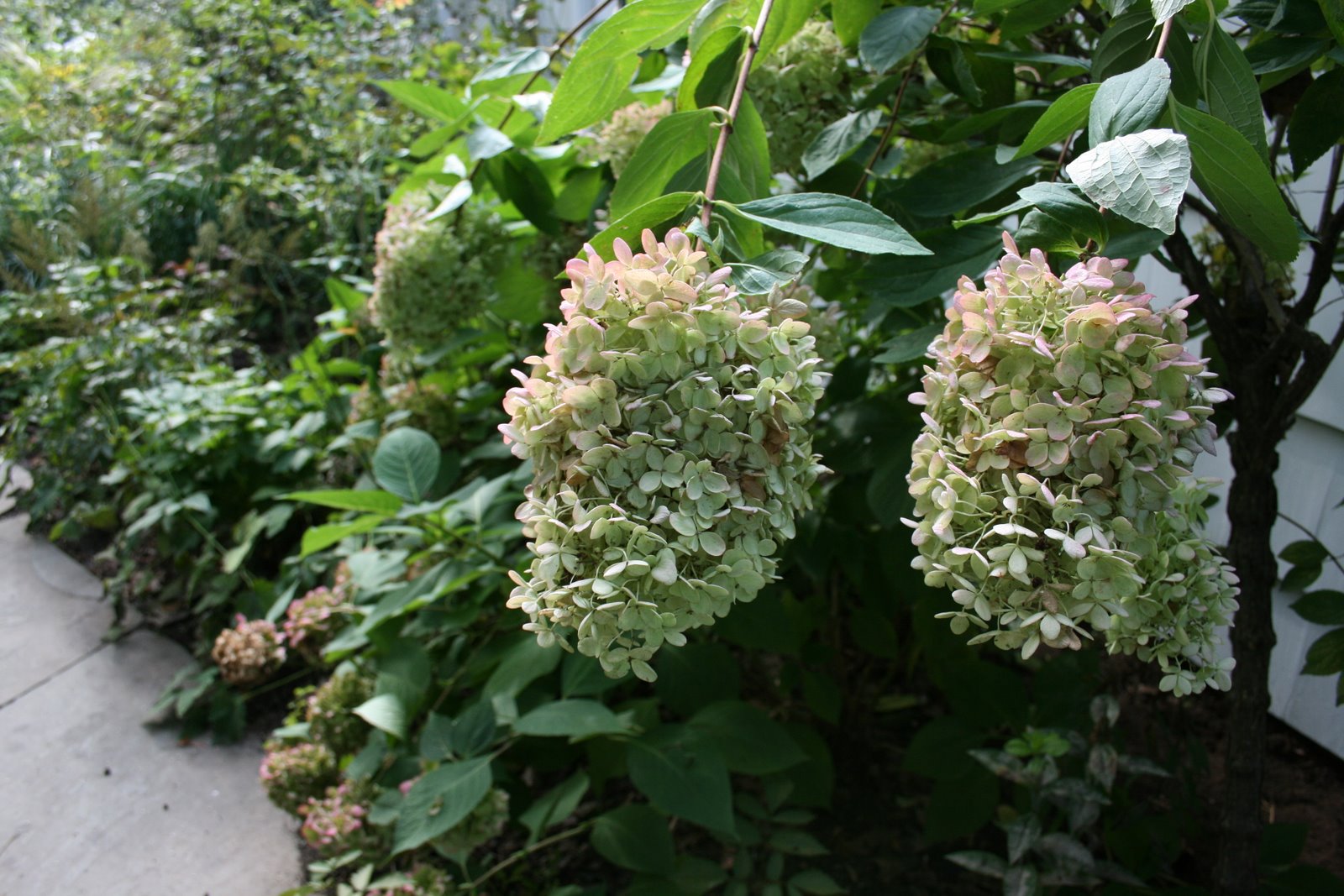 Autumn blooms turn pale green and pink.
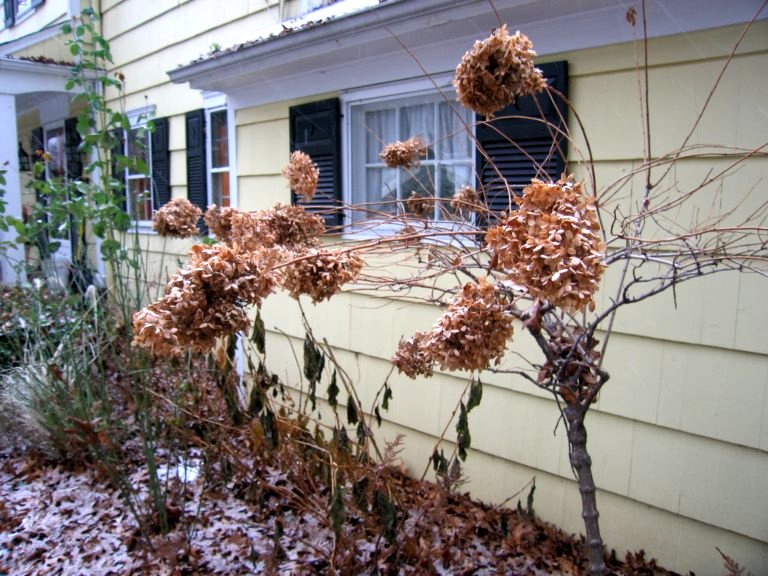 Winter blooms turn light brown.
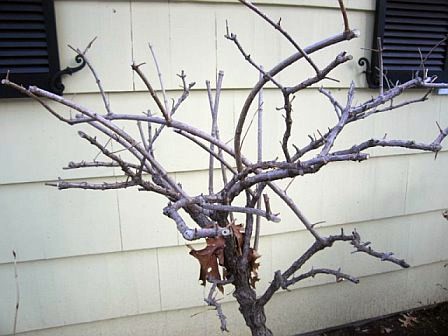 Spring after pruning (for a prior post about pruning pee gee hydrangeas, click here).
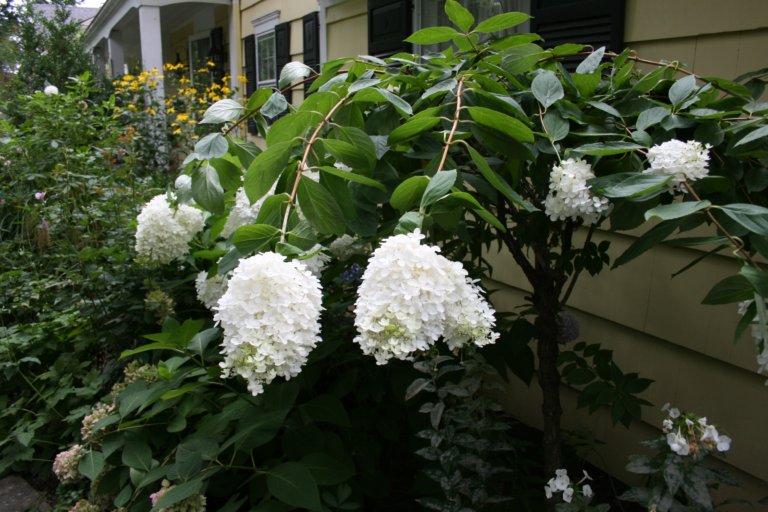 Summer blooms of brilliant white.
Telegraph.co.uk – ‘Annabelle’ hydrangea: How to grow

I was walking around my garden this weekend and I couldn’t resist taking yet another picture of my Annabelle hydrangeas. As I wrote in a prior post, my Annabelle hydrangeas–with their dried blossoms–are a highlight of my winter garden (http://heirloomgardener.blogspot.com/2007/12/annabelle-hydrangea-in-winter.html).
This past week, Telegraph.co.uk–the online version of the Telegraph in London–wrote an article praising Annabelle hydrangeas and giving advice on how to grow them. Val Bourne writes:
“The cool white Hydrangea arborescens ‘Annabelle’ produces one of the most magical of all winter seed heads. After the flowers have faded and fallen, a skeleton of fine tracery remains to catch the frost and low winter sunshine. So this is one hydrangea that deserves a prominent place in every garden, somewhere it can shine in three seasons – summer, autumn and winter.”
For the full article, click here: http://www.telegraph.co.uk/gardening/main.jhtml?xml=/gardening/2008/02/08/garden-hydrangea-grow108.xml.
Shakespeare: A February Face, So Full of Frost, Of Storm And Cloudiness
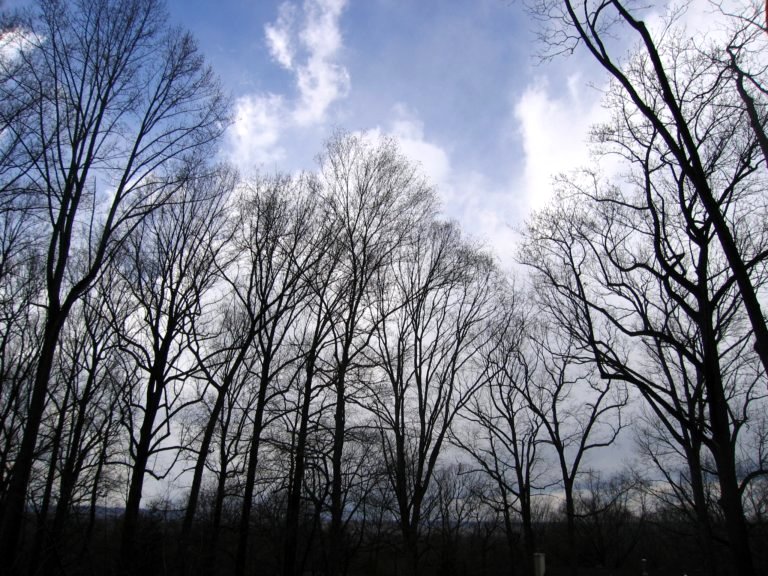
I woke up early this morning before my husband and children and took a walk around the garden. It was cold and there were only a few signs of spring and almost nothing worthwhile to photograph.
After church, we were sitting down for lunch looking out the windows to the west to this view. Today, with the movement of the sky and the trees, it was particularly beautiful.
Later, we were drawing with the children and this image came back to my mind’s eye when I was looking through a book of Van Gogh’s landscapes, especially the starkness of the trees and the movement of the sky. One of my favorites is his drawing Avenue of Willows with Shepherd and Peasant Woman, 1884.
Regarding this long month for gardeners in the Nothern states, Carolyn over at Sweet Home and Garden Chicago has a great quote from Shakespeare’s Much Ado About Nothing: “Why what’s the matter that you have such a February face, so full of frost, of storm and cloudiness?”
For Carolyn’s full post, click here: http://sweethomeandgardenchicago.blogspot.com/2008/02/garden-bloggers-muse-day-feb-1.html
Twelve Months of Garden Color in New Jersey (Zone 6b)
As it relates to color in the garden, one of my goals is to create year-round interest. Looking through my pictures, the year starts with whites and yellows; the middle months have a full range of of bright colors; and the year ends with the deep colors of berries. Here is a brief overview of these colors with one picture for each month of the year.
This post was inspired by the “Garden Bloggers’ Design Workshop – Colors in the Garden” at one of my favorite gardening blogs, Gardening Gone Wild: http://www.gardeninggonewild.com/?p=698
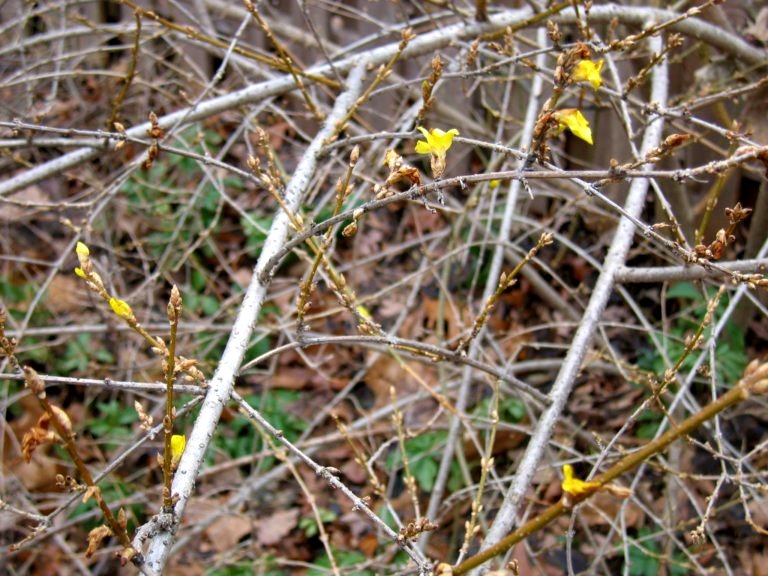 January in northern New Jersey (zone 6b) is a hard month to find any color in the garden. Fortunately, whenever the weather warms up into the forties, the forsythia start to show off some of their blooms. Of course, when it gets cold again, they hide themselves away until it warms up in earnest. This is the time when I start to cut the branches off and bring them indoors to force–my favorite thing to do with forsythia.
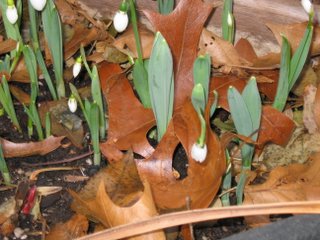 February is the month for snowdrops. I have snowdrops in the Cutting Garden and, last fall, planted more in the Walled Garden. These small flowers are so cute and the first real sign that spring is coming. Given their size, you really can’t plant too many of them–think hundreds. Since I like to plant a lot, I buy my snowdrops wholesale from Van Engelen. Once they come up, I cut small bunches for vases. Pests do not eat these bulbs.
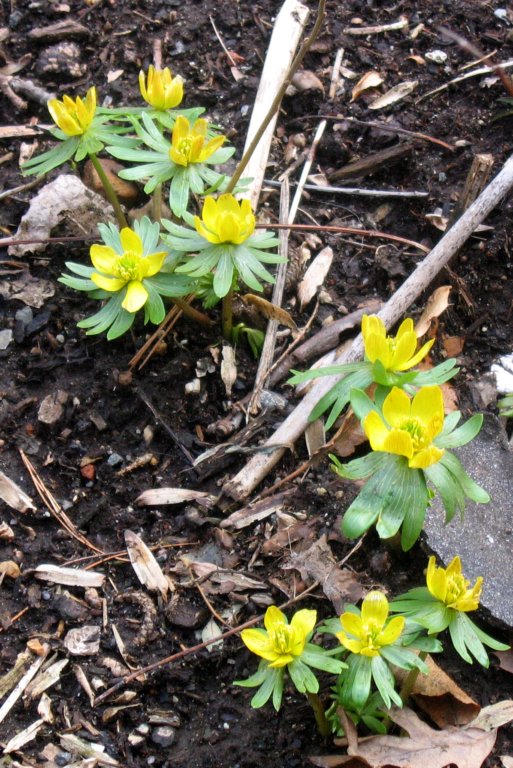 The March bulb show begins with winter aconite. It is another small bulb that I planted under Prunus ‘Forest Pansy’ in my front border. It took me a couple of years for me to get these established. I was most successful with bulbs from Old House Gardens. I think the difference was that these bulbs dry out very easily and Old House Gardens coats the bulbs in a horticultural wax to prevent this. If you know someone with an established clump, it’s best to beg a few in the green and replant them immediately in your garden. Pests do not eat these bulbs.
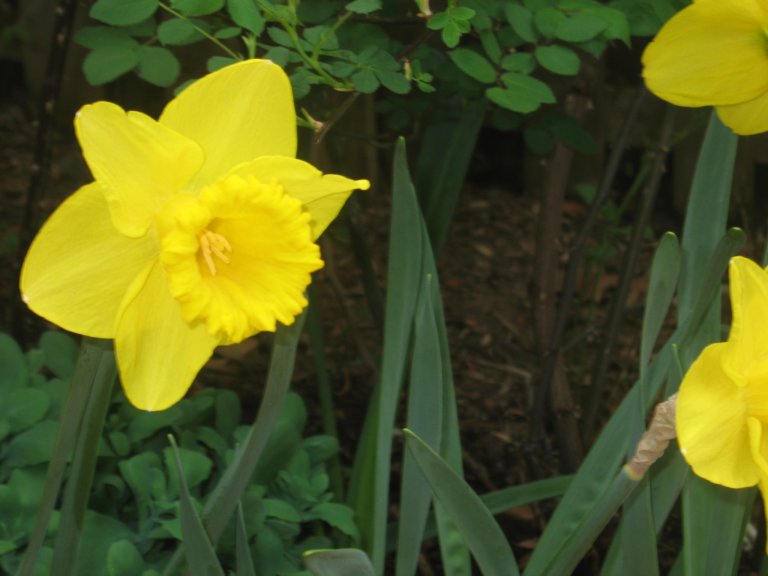
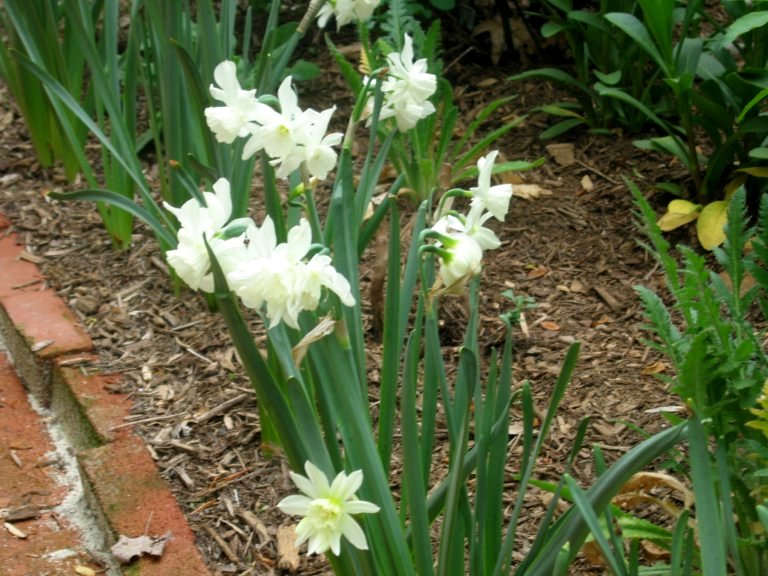 April, of course, is the month for daffodils. I plant hundreds of daffodils all over the garden. I plant all sizes and colors, but am particularly fond of the white daffodils. The earliest actually start to bloom at the end of March and they last through April into May. Pictured here is an old heirloom Thalia.
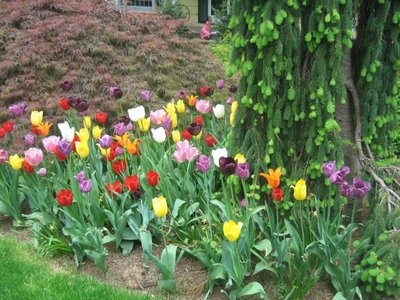 May is one of my favorite months in the garden as tulips explode everywhere. Last year, my combination was inspired by the Granny’s Garden collection from Old House Gardens. I planted a mix of the following tulips, most of which are older varieties: Cum Laude, Glowing Pink, Kingsblood, Maureen, Queen of the Night, Dillenborg, Mrs. John Scheepers, Colour Cardinal, Princess Irene, and Ballerina.
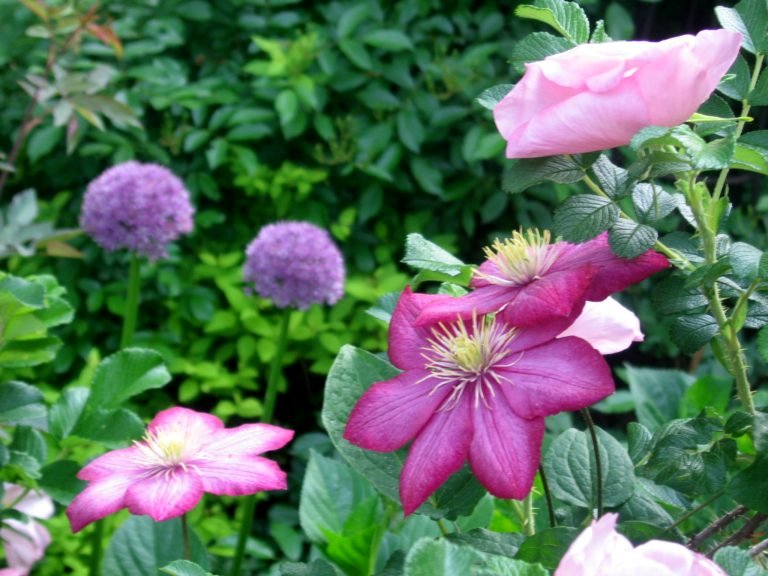
June is the most colorful month in my garden. As the spring bulbs wind down, the garden bursts into bloom with roses, clematis, alliums, peonies, poppies, and many more. In the picture is one of my favorite rugosa roses Frau Dagmar Hastrup. Frau Dagmar is small for a rugosa reaching only about 3 feet tall and about as wide. It begins blooming in May and continures until November. The leaves are a beautiful, quilted, dark green. Frau Dagmar also sets many hips when I stop deadheading. The fragrance of Frau Dagmar is magnificent.
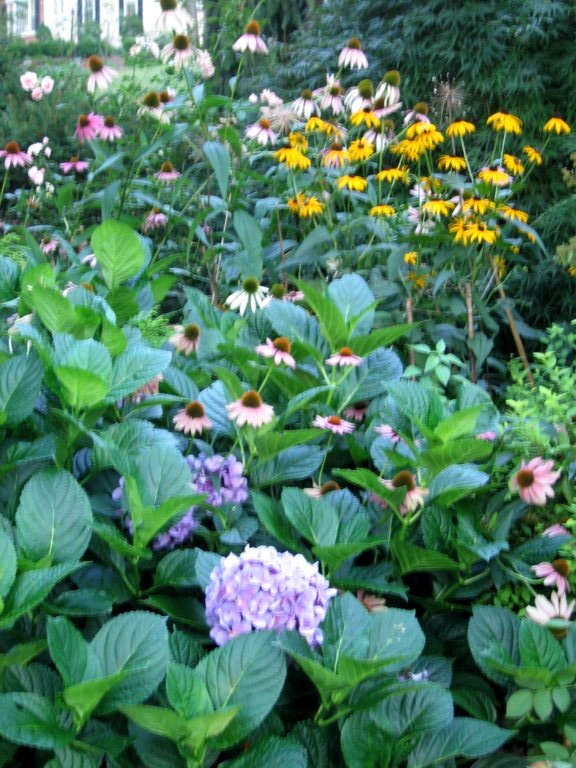 July is when the plants from and reminescent of the American prairie take over. Purple coneflower, the many rudbeckias, joe pye weed, heleniums, helianthus, phlox, milkweed, monarda, erygium, echinops, and shasta daisies all begin their bloom. These plants, despite the heat and humidity of summer, keep going and going while attracting many birds, hummers, and butterflies to the garden. By mixing these with grasses, you have color, movement, and beauty that will carry you well into September.
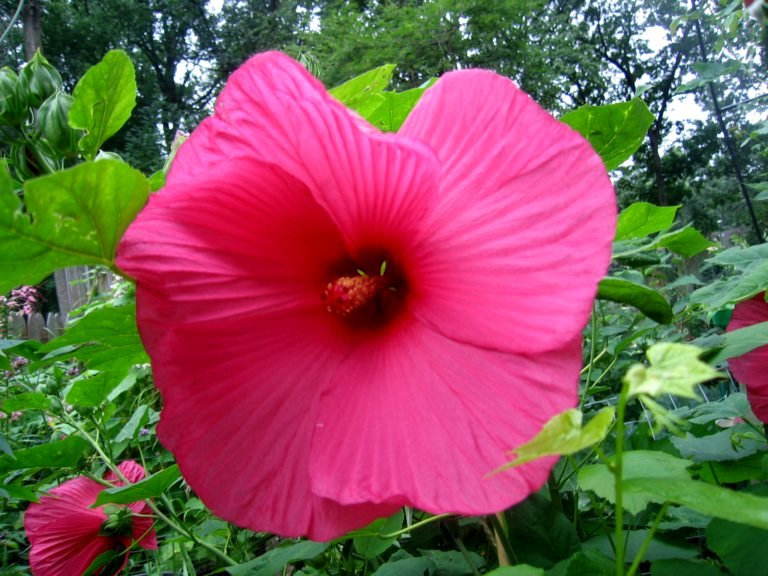 One of my daughters is in love with hibiscus and has been reminding me I haven’t put a picture of her hibiscus on my blog yet. In August, the huge tropical looking flowers garner lots of attention. The flowers are great floated in a vase and keep coming over a long period of time. Also, the seed pods of the hibiscus are quite beautiful afterward.
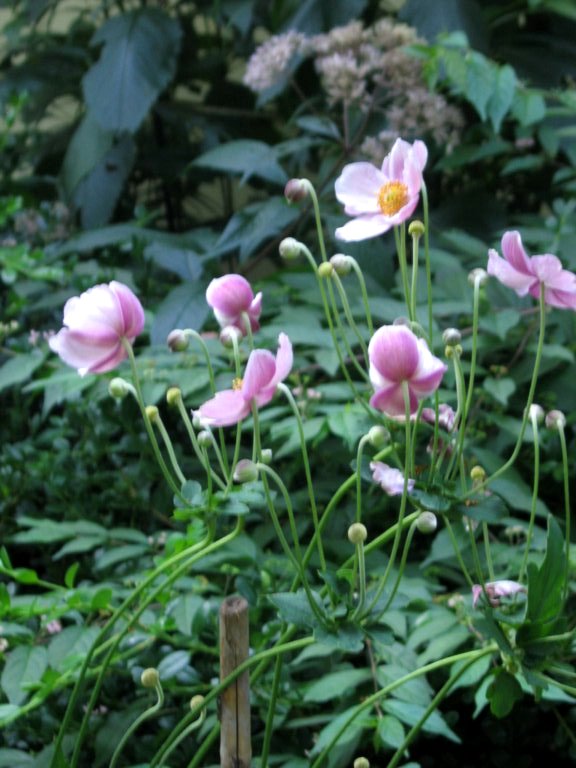 September is part of summer in my book. The garden is still in full swing with no sign of winding down. By the end of the month, however, the Japanese anemone ‘Queen Charlotte’ is beginning to bloom, signaling the very beginning of fall.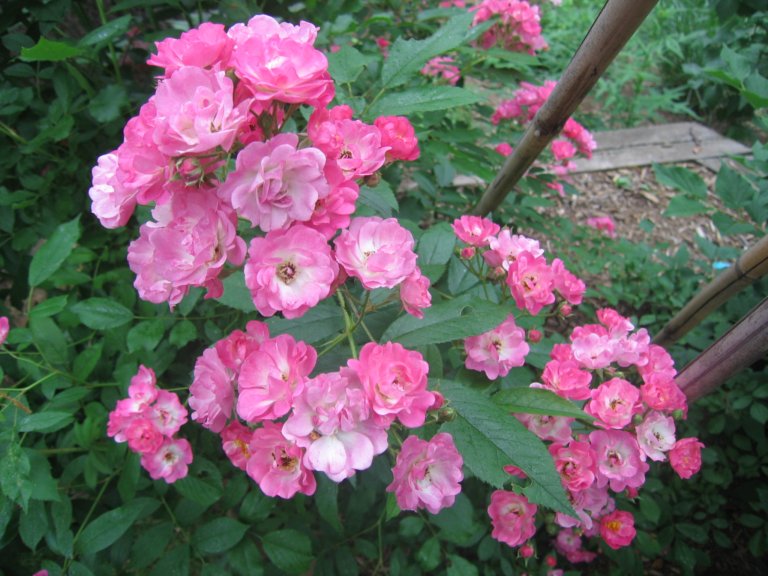
October is the month of rose rebloom. In our garden, any rose that is going to rebloom, puts on a very generous display in the autumn even if it hadn’t bloomed since June. The cooler temperatures in September helps to restart the roses after the heat of August. Pictured here is Belinda, an heirloom hybrid musk rose, purchased from Antique Rose Emporium. I deadheaded this rose throughout the summer and was rewarded in the fall with a very generous flush of roses in addition to the many others throught the summer.
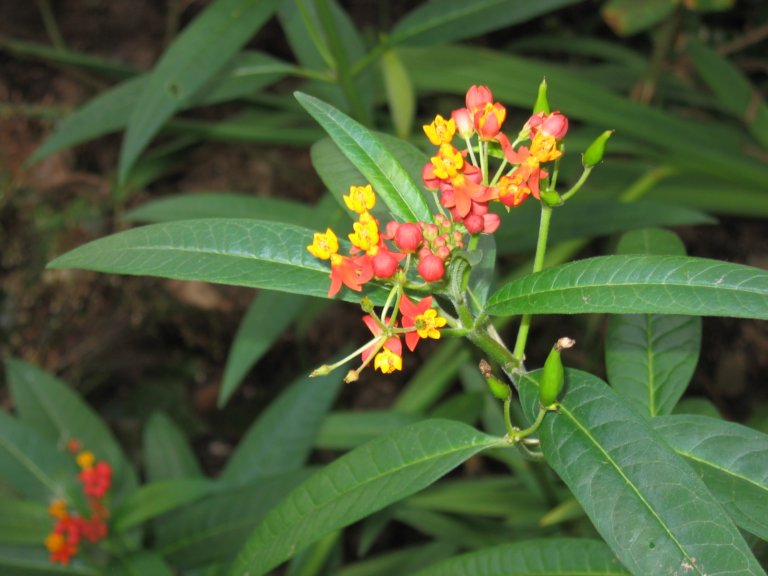 The butterfly weed pictured here was a welcome volunteer from a clump of Mexican milkweed I planted in 2006. I did not expect it to reseed for me given that its grown mainly in zone 8 and warmer. But the seedling did come and were enjoyed by many monarch catepillars. The plants came into bloom very late in the season. They, however, made it through many light frosts and only died well into November when we had a hard frost.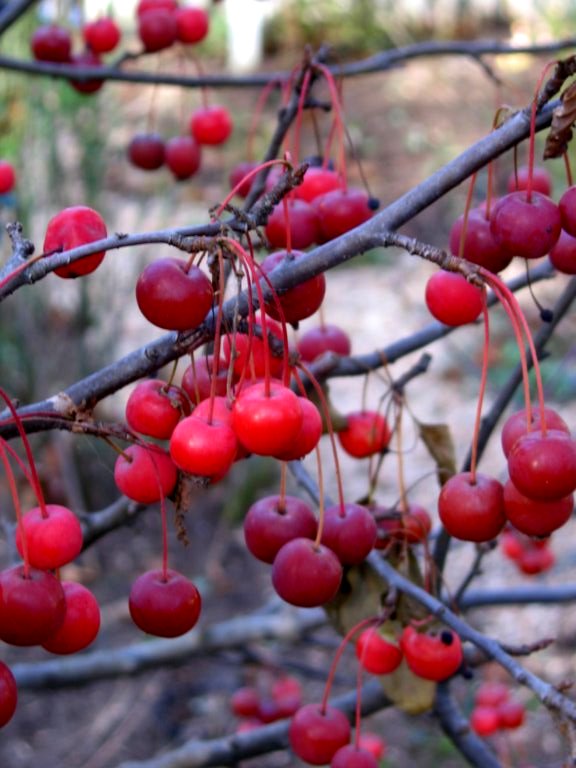
 Heirloom Gardener