Winter Garden Highlight: Lace Cap Hydrangea on Goldberry Hill

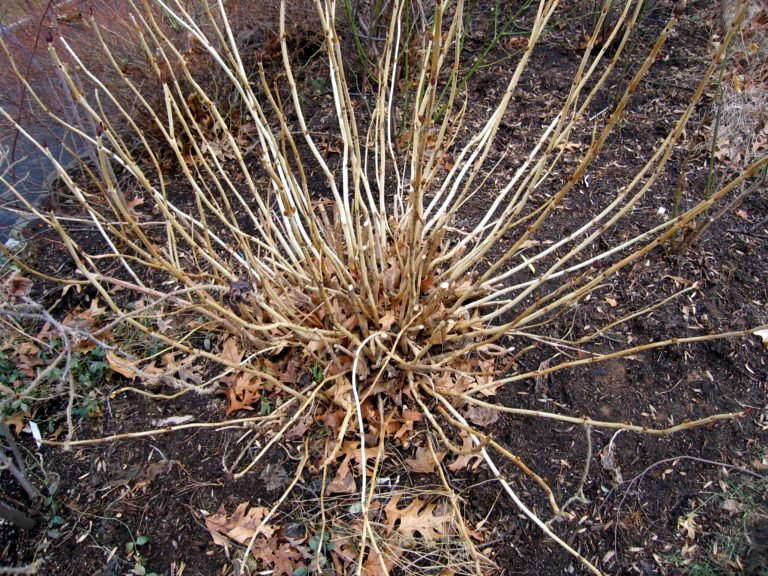
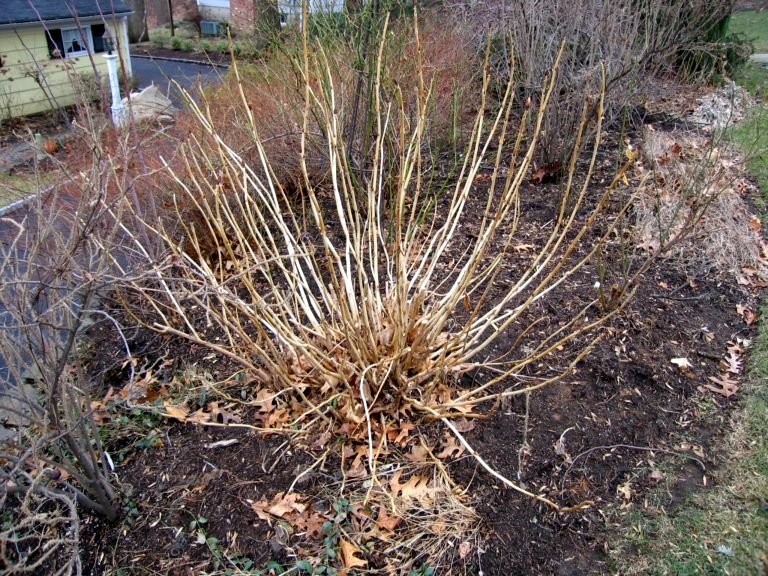
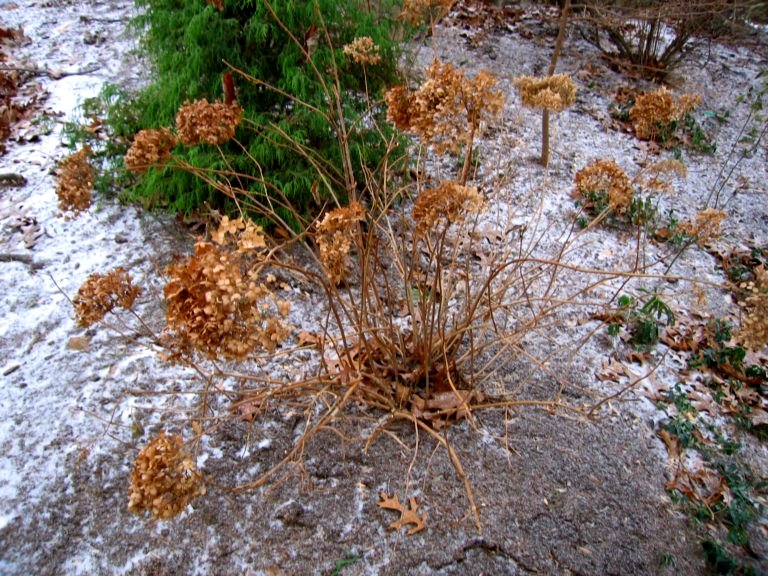
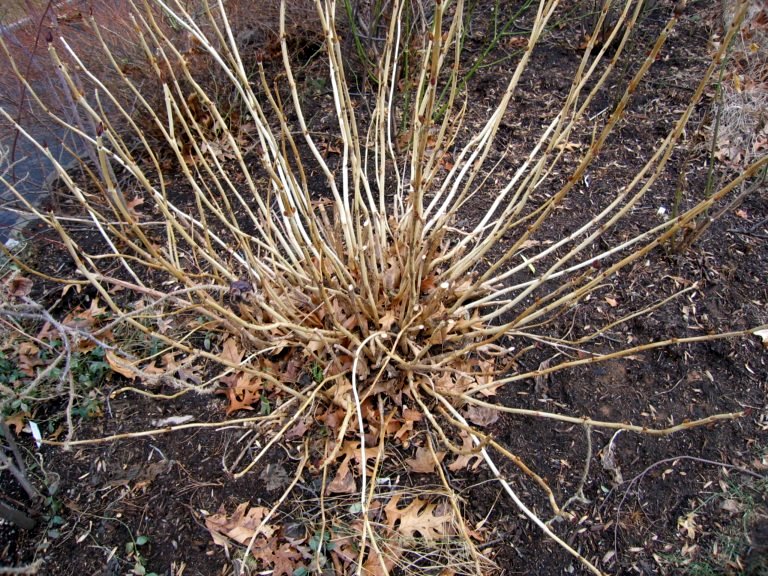
As I’ve written about in some of my prior posts, I have been trying to improve the appearance of my garden in winter. Part of this improvement includes appreciating the beauty that is already there, such as the large, mature hydrangea at the top of Goldberry Hill. The form and color of the bare stems have a beauty all their own.

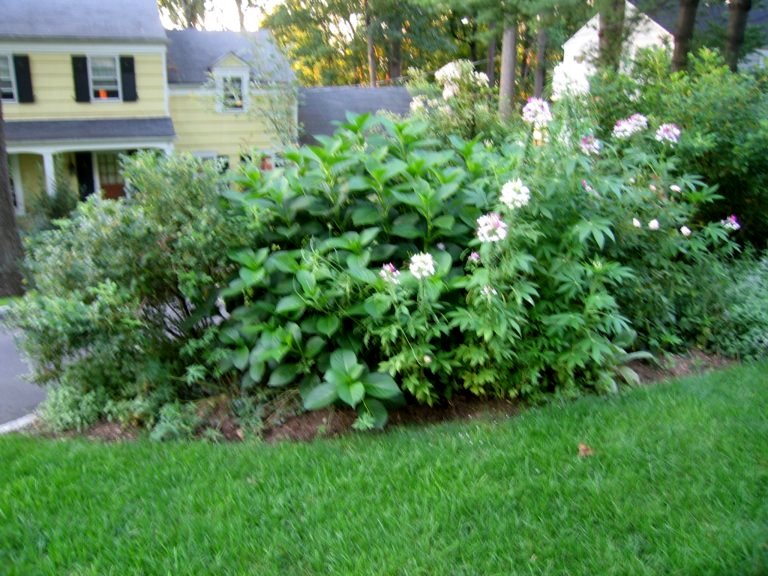
For a picture of this same hydrangea in summer, click here: http://heirloomgardener.blogspot.com/2008/01/gardening-on-hill-goldberry-hill-in.html


Winter Garden Inspiration: Piet Oudulf

I have been working on making my garden look more attractive during the long winter months. In this week’s Home & Garden section of the New York Times, they give a peak into famous Dutch gardener Piet Oudolf’s personal garden in an article entitled “A Landscape in Winter, Dying Heroically.” His personal garden is only one acre, and it is an inspiration–even in winter. For the full article and slide show, click here:

http://www.nytimes.com/2008/01/31/garden/31piet.html?ex=1359522000&en=9170d4bed2c36a64&ei=5124&partner=permalink&exprod=permalink

Common Witchhazel Blooming in December

When driving to my friend P’s house (also in Chatham, New Jersey), I almost ran off the road when I noticed Common Witchhazel (Hamamelis virginiana) in full bloom. I’d never noticed it before, as it is a small tree in the corner of her yard–but now that it’s in bloom, you can’t miss it.

My friend P was kind enough to give me a branch that came off during the recent ice storm to enjoy indoors.

From this branch, I have taken a few small cuttings and put them in the refrigerator, so I can try to propagate them in the spring. If I can’t, I’ll have to find one to mail order.

Heavenly Bamboo (Nandina) in December

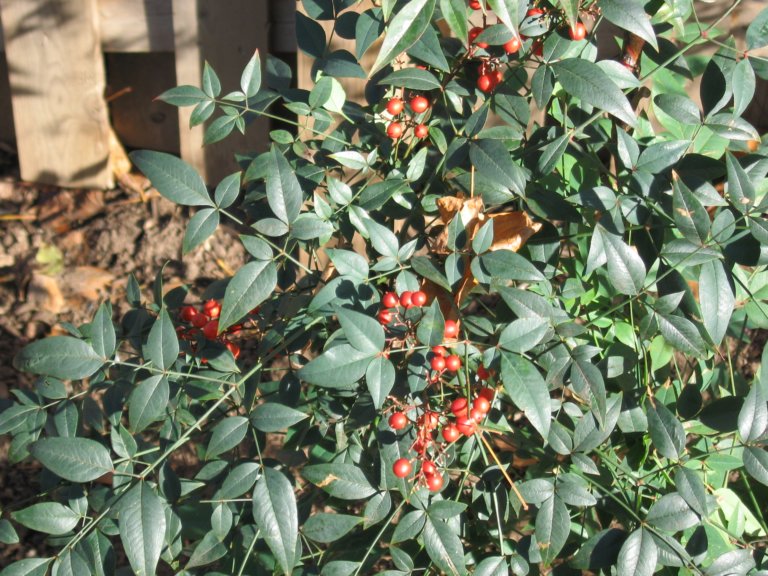
Next year I plan to plant more heavenly bamboo. When most every other non-conifer has lost its leaves, nandina looks as fresh as it did two months ago. The red berries are beautiful and cuttings of nandina last for weeks in water.

The plants are pretty undemanding. They will grow in sun or part shade, do not require feeding, and have modest water requirements. They grow 3-5 feet tall and will spread with time. Nandina does have a tendency to become leggy, so good pruning in spring helps stimulate growth lower down on the plant.

The Garden in Winter by Suzy Bales

The winter is my time for armchair gardening. Also, during the winter I always give the garden a hard look to see how I can improve it next spring to increase its winter beauty. I was thrilled to read Suzy Bales recently published book The Garden in Winter. I have read many books on winter gardens, but this is the best so far because of the breath of the information. It covers not only the garden, but indoor decorations made from material cut from the garden and various other winter occupations.

As expected Bales highlights various plants that add to the seasonal beauty of the garden, but goes beyond the laundry list to include her own experience in growing these plants. She grows Petasites japonicus, for example. Although, the plant blooms in very early spring and has distinctive leaves, its size and spreading habit allows Bales to only recommende it with caveats.

Throughout the book are many short essays on topics related to winter which are very interesting and informative. In these essays, Bales profiles many people and gardens that make use of the season in spectacular ways. For example, she interviews Les Brake, a gardener in Willow, Alaska, who is passionate about making sculptural ice lanterns to fight off the winter doldrums. His work is amazing and inspiring.

I love snowdrops. Every winter when I walk the garden I look with anticipation to see if they have begun to come up. I was thrilled to find Bales profile on Temple Nursery which specializes in hard to find and rare snowdrop cultivars sold in the green.

http://rcm.amazon.com/e/cm?t=heirlgarde-20&o=1&p=8&l=as1&asins=1594863636&fc1=000000&IS2=1&lt1=_blank&lc1=0000FF&bc1=000000&bg1=FFFFFF&f=ifr

Creating the Rose Garden with a Central Brick Path

After we established the Cutting Garden, there was a narrow portion of our property behind it and next to our deck that was another relatively unused portion of our yard, measuring approximately fifteen feet wide by thirty feet long.

Because this space had full-sun, I thought it was the perfect place for a rose garden. While I have roses in almost every part of the garden, a dedicated rose garden would provide more space for all of the roses that I wanted to grow.

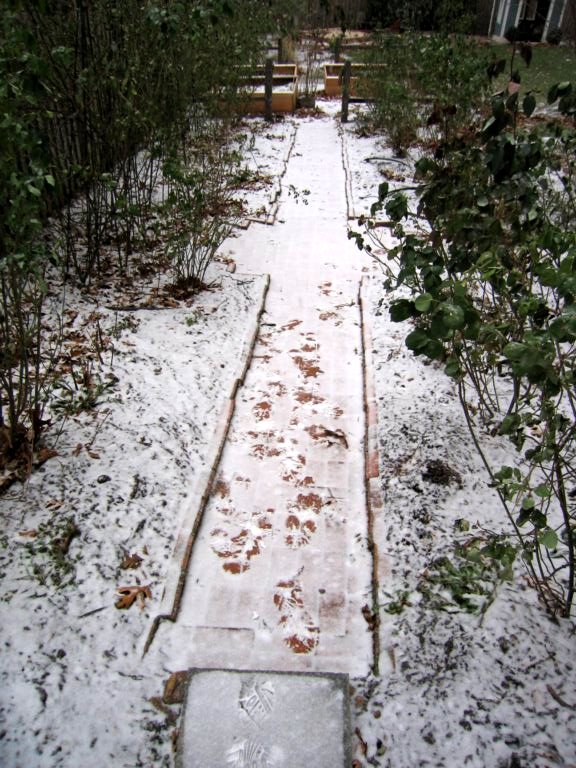
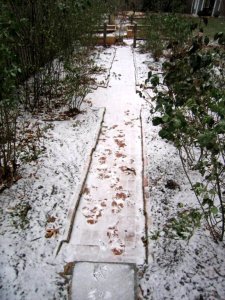
The first picture is taken from the steps of the Cutting Garden looking down the path of the Rose Garden to the Children’s Garden.

The main structural element of the Rose Garden is the brick path that you see running through the center. I actually installed the brick path myself, which was a tremendous amount of work that I’m not sure I would want to do again.

After we established the path in the summer, we started to prepare the beds for planting the roses. In the fall, we put down newspaper to kill the grass and covered it with a thin layer of organic matter. In the spring, we dug in significant amounts of composted cow manure and mushroom compost. Then, we planted the roses.

Inspired by the Cranford Rose Garden at the Brooklyn Botanical Garden, I knew that I could fit a lot of roses into a limited space. We now have twenty-seven different roses in the Rose Garden, as well as bulbs and perennials.
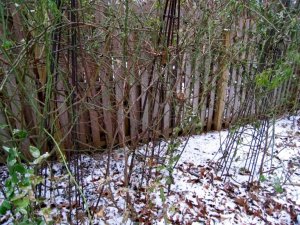
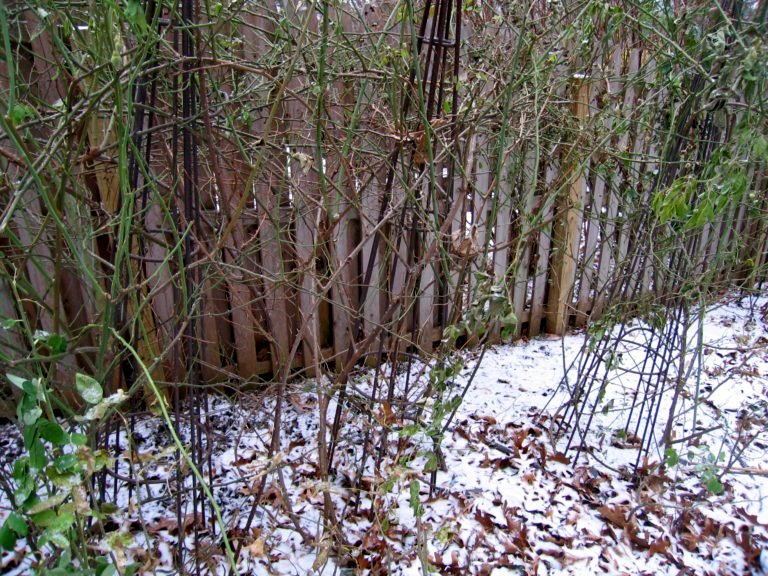
Some of the roses are grown on tutuers. The three pictured were purchased from the New York Botanical Garden, which has the best gift shop of all of the gardens I visit:

http://www.nybgshop.org/

For pictures of the Rose Garden in season, click here:

http://heirloomgardener.blogspot.com/2008/01/rose-garden-in-spring-summer-daffodils.html

For information on the creation of the Cutting Garden, see this post:

http://heirloomgardener.blogspot.com/2007/11/creating-space-for-garden.html

Gardening with Children: Creating the Children’s Garden

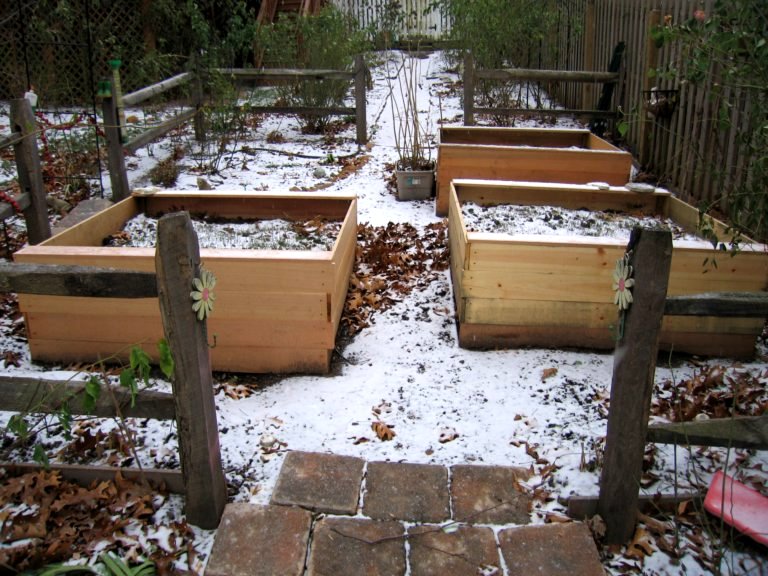
This is a picture of the Children’s Garden looking up the hill in winter. Beyond the Children’s Garden is the Rose Garden and beyond the Rose Garden is the back gate to the Cutting Garden.

The Children’s Garden includes beds that I help the children plant and cultivate: three raised vegetable beds, for which my oldest son (age eight) is the primary gardener, and one flower bed, for which my older daughter (age ten) is the primary gardener.
The boundaries of the Children’s Garden were created by installing a post and rail fence within the backyard.

Given the placement of the garden and to allow for maximum play, it has three openings: one to the Rose Garden, another to the Great Lawn, and the third next to the Long Border. The Great Lawn and the Long Border are hyperbole, as the Great Lawn is small and the Long Border is short.