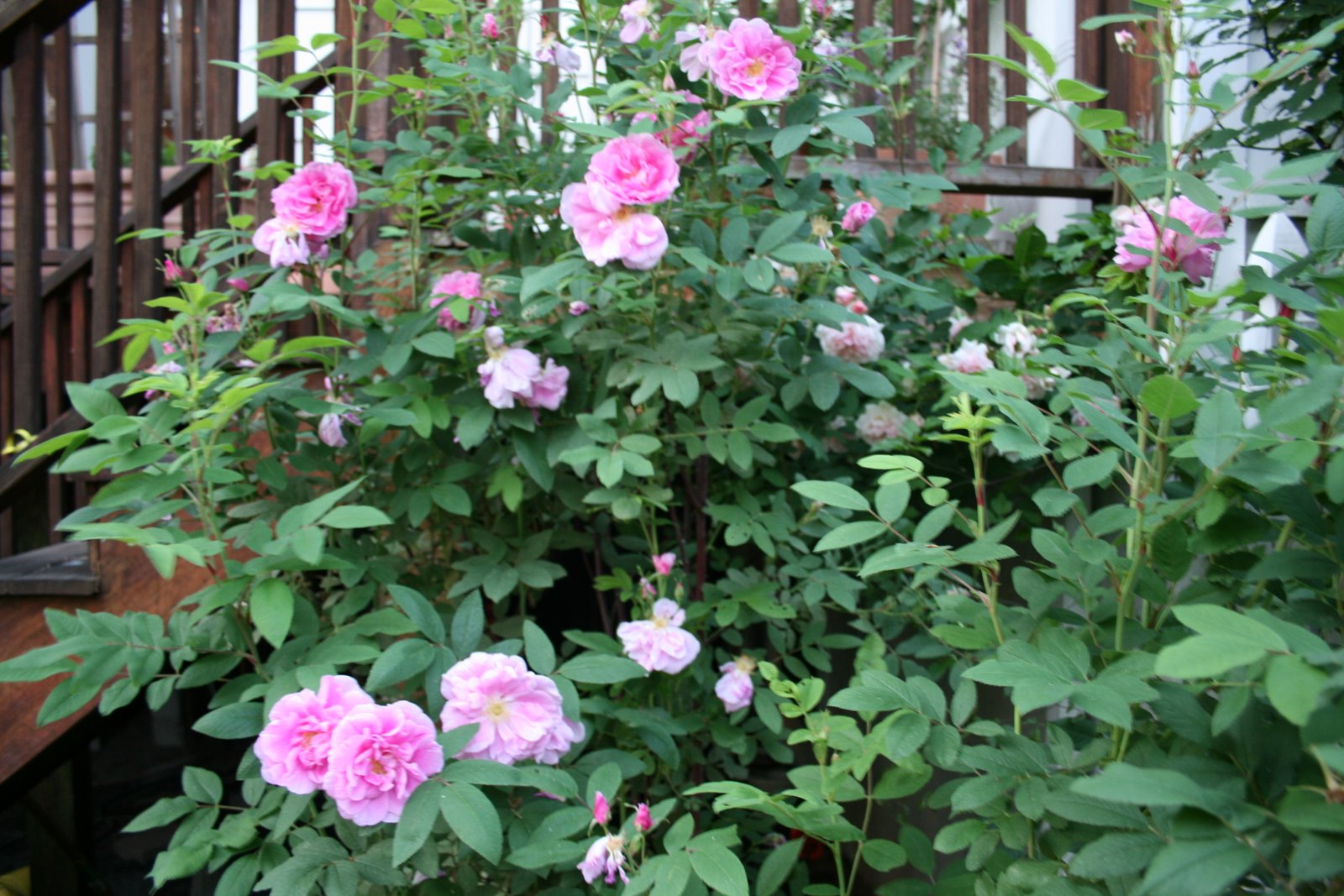
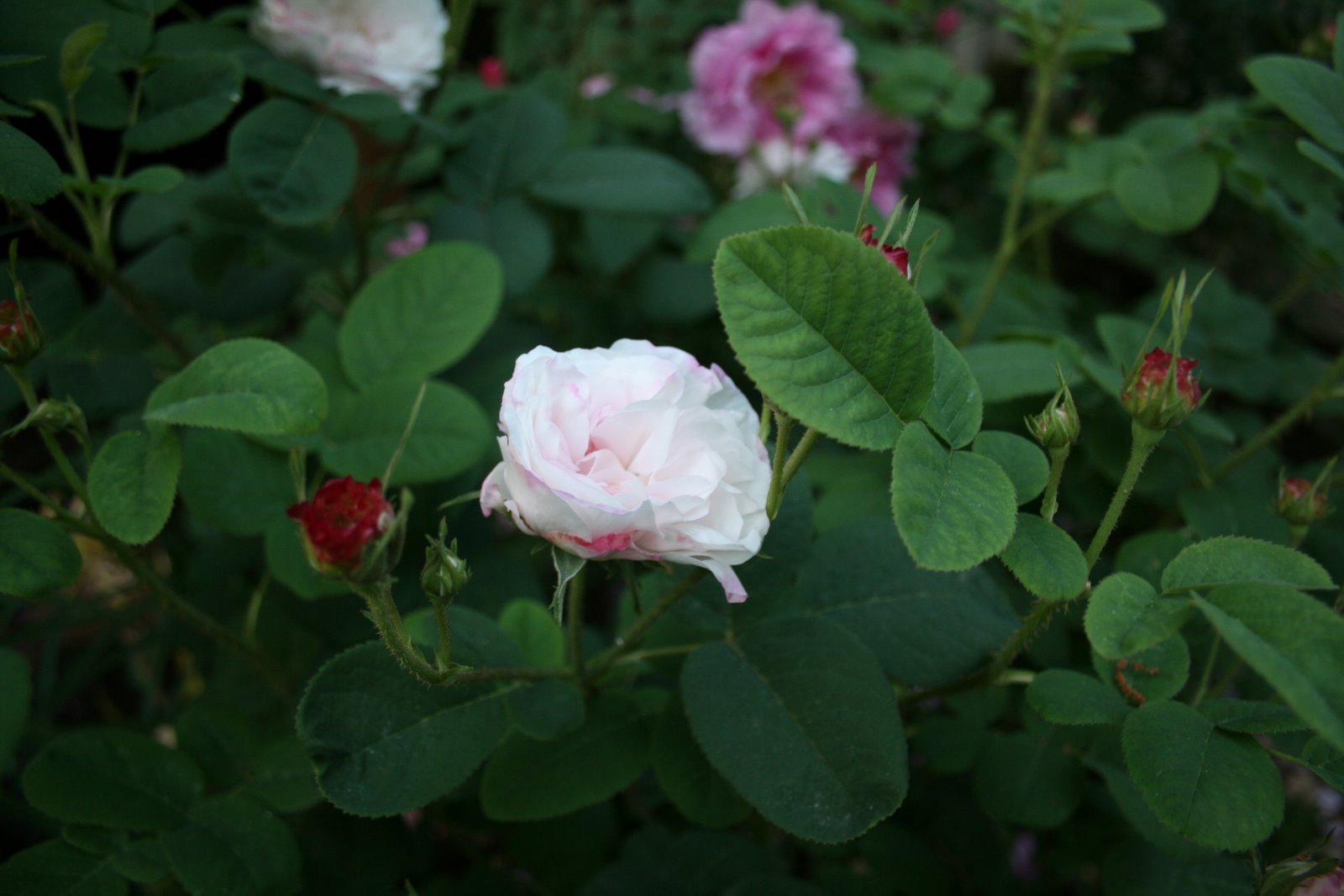
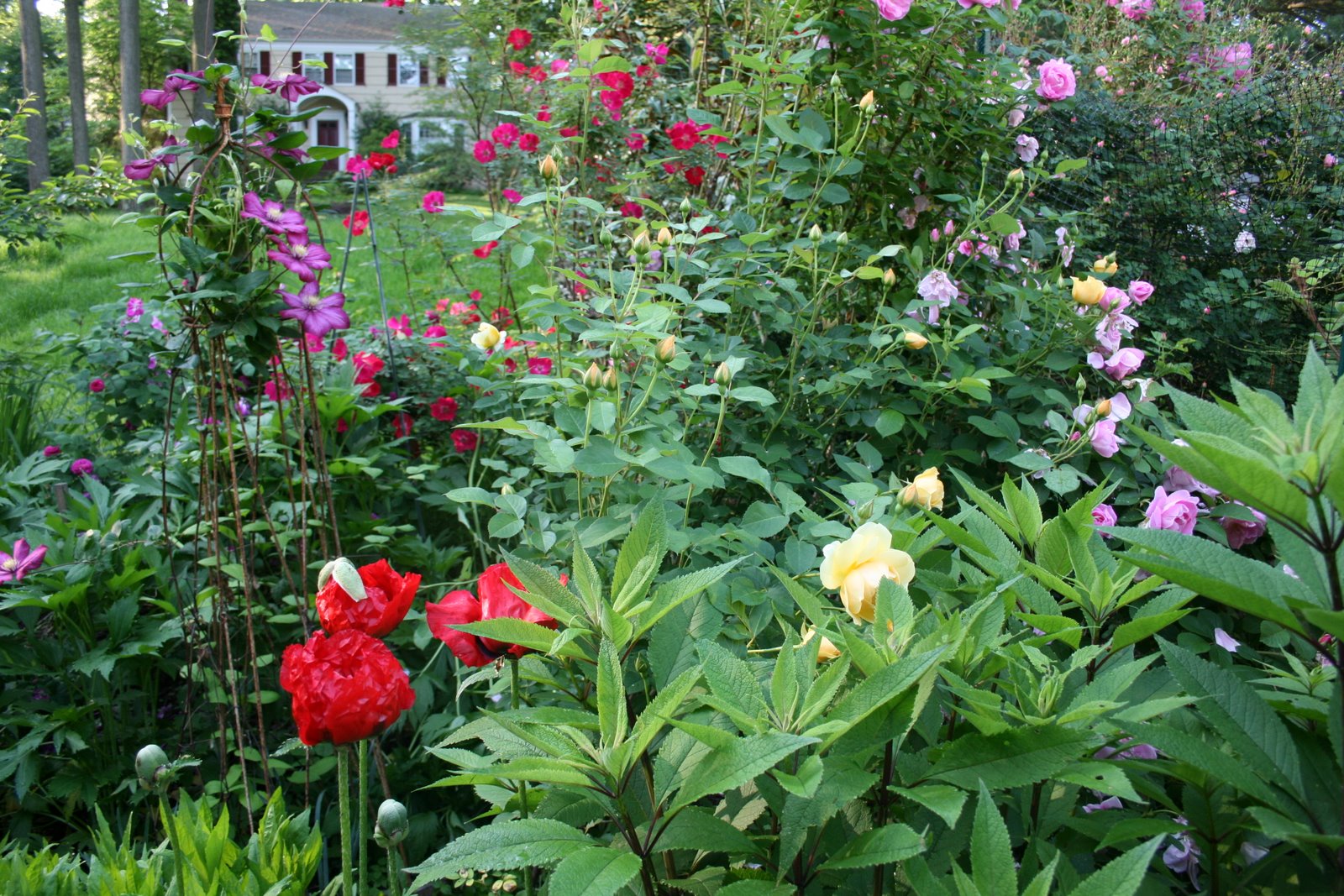
The Egg Garden in June: Replacing the Overgrown Evergreen in the Front Corner of our Home with a Mixed Bed

When we moved into our home, there was an enormous evergreen shrub planted in one of the front corners of our home. Perhaps it started off as a nice, tame shrub, but by the time we moved in it was almost as tall as the house and so wide that it made it uninviting to walk from the front yard to the back yard.
.
Looking around, having a large, overgrown evergreen planted at the front corner of your home appears quite common. Perhaps the builders planted them with the houses several decades ago. And once they have grown, people, even if they don’t particularly like them, are reluctant to remove them.
.
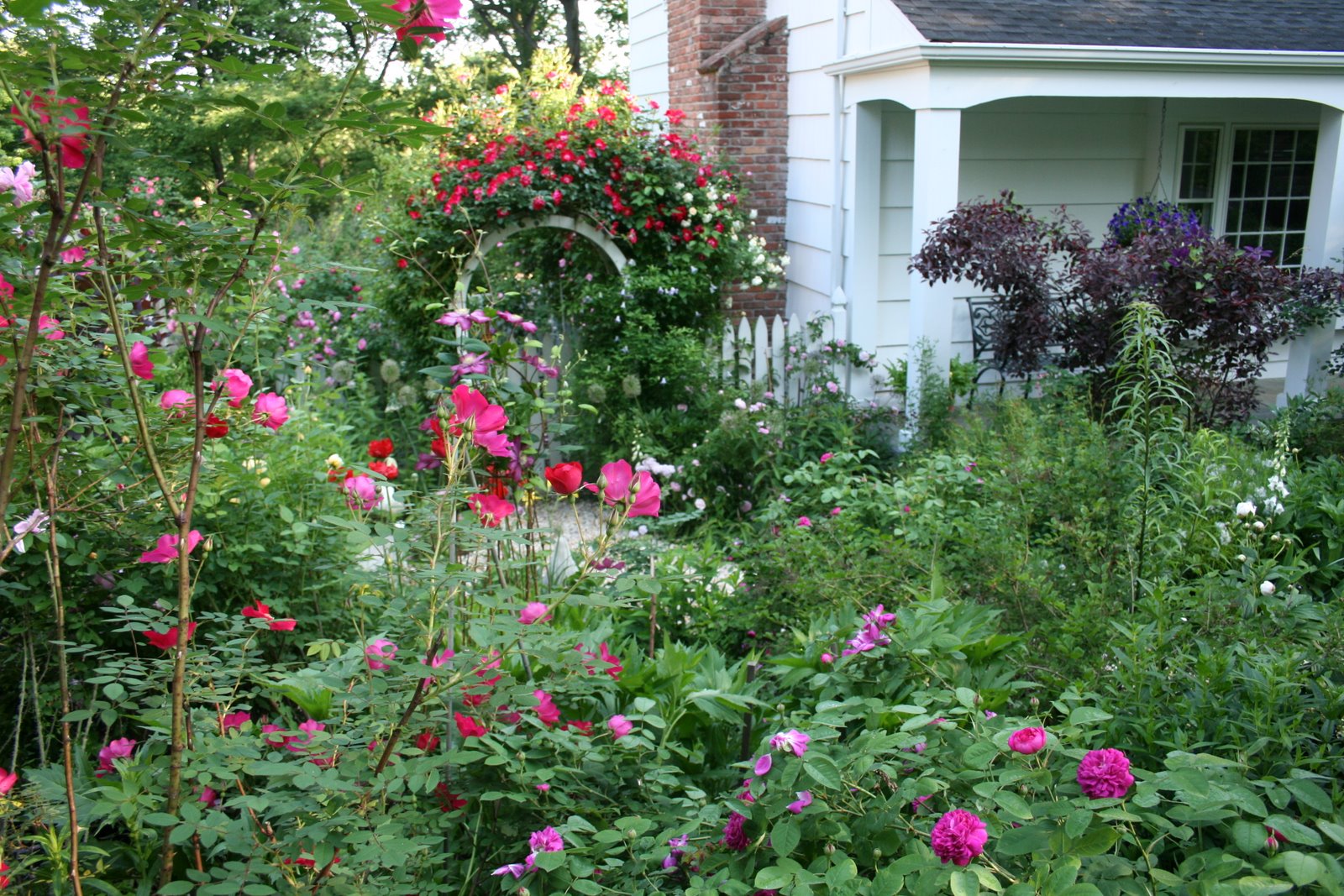
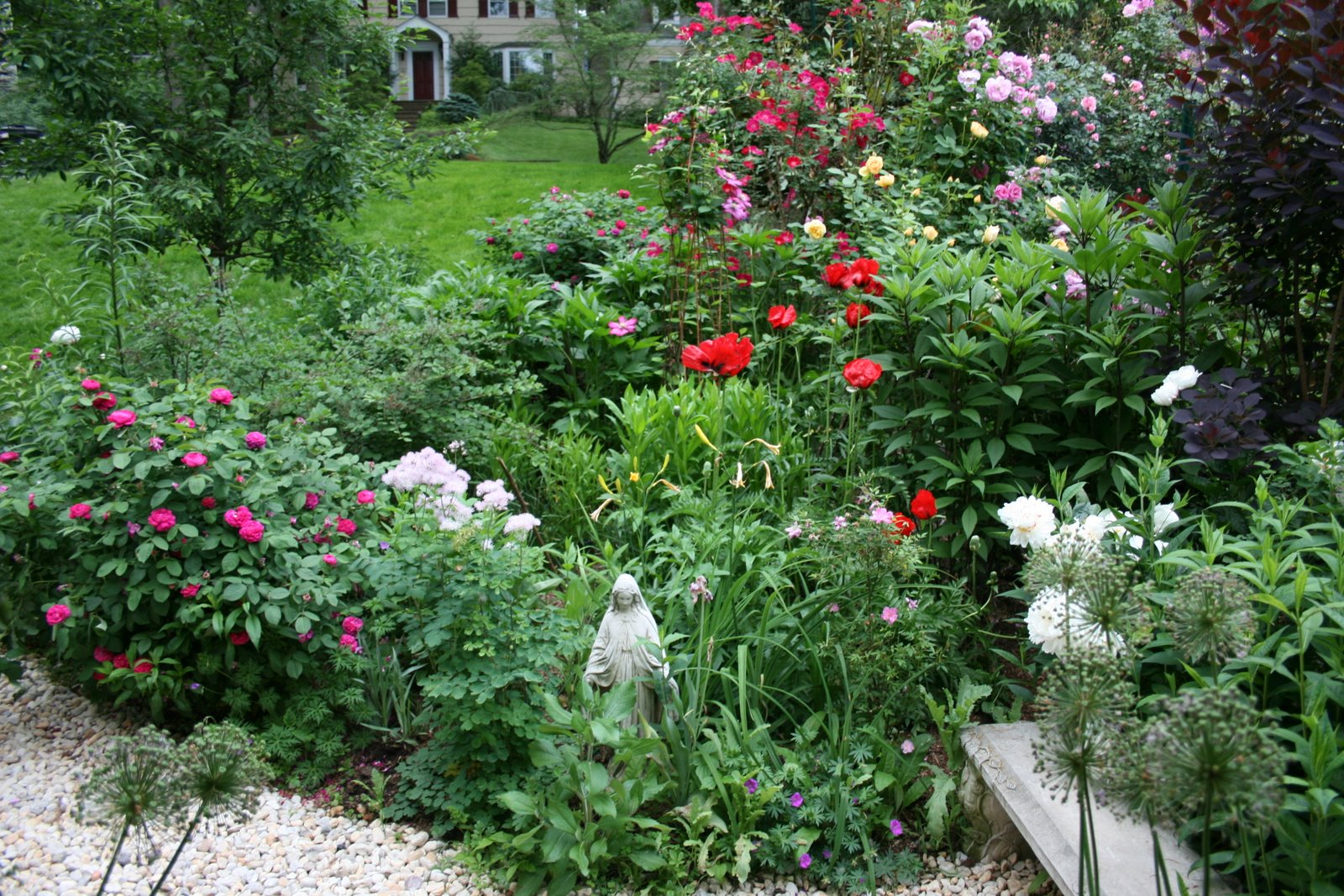
After we cut ours down, there was a giant empty oval where it once stood. From that oval, the Egg Garden was born. It was originally not much larger than shadow of the old shrub, but over time, it has continued to grow at the expense of the front lawn. (For a complete map of the gardens, click here.)
.
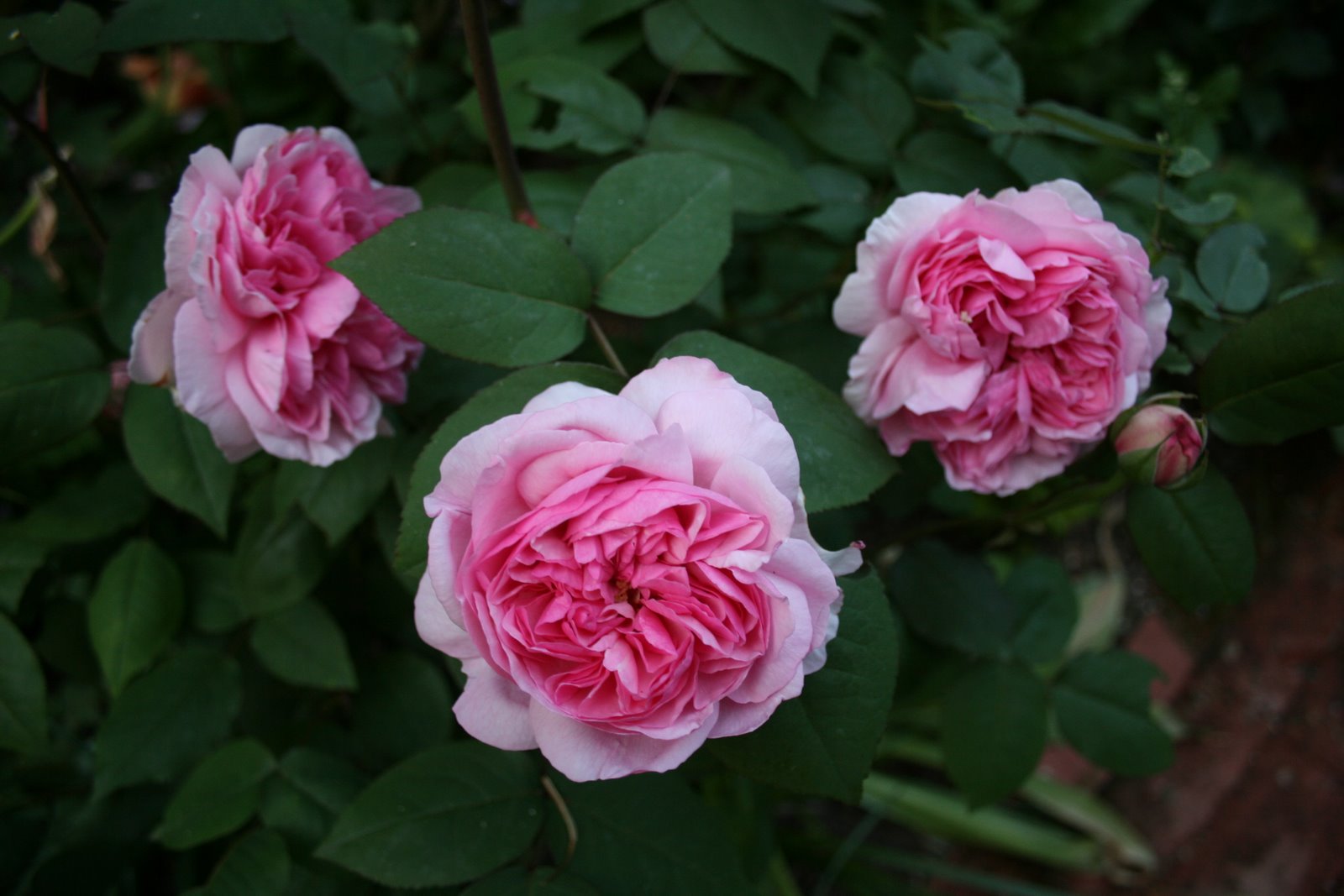
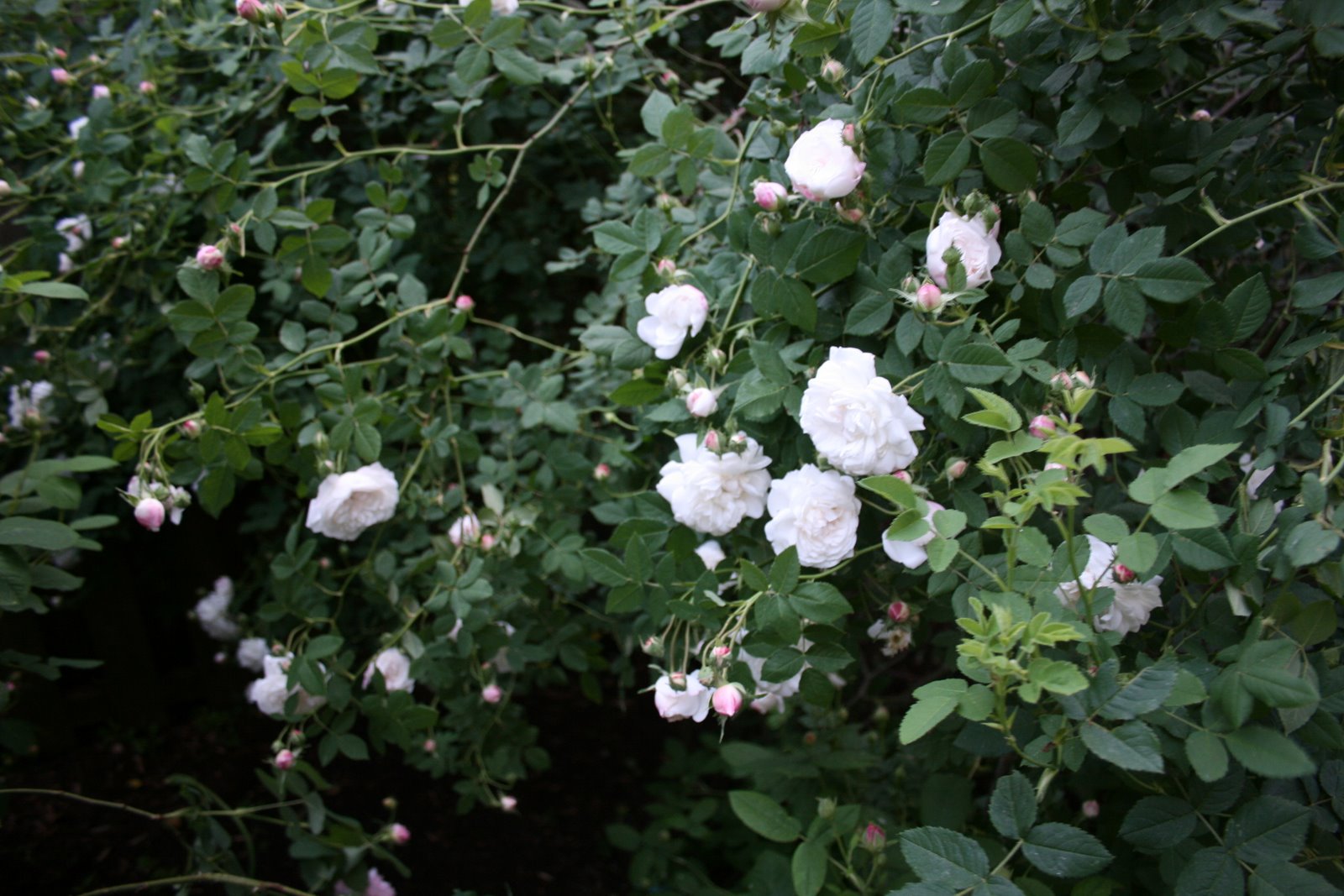
The Egg Garden is now made of perennials, annuals, shrub roses and the crabapple tree. In the garden, there is also a path made of pebbles that connects the front yard to the arbor, which is the entrance to the Cutting Garden.
.
Update: I am linking this post to this month’s Garden Bloggers‘ Design Workshop on Front Yards at Gardening Gone Wild. If you are not familiar with these design workshops, check them out.
.
The Egg Garden from the top of the hill.
.
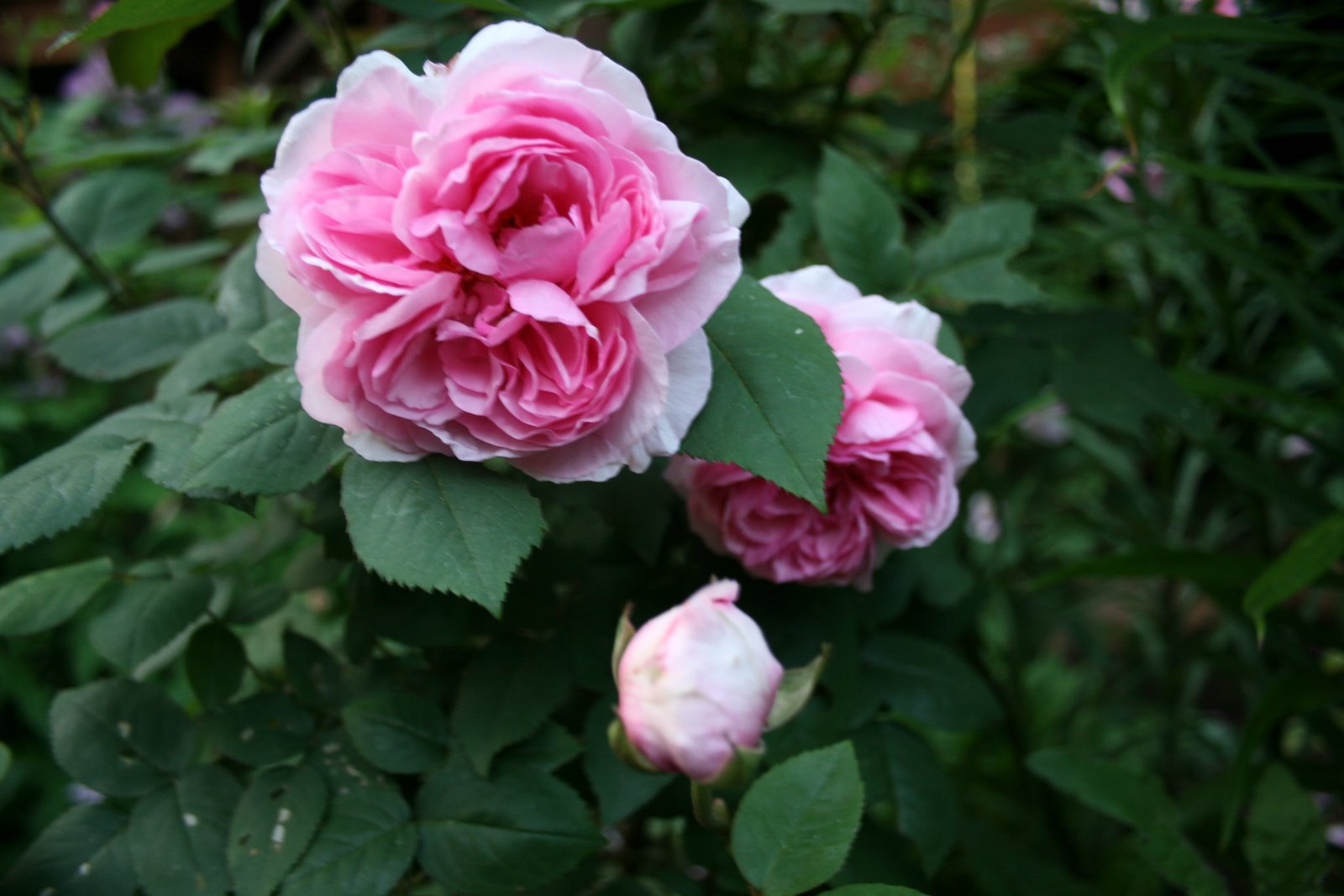
The Egg Garden from the door of the arbor.
.
The arbor that connects the Egg Garden to the Cutting Garden.

Green Hour: how to find public parks, campsites, and gardens by zip code

I learned of Green Hour, a great online resource, on The Homeschooler’s Guide to the Galaxy blog. On this website, you can type in your zip code and find all of the closest public parks, campsites, and gardens. I tried my zip code out and saw all of my favorite places, as well as some that I’ll now have to explore. Check it out:

http://www.naturefind.com/greenhour/

WSJ story about Danielle Hahn’s Rose Story Farm by Arnie Cooper

It’s amazing to me that most Americans have come to accept the long-stemmed, grocery-store rose “devoid of fragrance and that never opens,” just flops over and dies, as what a rose is.

An excerpt from the article: “By the 1960s, however, Americans’ concept of the ideal rose had become — as Danielle Hahn, who runs Rose Story Farm, describes it — “the long-stemmed grocery store ‘lollipop’ with a perfect shape, devoid of any fragrance and that never opens.”

But Ms. Hahn’s 15-acre spread in Carpinteria, a seaside hamlet 13 miles south of Santa Barbara, is helping guide a new aesthetic — really a return to an old one — that embraces not only fragrance, but a vivid spectrum of color, texture and petal type.”

For the full article, click here.

Ask Heirloom Gardener: Are Heirloom Roses Hard to Grow?

Question from the mailbag (heirloomgardener[at]aol[dot]com): Are heirloom roses hard to grow?

Answer from Heirloom Gardener: In short, my answer is no, they are not hard to grow. I’m not sure why heirloom roses have a misperception of being difficult, when my experience has been the exact opposite. In fact, I wrote a whole post about how easy they are, How to Care for Heirloom Roses: No Chemicals, No Sprays and No Special Treatment Required. A short excerpt:

“Heirloom roses are wonderful because they grow with very little care. In response to a recent question, you do not need to use chemicals to grow these roses. If you are into organic gardening or low maintenance gardening, then old garden roses are the plants for you. Look for the following classes of roses: alba, moss, damask, portland, centifolia, and gallicas. Also, include in your selection species and rugosa roses.
~
Most likely, the only one of these to be found in the average garden center is the so called beach rose: either rugosa alba or the pink single rugosa. Fortunately, they are easily available from specialty nurseries, such as: Antique Rose Emporium, Ashdown Roses, and Rogue Valley Roses. All three offer wonderful containerized own root roses. Rogue Valley Roses also has larger than normal roses for shipment.”

In addition, I wrote a related post, Six Trouble Free Heirloom Roses, which includes recommendations of particularly easy heirlooms: Rose de Rescht, Paul Neyron, Madame Plantier, Variegata di Bologna, Henry Martin, and Tuscany Superb. In that post, I wrote:

“The old garden roses are so easy to grow. In most cases, you can dig a hole, add in some compost, plant the rose, water it well for the first year, and from there its requirements are the same as other shrubs in your garden. What they lack in remontancy is made up with fragrance and profusion of bloom. Also, if you grow the Portlands and Bourbons, you can have repeat blooming shrubs as well.”