 Gardening Gone Wild has started a Plant Pick of the Month where they invite garden bloggers to write about a specific plant. This month’s pick is roses. I love roses. The comment I so frequently get is “It’s so hard to grow roses.” In my neighborhood, due to the misconception that the only roses which are easy to grow are carpet roses, that’s all you see. In the garden centers, there too you see mostly carpet roses and the Knock Out roses. These are great roses, but what about the heirloom roses?
~
The old garden roses are so easy to grow. In most cases, you can dig a hole, add in some compost, plant the rose, water it well for the first year, and from there its requirements are the same as other shrubs in your garden. What they lack in remontancy is made up with fragrance and profusion of bloom. Also, if you grow the Portlands and Bourbons, you can have repeat blooming shrubs as well.
~
I cannot image my garden without the beauty, fragrance, reliability, and link to the past that old garden roses provide. I love them all, but here are six heirloom roses that are particularly wonderful.
~
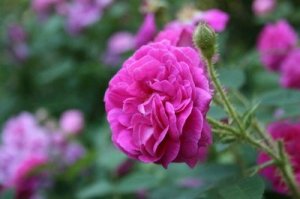
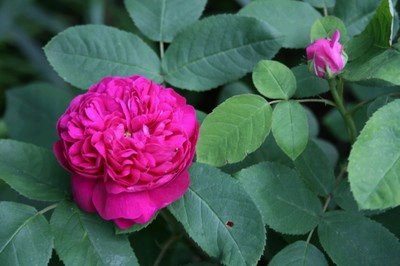
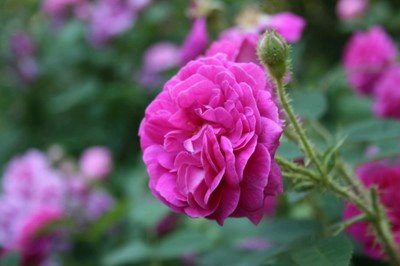
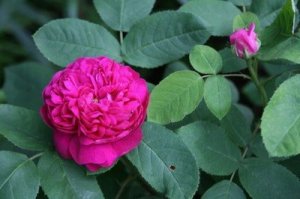 1. Rose de Rescht. Rose de Rescht (pictured) is a Portland rediscovered in the 1940s. It’s small stature of three to four feet tall and wide makes de Rescht easy to mix into shrub or mixed borders. This rose is a deep pink with many petals and an amazing fragrance. Rose de Rescht, like others in the Portland class, blooms remontantly throughout the summer and fall. The foliage is plentiful and not prone to disease.
~
2. Paul Neyron. Paul Neyron is a Hybrid Perpetual rose from the mid-1800s. As a class, the Hybrid Perpetuals are not as easy to care for as the other classes of old roses. By the end of the summer, most to the shrub has been defoliated and affected by fungal disease, but I grow it anyway for the flowers. The flowers are quintessentially what you think of when you picture an old rose: fully double, extremely fragrant, a strong pink color with huge flowers six to seven inches across. Although the foliage leaves more be be desired, Paul Neyron’s saving grace is also that unlike many Hybrid Perpetuals it is a reliable re-bloomer. I wouldn’t be without it.
~
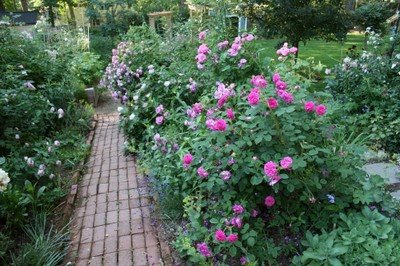
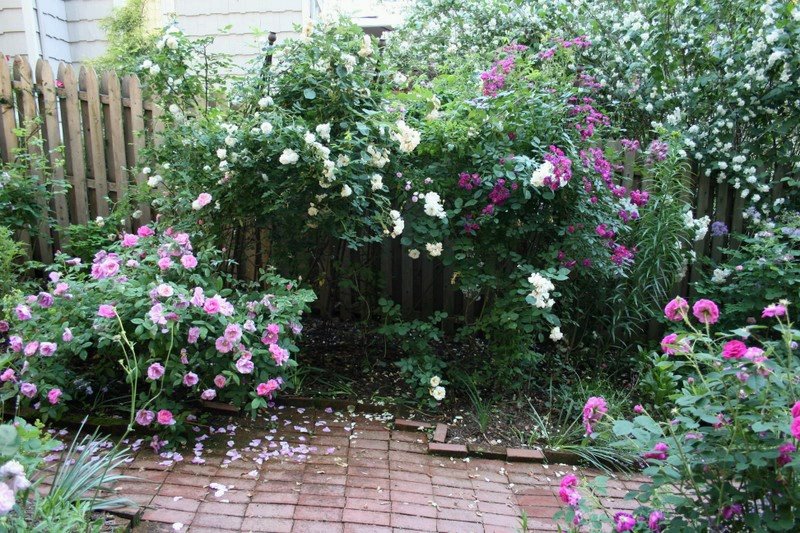
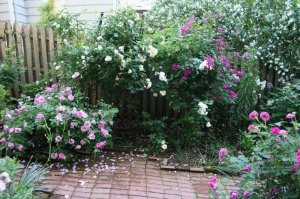 3. Madame Plantier. Madame Plantier is the most forgiving and trouble free rose in my garden. My first Madame Plantier was planted in a shade garden seeing that it is a reliable bloomer even in shade. Unfortunately, the tree creating the shade fell down in a storm one late June morning. In preparation for the tree removal, I dug Madame up and unceremoniously plopped her in a black nursery pot. There she sat with no water, no fertilizing, no attention for two months on the kids’ playground. Toward the end of August, seeing that Madame was still alive, I hastily dug a hole and planted her without amendments or special care. The rose survived and every June Madame Plantier graces the garden with a covering of fragrant, very double, white roses. I have three Madama Plantiers, one in the Rose Garden with full sun (pictured) and two others in a shady corner. All the plants grow equally well.
~
4. Variegata di Bolgona. Variegata di Bolgona is a striped, once blooming Bourbon. This rose is beautiful. The striped old roses such as Rose Mundi, Leda, Camaieux, and Honorine de Brabant are incomparable to the modern stripes. I have also grown Fourth of July, a modern striped rose. Although Fourth of July is very healthy and a good bloomer, it’s going to be removed in the spring because the garishness of the stripes are out of step with the restrained and classic beauty of the old roses which surround it. However, with the striped old roses, this is never an issue. They all blend beautifully with the other roses and plants growing around them. Variegata grows in the Long Border surrounded by sambucus, Japanese iris, veronicastrum, and false sunflower. Her flowers are lovely and the shrub is very healthy without any special treatment.
~
 5. Henry Martin. I love Henry Martin (pictured) because of his amazing color. It is one of the most richly colored Moss roses with petals that look like red velvet and the color and fragrance are rich and powerful.
~
6. Tuscany Superb. Every year I look forward to Tuscany Superb for the depth of color of its petals. This rose and many other Gallicas in my garden such as Charles de Mill, Complicata, the Apothocary Rose, Rose Mundi, Belle de Crecy, Camaieux, and Cardinal de Richelieu provide amazing color and fragrance to the rose season. Although they bloom only once, they bloom over three to four weeks and the bloom is so profuse that all the shrubs are covered with blossoms. What’s more is the Gallicas, like most old roses, do not require elaborate fertilizing regiments or spraying. My rose garden currently has no irrigation and the Gallicas perform superbly and continue to look good throughout the summer.
~
Related Posts:
~
Creating the Rose Garden with a Central Brick Path
The Rose Garden in Spring and Summer: Daffodils replace the Lavender Border
How to Prune Roses, Part I: An Introduction
How to Prune Roses, Part II: Old Rose Pruning Secrets
How to Prune Roses, Part III: Why Prune?
Index of Rose Photos

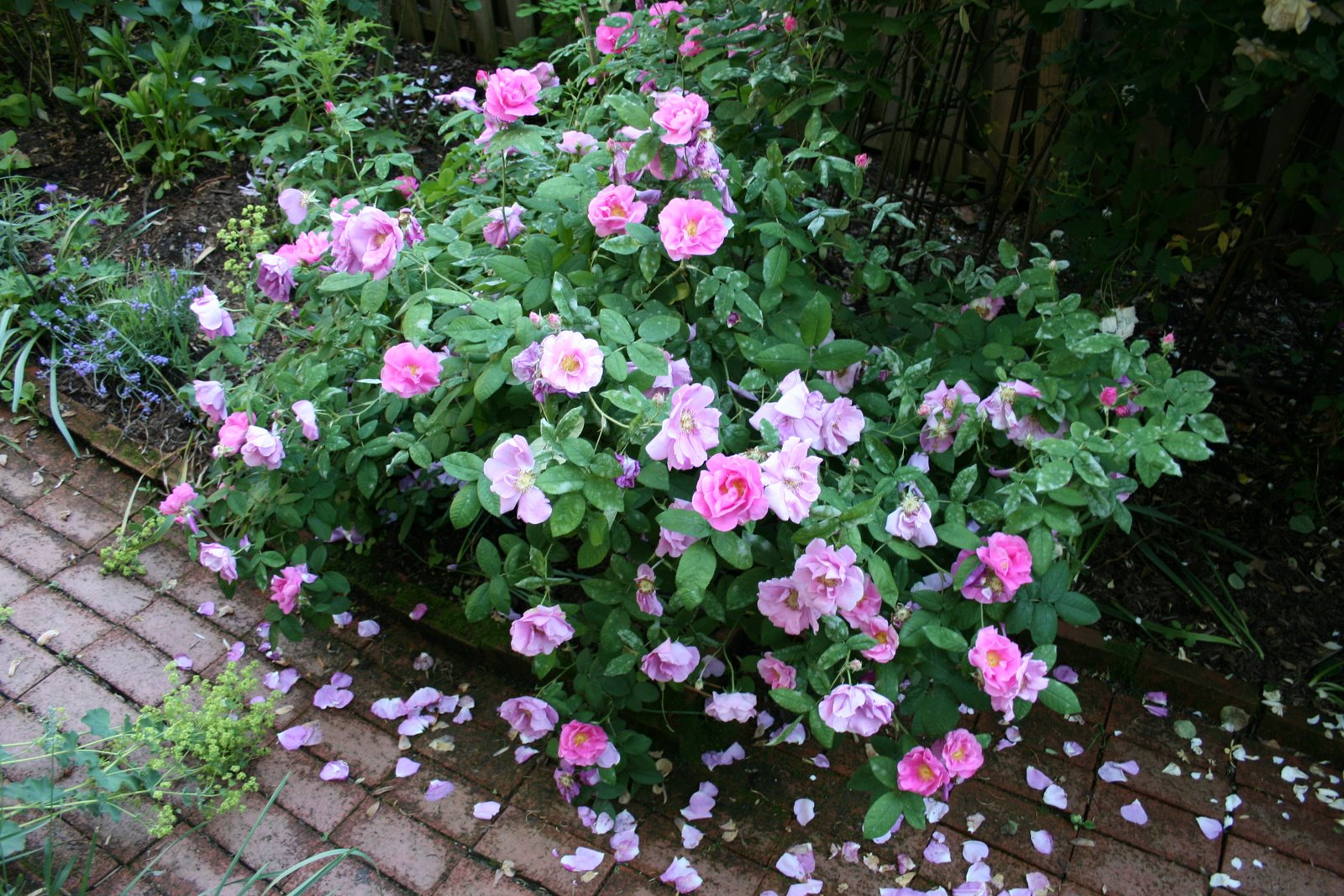 Heirloom roses are wonderful because they grow with very little care. In response to a recent question, you do not need to use chemicals to grow these roses. If you are into organic gardening or low maintenance gardening, then old garden roses are the plants for you. Look for the following classes of roses: alba, moss, damask, portland, centifolia, and gallicas. Also, include in your selection species and rugosa roses.
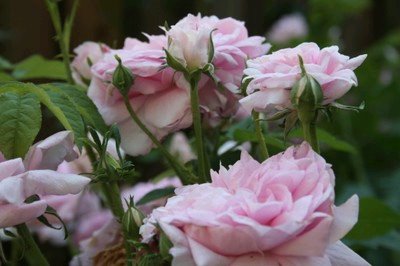 Once you have the rose, planting is very simple. First, dig a hole a bit larger than the container. Mix as much organic matter into the soil which you removed as you wish. This could be compost, leaf mold, composted manure, Bumper Crop, or whatever else you desire. Plant the rose, tamp it down firmly, water, and mulch with more organic material.
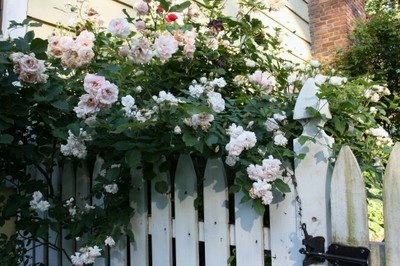 If you want to give them extra care, top dress them with compost once or twice a year. For more suggestions, and for those of us who can’t sit back and do nothing, there is a wonderful book on growing roses organically called Growing Roses Organically by Barbara Wilde.


 Heirloom Gardener