One Garden That Still Looks Great After the Frost
I always tell my husband that we can never, ever move to a colder climate. We’re in zone 6b and we have not yet experienced our first frost. However, I’ve been admiring Yvonne Cunnington’s blog entries over at Country Gardener (Ontario, Canada) and her photographs remind me that the post-frost garden can look beautiful too. Here’s her latest:
New Blogger Gadget: Followers
I just added a neat new Gadget from Blogger to my blog called Followers. You can see it on the upper right sidebar. Here’s how it works:
If you add yourself as a Follower of my blog (or whatever blog uses the Gadget), then Blogger displays your icon as a Follower and includes new Heirloom Gardener posts in your Dashboard’s Reading List. Further, it adds a free link directly from my blog via your icon to your About Me entry, so other Heirloom Gardener readers can find out more about you and your blogs.
If you’d like to add the Gadget to your blog, go to your Dashboard, click on Layout, then click on Add a Gadget.
Beyond Daffodils and Tulips: Seven Minor Bulbs To Plant for Spring
Over the last week, we’ve had a wonderful stint of warm weather. In preparation, I cleared my schedule for a fall planting holiday. This year I tried to concentrate on the minor bulbs that often get overlooked in the mad rush to plant tulips and daffodils — I did do a bit of that too, but we’ll save that for later.
~
The minor bulbs like snowdrops, winter aconite, and bluebells are so wonderful because they can easily be tucked under deciduous shrubs and around perennials which are rarely divided like peonies and oriental poppies. Also, many of them are the first late winter flowers to appear. In zone 6, I begin getting snowdrops in early February.
~ 1. Snowdrops. I planted three varieties of snowdrops: Galanthus elwesii, Galanthus ikariae, and Galanthus nivalis flore pleno. Elwesii is the largest and first to bloom and the others follow extending the flowering from February well into April. I usually order from Van Engelen so that I can get large quantities inexpensively. Snowdrops are best planted in groups of no less than ten bulbs. Seeing that they bloom when nothing else is and that they are rodent proof, you can’t have to many of them.
~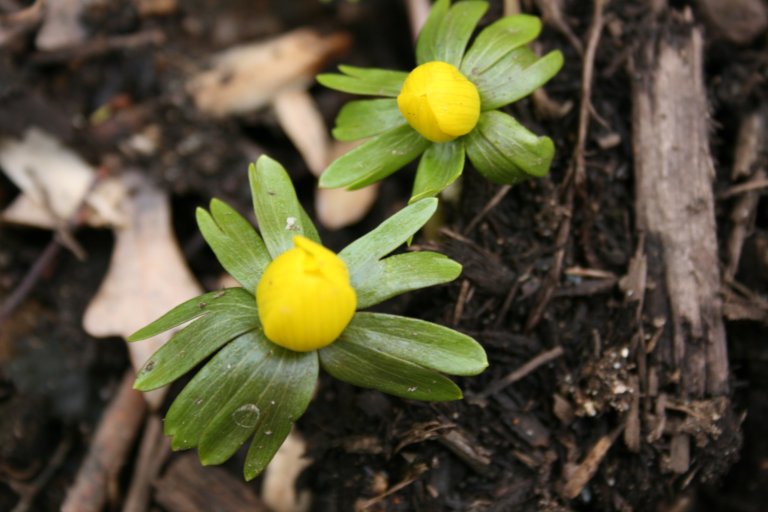 2. Winter Aconite. Winter aconite starts blooming once the snowdrops have began. I find that they more quickly naturalize than snowdrops so I planted about a third fewer of them. I soak my bulbs for a few hours before planting because the bulbs have a tendency to dry out. I also buy from Old House Gardens whose bulbs are dipped in agricultural wax alleviating the problem of the bulbs drying out. These I scatter about in areas of the garden that have humusy soil and I know do not go dry during the summer as they like consistent moisture throughout the year.
~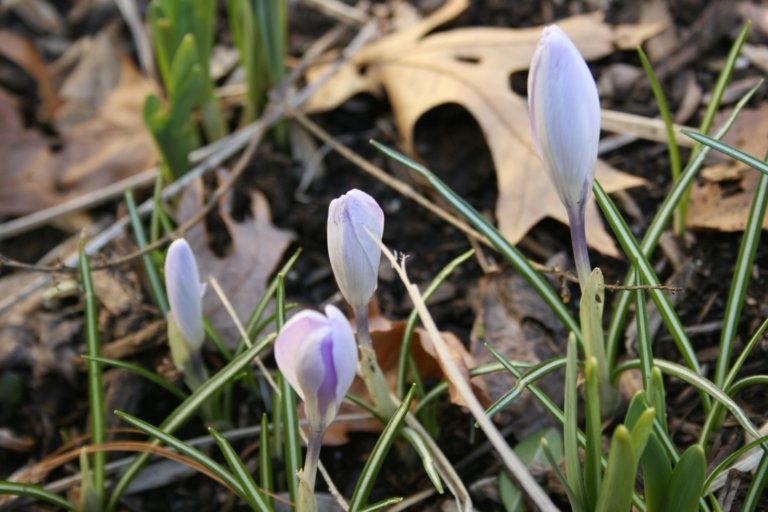 3. Tommies. On the heels of the aconite, are the tommies. Crocus tommasinianus bloom before Crocus vernus and are less frequently eaten by squirrels and chipmunks. I planted a beautiful lavender form called Roseus. These can go everywhere, but I like them along the front walk so during the cold days of early spring I don’t have to venture far to take a look at them or cut them. Again, I planted in groups of ten.
~
4. Glory of the Snow. Also in March, the Glory of the Snow blooms. These flowers are such an iridescent blue that they shout spring is here. I love these at the base of Magnolias which bloom around the same time.
~
5. Crocuses. By mid-April, Crocus vernus comes into bloom. The first year I planted these they appeared and flowered beautifully, only to be dug up and eaten by chipmunks immediately afterward. I think they did not dig them in the fall because I soaked them in deer repellent before planting. To avoid them from being dug up in the spring, I laid deer netting over the area for a few weeks. The chipmunks seem to forget they’re there after a while and leave them alone.
~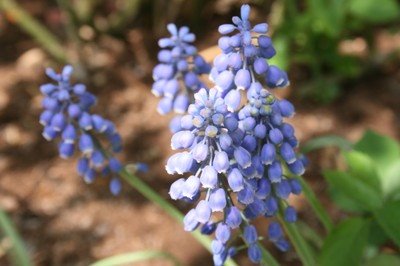 6. Muscari. At the end of April, muscari comes into bloom. Muscari is wonderful with late blooming daffodils and early tulips. Also, they’re useful to use as a marker for where other bulbs are planted. They sprout and flower in the spring, have a typical summer dormancy, but in the fall muscari sprouts leaves again. If planted among other bulbs, it can serve as a fall marker so that the other bulbs are not accidentally displaced during the fall planting season. Although, no one bothers the muscari bulb, deer have browsed the foliage of mine.
~
7. English Bluebells. English bluebells bloom in mid May along with late daffodils and tulips. English bluebells are dainty, sweet smelling flowers that are avoided by animals.
Fragrance in the Garden: The Katsura Tree in Autumn
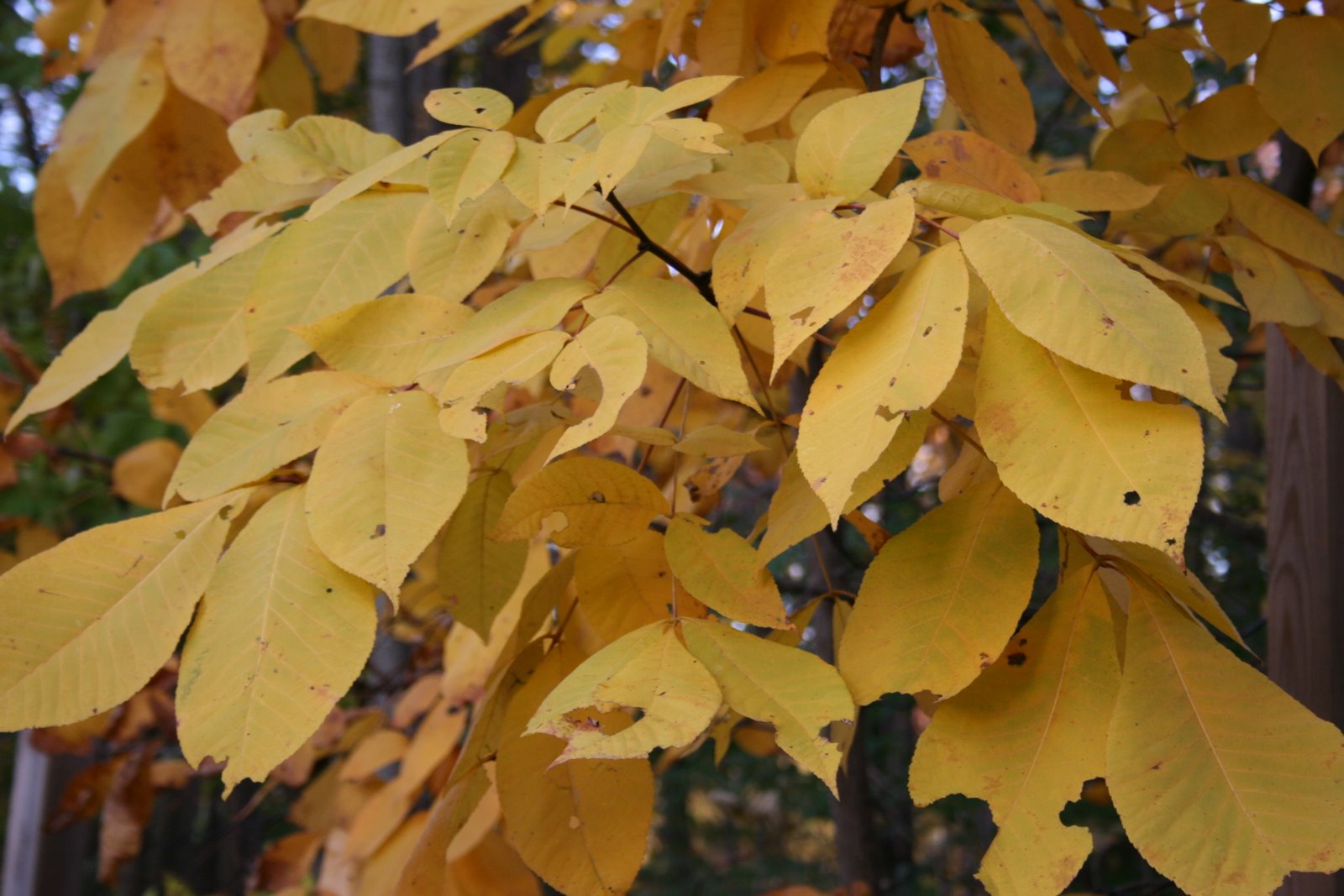
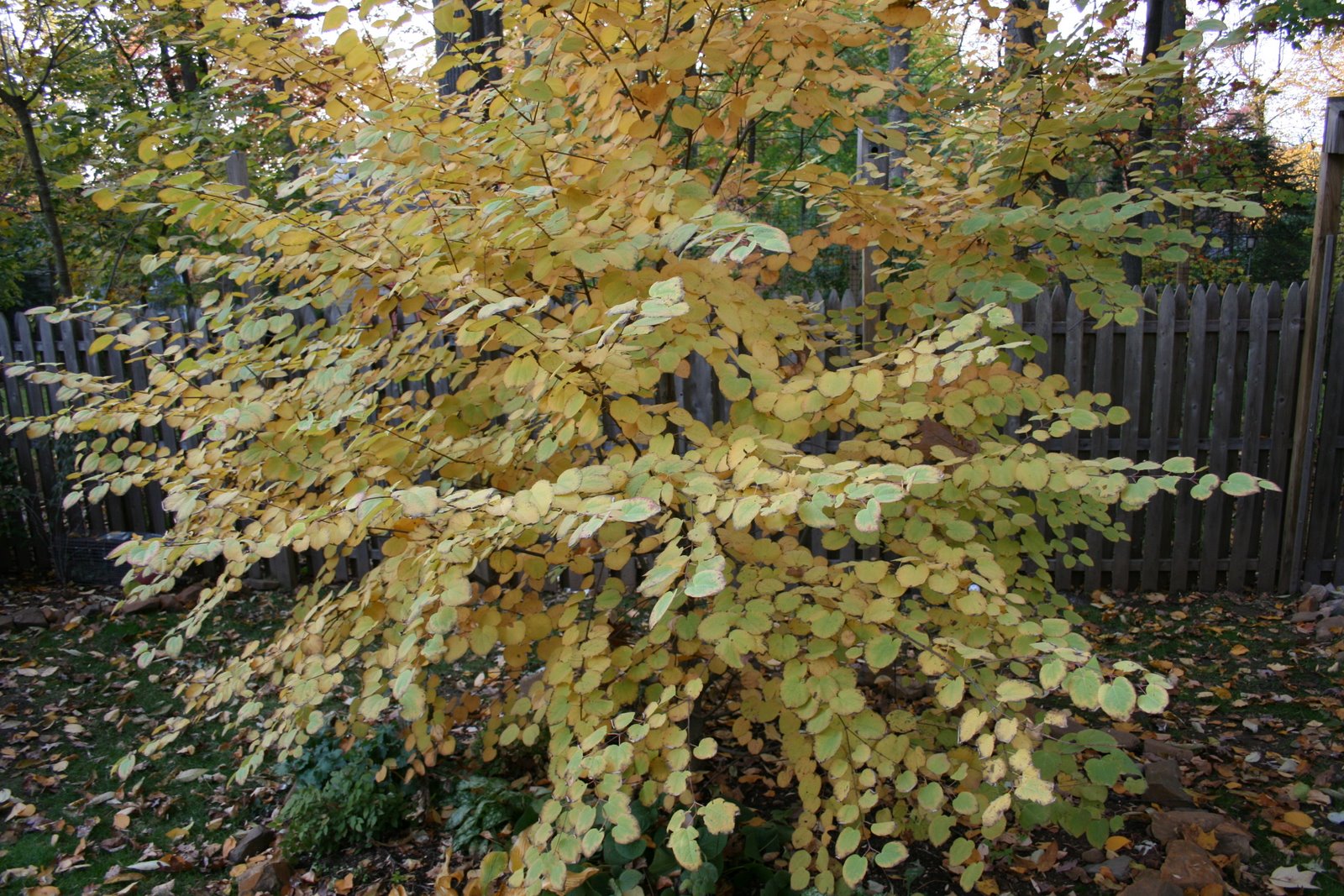 Purchased five years ago at a benefit for the Reeves Reed Arboretum in Summit, New Jersey, this Katsura tree, Cercidiphyllum japonicum, has grown from two feet to about twenty feet tall. Because of its beautiful form (it will be great to climb in about fifty years) and leaves (now yellow), it is one of my favorite trees in the garden. In addition, its most unique feature is its caramel-like fragrance that you experience in the fall. It is planted in the backyard next to the fort and in front of the deer fence.
~
*****
~
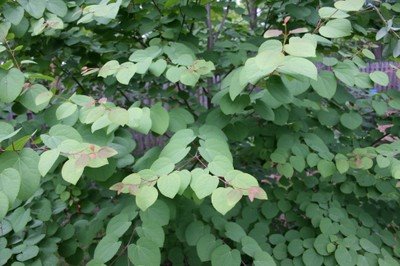
Update: as requested, here is an additional picture which displays what the leaves of the Katsura tree look like during the spring and summer.
A Flowering Tree for Spring and Fall: Autumn Cherry Blossoms
Despite temperatures forecast to dip below freezing, another week has gone by and I have thankfully not yet experienced my first frost. The weather is supposed to be in the forties to sixties this week, so it will be a perfect autumn week in the garden.
*****
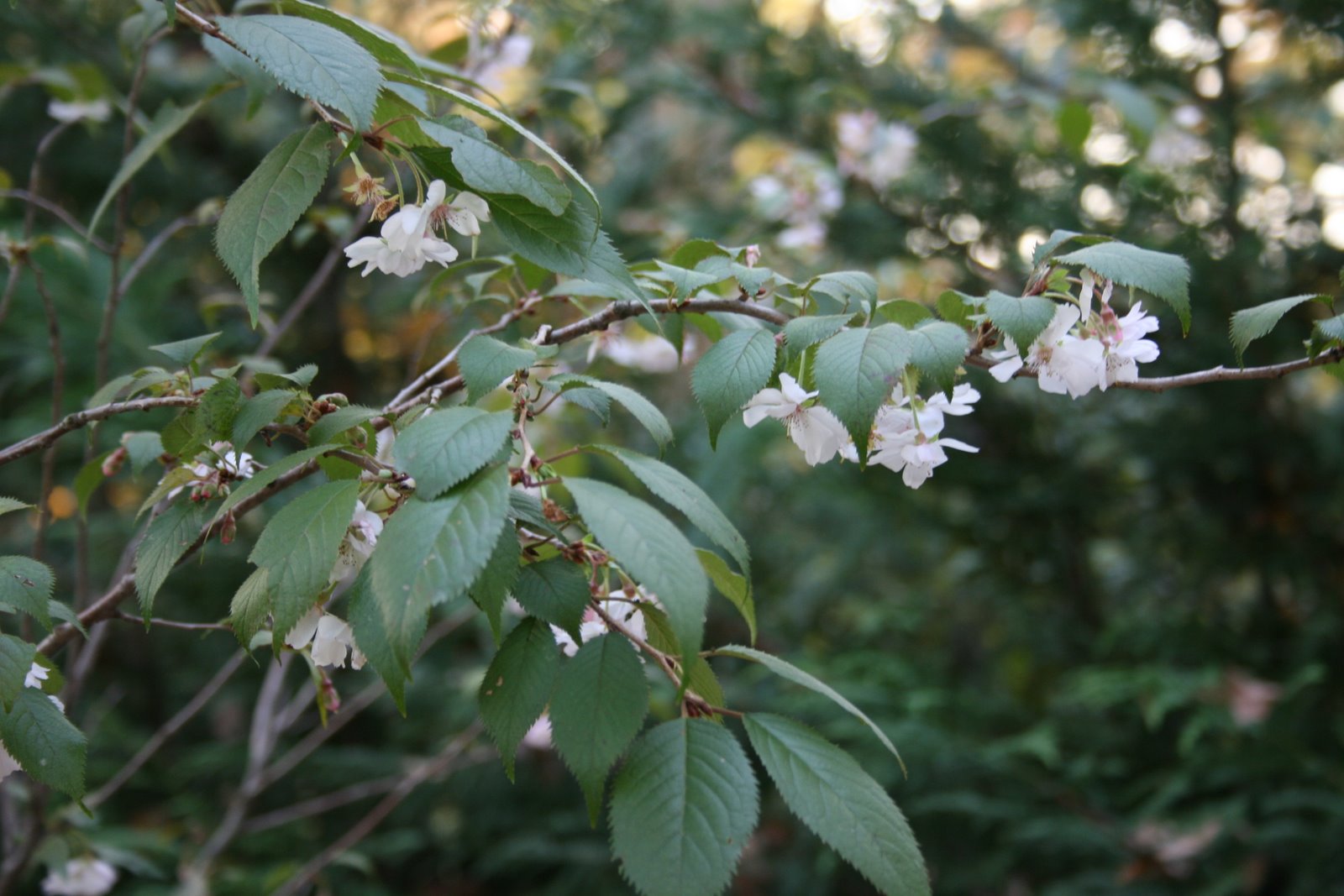
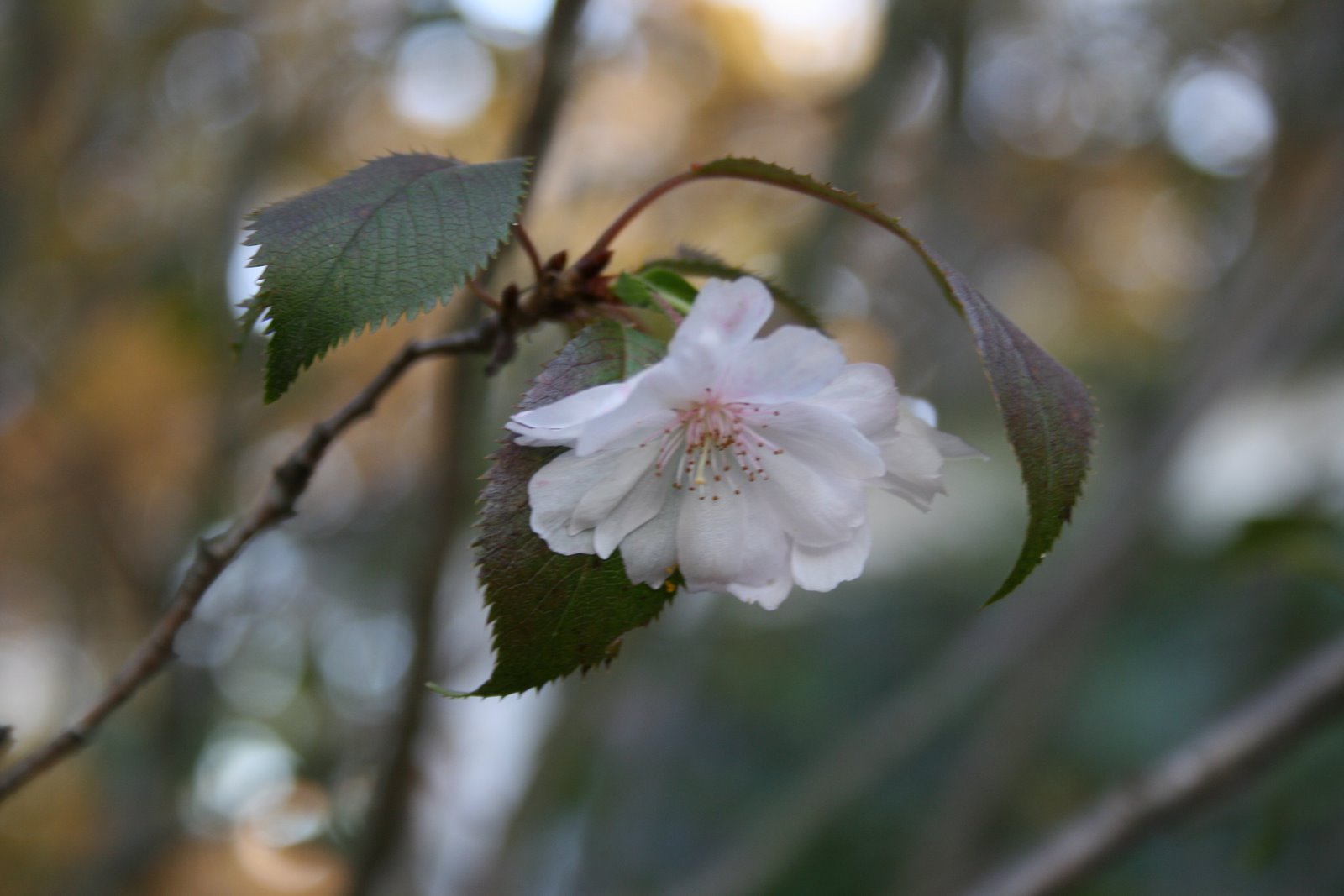
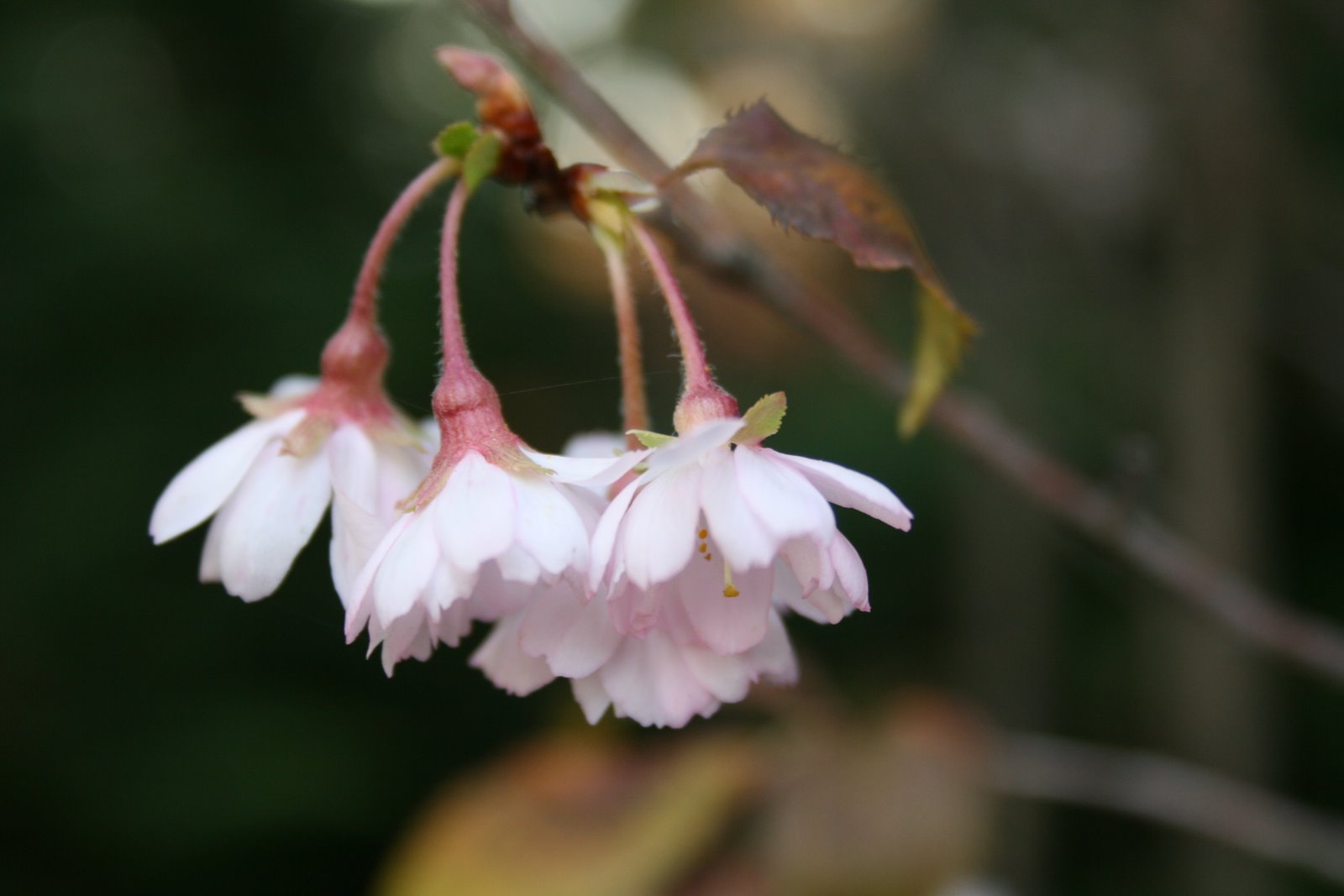
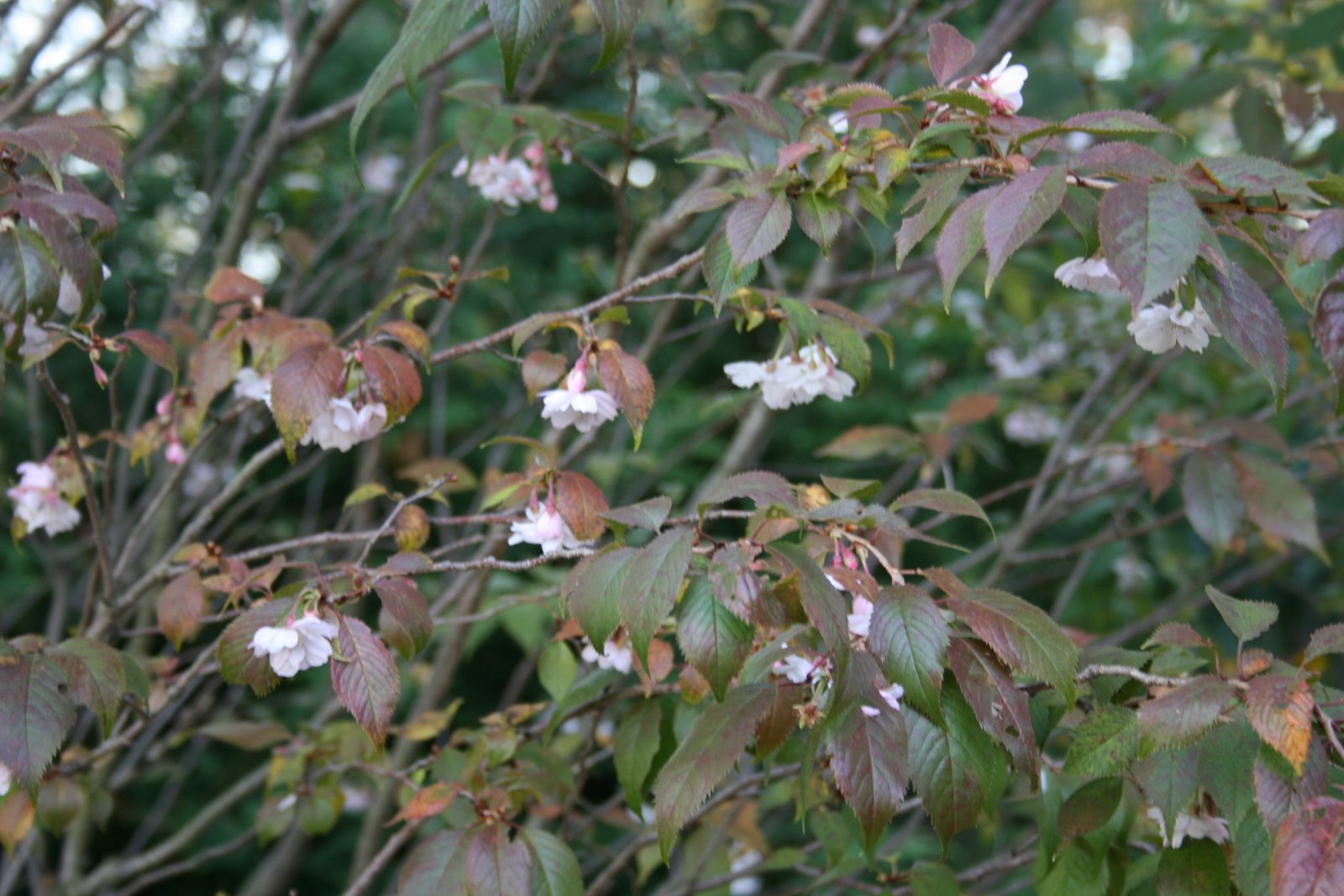
As I have previously written, I love flowering trees. I love them so much that I seek out varieties that blossom at various times of the year, not just the spring. For example, my new autumn cherry, prunus subhirtella autumnalis (pictured below), which I planted this spring in the Walled Garden, blossoms in both the spring and the fall. The autumn blooms, offset by the leaves which have already started to change from green to red, started showing themselves in October and are continuing into November.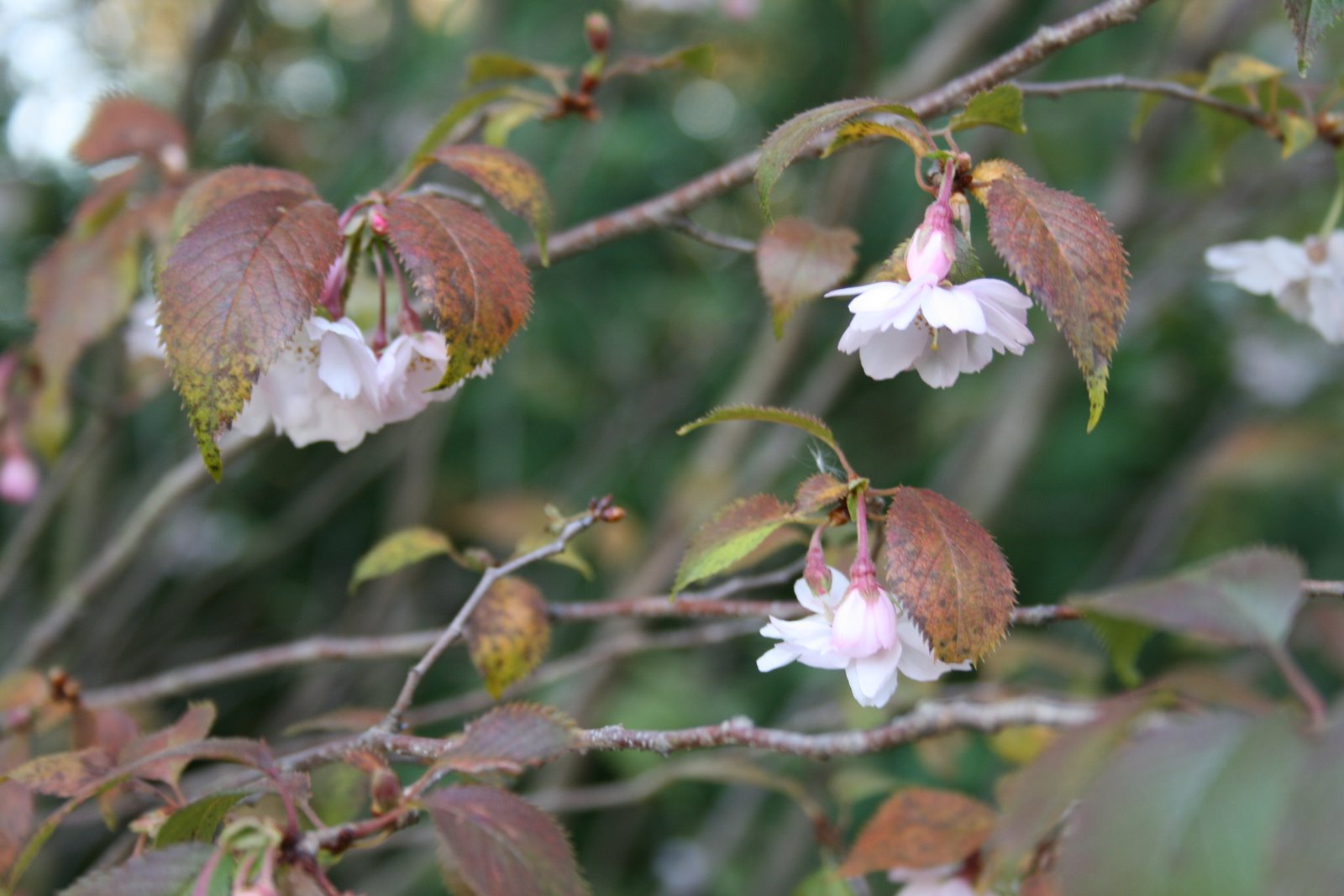
Spider Flowers (Cleome) in the Morning Sun after the Rain
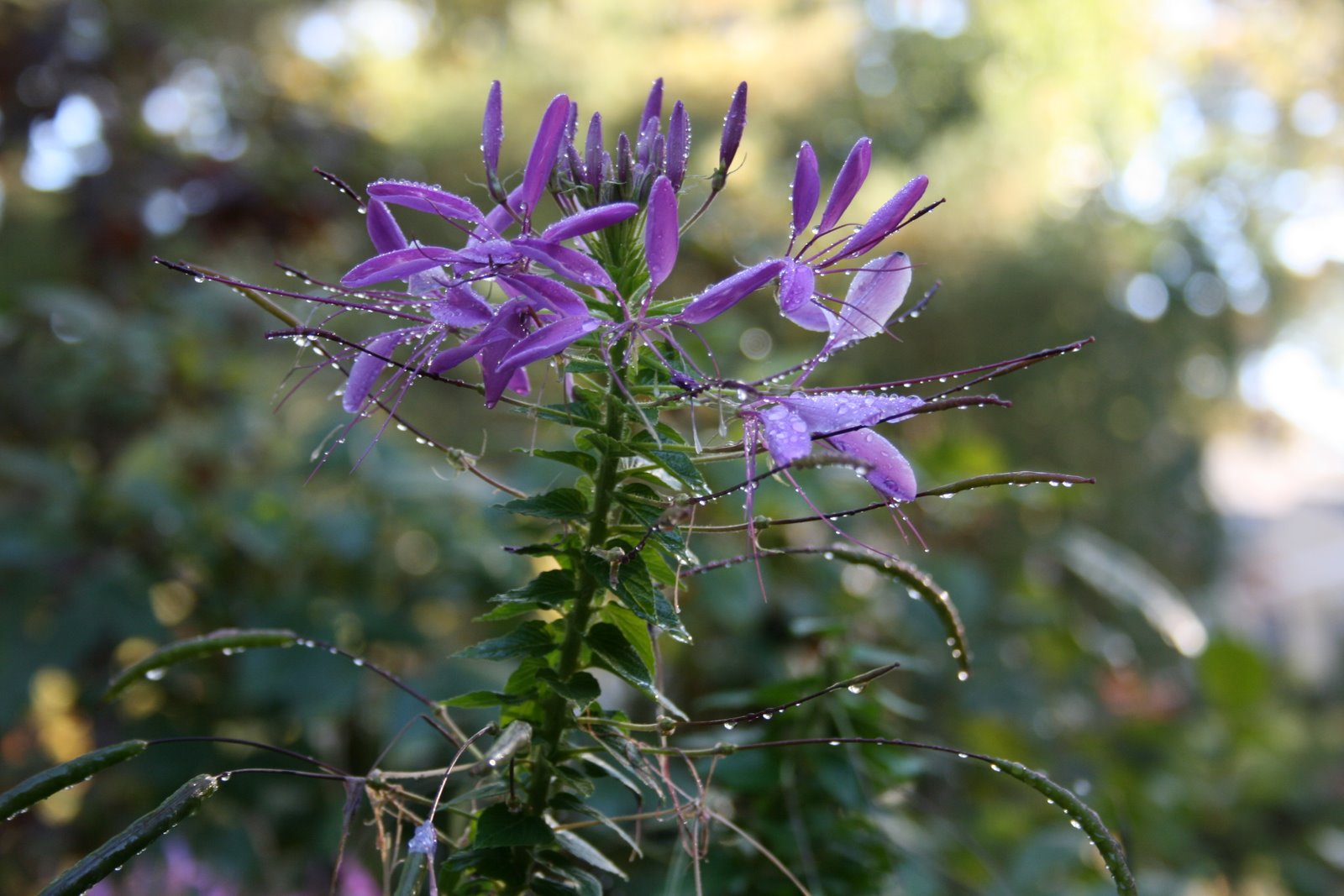 The frost came to some parts of Chatham, New Jersey earlier this week, but my garden has so far been spared. In these last days before the frost, I have been taking my time to appreciate and photograph the beauty of the flowers that remain.
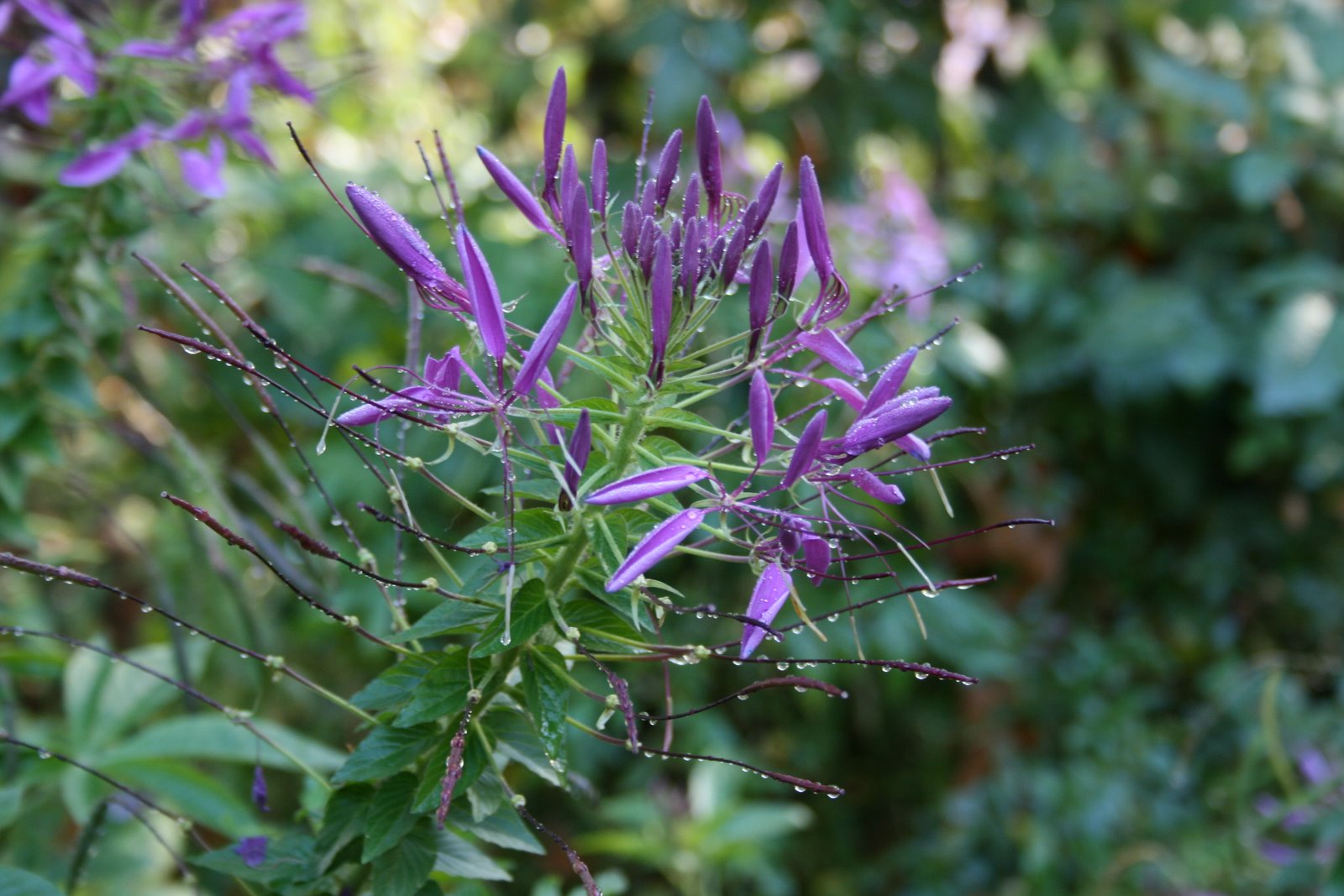 For example, I recently posted about Spider Flowers (Cleome), but couldn’t resist sharing these additional photographs that I took this morning. Along the pebble path of the Egg Garden, the morning sun glistened off of the raindrops captured in the delicate structure of the spider flowers.
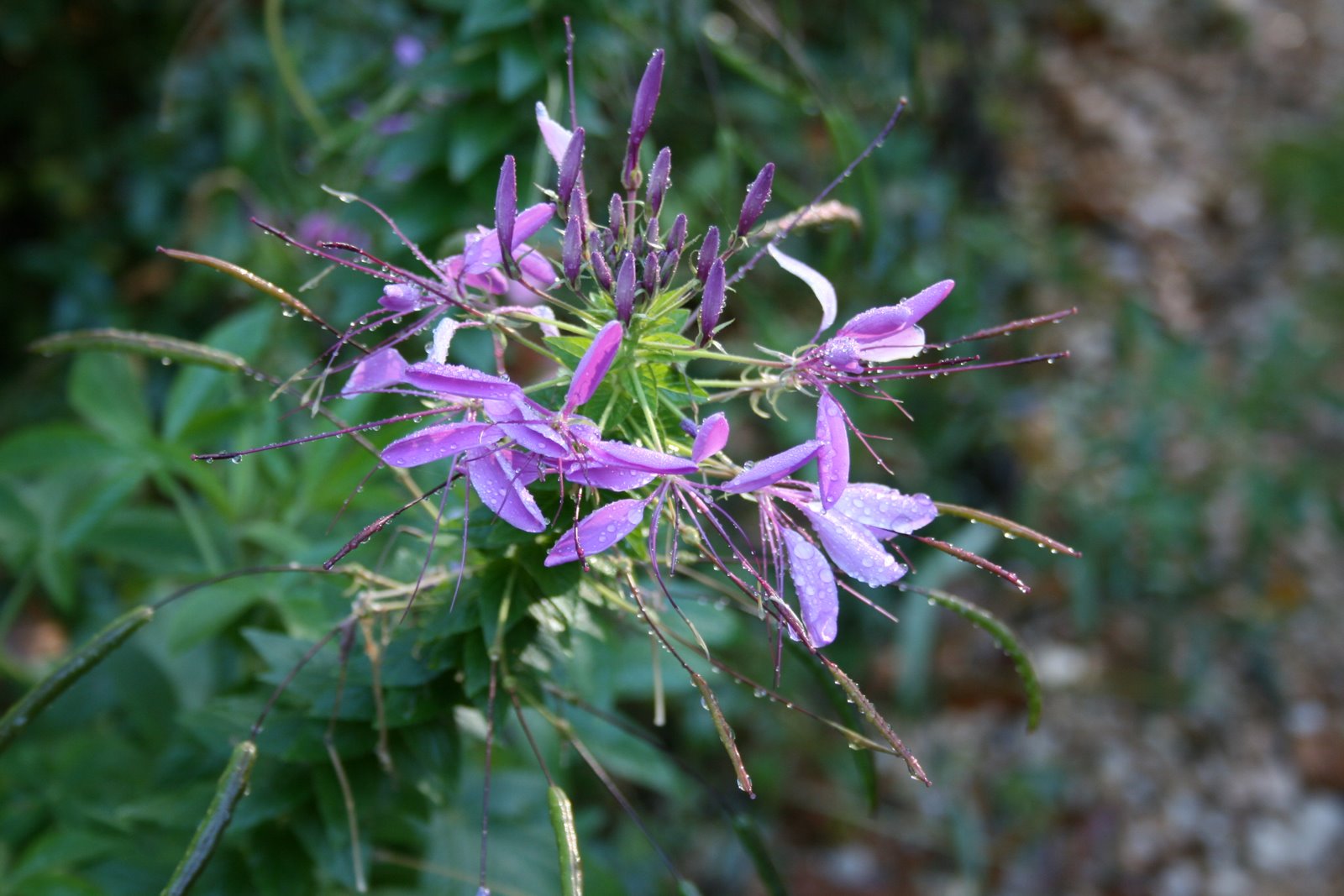 Knowing that their days are numbered, I have also been liberally cutting my flowers so my home is now filled with arrangements, including roses, dahlias, sunflowers, salvias, and cleome.
Garden Hopping: A Posy From My Garden
Click on the this post from Zoe at Garden Hopping for a picture of a truly inspiring autumn flower arrangement–roses, dahlias, berries, etc. I’m going to have to try something like this myself.
Autumn Beauty: Japanese Beautyberry
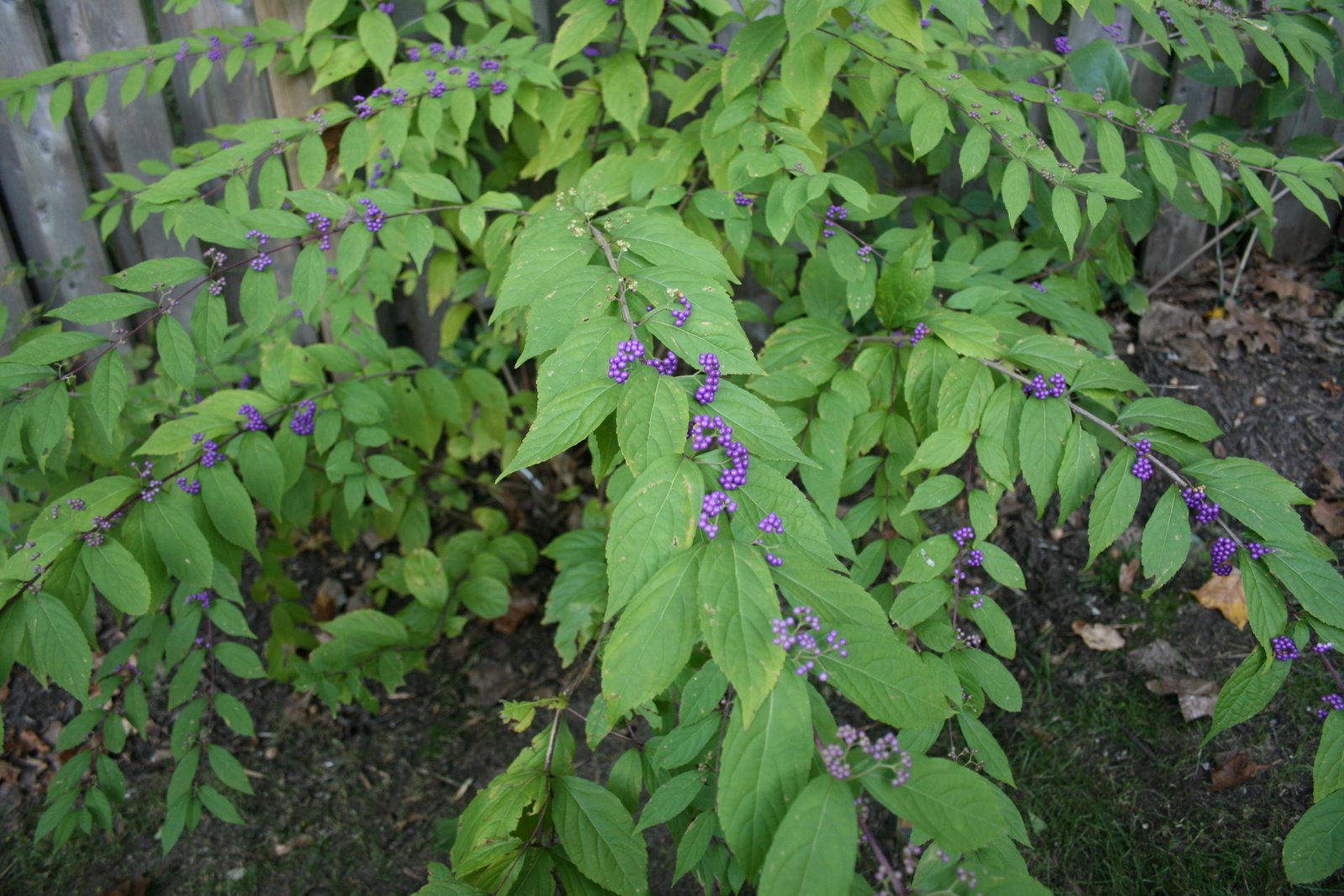
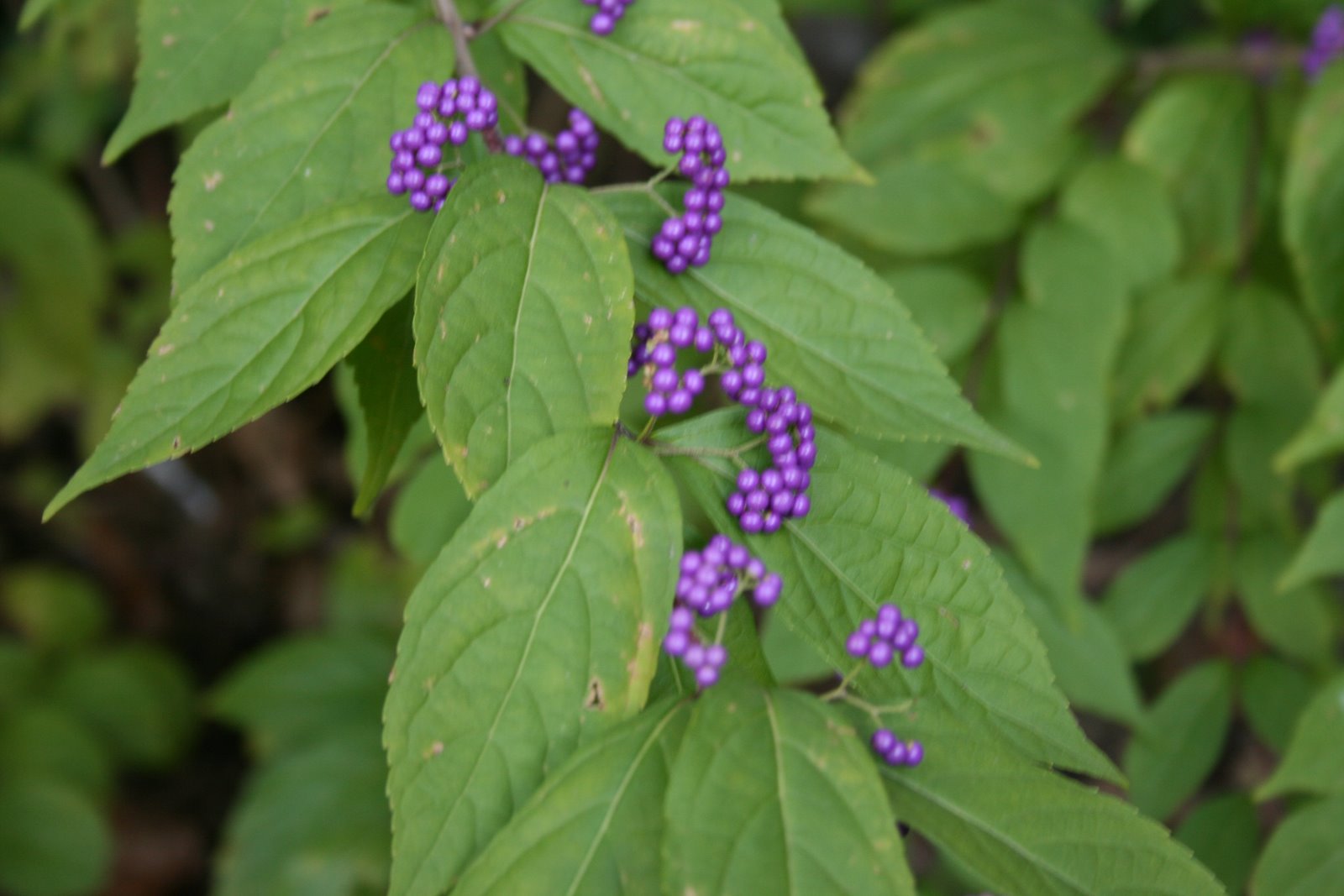 As a supplement to last year’s pictures of my Japanese Beautyberry (Callicarpa japonica) in summer and winter, here are two autumn pictures with the berries and leaves. In the winter, the shrub will be left with just the berries.
“They are healthy and vigorous plants. I purchased very small plants and they grew quickly in the first year…For fall and winter arrangements, you can cut the branches with the Beautyberries. If you do so when they still have leaves, I recommend that you remove the leaves because they droop immediately after being cut.”
For an additional post on propagation, click here.
 Heirloom Gardener