Container Gardening: Autumn Container (and some Pumpkins and Gourds)

In a prior post on container gardening, I discussed my efforts to change the containers in the front border with the seasons.

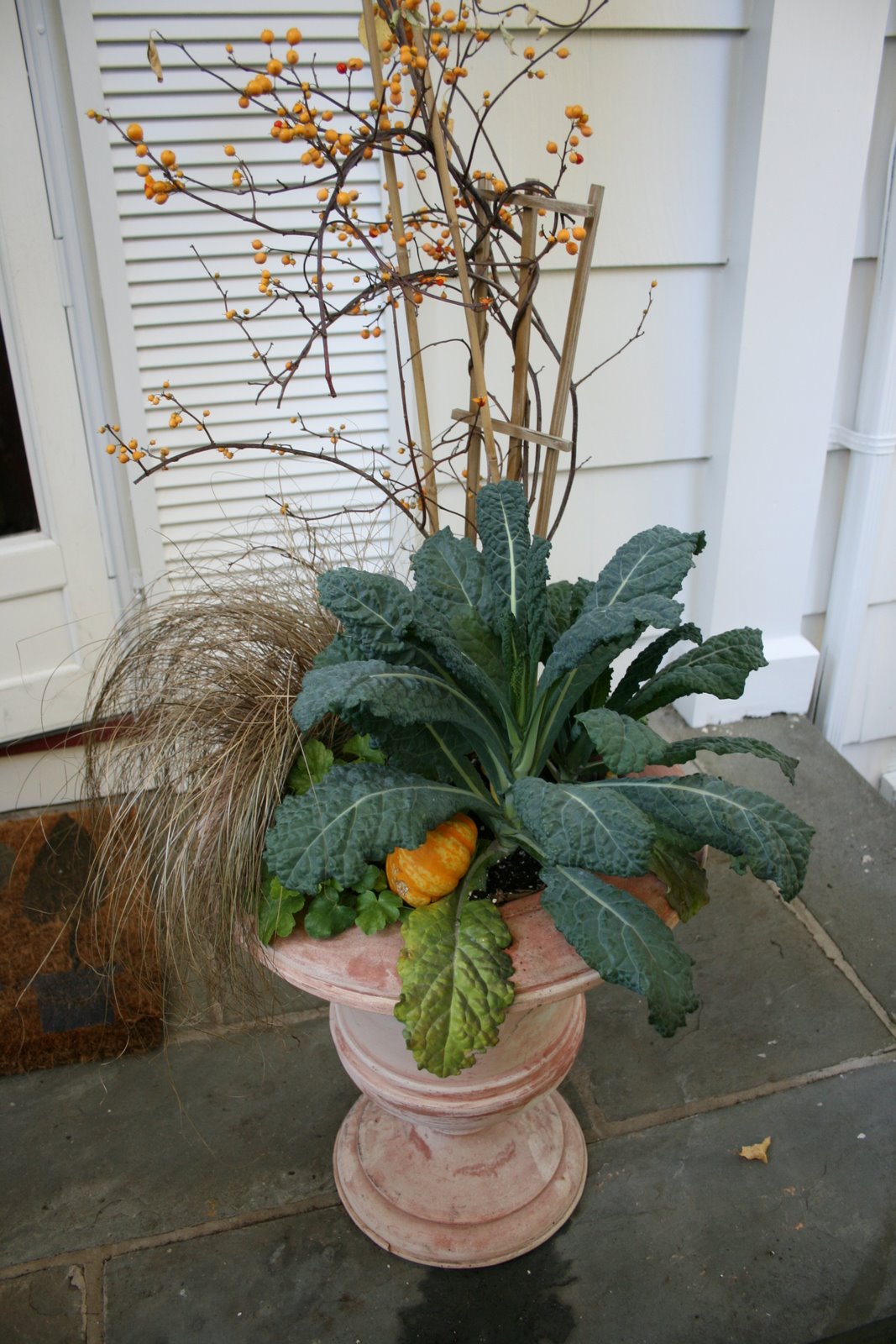
For the container by my front door, I’ve just replaced the summer display of elephant ears with kale, American bittersweet vine, bronze carex, and a miniature gourd. This arrangement will last until the winter containers in December.


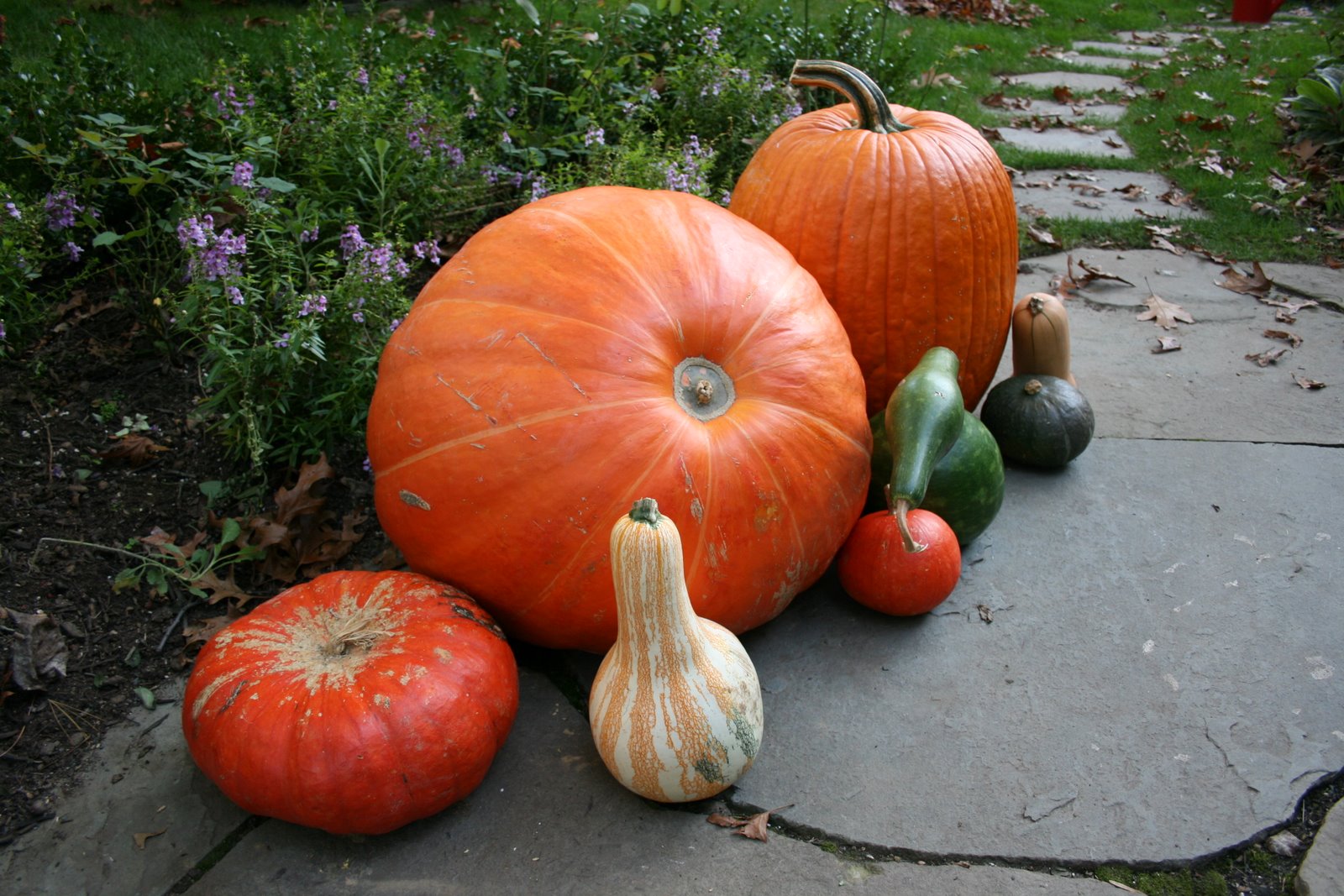
In front of the house, the children picked out a selection of pumpkins and gourds from the farmers’ market and the local nursery.

Times Online (UK): 51 Glorious Garden Websites

As an admirer of English gardens, I enjoy reading English gardening magazines, online newspaper articles, and blogs. Recently, Jane Owen, an editor of the Times Online gardening section, posted a list of “51 glorious garden websites.” Seeing that most of these were from the UK, they were almost entirely new to me. A particularly inspiring set of websites which I never would have found on my own was the following:

Individual designers whose work I know and recommend
30 Cleve West – brilliant, subtle, sculptural work which has won many Chelsea golds. http://www.clevewest.com/
31 James Alexander Sinclair – highly original designs on new and historic sites plus one of the most entertaining blogs in the business. http://www.blackpitts.co.uk/
32 Andy Sturgeon – regular Chelsea medalist. Modern designs and planting. http://www.andysturgeon.com/
33 Ann-Marie Powell – one of the great underestimated creative forces in the garden works whose practical designs addresses all the senses. http://www.ann-mariepowell.com/mainmenu.html
34 Diarmuid Gavin – iconoclastic designs from the garden world’s wild boy. http://www.diarmuidgavindesigns.co.uk/
35 Tom Stuart-Smith – Statesman of the landscape world with elegance has the default position of his designs. http://www.tomstuartsmith.co.uk/
36 Phillippa May – new kid on the block. Landscape architect already transforming private estates in the north of England. http://www.phillippamaydesign.co.uk/
37 Bunny Guinness – excellent practical designs particularly for family gardens. Outstanding planting. http://www.bunnyguinness.com/

Garden Bloggers’ Design Workshop: Sheds and Outbuildings

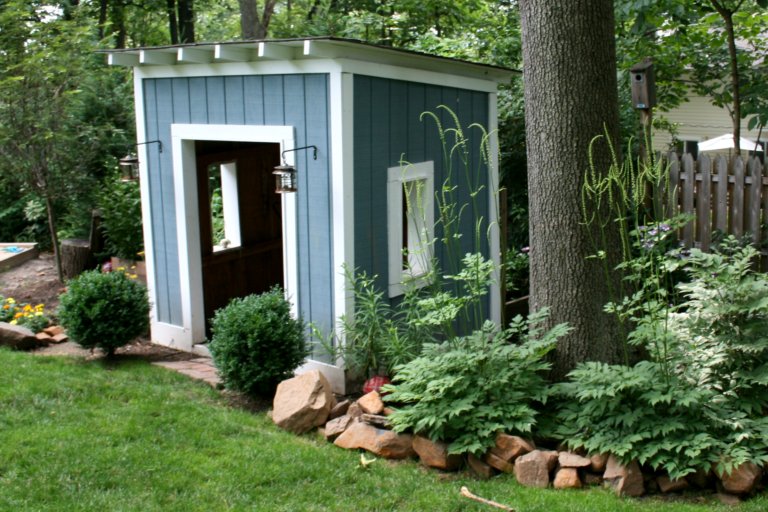
This month’s Gardening Bloggers’ Design Workshop at Gardening Gone Wild (one of my favorite places to share ideas with other gardeners) is on sheds and outbuildings. As much as I love sheds and outbuildings, the limitations of space and slope allow me only one, the fort (or playhouse) that is pictured here earlier this summer.

In a prior post, I wrote about how we built it from scratch: “The entire project took about a month, mainly on weekends. The total cost of the materials was approximately $700. My husband did all of the work himself, except the cutting and installation of the walls which he did with a friend on a single afternoon.”

Telegraph.co.uk: The 20 Best Spring Bulbs

This article includes inspiring photographs of some of my favorite bulbs: “Elspeth Thompson chooses the bulbs to plant now and enjoy later…For me there is something unfailingly cheering and hopeful about bulb-planting – it even helped me through the death of a muchloved dog one sad October. It can be tiring if large numbers are involved, so alternate the big naturalistic swaths with handfuls of delicate beauties in pots that can be brought inside when coming into bloom..”

How to Garden on a Budget: Four Ideas to Reduce Spending in a Recession (Updated)

Well, even if Congress does manage to pass the Paulson Plan, it seems like the economy may still be headed for a recession. My husband and I are actively speaking about how we can reduce our spending, so here are four ideas related to gardening:

1. Reduce spending at the gardening center/plant nursery.

a. To the extent possible, reduce the number of plants you buy: take divisions and cuttings from your own plants; grow plants from seed; over-winter tropical and non-hardy plants, bulbs, and tubers; and/or barter for plants with your friends.

b. When you do buy plants, choose them wisely: avoid the new cultivars which are usually more expensive and buy tried and true or heirloom cultivars; buy the smaller, less expensive specimens and let them grow to their full size; and/or buy them in the off-season when they are no longer in bloom and the nurseries are usually happy to move them out of their inventory.

c. Instead of buying ready-made containers and hanging baskets, create your own. You can even re-use last year’s potting soil by refreshing it with soil amendments.

d. Make your own compost and mulch.

e. Consider building your own flower/vegetable boxes.

f. Be a faithful, regular, friendly customer. In my experience as a well-known customer on a first name basis with all of the help, my local garden center offers me specials and discounts on volume purchases.

2. Reduce spending with the landscaping company. It’s expensive to hire someone else to install plants, mulch beds, pull weeds, and/or do any number of gardening chores. Sure, it’s more work to do it yourself, but you’ll save a lot of money and probably do a better job. You can get your spouse (“we’ll save money”) and/or children (“I’ll pay you”) to help.

3. Reduce spending at the grocery store/florist. You can grow your own food or shop at the farmers’ market. You can grow and cut your own flowers.

4. Reduce spending on entertainment. If you make your home and garden a more desirable place to quietly relax, play with your children, and/or entertain guests, you are guaranteed to spend less money going out.

Book Recommendation: Flowers and Herbs of Early America

Last weekend, I visited the New York Botanical Garden and picked up one of the best books I’ve found on heirloom plants: Flowers and Herbs of Early America by Lawrence D. Griffith and Photography by Barbara Temple Lombardi. The title speaks for itself and every spare moment I’ve had over the past week has been spent absorbed in this amazing book. Each flower and herb has four pages to itself, with two pages of inspiring photography and two pages of history, description, and habit. Reading the text, you can tell that the author has actual first-hand experience with these plants.

From the flap jacket: “Drawing on years of archival research and field trials, Colonial Williamsburg curator of plants Lawrence Griffith documents fifty-eight species of flowers and herbs, and explores how they were cultivated and used…It…is an important contribution to our understanding of colonial and Federal plants and an invaluable companion for today’s gardeners, who will appreciate the advice of a master gardener on how to plan, choose appropriate species, and maintain a beautiful period garden.”

http://rcm.amazon.com/e/cm?t=heirlgarde-20&o=1&p=8&l=as1&asins=0300145365&fc1=000000&IS2=1&lt1=_blank&m=amazon&lc1=0000FF&bc1=000000&bg1=FFFFFF&f=ifr

The Best of Heirloom Gardener (So Far)

I. Trees, Shrubs, and Plants

II. Hardscaping

III. Gardening With Children

IV. Vegetables and Herbs

V. Pest Control

Plants for Fall Color: Planning Improvements for Next Year’s Long Border

One of my goals as a gardener is to have year-round color. I’m editing the Long Border for fall color now. I originally conceived of this border being at its peak in the fall, but not without interest during the rest of the year.

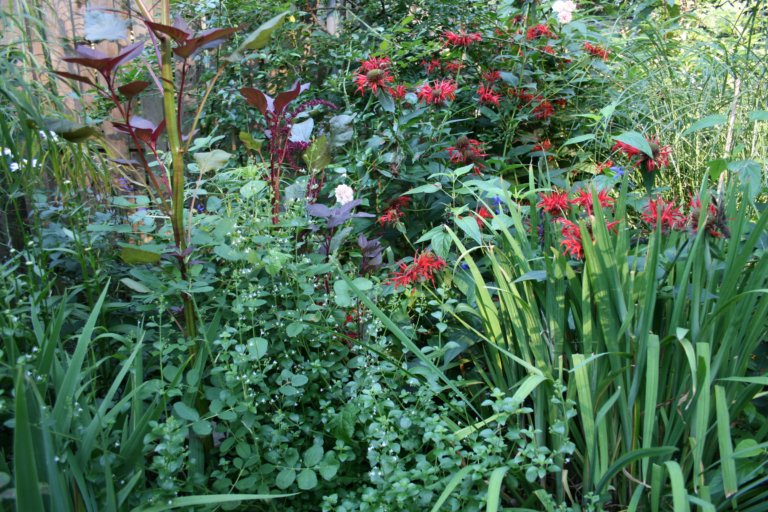
The first half of the Long Border looks great: the miscanthus grass provides movement; Salvia Black and Blue is weaving itself in and out; willow leaf sunflower, monarda, cimifuga, calamintha nepeta, and asters are all working. The second half is limping by: the false sunflower, two vitex, and an unremarkable grass all have to go.

For next fall, here are some plants that look great right now either in other parts of my garden or in others’ gardens that I admire: Japanese anemone; turtlehead chelone; aster tataricus “Jindai” (can spread aggresively recommended that it’s divided every three years); perovskia; boltonia; viburnum nudum; toadlily; monkshood; tall annual salvias (blooming now until the frost, including salvia ‘Phyllis Fancy’ and salvia splendens ‘Van Houttie’); Geranium ‘Roxanne’; red hot pokers; hardy chrysanthemums; clematis tibetana; Nippon daisy (is wonderful, but needs to be cut back hard so as to not flop before they flower); and/or hydrangeas (two with beautiful fall color are ‘Preziosa’ and ‘Lady in Red’).

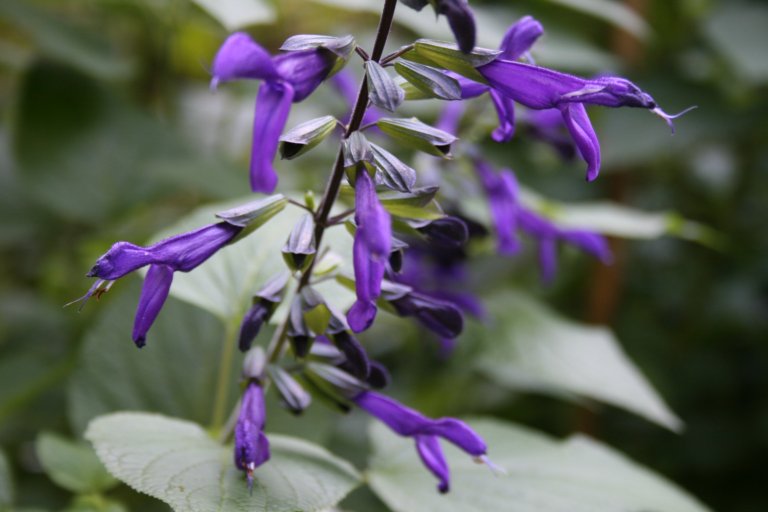
Keeping In: Salvia Black and Blue.
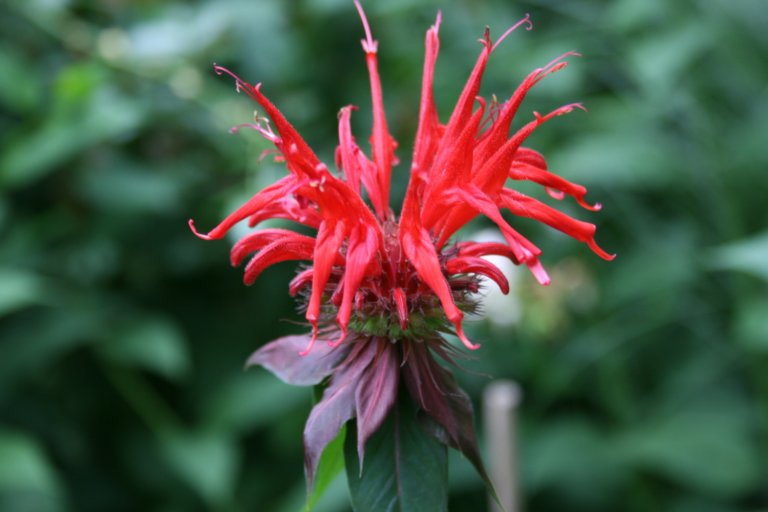
Keeping In: Monarda.
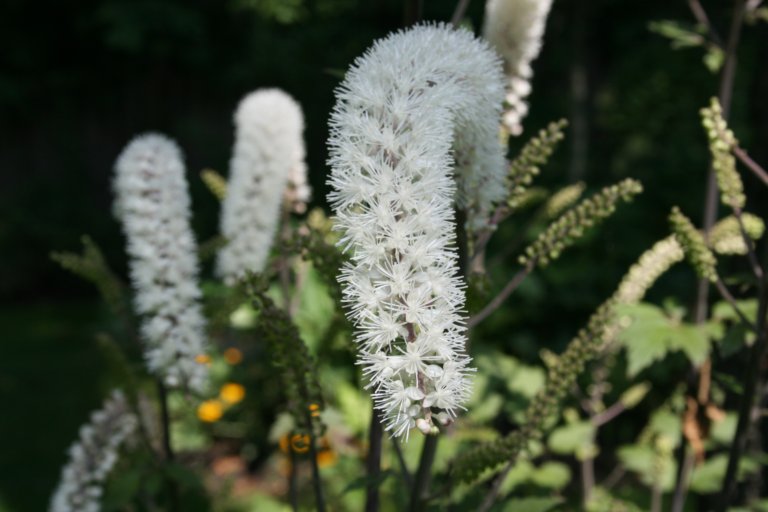
Keeping In: Cimifuga.
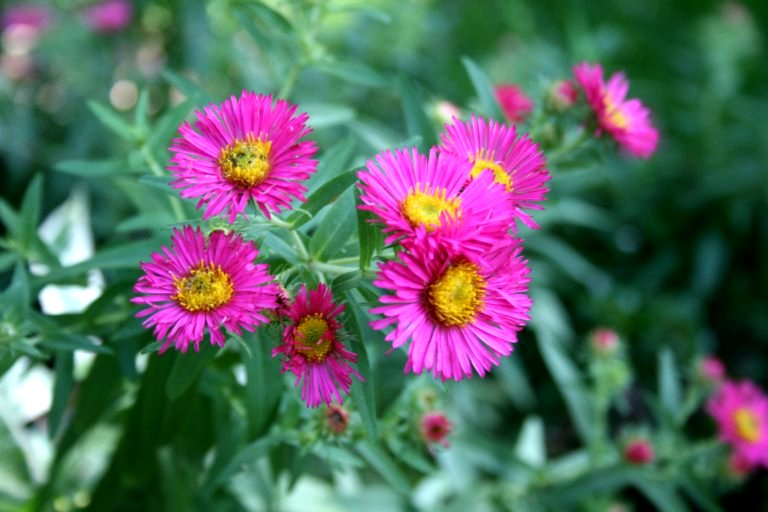
Keeping In: Asters.
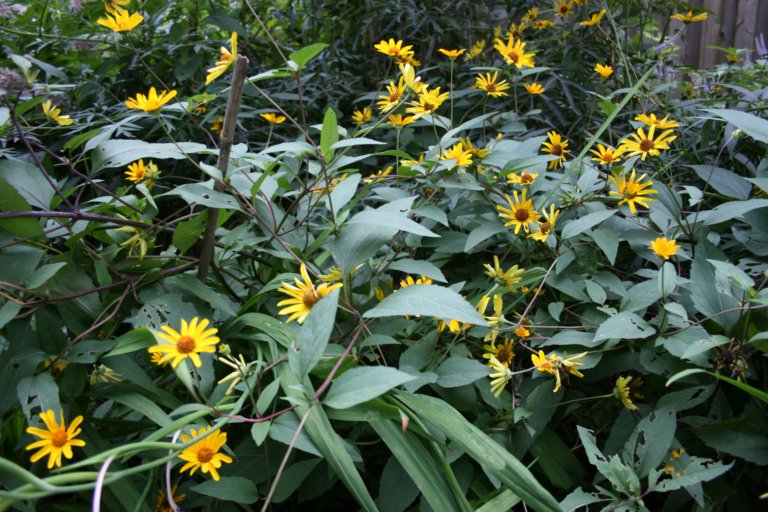
Taking Out: False Sunflower.

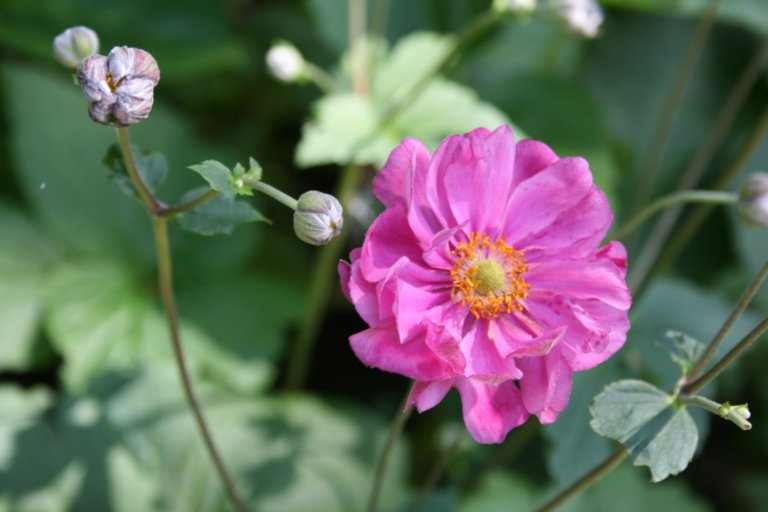
Maybe Next Year: Japanese Anemone (currently in the Front Border).
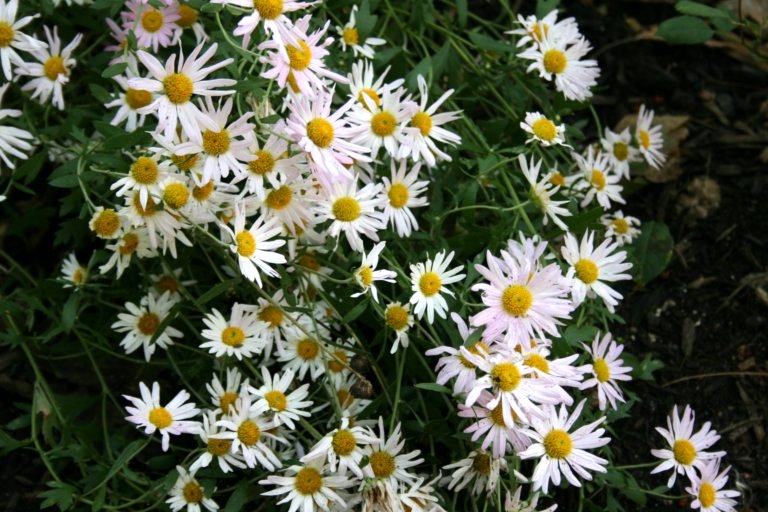
Maybe Next Year: Hardy Chrysanthemums (currently in the Egg Garden).