Covered Containers for Propagation: GardenTalk.com’s Bell Boys

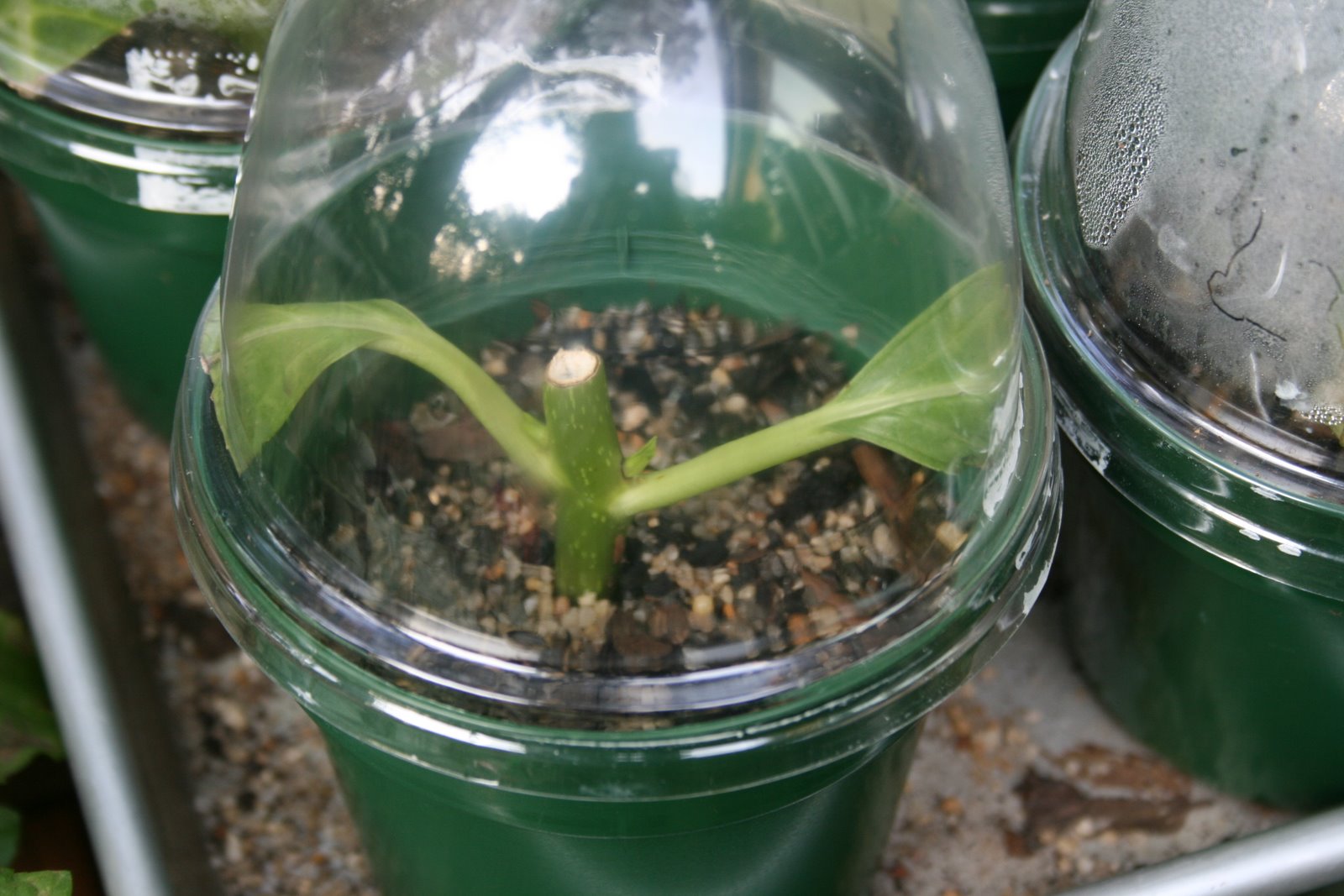
As a follow-up to my post on How to Propagate Hydrangeas, Part I: Taking Cuttings of Sister Theresa, I received several questions about the covered containers that I was using to propagate the cuttings. In response, I am re-posting the pictures of the containers with the information about where I purchased them.

They are from Walt Nicke’s GardenTalk: A Catalog of Fine Tools for Gardeners. You can find them under the section Potting and Propagators under the name Bell Boys. They come in two sizes in packages of six.

You can use them to propagate cuttings of other plants too, not just hydrangeas. In fact, I am also propagating the rose Frau Dagmar Harstropp, in another set of these containers just now.

Nan Ondra, Garden Writer/Blogger, Featured in The New York Times

Nan Ondra, one of my favorite garden bloggers, the genius behind both Gardening Gone Wild (a blogging consortium and host of the Garden Bloggers’ Design Workshop) and Hayefield (her personal blog), was featured in last week’s New York Times. In the article, “Where Foliage Eclipses Flowers,” journalist Anne Raver talks with Nan about her life, her garden, and her books (Nan just published her twelfth).

Caterpillars that Sting: Pictures of Saddleback Caterpillars (Acharia stimulea)

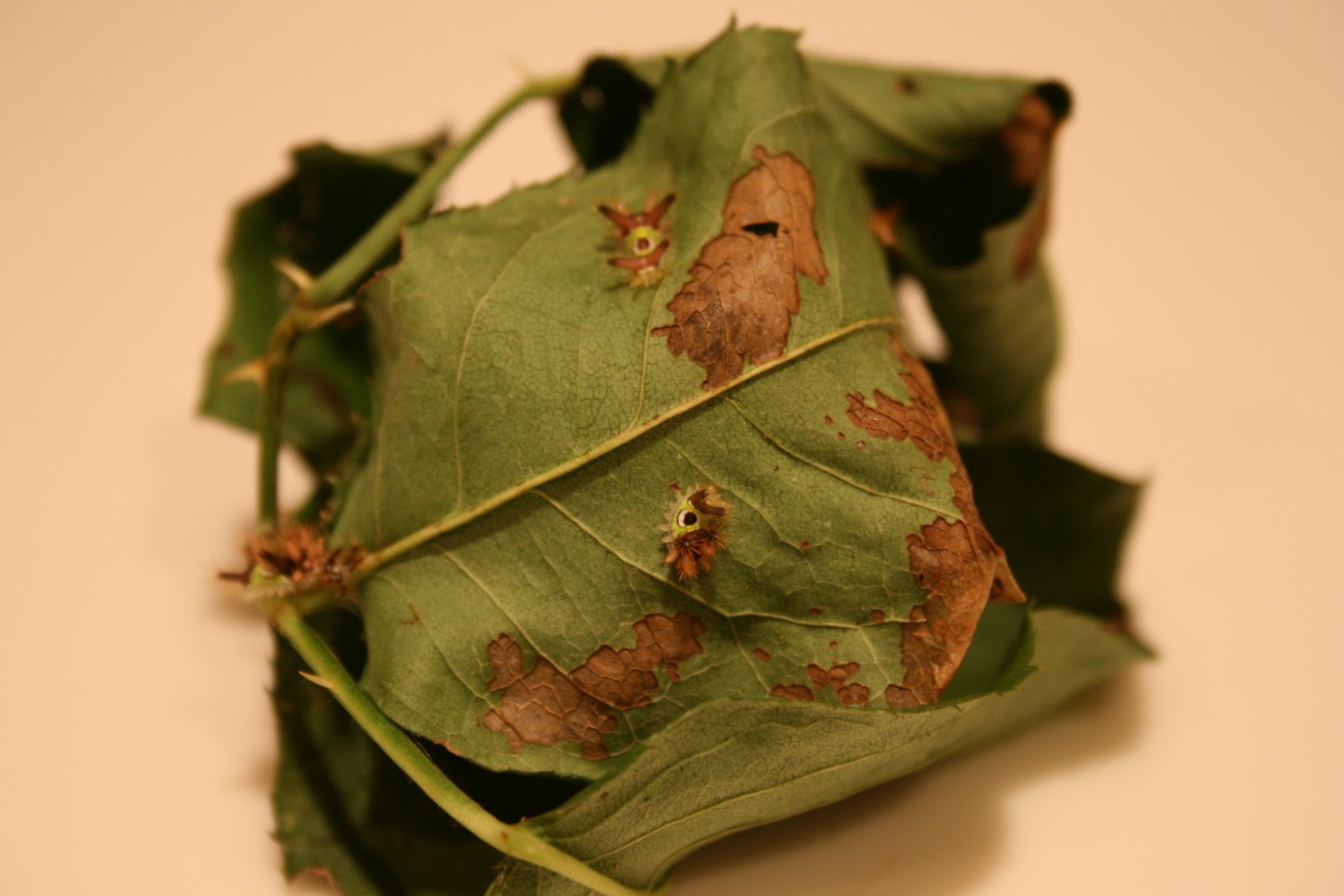
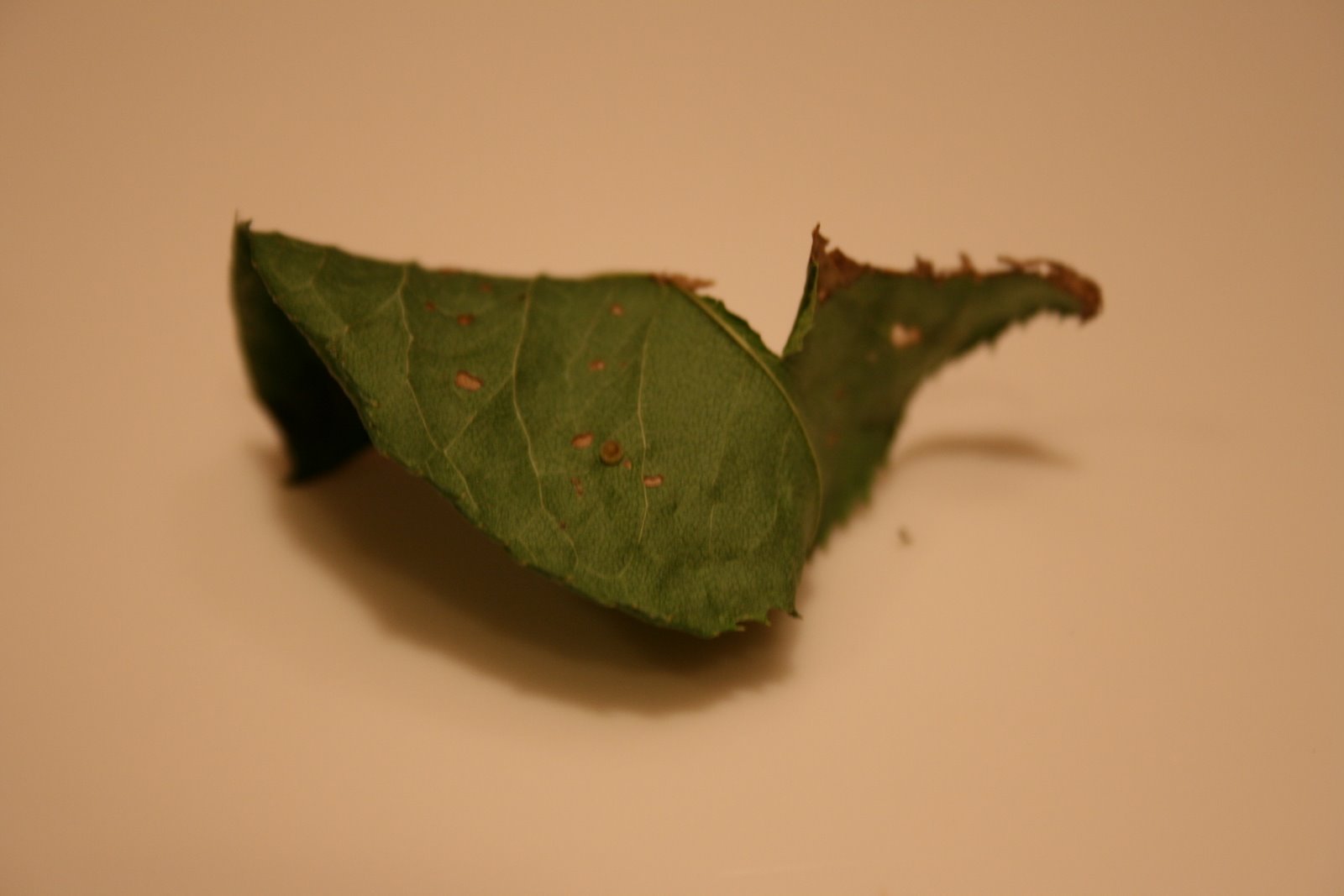
I was picking up some rose pruning clippings today when I felt a stinging sensation on my hand. I have never seen this little creature before, but my daughter identified it as the Saddleback Caterpillar, which she had previously seen in one of her science books. Unknown to me, these little creatures can actually sting you from their four distinctive spines. The first picture includes three caterpillars. The second picture includes one of the unhatched eggs. The caterpillar matures into an unremarkable brown moth, that you can see on bugguide.net.

"Children have lost touch with the natural world and are unable to identify common animals and plants," according to a UK survey

As a follow-up to my prior post on Richard Louv’s book, Last Child in the Woods – Saving Our Children from Nature Deficit Disorder, the UK newspaker, The Independent, ran an article about a UK survey on the subject. Sadly, the journalist Sarah Cassidy reports:

“Half of youngsters aged nine to 11 were unable to identify a daddy-long-legs, oak tree…or bluebell, in the poll by BBC Wildlife Magazine. The study also found that playing in the countryside was children’s least popular way of spending their spare time, and that they would rather see friends or play on their computer than go for a walk or play outdoors.”

“Experts blamed the widening gulf between children and nature on over-protective parents and the hostility to children among some conservationists, who fear that they will damage the environment. They said that this lack of exposure to outdoor play in natural environments was vital for children’s social and emotional development.”

“Dr Martin Maudsley, play development officer for Playwork Partnerships, at the University of Gloucestershire, said that adults had become too protective of wild places: ‘Environmental sensitivities should not be prioritised over children.'”

“He said: ‘Play is the primary mechanism through which children engage and connect with the world, and natural environments are particularly attractive, inspiring and satisfying for kids. Something magical occurs when children and wild spaces mix.'”

More Pictures of This Year’s Beautiful Hydrangeas

I’m really enjoying the hydrangeas in my garden this year. Hydrangeas are great because they take so little work and get better year after year. The blooms on hydrangeas are fascinating to watch as their colors mature and change as the blooms age. Below are some pictures of some of the hydrangea in my garden that were not in my Garden Bloggers’ Bloom Day post for July.

The first two pictures are of an unnamed lace cap hydrangea at the top of Goldberry Hill. Two winters ago this hydrangea was completely killed to the ground. Last summer it grew beautifully, but did not bloom. This year, its unbelievable–loaded with blossoms from head to toe. [Related post: the same lace cap hydrangea in the dead of winter.]

This annabelle hydrangea has been in bloom since June. The blossoms started green, turned white, and recently began turning back to green again. [Related posts: in the winter when it was brown and two weeks ago when it was white.]
This beautiful variegated hydrangea was a new addition to my Front Border last summer. I bought it out of flower for the leaves. I wasn’t expecting much out of the flowers and actually thought they would take away from the leaves. But, I was wrong. I love the flowers too.

The pee gee hydrangea, which I posted about pruning back in late winter, is now just starting to bloom, though it is still a week or so away from its peak.

How to Propagate Hydrangea, Part II: Layering Marechal Foch

In completing my expanded Front Border, I wanted to repeat some of the plants that existed in some of the neighboring beds. This first picture is a large, mature hydrangea, which I think is Marechal Foch, across the driveway on Goldberry Hill.

As you see in the close up of the mature specimen, the leaves are thick and shiny. The mopheads change a lot over the course of the summer. Two weeks ago, in the the last picture on my Garden Bloggers’ Bloom Day post, the blooms were various shades of pink.
The third picture is the baby of Marechal Foch in the Front Border which I propagated last year by layering my mother plant.
Layering is one of the easiest ways to increase your number of hydrangea. Simply choose a low growing branch. Place it in contact with the soil by burying it a bit or putting a rock on top of it. Leave the branch alone, yet check every month or so to see if it has begun to form roots in the area touching the ground. Once roots are developed, sever it from the mother plant. The baby hydrangea can be then left in place to grow a bit more or moved to a new location, as I did with this one.
~

How to Propagate Hydrangeas, Part I: Taking Cuttings of Sister Theresa

I just planted a hedge of southern magnolias. To cover up the space between each, I thought I would plant more of my favorite hydrangea: Sister Theresa. I love this hydrangea for its large pure white mopheads.

The purity of the white is stunning: it has no of pink or cream. The flowers are quite large and the individual sepals are very big making the blooms more striking. In addition, Sister Theresa performs beautifully in full shade and part shade which makes her a good choice for interplanting in my hedge.
This week I took cuttings from my Sister Theresa of non-blooming wood. I want about seven new plants, so I took two stems. I cut the stems into three or four parts with very sharp pruners.
I trimmed the leaves by cutting half or more of the leaf surface away. The easiest way to do that is to fold the leave at its midrib and cut half off. After which, I cut the stem which will be rooting at an angle and dipped it into rooting hormone.
~