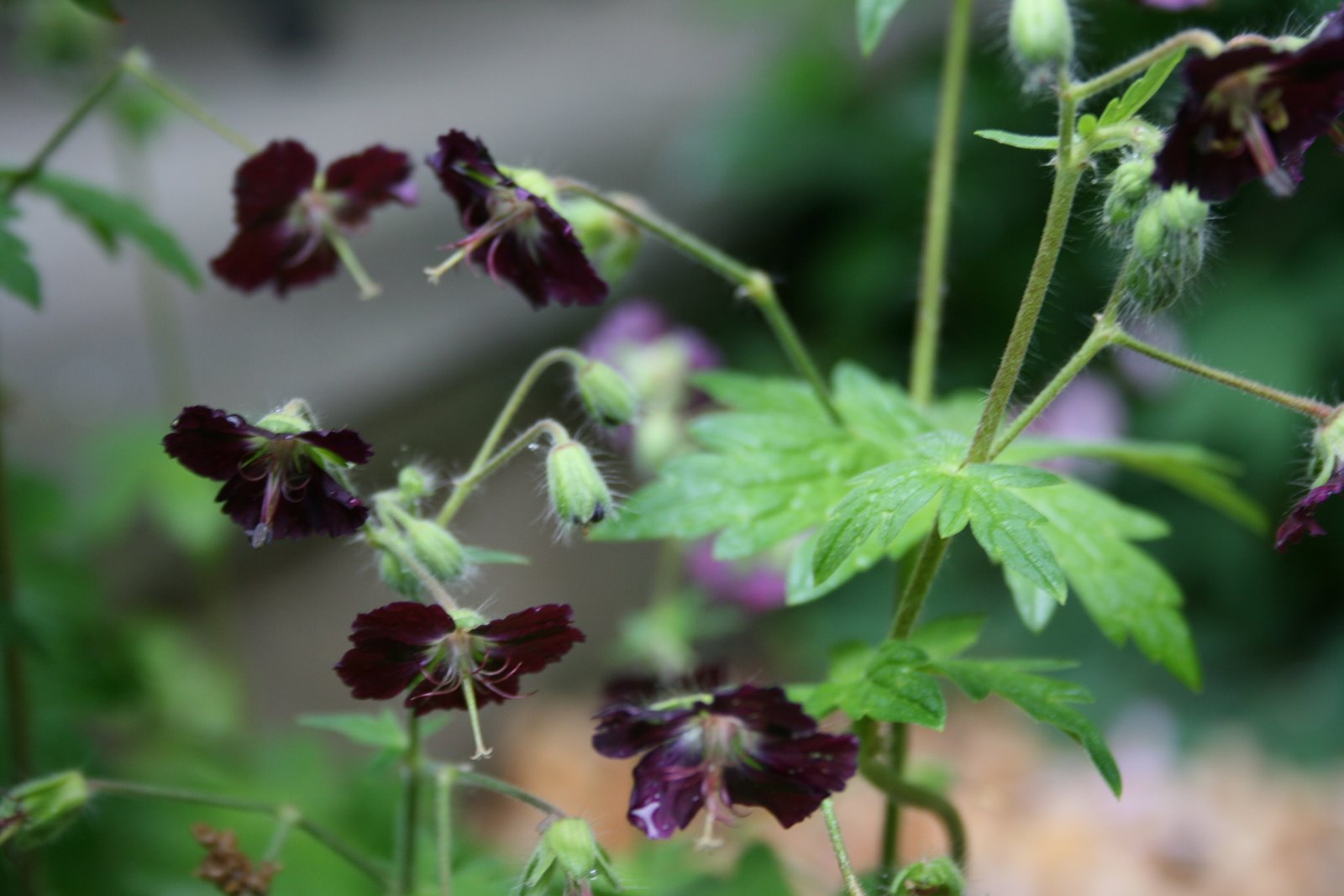
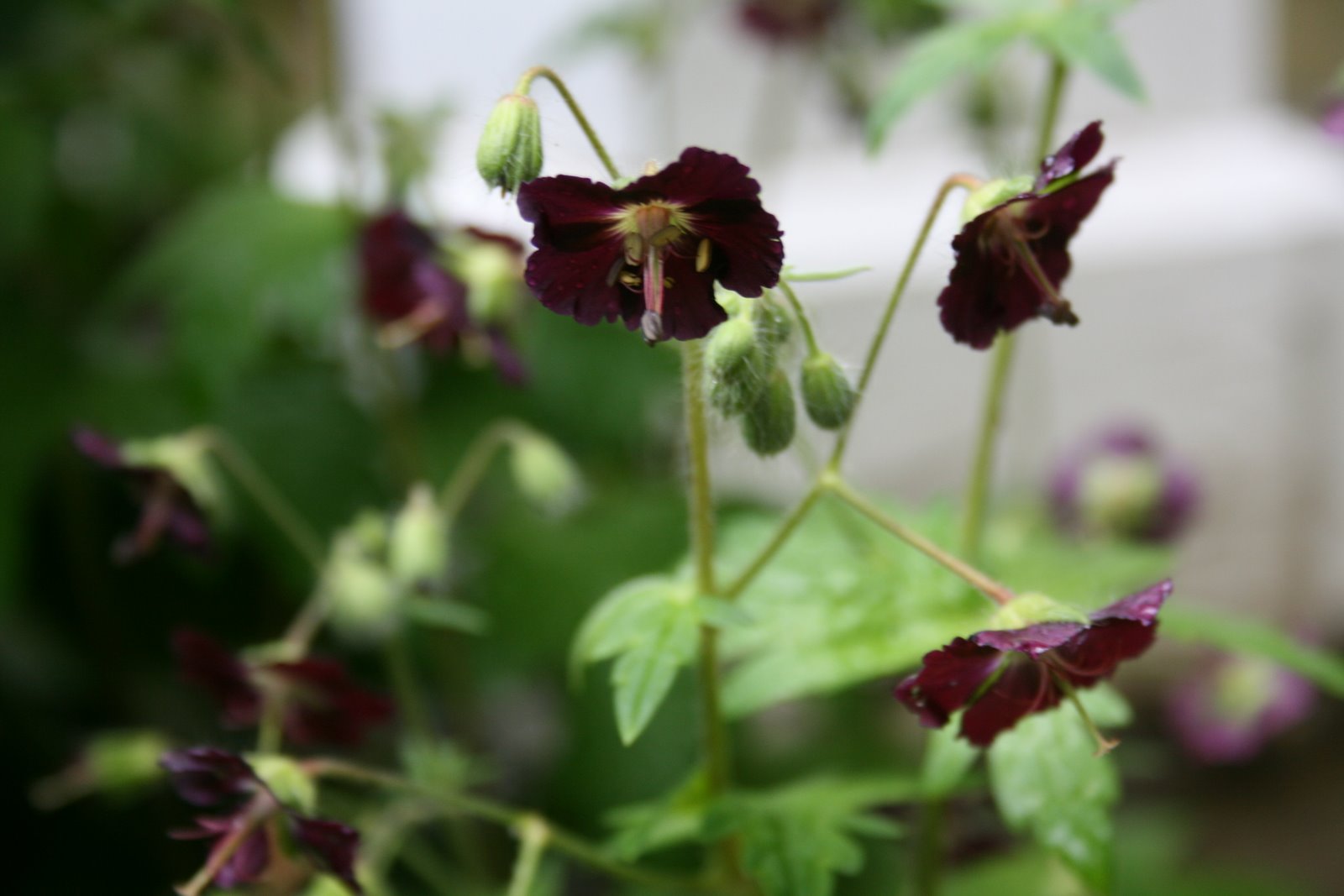
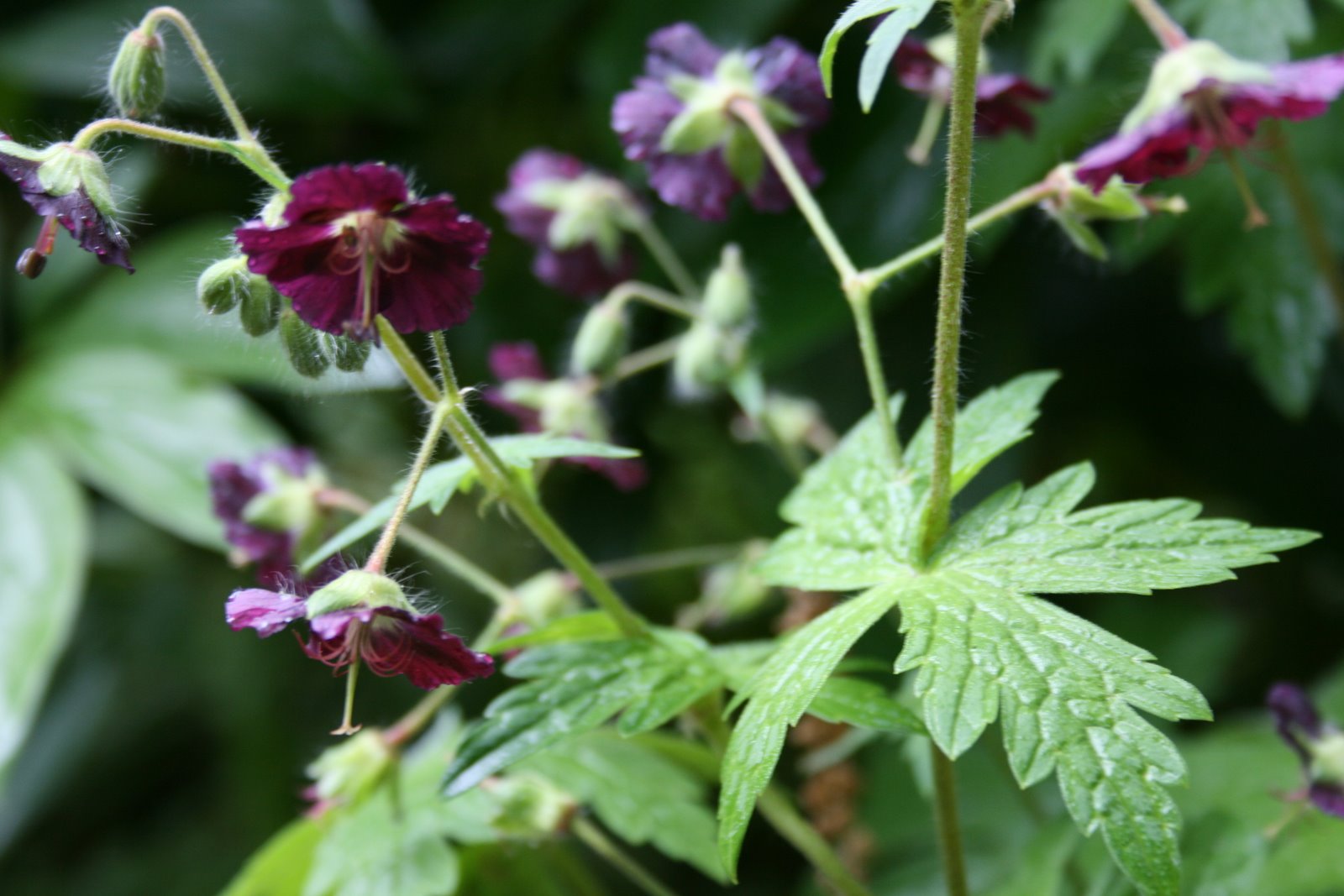
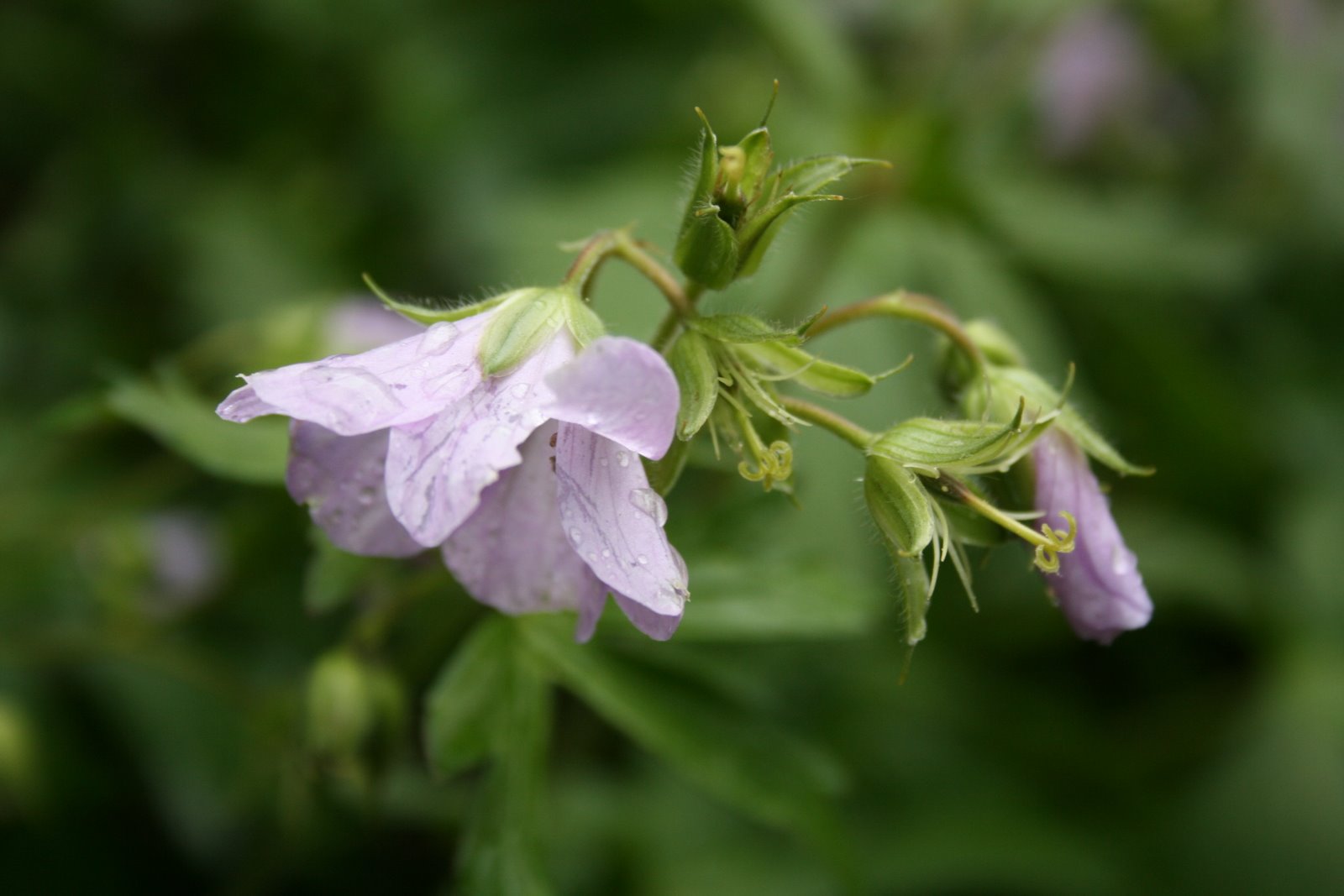
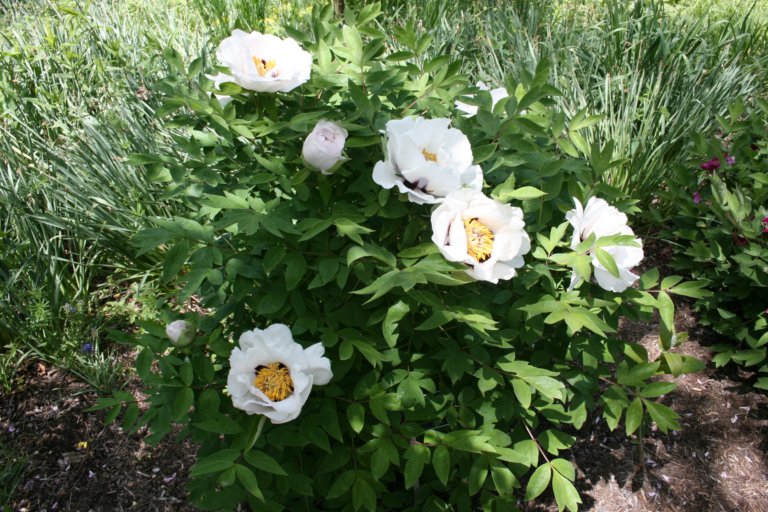
Heirloom plants, especially non-culinary herbs and plants of the American prairie, run throughout my garden. This weekend I found some wonderful new additions at Well-Sweep Herb Farm in Port Murray, New Jersey, about an hour away from Chatham. For a while, this has been on my most-wanted-to-visit list of nurseries. Boy, what a treat it was.
~
The setting of the nursery is beautiful. It’s four acres, surrounded by over 100 acres of undeveloped land. The parking lot is a grass field. Sheep graze along the periphery. An informal herb garden meets you as you get out of your car, then there are plants for sale, the gift shop, and a formal herb garden. It was a treat to talk to Cy who started the nursery forty years ago. He knew each plant’s history, how to use it, and cultural information that only comes from years of experience.
~
I was amazed by the breath of the collection. One of my favorite herbs is rue. Well Sweep had at least seven varieties from which to choose. I didn’t even know there was such variation in rue. As for thyme, there are over 100 varieties for sale. If you can’t get to the Herb Farm, plants are described and available in their mail order catalog which is available on their website:
~
“…In 1966, husband and wife, Cyrus and Louise Hyde, purchased an old run-down house and a piece of property. With a background in farming and a passion for gardening, what began as a homestead gradually transformed and grew into a national attraction…Our farm, a family endeavor…is home to one of the largest collections of herbs and perennials in the country…Our butterfly, herb, medicinal, perennial and rock gardens burst forth with breathtaking displays throughout the farm and have been featured in national magazines and books. Our brick-pathed formal herb garden boasts a knot garden, as well as a display of the 37 basils, 75 lavenders, 54 rosemarys, 108 thymes, and 72 scented-leaf geranium varieties that we stock. Whether for pleasure, inspiration, or ideas … come see the possibilities…”
~
On a side note: those native orange rocks that I was recently posting about,Cy has cleared all of them and used them to make large, attractive walls. Next time, I’ll bring my camera.
Vegetable Gardening with Children: How to Plant Corn with Fish the Way Squanto Taught the Pilgrims
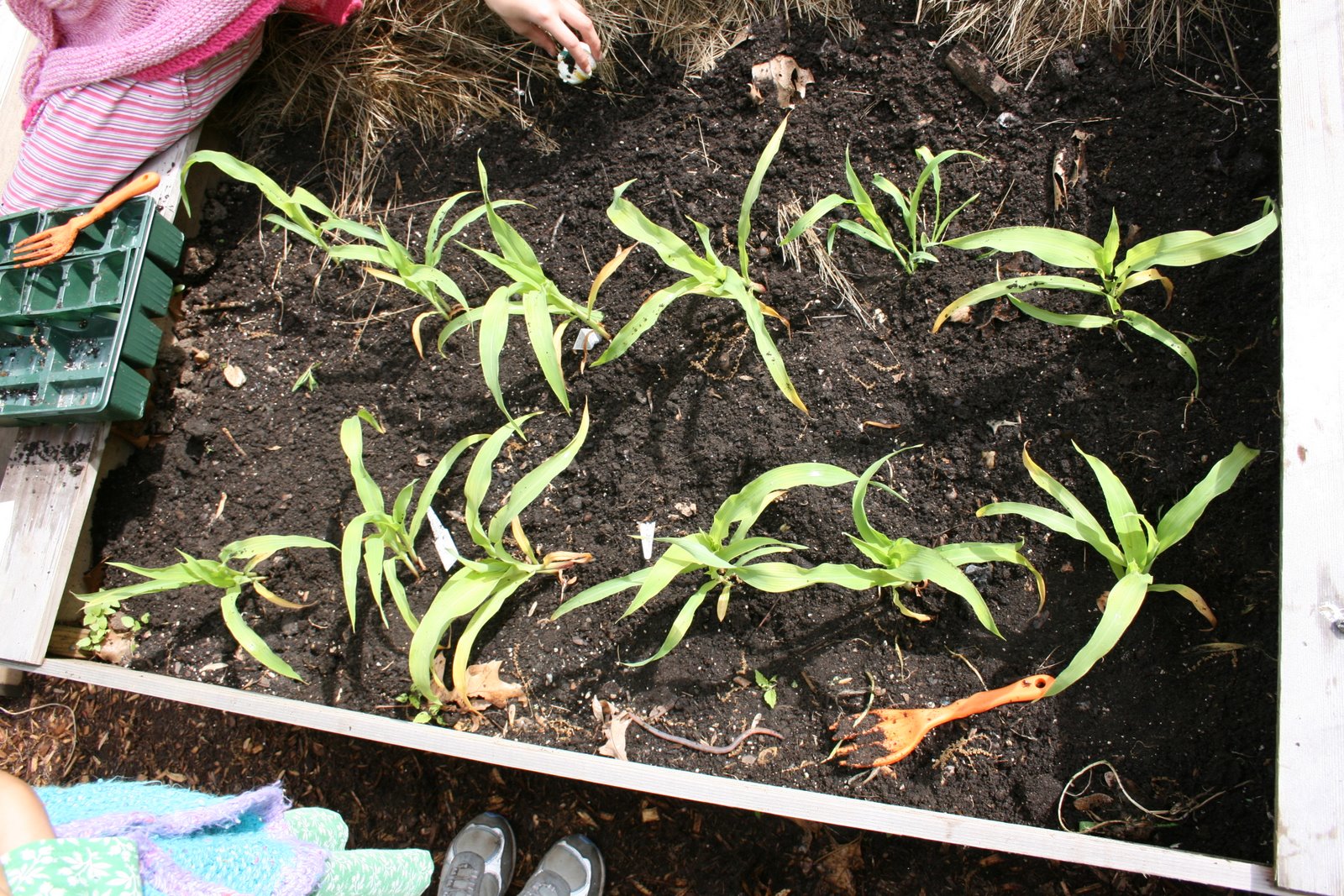
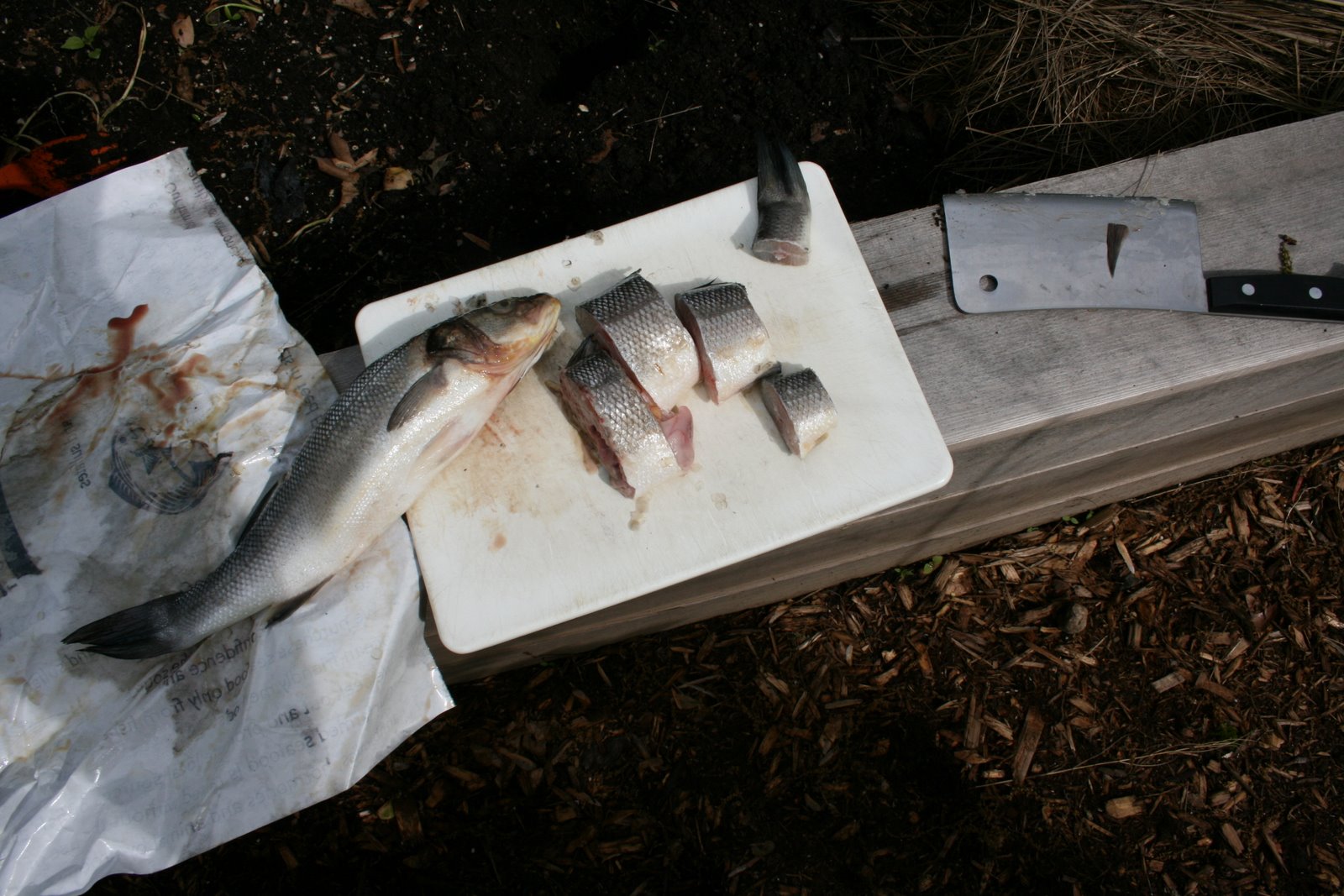 Here is another good gardening project to do with children. Using the Old Farmer’s Almanac Calendar as a guide, the kids and I planted our corn last week.
~
There is a well-known and amazing story about how Squanto–the Native American captured and sold into and escaped from European slavery–befriended and taught the bewildered and hungry English pilgrims how to plant corn using fish as fertilizer, which was later harvested and eaten at the first Thanksgiving.
~
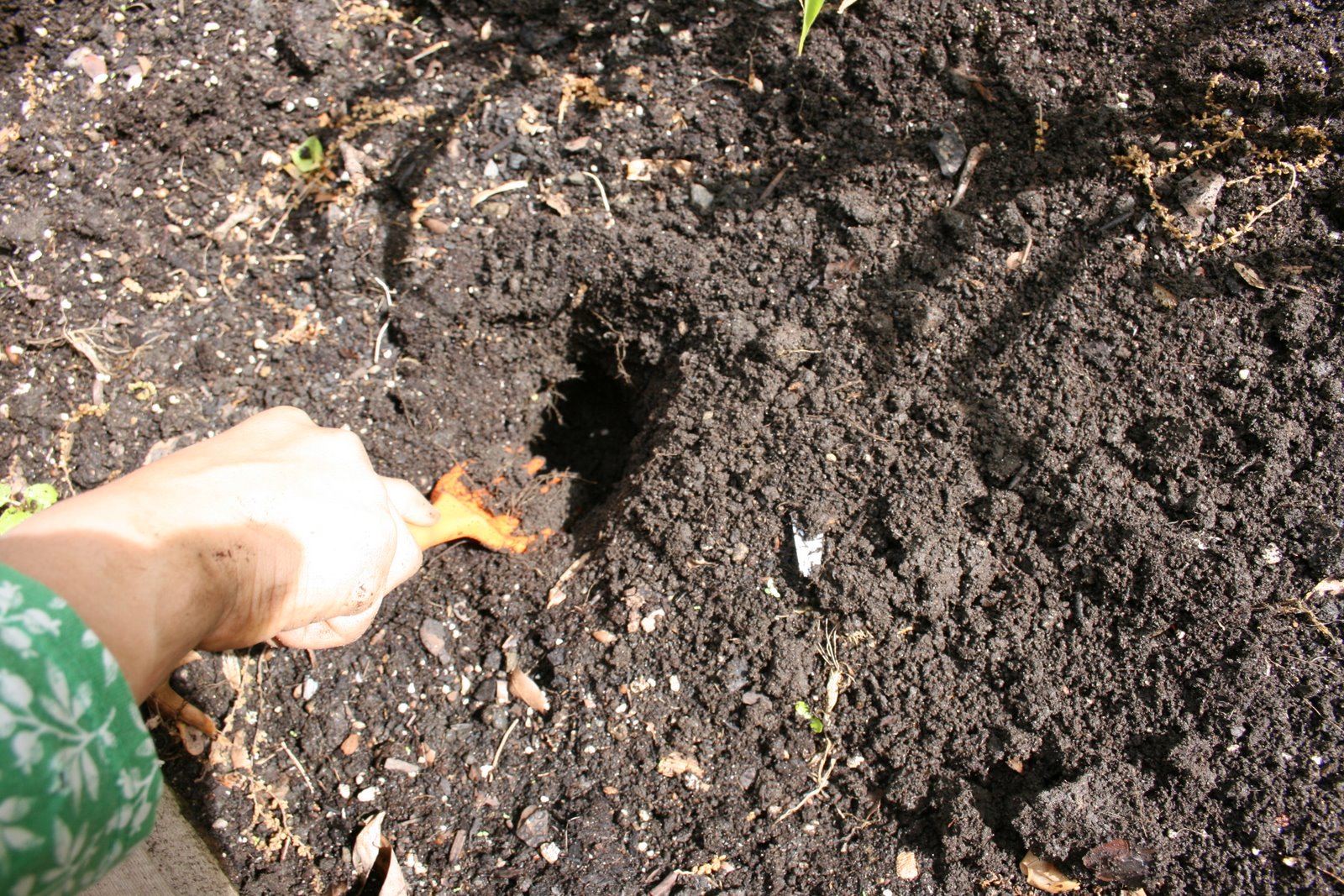
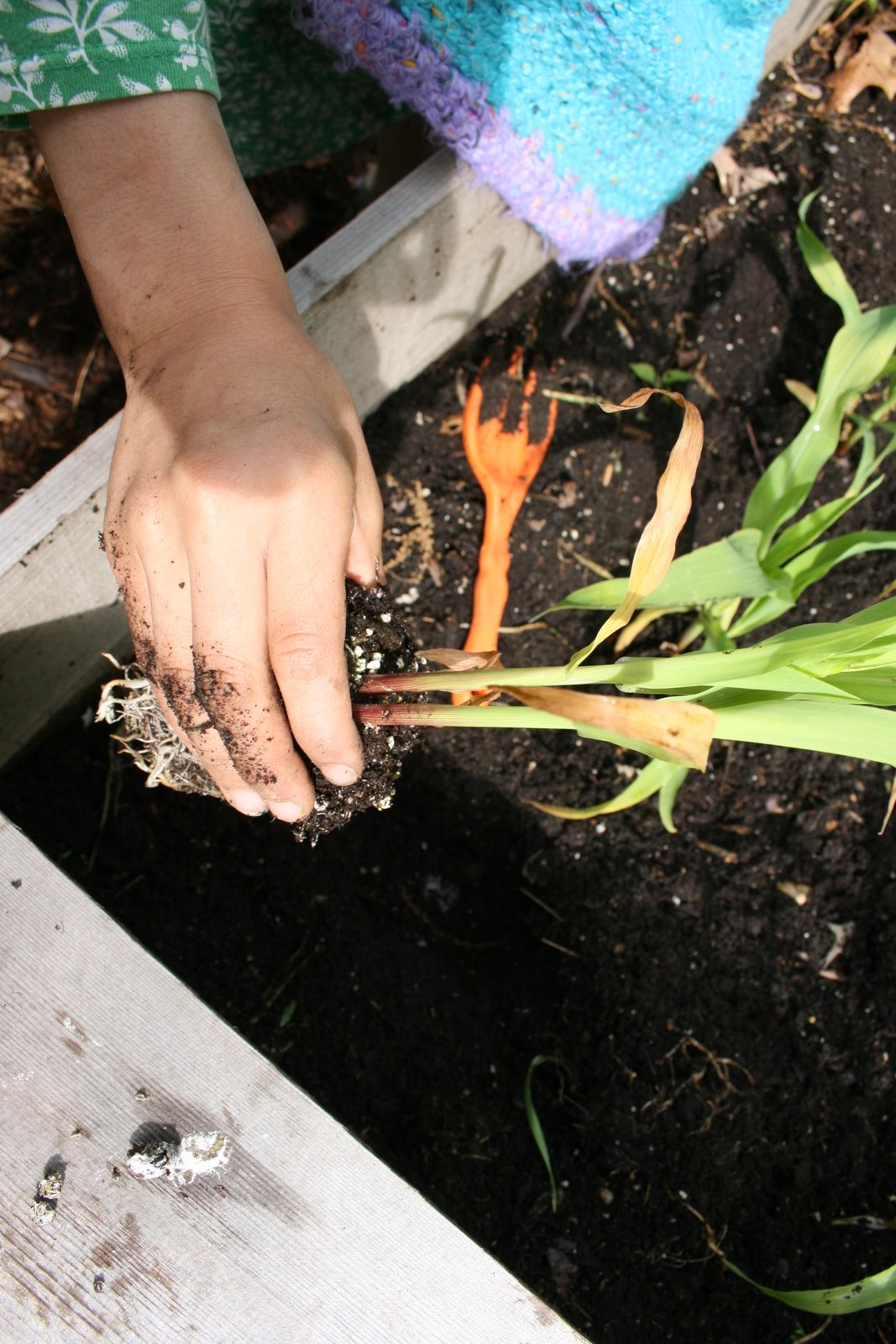
Inspired by this story, we used whole fish as fertilizer last year, which worked quite well, and repeated it again this year as follows:
~
1. Catch (or buy) some fresh whole fish.
2. Dig a hole several inches deep and add your fish.
3. Plant your kernels (or seedlings) on top of the fish.
~
Related posts: Ten Tips for Planning a Children’s Garden, How to Build Raised Vegetable Beds, Organically Preparing the Soil for Planting
Garden Bloggers’ Design Workshop: Stone in the Garden
I love stone in the garden. It is the perfect complement to all of my plants. As a part of this month’s Garden Bloggers’ Design Workshop over at Gardening Gone Wild, here is a brief post about how I have slowly replaced man-made materials with stone throughout my garden.
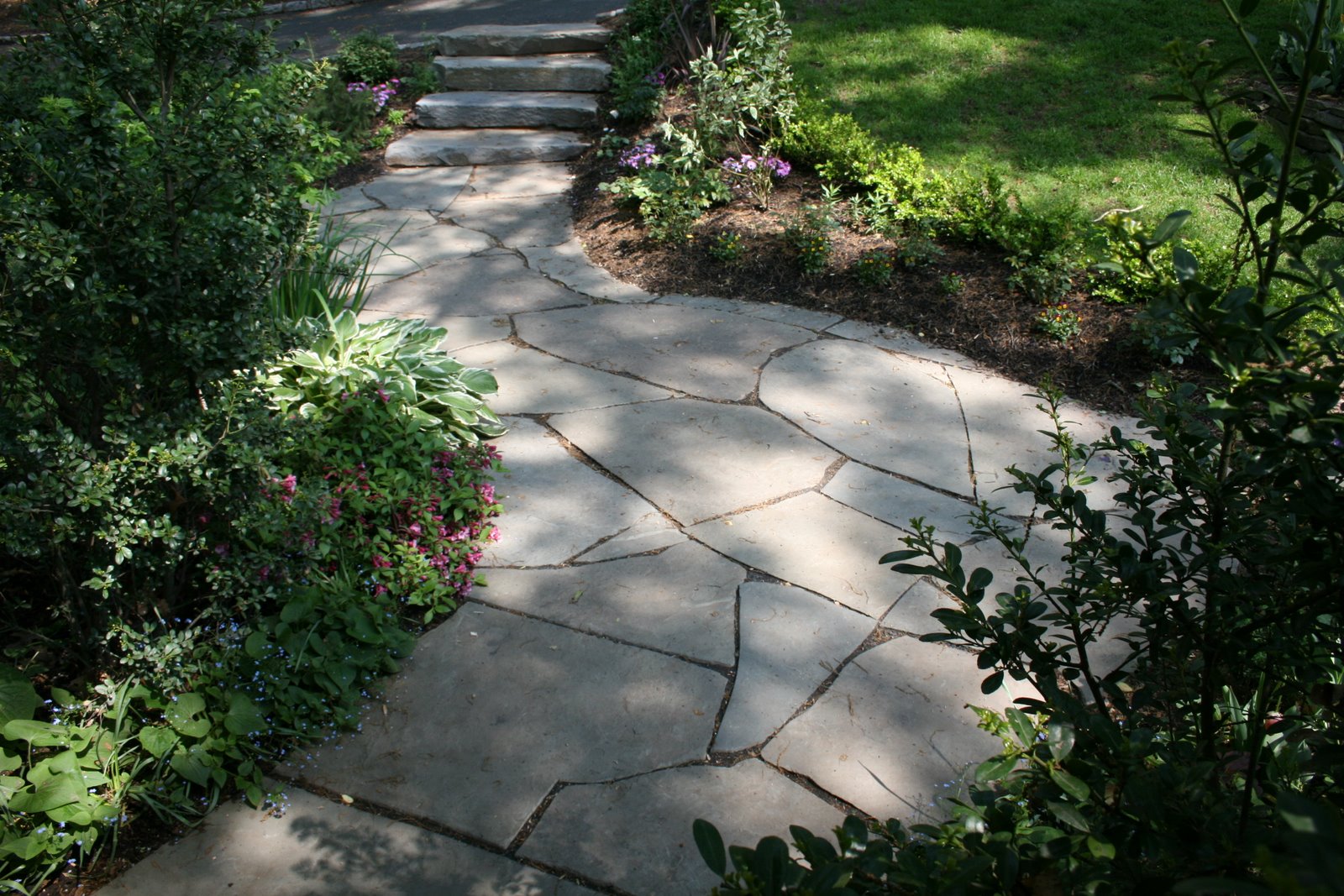
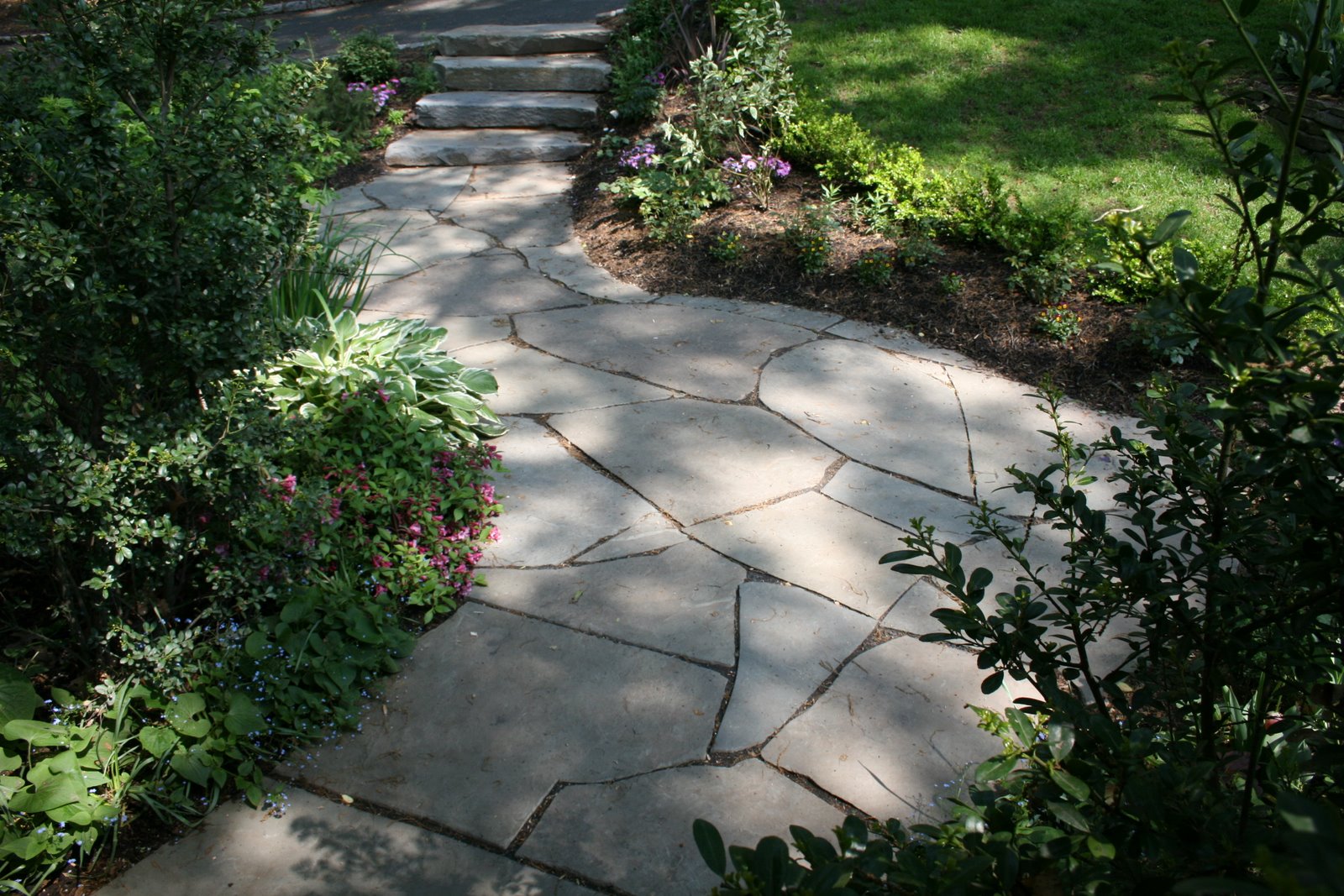
~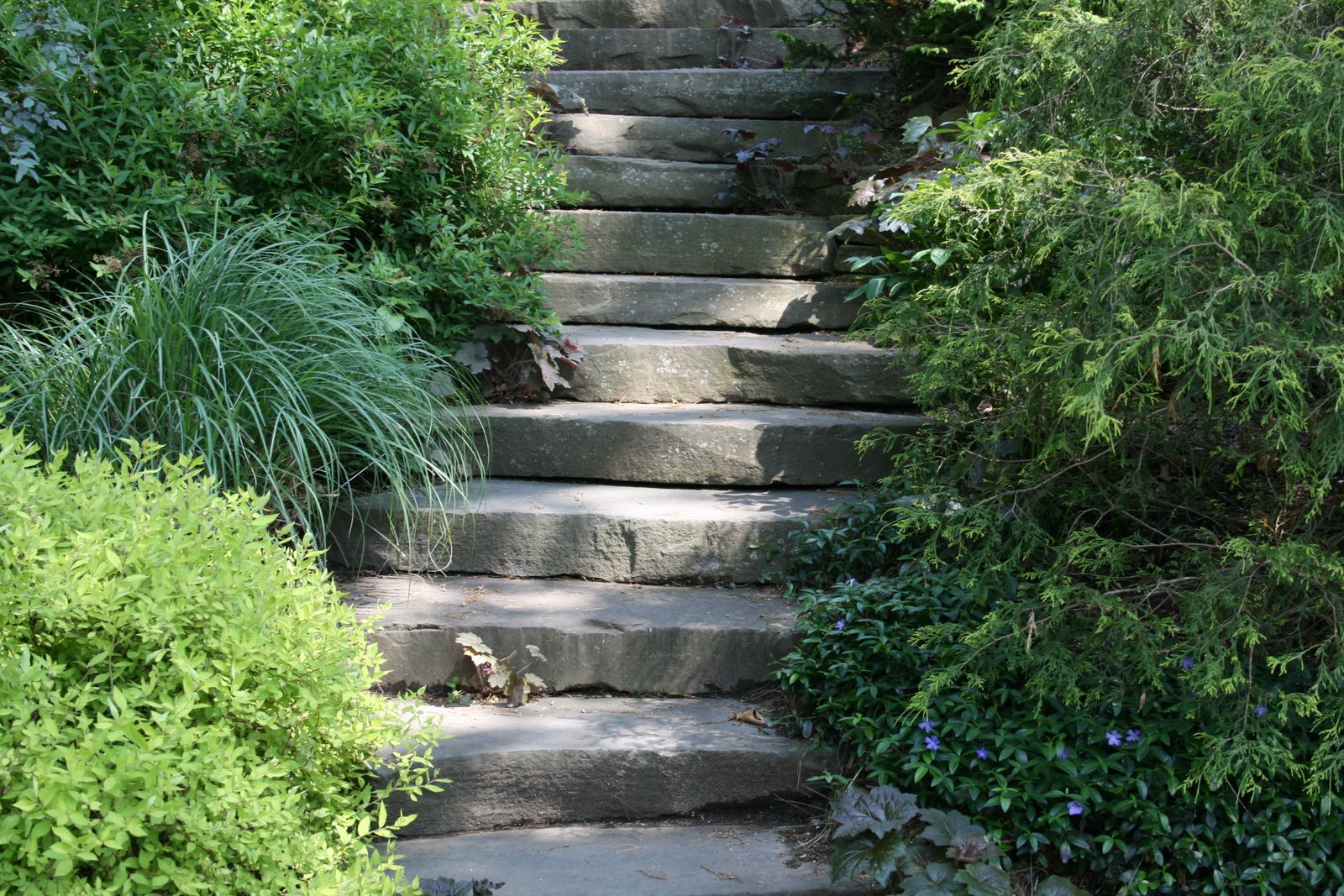 1. The Bluestone Paths, Stairs, and Walls. If you garden on a hill, a stone staircase cannot be beat for practical and aesthetic reasons. They are beautiful and maintenance free. Compared to the small staircase of railroad ties that I have in a less prominent part of the garden, the stone staircase is much more attractive and will never need to be replaced.
~
As I wrote in a post last month, I have just completed a four year project to redesign my Front Border. The most dramatic change was to replace the relatively unattractive and uneven man-made path of interlocking pavers with a continuation of the bluestone paths and stairs on Goldberry Hill. I am so pleased with the outcome, I only wonder why it took me so long to do it.
~
 2. The Pebble Path. I love pebble paths, but it is difficult to have them when you live and garden on a slope, as I do.
~
 2. The Pebble Path. I love pebble paths, but it is difficult to have them when you live and garden on a slope, as I do.
~
The one path that is relatively flat is the one through the Egg Garden, where I replaced some terra cotta stepping stones with pebbles. When I look back at the posted before and after pictures, I can’t believe how much better the pebbles look.
~
When I first conceived of the path, my first choice was the grey pea gravel that you see in all of those English gardens, but my local nursery was out of stock. As an alternative, I selected yellow river stones, with which I have been very pleased.
~
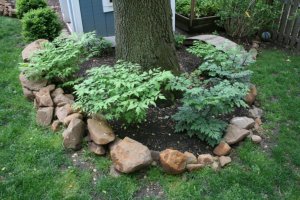 3. The Dry Laid Walls of Native Stones. If you have ever visited my region of New Jersey, you will see orange rocks everywhere: on the sides of the road, on the edges of properties, and even on the edges of garden beds. Every time I try to dig a hole, they are waiting for me: small, medium, large, and even giant-sized orange rocks. And unlike those beautiful, grey rocks that can be handsomely stacked into walls, these rocks are so unshapely that it’s impossible to dry lay them more than one or two layers high, which is exactly what I did to create the walls in my Walled Garden.
~
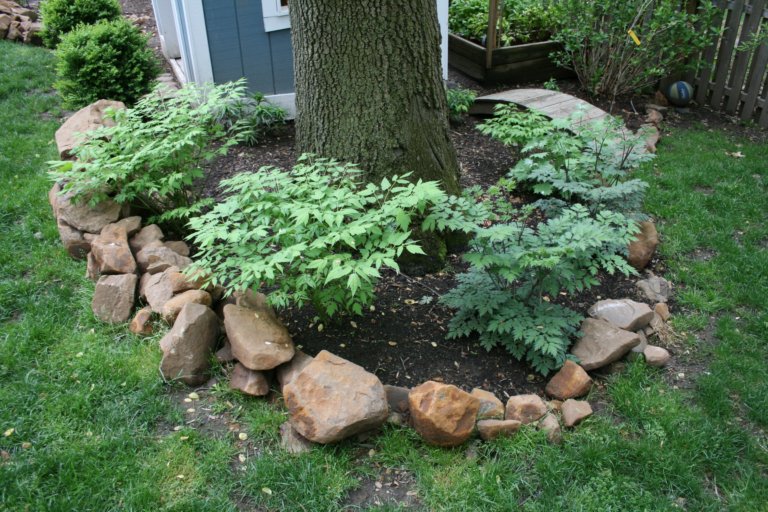 3. The Dry Laid Walls of Native Stones. If you have ever visited my region of New Jersey, you will see orange rocks everywhere: on the sides of the road, on the edges of properties, and even on the edges of garden beds. Every time I try to dig a hole, they are waiting for me: small, medium, large, and even giant-sized orange rocks. And unlike those beautiful, grey rocks that can be handsomely stacked into walls, these rocks are so unshapely that it’s impossible to dry lay them more than one or two layers high, which is exactly what I did to create the walls in my Walled Garden.
~
Two end notes: First, if you want to see a garden with a lot of beautiful stone, check out fsorin’s inspiring post on Gardening Gone Wild. Second, have you ever wondered where all of the bluestone comes from? There was an interesting article last week in the New York Times about some of the local tri-state area quarries.
~
Mad for Cranesbill Geraniums: Where to Plant, How to Maintain, Where to Buy
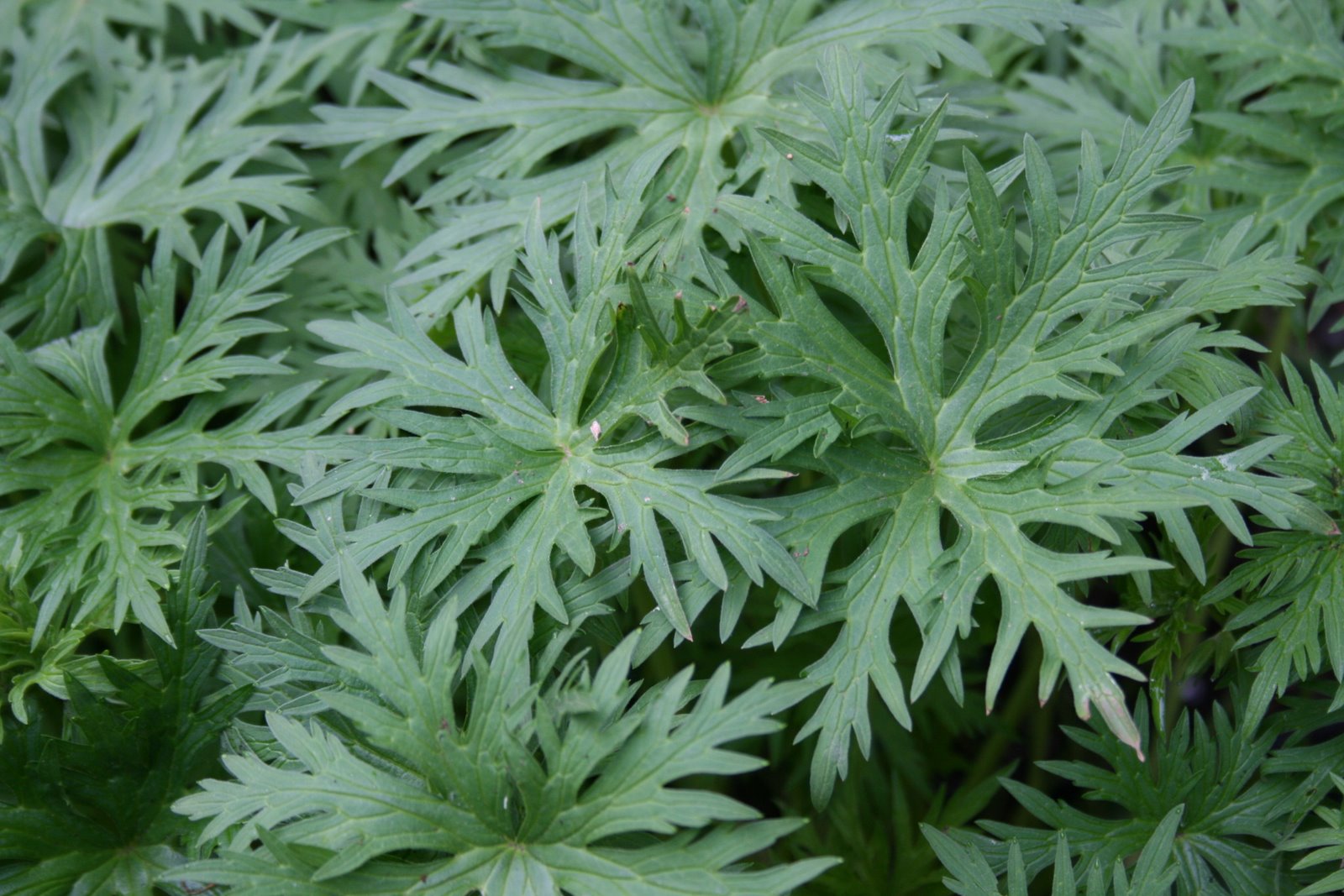
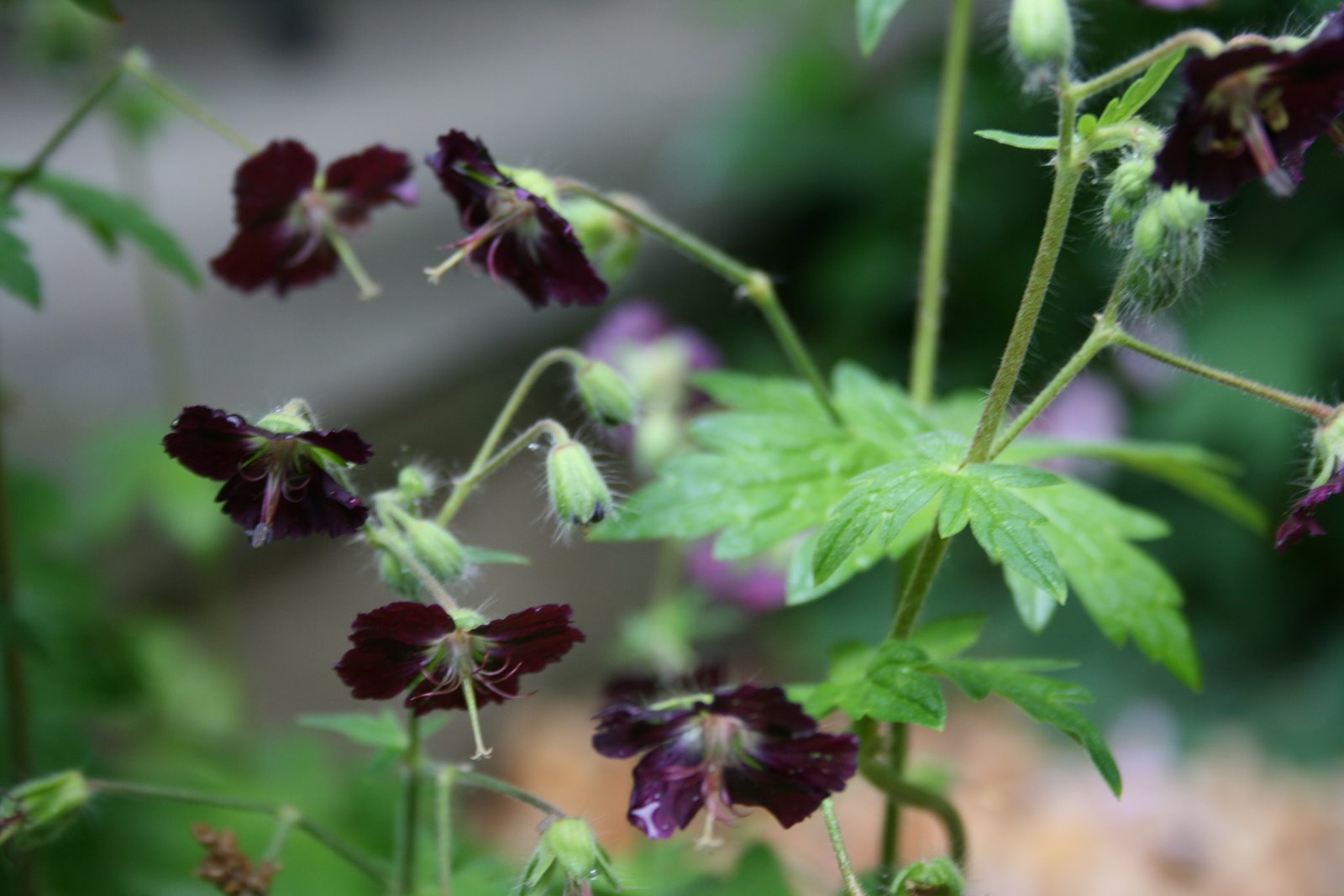 My cranesbill geraniums have just begun blooming this week. I love them. As cut flowers, they make great fillers or can be used for posies. Even without any flowers, the leaves themselves are highly ornamental. If you are not familiar with these hardy geraniums, now is the time to think about planting some.
~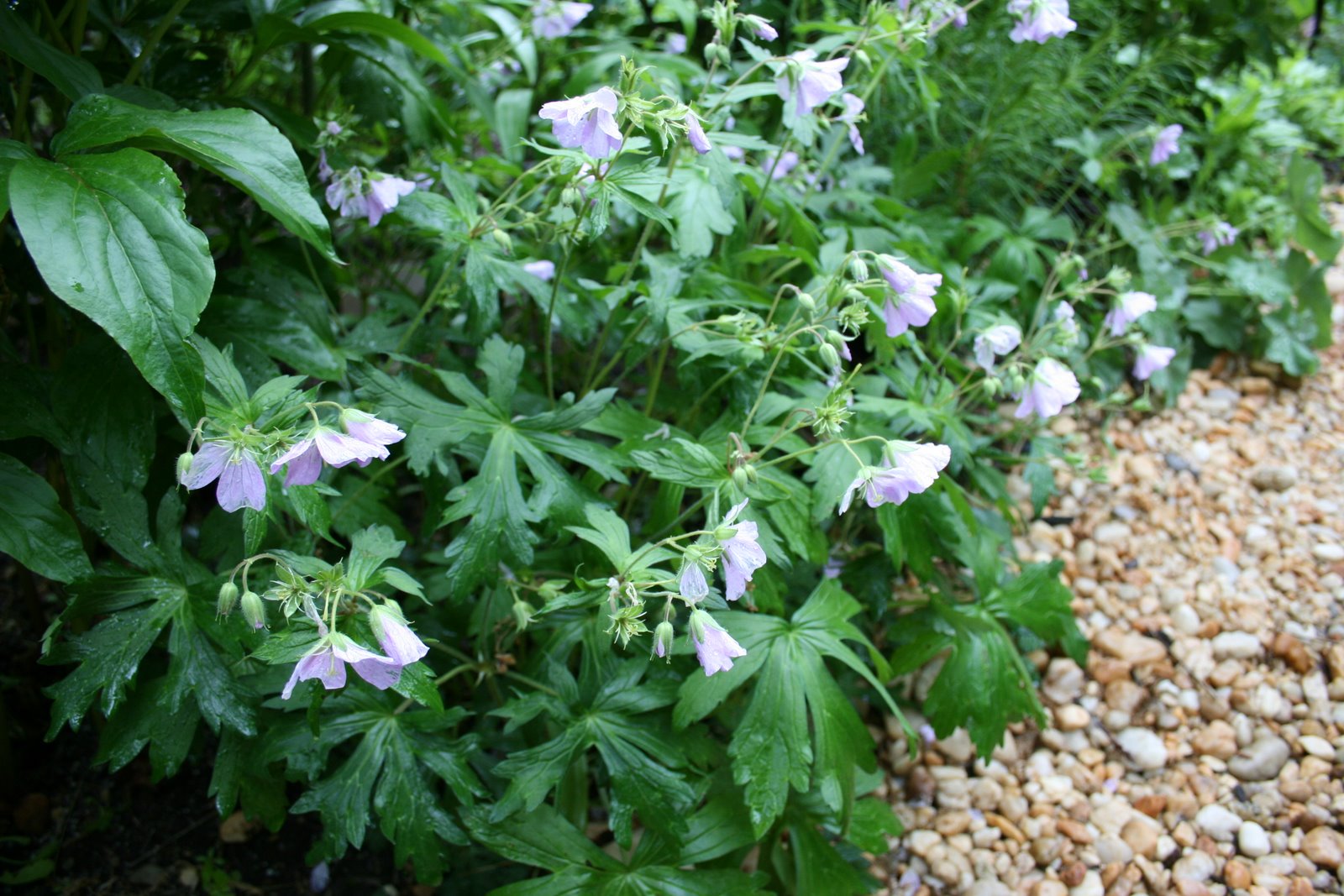 Where to Plant Cranesbill Geraniums. These little plants are my favorite mixers along the outside of all my borders. Wherever I can put them, I do. Cranesbill geraniums are hardy, easy to grow, and suited to a variety of situations. There are some for the shade garden, others to use as ground cover, and others that are suited to sunny beds and borders.
~ How to Maintain Cranesbill Geraniums. Geraniums edge, they weave, they spill over. Most bloom over a very long period of time and will repeat if they are cut back after flowering. Some of the larger geraniums will require mid-season maintenance. To prevent these ones from flopping or splaying open, I cut them back hard after blooming and fertilize. Soon, new fresh leaves appear and the plant remains compact.
~
 Where to Buy Cranesbill Geraniums. My first geraniums were from Perennial Pleasures Nursery which specializes in heirloom perennials. I also got others from Heronswood before they were sold. Another wonderful source for hardy geraniums is Geraniaceae, a California nursery which also has an online catalog. The selection at Geraniaceae is phenomenal. I am wanting to get some more mourning widow geraniums. Geraniaceae offers 26 different varieties. I don’t know how I will be able to choose. I think this will be a paralysis of choice.
~
Related post: My Love Affair with Clematis
Container Gardening: Pictures of Miss Kim Lilac
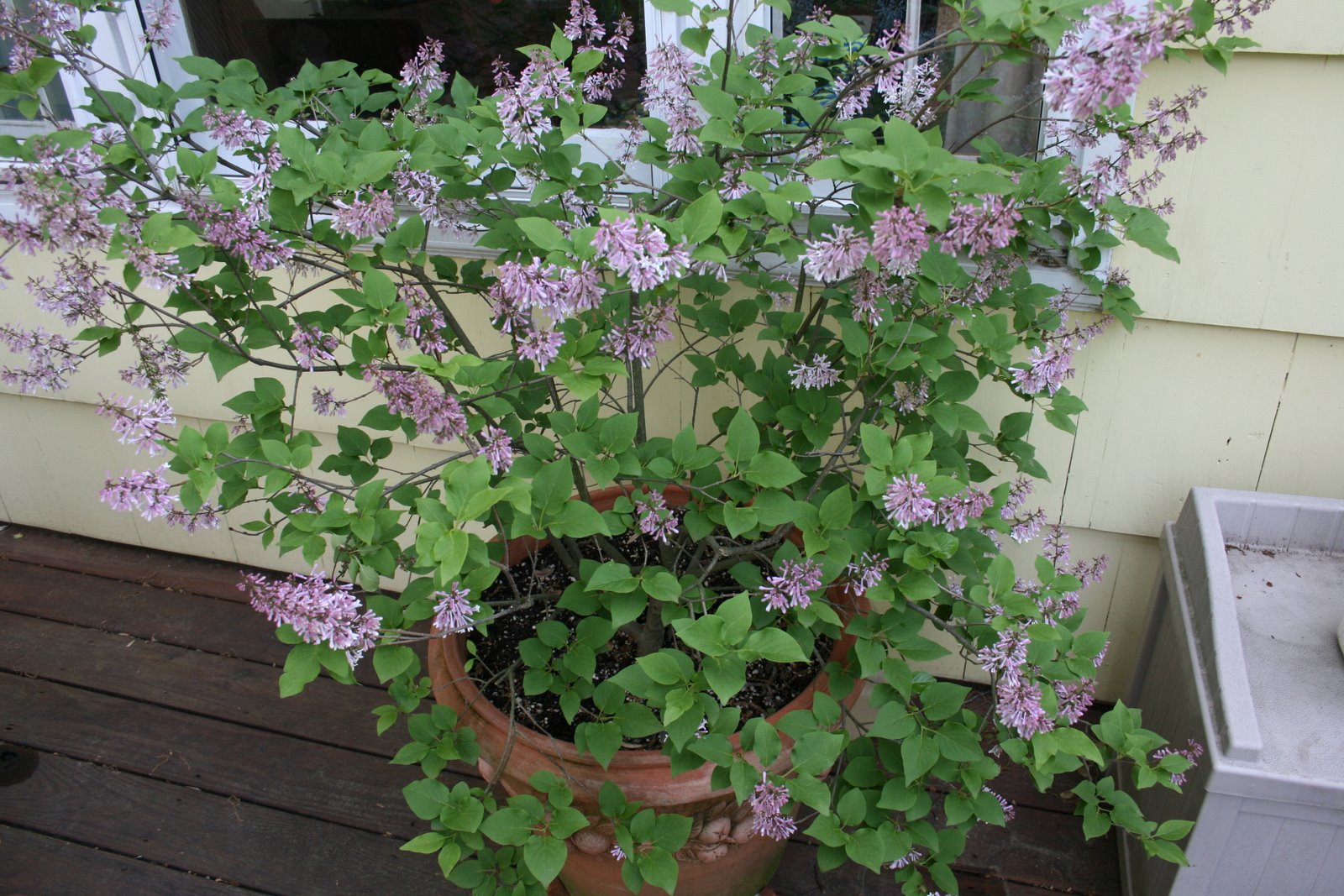
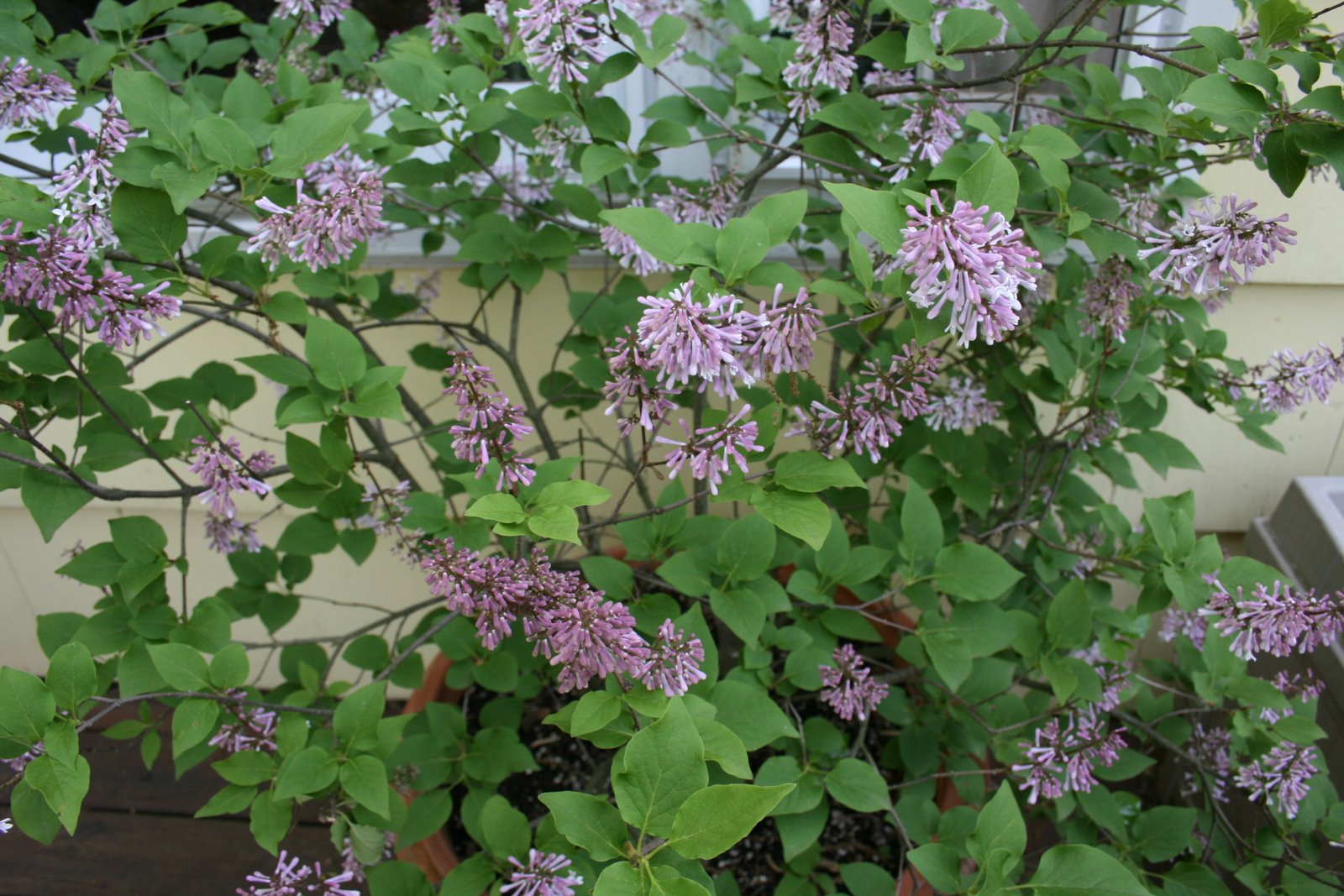
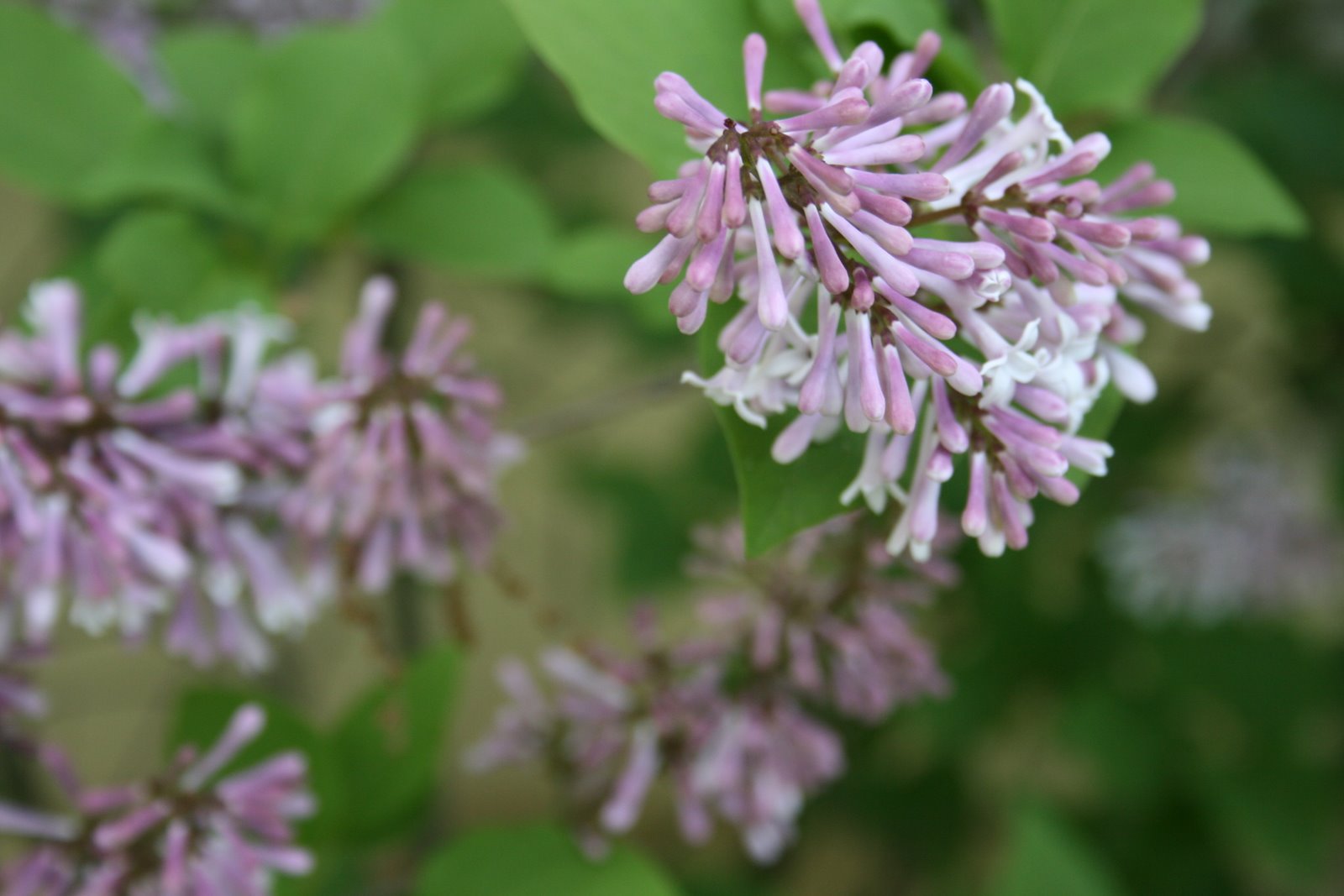 As a follow-up to my post on the variety, soil, and care of containers, here are some pictures of my Miss Kim Lilac, one of my favorite containers on the deck. As I previously wrote:
“When growing shrubs and trees in pots for the long term, I’ve learned to treat them as really large bonsai plants. Each year, I renew their soil by removing some and adding organic amendments and manure. Also, every few years I trim off the outer most roots of the plants on one side to allow more root development without the danger of the plant becoming root bound. With this treatment, my lilac is still growing in its original planting pot.”
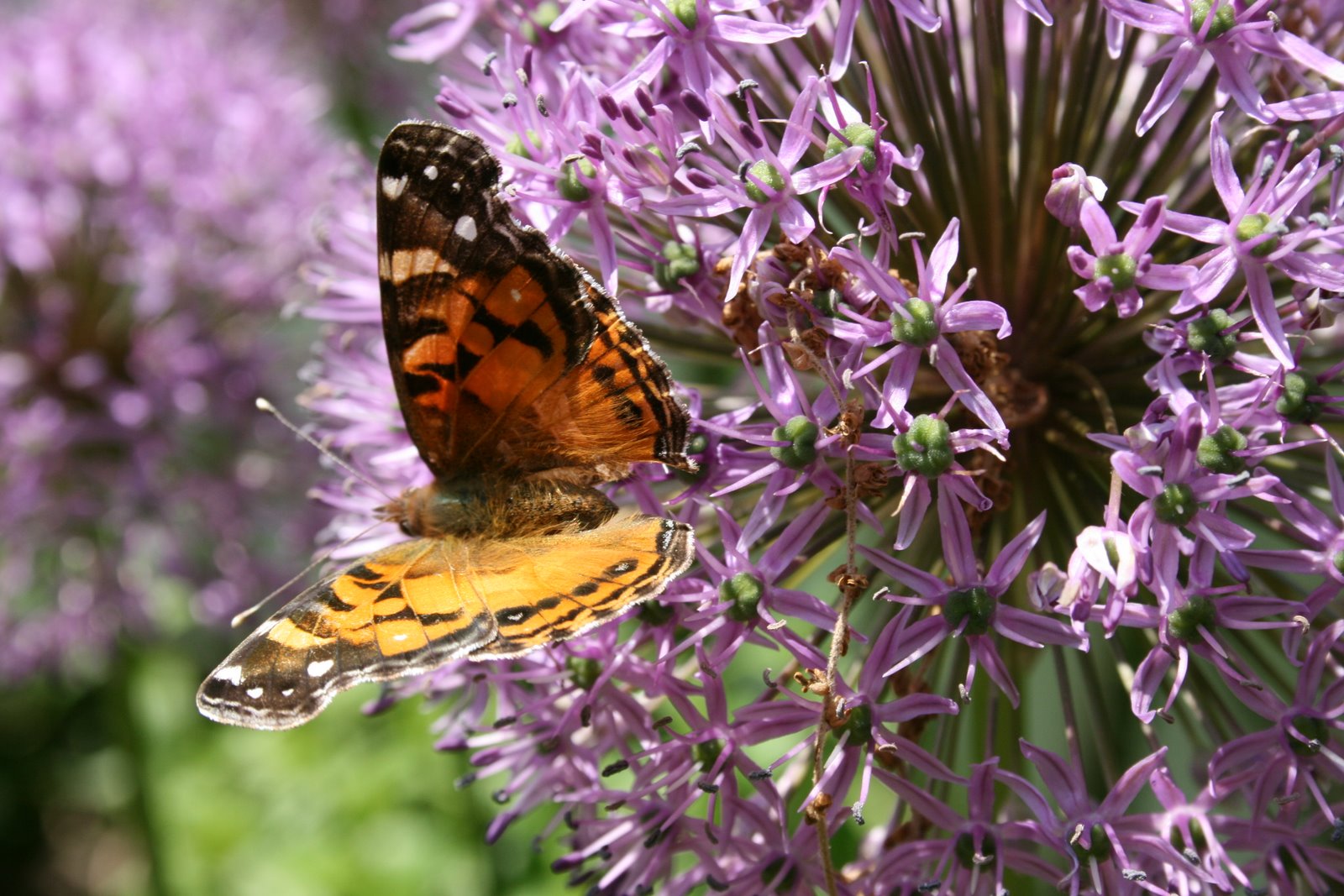
Butterflies in the Garden: Picture of a Painted Lady (Vanessa cardui) on an Allium
Pictures from my Mothers’ Day Visit to Reeves-Reed Arboretum in Summit, New Jersey
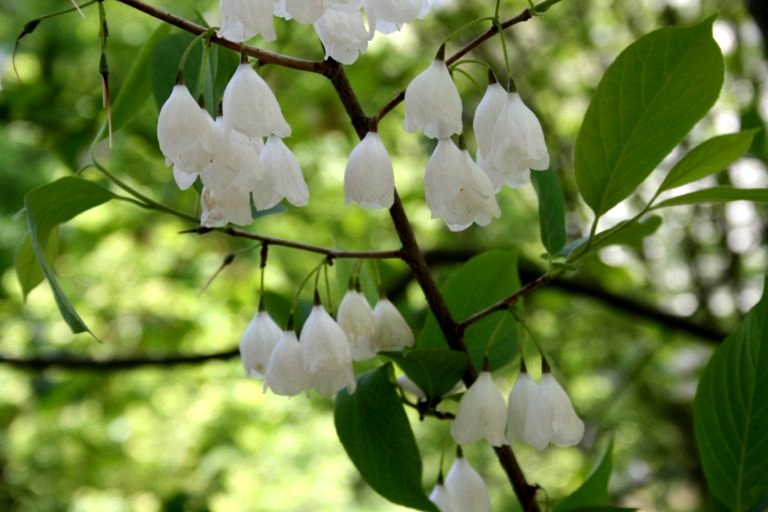
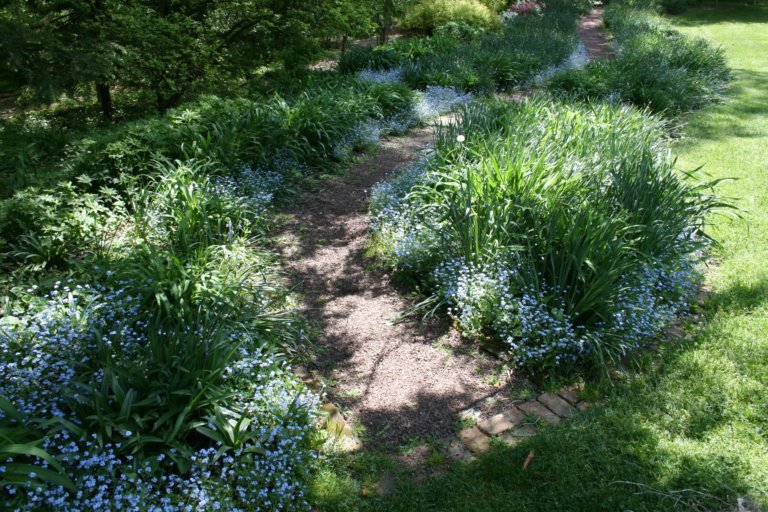
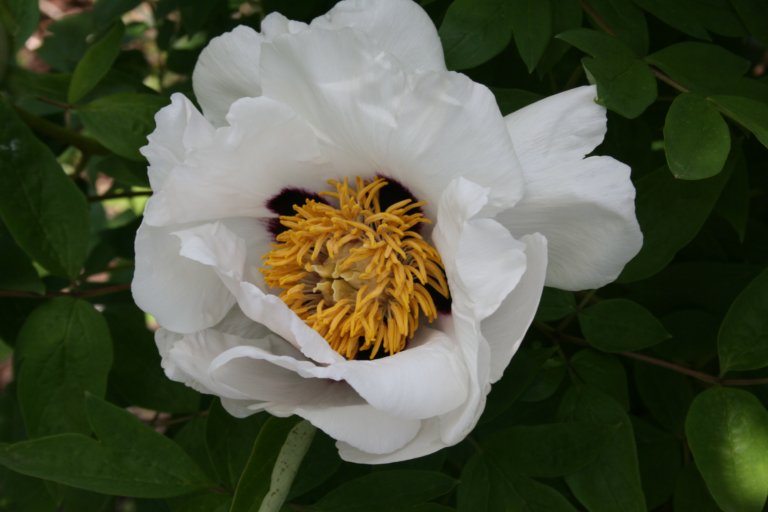
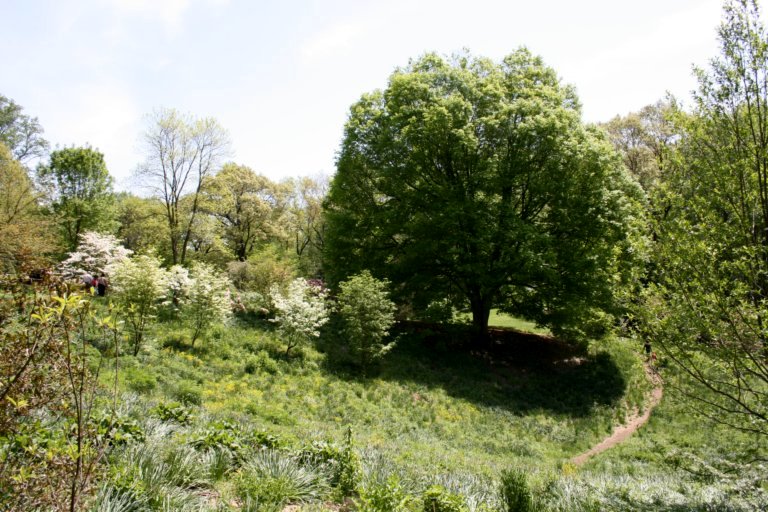 Reeves-Reed Arboretum is one of my favorite botanical gardens (click on any images for the full picture).
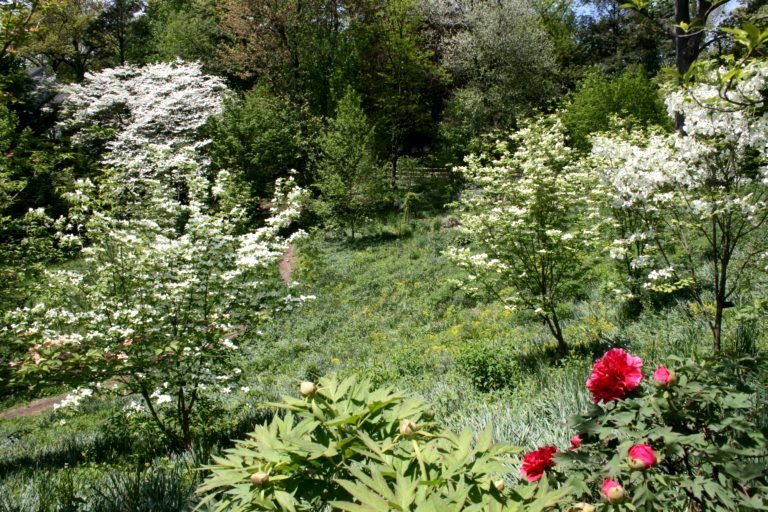 While Chanticleer and Wave Hill are ever-inspiring, Reeves-Reed and Willowwood Arboretum have the benefit of being local.
 Being only ten minutes away from Chatham in Summit, New Jersey, I get to visit Reeves-Reed frequently to see what’s new.
 Further, being in my identical gardening zone (6b), I know it will work in my garden if it works at Reeves-Reed.
 Also, being of a more modest scale, they have a lot that is applicable to the home gardener.
From the website:
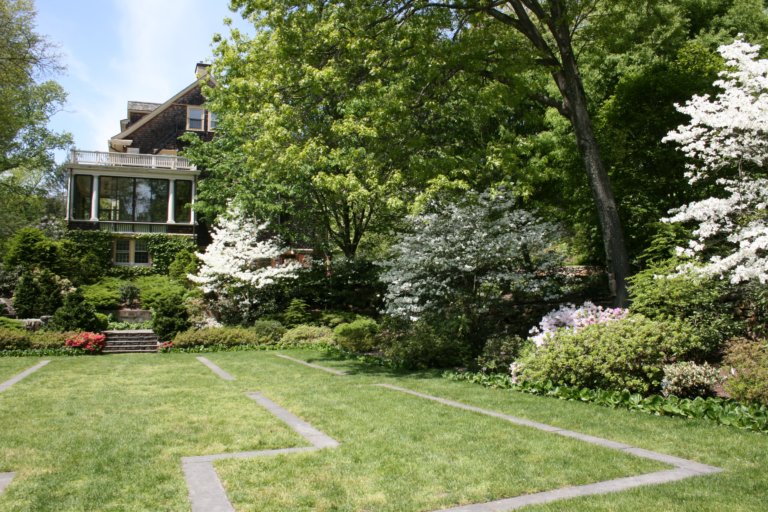 “The Reeves-Reed Arboretum is a suburban conservancy dedicated to environmental and horticultural education for children and adults…
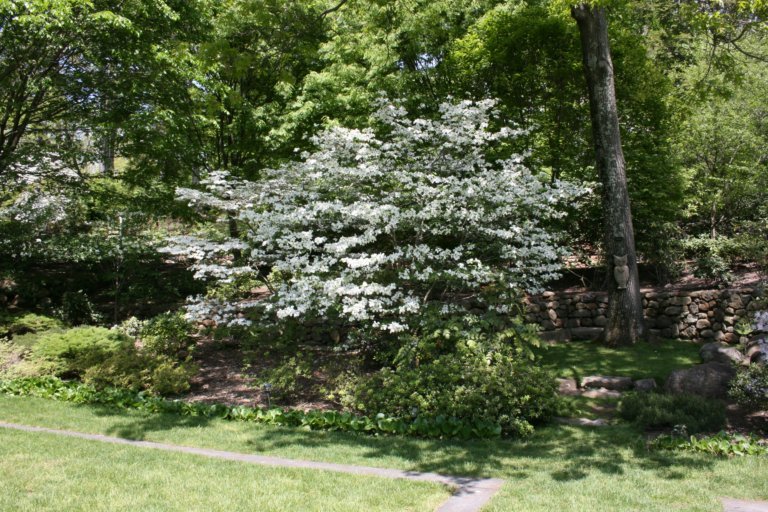 and to the enjoyment of nature through the professional care and preservation of a historic country estate. Reeves-Reed Arboretum has 5-1/2 acres of formal gardens.
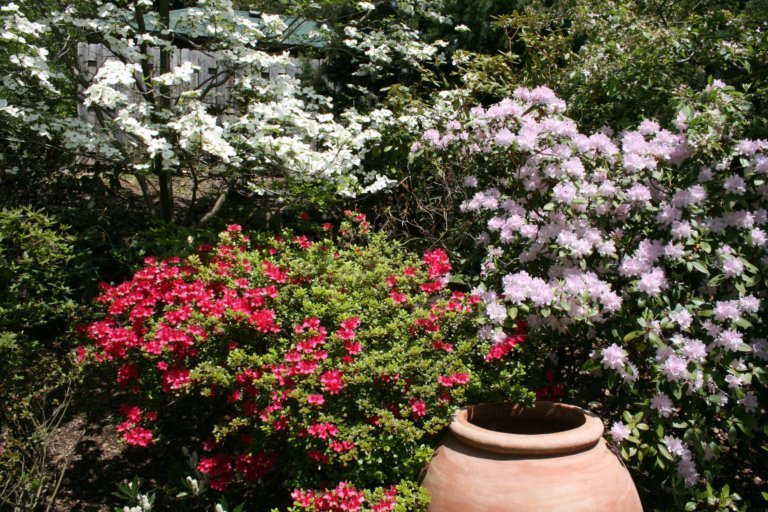 The gardens represent design trends of the early 20th century.
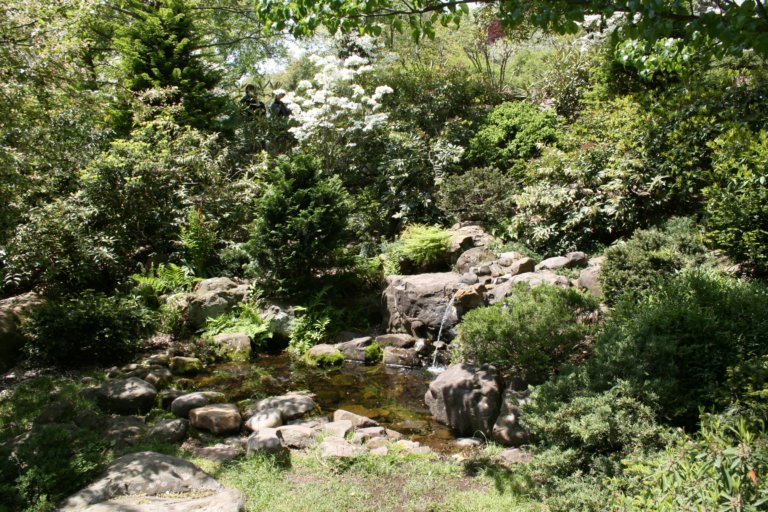 A map of the Arboretum grounds and description of the grounds are available.
 Also we have a wildflower guide depicting some of the many flowers that can be found at Reeves-Reed Arboretum.”
 Related posts: Living and Gardening Around Chatham, New Jersey, A Visit to Chanticleer in Wayne, Pennsylvania
Garden Bloggers’ Bloom Day – May 2008: Roses, Daffodils, Peonies, Lilacs, Irises, Alliums, and Mountain Bluet in New Jersey (zone 6b)
May and June are probably my favorite garden months. I love how they hint at the abundance to come in late summer, not to mention the old fashioned roses are blooming then. Here are just some of the highlights for May’s bloom day (double click on any image for the full picture).
~
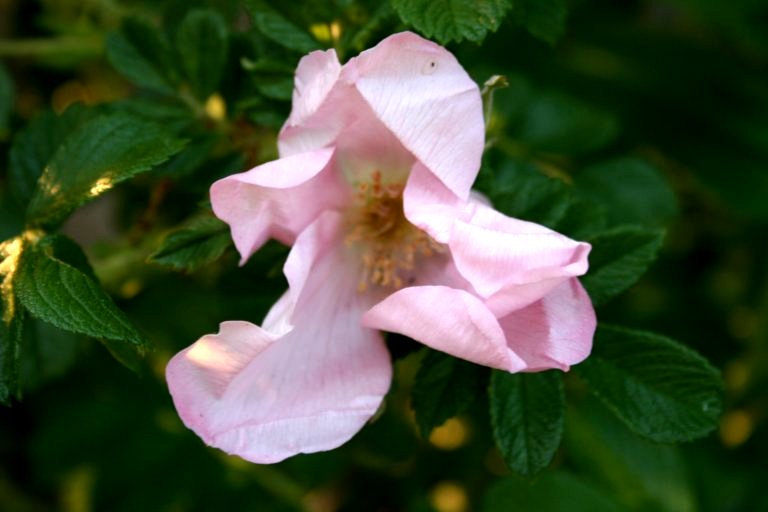 Frau Dagmar Hastrup, and then Rouletti, are my first roses of the season. Frau Dagmar is wonderful for its heavy scent and continuous bloom.
 ~
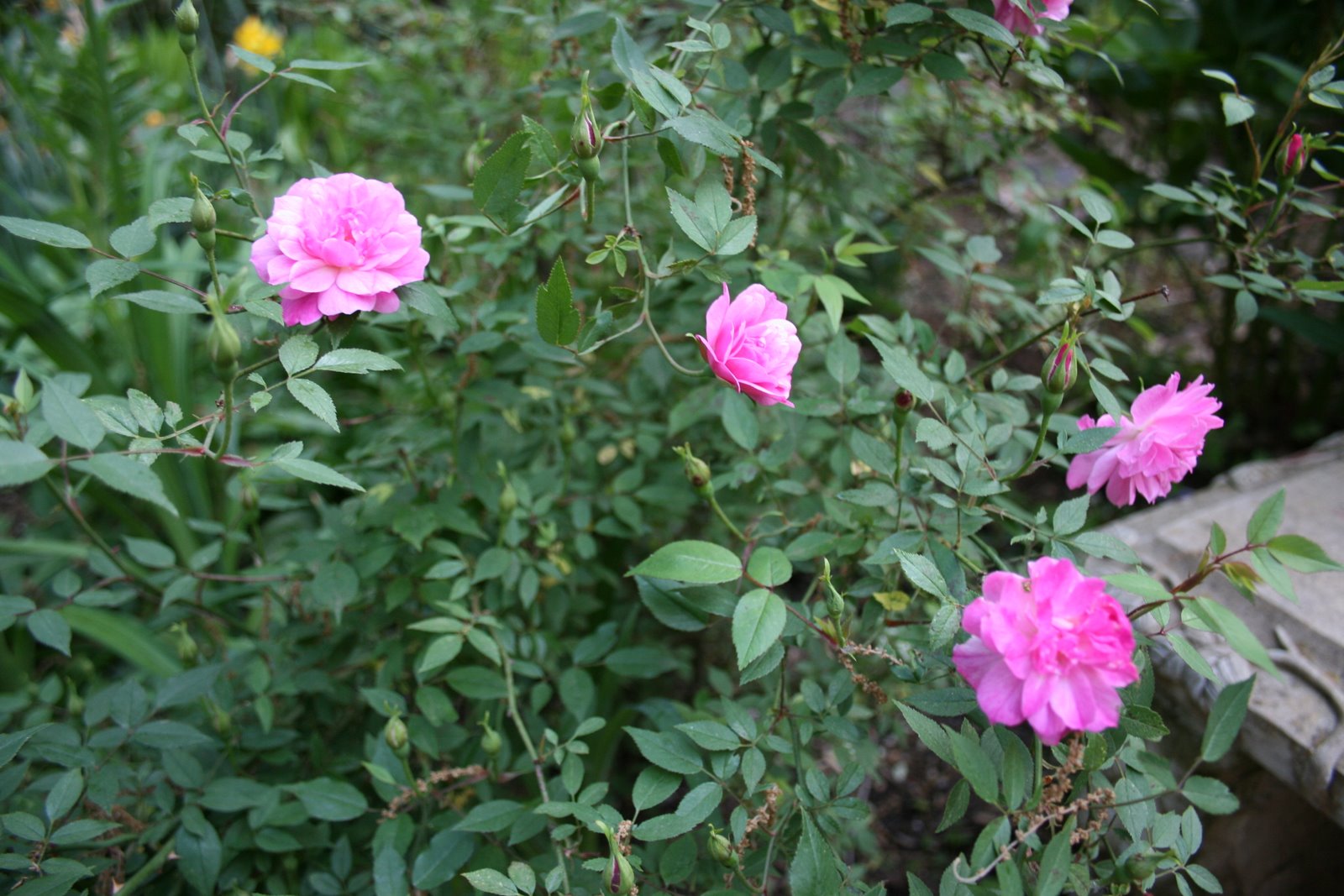 Rouletti has a light scent, but it is just as generous with its bloom.
~
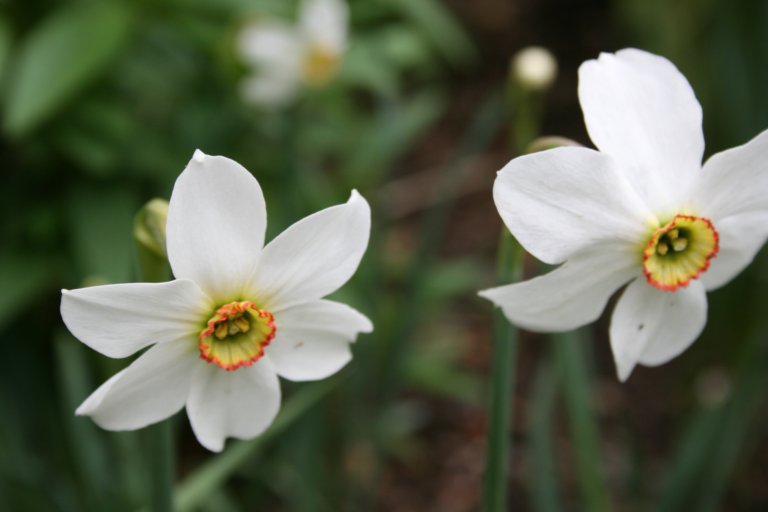 My last daffodils to open are the Peasant Eye. Sadly, they signal the end of daffodil season. These too are fragrant.
~
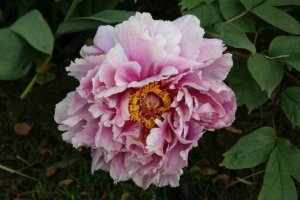 This tree peony is young, so I only get a few blooms, but they are spectacular. Each bloom is about eight inches across. The tree peonies have been holding their blooms surprisingly well this season despite the rain.
~
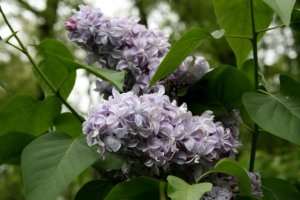 With huge blooms this wonderfully fragrant lilac, Nadezhda, is a highlight of the lilac season.
~
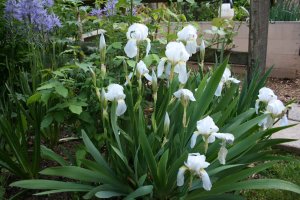 Camassias and irises blooming in the Triangle Garden.
~
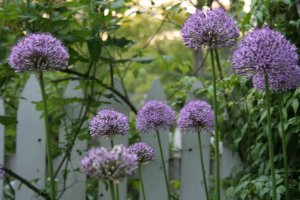 I love the purple allium aflatunenses. These have self seeded throughout the front garden.
~
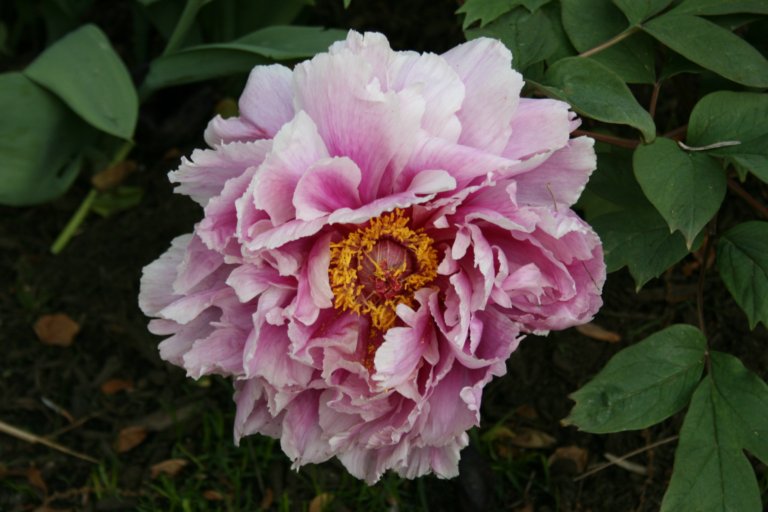 This tree peony is young, so I only get a few blooms, but they are spectacular. Each bloom is about eight inches across. The tree peonies have been holding their blooms surprisingly well this season despite the rain.
~
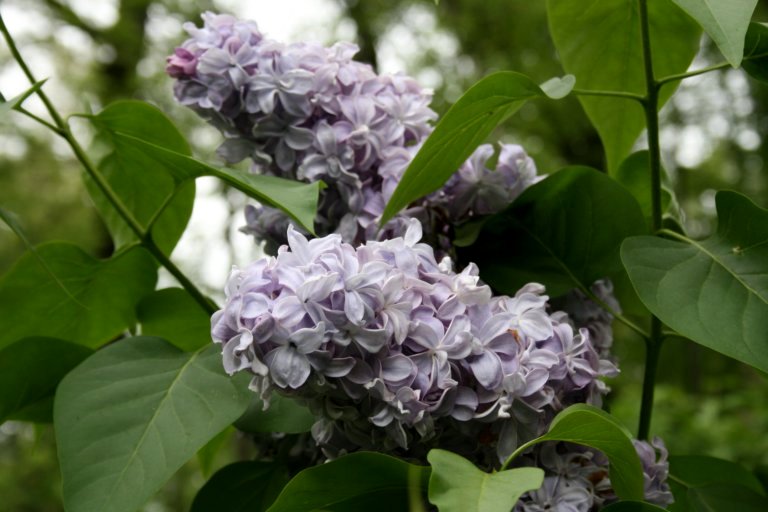 With huge blooms this wonderfully fragrant lilac, Nadezhda, is a highlight of the lilac season.
~
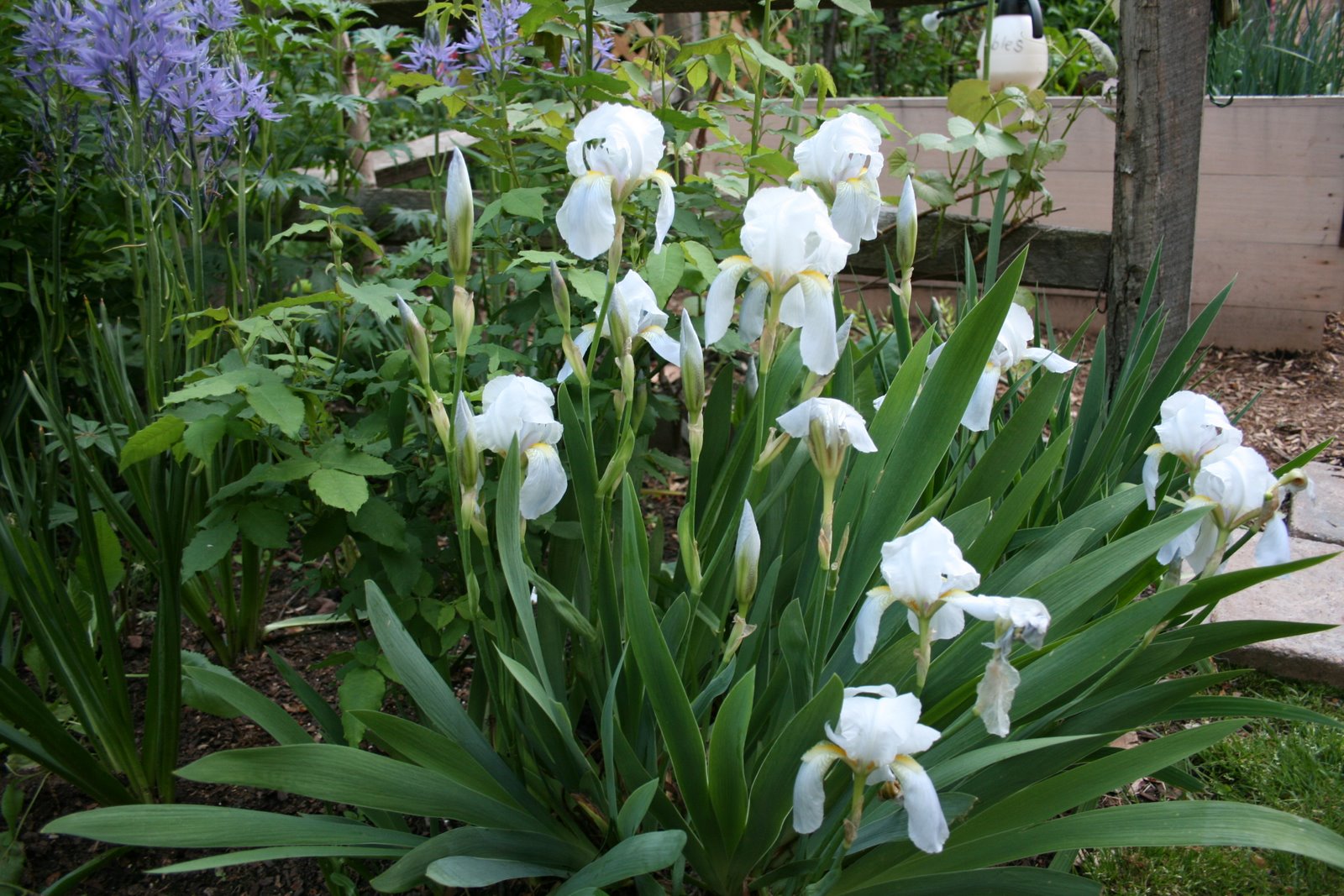 Camassias and irises blooming in the Triangle Garden.
~
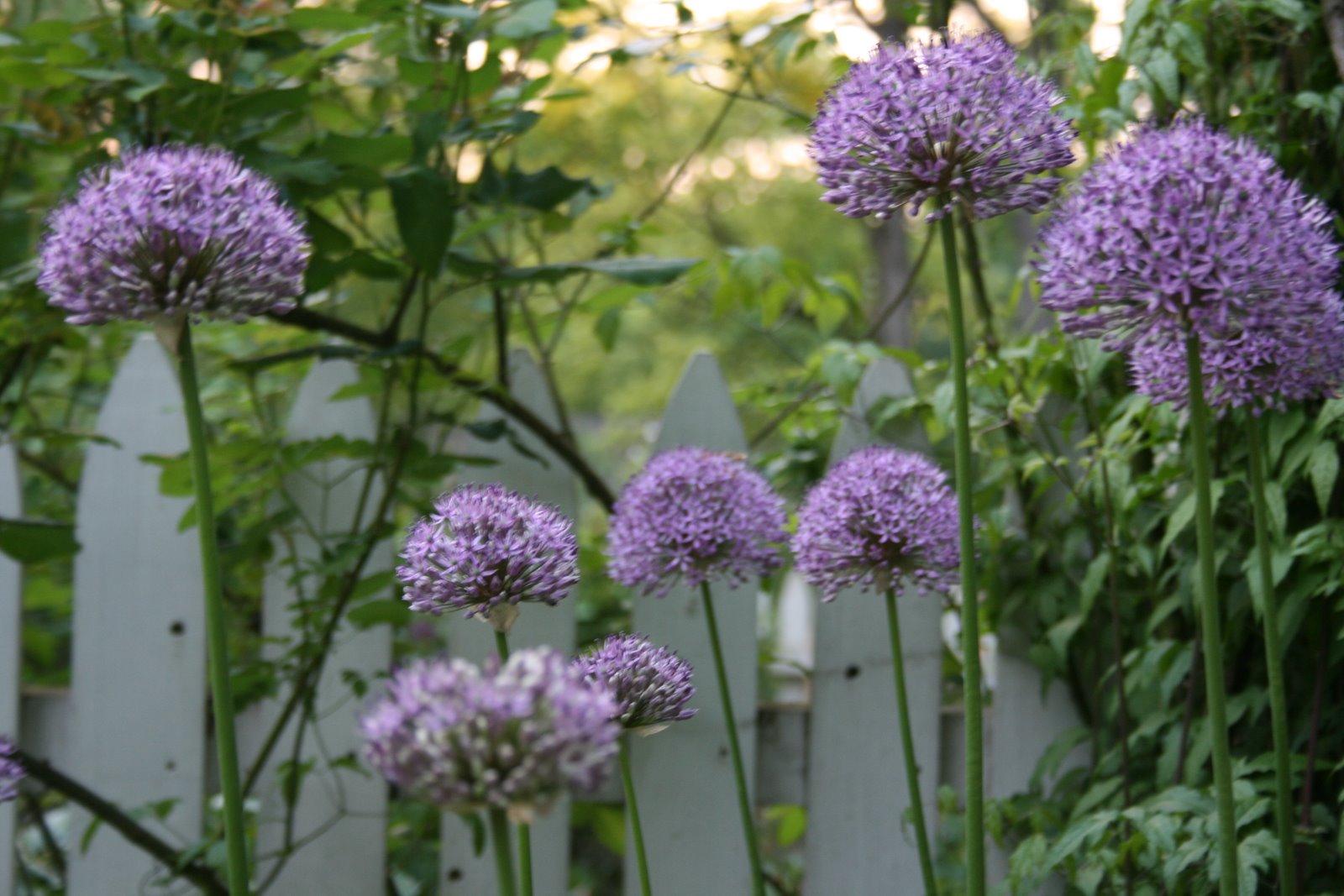 I love the purple allium aflatunenses. These have self seeded throughout the front garden.
~
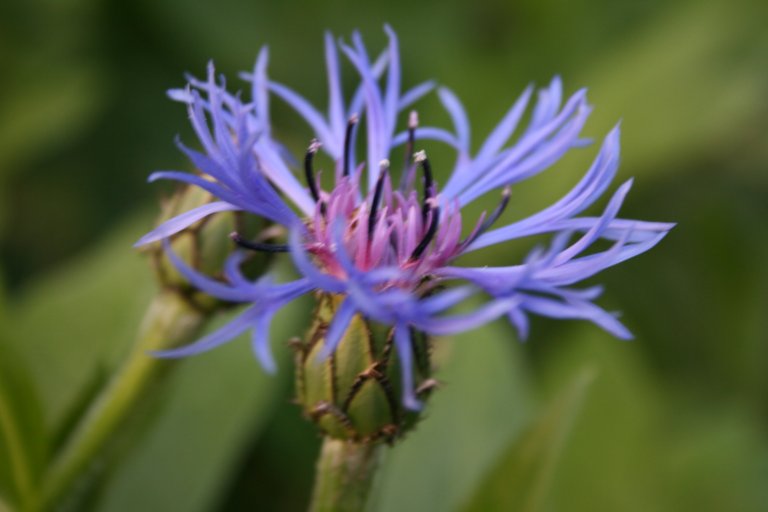 Mountain bluet spreads and is unassuming, but I love the almost irredescent blue of its flowers and its long bloom period.
~
 The jack in the pulpits in my garden, I never remember planting. I don’t know if I did, or did they just appear?
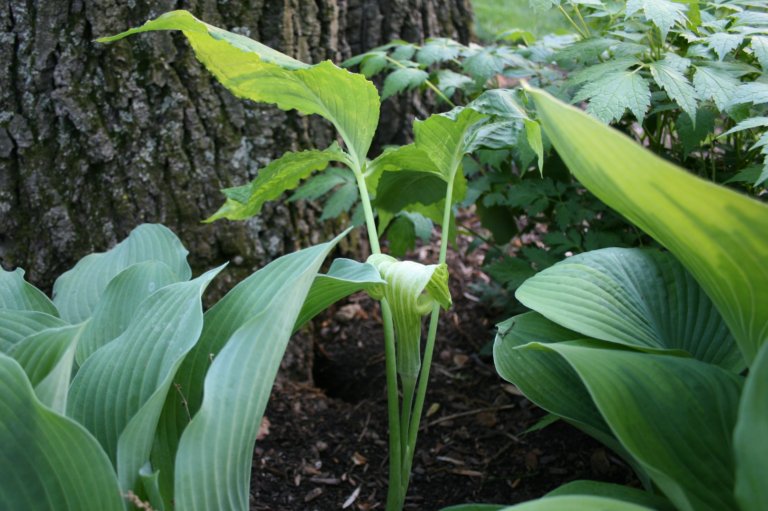 The jack in the pulpits in my garden, I never remember planting. I don’t know if I did, or did they just appear?
~
Gardening with Children: How to Make a Crown and Boutonniere with Fresh Flowers
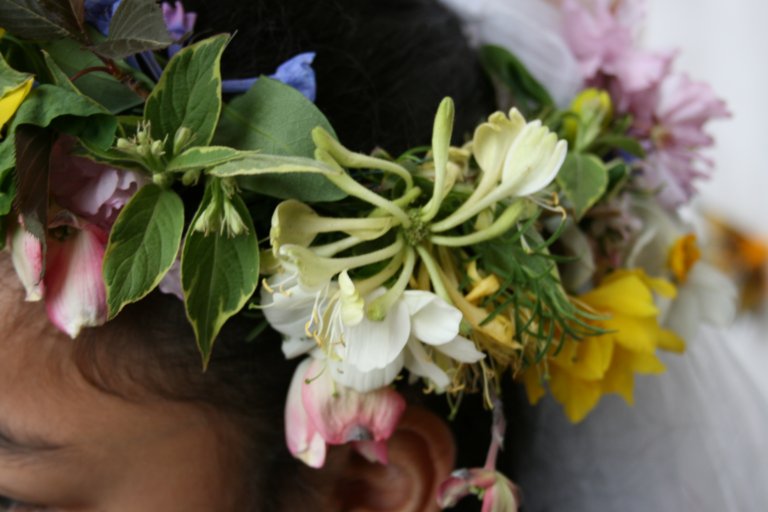 Last Saturday, two of my children made their First Communion. As a part of the joyous celebration, I made a crown for my daughter and a boutonniere for my son using fresh flowers from my garden. They were easy to make and could also be used for weddings (the perfect touch for a flower girl or ring bearer) and other special events of the summer.
~
 1. The base of the crown. As a base, I made ring out of a long, flexible branch from a weigelia. I bound the ends together with floral wire and tape. You could also use a young branch from forsythia, spirea, or honeysuckle.
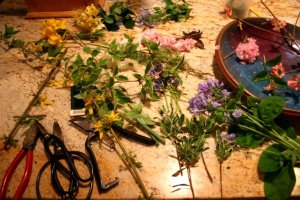 2. The flowers for the crown. Then, I went out to collect fresh flowers from my garden. I looked for flowers that were not too big and would last well out of water. Also, I took many fragrant flowers. I collected the following: daffodils, honeysuckle, brunnera, muscari, bluebells, dogwood, daphne, forget me nots, and cherry blossoms.
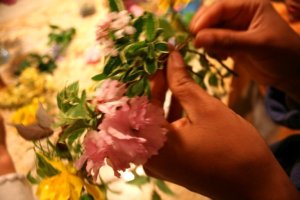 3. Attaching the flowers to the base. With floral wire, I attached each flower to the weigelia base.
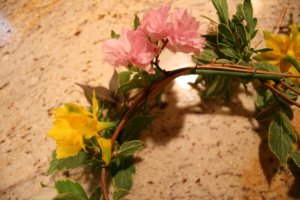 4. The finished product. When it was done, I spritzed the crown with water and put it into the refrigerator until we were ready to put it on.
 For the boutonniere, I used a brunnera leaf as the backing and wrapped daffodils and brunnera flowers together. I secured the whole thing together with floral tape and put it into the refrigerator to wait. The boutonniere was lovely, but I would not use brunnear foliae again because it wilts very quickly out of water (see picture); an immature hosta leaf would have been better.
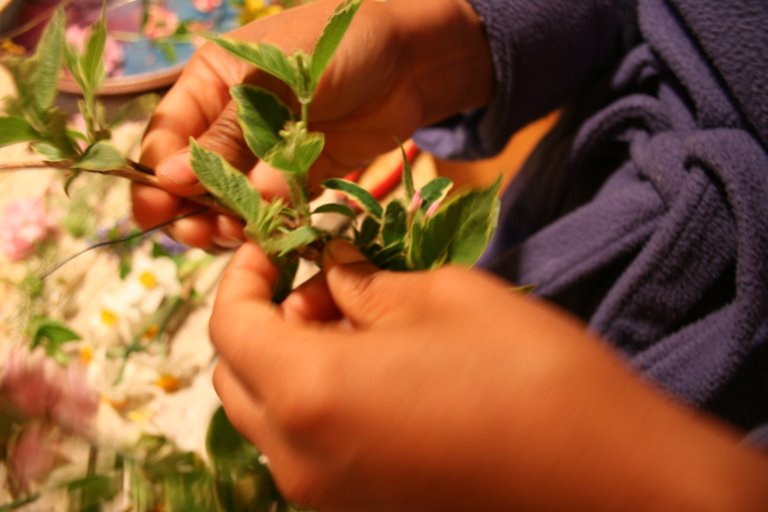 1. The base of the crown. As a base, I made ring out of a long, flexible branch from a weigelia. I bound the ends together with floral wire and tape. You could also use a young branch from forsythia, spirea, or honeysuckle.
~
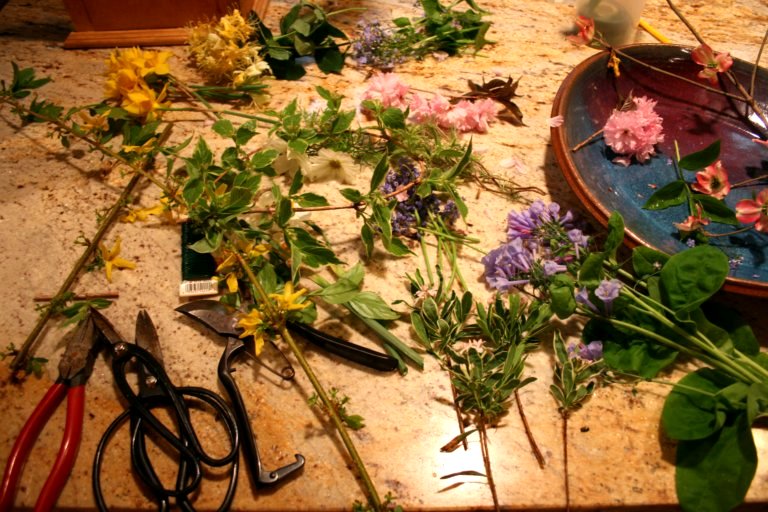 2. The flowers for the crown. Then, I went out to collect fresh flowers from my garden. I looked for flowers that were not too big and would last well out of water. Also, I took many fragrant flowers. I collected the following: daffodils, honeysuckle, brunnera, muscari, bluebells, dogwood, daphne, forget me nots, and cherry blossoms.
~
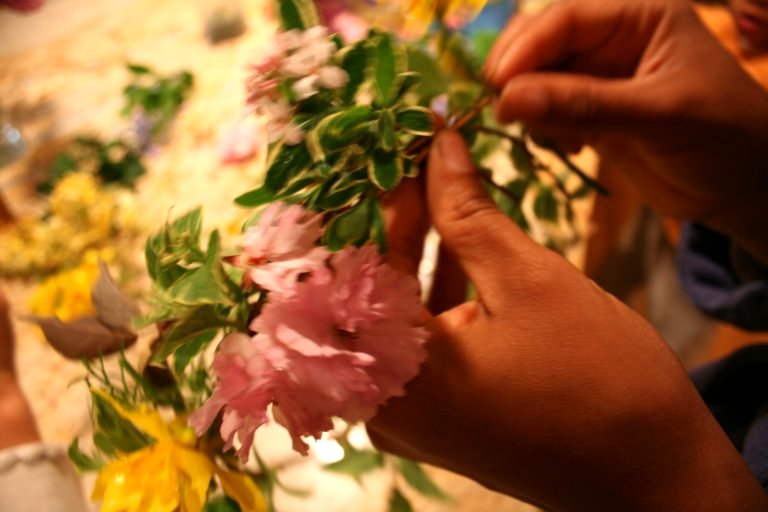 3. Attaching the flowers to the base. With floral wire, I attached each flower to the weigelia base.
~
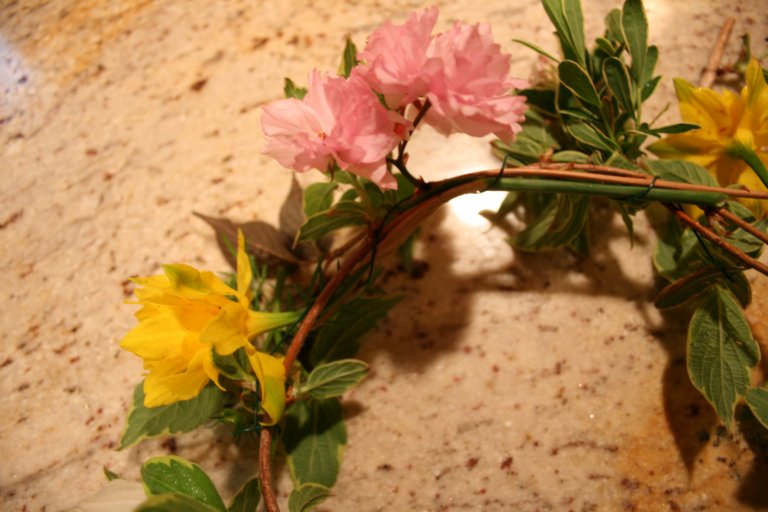 4. The finished product. When it was done, I spritzed the crown with water and put it into the refrigerator until we were ready to put it on.
~
 For the boutonniere, I used a brunnera leaf as the backing and wrapped daffodils and brunnera flowers together. I secured the whole thing together with floral tape and put it into the refrigerator to wait. The boutonniere was lovely, but I would not use brunnear foliae again because it wilts very quickly out of water (see picture); an immature hosta leaf would have been better.
 Heirloom Gardener