Gardening with Children: How to Make a Succulents Terrarium

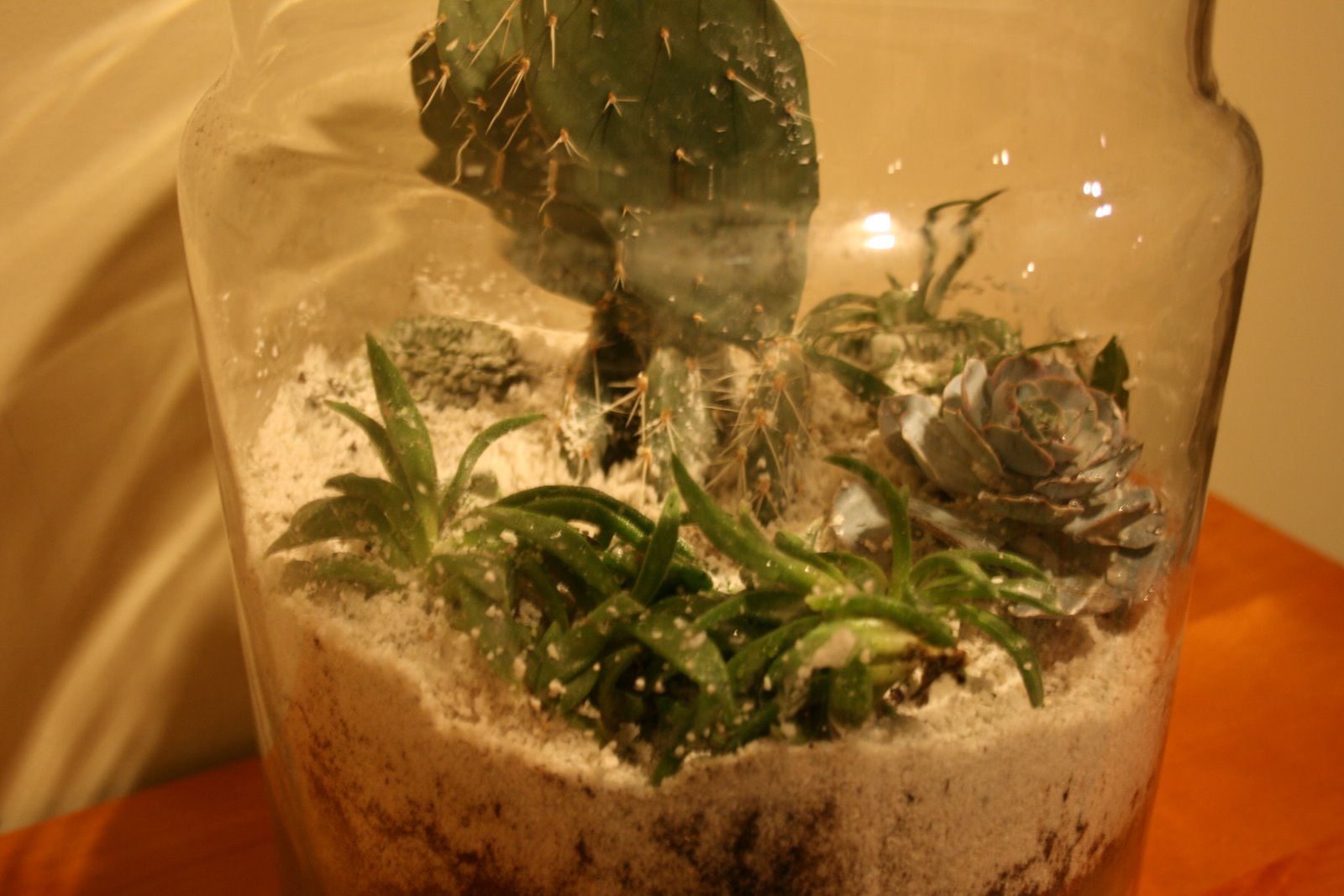
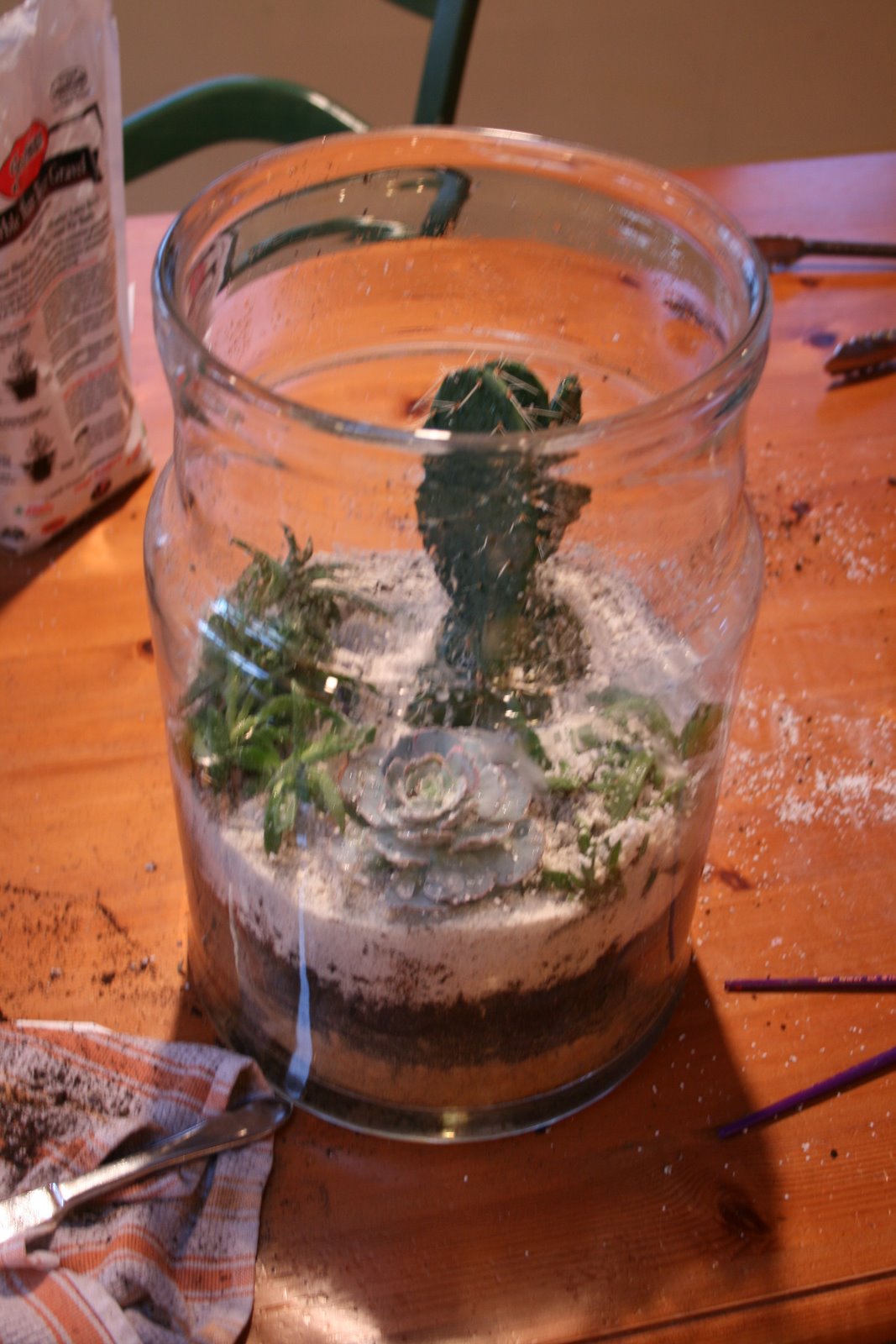
I recently mentioned to my children that I created a terrarium when I was a little girl. Since then, they have been asking me to help them make one of their own. Yesterday, I was ordering some plants for the upcoming season at Annie’s Annuals (http://www.anniesannuals.com/), one of my favorite nurseries, and they had a video on Succulents Terrariums as featured on Martha Stewart (http://www.marthastewart.com/article/succulents-terrariums?lnc=38f9cf380e1dd010VgnVCM1000005b09a00aRCRD&rsc=showmain_tv_the-martha-stewart-show). With this inspiration, we went to our local nursery, the Farm at Green Village (http://www.thefarmatgreenvillage.com/), bought our supplies and made our terrarium.

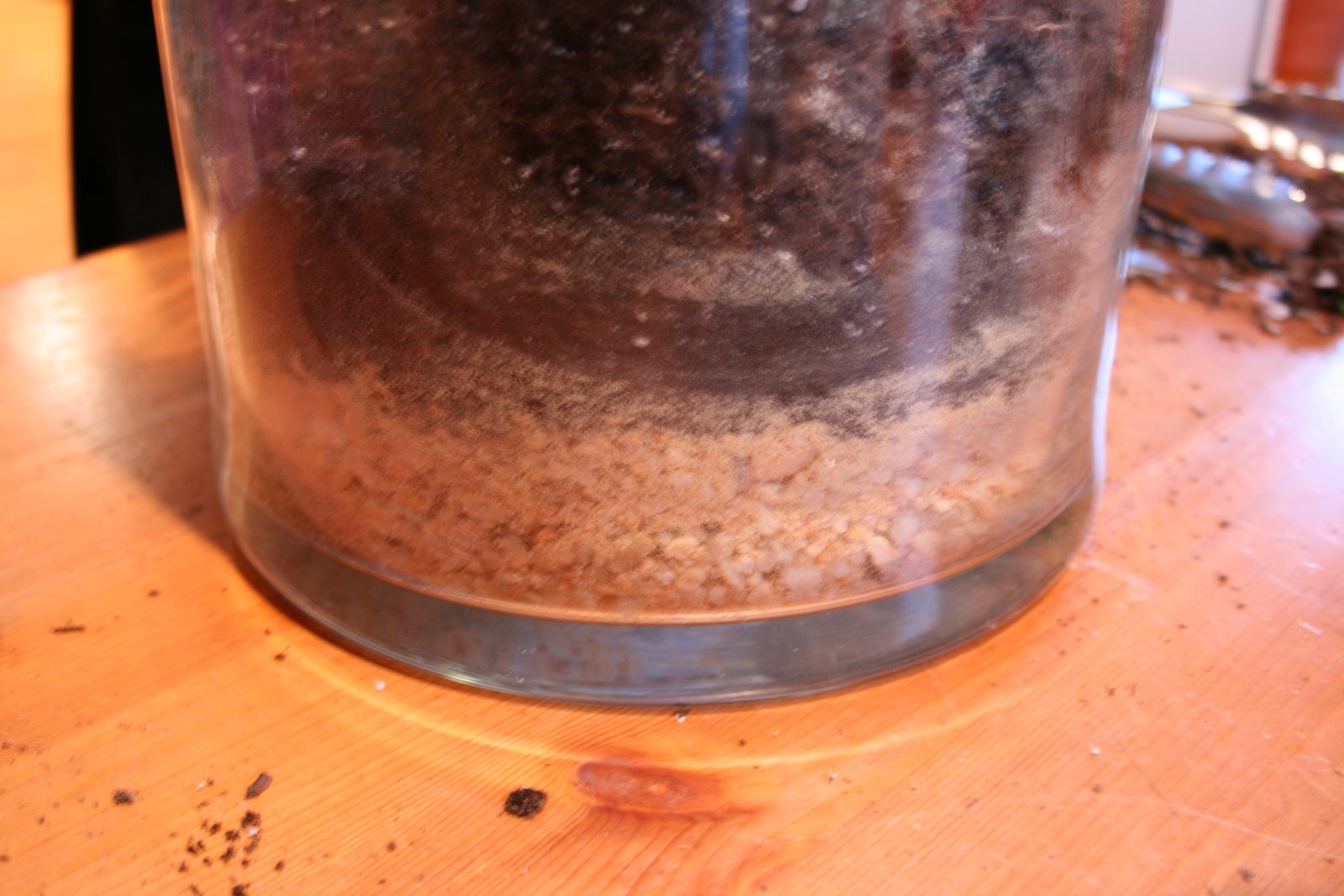
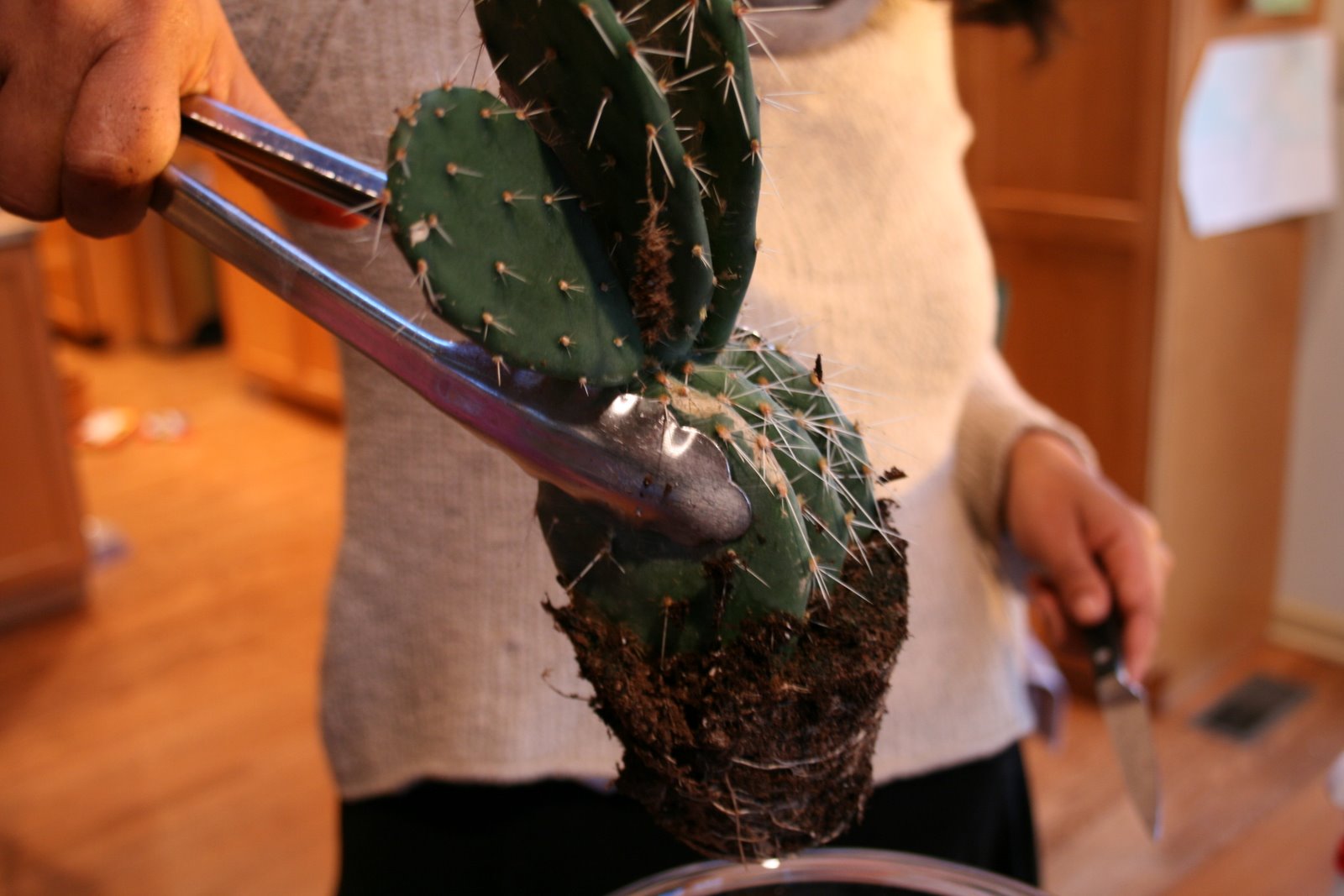
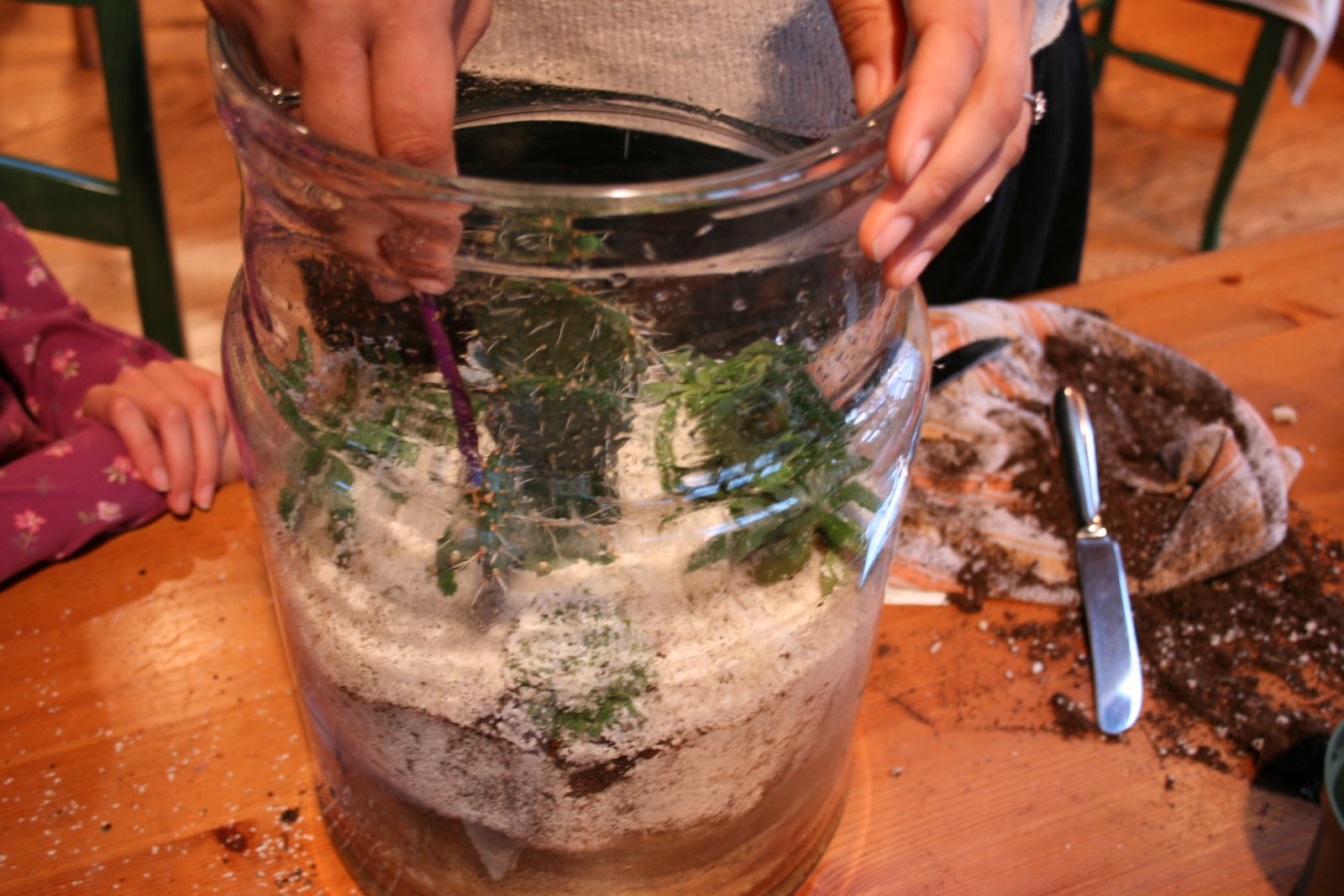
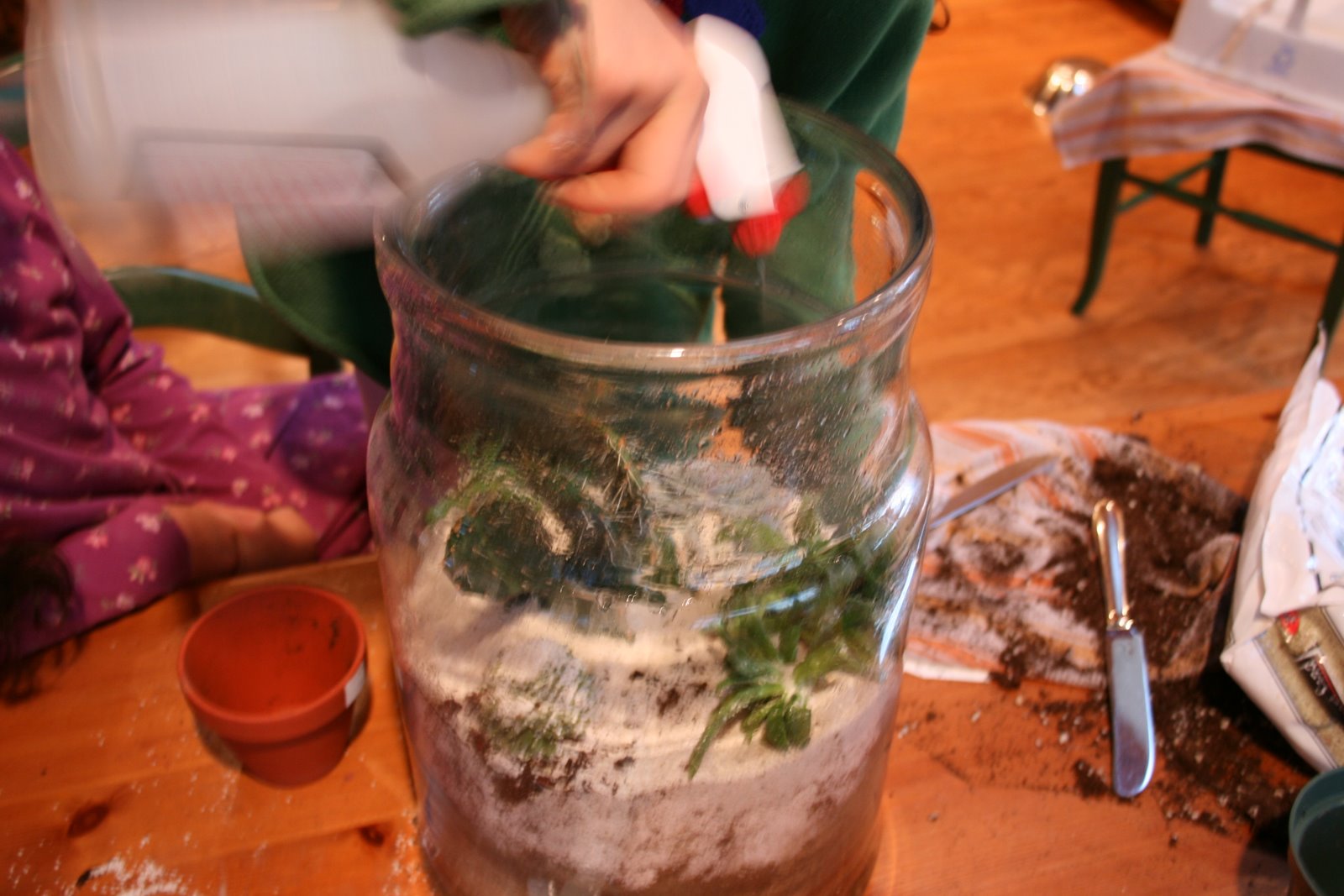
If you don’t have time to watch the video, here is a simplified step-by-step guide:

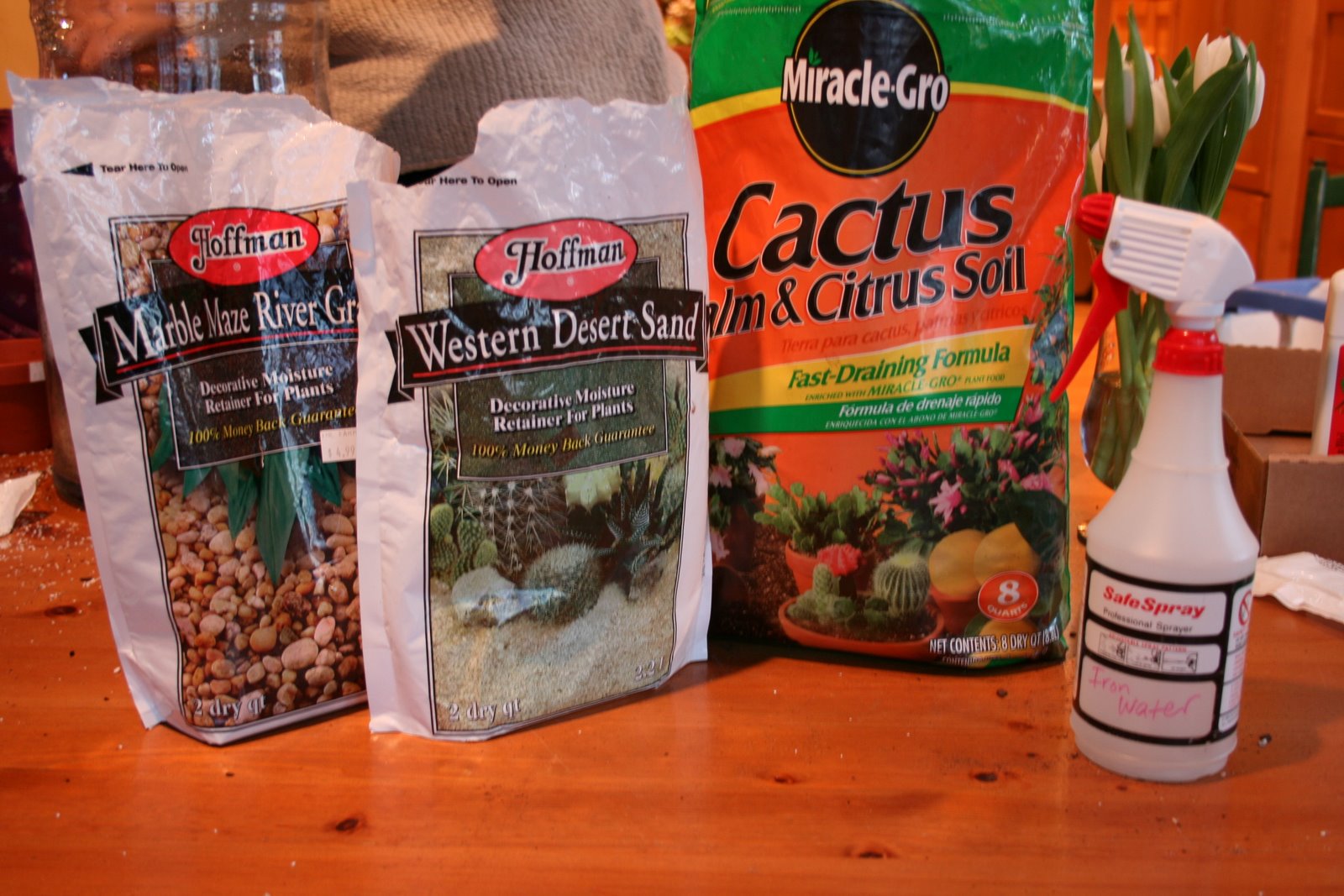
1. Gather together your supplies: a suitable container, succulents, gravel, soil, sand, a small paintbrush, and a spray bottle.
2. Pour the bottom layer of gravel and the middle layer of soil.

3. Place your succulents on top of the soil.
4. Add the top layer of sand.

5. Level and brush the sand off your succulents with the paintbrush.
6. Spray the sand off the succulents and walls of the terrarium with the spray bottle.
7. Your succulents terrarium is complete.

Pronouncing Latin Plant Names

It’s amazing how kids pick up vocabulary. Some friends and I were remarking how our kids’ vocabularies have expanded through reading, but since some of the words they are learning are more often read than heard, there are gaps in their pronunciation. This got me to thinking about my botanical Latin. I know most of the Latin names for the plants I grow, but mostly through reading countless books and articles about gardening. My pronunciation of some of the words is more than iffy.

As I was thinking about this the new listing of courses offered at the The New York Botanical Garden (NYBG) arrived in the mail (http://www.nybg.org/edu/cont_ed_cat.php). This September, they are offering a four week course on botanical Latin for professional and amateur gardeners. This course is aimed at teaching pronunciation and the root meaning of the words.

If you can’t make it to NYBG, I also found a wonderful feature of the Fine Gardening website (http://www.taunton.com/finegardening/pguide/pronunciation-guide-to-botanical-latin.aspx) which makes available a pronunciation guide for plants included in recent issues of the magazine. This was the only site I found that says the words for you. So, like our children, I’ll be brushing up on my pronunciation too.

Volunteers: Hardy Annual and Biennial Self Seeders

Hardy volunteers are a welcome gift from the garden. I have several reseeding annuals and biennials which each year enrich the garden. These plants which spring up where they please provide necessary filler and continuity within the borders. The advantage of volunteers is they weave themselves naturally into the garden. By doing so they hold the other plants together and give it a more relaxed feel. Also, they sometimes pop up where I would not have thought of planting them or could not have planted them. Reseeders also fill any holes in the plantings offering a sense of abundance. I have two types of volunteers: accent plants and unifiers.

The Accent Plants
~
The accent types tend to be large: having height, large leaves, or heavily textured leaves. They draw attention to themselves. They cause you to stop and touch them. These have to be ruthlessly thinned out, or else they loose their impact.

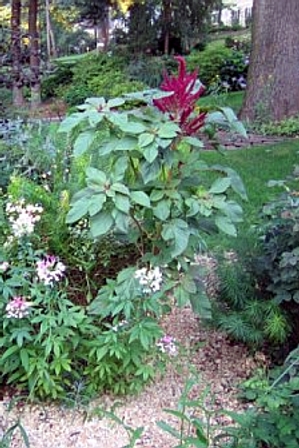
Amaranthus ‘Hopi’ is a very tall, red stemmed plant which I grow in the Cutting Garden, Egg Garden, and Long Border (it is pictured here between the Egg Garden and the Front Border). I bought Hopi from Annie’s Annuals three years ago. It is a generous self seeder which requires thinning out of the seedlings in the spring since I only want about five or six plants. The birds love the seeds so I usually don’t worry about too many seedlings. I also cut off some of the flowers as the seeds mature to keep for fall decorations.
When the amaranthus is young, I transplant some into containers or to other spots where I want them to grow. I keep more in the cutting garden for arrangements and to be dug up at a later date to fill in any holes which develop.
Sunflowers are always welcome. Due to the birds, I only get a few of these, but they are greatly appreciated.

Verbascum bombyciferum is a plant I love. The rosette of large, felted, silver leaves are even more spectacular than the yellow candelabra flower spikes. I had a hard time establishing this biennial. Since it likes better draining soil than the clay in most of my garden, it took me several tries before I got it to survive the winter, flower, and set seed. The seedlings, however, have found the better draining soil or the areas that get the least water. So now, every year I am assured of having this in my garden.

On the opposite end of the spectrum is nicotiana which seems to grow everywhere. Luckily, the roots are shallow making it easy to thin out. I have a tall variety named ‘Bella’ growing in my garden. It has white, pink, and lavender flowers which open during the day and are fragrant. I bought the original plant for Select Seeds.
Each year I get one or two hyacinth bean plants in the Cutting Garden. As self seeded plants, they do not come up until well into summer, but grow quickly.

Plectranthus appears very late in the season. This is a beautiful plant for it’s soft, grey leaves. It’s good to place this near a plant whose leaves die down in the summer like oriental poppies. It very nicely fills its place. The seeds do not travel around my garden, so plant it where you would like it to reappear. It usually blooms for me in September.

The Unifiers

The unifiers are allowed to seed more prolifically, mixing with the other plantings. Usually, they look better in groups and often have thin, wiry stems that mix with other plants and grow up through them. I allow only one of these per border, so the border does look jumbled. Below are my top ten unifiers.

Verbena bonariensis generously weaves itself between and among other plants. It adds interesting height, butterflies love it, and it makes great filler in the border as well as in floral arrangements.

Cosmos are great as reseeded plants because they usually grow a lot stronger than the ones bought as a six pack or transplanted as seedlings. The stems don’t tend to fall over as much either. However, since the plants seem to slow down once they set seed, I deadhead them until the end of August.
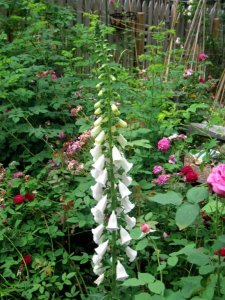
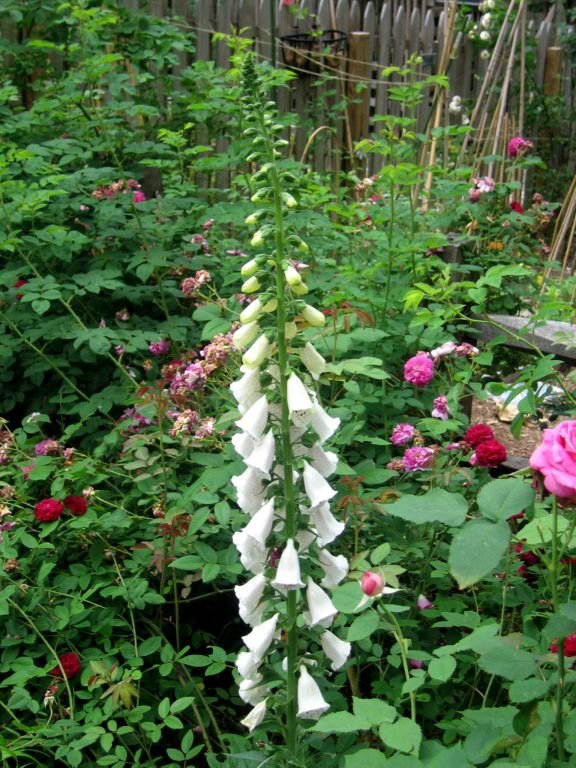
Inspired by Mottisfont Abbey (http://www.nationaltrust.org.uk/main/w-vh/w-visits/w-findaplace/w-mottisfont/), I have white foxglove in the Rose Garden. Most of the seedlings which I don’t thin out grow in situ, but others are moved to the Cutting Garden. I try to keep the foxglove in the Rose Garden white, so any which bloom non-white are cut for arrangements. If you don’t like having the spent flower stem left up, it works quite well to cut the stalk and lay it on the ground. I find that once the upper most flowers have bloomed the seeds from the bottom ones are mature. Cutting the stems also has the added advantage of stimulating the plant to produce more flowering side shoots.
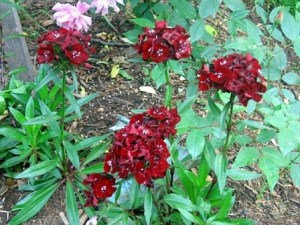
Sweet William, a biennial, is another heirloom plant which is extremely easy to grow, but often overlooked (pictured here under the wisteria). The flowers of the older varieties like Holborn’s Glory are fragrant and make a nice edging in the front of a border. I have these in the Cutting Garden and Long Border.
Larkspur is a wonderful, old fashioned annual. It needs very little care to produce long wands of deep blue flowers for the front to middle of the border.

Blooming calendula is always a happy sight in the garden. The glory of self seeded calendulas is that they come into bloom at different times, so you’ll have calendula in the garden from the early spring to the hard frost. I also like the light green leaves of calendula which add a lot of freshness to the look of the garden.

Forget me nots are wonderful grown as a carpet underneath tulips and daffodils. After they have had their show, I pull the plants up and scatter the seeds throughout the garden where I want them to grow on for the coming spring.
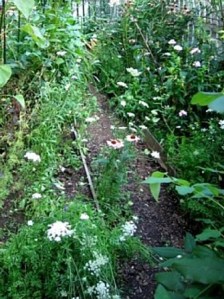
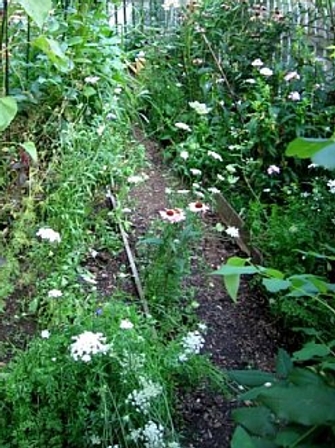
Queen Anne’s Lace is confined to the Cutting Garden as it is great mixed with other cut flowers. It took me several years to get it to grow which leads me to believe that the freshness of the seed makes a great difference in establishing it. Since then, I have had no problems keeping it. With fresh seed it reseeds quite a lot; after all, it is a weed to many. To prevent it from going beyond its welcome, I do not allow it into other areas of the garden; I cut a lot of it; and I thin it out when I have too much.

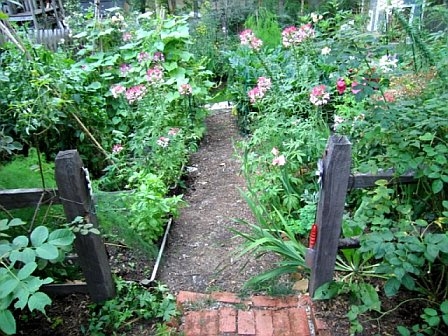
Spider flowers (cleome) are big and are sometimes hard to plant in the garden without them looking like stiff soldiers. But once spider flowers are allowed to self seed, it transforms them. They look very natural growing through other plants and often to different heights depending on where they are. They also have a range of color. In the front of Goldberry Hill, I only allow violet ones. In the Egg Garden, I try to keep more white than pink. In the Children’s Garden (pictured), they are mostly pink because my daughter loves pink. Also, as the first plants become leggy, plants from seed which germinated later reach up to cover up the old bare stalks.
~
Bloodflower (Asclepias curassavica) is another treasure in my garden. Each year it is one of the favorite sources of nectar for the butterflies and a food for monarch caterpillars. It also gives me wonderful orange and yellow flowers right up to the hard frost in addition to great seed pods.

Forced Branches: Quince, Crabapple, Willow, Ceris, Dogwood, and Forsythia

During the winter I miss the abundance of material from the garden for floral arrangements. This winter I am enjoying the shrubs and trees in the garden that force easily. By easy I mean that you simply cut the branches, place them in a vase with water, and wait. No special soaking or temperature control should be required. Here are the successes so far.

Quince are easy to force and grow. The flowers are very delicate and are lovely against the mostly bare branches. The shrubs are vigorous and won’t miss anything you cut. The only caveat is that they should be planted in an out of the way spot because they tend to lose most of their leaves by midsummer and are a bit thorny. Quinces will grow in full sun or part shade with equal success.

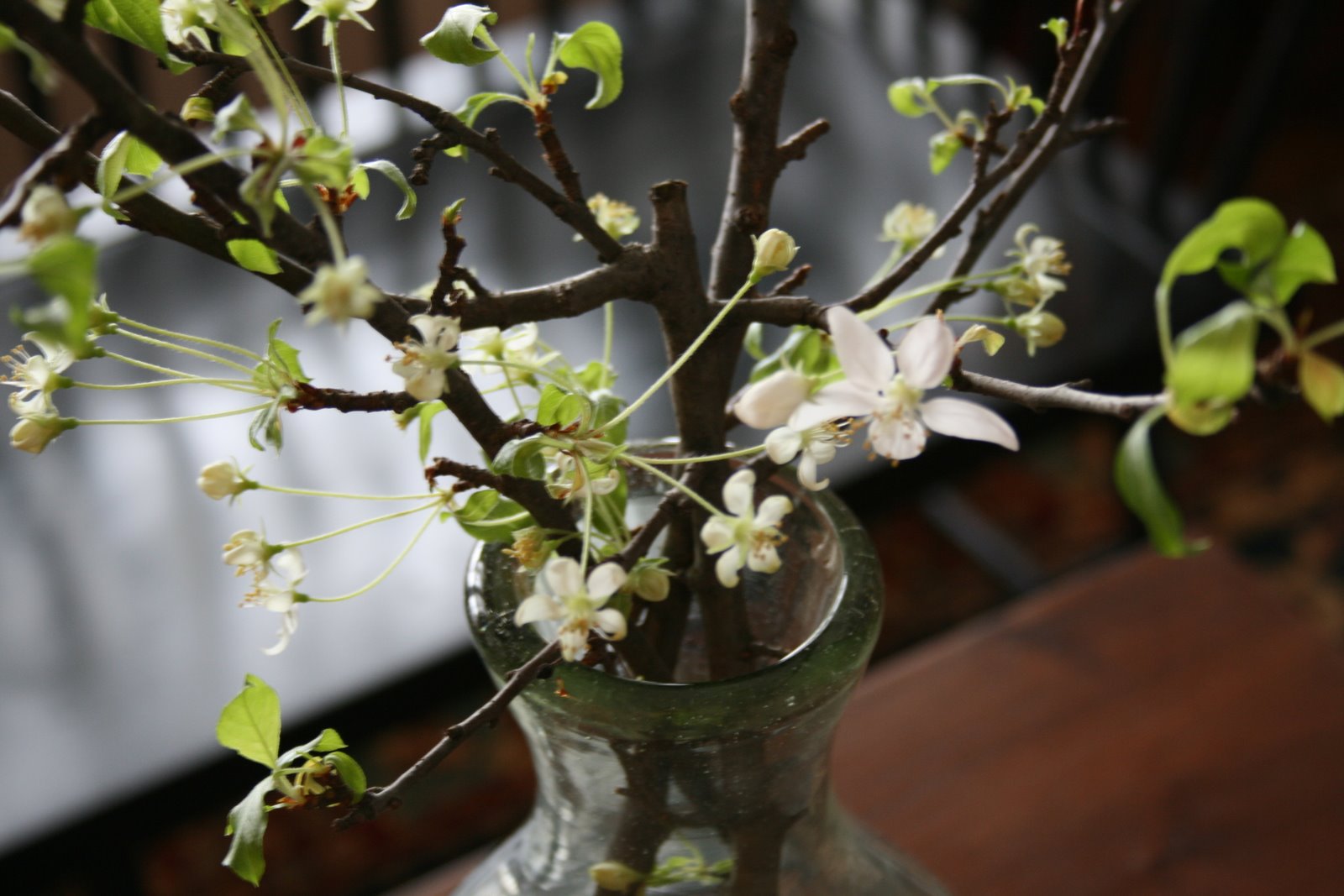
Crabapple (pictured above) to my surprise has been extremely easy to force. I brought some into the house from the Egg Garden a few weeks ago with the intention of enjoying the fruit that remained. In about a week, the buds began to swell; then the branches leafed out; and now, they are just beginning to break into bloom.

All kinds of willow are super easy. Ones with large catkins are wonderful to look at, but also are a treat to touch. But other willows which are grown more for their leaf like Salix ‘Flamingo’ are fun to watch leaf out and root at the same time.

Ceris ‘Forest Pansy” is beautiful when forced and pruning it helps to keep it small enough for the front border. The dainty little flowers can also be better appreciated when viewed up close in a vase. I do not have other redbuds in my garden. I would love to see if the redbuds which produce flowers all along their stems before they leaf out would force also.

The red twig dogwoods make great displays all winter. The dark red stems are beautiful especially when contrasted with the new lime green leaves. The yellow stemmed ones would work well too and would be more subtle.

Forsythia, as many know, is a great forcer and will grow vigorously just about anywhere. For a prior post on forcing forsythia and bulbs, click here: http://heirloomgardener.blogspot.com/2006/02/forcing-forsythia-and-bulbs-of-all.html.

I will have to try some other branches in the next month. My goal is to get twelve months of cut material from the garden. Any suggestions?
*****
For follow-up pictures of quince, ceris (redbud), and pussy willow, click here:

Telegraph.co.uk – ‘Annabelle’ hydrangea: How to grow


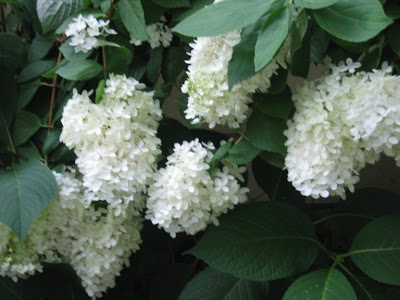
I was walking around my garden this weekend and I couldn’t resist taking yet another picture of my Annabelle hydrangeas. As I wrote in a prior post, my Annabelle hydrangeas–with their dried blossoms–are a highlight of my winter garden (http://heirloomgardener.blogspot.com/2007/12/annabelle-hydrangea-in-winter.html).

This past week, Telegraph.co.uk–the online version of the Telegraph in London–wrote an article praising Annabelle hydrangeas and giving advice on how to grow them. Val Bourne writes:

“The cool white Hydrangea arborescens ‘Annabelle’ produces one of the most magical of all winter seed heads. After the flowers have faded and fallen, a skeleton of fine tracery remains to catch the frost and low winter sunshine. So this is one hydrangea that deserves a prominent place in every garden, somewhere it can shine in three seasons – summer, autumn and winter.”

For the full article, click here: http://www.telegraph.co.uk/gardening/main.jhtml?xml=/gardening/2008/02/08/garden-hydrangea-grow108.xml.

How to Prune Roses, Part I: An Introduction to One Gardener’s Observations on Pruning Her 150+ Roses

On Monday, the temperature reached 65 degrees. I could not stay inside, so I began my early season rose pruning. This is the first of several posts that I plan to write on rose pruning because that is most of what I do in the garden in February and March.

Rose pruning is a year-round job, but a significant part of it happens now. In my garden, I have about 150 roses representing 95 varieties. About half of my roses are once blooming species and old European roses. Most of the other half is a mix of Rugosas, Portlands, Hybrid Perpetuals, Chinas, David Austin roses, Bourbons, and Ramblers. I also have a few Noisettes that are hardy to zone 6 and modern shrubs.

The first step to all pruning is gathering your tools: Felco hand pruners, loppers, glue, gloves, and a bucket to collect the prunings. If you haven’t sharpened and cleaned your tools already, it’s time to do so. There are lots of simple sharpeners out there and sharp tools make pruning easier and are better for the rose. For older shrubs with very thick canes or to pull out material without thrusting your hand into the middle of the bush, loppers are handy.

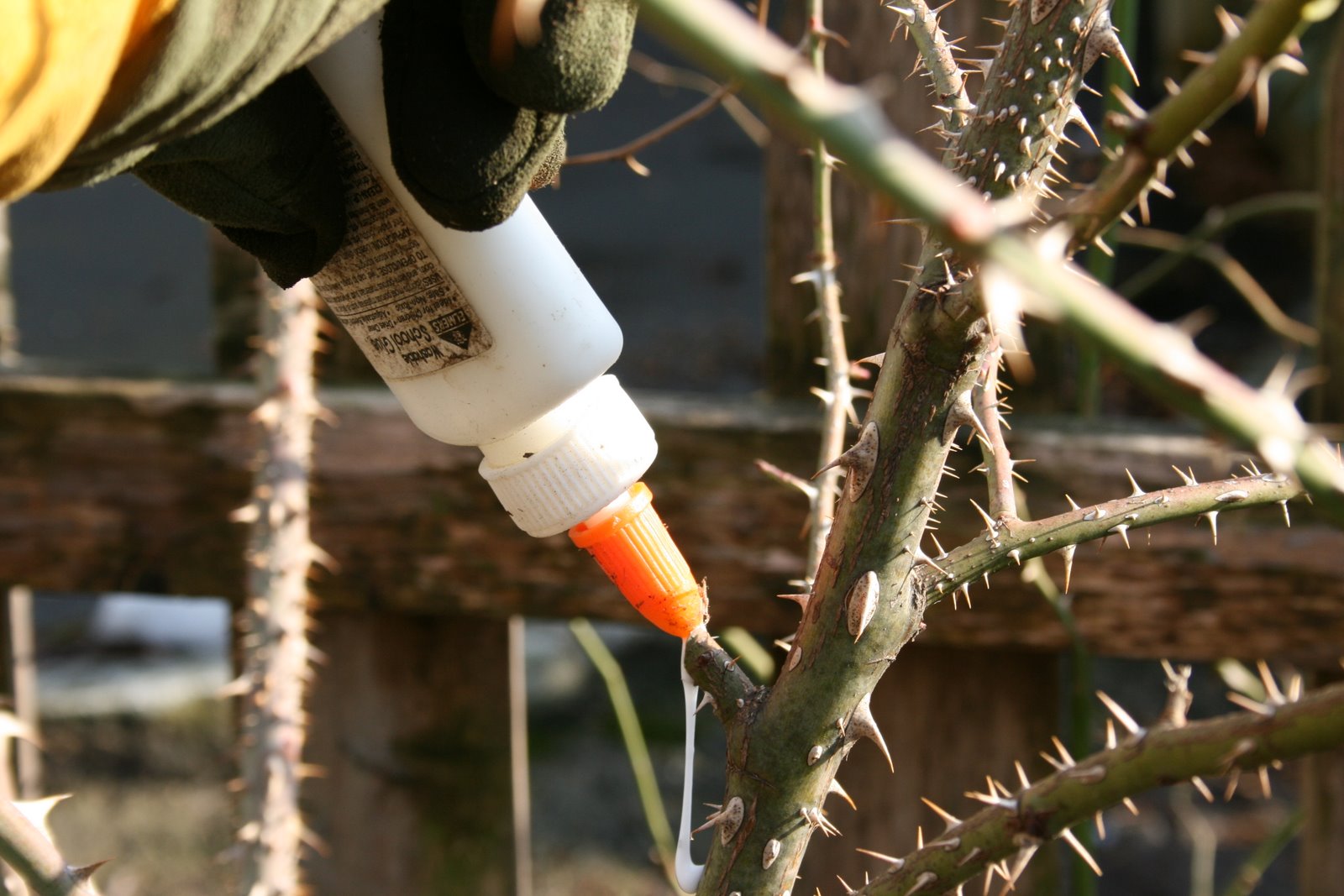
As I prune, I seal every cut with Elmer’s glue to deter bores from entering the freshly cut stems. I got this tip from the DVD Secrets of a Rose Gardener. If you haven’t seen this, it’s a wonderful day with rosarian who started as a garden volunteer to became the head rosarian at Long Island’s Planting Field Arboretum. I’ve been glueing for three years now. From observation in my garden, this does help prevent the borers from damaging the fresh cuts.

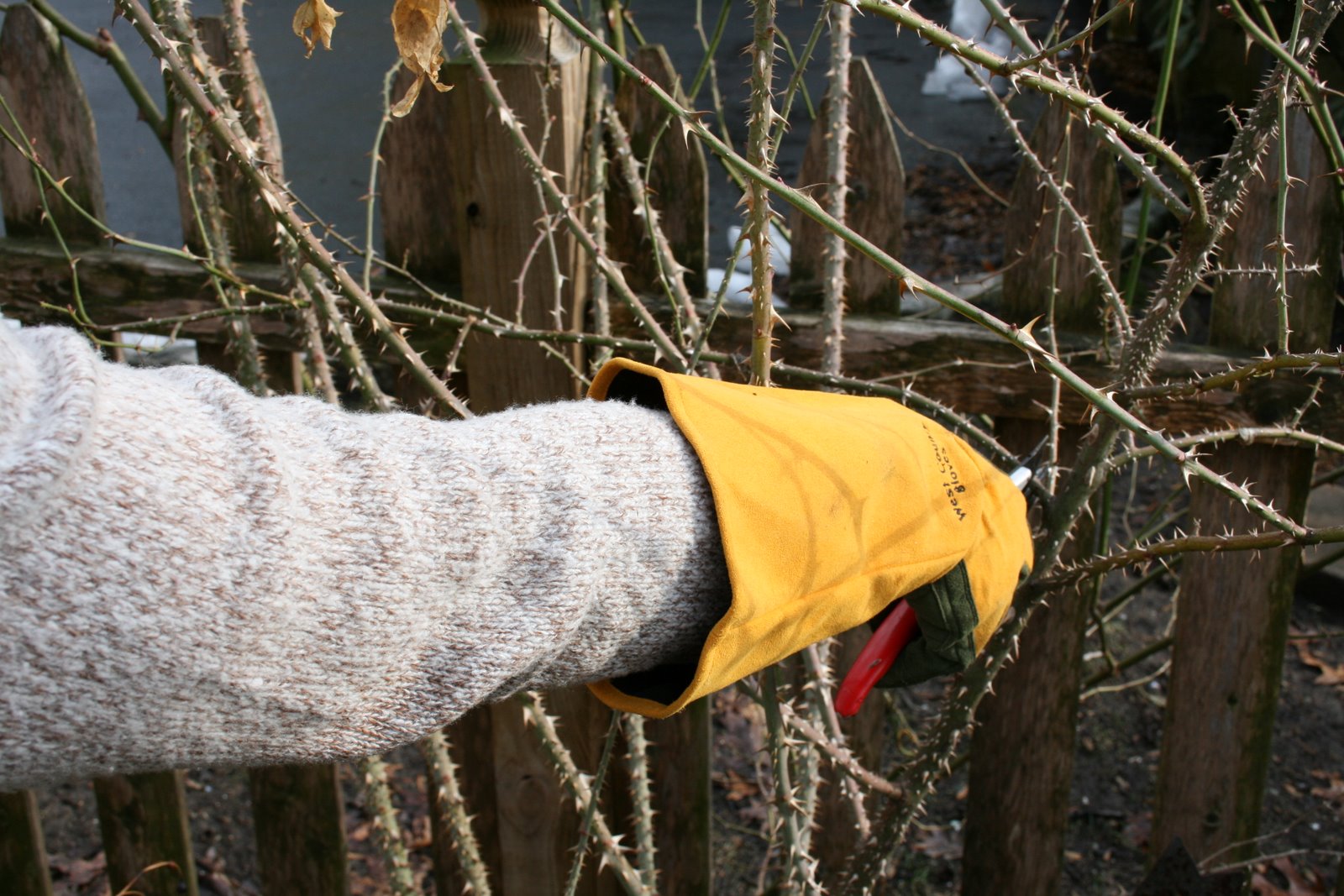
When I prune roses, I sometimes start barehanded, but I always regret it and end up going back to the house for gloves. The thing I don’t like about most gloves is that to be thick enough to not let the thorns in, the gloves restrict the movement of your hand. Last year, however, I bought a pair of rose pruning gloves from West County Glove that are wonderful. They go up to my elbow and allow very free movement of my hands and wrist.

I also get a kneeler because most roses require you to get down onto the ground to have a good look and them. Lastly, I bring out a bucket or large garbage can to hold all my prunings to make clean up easier. My favorite buckets are Tubtrugs.

http://rcm.amazon.com/e/cm?t=heirlgarde-20&o=1&p=8&l=as1&asins=B00009R607&fc1=000000&IS2=1&lt1=_blank&lc1=0000FF&bc1=000000&bg1=FFFFFF&f=ifr

*****

For “How to Prune Roses, Part II: Old Rose Pruning Secrets” click here:
http://heirloomgardener.blogspot.com/2008/03/how-to-prune-roses-part-ii-old-rose.html.

For “How to Prune Roses, Part III: Why Prune?” click here:
http://heirloomgardener.blogspot.com/2008/03/how-to-prune-roses-part-iii-why-prune.html.

Garden Blog Highlights

For some new and inspiring winter garden photographs, check out Country Gardener (http://countrygardener.blogspot.com/2008/02/ice-storm-then-snow-storm.html) and View from Federal Twist (http://federaltwist.blogspot.com/2008/02/my-wet-prairie-in-february-turning.html).

For those of you who love lists of plants, Gardening Tips ‘N’ Ideas notes “Val Bourne from the UK’s Telegraph has boldly gone where no other garden journalist would dare tread – creating her list of the Top 100 Plants Every Garden Should Have” (http://www.gardeningtipsnideas.com/2008/02/100_plants_every_garden_should_have.html).

For fans of living sculptures, Rurality has compiled some amusing photos of mud men and moss maids (http://rurality.blogspot.com/2008/02/of-mud-men-and-moss-maids.html) and Ellis Hollow displays a whimsical cow (http://www.remarc.com/craig/?p=339).

Lastly, for those of you who like to knit when you can’t garden, You Grow Girl has a great post on knit vegetables (http://www.yougrowgirl.com/thedirt/2008/01/31/knit-a-beet/).

Dried Annabelle Hydrangeas

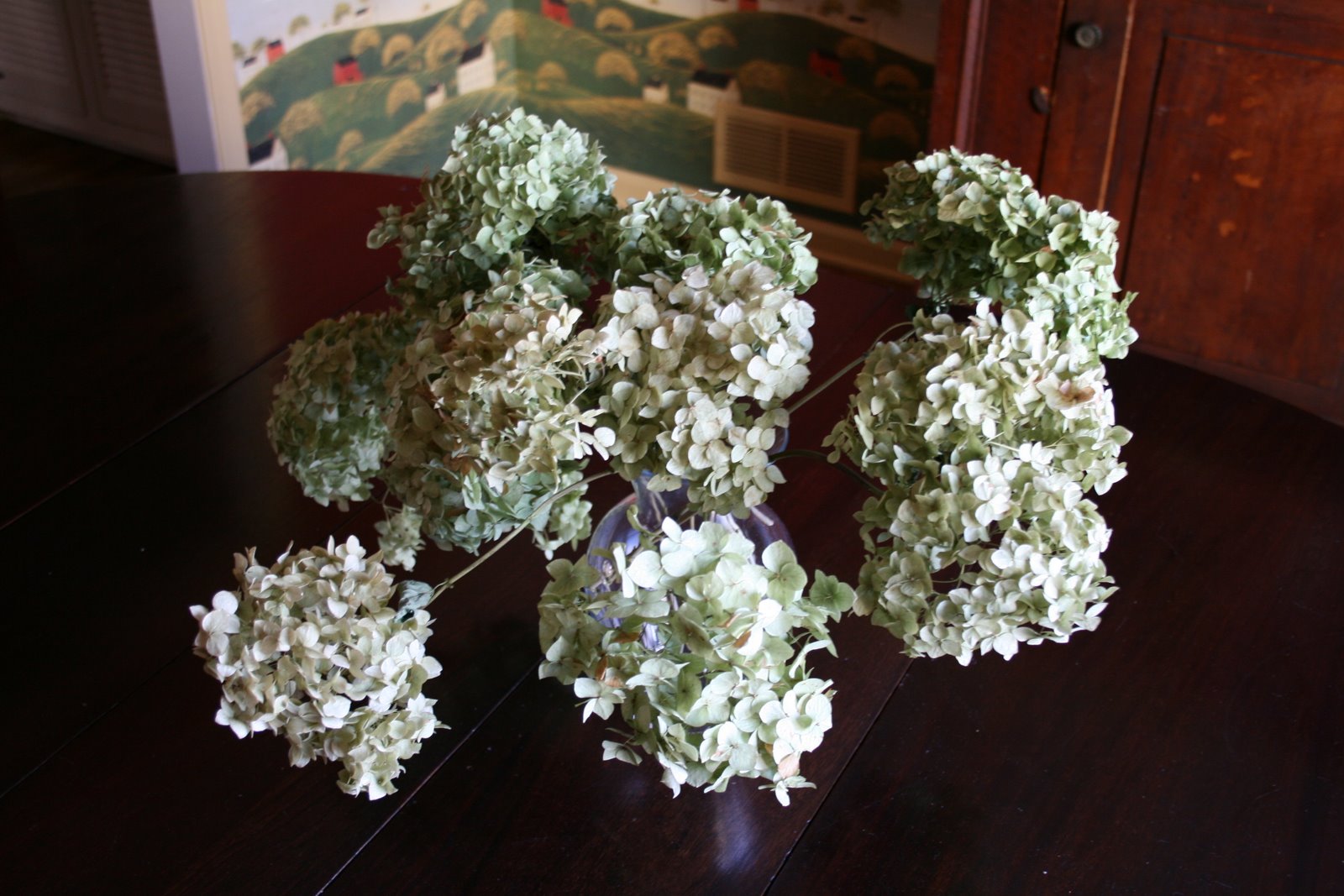
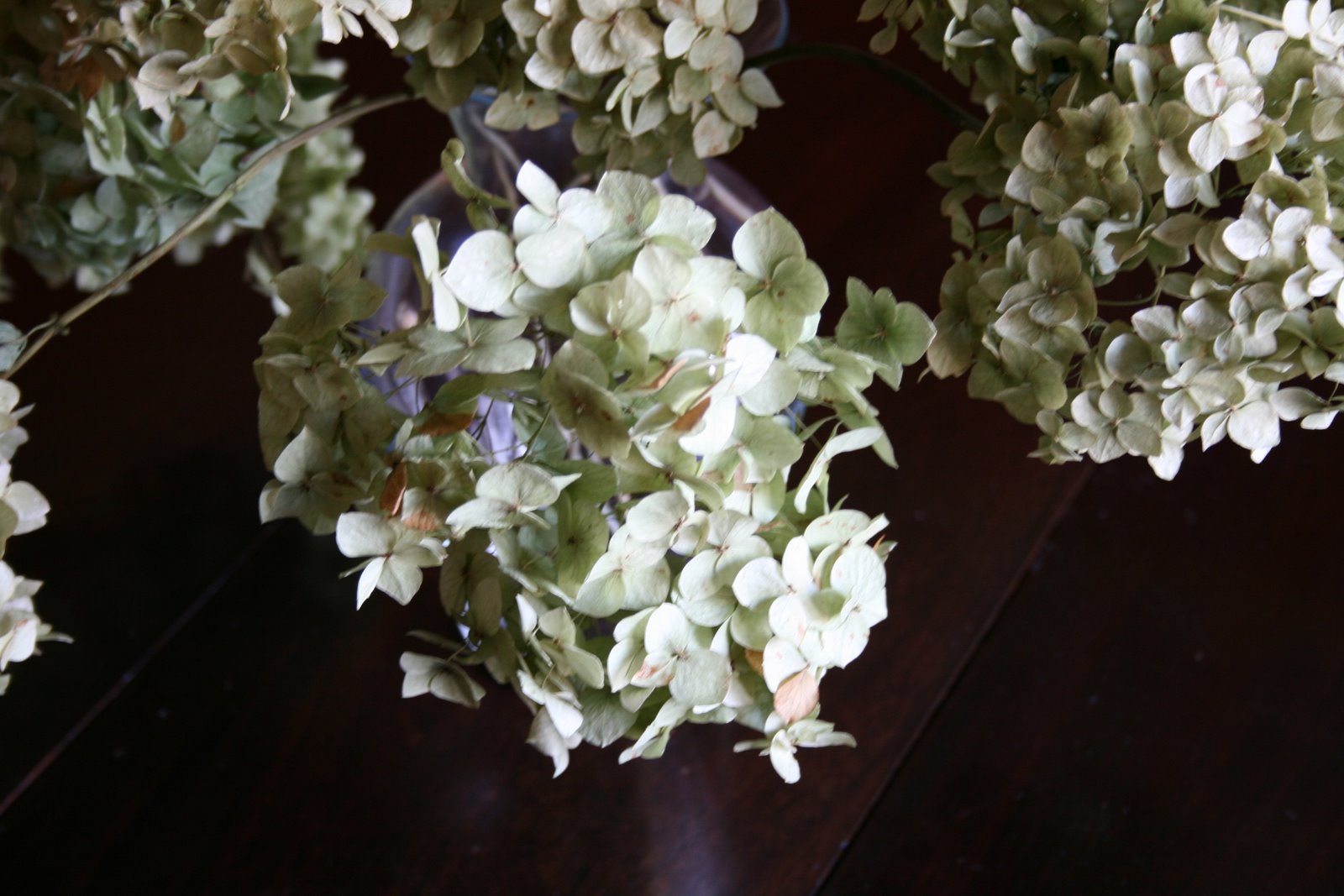
I have several Annabelle hydrangeas on Goldberry Hill. During the summer, their large white mopheads look great both in the garden and brought indoors as cut flowers. As they age, they turn green and then brown. This summer, my friend P cut some of them when they were green, dried them at her home, and gave them to me as a present in the early winter. As you can see, they have retained their attractive green color.

For a prior post about their contribution to the garden in winter, click here: http://heirloomgardener.blogspot.com/2007/12/annabelle-hydrangea-in-winter.html.

How to Prune Pee Gee Hydrangeas and Wisteria: Before Spring Growth Resumes

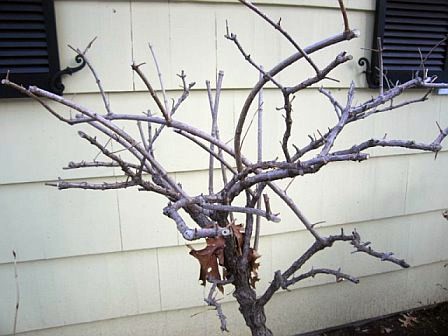
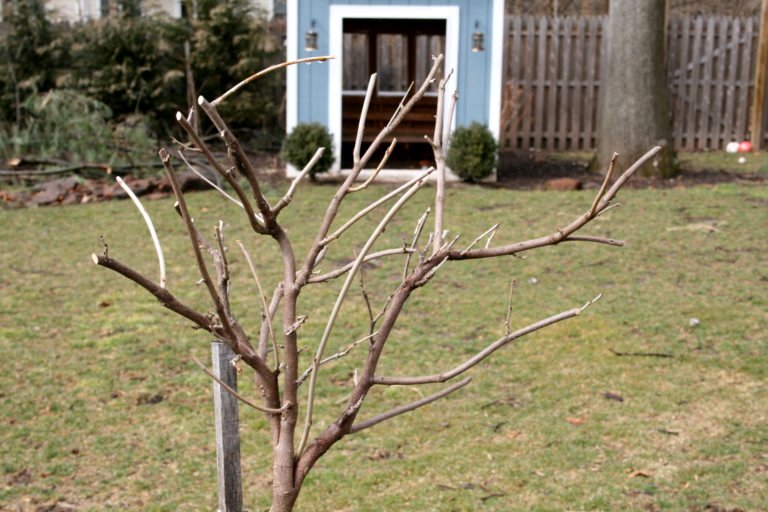
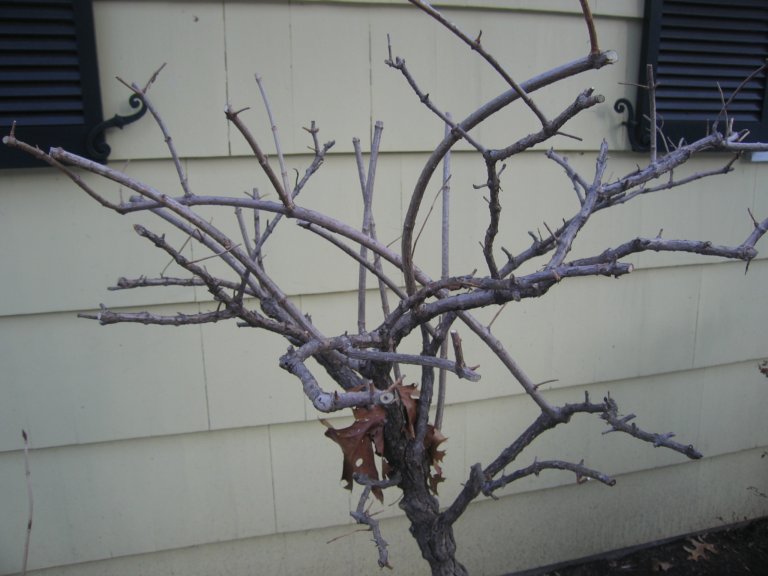
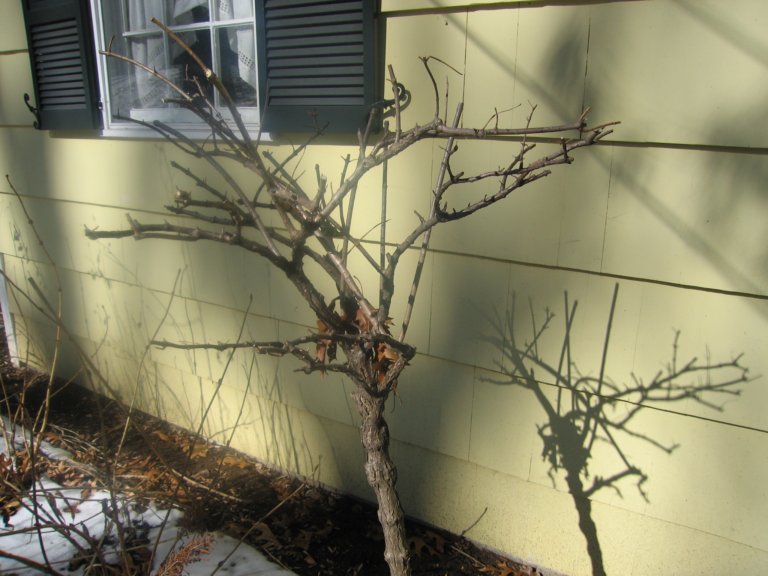
February is the time in my garden to prune the pee gee hydrangeas and the wisteria. I have two pee gee hydrangea standards: one along my front walk (pictured before and after pruning) in the Front Border and another along the fence in the back garden. I do this primarily because space is limited where it’s growing and, secondly, by pruning it I get more blooms (for a picture of the blooms, click here: http://heirloomgardener.blogspot.com/2008/01/front-border-in-summer-plan-for-new.html).

The best time to do this is when the plant is dormant, before the buds begin to swell. If you wait until spring growth resumes, you risk removing this year’s flowers. Pruning can be done in the early winter, but you will miss the lovely dried blooms during the winter. Every year I prune away the previous year’s growth for the one along the walkway. I also take out any twiggy branches that have died back during the winter. For the other which has more space allotted to it, I trim it back to shape it and remove spindly growth.

The wisteria I have is grown as a tree, but the pruning for it is the same as it would be for one grown against a wall. Each branch is cut back to the third or forth bud and any wispy growth is removed. The wisteria is good now until mid summer at which point it will need pruning again.
~
*****
~
Here is a picture of the same pee gee hydrangea in bloom: