Witch Hazel: Winter’s Cheerleader, Yelling for Spring

As a follow-up to my prior post (http://heirloomgardener.blogspot.com/2007/12/common-witchhazel-blooming-in-december.html), this week’s “In the Garden” section of the New York Times featured an article singing the praises of witch hazels, provides useful information about different cultivars, and lists three nurseries that carry a broad selection of them: Fairweather Gardens in Greenwich, NJ; RareFind Nursery in Jackson, NJ; and Broken Arrow Nursery in Hamden, CT.

Anne Raver writes: “Sunny, warm days in midwinter always send me in search of fragrant witch hazels, those graceful shrubs that unfurl their crinkled, confetti-like flowers from January to March.” For the full article, including some great photographs by Andrea Mohin, click here: http://www.nytimes.com/2008/02/14/garden/14garden.html?ex=1360731600&en=cf0cacc8f115ae37&ei=5124&partner=permalink&exprod=permalink
Great Blog Posts About Piet Oudolf

Yvonne Cunnington at Country Gardener has a beautiful picture of her Piet Oudolf Inspired Garden. She writes: “The lack of fussiness, tossing out high maintenance deadheading and staking, combining grasses with naturalistic perennials – these are all the qualities that drew me to his style, which happens to be tailor-made for country gardens.” For the full post, click here: http://countrygardener.blogspot.com/2008/02/more-piet-oudolf.html

Yolanda Elizabet at Bliss has pictures of Piet Oudolf’s private garden. She writes: “Last week I went to Piet Oudolf to look at his nursery and private garden. I had paid him a visit before, last October, but that was during the Grass Days (held annually) when several other nurseries sell their stuff at Piet’s place too.” For the full post, click here: http://blissyo-elgarden.blogspot.com/2007/07/piet-oudolfs-private-garden.html

James Golden at View from Federal Twist writes of Piet Oudolf’s next New York City project, the Highline. He writes: “The Highline, an abandoned elevated rail line on the West Side of Manhattan, is being converted into a linear park and trail. For the first time in New York City, this innovative park will introduce Piet Oudolf’s work on a large scale. While his plantings for the Memorial Gardens in Battery Park are a successful and attractive feature of Manhattan’s southern tip, the Highline is a much more ambitious and challenging project that promises to attract widespread attention.” For the full post, click here: http://federaltwist.blogspot.com/2006/10/highline.html

Inspiration for the Long Border: American Prairie Plants in Battery Park, Designed by Piet Oudolf

I love the plants of the American prairie. The simple forms are beautiful. They are undemanding, attract tons of butterflies, flower over a long period of time, and make me feel connected to the land. Unfortunately, I don’t have the setting and environment where I could create a meadow garden.

In the Long Border, I have tried to incorporate many of these plants–echinacea, black eyed susans, phlox, butterfly weed, goldenrod, joe pye weed, asters, liatris, veronicastrum, monarda, baptisia, rattlesnake master–into my planting.

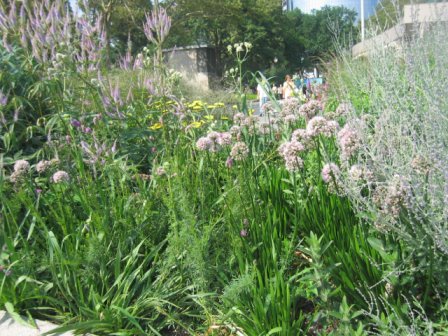
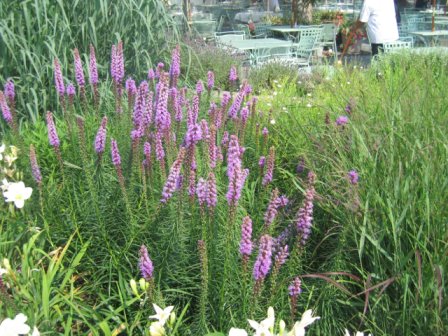
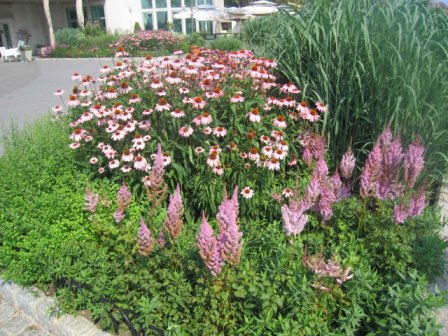
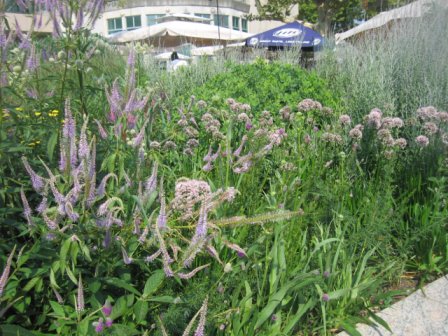
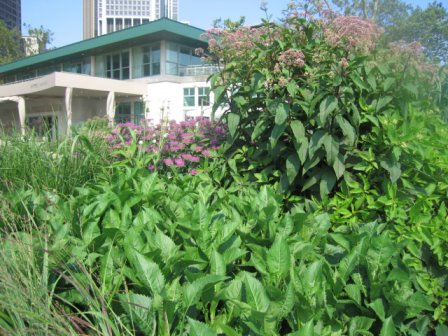
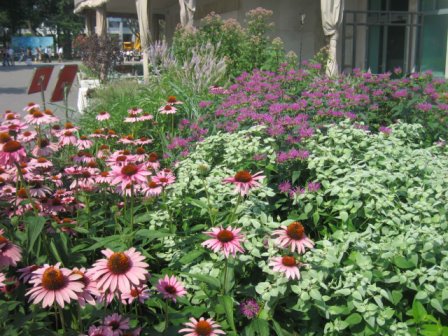
My inspiration for the Long Border came from a trip I took to the gardens of Battery Park in lower Manhattan. These American prairie plants compose a large part of the palette used by Piet Oudolf, the Dutch garden designer of the park. Below are some of the photographs I took on my visit.

The first picture shows purple coneflower and mountain mint in the foreground, backed by monarda, veronicastrum, joe pye weed, and miscanthus.
The second photo shows baptisia (not in flower), monarda, and daylilies with a mass of amsonia in the back.

Photo three shows veronicastum, Russian sage, yarrrow, rattlesnake master, and alliums.
The fourth photo shows liatris and switch grass.

The fifth photo includes purple coneflower, switch grass, astilbe, and oregano.

For pictures of the Long Border, click here: http://heirloomgardener.blogspot.com/2008/01/garden-for-late-summer-long-border.html

For my prior post on Piet Oudolf, click here: http://heirloomgardener.blogspot.com/2008/02/winter-garden-inspiration-piet-oudulf.html

Shakespeare: A February Face, So Full of Frost, Of Storm And Cloudiness


I woke up early this morning before my husband and children and took a walk around the garden. It was cold and there were only a few signs of spring and almost nothing worthwhile to photograph.

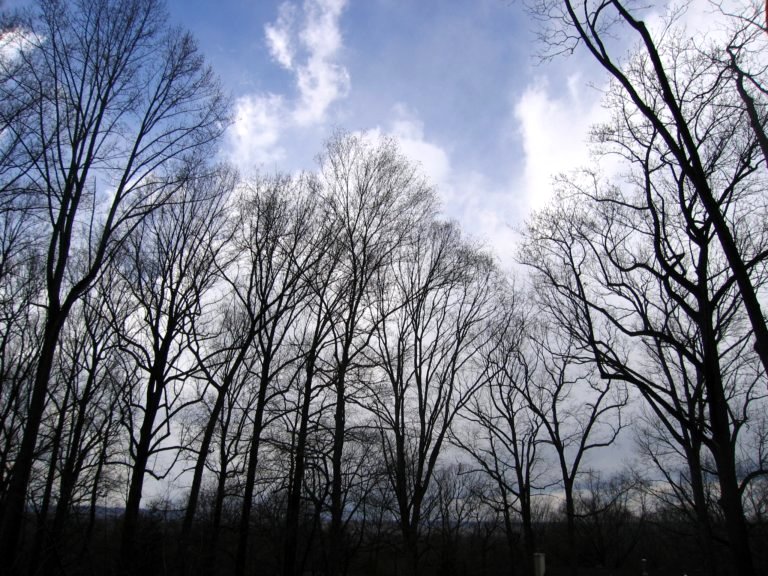
After church, we were sitting down for lunch looking out the windows to the west to this view. Today, with the movement of the sky and the trees, it was particularly beautiful.

Later, we were drawing with the children and this image came back to my mind’s eye when I was looking through a book of Van Gogh’s landscapes, especially the starkness of the trees and the movement of the sky. One of my favorites is his drawing Avenue of Willows with Shepherd and Peasant Woman, 1884.

Regarding this long month for gardeners in the Nothern states, Carolyn over at Sweet Home and Garden Chicago has a great quote from Shakespeare’s Much Ado About Nothing: “Why what’s the matter that you have such a February face, so full of frost, of storm and cloudiness?”

For Carolyn’s full post, click here: http://sweethomeandgardenchicago.blogspot.com/2008/02/garden-bloggers-muse-day-feb-1.html

Garden Color: Inspiration from Chanticleer in Wayne, Pennsylvania

Chanticleer, in Wayne, Pennsylvania, is one of my greatest sources of inspiration as a gardener. It describes itself as ‘America’s pleasure garden’ and that it is. I love Chanticleer because you can tell the staff loves plants and loves to play with them in creative combinations and venues. Everything is done to please and exite the senses.

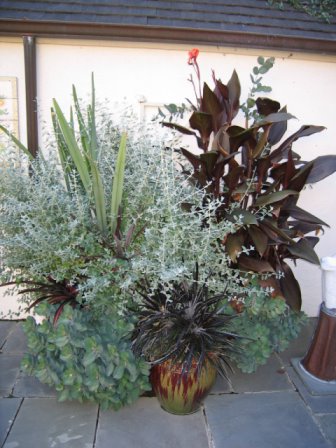
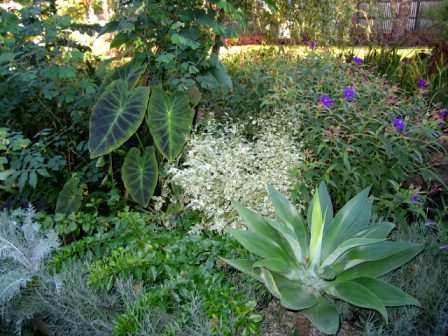
Color at Chanticleer is as much about flowers as it is about foliage. The combination of various leaf colors, textures, and shapes makes the garden interesting without any thought to flowers.
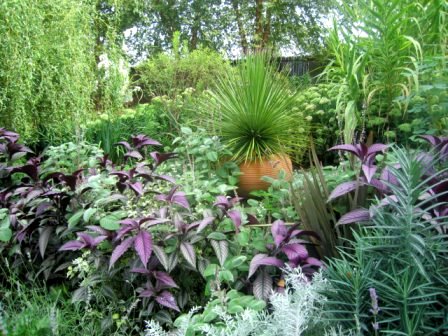
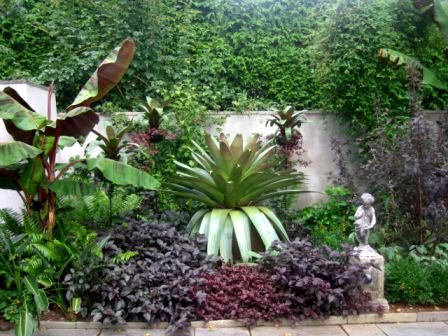
Purple leafed plants run as a theme through Chanticleer. I love how dark leaves interact with light and add a deep rich beauty which soothes the mind rather than excites.
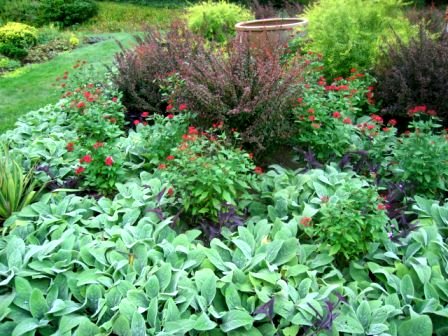
Over the last several years of viewing Chanticleer, I have added two smokebushes (Cotinus ‘Grace’ and ‘Royal Purple’), Rose glauca, purple phormiums, dark leafed clematis like ‘Freda’, amaranthus ‘Hopi Red Dye’ to my garden. The dark color relieves the green and really brings out any silver toned plants nearby. Also, the purple foliage looks great in floral arrangements.
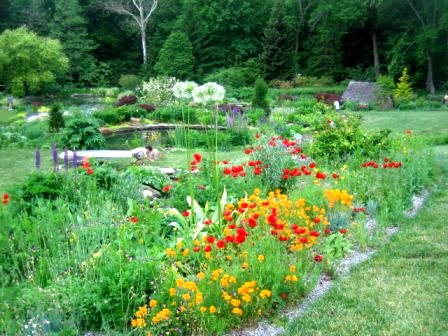
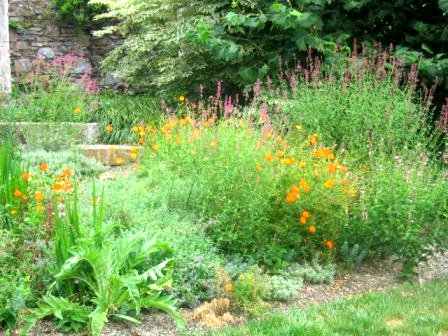
One of my favorite quotations from Christopher Lloyd as it regards planting and border design is that “you should never have to explain what you were trying to do.” At Chanticleer, this rings true. All the plantings are dense, rich, and full. The feeling of abundance surrounds you. There is rarely one of anything. Instead, it’s large swaths of poppies set against orange wallflowers.
My garden is my small piece of Eden where I can experience this. This year I want to do a combination of yellow anthemis and orange butterfly weed. I know from Chanticleer I’ll want to plant more than I think of both.
For more information about Chanticleer, click here: http://www.chanticleergarden.org/
This post was inspired by the “Garden Bloggers’ Design Workshop – Colors in the Garden” at one of my favorite gardening blogs, Gardening Gone Wild: http://www.gardeninggonewild.com/?p=698


Twelve Months of Garden Color in New Jersey (Zone 6b)

As it relates to color in the garden, one of my goals is to create year-round interest. Looking through my pictures, the year starts with whites and yellows; the middle months have a full range of of bright colors; and the year ends with the deep colors of berries. Here is a brief overview of these colors with one picture for each month of the year.

This post was inspired by the “Garden Bloggers’ Design Workshop – Colors in the Garden” at one of my favorite gardening blogs, Gardening Gone Wild: http://www.gardeninggonewild.com/?p=698

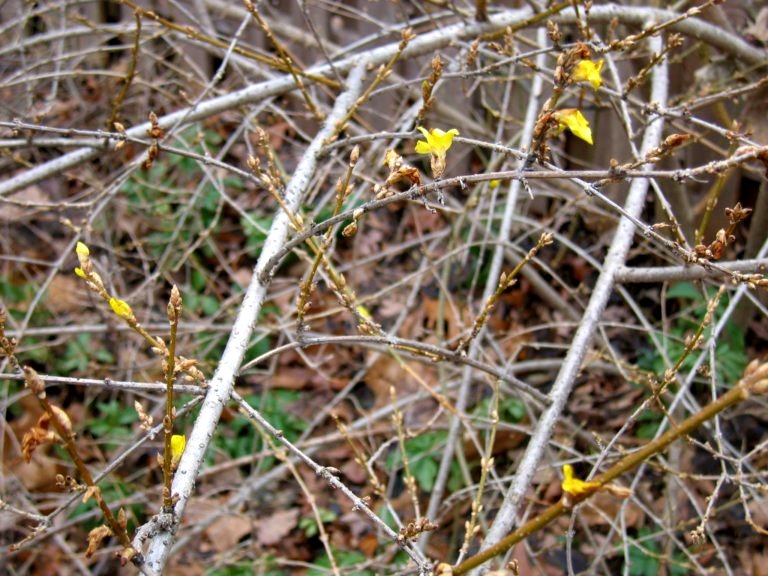
January in northern New Jersey (zone 6b) is a hard month to find any color in the garden. Fortunately, whenever the weather warms up into the forties, the forsythia start to show off some of their blooms. Of course, when it gets cold again, they hide themselves away until it warms up in earnest. This is the time when I start to cut the branches off and bring them indoors to force–my favorite thing to do with forsythia.

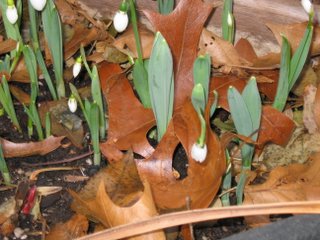
February is the month for snowdrops. I have snowdrops in the Cutting Garden and, last fall, planted more in the Walled Garden. These small flowers are so cute and the first real sign that spring is coming. Given their size, you really can’t plant too many of them–think hundreds. Since I like to plant a lot, I buy my snowdrops wholesale from Van Engelen. Once they come up, I cut small bunches for vases. Pests do not eat these bulbs.

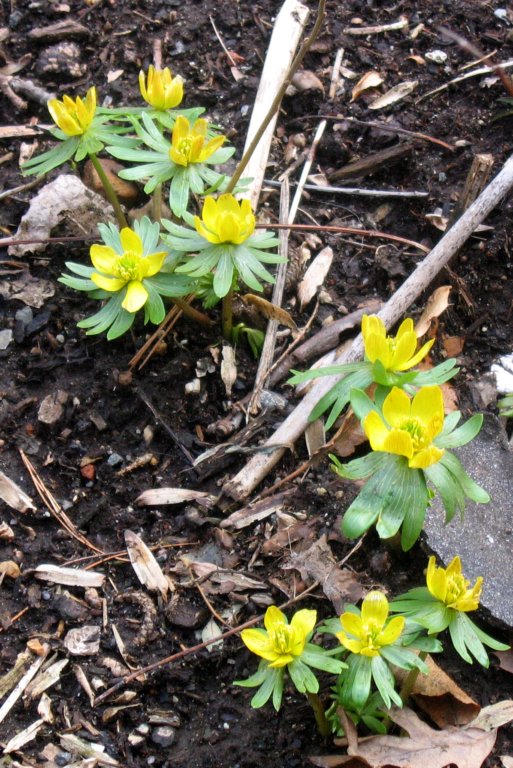
The March bulb show begins with winter aconite. It is another small bulb that I planted under Prunus ‘Forest Pansy’ in my front border. It took me a couple of years for me to get these established. I was most successful with bulbs from Old House Gardens. I think the difference was that these bulbs dry out very easily and Old House Gardens coats the bulbs in a horticultural wax to prevent this. If you know someone with an established clump, it’s best to beg a few in the green and replant them immediately in your garden. Pests do not eat these bulbs.

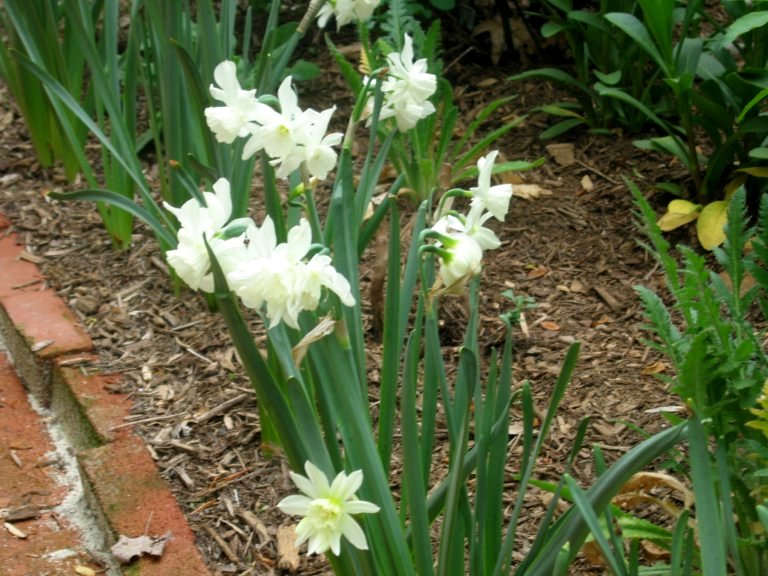
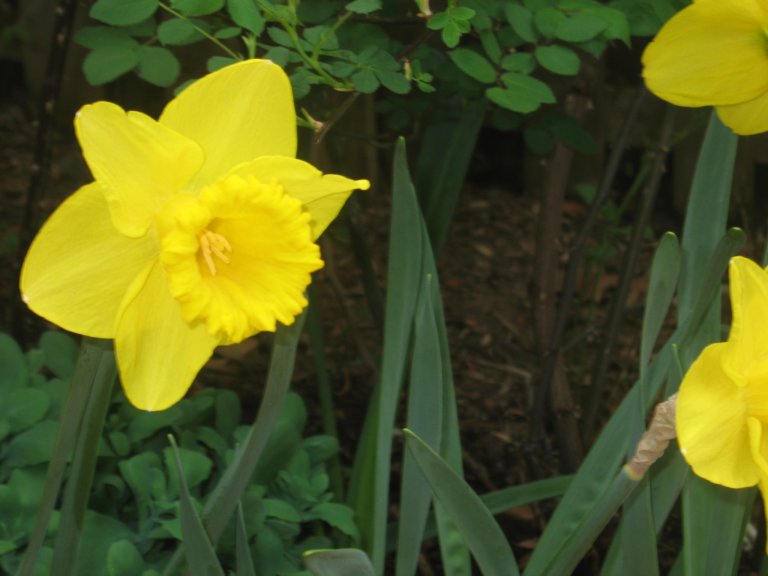
April, of course, is the month for daffodils. I plant hundreds of daffodils all over the garden. I plant all sizes and colors, but am particularly fond of the white daffodils. The earliest actually start to bloom at the end of March and they last through April into May. Pictured here is an old heirloom Thalia.

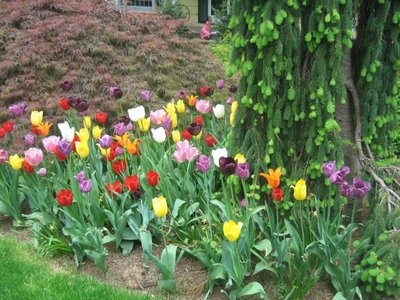
May is one of my favorite months in the garden as tulips explode everywhere. Last year, my combination was inspired by the Granny’s Garden collection from Old House Gardens. I planted a mix of the following tulips, most of which are older varieties: Cum Laude, Glowing Pink, Kingsblood, Maureen, Queen of the Night, Dillenborg, Mrs. John Scheepers, Colour Cardinal, Princess Irene, and Ballerina.

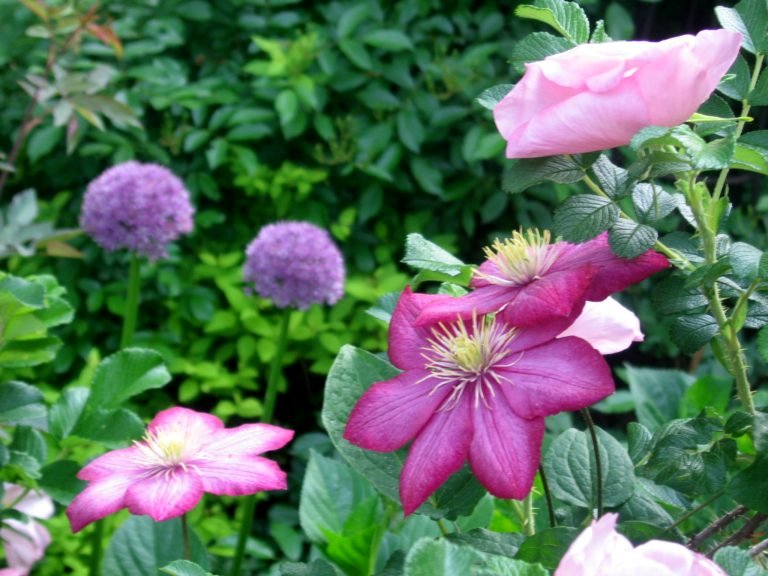
June is the most colorful month in my garden. As the spring bulbs wind down, the garden bursts into bloom with roses, clematis, alliums, peonies, poppies, and many more. In the picture is one of my favorite rugosa roses Frau Dagmar Hastrup. Frau Dagmar is small for a rugosa reaching only about 3 feet tall and about as wide. It begins blooming in May and continures until November. The leaves are a beautiful, quilted, dark green. Frau Dagmar also sets many hips when I stop deadheading. The fragrance of Frau Dagmar is magnificent.

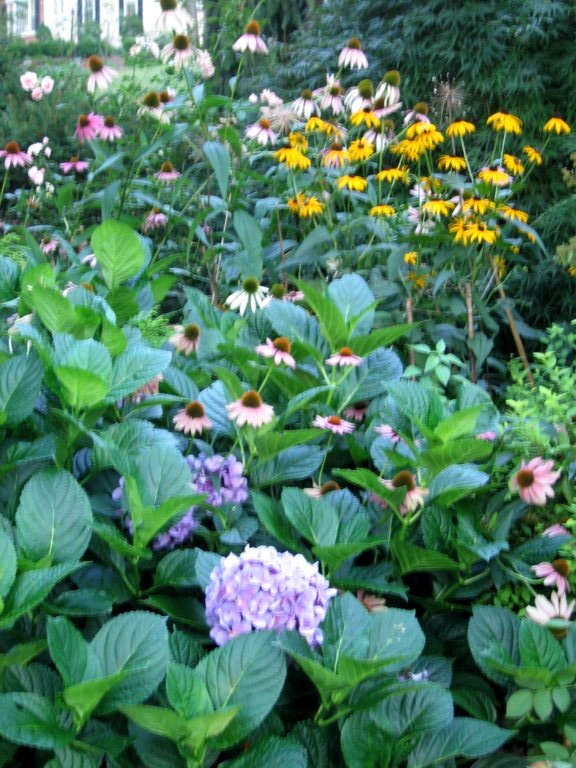
July is when the plants from and reminescent of the American prairie take over. Purple coneflower, the many rudbeckias, joe pye weed, heleniums, helianthus, phlox, milkweed, monarda, erygium, echinops, and shasta daisies all begin their bloom. These plants, despite the heat and humidity of summer, keep going and going while attracting many birds, hummers, and butterflies to the garden. By mixing these with grasses, you have color, movement, and beauty that will carry you well into September.
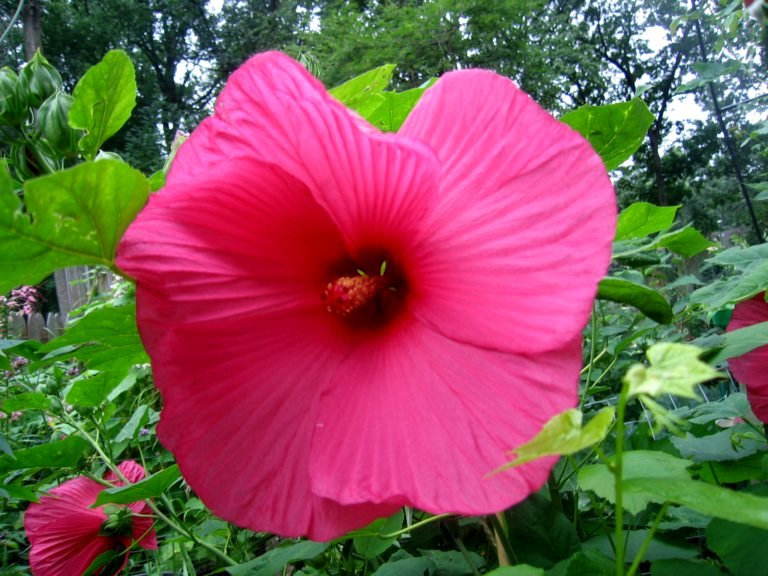
One of my daughters is in love with hibiscus and has been reminding me I haven’t put a picture of her hibiscus on my blog yet. In August, the huge tropical looking flowers garner lots of attention. The flowers are great floated in a vase and keep coming over a long period of time. Also, the seed pods of the hibiscus are quite beautiful afterward.

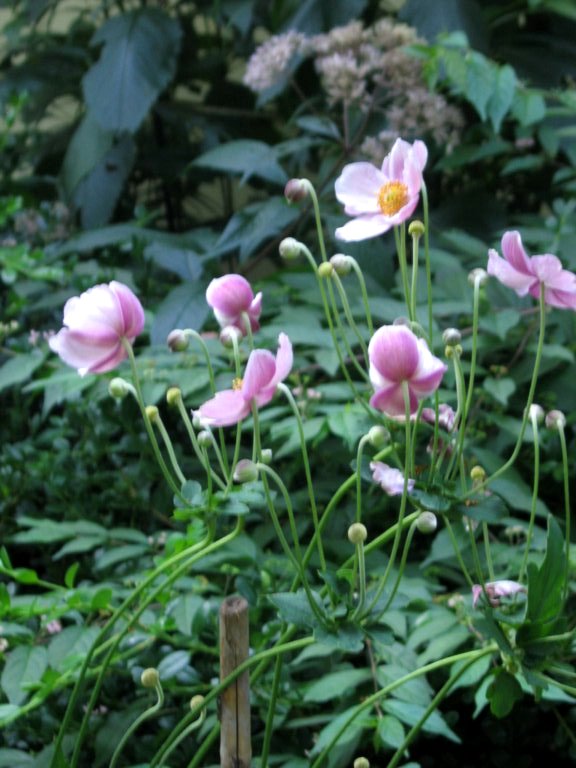
September is part of summer in my book. The garden is still in full swing with no sign of winding down. By the end of the month, however, the Japanese anemone ‘Queen Charlotte’ is beginning to bloom, signaling the very beginning of fall.

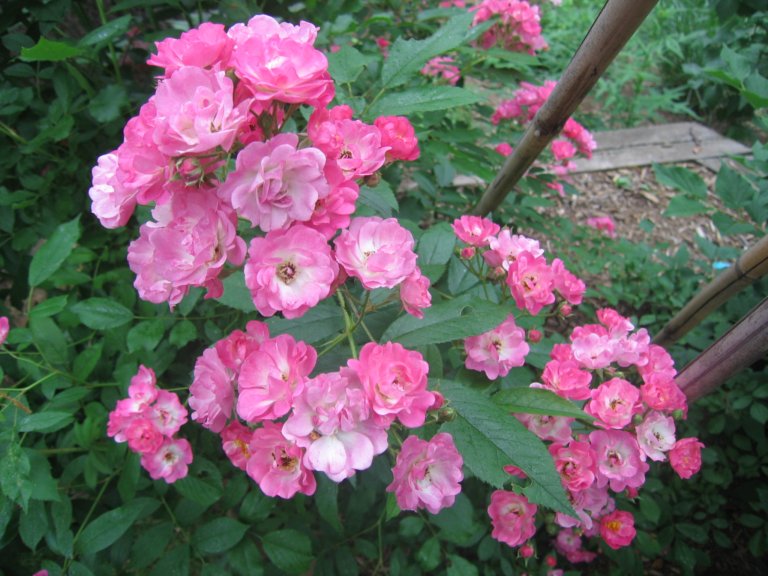
October is the month of rose rebloom. In our garden, any rose that is going to rebloom, puts on a very generous display in the autumn even if it hadn’t bloomed since June. The cooler temperatures in September helps to restart the roses after the heat of August. Pictured here is Belinda, an heirloom hybrid musk rose, purchased from Antique Rose Emporium. I deadheaded this rose throughout the summer and was rewarded in the fall with a very generous flush of roses in addition to the many others throught the summer.
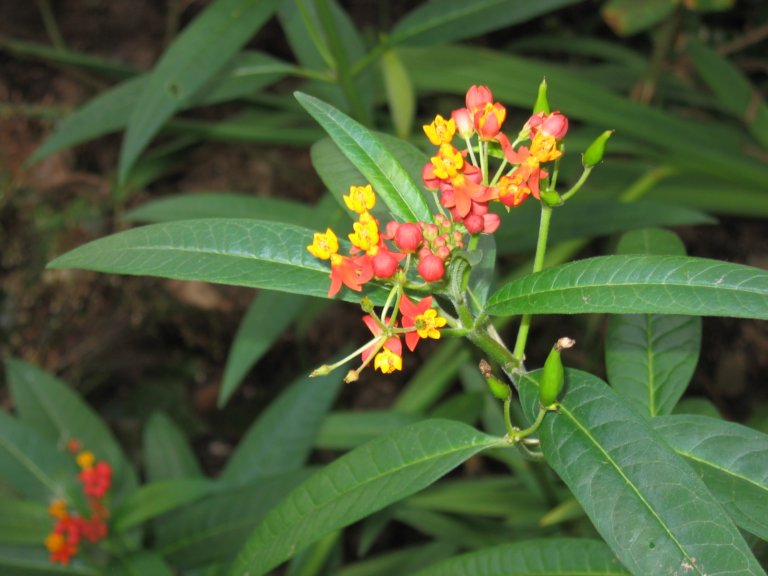
The butterfly weed pictured here was a welcome volunteer from a clump of Mexican milkweed I planted in 2006. I did not expect it to reseed for me given that its grown mainly in zone 8 and warmer. But the seedling did come and were enjoyed by many monarch catepillars. The plants came into bloom very late in the season. They, however, made it through many light frosts and only died well into November when we had a hard frost.

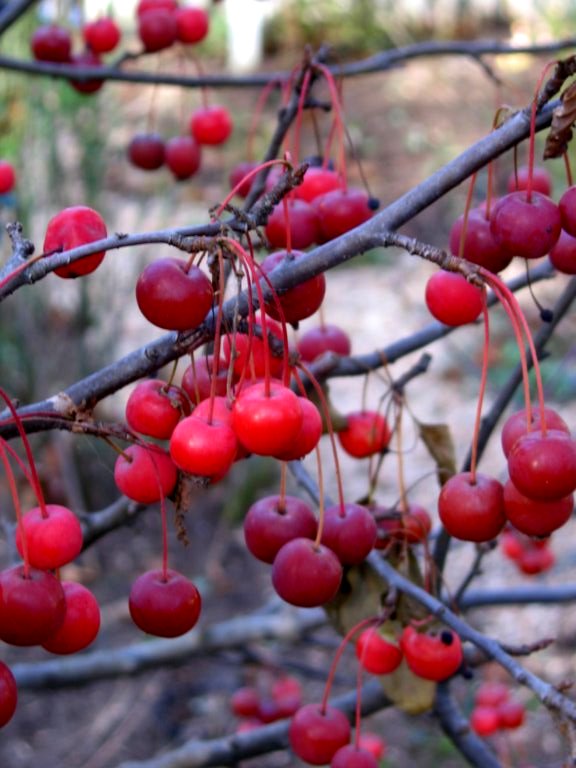
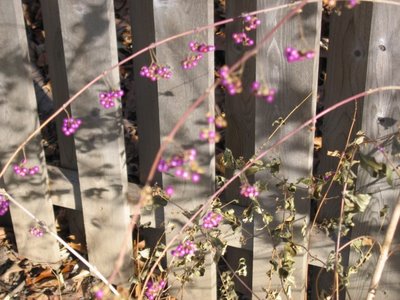
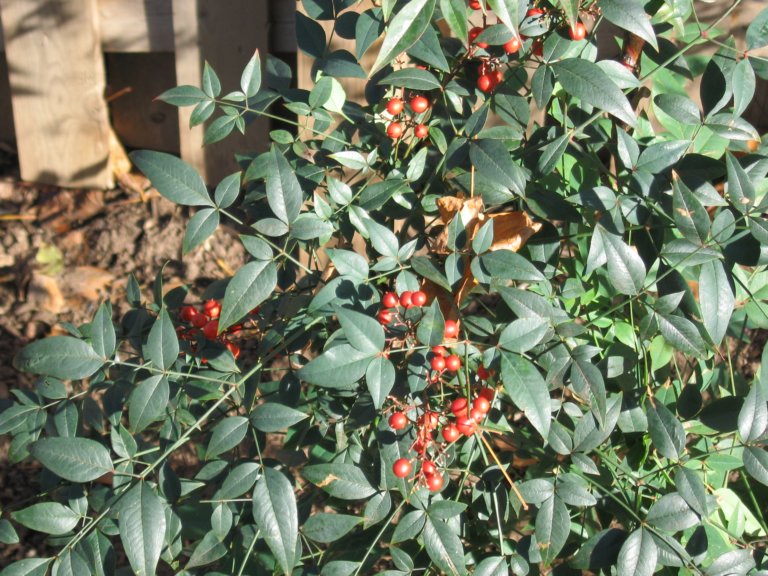
December leaves me with the scarlet crabapples in the Egg Garden and many other berries from roses, nandina, Japanese beautyberry and winterberry.

Winter Garden Highlight: Lace Cap Hydrangea on Goldberry Hill

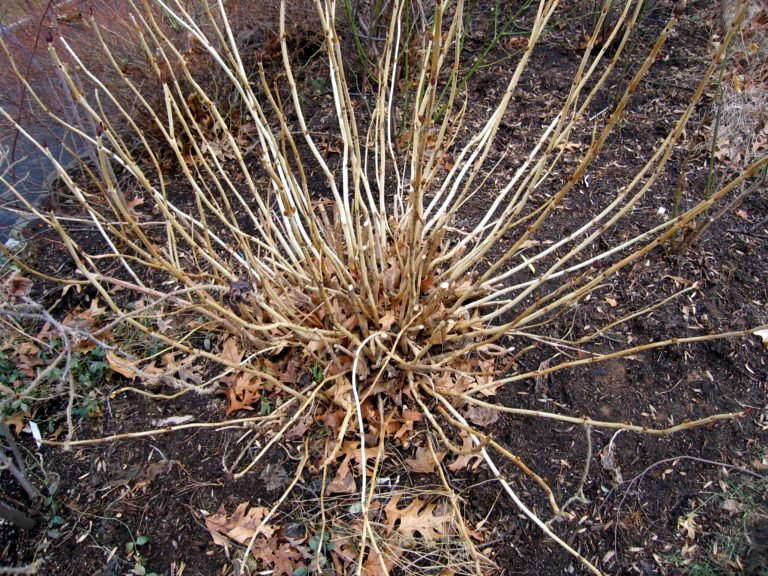
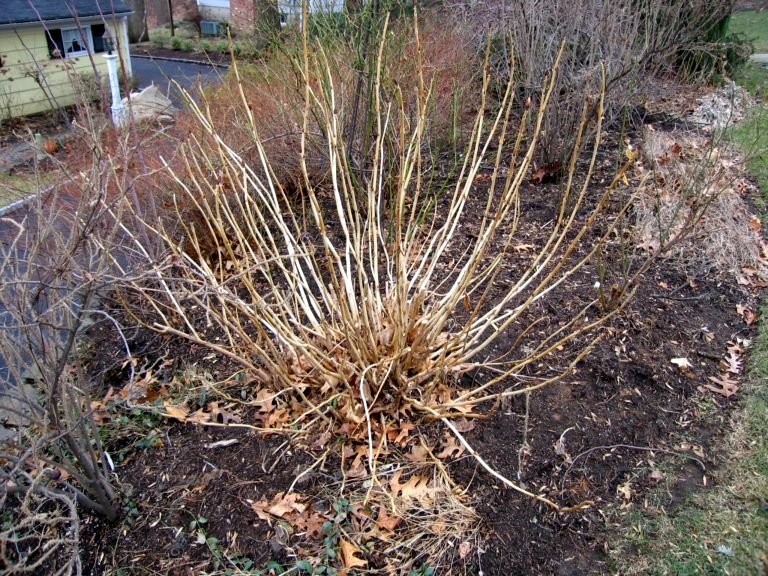
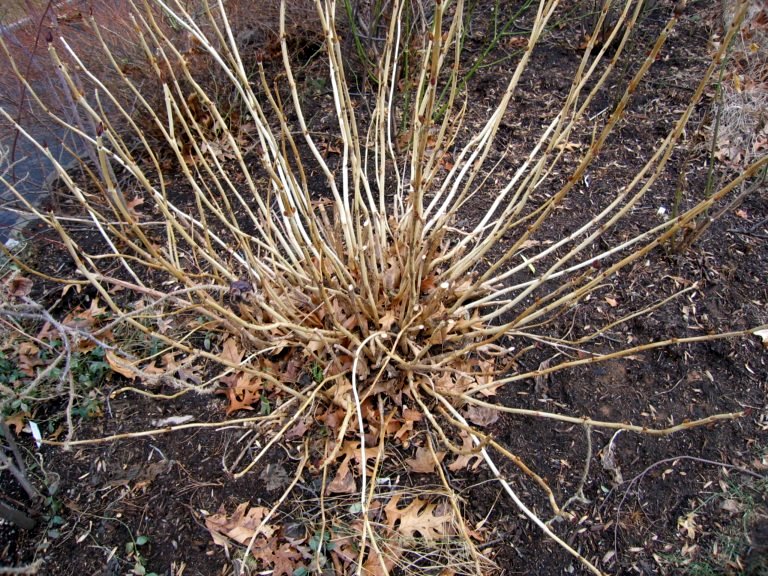
As I’ve written about in some of my prior posts, I have been trying to improve the appearance of my garden in winter. Part of this improvement includes appreciating the beauty that is already there, such as the large, mature hydrangea at the top of Goldberry Hill. The form and color of the bare stems have a beauty all their own.

For a picture of this same hydrangea in summer, click here: http://heirloomgardener.blogspot.com/2008/01/gardening-on-hill-goldberry-hill-in.html


Japanese Beautyberry (Unexpected) Propagation

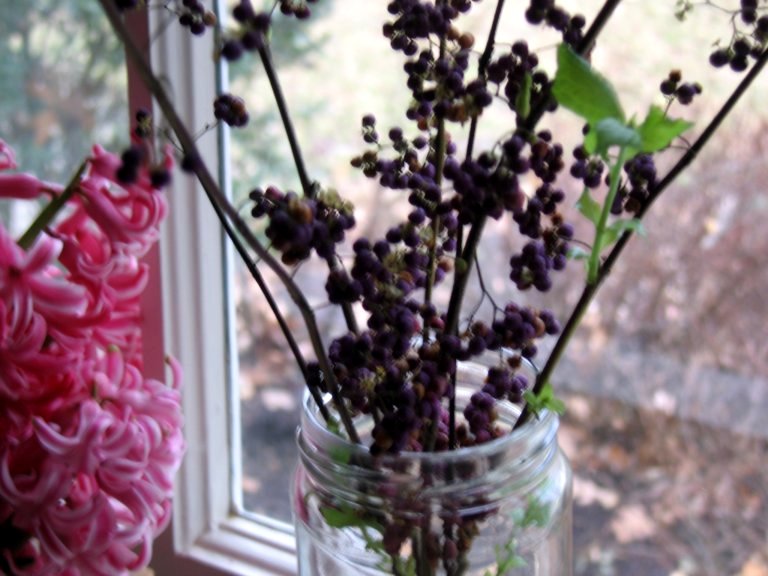
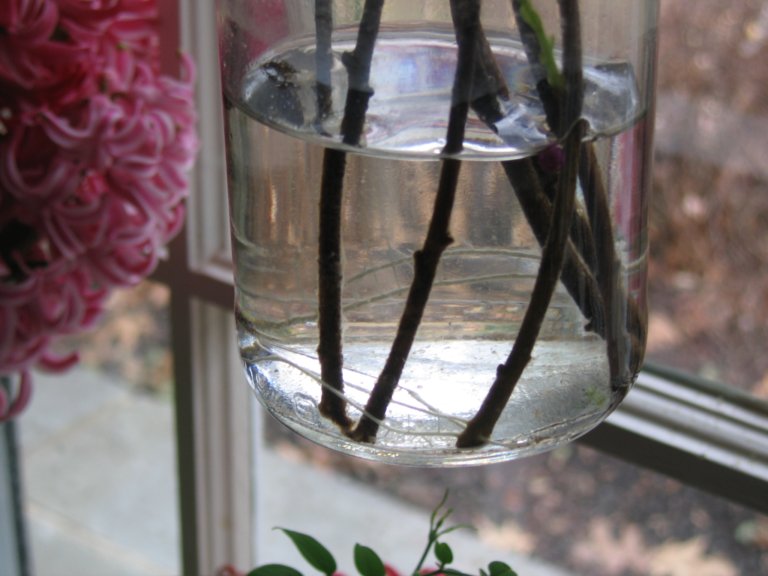
As a follow-up to my prior post about Japanese Beautyberry, I have an unexpected surprise to share with all of you. The Japanese Beautyberry that I cut back in November and put in a vase of water started rooting and sending up new shoots, as you can see in the pictures below. I should replant them now in some soil let them develop better roots inside before planting them outside in the spring.

For the original post, click here: http://heirloomgardener.blogspot.com/2007/12/japanese-beautyberry.html

Winter Garden Inspiration: Piet Oudulf

I have been working on making my garden look more attractive during the long winter months. In this week’s Home & Garden section of the New York Times, they give a peak into famous Dutch gardener Piet Oudolf’s personal garden in an article entitled “A Landscape in Winter, Dying Heroically.” His personal garden is only one acre, and it is an inspiration–even in winter. For the full article and slide show, click here:

http://www.nytimes.com/2008/01/31/garden/31piet.html?ex=1359522000&en=9170d4bed2c36a64&ei=5124&partner=permalink&exprod=permalink