My Love Affair with Clematis: Inspiration from Raymond Evison and Barbara Packer

I never liked clematis. Everyone in my neighborhood had the perfunctory clematis draping their mailbox. They were beautiful in bloom, but later did nothing for the mailbox.

Then in 2004, I met Raymond Evison at the Philadelphia Flower Show and I fell in love. Mr. Evison is one of the world’s foremost experts on and hybridizers of clematis. He has been growing clematis his entire life and produces somewhere around twenty five percent of all clematis sold in the world. Some pictures from his presentation at the Philadelphia Flower Show can be seen here: http://philadelphia.about.com/library/gallery/bl2004fs197.htm

The enduring lesson I learned from Mr. Evison is that clematis can and should be grown with other plants. The vines are gorgeous when in bloom, but are not so interesting otherwise. With this simple principle, the possibilities are endless: clematis with roses, clematis with shrubs, clematis with trees, clematis intertwined with perennials, and even clematis with ground covers.

I probably now have around 100 clematis throughout my garden and I feel like I’m just beginning my collection–there are so many spaces for clematis. Clematis offer such a range of color, vigor, and bloom time that every garden could find more spaces for clematis. Each time I plant a shrub, I usually plant a clematis along with it. Lilacs, for example, are dull most of the year; by adding a clematis that blooms later like ‘Venosa Violacea‘ (heirloom 1883), you have two seasons. Or clematis ‘Madame Julia Correvon‘ (heirloom pre-1900)blooms at the same time as caryopteris creating a great dark pink and blue combination. Herbaceous clematis from the intergrefolia group like ‘Hakuree‘ can be planted to weave in and out of perennials. If you have a shady spot you wish to brighten, many of the lighter colored clematis actually preform better there than they do in full sun. The part sun will not reduce their blooming power and will make the color of the flowers more vibrant. Two good clematis for part sun and northern exposures are ‘Dawn’ and ‘Asao.’ On a low evergreen, the upward facing, vase shape blooms of the ‘Texensis Viorna group are beautifully set off.

Some people shy away from clematis thinking that they are difficult to prune and grow. If you don’t want to deal with pruning decisions buy clematis in group 1 which don’t need pruning or in group 3 which you cut back to two to three buds in the late winter. As for growing, if planted deeply–at least two to three inches deeper than they are in the container–success is almost assured. Clematis have a remarkable ability to regenerate from underground shoots. I have had vines that look like they have not made it through a transplant or have fallen victim to clematis wilt that come back later in the season or the following one. Once chosen and planted well, just fertilize and keep well watered.

If Mr. Evison was not enough inspiration, in August 2007, The New York Times wrote about Barbara Packer and “The Climbery, her seven-acre clematis garden…near Livingston, N.Y., in Columbia County. With 600 varieties and 6,000 vines, it’s the largest private clematis collection in the world, according to the International Clematis Society.” Like many of us, Ms. Packer is not a professionally trained gardener, but this is no encumbrance to her being passionate about her garden. If you are reading his blog, I’m sure you know what I mean. For the full article, click here: http://www.nytimes.com/2007/08/31/travel/escapes/31away.html?pagewanted=all

For a prior post about the Betty Corning clematis on my arbor, click here: http://heirloomgardener.blogspot.com/2008/01/two-perfect-flowering-plants-for-arbors.html

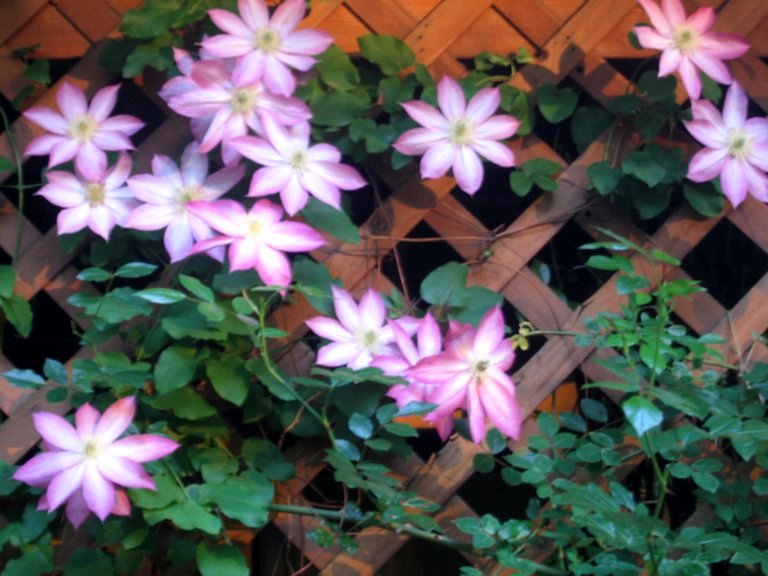
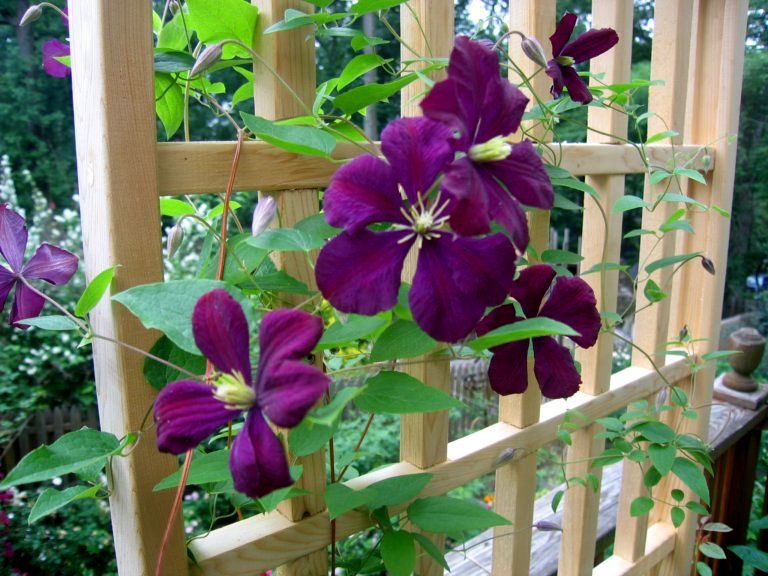
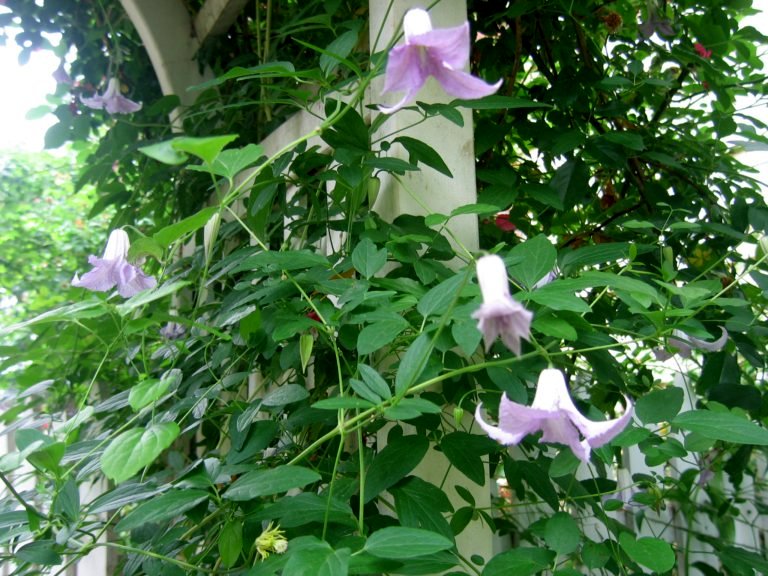
The pictures below are: ‘Ville de Lyon’ (heirloom 1899) growing in full son on Goldberry Hill; ‘Asao‘ growing in shade under our deck; and ‘Etoile Violette’ (heirloom pre-1885) growing in full sun on the deck.

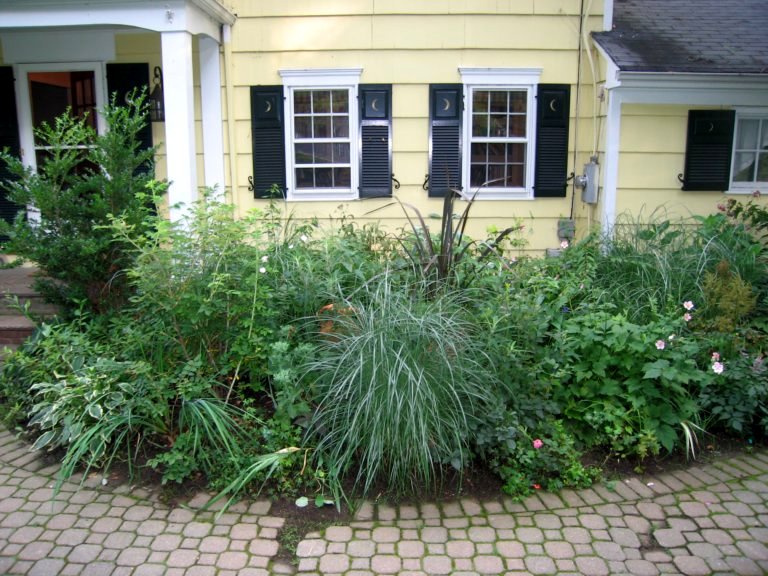
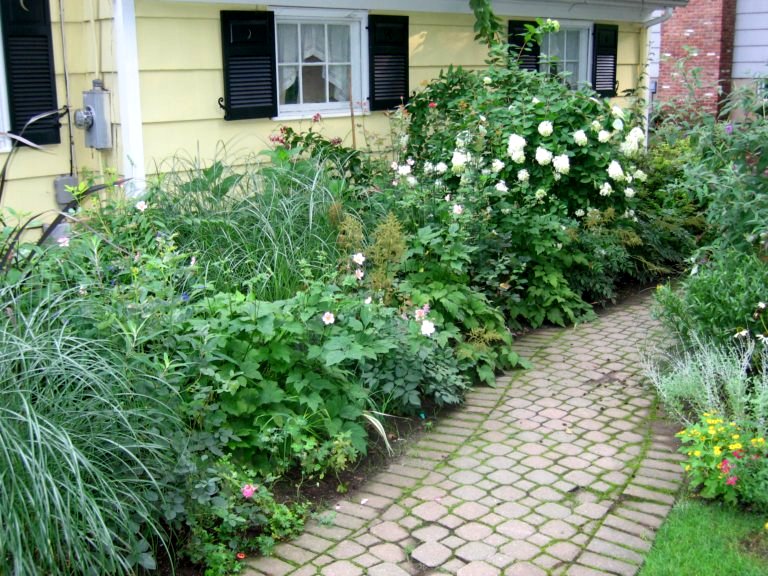
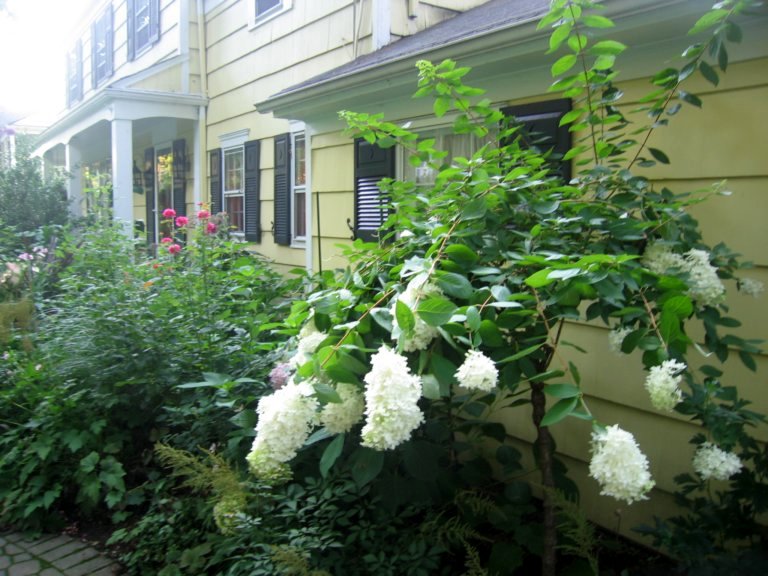
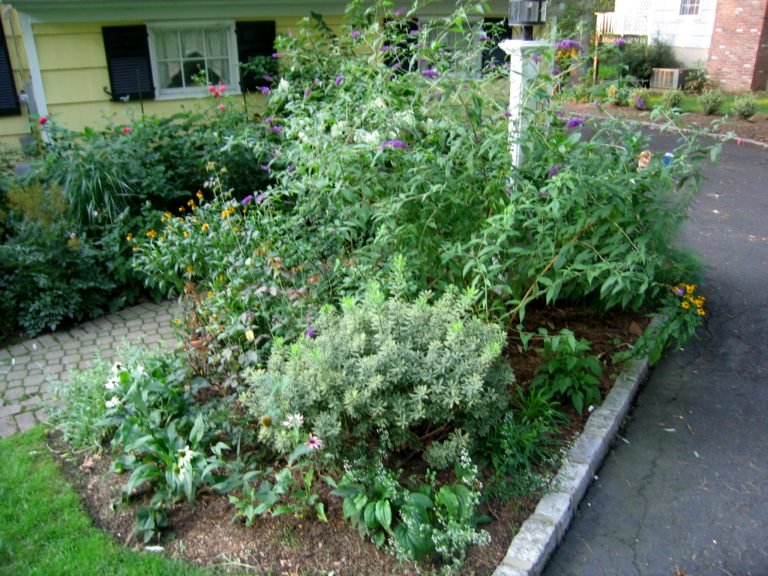
Front Border in Summer & Plan for the New Path

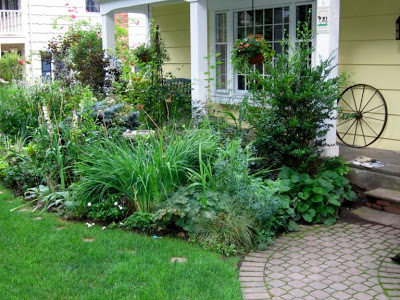
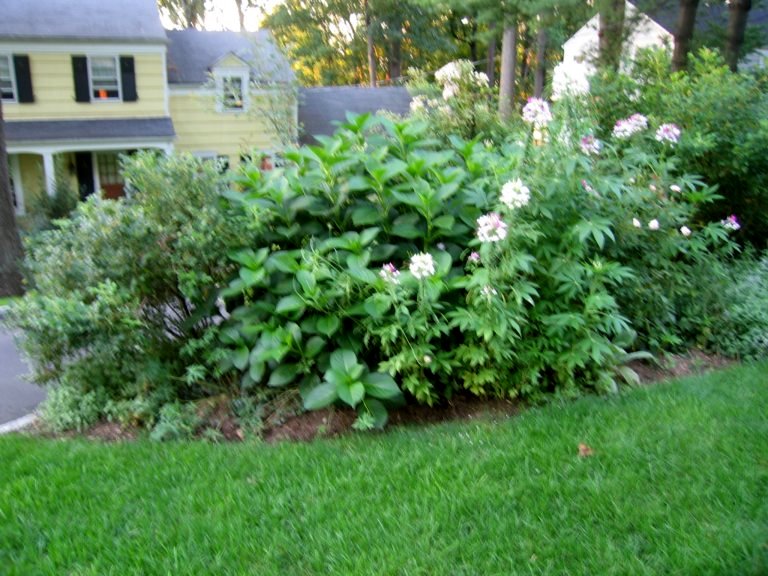
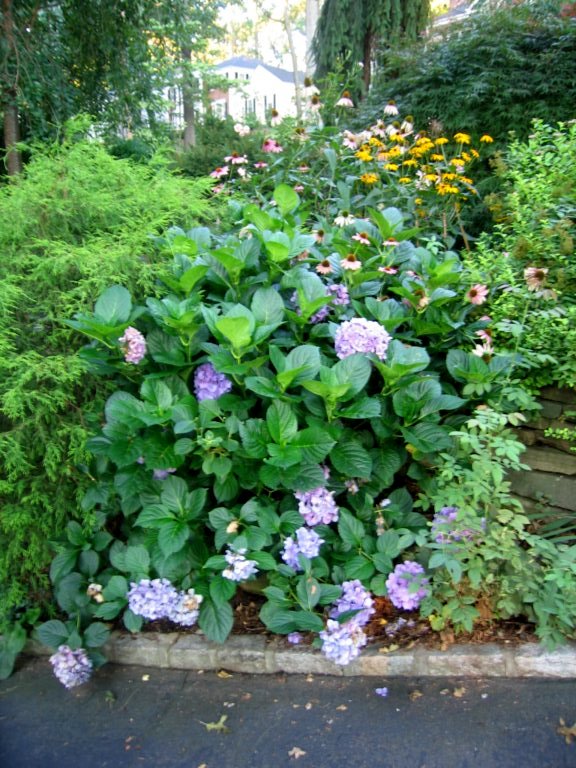
To help me plan for this coming gardening season, I am going through some of my pictures from last year. Here are some of the Front Border from last summer. The Front Border is a mixed border.

One of this year’s projects will be to fix the path that runs from the driveway to the front door. The path has two problems. The first is that some of the stones that make up the path have started to sink and the path is becoming hazardous to visitors. This is a relatively minor problem compared to the second. The second problem is that the path is in the wrong place. From the street, you walk down the steps through Goldberry Hill. At the bottom of the steps, you want to walk directly across the driveway, across the grass, and to the front door. This is where the path should be. Instead of this route, the path requires you to make a right turn down the driveway about twenty feet and then a sharp left turn around the light post (you can see this in the last picture).

The solution will be to create the direct path that does not exist with a continuation of the steps and stones that already exist on Goldberry Hill. You can see the steps on Goldberry Hill here: http://heirloomgardener.blogspot.com/2008/01/gardening-on-hill-goldberry-hill-in.html

Follow-up post: Heirloom Gardener’s Four Year Front Garden Makeover, including pictures of the new path


Two Perfect Flowering Plants for Arbors: Betty Corning Clematis and Dortmund Rose

My favorite of all plants to grow on an arbor is the heirloom clematis ‘Betty Corning.’ I have only two arbors in my garden–they both have Betty Corning. My hope is to install additional arbors to the Bird Garden and the Walled Garden. These too will have Betty Corning.

I love this clematis because of its scent. It has a lovely, sweet scent that hangs in the air just as you pass through the arbor. The scent is never cloying. It’s like the perfect perfume that you catch a hint of as someone passes by you.

Betty Corning is also very easy to grow. It is classed in the viticella group which means at the beginning of the spring as the buds swell you cut down last years growth to the first two to three buds. I fertilize my clematis liberally with fish and/or seaweed emulsion during the growing season which produces lots of strong growth and lots of bell shaped flowers. I purchased Betty Corning from Chalk Hill Clematis.

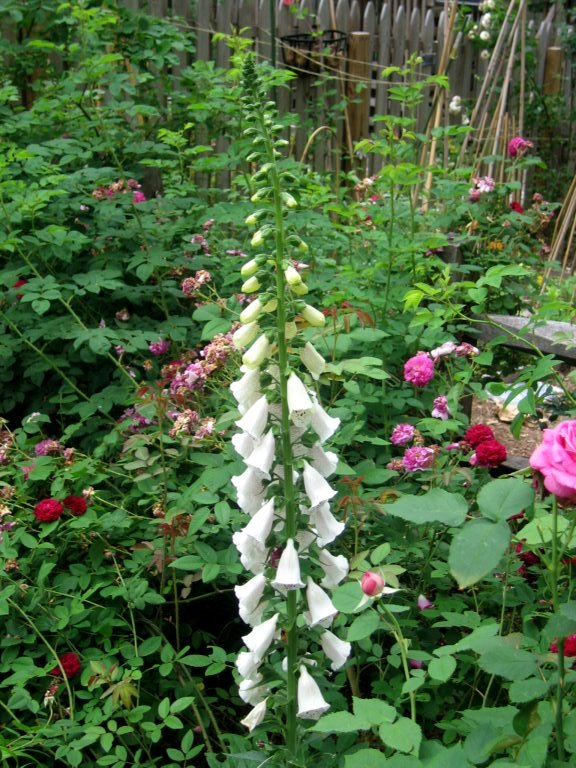
With Betty Corning grows the heirloom rose ‘Dortmund.’ This is the most asked about rose I grow. It catches everyone’s eye with its large, single red blossoms covering the arbor and itself in June. When it flowers the arbor isn’t seen nor are Dortmund’s glossy, disease resistant leaves. Dortmund is a repeat bloomer, but blooms most prolifically in the early summer and fall. Last year I didn’t get around to deadheading Dortmund, but as a result I got a bumper crop of hips to use for winter arrangements. For pictures of the hips, click here: http://heirloomgardener.blogspot.com/2007/12/dortmund-rose-hips.html

I purchased Dortmund from Antique Rose Emporium. Dortmund covered the arbor within a season, however, it is what I would call a well mannered climber–it never gets out of hand by too much exuberant growth for an arbor. With Dortmund though, you must be vigilant about tying in its canes to the arbor as it has very large curved thorns. Also, wear long sleeves and good, thick gloves for the yearly pruning in March.

This post was inspired by Gardening Gone Wild’s Garden Bloggers’ Design Workshop on Arbors and Pergolas: http://www.gardeninggonewild.com/?p=599

When Do You Force Forsythia? Now is the Time

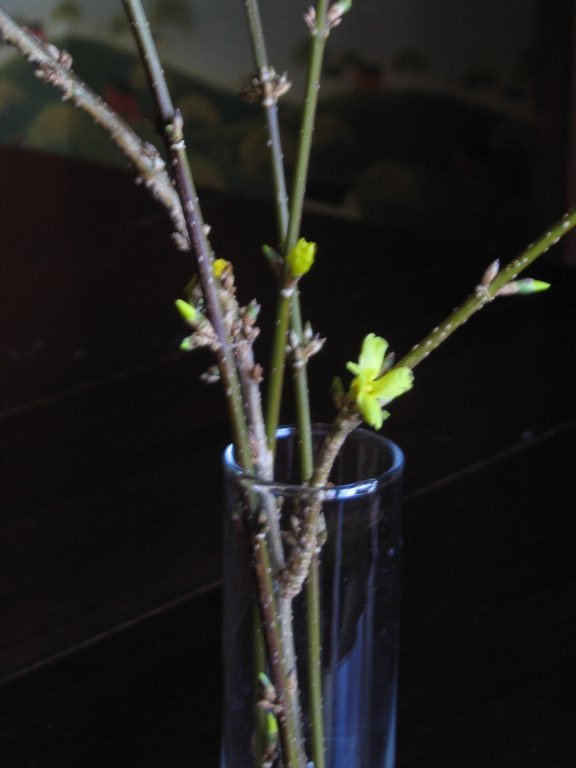
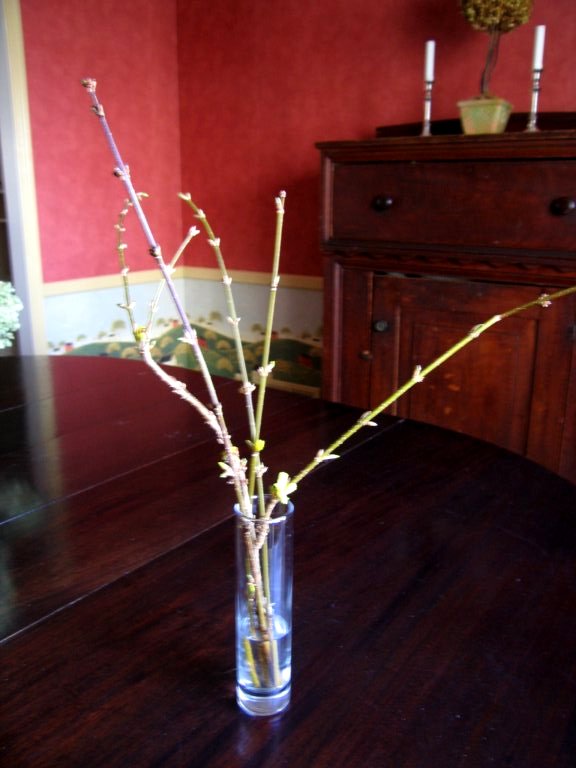
Now is the time. Go out and cut as much forsythia as you want. The plant grows like a weed and for each cut, you’ll be rewarded with long straight stems for the next winter’s forcing. Put the forsythia in a vase, wait a week or two and you’ll have flowers, wait longer and you’ll get green leaves.

For a prior post and additional pictures on forcing forsythia and bulbs, click here: http://heirloomgardener.blogspot.com/2006/02/forcing-forsythia-and-bulbs-of-all.html

Gardening on a Hill: Goldberry Hill in Summer – Phlox, Shasta Daisies, and Lamb’s Ear Replace Black Eyed Susans

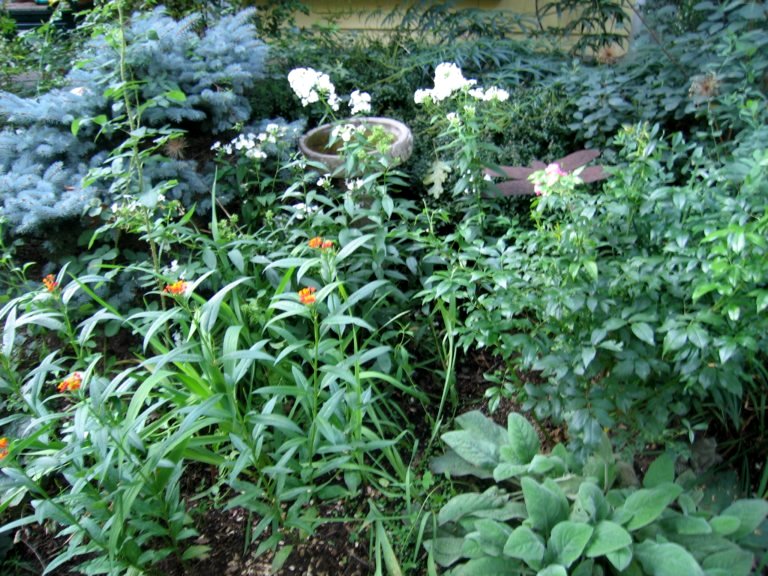
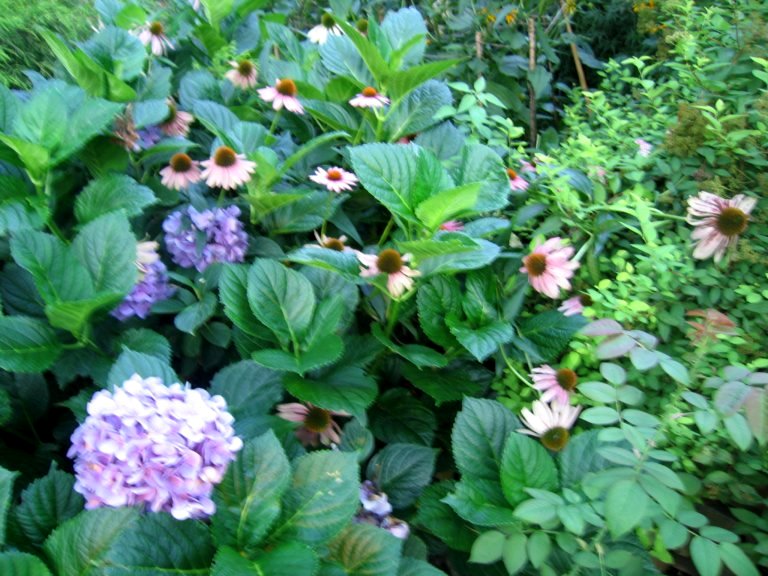
To help me plan for this coming gardening season, I am going through some of my pictures from last year. Here are some of Goldberry Hill from last summer. Goldberry Hill is the name of the garden in the front of my home on the hill between the street and my driveway. Goldberry Hill is made of small trees, shrubs, perennials and grasses.

In the first picture, there are newly planted phlox, shasta daisies, and lamb’s ear. Previously in that space, there were black eyed susans that were prone to a fungus that made the leaves turn black. Because this is right in the front of the house next to the road, I decided to pull them out and replace them. Given that the black eyed susans self-seed, you still see some in the third picture in the middle of the purple cone flowers where no one can see their black leaves.

The heirloom flox are Old Cellar Hole from Perennial Pleasures. The shasta daises are Becky and the lamb’s ear are Big Ears from my local nursery. Unfortunately, the deer started snacking on the flox at the end of the season, so I’ll have to wait and see if they come up again in the spring.

For pictures from last spring, click here: http://heirloomgardener.blogspot.com/2008/01/goldberry-hill-last-spring.html

The Egg Garden Path Makeover: Replacing the Terra Cotta Stepping Stones with Pebbles

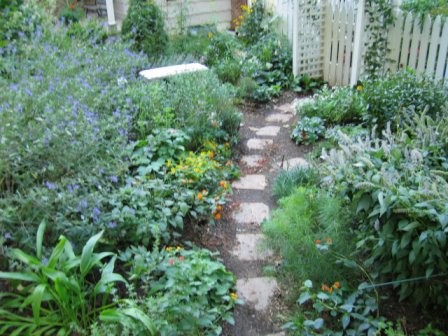
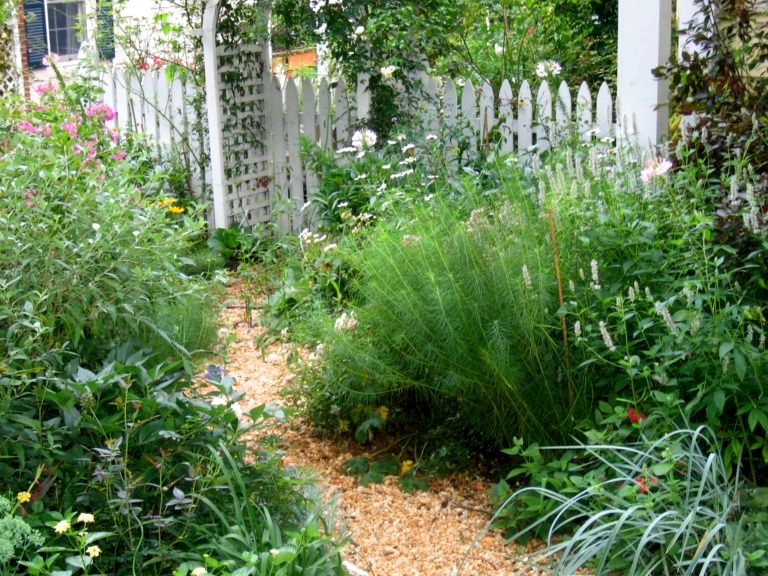
One of my goals for this upcoming gardening season is to improve my paths. Below are before and after pictures of last year’s path makeover in the Egg Garden.

Previously, the path was 18-24 inches wide and was made primarily of twelve inch square terra cotta stepping stones. This didn’t work because the path was too narrow and the stepping stones were sinking into the earth. To create the new path, I first moved some plants (mainly self-seeders) to widen the path to 24-36 inches. Second, I simply added pebbles over the old terra cotta stepping stones. In order to cover the entire area, I probably used 10-12 fifty pound bags of pebbles and will need to add 2-3 bags to refresh the path this spring. The new path is now more functional, as well as more attractive.

For more ideas on gardening paths, there is a great Gardening Gone Wild Garden Design Workshop on paths here: http://www.gardeninggonewild.com/?p=457

For more on the Egg Garden, click here: http://heirloomgardener.blogspot.com/2008/01/egg-garden-in-summer.html

Living and Gardening Around Chatham, New Jersey

When non-gardening people move, they ask easy-to-answer questions such as, how are the local schools? For gardening people, moving is much more complicated by questions such as, how are the local nurseries?

In brief, Chatham, New Jersey and nearby commuter towns (such as Maplewood, Millburn, Short Hills, Summit, Green Village, Madison, Morristown, New Providence, and Berkley Heights) are great places for gardeners. I recently visited my father in another community and noticed how few nurseries were present. Further, while the homes and the community were attractive, I didn’t drive by any home gardens that made me want to stop my car and take a second look. This made me appreciate all of the great gardening resources that I have at home.

For those who are nearby and/or for those gardeners who are thinking of moving here, here’s the lay of the land:

1. Plant Nurseries Around Chatham, New Jersey
The Farm at Green Village (Green Village)
Great Swamp Greenhouses (Gillette)
J & M Home & Garden (Madison)

2. Gardening Resources Around Chatham, New Jersey
S. Johnson Landscape Management (Chatham)
Garden Cottage – Patio Furniture (Morristown)
The Birdhouse at Madison (Madison)
Dreyer’s Lumber (Chatham)
Savatree Arborists

3. Farmers’ Markets Around Chatham, New Jersey
Chatham Farmers’ Market (Chatham)
Summit Farmers’ Market (Summit)

4. Botanical Gardens Around Chatham, New Jersey
Reeves-Reed Arboretum (Summit)
Willowwood Arboretum (Chester Township)
Presby Memorial Iris Gardens (Montclair)

5. Other Outdoor Spaces Around Chatham, New Jersey
Fosterfields Living Historical Farm (Morristown)
Great Swamp Outdoor Education Center (Chatham)
Noe Pond Club (Chatham)
The Raptor Trust (Gillette)
Morris County Parks Commission (Morris County)
New Jersey Tourism: Gardens (New Jersey)

6. Non-Gardening Information About Chatham, New Jersey
Chatham Borough
Chatham Recreation
Chatham Township
Money Magazine Best Places To Live 2005
NJ Transit – Commuting to Chatham
School District of the Chathams

*****

March 2008 Update: Chatham Township was named the best place to live by New Jersey Monthly

The Rose Garden in Spring & Summer; Daffodils Replace Lavender Border

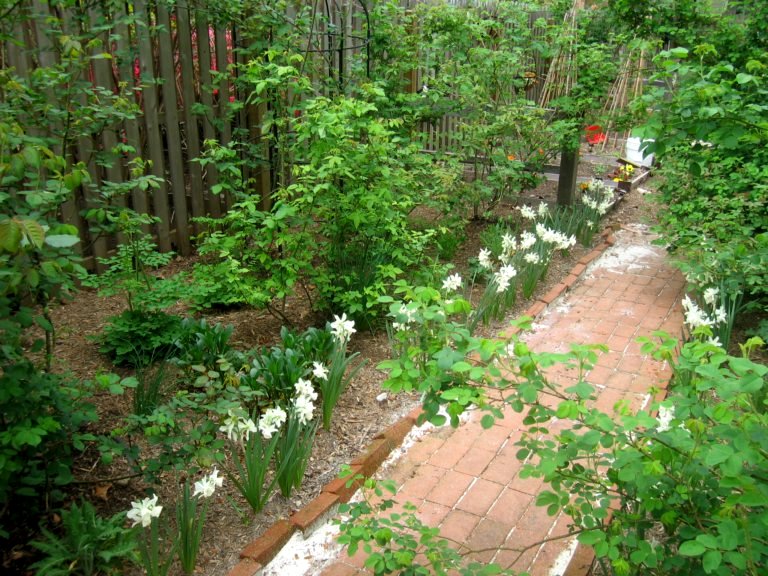
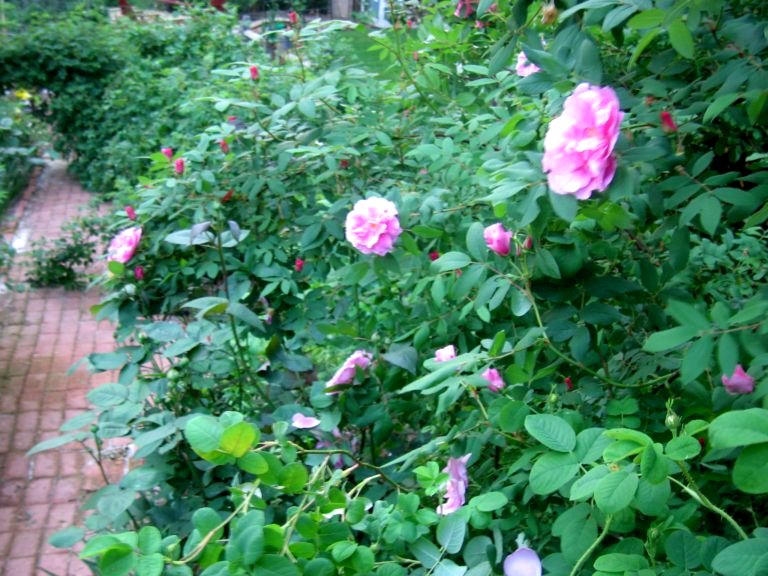
To help me plan for this coming gardening season, I am going through some of my pictures from last year. Here are two pictures of the Rose Garden from last spring and summer.

The first picture is from early spring before the roses bloom. Previously, the path was lined with lavender, but the lavender didn’t work. The purpose of lining the path was to provide interest before the roses started to bloom. The lavender looked great when I first put it in during the summer, but the next season I learned that it is one of the last perennials to wake up from winter–later than the roses themselves. Thus, I pulled out all of the lavender and replaced it with daffodil bulbs. As you can imagine, the daffodils looks much better in spring than the lifeless lavender. The second picture is from late spring when the roses have started to bloom.

The Rose Garden was created from a strip of previously unused lawn. The central brick pathway starts at the back of the Cutting Garden runs through the Rose Garden and ends at the Children’s garden. For more information on the creation of the Rose Garden, click here: http://heirloomgardener.blogspot.com/2007/12/creating-rose-garden.html