Christmas Decorations from the Garden

When decorating our home for Christmas, I try to bring some of the garden indoors. Below are some examples.

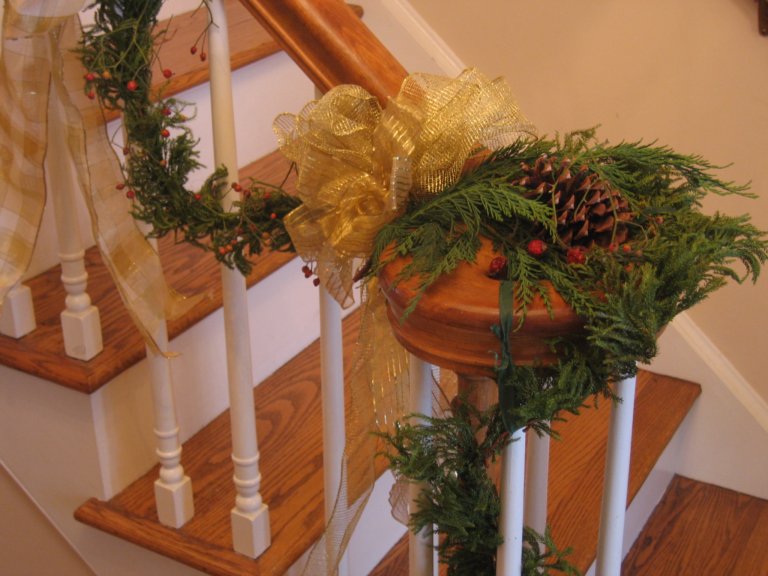
In the first picture of the staircase, I have paired some of my Ballerina and Dog Rose hips with the Princess Pine I purchased from my local nursery and the Leland Cypress clippings from my backyard.

In the second picture of the chandelier, I have placed additional Leland Cypress clippings.

Heavenly Bamboo (Nandina) in December

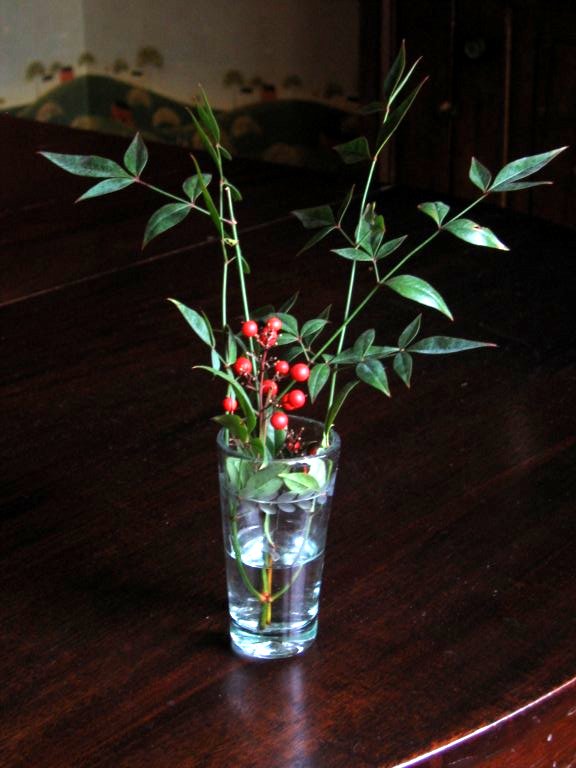
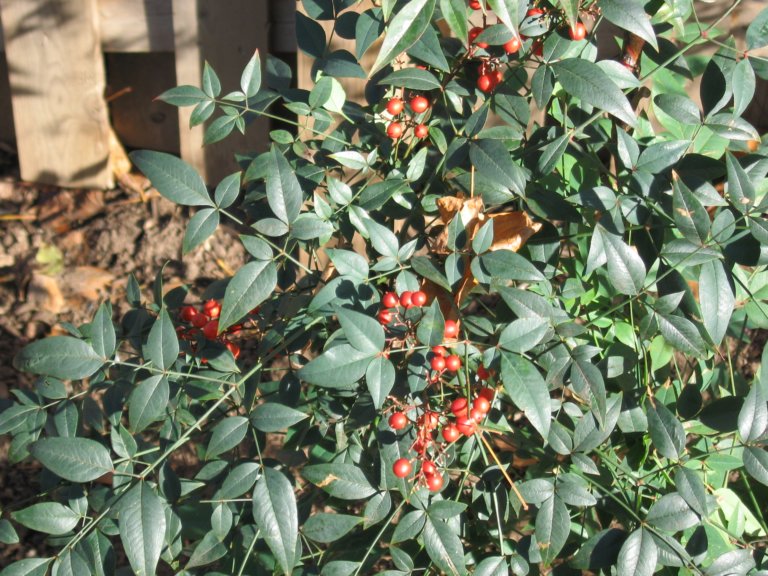
Next year I plan to plant more heavenly bamboo. When most every other non-conifer has lost its leaves, nandina looks as fresh as it did two months ago. The red berries are beautiful and cuttings of nandina last for weeks in water.

The plants are pretty undemanding. They will grow in sun or part shade, do not require feeding, and have modest water requirements. They grow 3-5 feet tall and will spread with time. Nandina does have a tendency to become leggy, so good pruning in spring helps stimulate growth lower down on the plant.

The Garden in Winter by Suzy Bales

The winter is my time for armchair gardening. Also, during the winter I always give the garden a hard look to see how I can improve it next spring to increase its winter beauty. I was thrilled to read Suzy Bales recently published book The Garden in Winter. I have read many books on winter gardens, but this is the best so far because of the breath of the information. It covers not only the garden, but indoor decorations made from material cut from the garden and various other winter occupations.

As expected Bales highlights various plants that add to the seasonal beauty of the garden, but goes beyond the laundry list to include her own experience in growing these plants. She grows Petasites japonicus, for example. Although, the plant blooms in very early spring and has distinctive leaves, its size and spreading habit allows Bales to only recommende it with caveats.

Throughout the book are many short essays on topics related to winter which are very interesting and informative. In these essays, Bales profiles many people and gardens that make use of the season in spectacular ways. For example, she interviews Les Brake, a gardener in Willow, Alaska, who is passionate about making sculptural ice lanterns to fight off the winter doldrums. His work is amazing and inspiring.

I love snowdrops. Every winter when I walk the garden I look with anticipation to see if they have begun to come up. I was thrilled to find Bales profile on Temple Nursery which specializes in hard to find and rare snowdrop cultivars sold in the green.

http://rcm.amazon.com/e/cm?t=heirlgarde-20&o=1&p=8&l=as1&asins=1594863636&fc1=000000&IS2=1&lt1=_blank&lc1=0000FF&bc1=000000&bg1=FFFFFF&f=ifr

Container Gardening: Autumn Cleanup and Rosemary in Bloom

In autumn, before the first frost, I move some of my non-hardy plants grown in containers from my deck into more sheltered locations.

Some, I move into the garage so they can go dormant under milder conditions, like my fig tree and a few of my roses. Others, like the elephant ears, I move into the house. The herbs, except the chives and thyme which are hardy and can be left outdoors, I have usually treated as annuals.

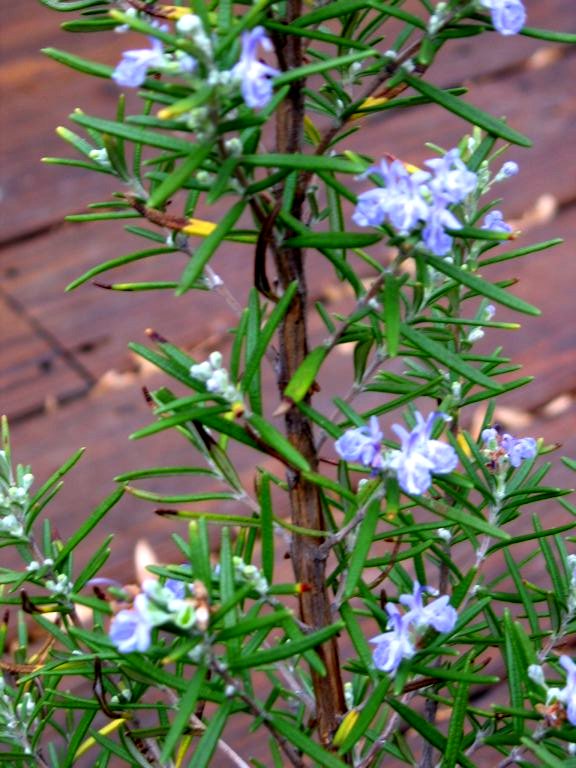
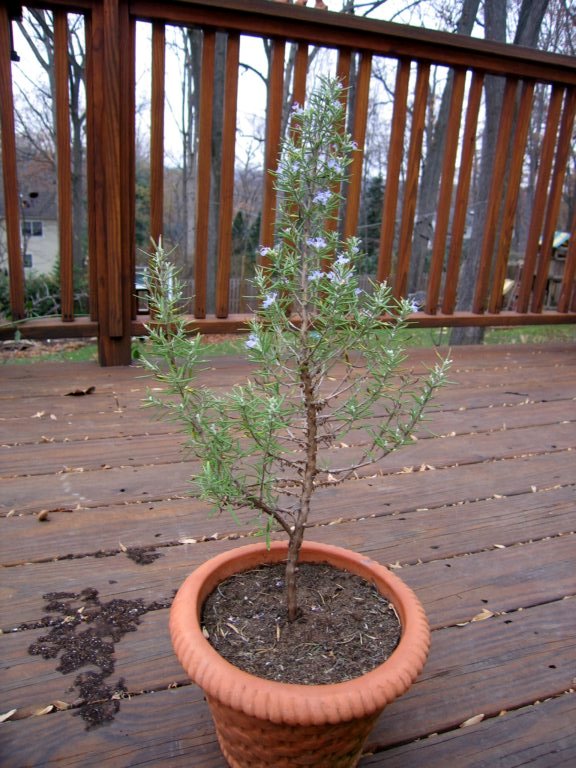
This year, I brought my rosemary plant indoors and, to my surprise, it started blooming. It is now covered with the small, light purple flowers that you see in these pictures.

Gardening with Children: How to Build a Children’s Playhouse (the Fort)

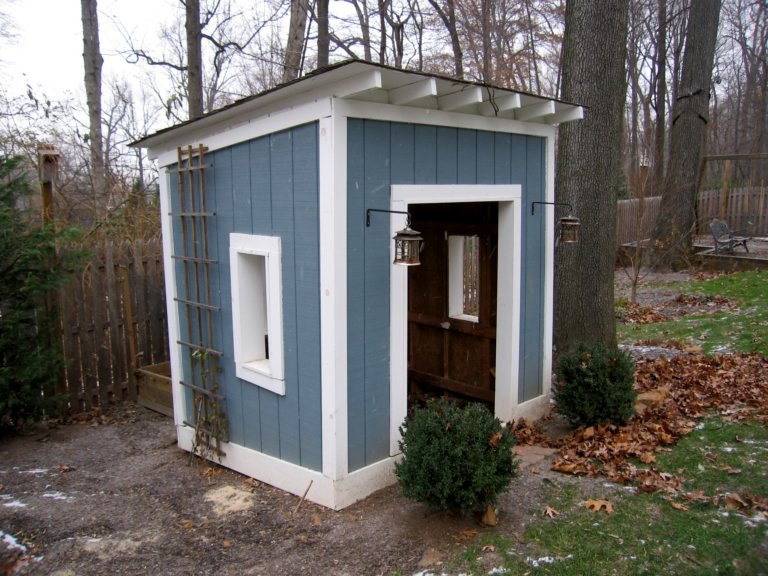
As a gardener with five children, I am always thinking of ways to make the garden a fun place to play. I had the idea of building a playhouse, or as my husband likes to call it, a fort.

When he was younger, my husband had a fort in the field behind his house. It was crudely built, but the four plywood walls, flat roof, and squeaky door was the center of play for many of the neighborhood boys. For our backyard, I wanted something a little more finished. seeing that the fort would be a focal point of the backyard.

First, we considered buying one of the playhouses we saw advertised in a gardening magazine, but these were too expensive. Next, we looked at some pre-built playhouses that you purchased and installed yourself. While these were less expensive, they looked too cute for our boys. Also, they were built for a flat property and would not work on our slope.

At this point, my husband decided to build one from scratch. We started doing some research for similar structures that we could modify, like the ones we found here:

http://www.freeww.com/storagebuildings.html

These different plans provided some good ideas that we could adapt to our needs. Here are some of the unique aspects of our fort:

1. Our fort has a dirt floor to discourage the groundhogs in our neighborhood from nesting underneath.

2. Given the absence of a floor, the foundation of our fort is made of bricks and stones from our property that support the walls.

3. The walls of our fort are built at an angle to accommodate our slope.

4. The scale of the structure is child-sized: it is basically an seven foot cube with a five foot tall door opening.

5. The generous trim hides the less-than-perfect carpentry beneath.

6. We hung two lanterns on the front, merely for decoration.

The rest of the fort pretty much follows the standard recommendations for this type of structure, including a frame made of two-by-fours, walls made of hardboard (barn siding), and a roof made of asphalt shingle.

The entire project took about a month, mainly on weekends. The total cost of the materials was approximately $700. My husband did all of the work himself, except the cutting and installation of the walls which he did with a friend on a single afternoon.

In front of the fort, my son wanted “two round ball plants” a.k.a two boxwoods. On one side of the fort is a trellis with clematis growing and hollyhocks planted in a row.

*****

Related posts: How to Build a Sandbox, Ten Tips for Planning a Children’s Garden

Gardening Gone Wild: Fences, Walls & Paths

I just came across Gardening Gone Wild which is a blog written by a collective of passionate gardeners. They hold online “Design Workshops” where gardeners can share ideas about different topics. This month’s topic is about fences and walls:

http://www.gardeninggonewild.com/?p=466

I was inspired by last month’s topic on paths, an aspect of my garden that I would really like to improve this year in my own garden:

http://www.gardeninggonewild.com/?p=457

Heirloom Gardener Magazine

I just found out about Heirloom Gardener Magazine, which has no relation to this blog:

http://theheirloomgardener.com/

Based upon the website, it looks like a great magazine for heirloom gardeners, primarily focused on vegetables, which makes sense given that it is published by Baker Creed Heirloom Seeds:

http://www.rareseeds.com/

As you can probably tell by my blog to date, my garden is primarily a flower garden, with a small vegetable patch. That being said, the magazine does have some articles about heirloom flowers, so I have ordered some back issues to see if I want to subscribe.

There is a review of the magazine on the following blog:

http://davesgarden.com/products/gwd/c/2875/

Heritage Rose: Flowers in December

This past weekend when it was a bit warmer, I was surprised when I took my daily walk about the garden and noticed Heritage (pictured here back in November) had a few roses opening up still. The warmth seemed to have awakened them, so I decided to cut a few for the house. The frost damaged the outer petals, but once I peeled these away, the flowers were in good enough shape to display. I can’t believe its December and I still have a few roses.

Heritage has been an unbelievable bloomer. It has beautiful, big, fragrant cupped flowers and is definitely one of the stars of the David Austin rose collection. The foliage is super healthy, even during the hot, humid days of summer.

Heritage has many uses in the garden. I started Heritage in a pot on my deck where it did very well its first year but was growing taller than I wanted it to be. I find that many of the Austin roses grow a lot taller than stated with our hot summers.

I re-planted it in the Children’s Garden where it has continued to grow very well. Heritage has very few thorns and offers a lot of flowers for the kids to cut for vases. Heritage also sets hips after I stop deadheading it in August which the squirrels (not the birds) eat in the fall and winter.

For more information about David Austin roses:

http://www.davidaustinroses.com/