Old Farmer’s Almanac Gardening 2008 Calendar

I just got my Old Farmer’s Almanac Gardening 2008 Calender. I love it. It has wonderful full color illustrations and just enough room to keep your appointments, but not take up too much space.

The best part is the gardening folklore, advice, and hints which are included each month relating to the garden chores, weather, and plants expected that month. On the last page is listed the planting times for an array of vegetables according to your region of the country. The calender also includes a preview of the gardening article for the month which can be read on the Farmer’s Almanac website.

Related post: Old Farmer’s Almanac Spring Planting Schedule; How to Build Raised Vegetable Beds; and Raised Vegetable Beds – Organically Preparing the Soil for Planting

http://rcm.amazon.com/e/cm?t=heirlgarde-20&o=1&p=8&l=as1&asins=1571984283&fc1=000000&IS2=1&lt1=_blank&lc1=0000FF&bc1=000000&bg1=FFFFFF&f=ifr

Garden Planning Before the Catalogs Arrive

In the winter, the garden looks so bare that despite the pictures I’ve taken from the growing season it’s hard to believe that it will all spring back again as full as it was. By January, my memories are clouded and I find myself circling way too many ‘must buy’ plants for the spring. Beguiled by the beautiful pictures and descriptions, in April you can find me on my porch surrounded by boxes of precious cargo wondering “Where am I going to put all of these?” In addition, I can’t help but make forays to the local nurseries adding to my conundrum.

So, last winter I formed a plan to review all the pictures and notes I took during the year. This helped me see gaps in the plantings and under performers. It also reminds me of areas that I can layer the plantings to extend the show. For example, oriental poppies take up a lot of space, but bloom for only a short time and their leaves die back soon afterward. So, I cut the leaves back after they bloomed and plant Abyssinian glads around them. In mid July, the Abyssinian glads begin to bloom. By the time the poppies reemerge in the fall, the glads are ready to be dug up for the winter.

I love to cut flowers to bring in the house or give as gifts. At this time I also think about what plants did I wish I had more of or were there times when I didn’t have much for cutting. I also keep track of where I like to plant dahlias and glads which are great cut flowers and add beauty to the garden.

Pictures also help to jog my memory as to where self seeders will fill in the garden, so I don’t order plants expecting them to take spaces I’ve reserved for nature’s gifts. In many of my gardens I allow one self seeder to provide an accent: in the front border it’s verbena bonariensis; Queen Anne’s lace in the Cutting Garden; around the oak in the front garden its cerinthe major; forget-me-nots in the Bird Garden; and annual black eyed susans in the Egg Garden.

Every year I have movers and those to be removed. The movers are either unhappy where they are; I don’t like where they are; or their neighbors don’t like them. These are listed and I note where they are moving to so that I don’t re allot that space to a new purchase. Plants which will be divided are put on this list too because some of the divisions can be used to fill empty areas. Under performers or plants tried, but not liked, are slotted for removal.

At this point I should have a good list of planting spots to think about as I approach my spring order. From then on I keep a master list of all my orders and exactly where they are going. Once the boxes arrive it is quick and easy to plant them where they belong and I can prepare the planting areas ahead of time. This system works pretty well. Yet, there’s always room for one more.

How do you plan your ordering? Please share any ideas that you have.

Creating the Rose Garden with a Central Brick Path

After we established the Cutting Garden, there was a narrow portion of our property behind it and next to our deck that was another relatively unused portion of our yard, measuring approximately fifteen feet wide by thirty feet long.

Because this space had full-sun, I thought it was the perfect place for a rose garden. While I have roses in almost every part of the garden, a dedicated rose garden would provide more space for all of the roses that I wanted to grow.

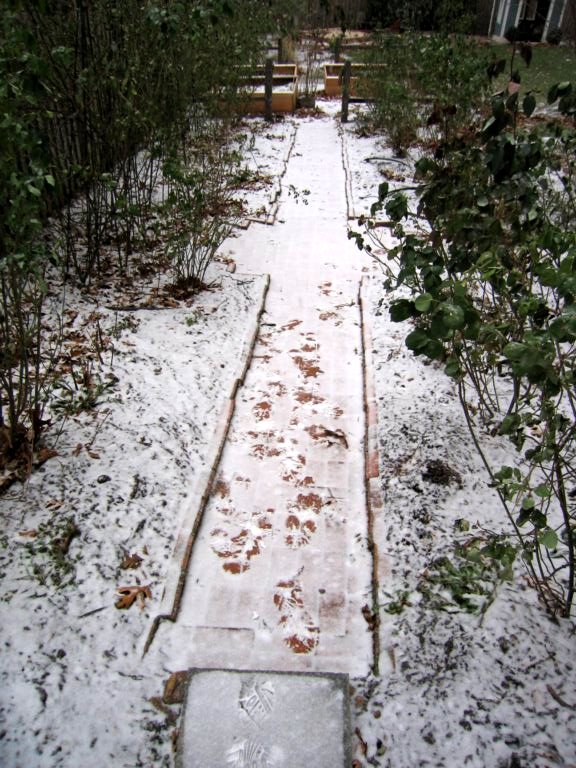
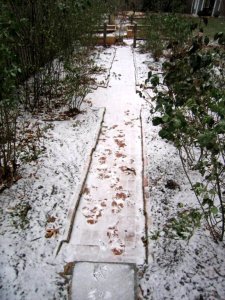
The first picture is taken from the steps of the Cutting Garden looking down the path of the Rose Garden to the Children’s Garden.

The main structural element of the Rose Garden is the brick path that you see running through the center. I actually installed the brick path myself, which was a tremendous amount of work that I’m not sure I would want to do again.

After we established the path in the summer, we started to prepare the beds for planting the roses. In the fall, we put down newspaper to kill the grass and covered it with a thin layer of organic matter. In the spring, we dug in significant amounts of composted cow manure and mushroom compost. Then, we planted the roses.

Inspired by the Cranford Rose Garden at the Brooklyn Botanical Garden, I knew that I could fit a lot of roses into a limited space. We now have twenty-seven different roses in the Rose Garden, as well as bulbs and perennials.
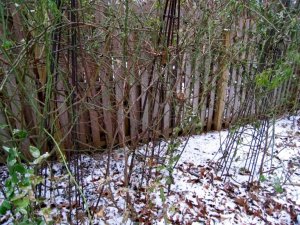
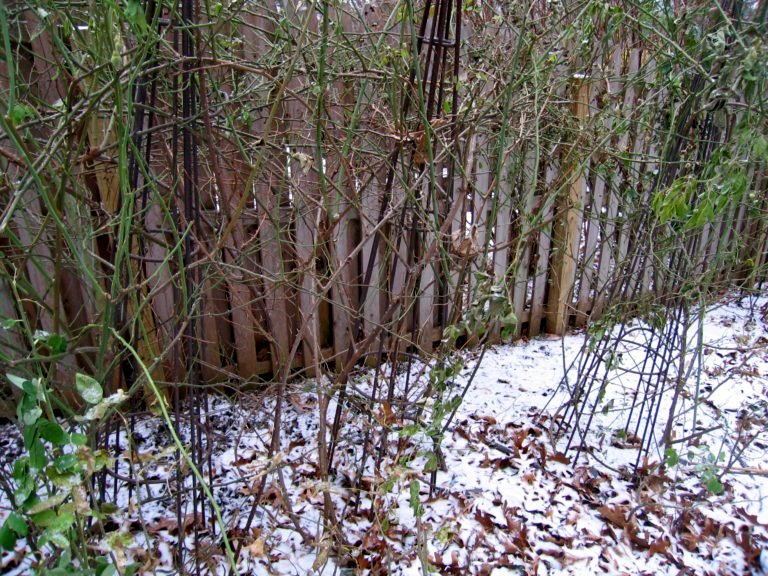
Some of the roses are grown on tutuers. The three pictured were purchased from the New York Botanical Garden, which has the best gift shop of all of the gardens I visit:

http://www.nybgshop.org/

For pictures of the Rose Garden in season, click here:

http://heirloomgardener.blogspot.com/2008/01/rose-garden-in-spring-summer-daffodils.html

For information on the creation of the Cutting Garden, see this post:

http://heirloomgardener.blogspot.com/2007/11/creating-space-for-garden.html

Gardening with Children: Creating the Children’s Garden

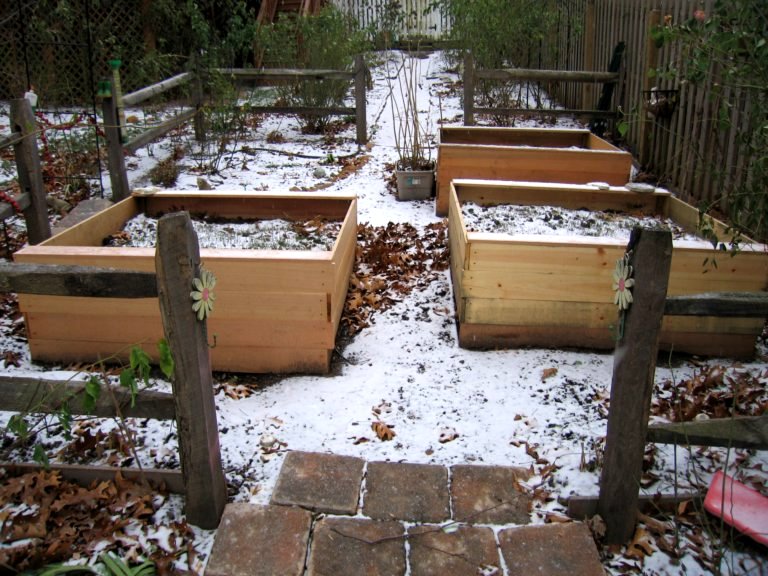
This is a picture of the Children’s Garden looking up the hill in winter. Beyond the Children’s Garden is the Rose Garden and beyond the Rose Garden is the back gate to the Cutting Garden.

The Children’s Garden includes beds that I help the children plant and cultivate: three raised vegetable beds, for which my oldest son (age eight) is the primary gardener, and one flower bed, for which my older daughter (age ten) is the primary gardener.
The boundaries of the Children’s Garden were created by installing a post and rail fence within the backyard.

Given the placement of the garden and to allow for maximum play, it has three openings: one to the Rose Garden, another to the Great Lawn, and the third next to the Long Border. The Great Lawn and the Long Border are hyperbole, as the Great Lawn is small and the Long Border is short.

Brooklyn: Private and Public Gardens

I was bitten by the gardening bug when I lived in Brooklyn Heights. Brooklyn Heights is a wonderful neighborhood next to the Brooklyn Bridge across the river from lower Manhattan. It is mostly made up of four to five story brownstones, many of which have front and/or back yards. As you get to know people in the neighborhood, they invite you into their homes and–in the warmer months–their private gardens. In the big city, these are private respites, small green spaces full of beautiful plants, and the perfect place to entertain. If you are not fortunate enough to have friends in the neighborhood, there are several public gardens that will give you a feel for what is behind the brownstones.

These are not formal Botanical Gardens, but rather green public spaces that are integral to their neighborhoods. Here are some suggestions:

*Brooklyn Heights Promenade (a great playground, as well as a tourist attraction for the view of Manhattan) – Brooklyn Heights

*Carroll Park (a neighborhood park with a playground and sprinklers in the summer months) – Carroll Gardens

*Cobble Hill Park (another neighborhood park with a small playground and a great Halloween parade for children) – Cobble Hill

In addition to the aforementioned, these two spaces are not public, but you could certainly visit them if visiting the church or buying a cup of coffee:

*Oratory Church of St. Boniface (the enclosed garden is sublime) – Downtown Brooklyn

*Sweet Melissa Patisserie (eat in the garden out back) – Cobble Hill

Russell’s Cottage Rose

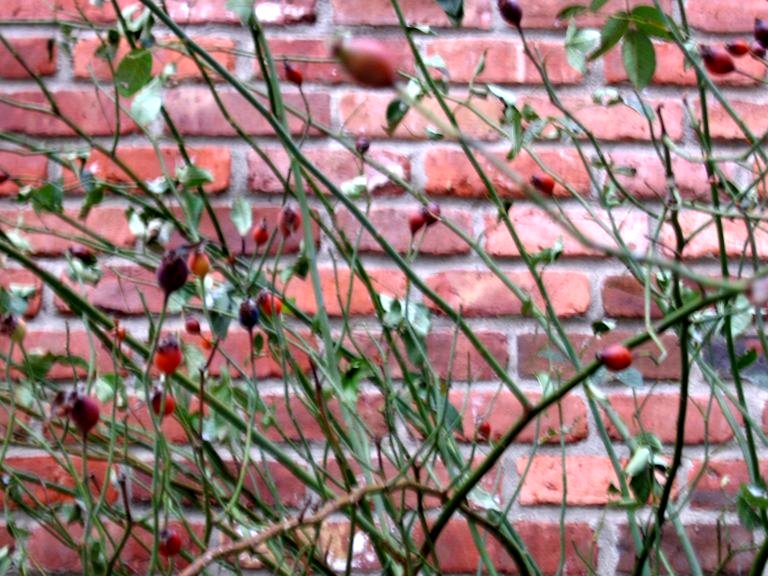
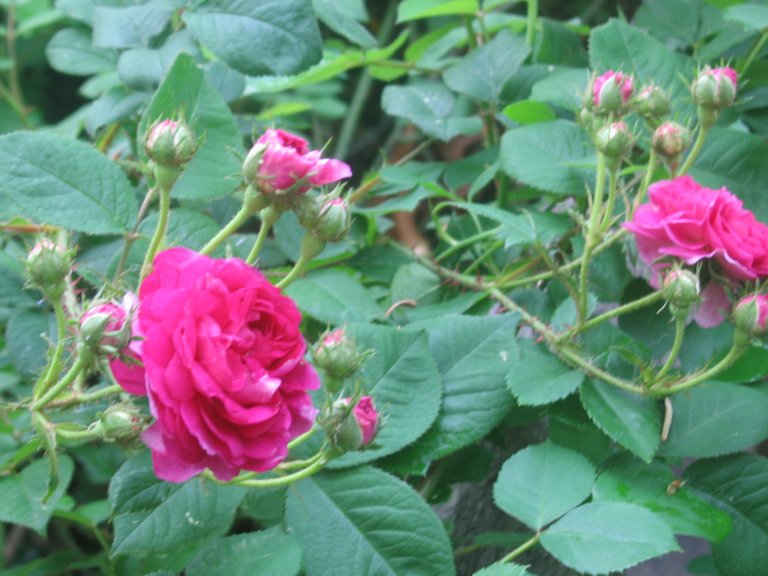
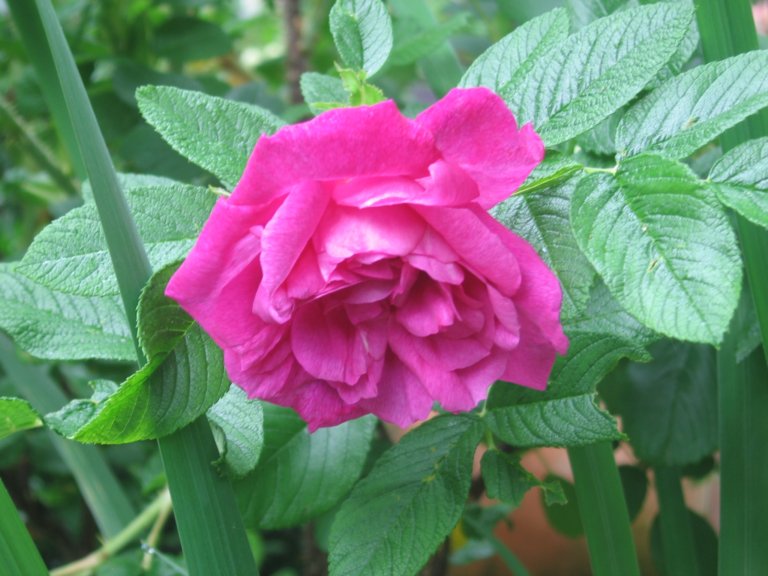
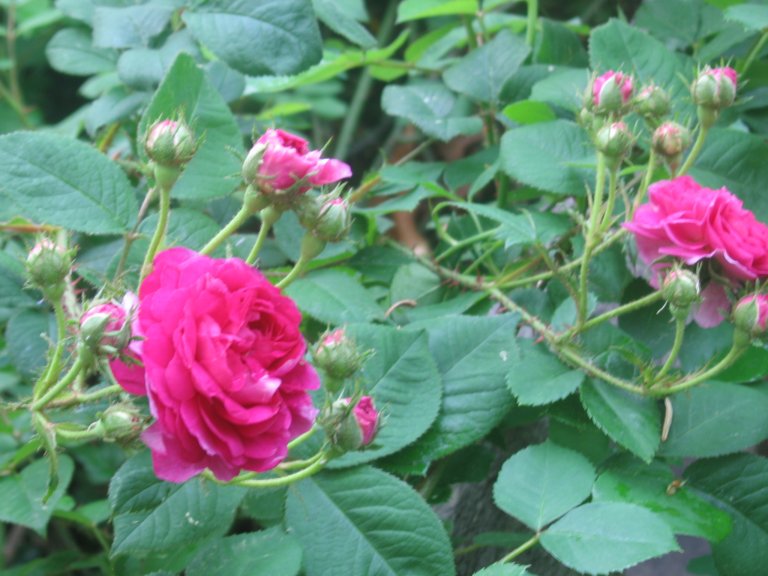
Russell’s Cottage Rose is one of many old roses in our garden. It is a hybrid of R. multiflora which can be grown as a shrub (as I do) or a pillar. This rose covers itself in June with these beautiful blossoms adding a rich Damask rose scent to the garden. It is one of the easiest roses to grow. It needs very little care to remain healthy and vigorous, although I do fertilize it, prune out deadwood, and shape it after its bloom to keep it the size I want.