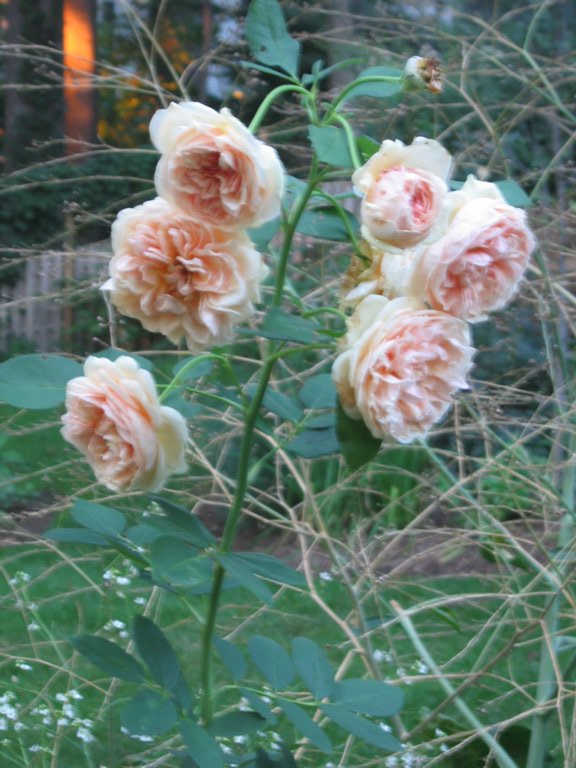
This is one of the new roses I tried last year from Antique Rose Emporium. It is one of their pioneer introductions which are supposed to be remontant, healthy, and vigorous. It is all that and more.
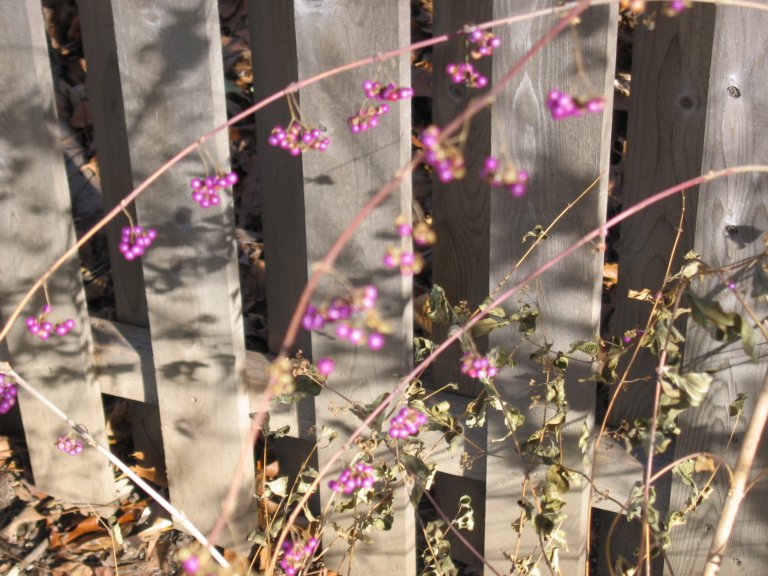
Japanese Beautyberry
The first picture shows what the Japanese Beautyberry is known for: its distinctive purple berries that appear in autumn and persist into the winter.
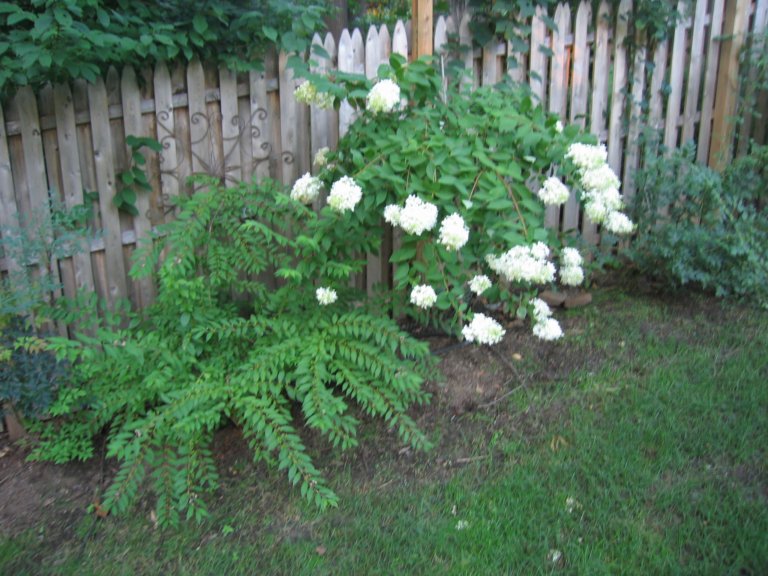
The second picture shows what the plant looks like in the summer, on the lower left, beneath the Pee Gee hydrangea.
I like these two stages of the plant, but am less fond of its other stages: the early spring when it looks dead and is late to leaf out; and the autumn when the leaves droop and look lifeless for about a month before they fall off.
They are healthy and vigorous plants. I purchased very small plants and they grew quickly in the first year. Next year, I am cutting them back to six inches off the ground in early spring to avoid the first problem. Further, I keep moving them around my property in hopes of finding the perfect place to enjoy them, and they are not bothered by this.
For fall and winter arrangements, you can cut the branches with the Beautyberries. If you do so when they still have leaves, I recommend that you remove the leaves because they droop immediately after being cut.
***
Click here for a follow-up post on propogation: http://heirloomgardener.blogspot.com/2008/02/japanese-beatyberry-unexpected.html
The Hellenbrechts in Ohio: Christmas Green
Here are some more ideas about winter containers:
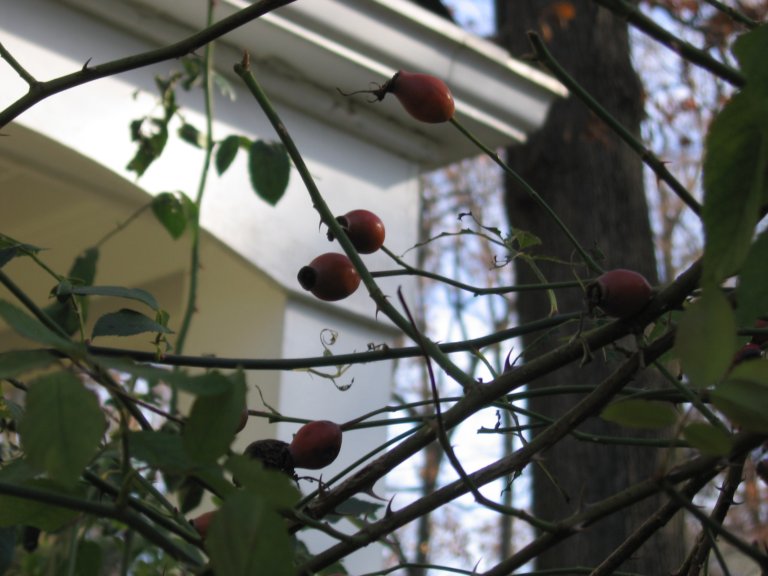
Dortmund Rose Hips
Blackberry Lily Seedheads
I love splashes of orange in the garden. My blackberry lily has small orange flowers with red dots. There is another cultivar that is yellow. They do not look like lilies. Unfortunately, I don’t think I took a picture of the flowers. I have to remember to take some pictures of them next year.
The blackberry lily blooms at the end of July over several weeks. The flowers and seed heads make great cut flowers for arrangements.
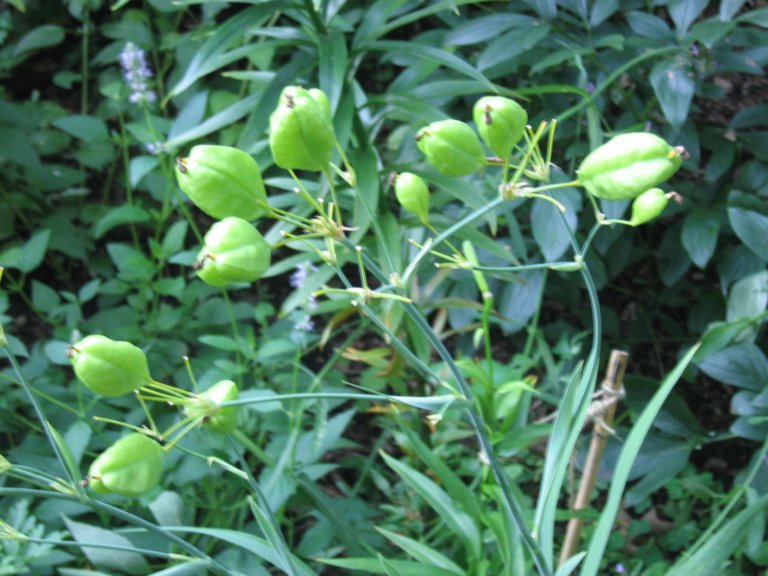
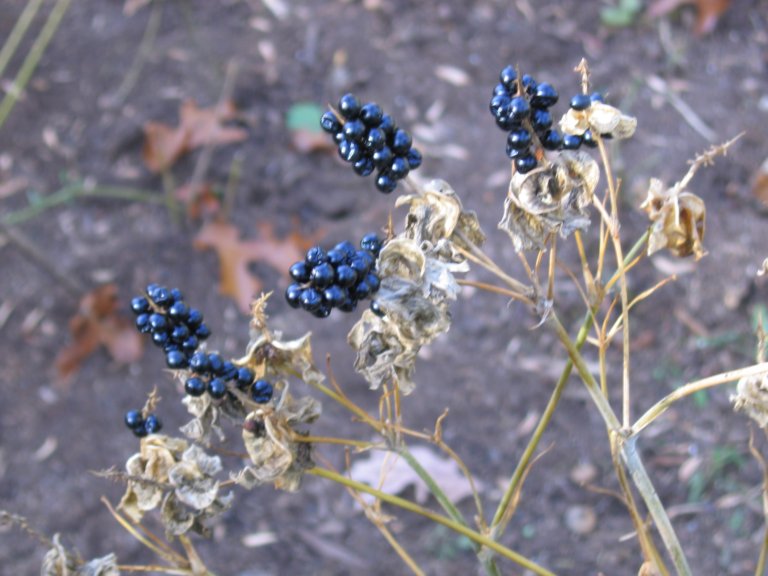
These lovely seedheads develop in autumn. The first picture shows the immature pods. The outside becomes brown and papery. They break open to reveal the luscious blackberry seedheads. Resist temptation: do not eat them. The seedheads persist into winter. They will drop and produce more plants the following spring.
Although it does self seed, it is not prolific and gives a more natural look to the garden. The seedling take one to two years to reach blooming size.
Note: they are deer resistant.
Container Gardening: Winter Containers
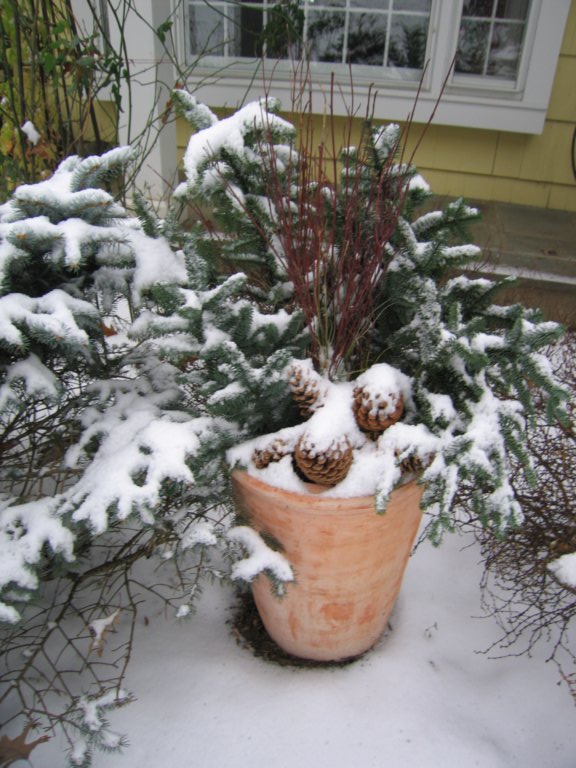
Yesterday, before today’s snow, I replanted all my planters in the front garden for the winter. I love having something beautiful to look at when most of the garden is sleeping. For inspiration this year, I looked at some photographs I took at the Missouri Botanical Garden (http://mobot.org/) last winter.
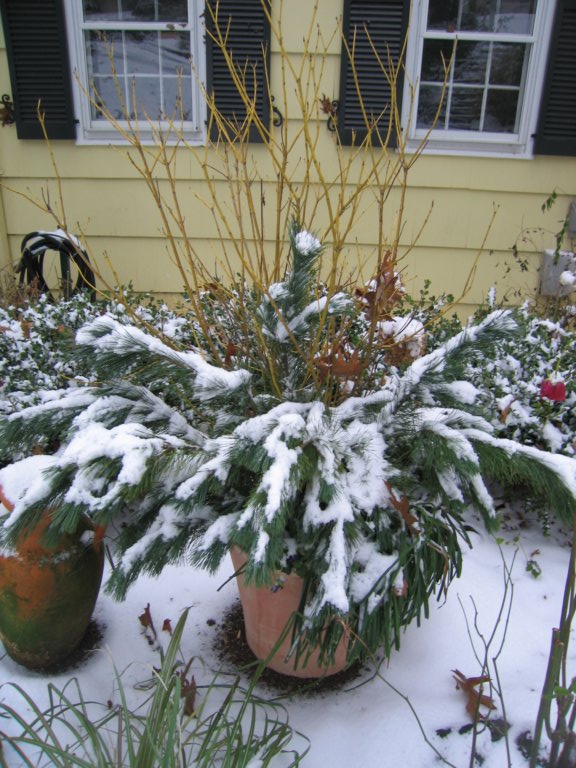
The first pot has a yellow twig dogwood as its base. From there, I added boughs of white pine and dried hydrangea blossoms from a Pee Gee hydrangea in the garden. 
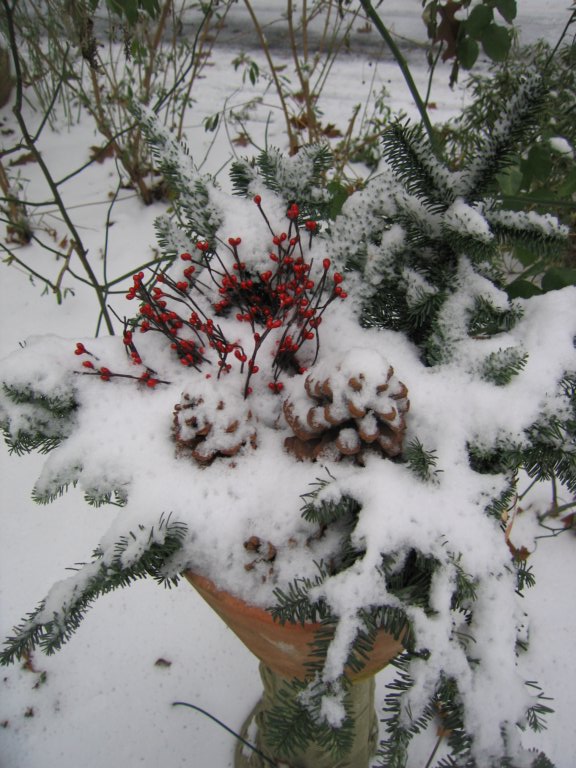
On the front porch is an urn whose plantings change every season. For winter, I have cut branches of winterberry surrounded by dried statice and white pine branches. Also, added are some large pine cones from a collection my husband and I have gathered over the years.
Near the lamp post is a small pot atop a column which has Douglas fir clippings, some faux winterberries, and pine cones. Since this pot is in a more exposed position than the one on the porch, in the the past I have found that real winterberries do not hold up as well.
The last pot I did is in front of the living room. In the center of the pot are branches cut from a red twig dogwood surrounded by more Douglas fir branches. A few pine cones were added also. 
The pots will add interest to the garden until spring comes and are easy to do. You can use cuttings from your own garden, buy some from local nurseries, or from White Flower Farm (http://www.whiteflowerfarm.com/) who sells a wonderful 14 pound box of winter greens.
Vegetables and Herbs: How to Build Raised Vegetable Beds (on a Slope/Hill)
In my children’s garden, my children and I grow vegetables in addition to flowers. For the last two years, we used the same raised bed construction that I used in the side garden:
http://heirloomgardener.blogspot.com/2007/11/creating-space-for-garden.html
These were short raised beds constructed with six inch wide ipe wood. You can see a picture of one of these beds below from last summer with heirloom lemon cucumbers:
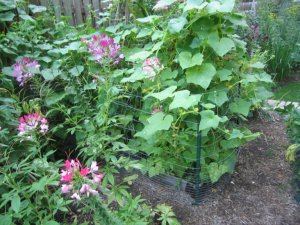
The rabbit fencing around the cucumbers was to keep the resident groundhog from eating the cucumbers in the same way he did the tomatoes.
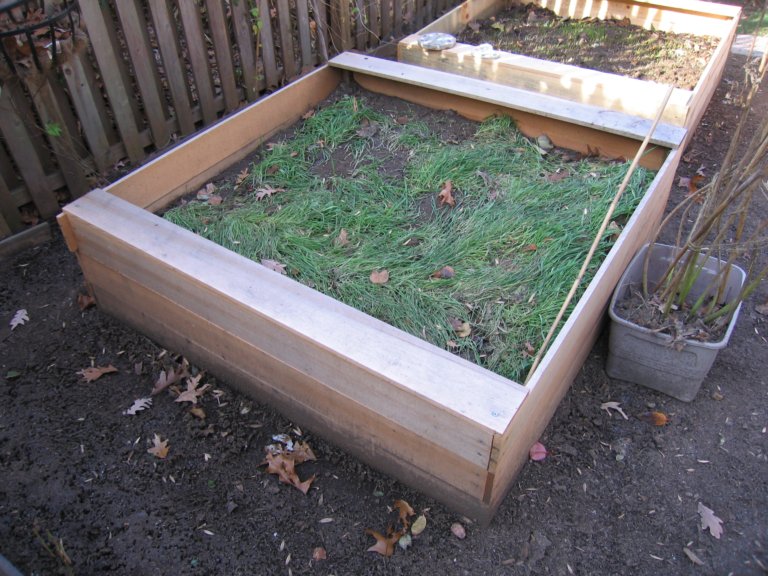
Towards the end of the summer, we visited New York Botanical Garden’s Home Gardening Center (http://www.nybg.org/hgc_online/hgc_onsite/) and were inspired by their raised beds that were significantly taller than the ones we had constructed. Thus, once we had harvested the last of our cucumbers and zucchinis, my husband deconstructed the old beds and built the new ones you see below:
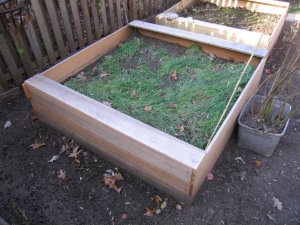
Ipe was too difficult to work with and costly, so we made these out of cedar wood. We purchased standard six by one inch, un-treated ten foot planks and had them cut in half. Each box (two of three are pictured) is made of three planks on three sides and four planks on the fourth side because our entire property is on a slope. Two additional boards are placed on top on either side to create a place where you can sit, place tools, or when the vegetables have grown, stand.
We filled the bottom of the boxes with compostable garden waste. On top, we added a mix of composted cow manure, Bumper Crop and top soil. Then, to protect the soil, we sowed a cover crop of winter rye that I purchased from Johnny’s Seeds (http://www.johnnyseeds.com/). The winter rye will be turned over in the spring adding even more organic material to the soil.
The overall result was a neater looking garden that will hopefully produce an even more robust crop next year.
For a follow-post on organically preparing the soil for planting, click here:
http://heirloomgardener.blogspot.com/2008/03/raised-vegetable-beds-organically.html
Ballerina Rose Hips
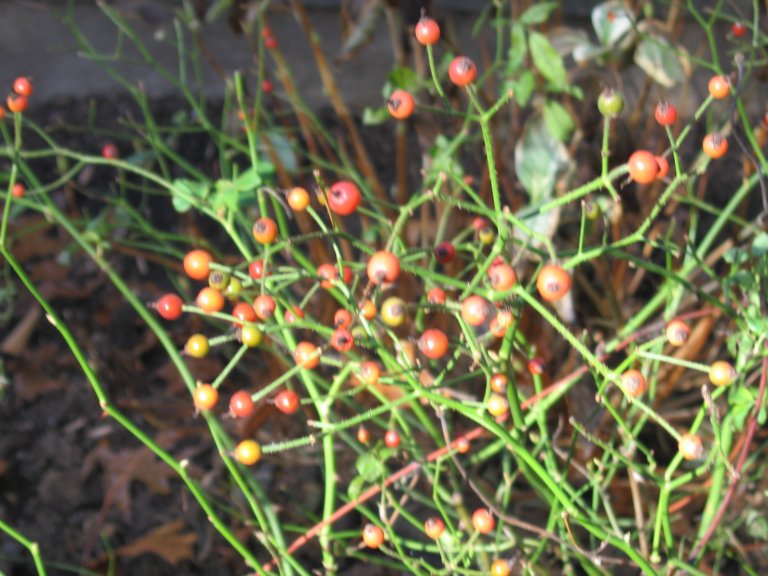
In my prior post about Ballerina, I wrote about her all-purpose qualities that have won her many places throughout my garden. In addition to what I previously wrote, I went out into the garden today and took the attached pictures of her cute little hips that provide winter interest and food for the birds.
For my prior post and pictures of Ballerina’s flowers:
Crabapple Tree in Winter
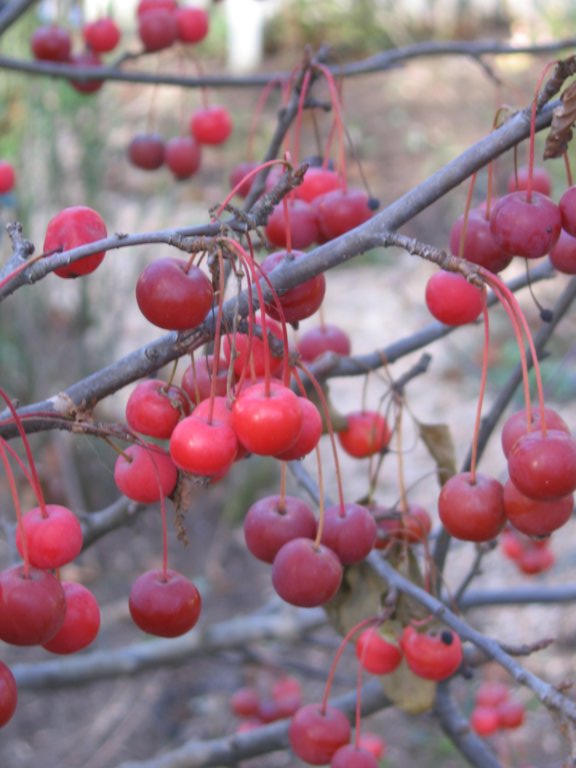
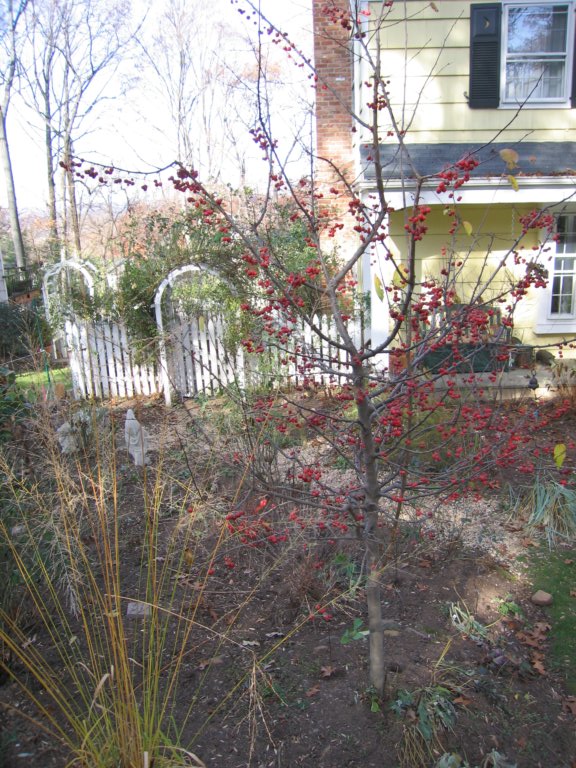
The crabapple tree in the Egg Garden is one of my favorites. Previously, there was a Japanese maple in the same location that died, so I decided I wanted something with spring flowers and winter interest. The crabapple tree is just perfect. In the spring it’s covered with white, sweetly scented flowers. For fall, the leaves turn yellow and drop to reveal gorgeous red fruits which the birds eat all winter.