Hydrangea Wrapped For Winter

When I moved into my home, there was a hydrangea by the lamp post that produced no flowers. I knew that the deer were eating it regularly. So I began a successful regiment of deer spraying, only to find that each winter it also got killed to the ground. I find that in my Zone 6b garden hydrangea are frequently only root hardy which means that the stems are prone to being killed by the cold. Since this hydrangea only flowers on old wood it produced no flowers–it was just a foliage plant.

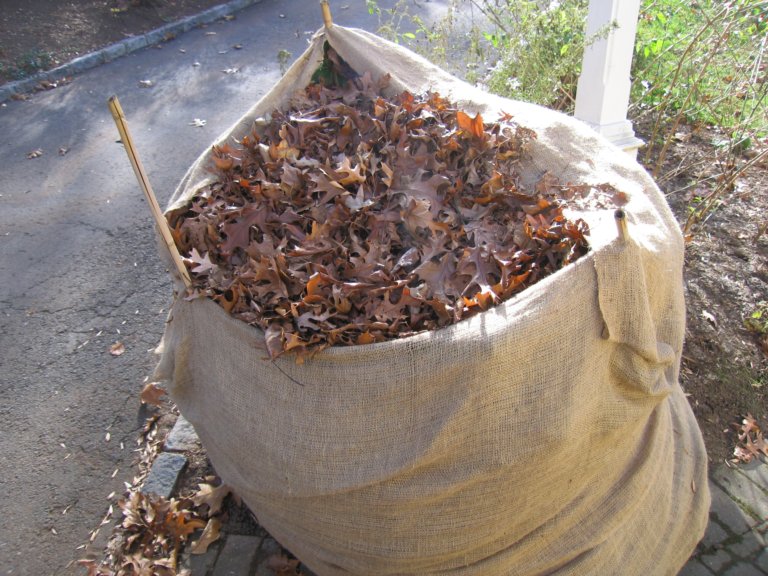
That fall I asked my husband to wrap it in burlap and cover it with oak leaves. I asked him to do it too late and we ran out of leaves, so we only protected the lower half of the plant. This year we got a few flowers. For the first time I saw they were mopheads with pink sepals edged in white. I asked my husband to start earlier and we covered the entire plant. He wrapped burlap around three bamboo stakes and stuffed it full of oak leaves, covering it entirely to about four feet high. Hopefully next year, the whole plant will produce flowers.

English Gardens: Wisley Through the Seasons

Tonight was movie night. The kids wanted to watch Oliver Twist, but I won and we watched Wisley Through the Seasons. Wisley Through the Seasons is about Garden Wisley which is managed by the Royal Horticultural Society:

http://www.rhs.org.uk/WhatsOn/Gardens/wisley/

The movie is beautiful and inspiring, though not instructional. I hope to visit Garden Wisley in person some day, but until then, this is as close as I can get.

http://rcm.amazon.com/e/cm?t=heirlgarde-20&o=1&p=8&l=as1&asins=B00000IBQ6&fc1=000000&IS2=1&lt1=_blank&lc1=0000FF&bc1=000000&bg1=FFFFFF&f=ifr

Cultural Landscape Foundation

Every Thursday, the New York Times has a Home & Garden section, which is usually more home than garden. Today, there is an interesting article on the Cultural Landscape Foundation “which draws attention to historically important natural features and designed landscapes” :

http://www.nytimes.com/2007/11/29/garden/29garden.html?_r=1&ref=garden&oref=slogin

“This year [the Cultural Landscape Foundation] worked with the George Eastman House International Museum of Photography and Film…to commission photographers known for very different kinds of work to record a dozen of the landscapes…” The photo exhibit will start in Rochester, New York, and then travel around the country to “various botanical gardens, museums and historic sites.”

For more information on the Cultural Landscape Foundation:

http://www.tclf.org/

For more information on the George Eastman House and the exhibit:

http://www.eastmanhouse.org/

Creating Space for a Garden: the Cutting Garden

Like many suburban gardeners, one of the hardest things to do is find space for all of the plants that you want to cultivate. One solution is to create gardens in the under-utilized parts of your property.

Like many suburban tracts, each home in my neighborhood has about thirty feet of space between each house. When we moved in, the fifteen feet on our side of the property line included a very large rhododendron, some unattractive evergreen trees, some grass, and a lot of weeds. The only thing we did on this strip of property was occasionally walk from the front yard to the back yard.

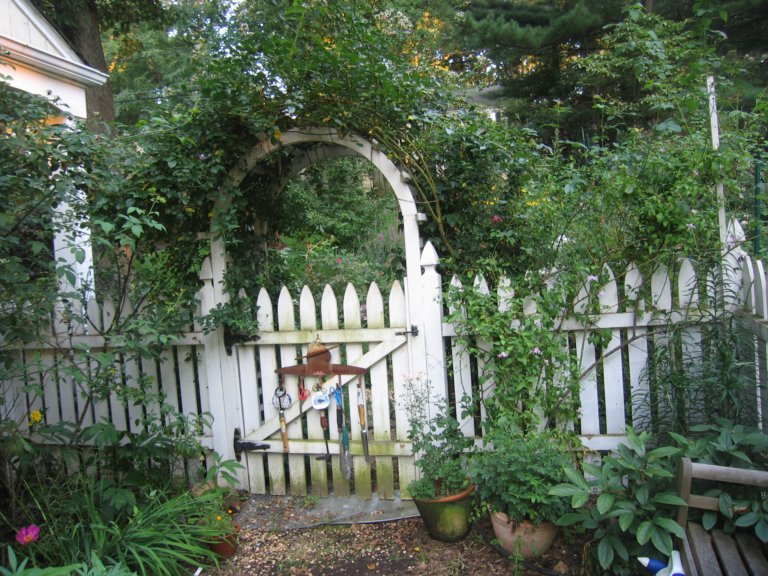
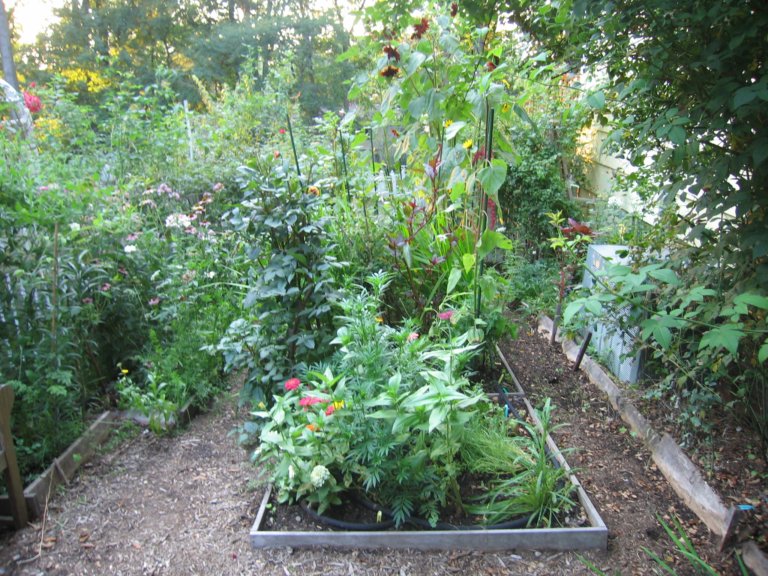
After a couple of years, we decided to remove the existing trees and plants and transform the space into a cutting garden. This space measures approximately fifteen feet wide and thirty feet long. We created a garden room by installing a wooden picket fence with an attractive arbor and gate in the front (visible in the first picture from inside the garden) and a simple gate in the back. Because the side yard was also on a slope, we installed a short, one-foot dry laid wall in the back to decrease the grade.
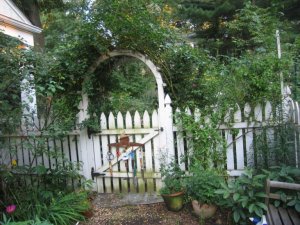
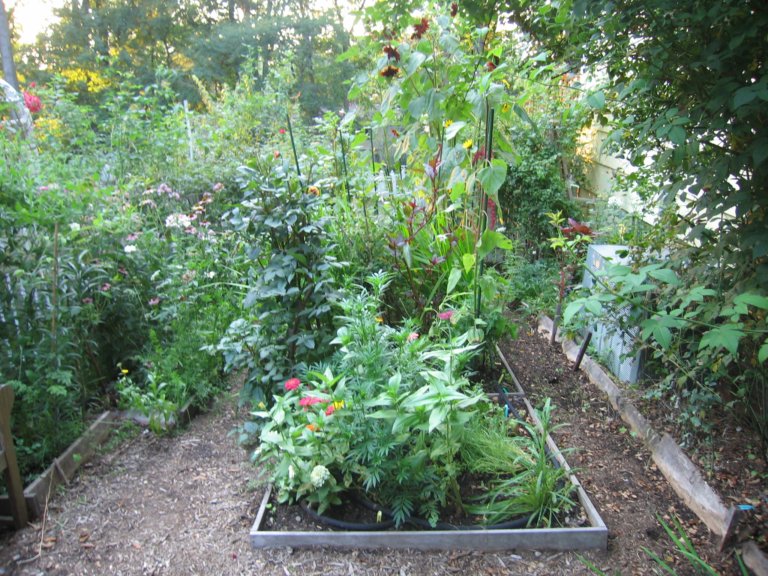
There are three foot beds on either side and a central four foot bed (visible in the second picture). The paths are too narrow at only two feet, but with only fifteen feet to work with, we had to make compromises. The soil was dead, so we dug down about two feet and also created shallow raised beds with ipe wood. Ipe is expensive, but it is far better for your garden than the toxic chemicals in pressure treated wood. Warning: ipe is very hard, which makes it rot and insect resistant, but it also makes it extremely difficult to cut with standard woodworking tools. I had to have my planks cut at the lumber yard.

After digging out the beds and creating the walls of the raised beds, we then added significant amounts of composted cow manure and Bumper Crop. These are now some of the richest beds on our property.

This is now one of the favorite parts of our property. In addition to changing this from unused and unattractive to a place we visit every day, it also produces abundant cut flowers for indoor enjoyment from May through October.

Related Post: Making the Most of Your Space for Gardening – A Map of My Gardens

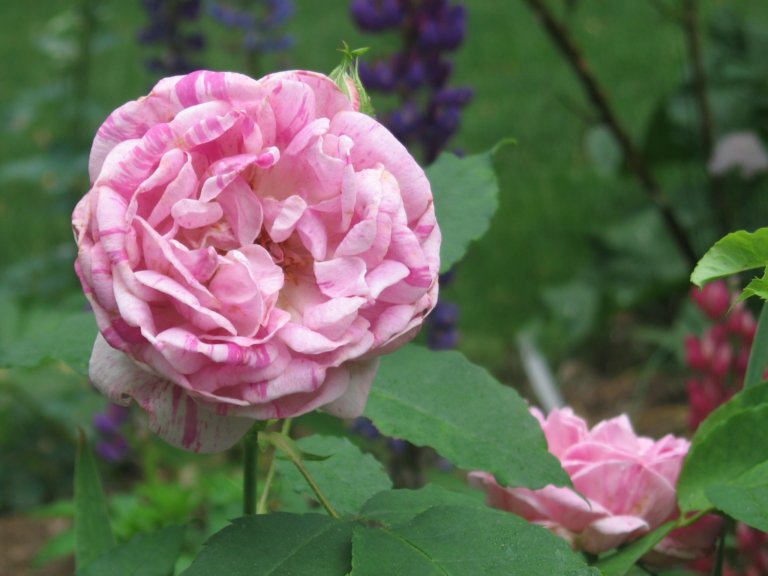
Sophie’s Rose Provides Late Season Color

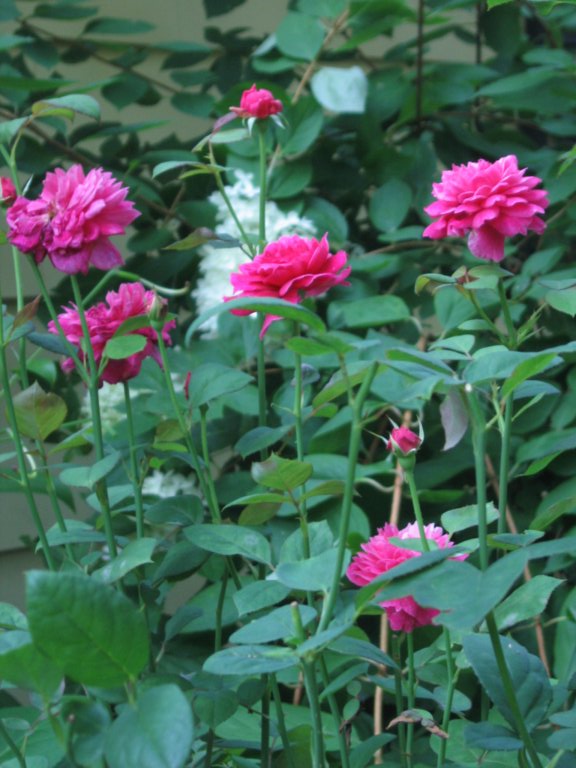
The frost has come and gone, but Sophie’s Rose continues to bloom. I purchased Sophie’s Rose on a recommendation from Matterhorn Nursery in Spring Valley, New York, one of the best nurseries in the tri-state area:

http://www.matterhornnursery.com/

Matterhorn Nursery contains a large David Austin rose display garden and sells many David Austin roses, including Sophie’s. It blooms prolifically from May through November.

Sophie’s Rose is planted in my front mixed border in part-shade. I am amazed it blooms as much as it does given the lack of full sun.

This is a tall, but not wide rose. It should be planted in a group of at least three, each spaced two feet apart. After being pruned to about twenty-four inches tall in the spring, it ends the season approximately seven feet tall.

For more information about David Austin roses:

http://www.davidaustinroses.com/

The Best Flower Cutting Shears

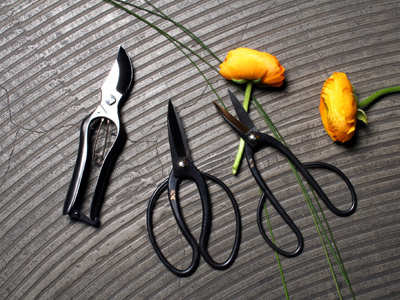
In all my books about cut flowers, the authors always talk about using high quality shears that are specifically for flowers. Instead, I have been using my kitchen scissors and bypass pruners (Felco #2s) for years. This year, I started using Japanese shears sold as bonsai trimmers available from Takashimaya New York:

http://www.takashimaya-ny.com/

Takashimaya in Tokyo is a large department store like Saks Fifth Avenue. In New York, it is a small multi-level boutique. The top floor is dedicated to cut flowers and accessories. If you appreciate beautiful and hard-to-find cut flowers, it is well worth a visit.

The shears come in three sizes: large for woody flowers, medium for large green stems, and small for delicate stems. They are very sharp and do not damage the stem’s ability to take up water. My cut flowers now last so much longer than they ever did before.

Ballerina – All Purpose Repeat-Bloomer

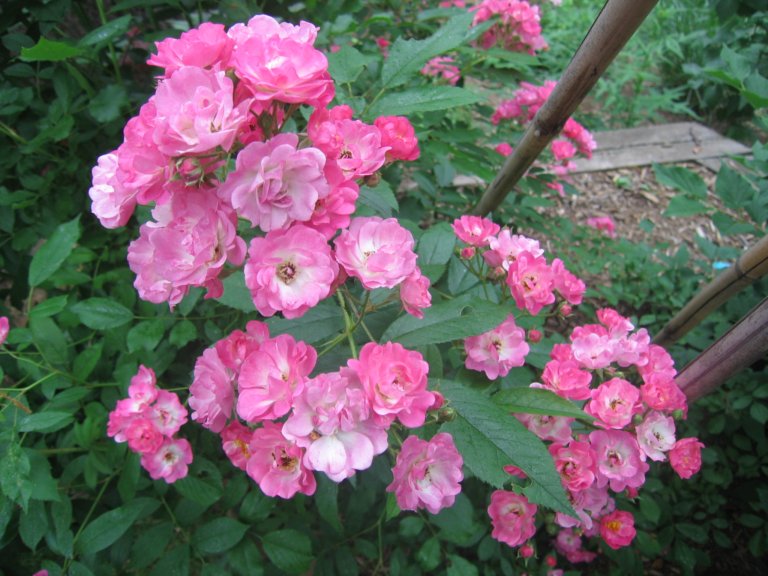
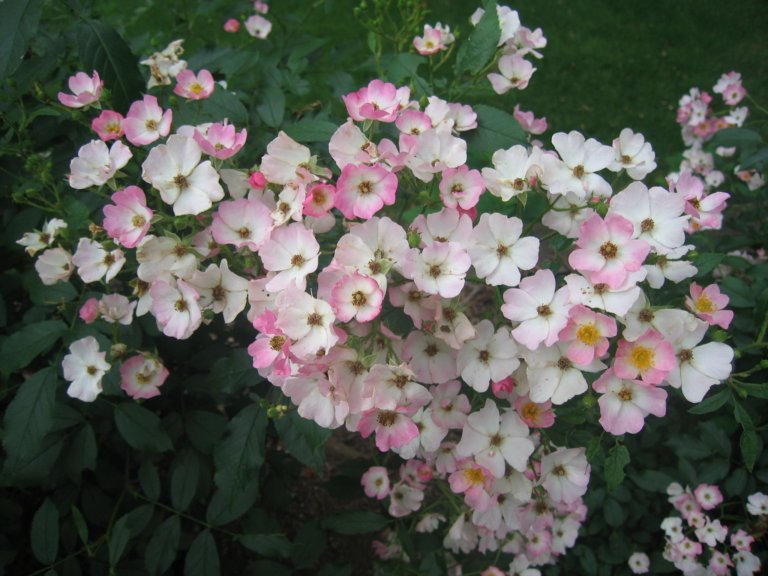
If you are a beginning rose gardener, start with Ballerina. She grows in full sun and part shade. She repeat blooms from May to November (she really does). She has beautiful blooms in sprays that make for wonderful cut flowers and has red round hips that I use in winter arrangements. I have one growing as a pillar rose on a tutuer in full sun. I have seven growing in part shade as a hedge. I have two more in a mixed border. I have two more that have been trained as tree roses, purchased from:

http://www.whiteflowerfarm.com/

For pictures of the hips: