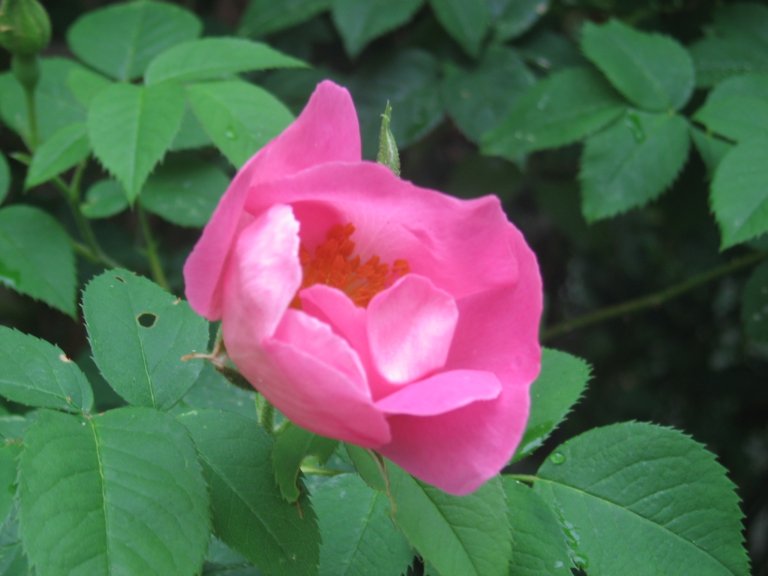
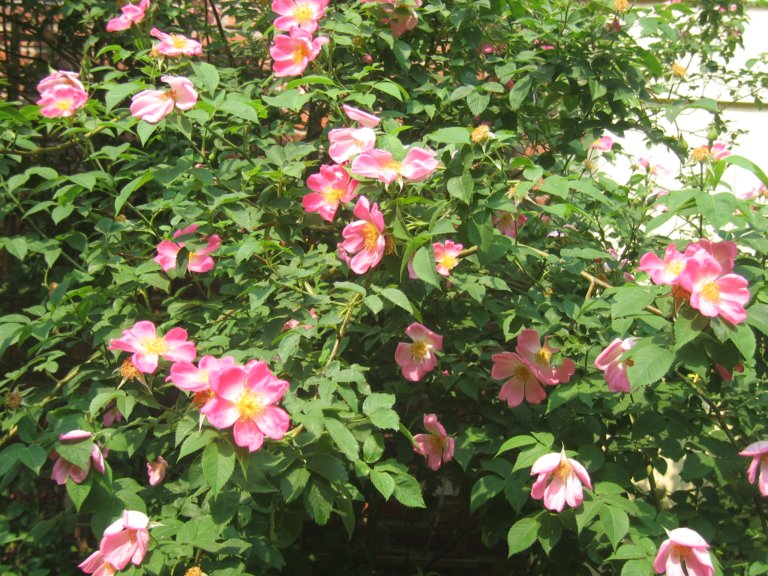
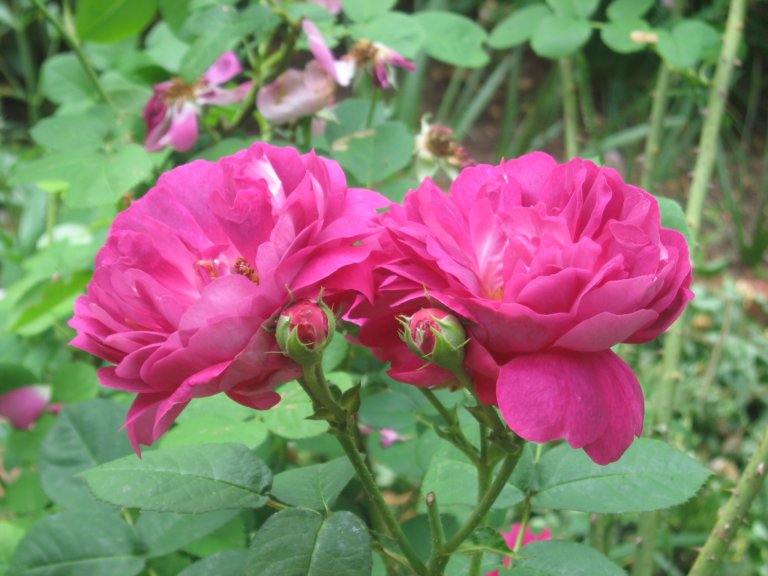
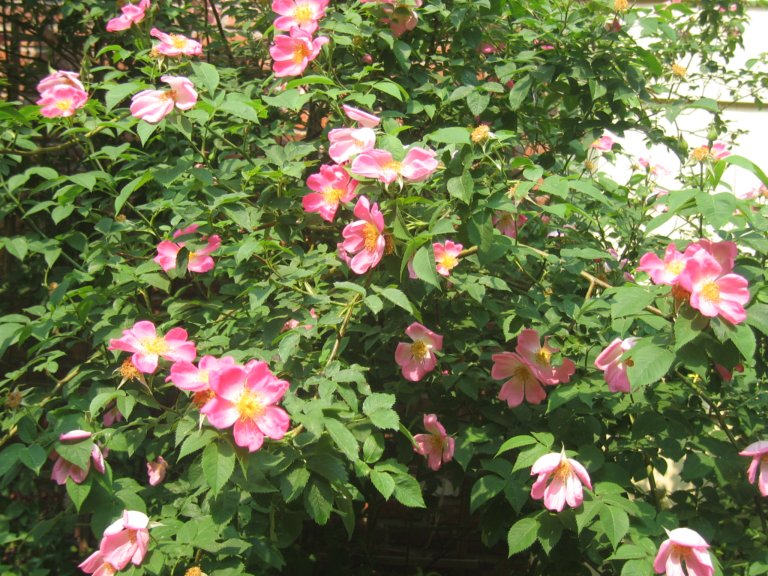
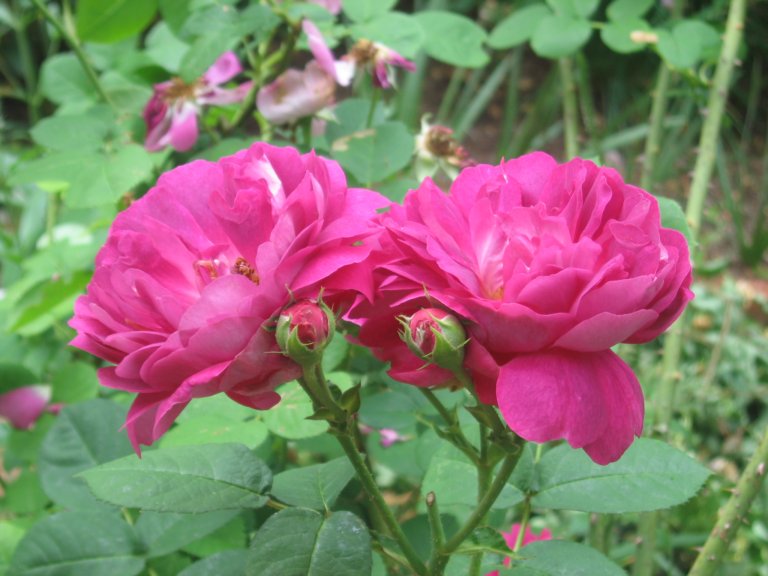
Complicata – Vigorous Once Blooming Rose
I read the following review of Prince Charles’s new book in the New York Times:
http://www.nytimes.com/2007/08/23/garden/23highgrove.html?_r=1&oref=slogin
After reading the review, I couldn’t wait to get it, as it had already been printed in the UK, but not yet in the US. I pre-ordered it and waited with baited breath. When it finally arrived a few weeks later, I was not disappointed. It was a trove of wonderful information that was applicable to my very own suburban garden. Okay, my less than half an acre doesn’t compare to Highgrove, but the Prince does have about one full-time gardener per acre or two. One thing that the Prince can’t do organically–even with a royal staff–is keep a proper lawn. Instead, he keeps green spaces that that are mowed. A proper lawn–a monoculture of a specific grass–is just too prone to disease and weeds to manage organically.
I purchased Garden to Vase: Growing and using your own cut flowers by Linda Beutler earlier this year. It is the first book on cut flowers that is addressed to the gardener, unlike most flower arranging books that assume you are buying the flowers from a florist. While not all of the information is from first-hand knowledge, it is enough of a start for you to experiment on your own. You can find the book on at:
Given that I haven’t poste since last winter, I guess I only have time for this blog in the off-season.
Last year, the trauma of the garden was a 100+ year-old oak tree falling in the backyard. Our wonderful arborists from Savatree (http://www.savatree.com/) check our trees every year, and both of these trees were quite sound.
Then in the spring, after a heavy rainstorm, we heard a giant cracking sound in the backyard and actually saw the tree falling. This, as the arborist categorized it for insurance purposes, was truly an act of God. As if this wasn’t bad enough, it had grown intertwined at the base to a 100+ year-old tulip tree. Removing a tree that has fallen down, assuming that it hasn’t fallen down on your house, is a pretty minor job. However, removing a giant tulip tree with no other trees around it, is a major job that requires heavy machinery. The arborists did everything possible to avoid this, but it was unavoidable. The heavy machinery, to say the least, destroyed significant parts of the backyard and garden, not to mention the damage to the driveway. Speakng of insurance, the people at Chubb (http://www.chubb.com/) were wonderful about the whole affair.
The gardening challenge was multi-fold: the back corner of the garden which was formerly full-shade was now full-sun.
To be continued…
I love attracting birds to the garden. While I have many plants during the growing season to attract birds–such as purple coneflower, black eyed susans, raspberries, serviceberry, rattlesnake master, and sunflowers– there are fewer in the winter months. After all my crabapples and rose hips are gone, the birds are mainly attracted to the bird feeders and the bird baths during the winter months.
As you see in the picture, I have a multi-armed post with three feeders in the backyard. The one on the left looks like a little house with suet on the ends for the woodpeckers. If you look closely, there is a downy woodpecker on the back of the bird feeder in the picture. In the center of the house, there is a covered space that I use for shelled peanuts (a favorite of woodpeckers, nuthatches, and blue jays) and a seed blend for cardinals and other song birds. In the center (back), is a bird feeder for small backyard birds. One time instead of putting my regular mix in the feeder, I filled it with shelled sunflower seeds. The goldfinches love the sunflower hearts and are no longer attracted to the nyjer seeds which are recommended for them. On the right, is an all-purpose feeder for small birds. In the picture, there is a tufted titmouse on the birdfeeder. It is also a favorite of the house finches who are sitting on the branches of the Ceris ‘Forest Pansy’ behind and to the right.
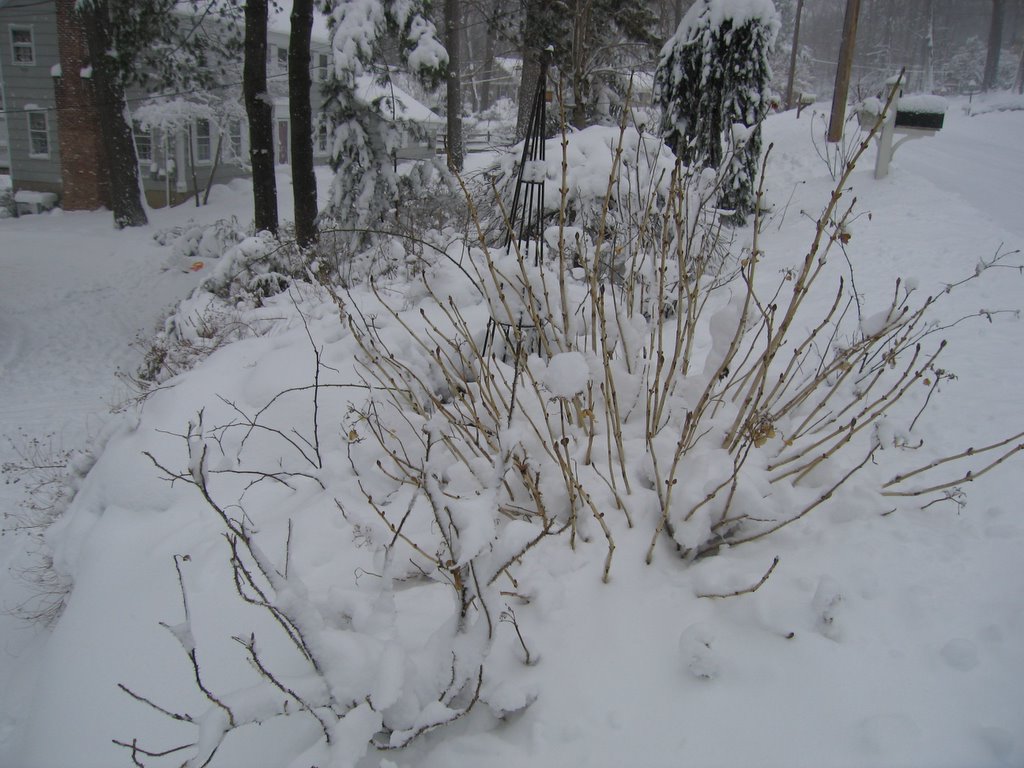
The warm weather over the past eight weeks was too good to be true. It has snowed over twelve inches since yesterday, and more snow is expected throughout the day and night. I ventured out to take some pictures of the garden.
Descriptions of the pictures are enumerated from the top:
1. Butterfly Bush decorated with Christmas ornaments in the front garden next to the lamp post.
2. A grouping of spirea next to the front staircase. It is difficult to see with the snow, but behind the spirea are Rosa glauca and miscanthus ‘Adagio.’ Further back is Wiegela florida to the left and a lace bark pine in the center.
3. Lacecap hydrangea in the front garden. To the left of the hydrangea is the rose Frau Dargmar Harstrup.
4. The arbor over the entrance to the side garden is covered with the rose Dortmund. In the forefront of the picture are caryopteris. For winter interest, I hung a string of decorative apples on the fence.


In February, I am always overwhelmed with winter and overwrought by the desire to garden again. This is when forcing branches and bulbs comes to the rescue. Forcing forsythia is easily done. All you need to do is cut several branches showing lots of flower buds, put them in a vase with water, place the vase in a sunny indoor location, and wait about 7 to 14 days for flowers to open. The flowers last for a good time and, if the water is frequently changed so it remains clean, leaves will follow the flowers.
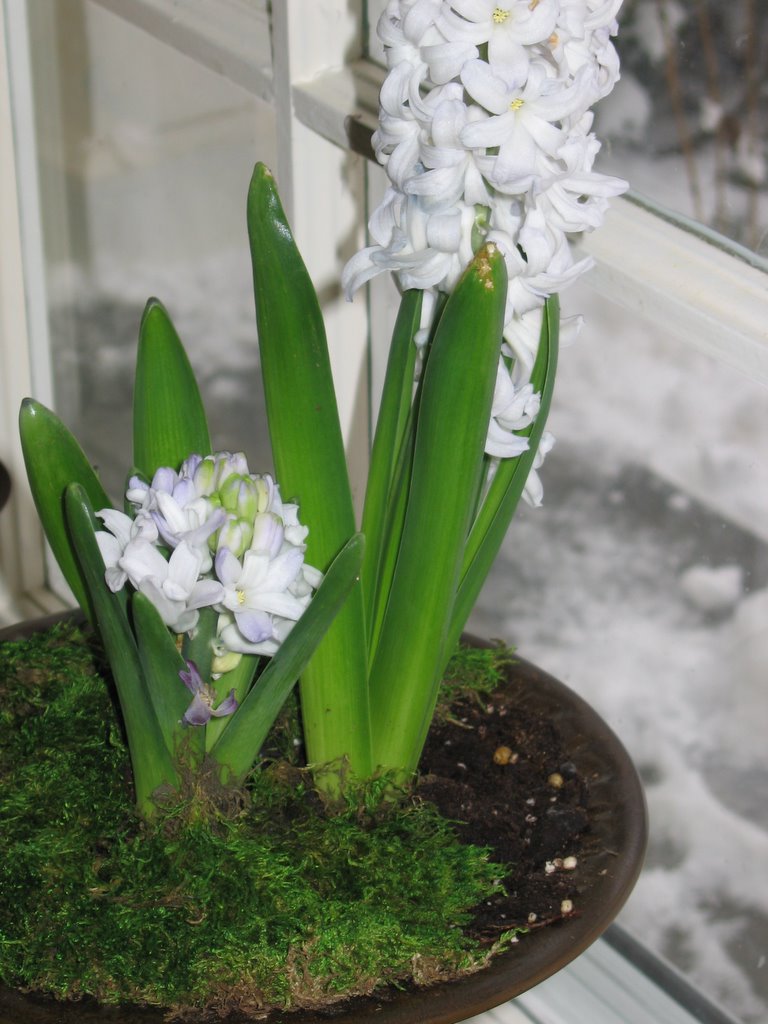
The hardest step in forcing bulbs is planning ahead by buying and preparing the bulbs. Last October, I tucked away several extra bags of hyacinth, tulips, daffodils, muscari, and crocus for forcing. I have found that bulbs will force by chilling them in the refrigerator away from fruit for a minimum of ten weeks. After which they can be potted up inside as I need them. I also force bulbs by planting them in pots in the fall and, then, storing these pots in the garage for at least ten weeks. After the chill time, I bring the pots inside, water them, and they will grow and bloom in a matter of weeks.
Usually, after the middle of January I will bring in a pot or pot up one each week. This combined with forsythia branches, snowdrops, and amaryllis will keep my home full of flowers until the first crocus appears.